


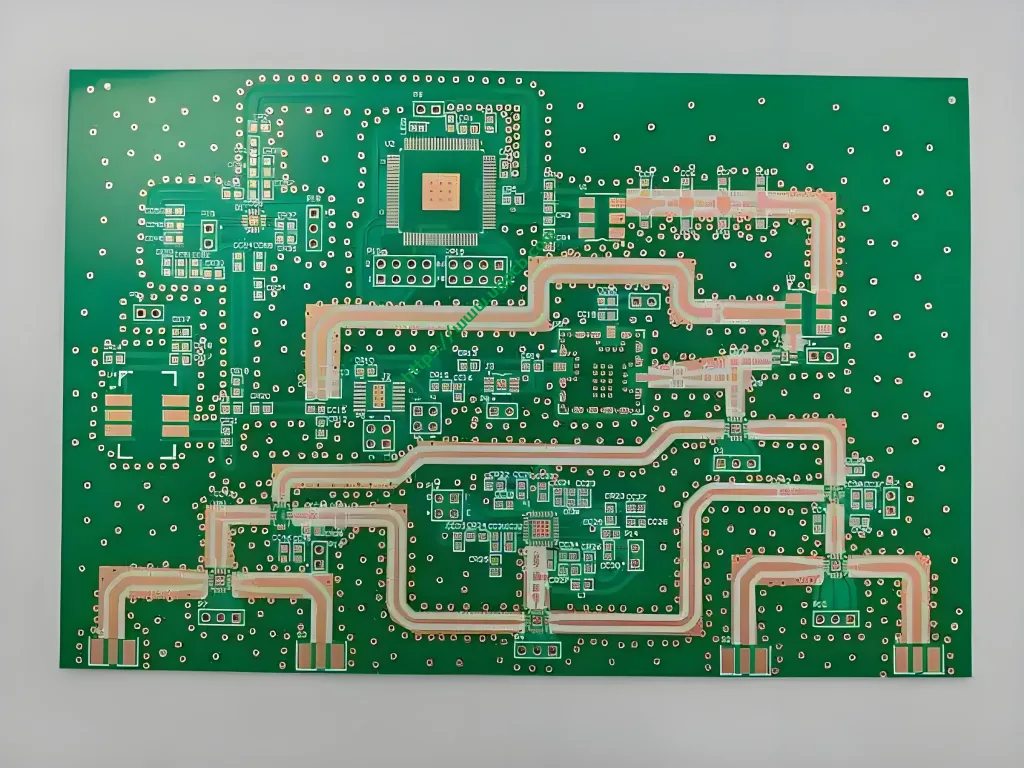
UGPCB specializes in manufacturing Rogers RO4350B + FR4 high-frequency printed circuit boards. These are the ideal solution for communication systems, RF circuits, and high-speed digital designs. By combining high-frequency ceramic-based materials with traditional FR4, we achieve excellent signal integrity without compromising cost control.
This specific 4-layer hybrid board features a precise finished thickness of 1.0mm. It utilizes a symmetrical stackup of 2 layers of Rogers RO4350B and 2 layers of FR4. The surface finish is Immersion Gold (يوافق). This combination provides a superior performance substrate for 5G base stations, power amplifiers, and wireless communication equipment.

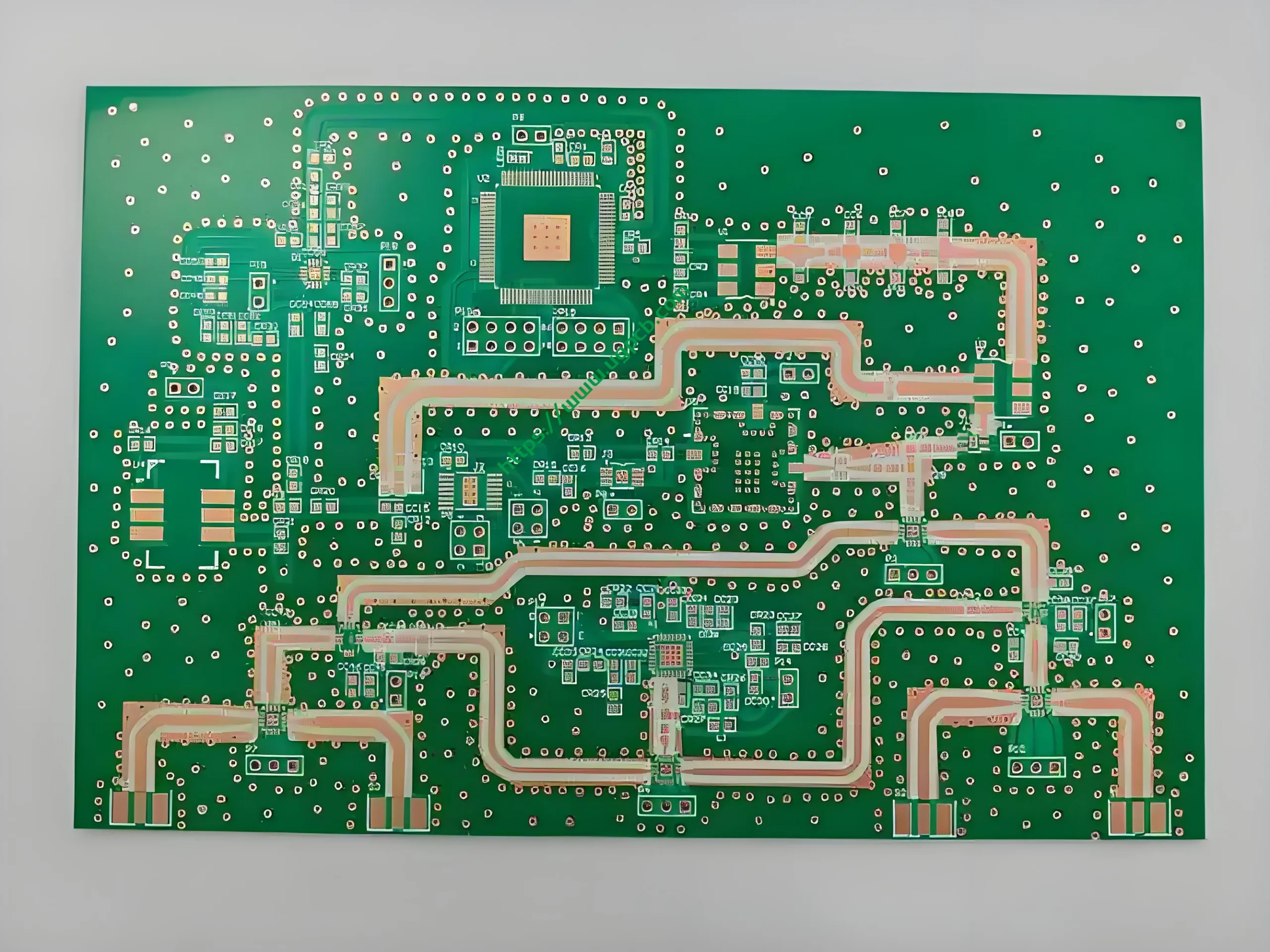
What is a Rogers RO4350B + FR4 Hybrid PCB? [Product Overview & تعريف]
A Rogers RO4350B + FR4 hybrid PCB is a multilayer board made by pressing two different substrate materials together. It is not a standard FR4 board, nor is it an expensive all-high-frequency board. بدلاً من, it is a “mixed dielectric” product that leverages the strengths of both materials.
-
Core Material: It utilizes Rogers Corporation’s RO4350B hydrocarbon/ceramic laminate. This material is known for its stable Dielectric Constant (DK) and very low RF loss, making it ideal for high-frequency circuits.
-
Support Material: It is combined with traditional FR4 epoxy glass cloth laminate. FR4 is the most common material in the ثنائي الفينيل متعدد الكلور صناعة. It offers excellent mechanical support, mature processing techniques, and lower cost.
-
Product Definition: Using UGPCB’s product as an example, the model clearly indicates its hybrid nature. The standard structure is 2 layers of Rogers RO4350B and 2 layers of FR4. This creates a total of 4 طبقات, with the finished board thickness strictly controlled at 1.0mm.
The core design philosophy is using the right material for the right job. High-frequency signals travel through the RO4350B layers. قوة, control signals, and mechanical support are handled by the FR4 layers.
Key Parameters & Design Specifications
To ensure high performance in high-frequency applications, UGPCB strictly follows these design specifications:
| المعلمة | Specification | Design Notes |
|---|---|---|
| نموذج | روجرز RO4350B + FR4 Hybrid | Mixed dielectric structure for cost and performance. |
| ثابت العزل الكهربائي (DK) | 3.48 | Stable at 10GHz, ensuring signal speed and wavelength stability. |
| Layer Structure | 2L RO4350B + 2L FR4 | Symmetrical stackup reduces warping risk from CTE mismatch. |
| Total Layers | 4 طبقات | Supports complex RF front-ends and simple control circuits. |
| سمك الانتهاء | 1.0مم | Thinner than standard 1.6mm boards; ideal for compact and lightweight devices. |
| سمك العزل الكهربائي | 0.254مم | Refers to the single-layer thickness of the RO4350B core for precise impedance control. |
| Finished Copper Weight | 1/0.5/0.5/1 (أوقية) | Outer 1OZ for heat dissipation; inner 0.5OZ for fine-line etching. |
| Base Copper Foil | ½ (18ميكرومتر) HH/HH | Ensures etching precision for inner layer circuits. |
| الانتهاء من السطح | الغمر الذهب (يوافق) | Provides excellent flatness, solderability, and oxidation resistance. |
| طلب | Communication PCB | Suitable for wireless base stations and microwave transmission. |
خصائص المواد & Performance Advantages
-
Stable Dielectric Performance (DK=3.48)
4350 مليار ريال عماني maintains a consistent DK of around 3.48 across a wide frequency range from MHz to GHz. This stability allows designers to rely on a constant value for impedance calculations. It guarantees signal phase integrity during high-speed transmission, which is critical for 5G and radar systems. -
Low Dissipation Factor (ص)
RO4350B features a very low dissipation factor, typically around 0.0037 في 10 جيجا هرتز. في المقابل, standard FR4 loss increases sharply above 1GHz. UGPCB’s hybrid board ensures minimal energy loss and low heat generation as RF signals pass through the RO4350B layer. -
Ideal Thermal Performance
-
الموصلية الحرارية: RO4350B has a thermal conductivity of 0.69 W/m·K. This is nearly double that of standard FR4 at 0.3 W/m·K. Heat from components like power amplifiers dissipates much faster.
-
Thermal Stability: With a high glass transition temperature above 280°C and low Z-axis CTE, it ensures plated through-hole reliability during temperature changes.
-
-
ميكانيكية & Process Compatibility
RO4350B is one of the few ceramic-filled materials compatible with standard FR4 epoxy processes. This eliminates the need for complex plasma treatments required for pure PTFE materials. It simplifies manufacturing and ensures reliable lead times.
How It Works & Structural Analysis
How It Works
High-frequency signal transmission on a PCB is essentially electromagnetic wave propagation in microstrips or striplines. In this 4-layer board, the top (L1) and bottom (L4) layers handle RF signal routing and component assembly. The internal RO4350B dielectric layer with DK of 3.48 provides a stable and low-loss electromagnetic field environment.
Structural Analysis
The board uses a sandwich symmetrical structure:
-
L1 Layer: 1OZ copper with ENIG finish. Used for mounting RF chips.
-
L2 Layer: 0.5OZ copper. Typically a ground reference for high-frequency signals, supported by FR4.
-
Core Layer: 0.254mm RO4350B core. This is the primary medium for high-frequency signal transmission.
-
L3 Layer: 0.5OZ copper. Can be a power plane or a secondary ground reference.
-
L4 Layer: 1OZ copper with ENIG finish. Used for mounting control circuits or interfaces.
Product Classification
UGPCB’s product falls into these categories:
-
By Material: Rigid High-Frequency هجينة ثنائي الفينيل متعدد الكلور with ceramic-filled hydrocarbon and epoxy.
-
By Layer Count: 4-Layer Multilayer Board.
-
By Process: Hybrid Lamination PCB.
-
By Application: Communication or RF Microwave PCB.
-
By Surface Finish: ENIG or Electroless Nickel Immersion Gold Board.
Key Production Control Points
UGPCB controls these critical steps to ensure high quality:
-
إعداد المواد: Baking RO4350B and FR4 to remove moisture. RO4350B has very low absorption below 0.06 percent, but drying prevents delamination.
-
Inner Layer Imaging: Using ½ or 18μm HH/HH thin copper foil for precise fine-line etching.
-
Lamination as the Core of Hybrid:
-
Using specialized bondply like Rogers 2929 or high-flow prepregs.
-
Employing a stepwise pressing schedule to manage different curing temperatures.
-
Forced cooling for over 2 hours after pressing to release stress.
-
-
حفر & Desmear: Adjusting drill parameters due to ceramic powder. Using plasma desmear to clean resin residue from hole walls, ensuring reliable metallization.
-
الانتهاء من السطح: Applying Immersion Gold for excellent protection and solderability.
Typical Applications
With its 4-layer and 1.0mm thin design combined with Rogers high-frequency performance, this PCB is ideal for:
-
5G Communication Base Stations: RF Front-End modules and power amplifiers in AAUs.
-
Wireless Backhaul Systems: Point-to-point microwave communications requiring stable DK.
-
Automotive Radar: 77GHz millimeter-wave radar circuits.
-
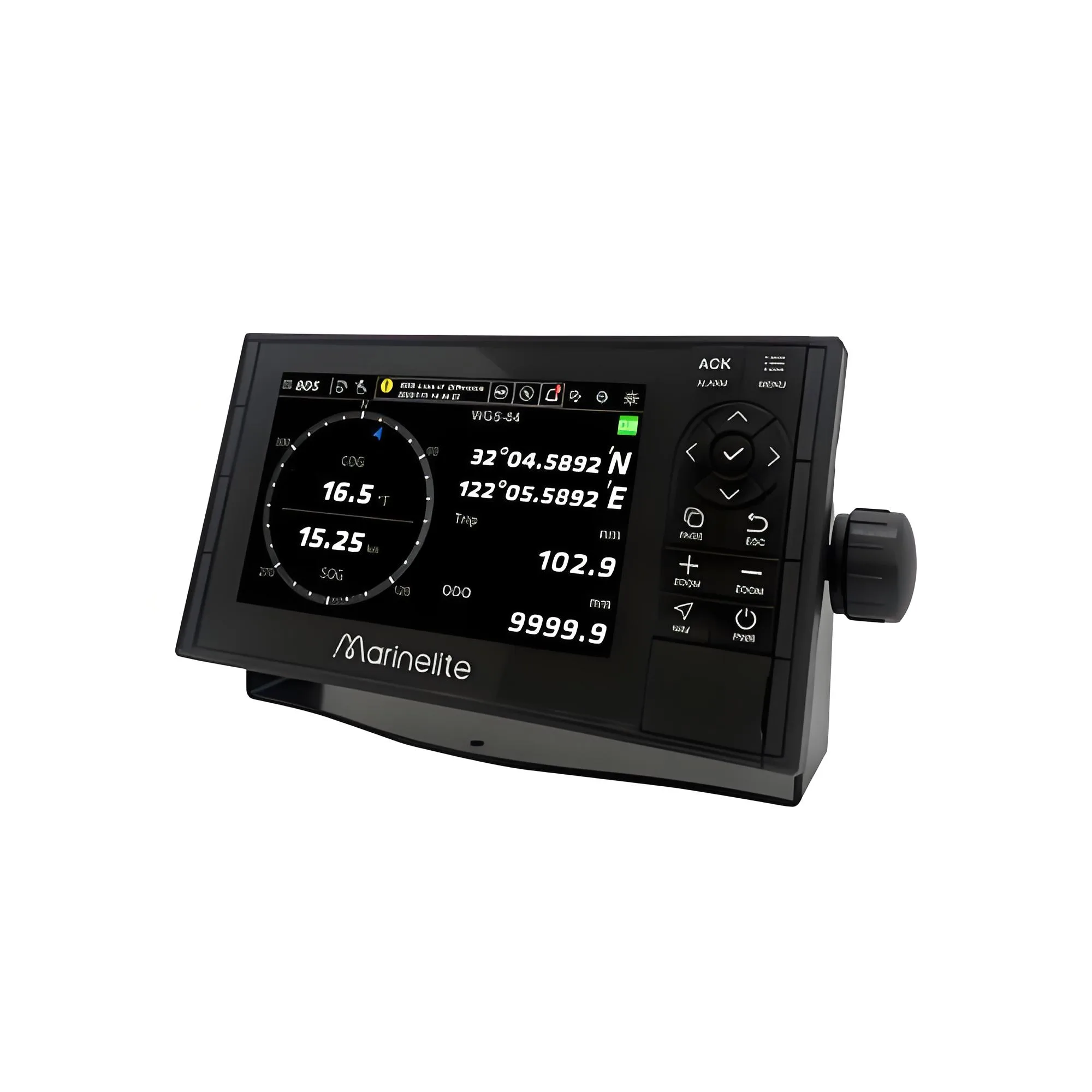
Satellite Navigation: High-frequency amplification and filtering in GPS or Beidou receivers.
-
Test & Measurement Instruments: Signal acquisition boards inside high-frequency oscilloscopes.

لماذا تختار UGPCB?
Choosing UGPCB means choosing precision and reliability. We perform impedance calculations and production control strictly according to your design parameters including 1.0mm thickness, 0.254mm dielectric, and specific copper weights. In the communication PCB field, even a slight deviation can cause system failure.
Ready to drive your next-generation communication product?
Send your Gerber files to sales@ugpcb.com for a free quote and technical support on your RO4350B hybrid board.
Our engineering team will provide professional DFM analysis and a competitive price proposal within 24 ساعات.