


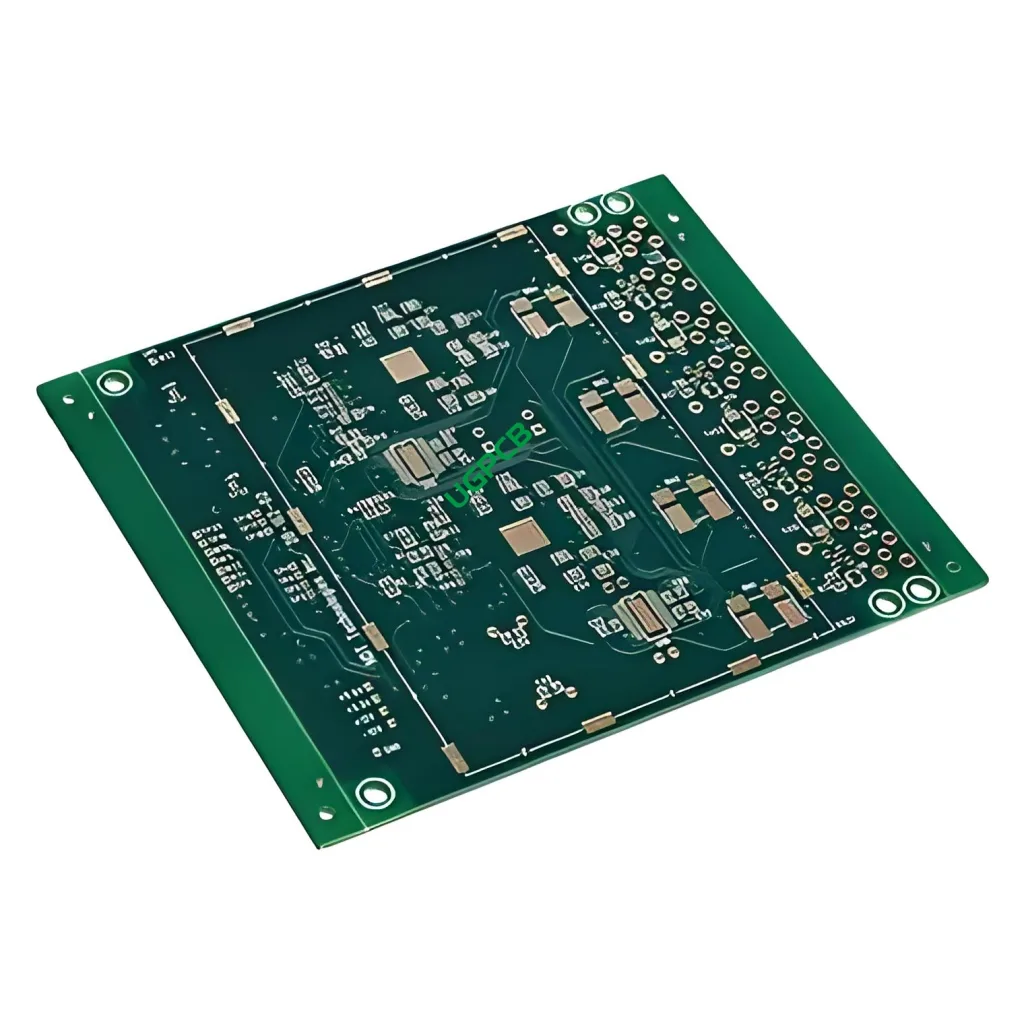
Overview of Rogers 5880 PCB
The Rogers 5880 PCB is a high-performance circuit board designed for demanding applications in microwave, instrumentation, and communication. Utilizing Rogers 5880 substrate, this product offers exceptional signal integrity and reliability. With dielectric constants of 2.2 and thickness options ranging from 0.2mm to 4.8mm, it provides flexibility for various design requirements. The surface treatment is Immersion Gold, ensuring excellent solderability and corrosion resistance. The special processes include Teflon multilayer PCB and Countersink PCB, enhancing its performance in high-frequency applications.

Definition and Key Specifications
A Rogers 5880 PCB is defined by its use of the Rogers 5880 substrate, known for its low dielectric constant and high signal fidelity. The dielectric constant is 2.2, which is ideal for maintaining signal integrity at high frequencies. The thickness can vary from 0.2mm to 4.8mm, allowing for customization based on specific application needs. The surface treatment is Immersion Gold, providing a robust and reliable finish. The base copper weight is 0.5OZ, with a finished thickness of 1OZ, ensuring efficient conductivity. Special processes like Teflon multilayer and Countersink further enhance the PCB’s performance in high-frequency environments.
Design Considerations
When designing a Rogers 5880 PCB, several factors must be considered:
- Dielectric Constant: The 2.2 dielectric constant of Rogers 5880 is optimal for high-frequency signals, reducing delay and loss.
- Thickness: The wide range of thickness options (0.2mm – 4.8mm) allows for flexibility in design, catering to different application requirements.
- Copper Thickness: The base and finished copper weights ensure that the PCB can handle high currents and maintain signal integrity.
- Surface Treatment: Immersion Gold provides excellent solderability and protects against corrosion, essential for long-term reliability.
- Special Processes: Techniques like Teflon multilayer and Countersink are crucial for enhancing performance in high-frequency and microwave applications.
Working Principle
The Rogers 5880 PCB operates based on the principle of controlled impedance and minimal signal loss. The low dielectric constant of the substrate ensures that signals travel with minimal delay and loss, maintaining their integrity. The precise control over thickness and copper weight allows for consistent impedance, which is critical for high-frequency signal transmission. The Immersion Gold surface treatment provides a reliable connection point for components, ensuring efficient signal transfer.
Applications
Rogers 5880 PCBs are used in a variety of applications that require high-frequency performance and signal integrity:
- Microwave: Ideal for radar systems, satellite communications, and other microwave applications where signal purity is paramount.
- Instrumentation: Used in precision measurement and testing equipment where accurate signal processing is crucial.
- Communication: Suitable for high-speed data transmission and reception in communication devices.
Classification
Rogers 5880 PCBs can be classified based on several criteria:
- Layer Count: Ranging from 1 layer to 24 layers, depending on the complexity of the circuit.
- Thickness: Options from 0.2mm to 4.8mm allow for customization based on specific application needs.
- Special Processes: Standard and specialized versions, such as those using Teflon multilayer or Countersink techniques.
Material Properties
The key properties of the Rogers 5880 substrate include:
- Low Dielectric Constant: Ensures minimal signal delay and loss, making it suitable for high-frequency applications.
- Wide Thickness Range: Allows for flexibility in design, catering to different application requirements.
- Excellent Solderability: The Immersion Gold surface treatment provides a reliable and robust connection point for components.
- High Signal Fidelity: Maintains signal integrity even at high frequencies, ensuring reliable performance.
Production Process
The production of a Rogers 5880 PCB involves several steps:
- Material Selection: Choosing the Rogers 5880 substrate for its low dielectric constant and high signal fidelity.
- Circuit Design: Creating the circuit layout with considerations for high-frequency performance and signal integrity.
- Etching: Removing unnecessary copper to create the desired circuit pattern.
- Lamination: Bonding multiple layers together under high pressure and temperature to ensure a strong and reliable connection.
- Surface Finishing: Applying Immersion Gold to enhance solderability and corrosion resistance.
- Special Processes: Utilizing techniques like Teflon multilayer and Countersink to further enhance performance in high-frequency applications.
- Testing and Quality Control: Ensuring the final product meets all specifications and standards.
Use Scenarios
Rogers 5880 PCBs are used in scenarios where high-frequency performance and signal integrity are critical:
- Microwave Communication Systems: Ensuring clear and reliable signal transmission in radar and satellite communication systems.
- Precision Measurement Instruments: Providing accurate and reliable signal processing in scientific and industrial measurement equipment.
- High-Speed Data Communication: Facilitating rapid and reliable data transfer in modern communication devices.
In summary, the Rogers 5880 PCB is a high-performance circuit board designed for demanding applications in microwave, instrumentation, and communication. Its low dielectric constant, wide thickness range, and excellent signal fidelity make it an ideal choice for maintaining signal integrity at high frequencies.