

TG150 PCB Circuit Board Introduction: Meeting the Thermal Challenge in Modern Electronics
In high-speed communications, automotive, aerospace, and advanced industrial controls, electronic devices face increasingly harsh operating environments. Elevated temperatures can cause standard PCB substrates (e.g., standard FR-4) to reach their glass transition, leading to softening, deformation, and critical performance loss, jeopardizing system reliability. Selecting a high-Tg printed circuit board is essential for ensuring long-term stability in these demanding applications.
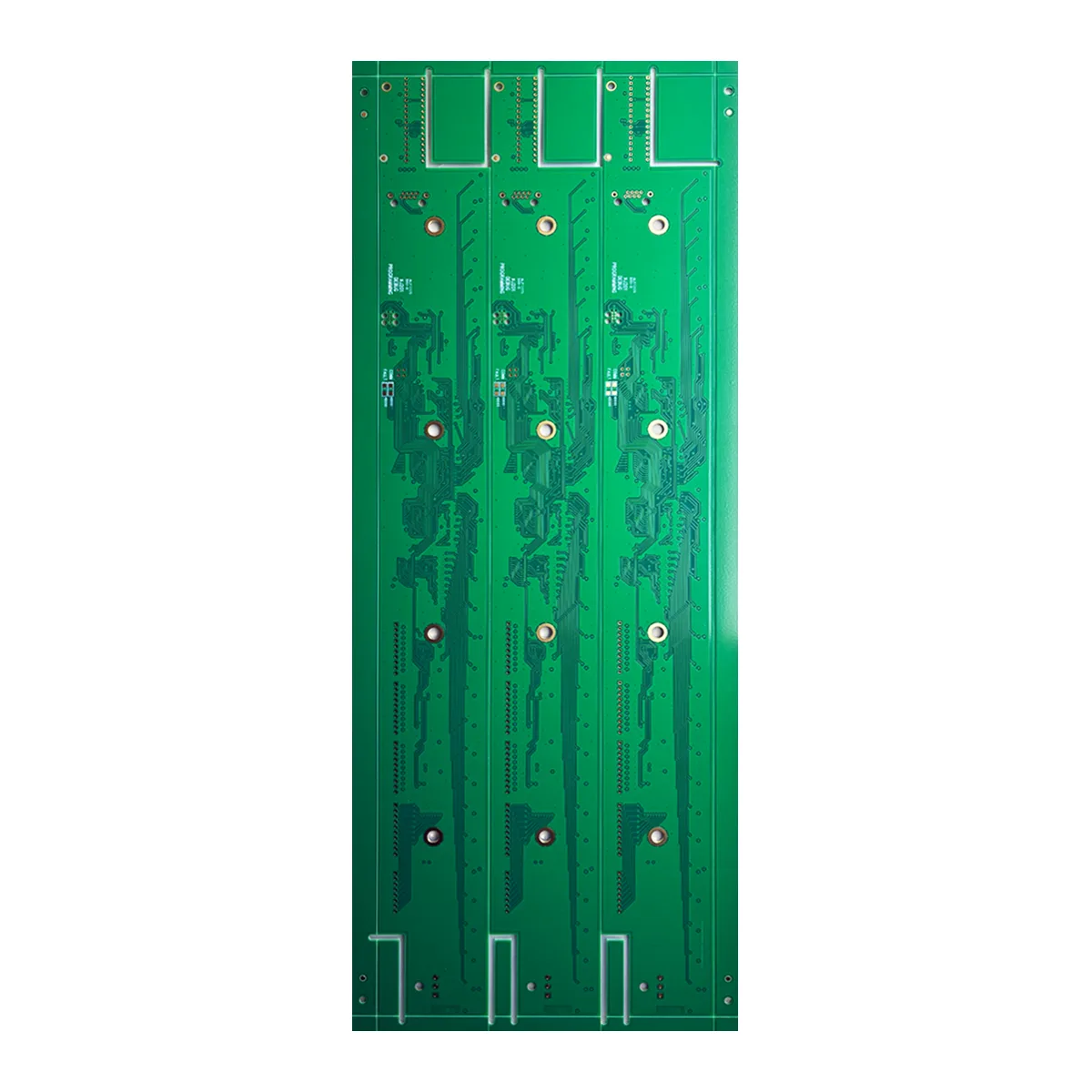

1. Product Overview: What is a TG150 PCB?
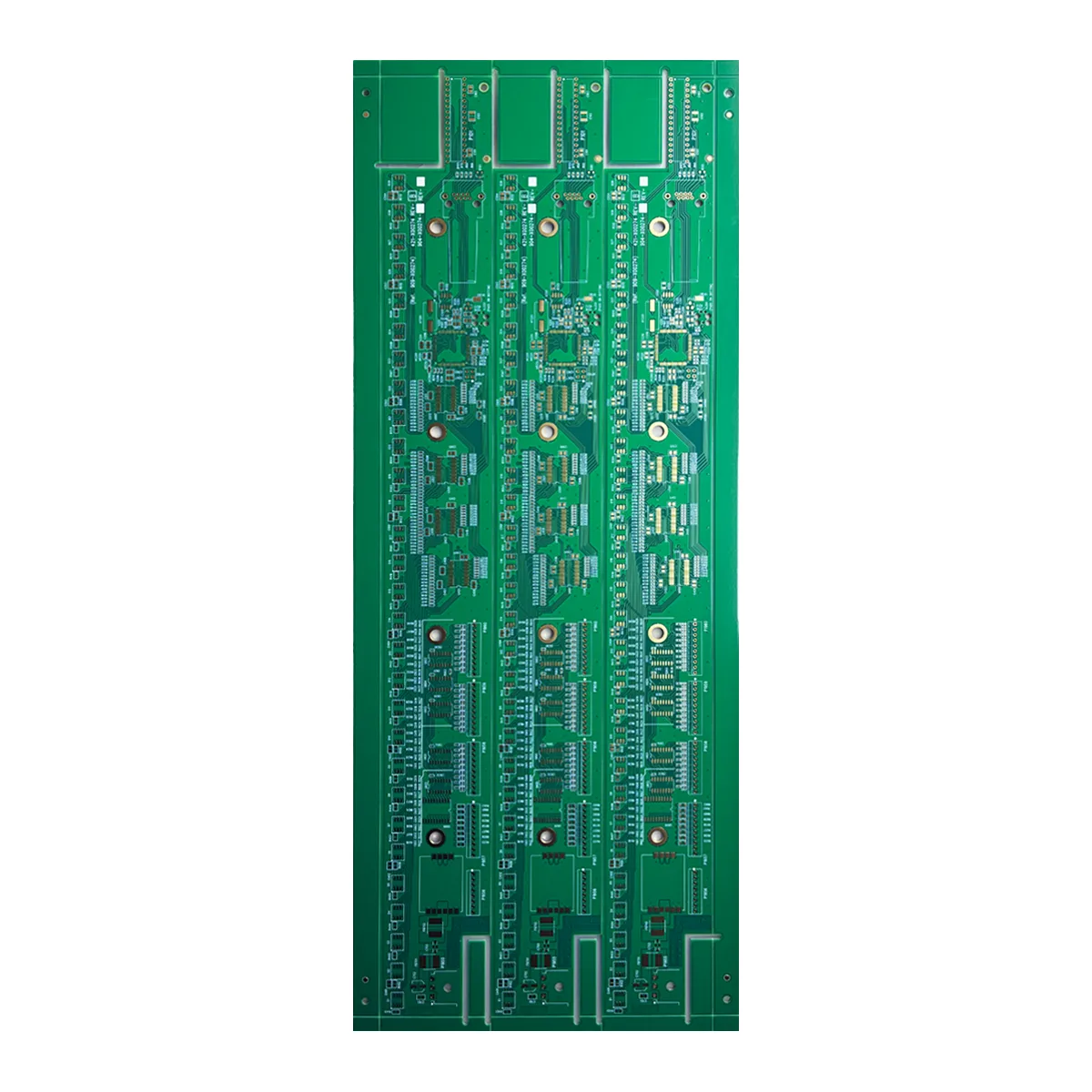
A TG150 PCB is a printed circuit board fabricated using a laminate material with a glass transition temperature (Tg) of 150°C. The Tg is a crucial metric for a PCB substrate’s thermal endurance. Compared to common TG130 PCB laminates, TG150 material maintains superior physical rigidity and stable electrical properties under high temperatures. UGPCB’s 4-layer TG150 circuit board combines this high-performance material with an Immersion Gold (ENIG) surface finish and supports 0.08mm fine-line circuitry and 0.2mm micro-drilling, making it a high-reliability multilayer PCB solution for advanced applications.
2. Core Material and Enhanced Performance of TG150 PCB
-
Base Material: A high-performance epoxy or modified FR-4 formulation, specially engineered to consistently achieve a Tg of 150°C or higher.
-
Key Performance Advantages (vs. TG130 PCBs):
-
Exceptional Thermal Stability: The increase from 130°C to 150°C Tg significantly enhances the board’s resistance to deformation at high temperatures, improving its ability to withstand high-temperature assembly processes like lead-free soldering.
-
Superior Moisture and Chemical Resistance: A denser molecular structure reduces moisture absorption in humid environments, minimizing losses in insulation resistance (IR) and signal integrity, while offering better resistance to chemical exposure.
-
Improved Mechanical Strength and Dimensional Stability: High Tg PCBs exhibit lower Z-axis expansion coefficients and stronger bond strength during thermal cycling, reducing risks like via cracking and delamination.
-
Stable Electrical Characteristics: Dielectric constant (Dk) and dissipation factor (Df) remain more stable at elevated operating temperatures, ensuring higher signal integrity for high-frequency PCBs.
-
3. Structure and Design Specifications of Our TG150 PCB
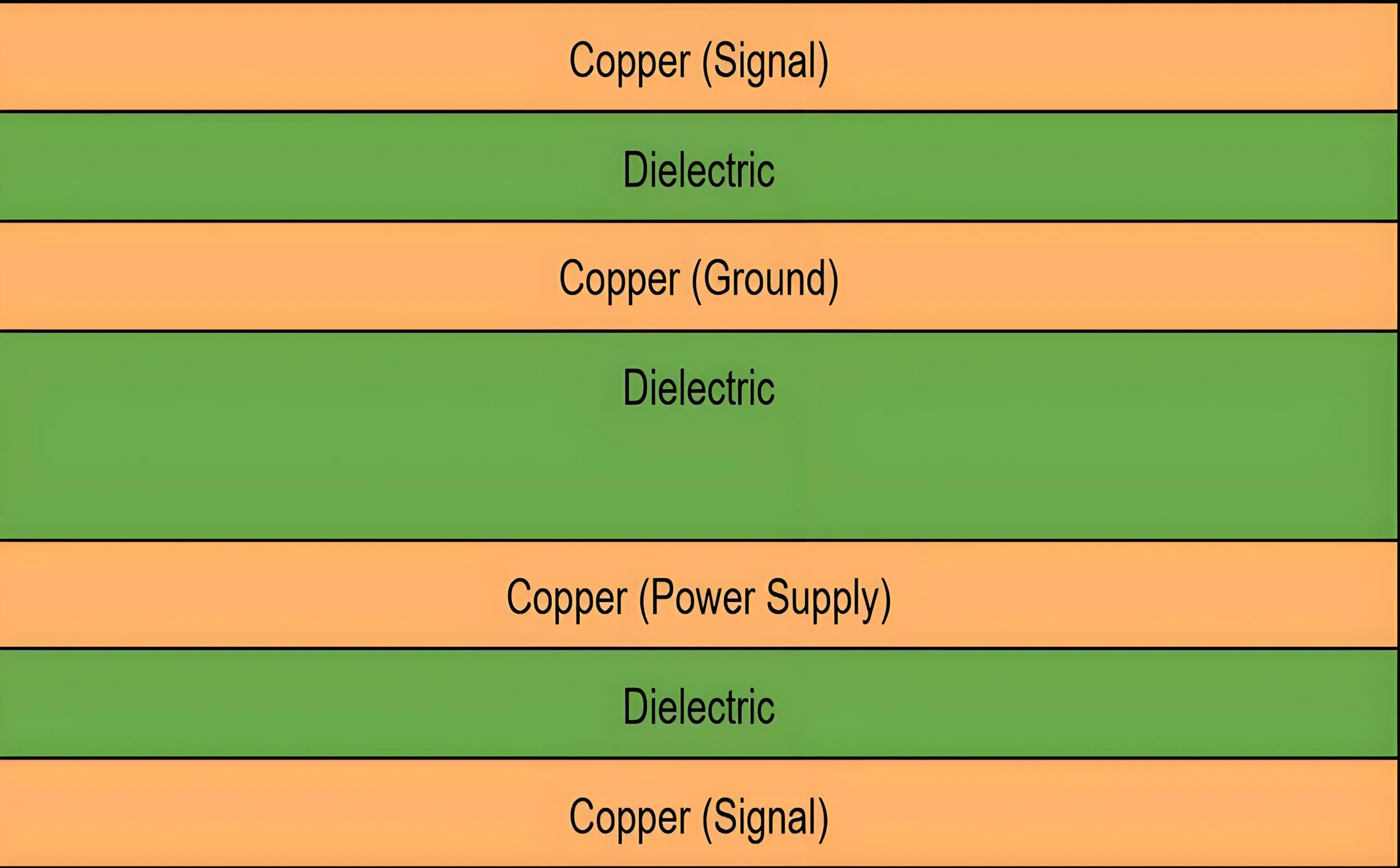
PCB Stack-up
This product is a standard 4-layer PCB board. A typical stack-up is Signal Layer – Ground Plane – Power Plane – Signal Layer, providing a complete return path for high-speed signals and effective EMI control.

Key Design Capabilities & Specifications
Minimum Trace Width/Space: 0.08mm / 0.1mm. This represents advanced fine-line PCB manufacturing capability, essential for routing high-density ICs (e.g., BGA packages).
Drill Diameter: 0.2mm. Supports micro-via drilling, facilitating higher density interconnects and saving board space.
Surface Finish: Immersion Gold (ENIG). Provides a flat surface, excellent solderability, and long shelf life, ideal for fine-pitch components (e.g., QFP, BGA).
4. Manufacturing Process and Quality Control
UGPCB’s TG150 PCB manufacturing process strictly adheres to international standards like IPC-6012 (Qualification and Performance Specification for Rigid PCBs). The process includes:
Material Preparation → Inner Layer Imaging → Etching → Lamination → Drilling (0.2mm) → Desmear & Plating → Outer Layer Imaging → Pattern Plating → Etching → Solder Mask Application → ENIG Surface Finish → Routing → Electrical Testing → Final Inspection.
At each stage, we employ advanced equipment (e.g., LDI imaging, AOI inspection) and rigorous reliability testing (e.g., thermal stress, ionic contamination) to ensure the quality of every high-Tg circuit board.
5. Product Classification and Typical Applications
-
Technical Classification:
-
By Tg: Mid-High Tg PCB (Tg ≥ 150°C).
-
By Layer Count: Multilayer PCB (4-Layer Board).
-
By Technology: Precision PCB (HDI-ready capability).
-
By Finish: ENIG PCB, Fine-Line PCB.
-
-
Ideal Application Scenarios:
-
Automotive Electronics: Engine Control Units (ECUs), infotainment systems, power management modules – requiring tolerance under-hood temperatures.
-
Telecommunications Equipment: 5G base station PAs, optical modules, network switches – where high power generates sustained heat.
-
Industrial Controls: Servo drives, PLCs, industrial PCs – for reliable operation in hot factory environments.
-
Power Electronics: High-power switch-mode power supplies (SMPS), inverters – where power components generate significant heat.
-
Aerospace & Defense: Electronic systems with extreme demands for reliability and environmental resilience.
-
6. Why Choose UGPCB for Your TG150 PCBs?
-
Certified Materials: We use verified, traceable TG150 PCB laminates from reputable suppliers.
-
Precision Manufacturing: Our expertise in multilayer PCB fabrication and ENIG processing ensures high yield for 0.08mm fine-line designs.
-
Guaranteed Specifications: All technical parameters (Tg 150°C, 0.2mm drills) are rigorously validated against datasheets.
-
End-to-End Support: We provide full technical support from PCB design review and impedance control to rapid prototyping and volume production.
7. Take Action: Secure Your Design with a Robust Foundation
Don’t let thermal limitations hinder your product innovation. Choosing UGPCB’s high-reliability TG150 PCB means investing in exceptional stability, durability, and performance.
Call to Action
*(Image Suggestion: High-quality close-up photo of a populated TG150 PCB used in a telecom orautomotive application.)*
Alt Tag: High-density assembled 4-layer TG150 PCB with ENIG finish for automotive or telecom applications
Is your next project facing thermal reliability challenges?
Do you need a PCB that can withstand rigorous environmental stress?
Contact the UGPCB expert team today!
[Click here to Get a Free Quote for TG150 PCBs]
[Upload Your Gerber Files for a 24-Hour Design Review]
Let our expertise in high-performance PCB manufacturing power your success.