


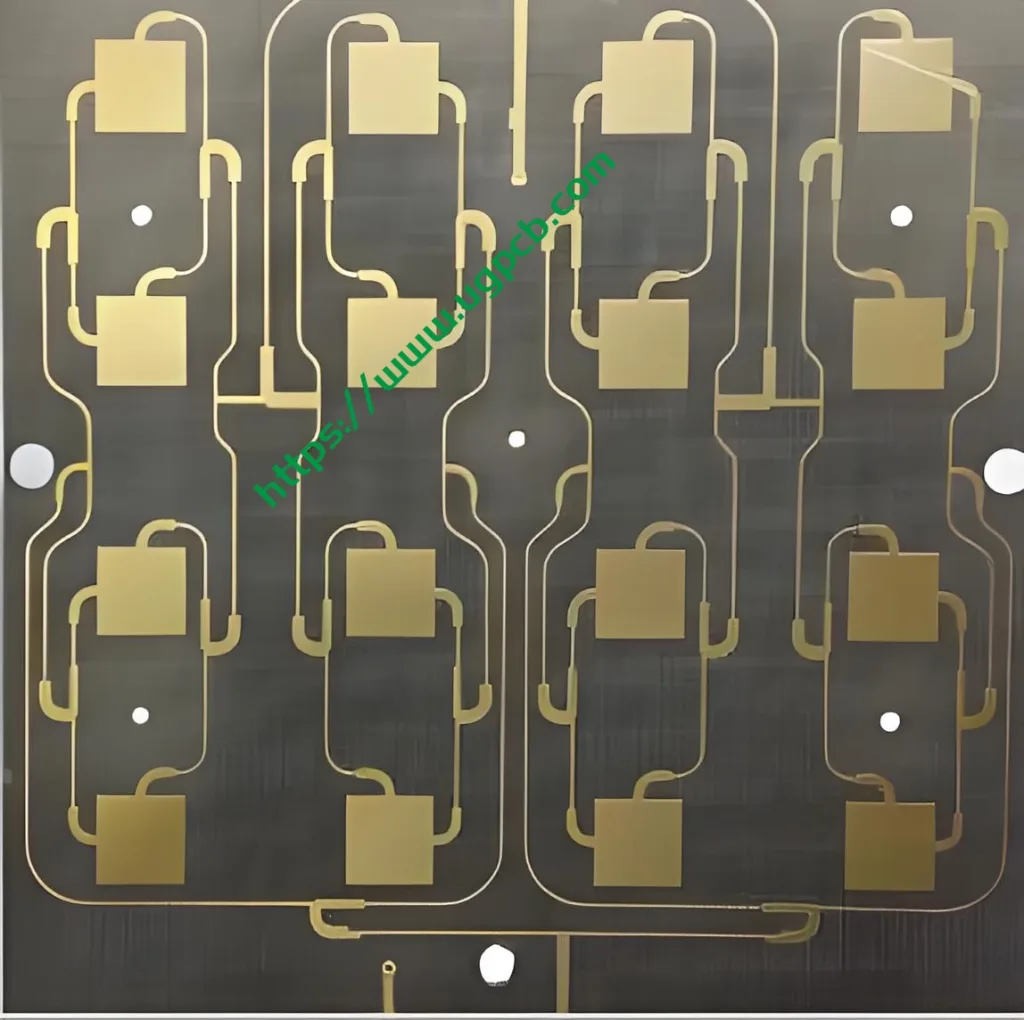
Rogers RO4725JXR PCB Laminates: The Ultimate Solution for High-Performance RF & Antenna Applications
When your design pushes high-frequency limits, your choice of PCB laminate é crítico.
In the rapidly evolving fields of 5G communications, Sistemas Avançados de Assistência ao Condutor (ADAS), e dispositivos IoT, engineers are constantly pushing the boundaries of high-frequency PCB design. Balancing signal loss, Estabilidade térmica, and cost-effectiveness remains a persistent challenge in designing RF circuit boards and antenna feed networks. UGPCB’s Rogers RO4725JXR series is engineered to resolve this core conflict—seamlessly integrating superior RF performance, outstanding reliability, and competitive cost. It is the ideal foundation for building next-generation wireless systems.
Product Deep Dive: Redefining Performance Standards for Antenna-Grade PCBs
Product Definition & Scientific Classification
The Rogers RO4725JXR™ PCB laminate is a ceramic-filled PTFE (Politetrafluoretileno) composite-based high-frequency material, scientifically classified as an antenna-grade, low-loss microwave substrate. It is not a standard printed circuit board material but an engineered substrate designed for demanding RF and microwave applications. Its performance sits between standard FR-4 and pure PTFE laminates, achieving the optimal balance between performance and manufacturability.

Core Performance Parameters: The Engineering Advantages Behind the Data
| Performance Parameter | Especificação | Implication for Your Design |
|---|---|---|
| Constante dielétrica (Dk) | 2.55 ± 0.05 | Excellent stability ensures consistent impedance from baseband to mmWave frequencies. It is fundamental for designing precise microstrip and stripline PCBs, directly determining signal integrity and antenna radiation efficiency. |
| Fator de dissipação (Df) | 0.0022 @ 2.5 GHz | Industry-leading low-loss characteristic. A Df of just 0.0022 no 2.5 GHz means minimal signal energy loss within the substrate in 5G Sub-6GHz bands, significantly improving system Signal-to-Noise Ratio (Snr) and overall efficiency. |
| Zis Z CTE | < 30 ppm/°C | Closely matches the CTE of copper, virtually eliminating the risk of plated through-hole (PTH) failure due to thermal cycling. This is crucial for high-reliability PCBs subjected to extreme temperature swings or multiple reflow cycles. |
| Glass Transition Temp (Tg) | >280°C (536° f) | Exceptionally high thermal endurance ensures mechanical and electrical properties do not degrade during lead-free soldering processes. Suitable for demanding applications like automotive electronics. |
| Folha de cobre | Discreto (Low Roughness) Foil | Effectively reduces conductor loss from the “skin effect” at high frequencies. A key factor for ensuring final performance in mmWave circuit board designs above 10GHz. |
| Process Compatibility | Compatible with Standard FR-4 Processes | Can be processed on standard PCB production lines. Supports hybrid construction (mixed lamination) with FR-4, greatly reducing complexity and cost from prototype to volume production. |
| Environmental Compliance | RoHS Compliant | Meets global environmental regulations for unrestricted market access. |
Key Design Considerations
-
Controle de impedância: Utilize its stable, known Dk value (2.55) combined with UGPCB’s advanced calculation tools to achieve precise impedance control within ±5%.
-
Thermal Management Design: Excellent Z-axis CTE allows for more confident use of multi-stage blind and buried via structures in multilayer Interconexão de alta densidade (IDH) Designs de PCB, without compromising long-term reliability.
-
Loss Budget: The extremely low Df value enables designers to allocate a more generous loss margin in the link budget or to design longer, more complex low-loss feed networks.
Composição de materiais, Estrutura & Core Features
-
Material: A ceramic-powder-filled PTFE composite substrate clad with ultra-low-profile electro-deposited copper foil. This unique formulation retains PTFE’s excellent dielectric properties while the ceramic filler enhances mechanical strength, condutividade térmica, and significantly reduces material cost.
-
Estrutura: Supplied as standard Copper Clad Laminate (Ccl). Available in various standard thicknesses (por exemplo, 0.254milímetros, 0.508milímetros, 0.762milímetros) and copper weights (1onças, 0.5onças) to manufacture single-sided, double-sided, or multilayer high-frequency hybrid dielectric PCBs.
-
Vantagens principais:
-
Optimal Performance-Cost Balance: Delivers RF performance close to pure PTFE laminates with better cost-efficiency and easier processing. The ideal choice for projects demanding high performance and cost control.
-
Exceptional Long-Term Reliability: The combination of very low Z-axis CTE (<30 ppm/°C) and ultra-high Tg (>280°C) ensures extended lifespan and stable operation in harsh environments like outdoor base stations and automotive systems.
-
End-to-End Low-Loss Solution: Low dielectric loss (Df) and low-profile copper foil work synergistically to minimize signal attenuation from both the dielectric and conductor, making it the premier choice for low-loss PCB fabrication.
-
Seamless Integration into Existing Supply Chains: Fully compatible with standard epoxy/glass (FR-4) PCB fabrication processes—including drilling, desmear, revestimento, imaging, and soldermask application. Requires no special equipment or processes, shortening the learning curve and improving production yield.
-
From Laminate to Finished Product: Our Refined Production Process
Aquela UGPCB, we employ an optimized, proprietary process flow for Rogers RO4725 series laminates to ensure their innate superior performance is fully realized:
Preparação de material & Inner Layer Fabrication → AOI Inspection → Lamination & Pressing (supports FR-4 hybrid) → Laser/Mechanical Drilling → Hole Metallization & Plating → Outer Layer Imaging → High-Performance Soldermask Coating → Surface Finish (CONCORDAR, Immersion Silver recommended) → 100% Flying Probe/Fixture Electrical Testing → Final Visual & Dimensional Inspection. We place particular emphasis on three critical quality control points: impedance control consistency, hole wall quality, and layer-to-layer registration accuracy.
Aplicações Típicas: Enabling Cutting-Edge Technology
-
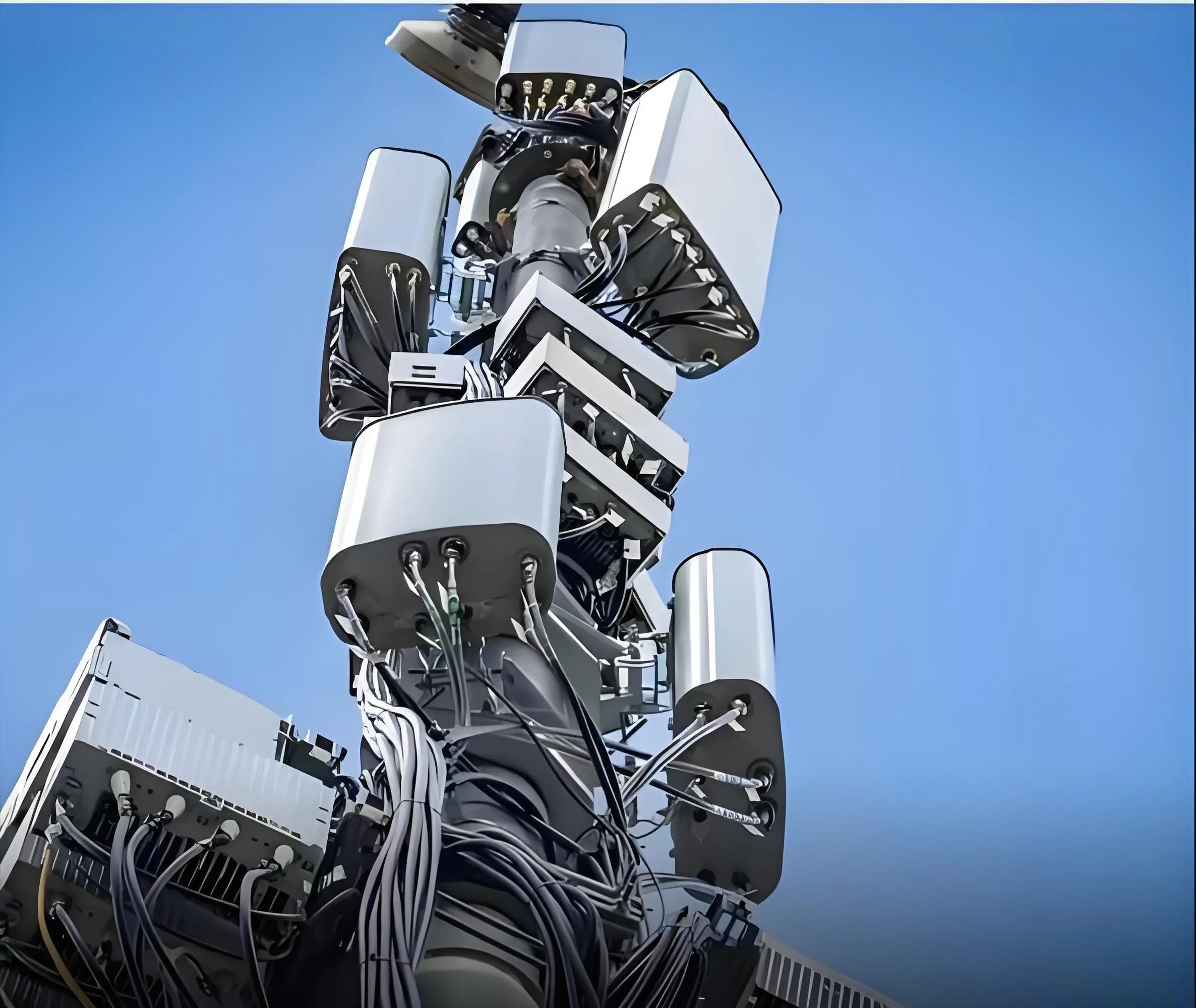
Cellular Communication Infrastructure: The classic application for 4G/LTE and 5G Sub-6GHz macro and micro base station antenna radiating elements, feed networks, and filters.
-
RF Identification Systems: High-performance UHF RFID reader antennas requiring low loss and stable radiation pattern performance from the substrate.
-
Eletrônica Automotiva & Radar: Printed Circuit Boards for 77GHz automotive radar sensors (por exemplo, corner radar, forward-facing radar), where stable Dk is crucial for beamforming accuracy.
-
Satellite Communication & Broadcast: Low-Noise Amplifier (LNA) and down-converter circuits in VSAT terminals and LNBs.
-
General High-Performance RF Modules: Point-to-point microwave backhaul, test instrumentation, medical imaging equipment, and any field requiring high-performance RF PCBs.

Escolha UGPCB: Your Trusted Partner in High-Frequency PCBs
We provide not only genuine Rogers RO4725JXR laminates but also end-to-end technical solutions:
-
Technical & Supply Chain Assurance: As an authorized partner, we guarantee reliable material sourcing with performance matching the datasheet.
-
In-Depth PCB Design Support: Free stack-up design, impedance calculation, and Design for Manufacturability (Dfm) analysis to minimize your design risks.
-
Proven Hybrid Dielectric Board Expertise: Extensive experience in manufacturing high-frequency hybrid PCBs ensures perfect bonding between RO4725 and FR-4 for robust, reliable structures.
-
Rapid Response & Flexible Delivery: De Prototipagem de PCB to quick-turn low/medium-volume production, we offer highly competitive lead times.