

What is a 12L 2+N+2 HDI PCB?
A 12L 2+N+2 HDI PCB refers to a twelve-layer Interconexión de alta densidad (IDH) placa de circuito impreso, featuring two core layers flanked by N signal layers and another two core layers. This configuration allows for high density interconnections, making it suitable for advanced electronic applications. The “2+N+2” designation indicates the arrangement of the core and signal layers.

Consideraciones de diseño
Designing a 12L 2+N+2 HDI PCB involves several critical factors:
- Apilamiento de capas: Proper alignment of the core and signal layers to ensure optimal electrical performance.
- Trace and Space: Minimal trace width and space of 3mil/3mil to accommodate fine features.
- Hole Sizes: Mechanical holes as small as 0.2mm and laser holes down to 0.1mm for precise component placement.
- Espesor de cobre: Varied copper thickness with inner layers at 1OZ and outer layers at 0.5OZ to balance conductivity and flexibility.
¿Cómo funciona??
The functionality of a 12L 2+N+2 PCB HDI relies on its multilayer structure and the use of high-density interconnects. Each layer serves a specific purpose:
- Core Layers: Provide structural integrity and act as the foundation for signal layers.
- Capas de señal: Carry electrical signals between components.
- Tratamiento superficial: Immersion gold plus OSP ensures excellent solderability and long-term reliability by preventing oxidation.
Aplicaciones y clasificaciones


Materiales y rendimiento
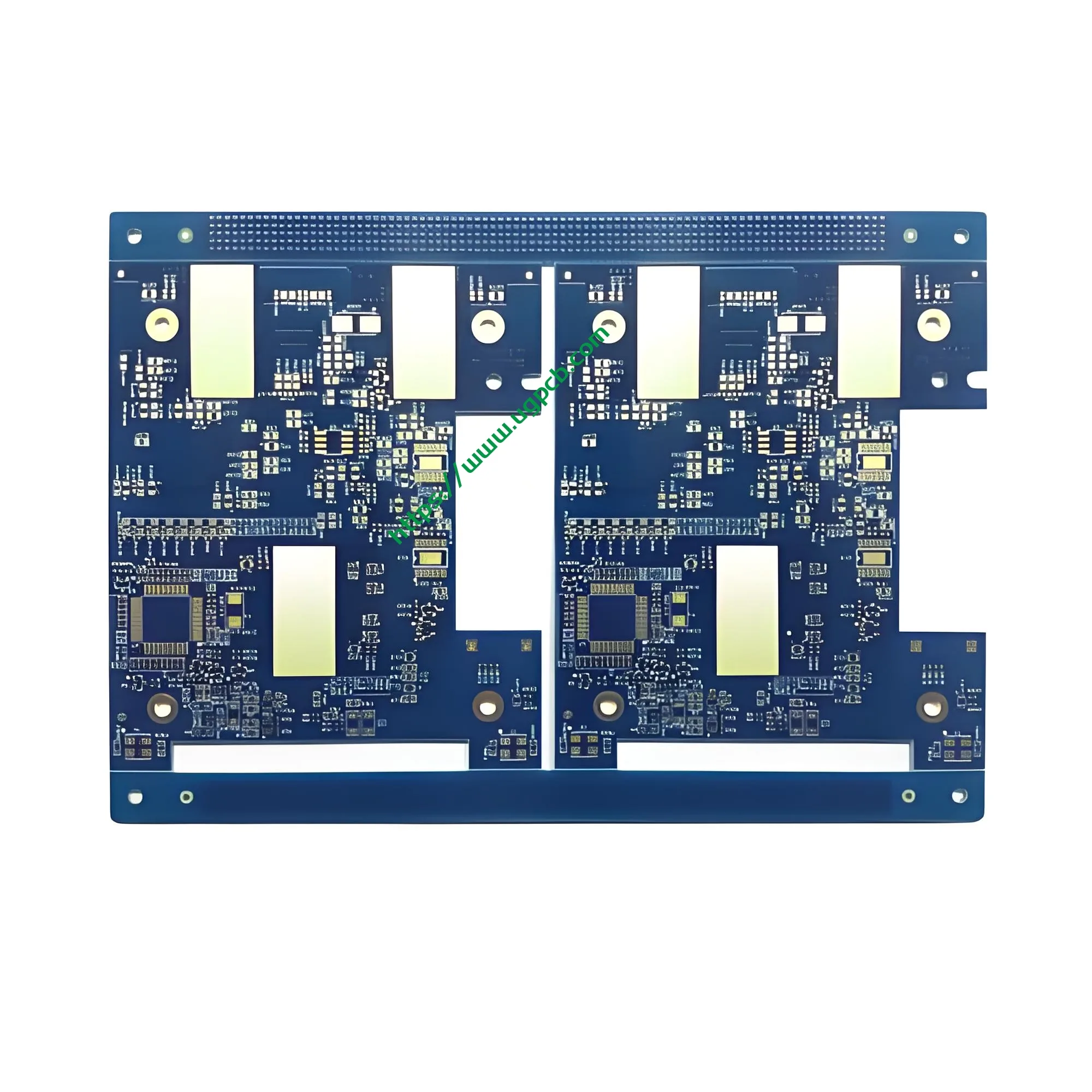
Constructed from FR-4 ITEQ, these PCBs offer excellent thermal stability and mechanical strength. The blue/white color scheme aids in visual inspection and troubleshooting. The finished thickness of 1.6mm provides a robust yet flexible board suitable for intricate designs.
Estructura y características
The unique structure of a 12L 2+N+2 HDI PCB includes:
- Twelve Layers: Two core layers, N signal layers, and another two core layers.
- High Density Interconnects: Allow for complex routing and minimal space usage.
- Tratamiento superficial: Immersion gold plus OSP enhances conductivity and protects against corrosion.
Proceso de producción
The manufacturing process involves several sophisticated steps:
- Preparación de material: Selecting high-quality FR-4 substrate and copper foils.
- Apilamiento de capas: Arranging the layers in a precise order to achieve the desired “2+N+2” configuration.
- Vinculación: Usar calor y presión para unir las capas..
- Aguafuerte: Aplicar grabador para eliminar el exceso de cobre., dejando sólo los caminos conductores deseados.
- Enchapado: Adding a thin layer of metal to improve conductivity and solderability.
- Tratamiento superficial: Applying immersion gold plus OSP to protect against oxidation and enhance solderability.
- Control de calidad: Realizar inspecciones y pruebas exhaustivas para garantizar que cada placa cumpla con estrictos estándares de calidad..


Casos de uso y escenarios
12L 2+N+2 HDI PCBs are ideal for use in intelligent digital products where miniaturization and high performance are critical. Las aplicaciones comunes incluyen:
- Teléfonos inteligentes: Permitir diseños más delgados sin comprometer la funcionalidad o el rendimiento.
- Tabletas: Proporcionar conectividad confiable para la transferencia y el procesamiento de datos de alta velocidad.
- Dispositivos portátiles: Admite diseños compactos y mantiene un rendimiento y una durabilidad sólidos.
- Reproductores multimedia portátiles: Garantizar capacidades de procesamiento de audio y vídeo de alta calidad en un factor de forma pequeño.
En conclusión, the 12L 2+N+2 HDI PCB represents a pinnacle of innovation in PCB technology, ofreciendo una densidad inigualable, actuación, y confiabilidad para las aplicaciones electrónicas de consumo más exigentes.