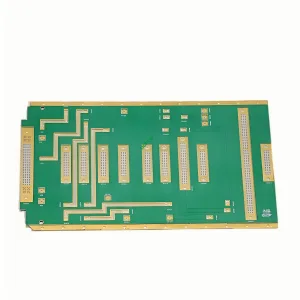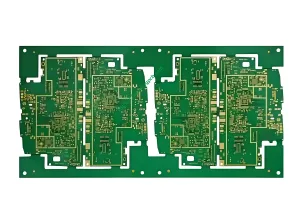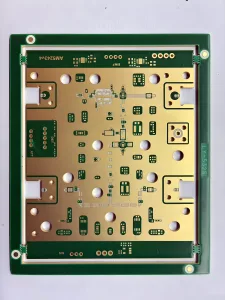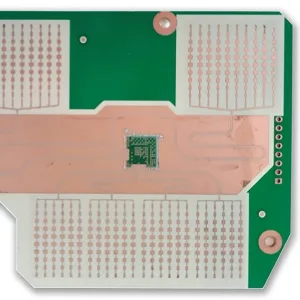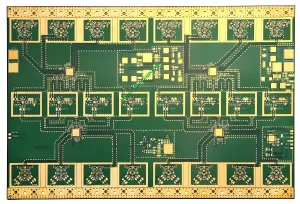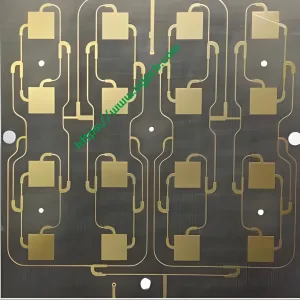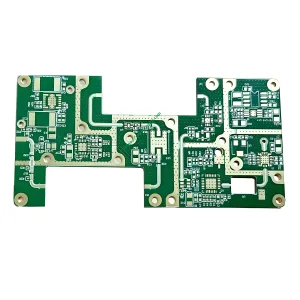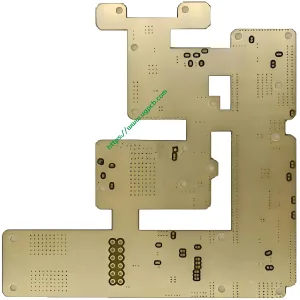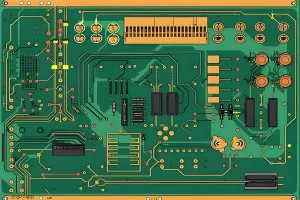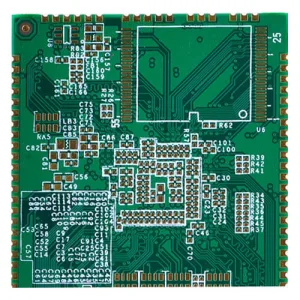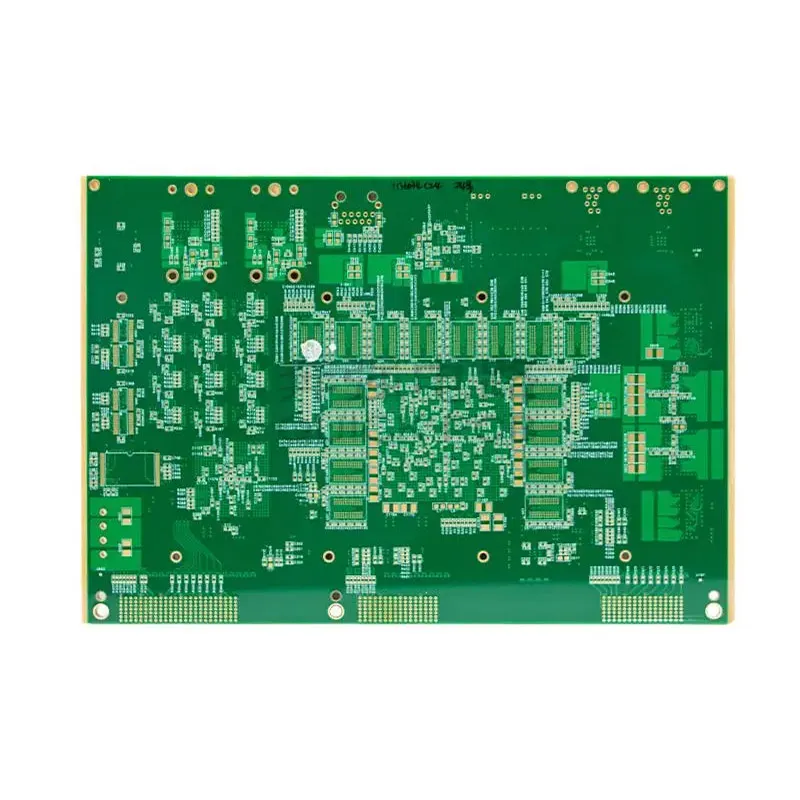
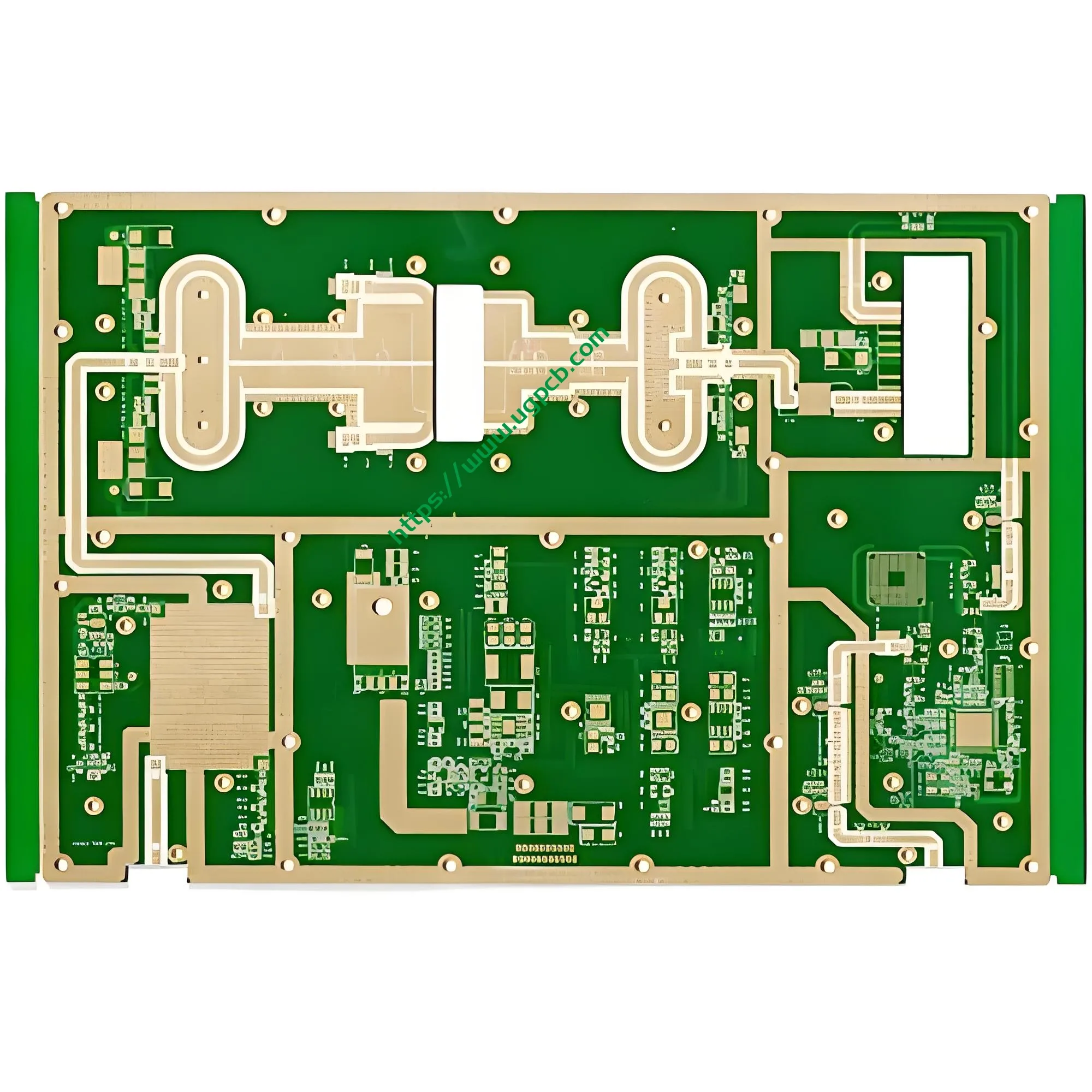
With the rapid growth of 5G communication, رادار الموجة المليمترية, والاتصالات عبر الأقمار الصناعية, تصميم ثنائي الفينيل متعدد الكلور engineers face a classic dilemma. Using high-end high-frequency materials like روجرز RO4350B for the entire board gives excellent electrical performance but becomes too expensive. Using standard FR4 for the whole board saves cost, but high-frequency signal loss is high and the dielectric constant is unstable.
UGPCB’s Rogers RO4350B+FR4 high frequency hybrid board solves this problem perfectly. This article covers product overview, إرشادات التصميم, مبادئ العمل, المعلمات التقنية, عملية التصنيع, والتطبيقات. It provides a reliable reference for RF engineers and purchasing decision-makers.
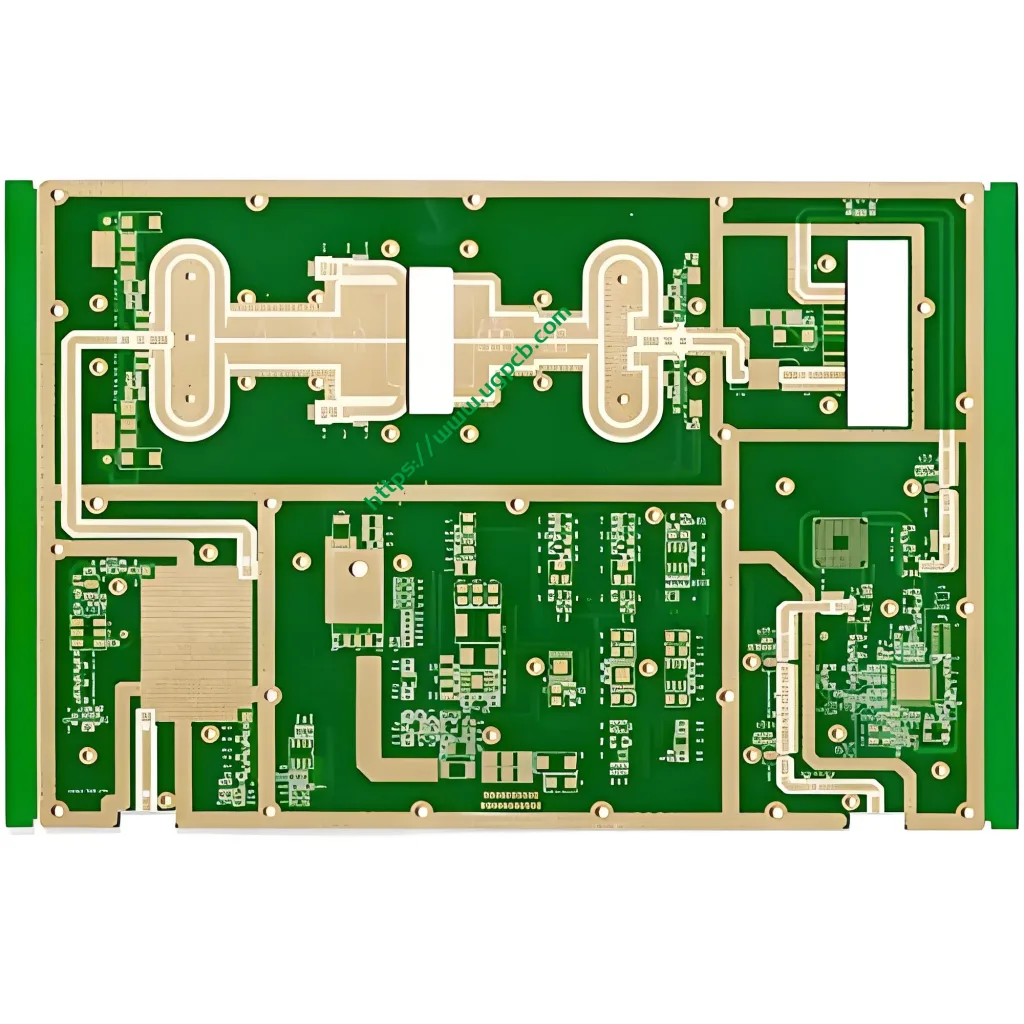
1. نظرة عامة على المنتج: What is a Rogers RO4350B+FR4 High Frequency Hybrid PCB?
1.1 تعريف
A Rogers RO4350B+FR4 high frequency hybrid PCB uses both Rogers RO4350B high frequency laminate and standard FR-4 epoxy glass fabric on the same circuit board. UGPCB’s product uses a 4-layer symmetrical stack-up: two outer layers of Rogers RO4350B for RF signal routing, and two inner layers of FR4 for power distribution and ground planes. This creates a standard “signal – ground – power – signal” كومة المتابعة.
1.2 Core Value Proposition
هذا ثنائي الفينيل متعدد الكلور الهجين solution delivers precise balance between performance and cost. It uses high-performance Rogers material only on the outer layers where high frequency signals travel. It uses low-cost FR4 on the inner layers. This significantly reduces total تصنيع ثنائي الفينيل متعدد الكلور cost without sacrificing RF performance. Industry estimates show a 30%–50% material cost reduction compared to a full Rogers board.
2. المعلمات التقنية الرئيسية (Rogers Official Data & UGPCB Specs)
| المعلمة | قيمة | حالة الاختبار / معيار | مصدر |
|---|---|---|---|
| Material combination | 2 layers Rogers RO4350B + 2 layers FR4 | 4-layer symmetrical stack-up | UGPCB |
| Finished board thickness | 1.2 مم | — | UGPCB |
| سمك رقائق النحاس | 1 أوز الخارجي / 1 أوز الداخلية | Finished copper | UGPCB |
| سمك العزل الكهربائي | 0.508 مم | — | UGPCB |
| Dielectric constant Dk | 3.48 ± 0.05 @ 10 GHz | IPC-TM-650 | ورقة بيانات روجرز الرسمية |
| Dissipation factor Df | 0.0037 @ 10 GHz | IPC-TM-650 | ورقة بيانات روجرز الرسمية |
| Thermal conductivity λ | 0.69 واط / م · ك عند 50 درجة مئوية | أستم D5470 | ورقة بيانات روجرز الرسمية |
| تصنيف القابلية للاشتعال | أول 94 V-0 | أول 94 | ورقة بيانات روجرز الرسمية |
| Volume resistivity ρ_v | 1.2 × 10¹⁰ Mohm·cm | — | ورقة بيانات روجرز الرسمية |
| Surface resistivity ρ_s | 5.7 × 10⁹ Mohm | — | ورقة بيانات روجرز الرسمية |
| المحور Z CTE | 32 جزء في المليون/درجة مئوية | -55درجة مئوية إلى 288 درجة مئوية | ورقة بيانات روجرز الرسمية |
| كثافة | 1.9 جم/سم3 | — | ورقة بيانات روجرز الرسمية |
3. Design Guidelines for Rogers RO4350B+FR4 Hybrid PCBs
Engineers must focus on these key technical points when designing a hybrid PCB with Rogers RO4350B and FR4.
3.1 Impedance Matching Design
The dielectric constant difference between RO4350B and FR4 is significant. RO4350B has Dk = 3.48 في 10 GHz, while standard FR4 has Dk between 4.2 و 4.8. Signal line impedance changes depending on the material layer.
Example for a 50Ω microstrip line:
- On RO4350B layer (دك=3.48, 1 أوز النحاس), 50Ω trace width ≈ 0.4 مم
- On FR4 layer (Dk≈4.5, same copper), 50Ω trace width ≈ 0.25 مم
Design recommendations:
- Keep high-frequency signal traces entirely within the RO4350B signal layers. Avoid crossing material boundaries where impedance changes suddenly.
- If a cross-layer transition is unavoidable, use tapered trace width at the RO4350B-FR4 boundary. Or use electromagnetic simulation to minimize signal reflection caused by the sudden Dk change.
3.2 Symmetrical Stack-up Design
Preventing board warpage is a core concern in hybrid stack-up design. RO4350B has X/Y axis CTE of about 10/12 جزء في المليون/درجة مئوية, while FR4 has about 16 جزء في المليون/درجة مئوية. This mismatch is significant.
UGPCB strictly follows a symmetrical stack-up principle. We use a copper thickness distribution of:
1 OZ RO4350B (top signal) - 0.5 OZ FR4 (أرضي) - 0.5 OZ FR4 (قوة) - 1 OZ RO4350B (bottom signal).
This makes thermal stress distribution even during lamination and greatly reduces warpage risk.
3.3 Transmission Line Selection for RF PCBs
For high frequency applications, we recommend grounded coplanar waveguide (GCPW) instead of traditional microstrip lines. GCPW places dense via fences on both sides of the signal line. This effectively shields crosstalk and reduces electromagnetic interference. It works especially well for 5G millimeter-wave and 77 رادار السيارات جيجا هرتز.
3.4 Drilling and Desmear Process
UGPCB uses drilling parameters recommended by Rogers for RO4350B. We also optimize the desmear process for the mixed material. FR4 resin residue can cause rough hole walls. لذلك, we extend plasma desmear time by about 30% compared to pure Rogers boards. This ensures clean hole walls and high-quality metallization.
4. Working Principle and Electrical Performance
4.1 Dielectric Constant Stability
RO4350B belongs to Rogers’ RO4000 series hydrocarbon/ceramic filled laminates. Its key feature is tight dielectric constant tolerance of ±0.05 over a wide frequency range. The Dk variation with temperature is only +50 جزء في المليون/درجة مئوية (أقل من 0.4% change from -50°C to 150°C). This ensures stable operation of communication equipment across the full temperature range.
4.2 Signal Loss Analysis
في 10 GHz, the dissipation factor Df of RO4350B is 0.0037. This is much lower than that of ordinary FR4 at the same frequency (Df ≈ 0.015–0.025). This low-loss property maintains signal integrity over long distances for millimeter-wave signals. In the 5G millimeter-wave band (فوق 24 GHz), UGPCB’s hybrid board typically shows insertion loss below 0.5 dB/inch and return loss above 15 ديسيبل (users should verify with a VNA on their specific design).
4.3 Thermal Conductivity and Thermal Management
RO4350B لديه الموصلية الحرارية 0.69 ث / م · ك, about twice that of ordinary FR4 (≈0.3 W/m·K). This allows the hybrid high frequency PCB to efficiently conduct heat from high-power devices like power amplifiers (السلطة الفلسطينية) to copper layers and thermal vias, then spread it through the FR4 inner copper planes. This gives an excellent thermal management solution for RF power amplifier modules.
5. تصنيف المنتج
| البعد التصنيفي | فئة |
|---|---|
| Material type | Hybrid dielectric PCB / High frequency hybrid laminated board |
| عدد الطبقات | 4-طبقة ثنائي الفينيل متعدد الكلور متعدد الطبقات |
| Application frequency | الترددات اللاسلكية/الميكروويف ثنائي الفينيل متعدد الكلور, covering up to millimeter-wave bands (79 GHz max) |
| Manufacturing process | Mixed lamination multilayer |
| تصنيف القابلية للاشتعال | أول 94 V-0 rated PCB |
UGPCB manufactures and tests according to IPC-6012 (مواصفات التأهيل والأداء للألواح المطبوعة الصلبة) and IPC-4101 (مواصفات المواد الأساسية للوحات المطبوعة الصلبة ومتعددة الطبقات).
6. Stack-up Structure of the 4-Layer 1.2mm Hybrid PCB
UGPCB’s 1.2mm thick 4-layer Rogers RO4350B+FR4 high frequency hybrid board uses a standard symmetrical stack-up:
- L1 (الطبقة العليا): روجرز RO4350B, 1 OZ finished copper – RF signal layer
- L2 (طبقة 2): FR4, 1 OZ copper – Ground plane
- L3 (طبقة 3): FR4, 1 OZ copper – Power distribution / low-frequency control signals (طائرة السلطة)
- L4 (الطبقة السفلية): روجرز RO4350B, 1 OZ finished copper – RF signal layer
Total dielectric thickness is 0.508 مم. Finished board thickness is 1.2 مم.
الانتهاء من السطح: يوافق (الذهب الغمر بالنيكل غير الكهربائي) – meets high-reliability soldering and oxidation resistance requirements.
7. تحليل المواد
7.1 Rogers RO4350B High Frequency Material
RO4350B is a composite laminate of hydrocarbon resin, حشو السيراميك, and woven glass fabric. Its main advantages include:
- توافق العملية: Fabrication is nearly the same as FR-4. No special hole wall treatment needed (unlike PTFE materials). Manufacturing cost is much lower than traditional microwave laminates.
- أول 94 V-0 تصنيف القابلية للاشتعال: Suitable for active devices and high-power RF designs.
- انخفاض المحور Z CTE (32 جزء في المليون/درجة مئوية): Ensures high reliability of plated through holes (PTH) in multilayer circuits.
7.2 FR4 Substrate
We use high Tg FR4 material (تيراغرام ≥ 170 درجة مئوية) to match the thermal processing window of Rogers RO4350B. FR4 acts as the power and ground layers in the hybrid board. Its cost is only 1/5 ل 1/3 that of Rogers material, greatly reducing total ثنائي الفينيل متعدد الكلور manufacturing cost.
8. Manufacturing Process for Hybrid High Frequency PCBs
UGPCB follows a strict quality control process for high frequency hybrid boards:
- Cutting and browning: Apply browning treatment to RO4350B cores and FR4 cores to improve layer adhesion.
- Inner layer circuit patterning: Create ground and power layer patterns on inner FR4 layers.
- Hybrid lamination (خطوة حاسمة): Use a stepped temperature lamination profile (على سبيل المثال, 120°C → 170°C → 220°C). Select prepregs compatible with both materials. Strictly control ramp rate and press time to avoid delamination or voids.
- Drilling and desmear: Use Rogers-recommended drilling parameters. Increase plasma desmear time by about 30% for mixed material to ensure clean hole walls.
- Plated through hole (PTH): Bake boards at 150°C for 2 hours before electroless copper deposition to compensate for moisture absorption differences (FR4 water absorption >0.1%, 4350 مليار ريال عماني <0.02%).
- Outer layer circuit patterning: Form signal traces on top and bottom RO4350B layers.
- Solder mask and surface finish: No solder mask on antenna openings. Use ENIG (الذهب الغمر بالنيكل غير الكهربائي).
- Electrical test and reliability inspection: 100% اختبار كهربائي, الهيئة العربية للتصنيع التفتيش البصري, X-ray layer-to-layer alignment check, plus flatness measurement and correction before shipment.
9. Performance and Features of the Hybrid PCB
9.1 Core Performance Values
- Dielectric constant Dk: 3.48 ± 0.05 @ 10 GHz (Rogers official)
- Dissipation factor Df: 0.0037 @ 10 GHz
- الموصلية الحرارية: 0.69 واط / م · ك عند 50 درجة مئوية (أستم D5470)
- نطاق درجة حرارة التشغيل: -50درجة مئوية إلى +150 درجة مئوية
- تصنيف القابلية للاشتعال: أول 94 V-0
- مقاومة الحجم: 1.2 × 10¹⁰ Mohm·cm
- Surface resistivity: 5.7 × 10⁹ Mohm
- كثافة: 1.9 جم/سم3
9.2 ميزات المنتج (Why choose this 4-layer RF microwave PCB)
- ✅ Best performance-cost balance: Saves 30%–50% material cost vs. full Rogers solution.
- ✅ ثابت عازل مستقر: ±0.05 tight tolerance, minimal variation with temperature/frequency.
- ✅ Low-loss transmission: Df=0.0037 @ 10 GHz, excellent millimeter-wave signal integrity.
- ✅ FR4-compatible process: No special hole wall treatment, high manufacturing efficiency.
- ✅ Good thermal management: الموصلية الحرارية 0.69 ث / م · ك, effective heat dissipation.
- ✅ V-0 تصنيف القابلية للاشتعال: يلتقي ماي 94 V-0 safety standard.
- ✅ Flexible customization: 1.2 سمك مم, supports multiple surface finishes.
10. Applications of Rogers RO4350B+FR4 High Frequency Hybrid PCBs
Thanks to excellent RF performance and cost advantages, this hybrid PCB serves many key fields:
10.1 5البنية التحتية للاتصالات
- 5G macro base station antenna boards and power amplifier modules (PA layer uses RO4350B, power/ground layers use high Tg FR4 with 2+ oz thick copper)
- Microwave point-to-point (P2P) connection equipment
- Satellite communication ground terminal LNBs
10.2 Automotive Electronics and Autonomous Driving
- 77 GHz / 79 GHz automotive millimeter-wave radar – core sensing component for ADAS and autonomous driving; requires AEC-Q100 qualification
- مركبة إلى كل شيء (V2X) وحدات الاتصالات
- 24 GHz blind spot detection radar sensors
10.3 وحدات الواجهة الأمامية للترددات اللاسلكية
- مضخمات الطاقة (السلطة الفلسطينية) and low noise amplifiers (الجيش الوطني الليبي) وحدات
- RF transceiver front-ends
- Millimeter-wave phased array antenna T/R modules
10.4 المعدات الصناعية والطبية
- RFID readers and tags
- High frequency signal processing circuits in medical imaging (التصوير بالرنين المغناطيسي, CT)
- Precision inspection and measurement instruments
10.5 IoT and Consumer Electronics
- 5G CPE (customer premises equipment)
- Wireless inductive communication systems
- Wi-Fi 6E/7 antenna modules
11. Why Choose UGPCB for Your High Frequency Hybrid PCB?
UGPCB has mature process systems and rich practical experience in high frequency hybrid board تصنيع.
- 🔧 Mature process: Master core hybrid lamination techniques – stepped press cycles, إزالة البلازما, layer-to-layer alignment control.
- 📋 100% tested: Full process quality control, 100% اختبار كهربائي, AOI optical inspection, X-ray alignment verification.
- ⚡ Fast delivery: Sufficient raw material stock of RO4350B and FR4 ensures controllable lead times.
- 📞 Professional technical support: One-stop engineering support from stack-up design consulting to impedance simulation.
- 🏭 Extensive manufacturing experience: Many years in ثنائي الفينيل متعدد الكلور عالي التردد إنتاج, serving global customers.
Get a Quick Quote & Technical Consultation
UGPCB offers free impedance design consulting and high-precision sample manufacturing.
📧إرسال الاستفسارات إلى: sales@ugpcb.com
📝Request a fast quote: Please provide Gerber files, مواصفات المواد (RO4350B+FR4), عدد الطبقات (4 طبقات), سمك اللوح (1.2مم), سمك النحاس (1 أوقية), and any other process requirements
🔧الدعم الفني: Contact UGPCB’s engineering team for stack-up design, impedance matching calculations, and hybrid lamination process parameters.
💡 Inquiry tip: To ensure an accurate quote, include complete Gerber files (with drill layer), stack-up requirements, minimum trace width/spacing, and surface finish specification.
تنصل & Data Accuracy Statement
All technical parameters in this document have been manually verified against the Rogers official datasheet (2025-2026 طبعة), معايير IPC, and UL certification documentation. Core data – Dk=3.48 (@10 جيجا هرتز), مدافع = 0.0037 (@10 جيجا هرتز), الموصلية الحرارية 0.69 ث / م · ك (@50°C per ASTM D5470) – come directly from the Rogers RO4350B datasheet. This article follows fair use guidelines for citation and has been reasonably adapted and restructured.
© 2026 UGPCB. All Rights Reserved. | High Frequency Hybrid PCB Design & Manufacturing Expert