Infrared Spectrometer
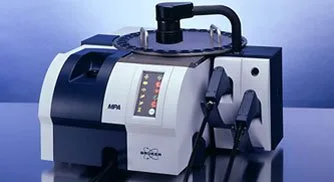
Infrared spectrometer is an instrument that uses the absorption characteristics of substances to infrared radiation of different wavelengths to analyze molecular structure and chemical composition. An infrared spectrometer is usually composed of a light source, a monochromator, a detector, and a computer processing information system. According to the different spectroscopic devices, it can be divided into dispersion type and interference type. For the dispersion-type dual optical path optical zero balance infrared spectrophotometer, when the sample absorbs a certain frequency of infrared radiation, the vibration energy level of the molecule transitions, and the light of the corresponding frequency in the transmitted beam is weakened, resulting in a reference. The intensity difference between the light path and the corresponding radiation of the sample light path, so as to obtain the infrared spectrum of the measured sample.
1. Theory
The infrared part of the electromagnetic spectrum can be divided into near-infrared light, mid-infrared light, and far-infrared light according to its relationship with the visible spectrum. Far-infrared light (Di 400-10 cm⁻¹) is adjacent to microwaves and has low energy, which can be used for rotation spectroscopy. Mid-infrared light (circa 4000-400 cm⁻¹) can be used to study fundamental vibrations and associated rotation-vibration structures. Higher energy near-infrared light (14000-4000 cm⁻¹) can excite overtones and harmonic vibrations. Infrared spectroscopy works on the basis that chemical bonds have different frequencies due to vibrational energy levels. The resonant or vibrational frequency depends on the shape of the molecular equipotential surfaces, the atomic mass, and ultimately the associated vibrational coupling. In order for a molecule’s vibrational modes to become active in the infrared, there must be a permanent dipole change. Specificamente, in the Born-Oppenheimer harmonic oscillator approximation, Per esempio, when the molecular Hamiltonian energy corresponding to the electronic ground state is approximated by a harmonic oscillator near the equilibrium state of the molecular geometry, the potential surface of the molecular electronic energy ground state is determined by the natural oscillation mode, which determines the resonant frequency. Tuttavia, the resonant frequency is related to the strength of the bond and the atomic masses at both ends of the bond after an approximation. In questo modo, vibration frequencies can be associated with specific key patterns. Simple diatomic molecules have only one kind of bond, and that is stretching. More complex molecules may have many bonds, and vibrations may occur in conjugation, resulting in infrared absorption at certain characteristic frequencies that can be associated with chemical groups. The CH₂ group, which is often found in organic compounds, can vibrate in six ways: “symmetrical and asymmetrical stretching,” “scissor swinging,” “left and right swinging,” “up and down swinging,” E “twisting.”
2. Principio
The schematic diagram of the Fourier transform infrared spectrometer, known as the third-generation infrared spectrometer, è il seguente: It uses a Michelson interferometer to interfere with two beams of polychromatic infrared light whose optical path difference changes at a certain speed, forming interference light, and then interacting with the sample. The detector sends the obtained interference signal to the computer for mathematical processing of Fourier transformation, and restores the interferogram into a spectrum.
3. Classificazione
It is generally divided into two categories: one is raster scanning, which is rarely used; the other is Michelson interferometer scanning, called Fourier transform infrared spectroscopy, which is the most widely used. Grating scanning uses a spectroscope to divide the detection light (luce infrarossa) in due travi, one beam as a reference light and the other beam as a probe light to irradiate the sample. Poi, the wavelength of the infrared light is separated by a grating and a monochromator, and scanned and detected one by one. The intensities of the wavelengths are finally integrated into a spectrum. Fourier transform infrared spectroscopy uses a Michelson interferometer to divide the detection light (luce infrarossa) in due travi, which are reflected back to the beam splitter on the moving mirror and the fixed mirror. The two beams are broadband coherent light and will interfere. The coherent infrared light is irradiated on the sample, collected by the detector, and the infrared interferogram data containing the sample information is obtained. After the data is Fourier transformed by the computer, the infrared spectrum of the sample is obtained. Fourier transform infrared spectroscopy has the characteristics of a fast scanning rate, alta risoluzione, stable repeatability, ecc., and is widely used.
4. Campo di applicazione
– Perform compound identification and structural analysis of unknown compounds.
– Carry out quantitative analysis of compounds to study the transient relationship between chemical reaction kinetics, crystal transition, phase transition, material tension, and structure.
– Continuous detection of industrial processes and air pollution.
– Monitoring of free silica in the coal industry.
– Health and quarantine, pharmacy, cibo, environmental protection, public security, petroleum, chemical industry, optical coating, optical communication, scienza dei materiali, e molti altri campi.
– Jewelry industry detection, crystal quartz hydroxyl measurement, polymer composition analysis, drug analysis, ecc.
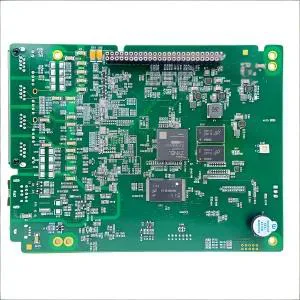
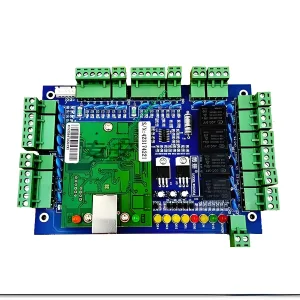
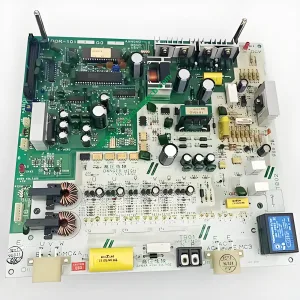
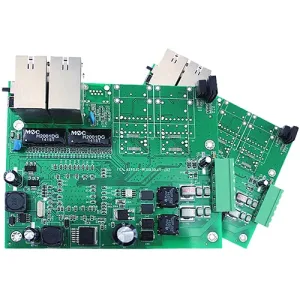
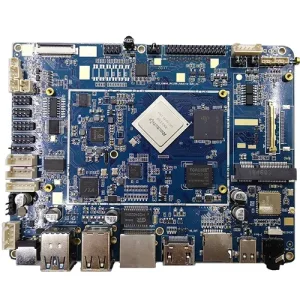
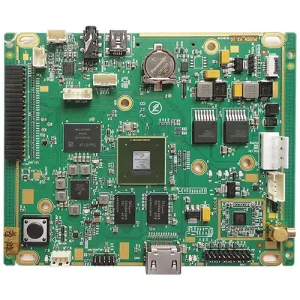
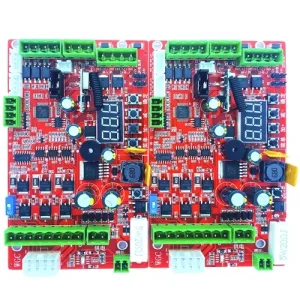
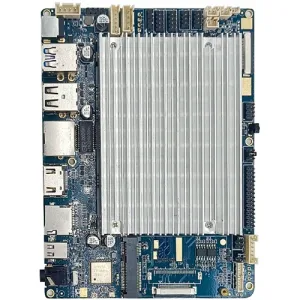
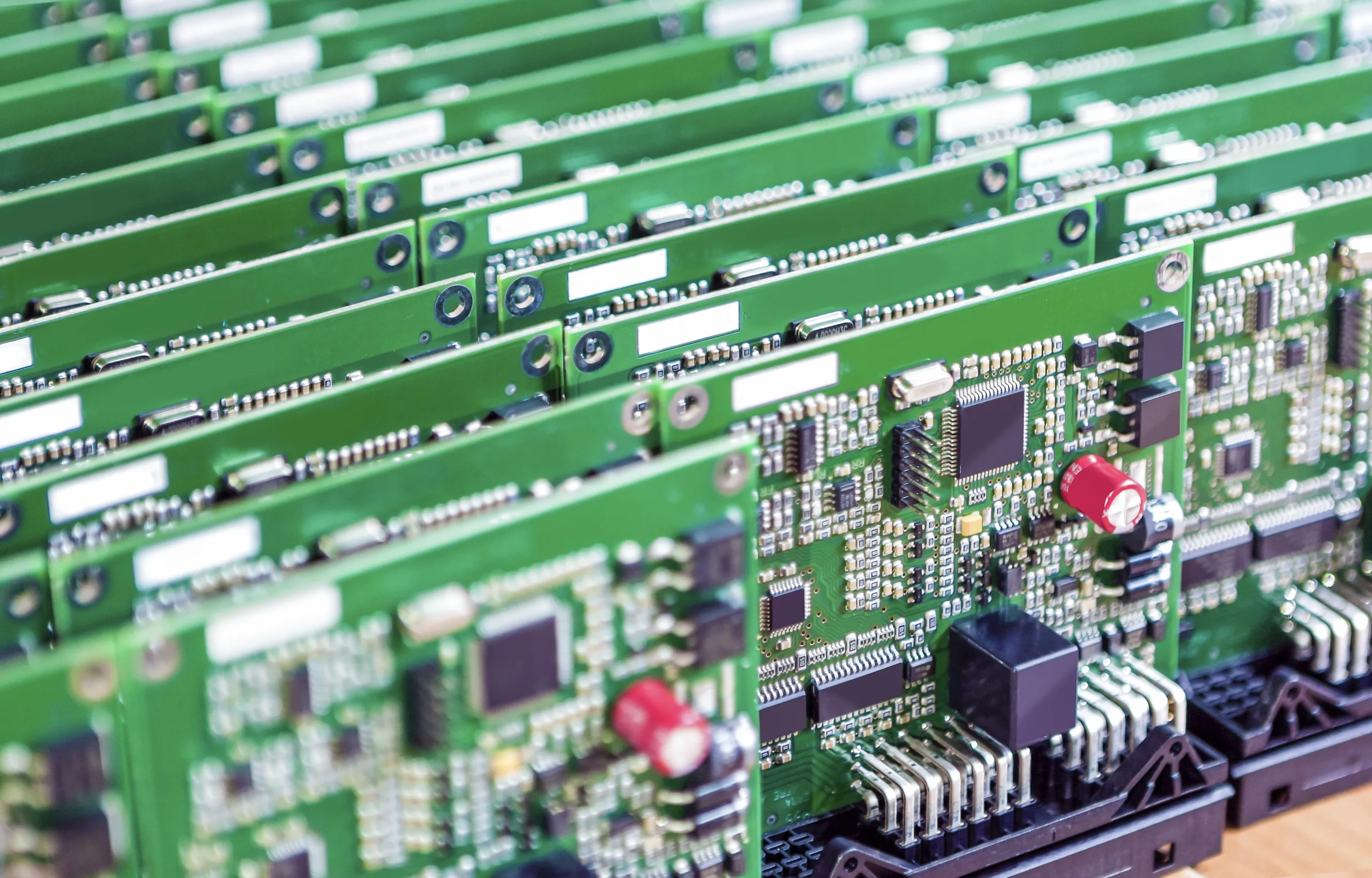
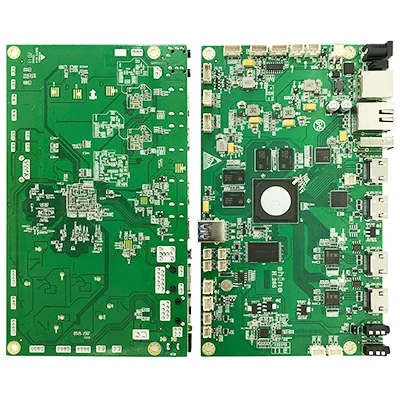
We provide Infrared Spectrometer Turnkey PCB Assembly services. UGPCB è la tua azienda unica di assemblaggio PCB chiavi in mano.