LOGO UGPCB
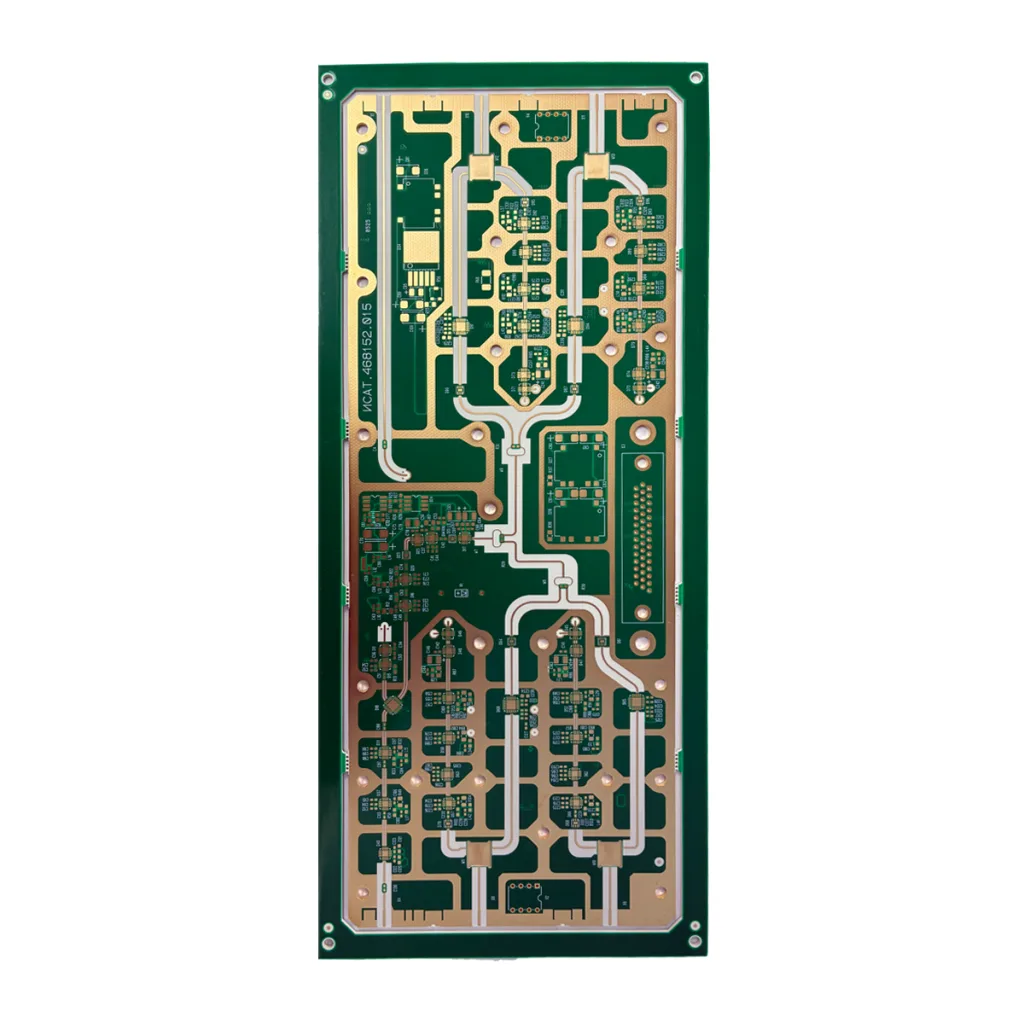
Professional 8-Layer Rogers 4350B High-Frequency PCB for Demanding RF & Microwave Applications
In the rapidly advancing fields of wireless communications, aerospaziale, and high-end test instrumentation, PCB standard fall short of meeting extreme demands for signal integrity, bassa perdita, and thermal stability. UGPCB leverages deep technical expertise to present this 8-Layer High-Frequency PCB costruito su Rogers 4350B laminate. Engineered to address core challenges in RF applications, it is more than an interconnect—it’s a critical foundation ensuring stable performance and signal purity in advanced electronic systems.
Panoramica del prodotto & Definizione
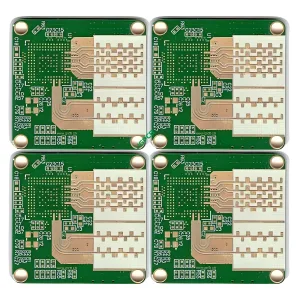
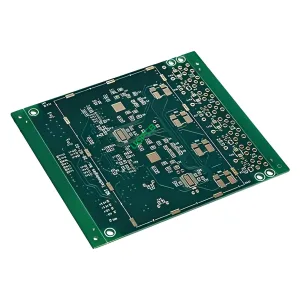
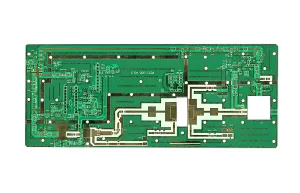
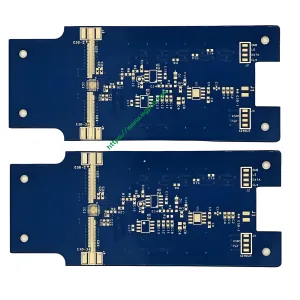
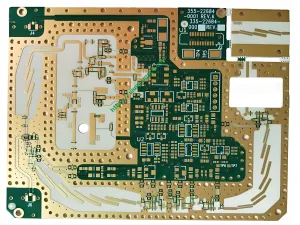
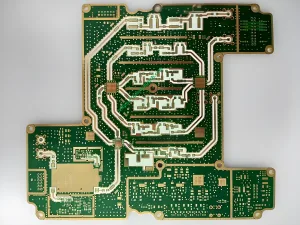
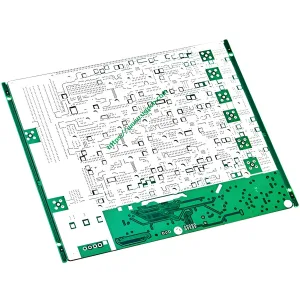
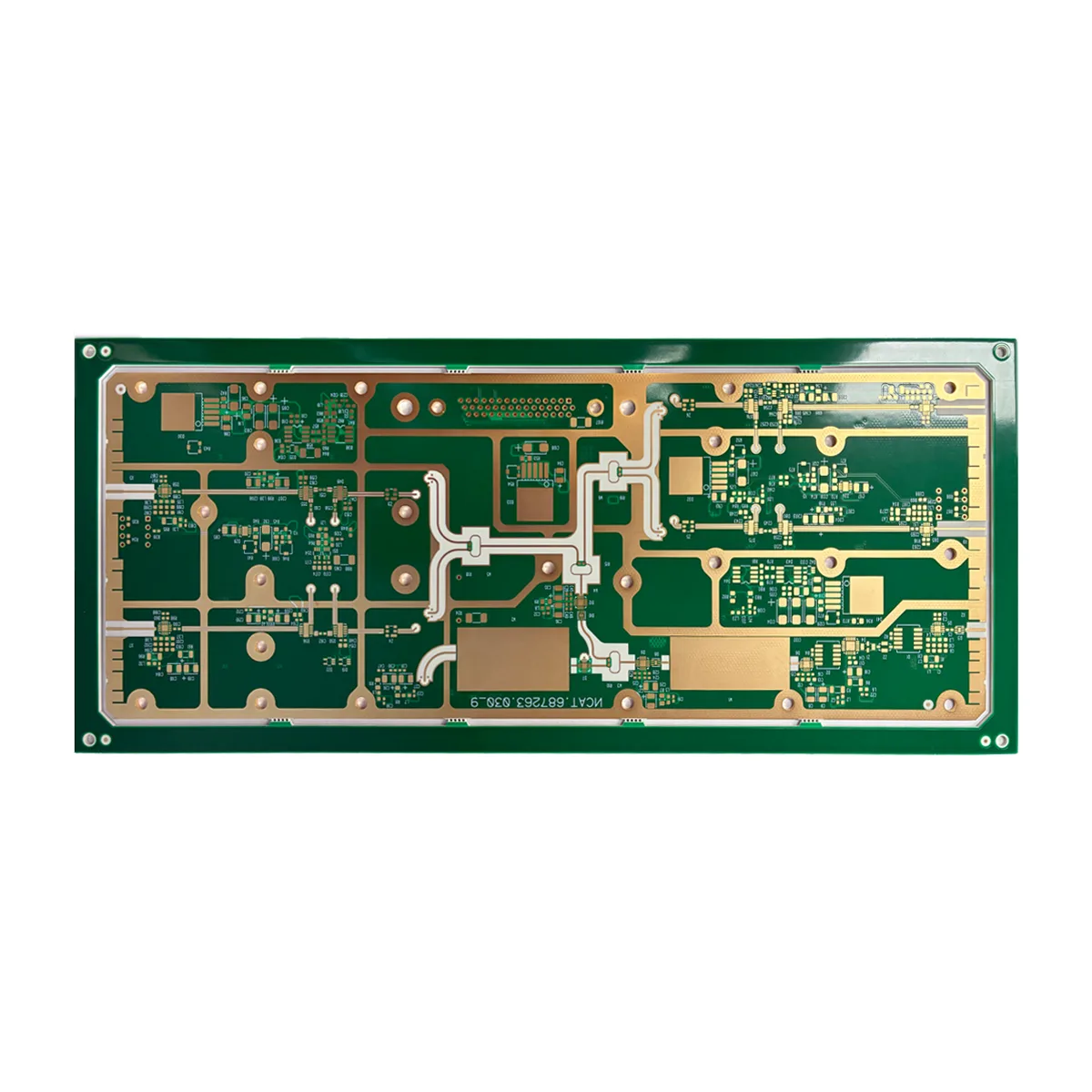
This product is an 8-layer rigid high-frequency Printed Circuit Board (PCB), utilizing the industry-recognized premium RF material—Rogers 4350b. Through precision multilayer lamination and specialized processing, it achieves high-density integration of complex RF circuits within a 1.65mm board thickness, delivering superior electrical performance control. It is specifically designed for applications requiring bassa perdita, costante dielettrica stabile, and excellent thermal management.
Detailed Specifications & Considerazioni di progettazione
A high-quality PCB starts with precise control over every detail. Below are the core specifications and their design significance:
| Parameter Category | Specifica | Design Rationale & Implication |
|---|---|---|
| Basic Structure | Strati: 8 Strati | Provides ample routing space, supports separate power, terra, and signal planes—essential for Interconnessione ad alta densità (ISU) E Interferenza elettromagnetica (EMI) suppression. |
| Spessore della scheda: 1.65mm | A balanced thickness ensuring mechanical robustness and heat dissipation while accommodating spatial constraints in assemblies. | |
| Materiale principale | Laminato: Rogers 4350b | The cornerstone of high-frequency Progettazione di circuiti stampati. Its low dissipation factor (Df) and stable dielectric constant (Non so) with minimal variation over frequency/temperature are critical for RF/microwave circuit Integrità del segnale. |
| Conductivity | Peso del rame: Interno 1/1 oz, Esterno 1/1 oz | Balanced copper weight ensures consistent current-carrying capacity and impedance control accuracy. 1 oz outer copper aids in heat dissipation. |
| Finitura superficiale | Essere d'accordo (Oro per immersione in nichel chimico), 2μ” | Provides a flat, highly solderable surface with excellent oxidation resistance, ensuring long-term reliability for RF connectors and BGA assemblies. |
| Physical Dimensions | 280mm x 120mm | Suited for medium-sized RF modules or subsystems, balancing integration density and mechanical strength. |
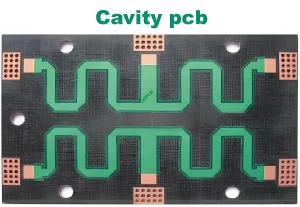
| Processi speciali | Depth-Controlled Milling (Step-down) + Blind Vias | Key for enhanced spatial efficiency and performance. Step-down milling allows varied board heights; blind vias enable high-density interconnect from surface to inner layers, reducing signal crosstalk—a hallmark of advanced RF PCBs. |
Alt tag for suggested technical diagram: Cross-section diagram of 8-layer PCB stackup showing blind vias and step-down milling.
Come funziona & Applicazioni primarie
Principio di lavoro:
Ad alte frequenze (MHz to GHz range), electrical signal transmission behaves more like electromagnetic wave propagation. This PCB leverages the stable dielectric properties of Rogers 4350B to provide a “smooth highway” for these waves, minimizing energy loss (perdita di inserzione) and waveform distortion during transmission. Its precise 8-impilamento degli strati E blind via design ensure controlled characteristic impedance (per esempio., 50Ω or 75Ω) for transmission lines while mitigating interlayer signal reflection and crosstalk.
Key Applications:
-
Wireless Infrastructure: 5G/6G base station antennas, amplificatori di potenza (PAs), Filtri, LNAs.
-
Satellite Comms & Aerospaziale: Satellite transceiver modules, sistemi radar, RF front-ends.
-
High-End Test & Misurazione: Core boards for network analyzers, analizzatori di spettro, signal generators.
-
Elettronica automobilistica: Millimeter-wave radar boards for ADAS.
-
Attrezzatura medica: RF control modules in high-precision imaging systems (per esempio., MRI).
Classificazione scientifica
Per industry and IPC standards, this product is classified as a Alta frequenza, Multilayer Rigid Printed Circuit Board. More specifically, it is an 8-Layer Metal Core PCB with Blind Vias, fabricated on ceramic-filled hydrocarbon/glass weave reinforced laminate (Rogers 4350B series).
Costruzione & Key Performance Features
Structural Analysis:
This PCB employs a classic symmetrical stack-up, comprising multiple signal layers with dedicated power and ground planes. Vias cieco connect the surface to adjacent inner layers, Mentre through-holes provide interconnection through the entire board. Depth-controlled milling creates mechanical recesses for shield can installation or special assembly requirements.
Outstanding Performance Features:
-
Perdita di segnale estremamente bassa: The low dissipation factor of Rogers 4350b at GHz frequencies ensures high-efficiency signal transmission.
-
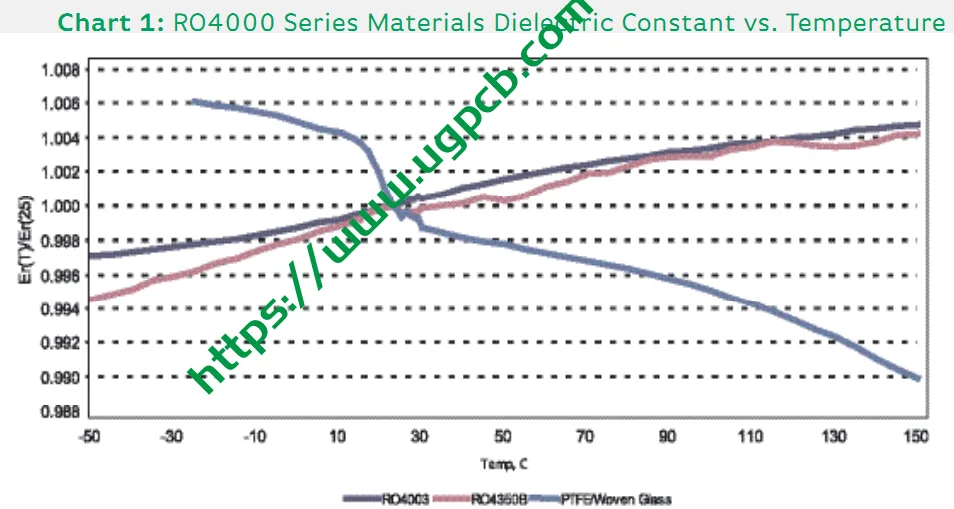
Exceptional Electrical Stability: Excellent thermal coefficient of dielectric constant (TCDk) guarantees consistent performance across a wide temperature range.
-
Superior Thermal Management: Basso coefficiente di espansione termica (Cte) and high thermal conductivity enhance reliability in high-power RF circuits.
-
High-Precision Impedance Control: Achievable tolerance of ±5% or better, thanks to material stability and UGPCB’s advanced process control.
-
High-Reliability Interconnects: Robust 2μ” ENIG finish and precision blind via technology ensure durable connections in harsh environments.
-
Enhanced Design Flexibility: The combination of 8 strati, vie cieche, and step milling supports highly complex and compact RF system design.
Core Manufacturing Process Flow
-
Preparazione del materiale & Inner Layer Fabrication: Rogers 4350B clad laminates are sheared, perforato (for blind vias), plated, patterned, and etched to form inner layer circuits.
-
Layup & Laminazione: Etched inner layer cores and prepreg sheets are aligned in the designed stack-up and bonded under high temperature and pressure.
-
Mechanical Drilling & Placcatura: Through-holes are drilled, followed by electroless and electrolytic copper plating to metallize all holes (PTH and blind vias).
-
Outer Layer Imaging & Placcatura: Outer layer circuit pattern is applied, followed by pattern plating to build up trace and hole copper thickness.
-
Finitura superficiale: Oro per immersione in nichel chimico (Essere d'accordo) process applied to form a 2-microinch nickel-gold protective layer on pads and hole walls.
-
CNC Routing & Step Milling: The board outline is routed, E depth-controlled milling creates step-down areas as per design.
-
Prova elettrica & Ispezione: 100% electrical test (flying probe or fixture) for continuity and isolation, followed by final QA inspection (including impedance coupon testing).
Typical Use Case Scenarios
-
Scenario 1: 5G Massive MIMO Antenna Array Board
In such array boards, densely packed RF channels require minimal mutual interference. This PCB’s stable Dk and blind via design ensure channel isolation and phase coherence, while its superior thermal performance supports prolonged stable operation of PA chips.
Alt tag: 8-layer Rogers 4350B PCB assembly for a 5G Massive MIMO antenna unit. -
Scenario 2: Airborne Radar Signal Processing Front-End
Airborne environments involve large temperature swings and vibration. This PCB’s low TCDk ensures consistent radar performance across altitudes and temperatures, while the 1.65mm thick, robust construction resists vibrational stress.
Why Choose UGPCB for Your High-Frequency PCB?
-
Competenza materiale: We possess in-depth knowledge of processing high-frequency materials like Rogers, ensuring material integrity from storage through fabrication.
-
Advanced Process Capability: Mature processes for blind via registration E depth-controlled milling ensure first-pass success for complex designs.
-
Performance Validation: We provide critical impedance test reports E S-parameter data support using high-end network analyzers, bridging simulation and measurement.
-
Supporto end-to-end: We offer full-cycle technical collaboration—from stack-up & impedance design, Analisi DFM, to volume production—accelerating your time to market.
Ready to Power Your Next RF Project?
Contact a UGPCB engineer today for a comprehensive DFM review and a competitive quote. Submit your stack-up and impedance requirements to start the conversation.