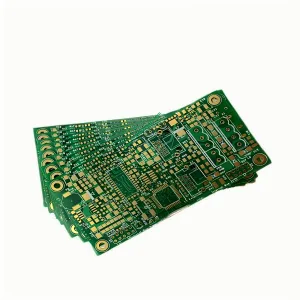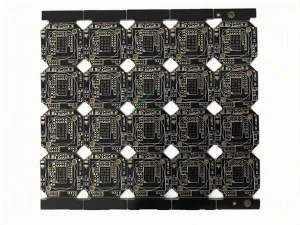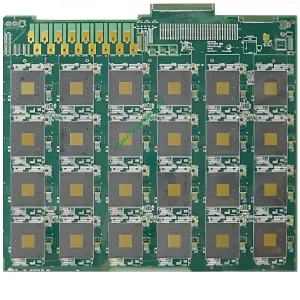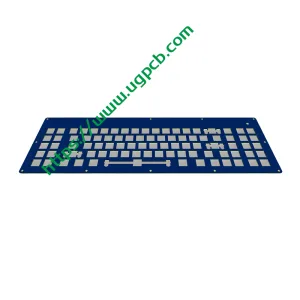
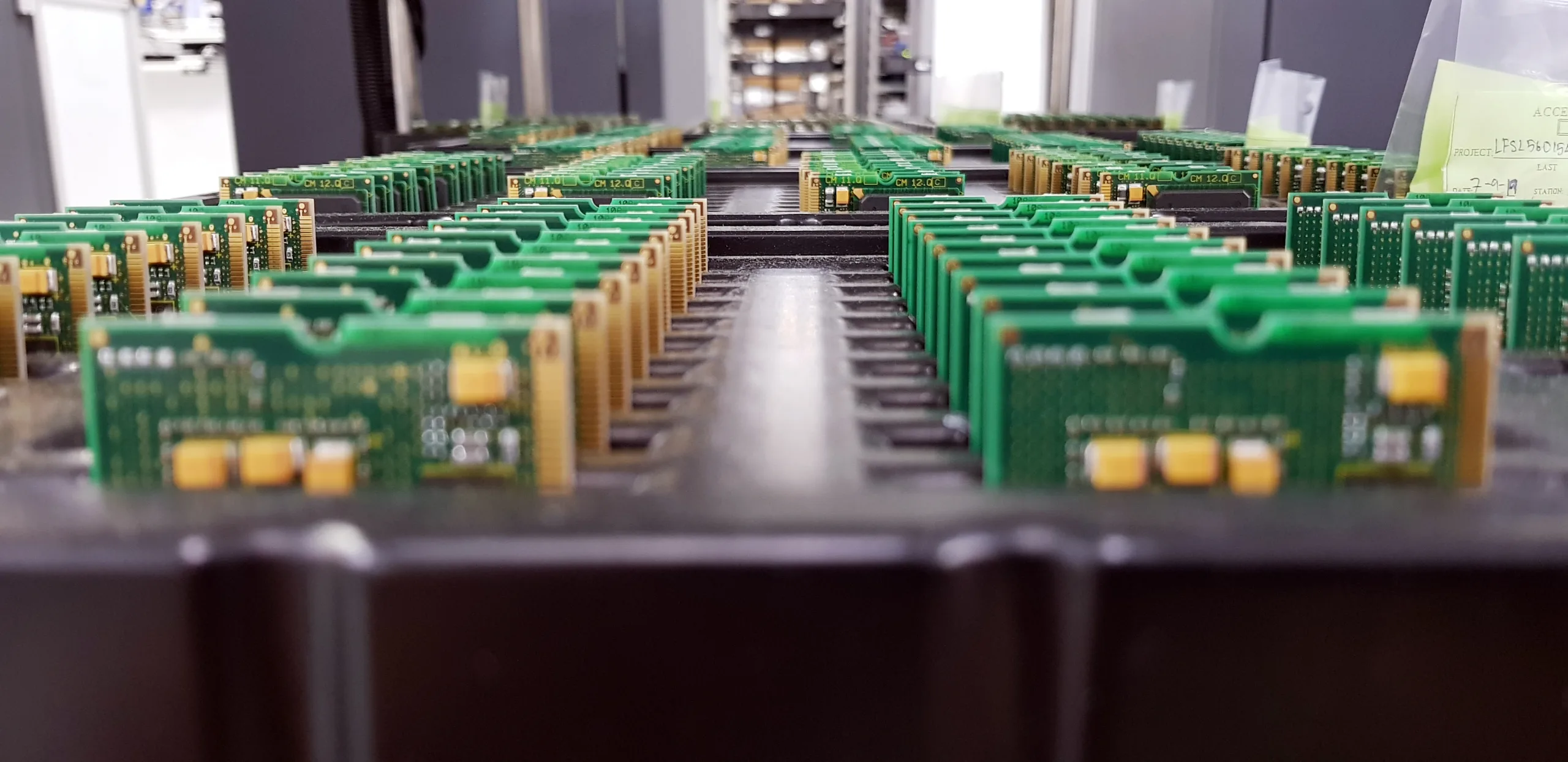
製品の概要
として プリント基板の製造 costs continue to rise, engineers and procurement professionals are actively seeking cost-effective solutions that do not compromise performance. The double-sided carbon oil circuit board offers a compelling answer to this challenge.
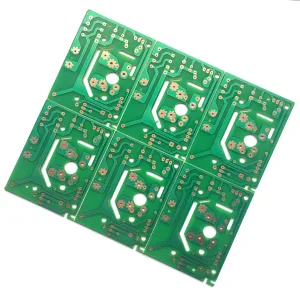
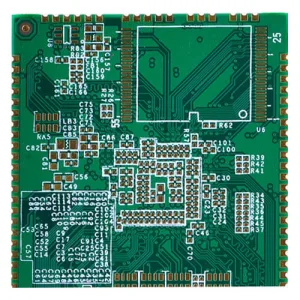
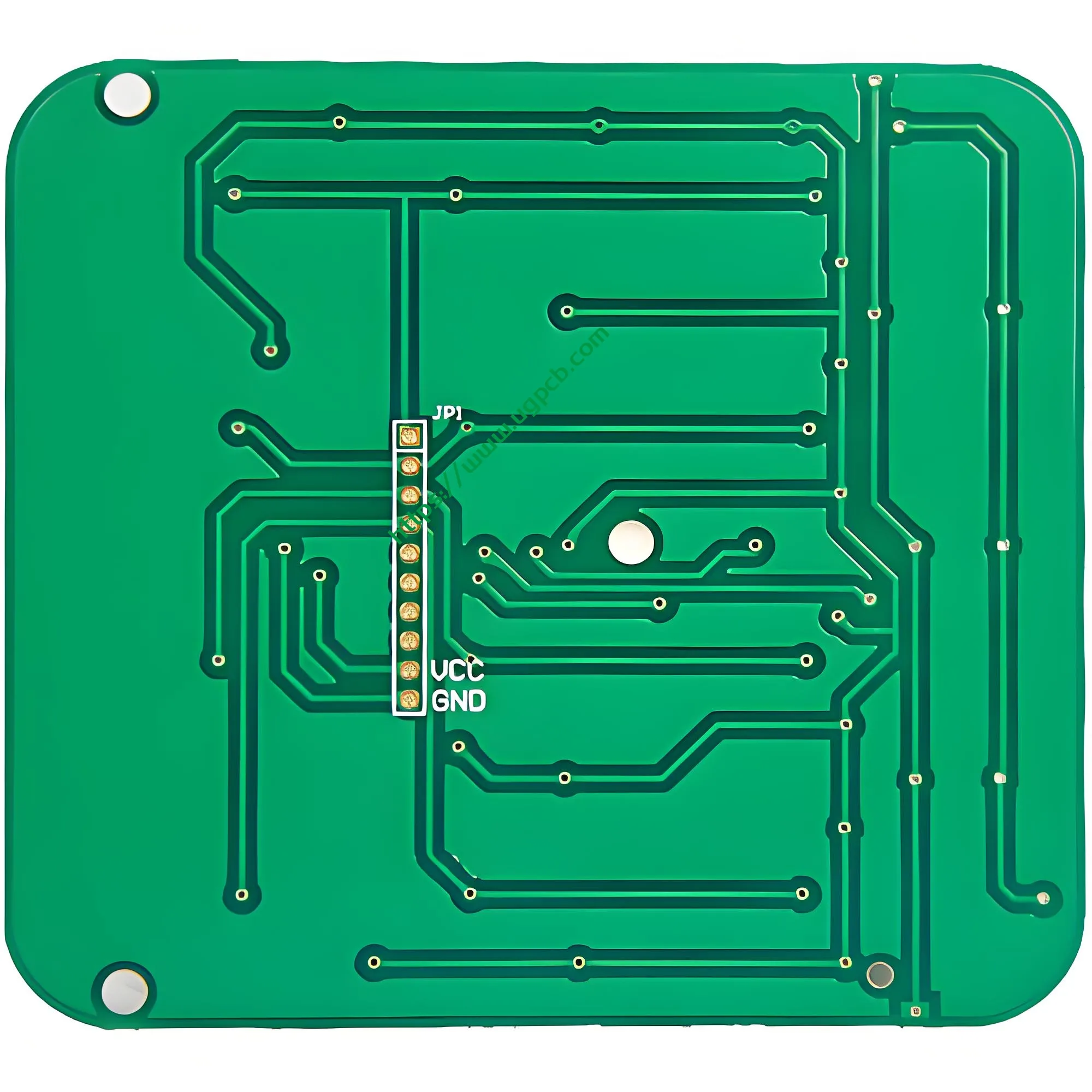
UGPCB presents thisdouble-sided carbon oil circuit board with the following specifications:
| パラメーター | 仕様 |
|---|---|
| 基本材料 | FR4 |
| 板厚 | 1.6mm |
| レイヤー数 | 2 レイヤー (両面) |
| 基板サイズ | 43.68 × 38.9mm |
| 最小穴の直径 | 0.33mm |
| トレース幅 / 間隔 | 0.32 × 0.36mm |
| 銅箔の厚さ | 35/35μm (1OZ on both sides) |
| 表面仕上げ | Carbon oil process |
| はんだマスク / 伝説 | 緑色のソルダーマスク / white silkscreen |
これはstandard rigid double-sided PCB. It combines traditional copper traces with acarbon oil surface finish that forms conductive carbon film pads at designated locations. The result is a board that offers both the excellent conductivity of copper traces and the superior wear resistance of carbon film contacts. This makes it an ideal choice for keypad applications across consumer electronics, 自動車エレクトロニクス, および医療機器.
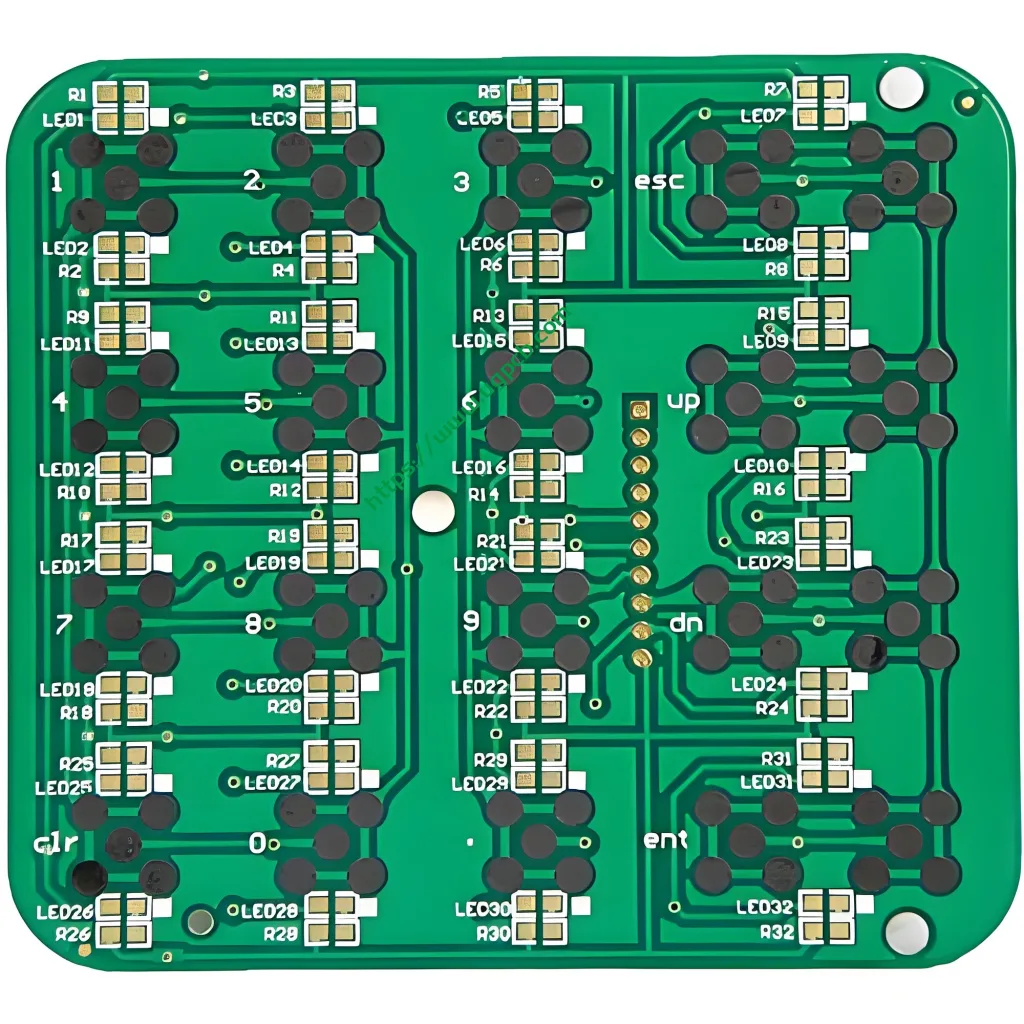
What Is a Double-Sided Carbon Oil Circuit Board?
あ double-sided carbon oil circuit board is a printed circuit board that uses carbon-based conductive ink (commonly referred to as carbon oil or carbon ink) applied through screen printing onto designated areas of the PCB基板. After curing, this forms a carbon film conductive pattern.
Carbon oil is a conductive ink composed primarily of conductive carbon powder, thermosetting resin, and various additives. It is precisely printed onto specific locations on the 回路基板 – typically keypad contact areas – using screen printing technology. After high-temperature curing, the carbon oil forms a carbon film with a defined resistance value.
従来のものと比較してgold-plated keypads, carbon oil keypads offer a clear advantage.Carbon oil keypads are highly wear-resistant and can withstand repeated operations, generally lasting for hundreds of thousands or even millions of switching cycles. Replacing expensive gold keypads with carbon oil keypads has become a major industry trend.
Carbon oil boards are a common surface treatment method for single-sided and double-sided PCBs. Through a series of processes including inspection, テスト, and burn-in testing, these プリント基板 achieve reliable long-term operation.
設計ガイドライン
Designing adouble-sided carbon oil circuit board requires attention to the following key technical aspects:
Carbon Oil Trace Width and Spacing
According to industry PCB carbon oil manufacturing specifications, carbon oil trace width must be greater than 6mil (approximately 0.152mm). Carbon oil films are identified as “GTC” (最上層) または “GBC” (下層) and are output as positive films.
Due to the excellent conductivity of carbon oil, adequate spacing must be maintained between carbon oil features on the finished board to prevent short circuits. Typical minimum clearances are:
The minimum alignment tolerance for carbon oil is±6mil.
Carbon Oil Window and Copper Pattern Spacing
To account for alignment tolerances and prevent oil leakage that could expose copper, the carbon oil pad must be larger than the copper pad by:
The same clearance must be maintained between the carbon oil window and surrounding copper patterns to prevent carbon oil from covering adjacent copper traces and causing short circuits.
Carbon Oil Thickness Control
Carbon oil thickness directly affects sheet resistance and wear resistance. Industry standard specifications are as follows:
- Single-print carbon oil thickness: 0.3–1.0mil, tolerance ±0.3mil
- Double-print carbon oil thickness: 1.0–2.0mil, tolerance ±0.4mil
For carbon oil thickness exceeding 1.0mil, a double-print process is required. The carbon oil film for the second print must be 3mil smaller on each side than the first-print film.
Design Standard References
When designing adouble-sided carbon oil circuit board, the following international standards should be followed:
- IPC-2221: Generic Standard on Printed Board Design – covers spacing, クリアランス, and structural design requirements
- IPC-6012: Qualification and Performance Specification for Rigid Printed Boards – defines performance requirements and product qualification criteria
- IPC-TM-650: Test Methods Manual – provides standardized test procedures for carbon oil PCB performance
作業原則
Thedouble-sided carbon oil circuit board operates on two fundamental levels:
Conduction Principle
The conductivity of carbon oil is determined by its formulation, which consists of conductive carbon powder, thermosetting resin, and various additives. Conductivity is measured bysheet resistance (ユニット: Ω/□).
オームの法則によると:
R = ρ × L / s
Where R is resistance, ρ is resistivity, L is conductor length, and S is conductor cross-sectional area. For the carbon film conductive layer, sheet resistance is inversely proportional to film thickness: Rs = ρ / t (where t is carbon film thickness).
Carbon oil boards generally achieve sheet resistance of ≤20Ω/□, offering excellent cost-performance. Some low-resistance carbon oil formulations also incorporate a small amount of silver oil to further enhance conductivity.
Keypad Switching Principle
In keypad applications, のdouble-sided carbon oil circuit board works as follows: when a rubber keypad (or other elastic element) is pressed, the conductive carbon particles on the bottom of the keypad contact thecarbon oil pad PCBで, completing the circuit. The carbon oil pad serves as the keypad’scontact conductor, replacing traditional gold-plated contacts.
The advantages of carbon oil contacts include:
- High surface hardness andexcellent wear resistance
- Low contact resistance andfast response time
- Chemical inertness, 提供物corrosion resistance and oxidation resistance
アプリケーション
Double-sided carbon oil circuit boards are widely used across various industries:
家電
- Remote controls: TV remotes, air conditioner remotes
- Calculators: Keypad panels
- Keyboards: Computer keyboards, membrane keyboards
- Gaming devices and electronic keyboards
カーエレクトロニクス
- Window switch control boards
- Air conditioning control panels
- Instrument clusters and seat controllers
医療機器
- Medical equipment operator panels
- Blood glucose test strip electrodes
Industrial and Communications
- Industrial control equipment panels
- 通信機器
- Smart label RFID
Cost-Effective Alternatives
Carbon oil circuit boards can replace the following traditional processes:
- Copper-plated through-hole processes
- Silver paste via-filling processes
- Copper paste via-filling processes
環境に優しい, low-cost carbon paste via-filling is a mainstream industry trend. Microsoft has adopted carbon oil for via-filling on power boards, completely replacing double-layer boards with copper-plated holes.
製品分類
Double-sided carbon oil circuit boards can be classified along the following dimensions:
By Conductivity Type
- Low-resistance carbon oil boards: Sheet resistance ≤20Ω/□ – suitable for keypad contacts
- High-resistance carbon oil boards: Suitable for potentiometers and resistor layers
- Carbon oil via-filled boards: Use carbon oil to fill via holes for interlayer connections
ベース素材によって
- FR4 carbon oil boards: Glass fiber/epoxy substrate (この製品)
- CEM-1 carbon oil boards: Composite epoxy material substrate
- Polyimide carbon oil boards: Flexible substrate
レイヤーカウントごとに
- Single-sided carbon oil boards
- Double-sided carbon oil boards (この製品)
- Multilayer carbon oil boards
By Surface Finish Combination
- 同意する + carbon oil
- 出血 + carbon oil
- OSP + carbon oil
- Carbon oil + 浸漬ブリキ (currently not suitable for mass production due to tin surface contamination issues)
材料
Base Material – FR4
この製品が使用しているのは、 FR4 基材として. FR4 is the industry designation for glass fiber-reinforced epoxy resin copper-clad laminate, 提供物:
- Excellent mechanical strength and dimensional stability
- Superior electrical insulation properties
- Good moisture and heat resistance
- Dielectric constant of approximately 4.2–4.3
FR4 is the most commonly used base material for rigid PCBs and offers good adhesion compatibility with carbon oil.
Conductive Layer – Copper Foil
Both sides use35μm (1オズ) 銅箔, ensuring excellent conductivity and current-carrying capacity.
Carbon Oil Material
Carbon oil is acarbon-based conductive ink で構成されています:
- Conductive carbon powder: 30%–50% content – determines conductivity
- Thermosetting resin: Provides adhesion and curing properties
- Various additives: Regulate flow characteristics and adhesion performance
Carbon oil must exhibitstrong adhesion, peeling resistance, そして耐摩耗性.
はんだマスクと凡例
- はんだマスク: Green ink – protects circuits and prevents short circuits
- 伝説: White silkscreen – identifies component locations and board numbers
性能仕様
電気性能
機械的性能
| パラメーター | 仕様 | Reference |
|---|---|---|
| Keypad lifespan | ≥1 million cycles | 業界標準 |
| Carbon oil thickness (single print) | 0.3–1.0mil ±0.3mil | IPC specifications |
| Carbon oil thickness (double print) | 1.0–2.0mil ±0.4mil | IPC specifications |
Dimensional Accuracy
| パラメーター | 仕様 |
|---|---|
| 最小穴の直径 | 0.33mm |
| 最小トレース幅 | 0.32mm |
| Minimum trace spacing | 0.36mm |
| 板厚 | 1.6mm |
環境の信頼性
あたりIPC-TM-650 標準要件:
- Damp heat test (IPC-TM-650 2.6.3.7): 1000 hours at 40°C / 90% RH – carbon oil sheet resistance change ≤20%
- Temperature cycling test (IPC-TM-650 2.6.7): 100 cycles from -40°C to 85°C – no carbon oil cracking, on-resistance fluctuation ≤15%
- Abrasion resistance test (IPC-TM-650 2.5.9): 後 1000 cycles – abrasion coefficient ≤5mg
製品構造
The typical structure of adouble-sided carbon oil circuit board (上から下へ):
- Legend layer (白): Component reference designators
- Solder mask layer (緑): Circuit protection and short-circuit prevention
- Carbon oil layer: Conductive carbon film at designated keypad locations
- Top copper traces (35μm): Conductive circuitry
- FR4 substrate (1.6mm): Insulating support
- Bottom copper traces (35μm): Conductive circuitry
- Solder mask layer (緑): Bottom layer circuit protection
- Legend layer (白): Bottom layer identifiers
The carbon oil layer is applied only to designated keypad contact areas or conductive zones, not across the entire board.
主な特長
Significant Cost Advantage
The carbon oil process eliminates certain copper plating and etching steps, reducing material costs by 15%–25%. Compared to hard gold plating, carbon ink costs are 40%–60% lower.
Long Wear Life
Carbon oil keypads offer exceptional wear resistance, lasting over 1 million switching cycles with a resistance change rate of ≤10%.
Simple, Efficient Process
Carbon oil application usesスクリーン印刷 rather than lengthy electroplating processes. Production lead times can beshortened by over 30%.
Excellent Environmental Resistance
Carbon oil ischemically inert, offering better acid and alkali resistance than copper. It performs more reliably in humid or dusty environments. Carbon film surface hardness reaches3H (pencil hardness test), outperforming unprotected copper surfaces (1–2H).
Flexible Design Options
Carbon oil can be printed directly to form resistors, キーパッド, and other functional modules, reducing solder joint counts by 30%–50%.
製造工程
The typical manufacturing process for adouble-sided carbon oil circuit board:
- 材料の切断: Cut FR4 copper-clad laminate to working dimensions
- 掘削: Drill via holes and mounting holes (minimum diameter 0.33mm)
- Surface cleaning: Chemical cleaning to remove oxides, oils, and contaminants
- Electroless copper / 電気めっき: Plating via holes for interlayer connections
- パターン転写: Exposure and development to form circuit patterns
- エッチング: Remove copper foil from non-circuit areas
- Strip: Remove dry film resist
- ソルダーマスク印刷: Apply green solder mask ink
- Solder mask curing: High-temperature curing of solder mask
- Surface finish – carbon oil printing:
- Screen print carbon oil at designated locations (single or double print)
- Pre-bake (80°C× 30 分)
- Main cure (150°C × 30–60 minutes)
- 凡例の印刷: Print white silkscreen identifiers
- プロファイリング: Router routing, Vカット, 等.
- 電気試験: Continuity testing, insulation testing
- Final inspection and packaging
For PCBs with同意する + carbon oil combination finish, carbon oil printing is typically performed after ENIG, with blue tape applied to protect carbon oil areas.
アプリケーションシナリオ
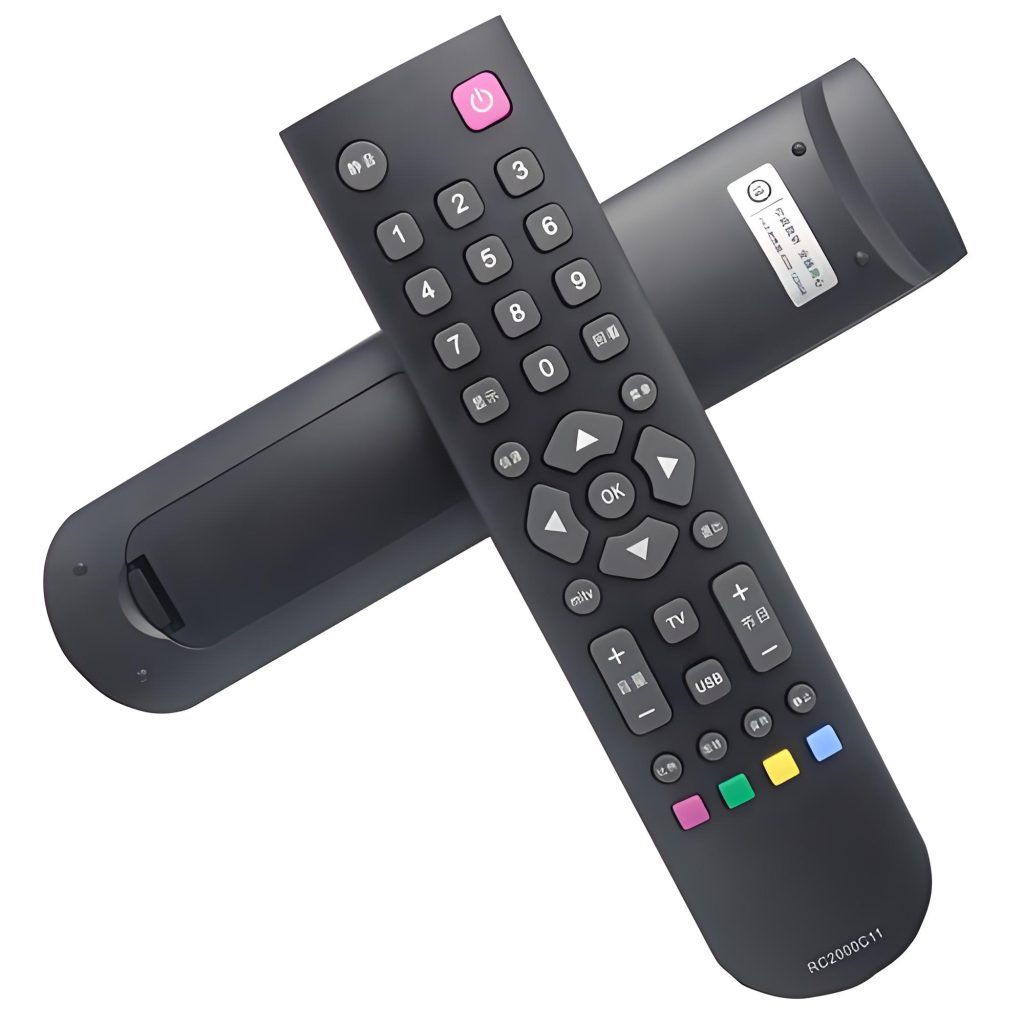
Remote Controls and Appliance Control Panels
Carbon oil contacts offerlong press life and low contact resistance for fast response. Typical applications include TV remotes, air conditioner remotes, and washing machine control panels.
Automotive Electronic Control Modules
Carbon oil circuits inside vehicle door panels offerstrong corrosion resistance, performing reliably in complex automotive environments and solving the oxidation and breakage issues common with traditional solutions.
Medical Device Operator Panels
Carbon oil-printed touch sensing areas maintain stable operation in oily, humid environments. Carbon oil materials also offer excellent生体適合性.
Industrial Keyboards and POS Systems
In POS terminals and industrial keyboards, circuits combining carbon oil with FR4 substrates adapt to temperature variations and deliver stable, 信頼できるパフォーマンス.
Why Choose UGPCB for Your Double-Sided Carbon Oil Circuit Board?
✅ International Standard Compliance
Product design and manufacturing strictly followIPC-2221 (プリント基板設計に関する一般規格), IPC-6012 (Rigid Board Performance Specification), そしてIPC-TM-650 (試験方法マニュアル).
✅ Precision Manufacturing Capabilities
- Minimum hole diameter 0.33mm – supports high-density designs
- 最小トレース幅/間隔 0.32 × 0.36mm – industry-leading precision
- Carbon oil sheet resistance ≤20Ω/□ – excellent conductivity
✅ One-Stop Service
UGPCB provides end-to-end services from プリント基板設計 and manufacturing to PCBAアセンブリ.
✅ High Reliability Guarantee
Carbon oil contacts offer wear life≥1 million cycles with resistance change rate ≤10%, 長期安定稼働を実現.
今すぐ見積もりをリクエストする
Thedouble-sided carbon oil circuit board ですhighly cost-effective solution for keypad applications in consumer electronics, 自動車エレクトロニクス, および医療機器.
必要かどうか PCBプロトタイピング, 量産, または ターンキー PCBA サービス, UGPCB delivers professional technical support and competitive pricing.
📧Contact us today for a free technical consultation and custom quote!
- Webサイト: www.ugpcb.com
- One-stop services: プリント基板設計, 製造業, およびPCBAアセンブリ
データソース宣言
The technical data and standards cited in this article are derived from the following authoritative sources:
- IPC (エレクトロニクス産業をつなぐ協会) 規格:
- IPC-2221 – Generic Standard on Printed Board Design
- IPC-6012 – Qualification and Performance Specification for Rigid Printed Boards
- IPC-TM-650 – Test Methods Manual
- Industry Standard Technical Specifications:
- PCB carbon oil manufacturing requirements (carbon oil trace width ≥6mil, film naming conventions, 等)
- Carbon oil screen printing thickness control specifications (single print: 0.3–1.0mil; double print: 1.0–2.0mil)
- Industry Technical Literature:
- Carbon oil PCB manufacturing specifications – three key dimensions
- Carbon oil process PCB technical analysis
- Carbon oil PCB vs. standard PCB comparison