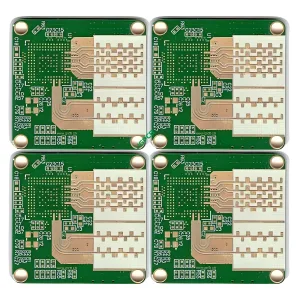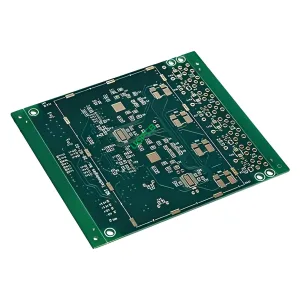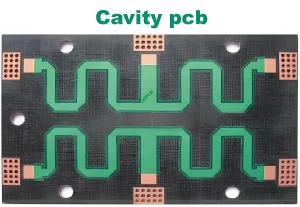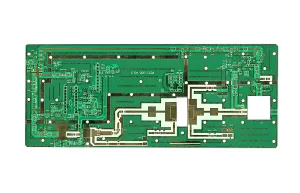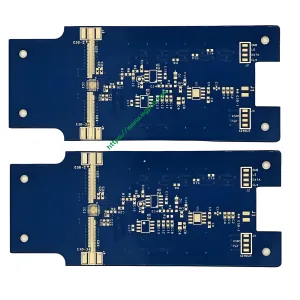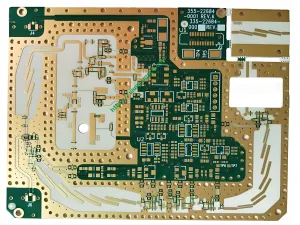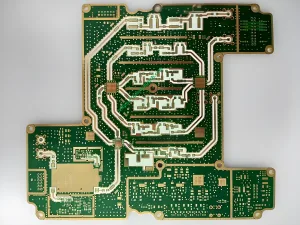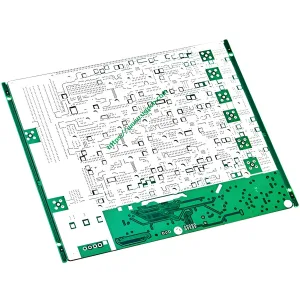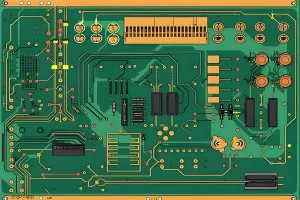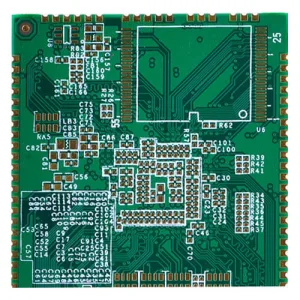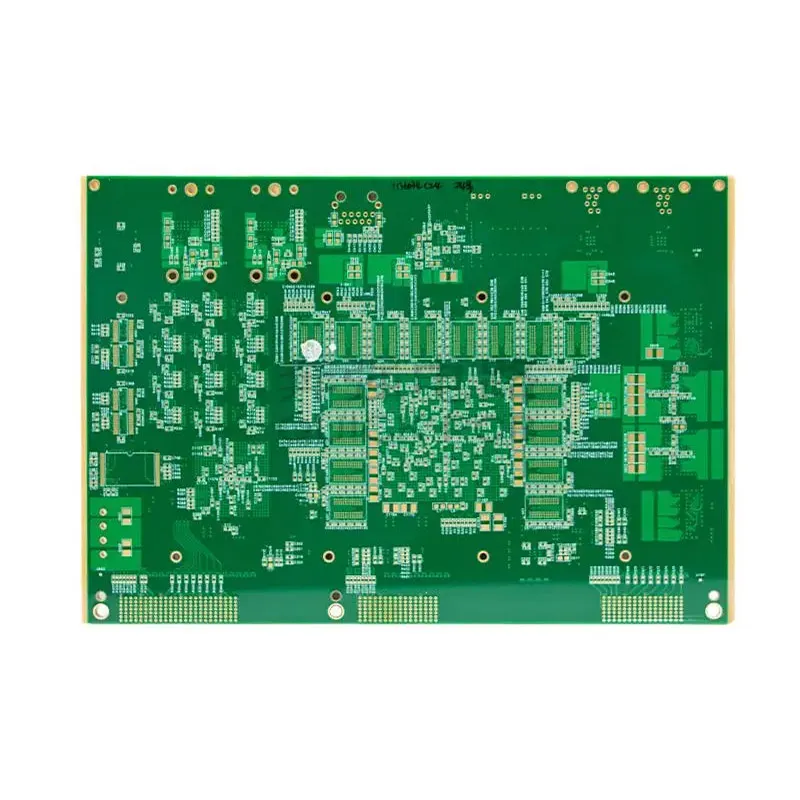
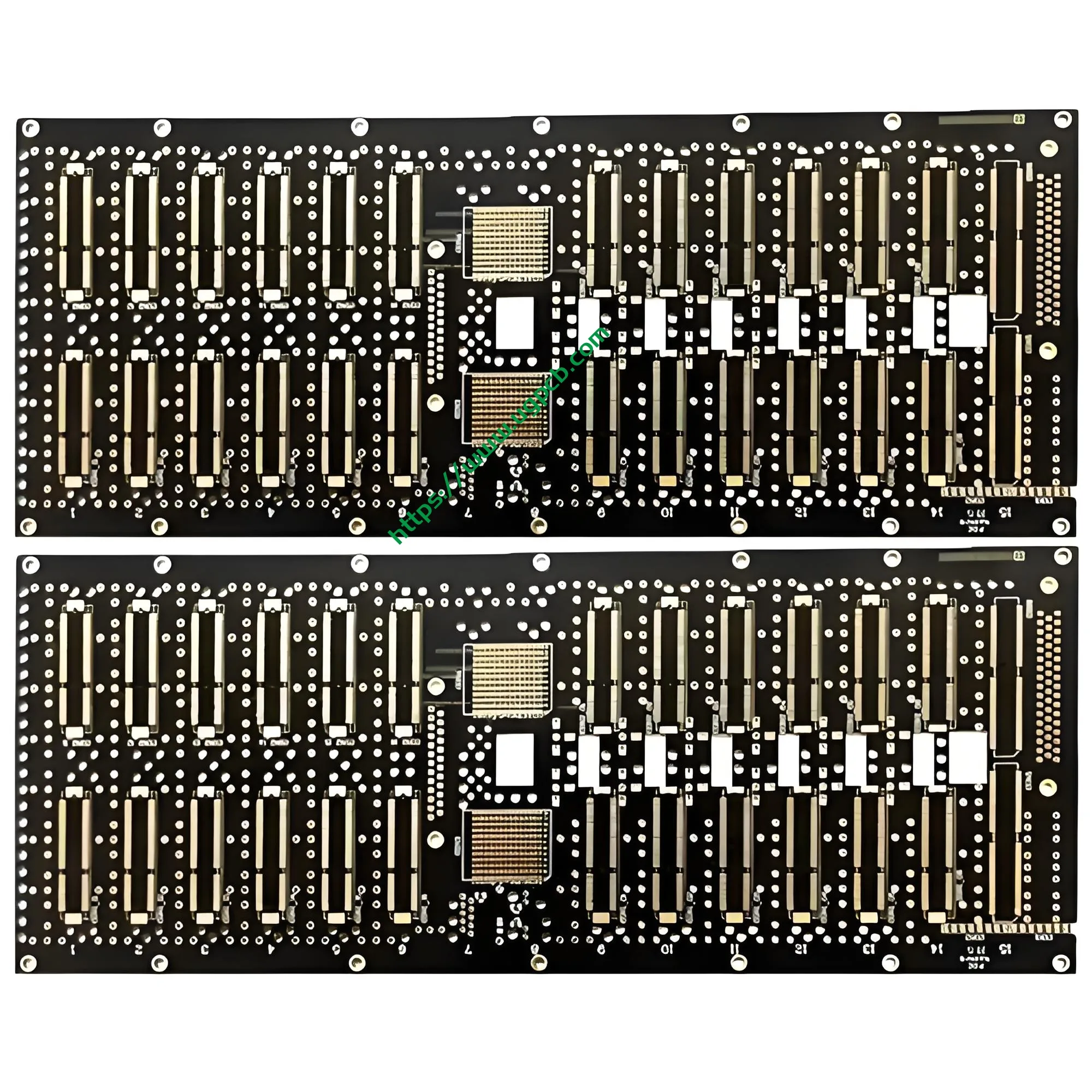
Specifiche rapide
| Parametro | Dettaglio |
|---|---|
| Materiale di base | Rogers RT/duroid 5870 (Composito PTFE rinforzato con micro fibra di vetro casuale) |
| Conta dei strati | 2 strati |
| Spessore totale del pannello | 0.9 mm |
| Spessore dielettrico | 0.762 mm |
| Costante dielettrica (Non so) @ 10 GHz | 2.33 ± 0.02 (tipico) |
| Fattore di dissipazione (Df) @ 10 GHz | 0.0012 (tipico) |
| Punteggio di infiammabilità | UL 94 V‑0 |
| Peso del rame | Base 0.5 oz (≈18 µm), finito 1 oz (≈35 µm) |
| Finitura superficiale | Essere d'accordo (Oro per immersione in nichel chimico) |
| Applicazioni chiave | Antenne commerciali a banda larga aerospaziali, circuiti microstrip e stripline, apparecchiature a onde millimetriche, sistemi radar militari, sistemi di orientamento missilistici, antenne RF digitali punto-punto |
Cos'è un PCB ad alta frequenza Rogers RT5870? Definizione e classificazione
Un PCB ad alta frequenza Rogers RT5870 utilizza Rogers RT / Duroid 5870 laminato come nucleo dielettrico. Questo laminato è un composito PTFE. Le microfibre di vetro orientate in modo casuale rinforzano il composito. Gli ingegneri lo hanno progettato per circuiti stripline e microstrip esigenti.
Da a PCB punto di vista della classificazione, la scheda RT5870 rientra in queste categorie:
- Per frequenza - PCB ad alta frequenza (PCB RF/microonde) che copre la banda Ku e oltre.
- Per sistema materiale – PCB ad alta frequenza a base di PTFE. Ciò differisce dai sistemi riempiti con ceramica di idrocarburi o dai sistemi epossidici modificati.
- Per applicazione – PCB RF e microonde con affidabilità di livello militare/aerospaziale.
- Per numero di strati – PCB a doppia faccia (standard). Sono supportate anche le configurazioni multistrato.
- Secondo le specifiche IPC – Materiale di base ad alta velocità/alta frequenza conforme a IPC‑4103.
Rogers RT/duroid 5870 apparve per la prima volta negli anni '60. Ha più di 60 anni di prestazioni comprovate sul campo. Rimane una delle soluzioni di materiali PCB ad alta frequenza più mature del settore.
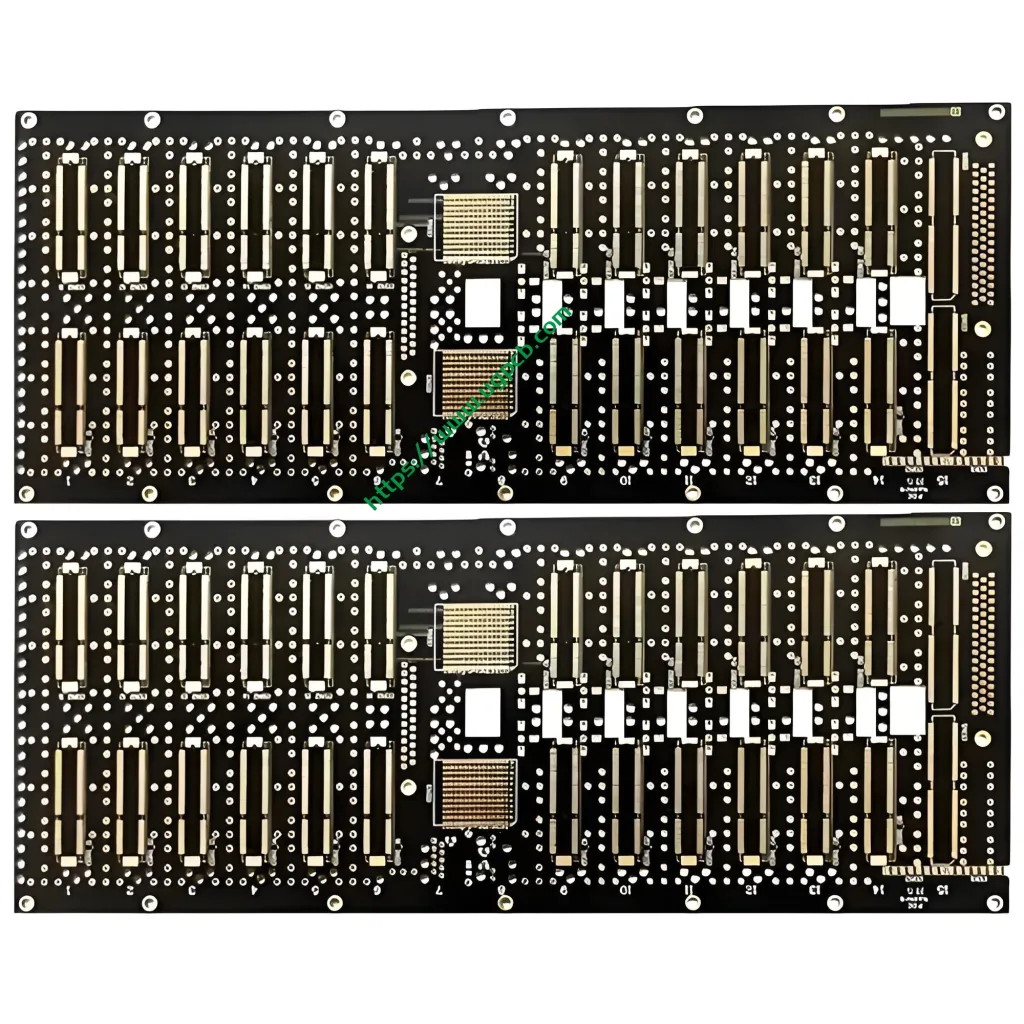
Composizione del materiale e stackup PCB della scheda RT5870 di UGPCB
Substrato centrale: Composito PTFE rinforzato con fibra di vetro casuale
Il cuore di RT/duroid 5870 è una matrice di PTFE. Contiene uniformemente distribuito, Microfibre di vetro orientate in modo casuale. Questa microstruttura unica offre due importanti proprietà. Primo, fornisce un comportamento elettrico isotropo. La costante dielettrica rimane costante in X, Y, e direzioni Z. Secondo, garantisce un'ottima uniformità Dk da pannello a pannello.
Impilamento PCB
Questo prodotto è un PCB ad alta frequenza a doppia faccia a 2 strati. Misure dello spessore totale del pannello 0.9 mm. Lo spessore dello strato dielettrico è 0.762 mm. I conduttori in rame si trovano su entrambi i lati. Il peso base del rame è 0.5 oz (Di 18 µm). Dopo la placcatura, raggiunge il rame finito 1 oz (Di 35 µm). Questo design bilancia la trasmissione del segnale ad alta frequenza con la capacità di trasporto di corrente.
Finitura superficiale: Essere d'accordo
UGPCB applica un ENIG (Oro per immersione in nichel chimico) finitura superficiale. Depositiamo uno strato di lega di nichel-fosforo (3–6 µm) Primo. Quindi aggiungiamo uno strato di oro puro (0.05–0,1 µm). Lo strato di nichel funge da barriera alla diffusione. Previene la fragilità dei composti intermetallici durante la saldatura. Lo strato d'oro offre una conduttività superiore, Resistenza alla corrosione, e saldabilità. Questa finitura soddisfa perfettamente le esigenze di trasmissione del segnale ad alta frequenza. Offre eccezionale planarità superficiale e protezione dall'ossidazione.
Come funziona: Perché il basso Dk e il basso Df trasformano le prestazioni del PCB ad alta frequenza
I PCB ad alta frequenza normalmente funzionano al di sopra 100 MHz. Le bande delle microonde iniziano alle 2 GHz. A queste frequenze, il materiale dielettrico controlla direttamente la qualità del segnale. Due parametri contano di più.
Costante dielettrica (Non so) e velocità di propagazione del segnale
La velocità di propagazione del segnale v_p in una linea di trasmissione PCB segue questa formula:
v_p = c / √(Non so)
Qui, c è la velocità della luce nel vuoto (≈ 3 × 10⁸ m/s). Con Dk = 2.33, il segnale viaggia a circa 65.5% della velocità della luce (≈ 1.96 × 10⁸ m/s). Questo è significativamente più veloce rispetto alle schede FR‑4 standard. FR‑4 ha un Dk intorno a 4,2–4,8. I suoi segnali viaggiano solo al 46%–49% della velocità della luce. Una propagazione più veloce significa un ritardo di trasmissione inferiore. Questo vantaggio si rivela fondamentale per i sistemi radar e di antenne sensibili alla fase.
Fattore di dissipazione (Df) e attenuazione del segnale
Il fattore di dissipazione (Df, chiamato anche tan δ) misura quanta energia elettromagnetica un materiale trasforma in calore. Un Df più basso significa una minore perdita di segnale. RT / Duroid 5870 raggiunge un Df di soli 0.0012 A 10 GHz. Questo è 0.12%. I tipici materiali FR‑4 mostrano valori Df compresi tra 0.018 E 0.025. Di conseguenza, il PCB RT5870 riduce la perdita di trasmissione ad alta frequenza di oltre un ordine di grandezza.
Controllo della dispersione
Frequenze diverse possono viaggiare a velocità diverse in un dielettrico. Questo effetto è chiamato dispersione. Distorce i segnali a banda larga. RT / Duroid 5870 mantiene un Dk quasi costante su un ampio intervallo di frequenze. Questo comportamento minimizza la dispersione. Rende il materiale particolarmente adatto per PCB ad alta frequenza a banda larga.
Elementi essenziali di progettazione per circuiti ad alta frequenza RT5870
Impedenza controllata – Standard 50 Progettazione Ω
Microstrip e stripline fungono da strutture principali della linea di trasmissione nei PCB ad alta frequenza. L'impedenza dipende da Dk, spessore dielettrico, larghezza della linea, e spessore del rame. Usando Dk = 2.33, spessore dielettrico 0.762 mm, E 1 once di rame, UN 50 La microstriscia Ω necessita di una larghezza di linea di circa 0.762 mm (30 mil). UGPCB controlla strettamente la larghezza e la spaziatura della traccia durante Fabbricazione di PCB. Ciò mantiene l'impedenza caratteristica sul target.
Design a basso assorbimento di umidità
RT / Duroid 5870 assorbe solo 0.02% acqua (Condizione di prova D48/50%.). Questo assorbimento di umidità estremamente basso previene la deriva del Dk e il degrado del segnale in ambienti umidi. Si adatta molto bene alle apparecchiature avioniche di bordo.
Progettazione della stabilità termica
Il coefficiente di dilatazione termica (Cte) per RT/duroid 5870 È 22 ppm/° C. (X), 28 ppm/° C. (Y), E 173 ppm/° C. (Z) da -55°C a 288°C. Il coefficiente termico della costante dielettrica è -115 ppm/° C. (-50° C a 150 ° C.). Il CTE relativamente elevato dell'asse Z richiede un'attenzione particolare al foro passante placcato (PTH) affidabilità. UGPCB affronta questa sfida con l'attivazione ottimizzata del plasma e processi con rame chimico per il PTFE. Il nostro approccio garantisce robustezza tramite connessioni.
Resistenza chimica e lavorabilità
I materiali PTFE sono altamente inerti. RT / Duroid 5870 resiste a tutti i solventi e reagenti utilizzati nell'incisione e nella placcatura. Allo stesso tempo, il laminato è facile da tagliare, taglio, e macchina. Ciò supporta la fabbricazione di precisione di profili PCB complessi.
Approfondimento sui dati sulle prestazioni (secondo IPC‑TM‑650 e standard correlati)
La tabella seguente elenca i dati prestazionali completi per RT/duroid 5870 laminato. Tutti i valori provengono dalla scheda tecnica ufficiale Rogers. I metodi di test sono in linea con la serie IPC‑TM‑650.
| Parametro | RT / Duroid 5870 Valore tipico | Metodo di prova |
|---|---|---|
| Costante dielettrica (processo) @ 10 GHz | 2.33 ± 0.02 | IPC‑TM‑650 2.5.5.5 |
| Costante dielettrica (progetto) @ 8–40 GHz | 2.33 | Metodo della lunghezza di fase differenziale |
| Fattore di dissipazione @ 1 MHz | 0.0005 | IPC‑TM‑650 2.5.5.3 |
| Fattore di dissipazione @ 10 GHz | 0.0012 | IPC‑TM‑650 2.5.5.5 |
| Coefficiente di temperatura Dk (-50° C a 150 ° C.) | -115 ppm/° C. | IPC‑TM‑650 2.5.5.5 |
| Resistività al volume | 2 × 10⁷ Mohm·cm | ASTM D257 |
| Resistività superficiale | 2 × 10⁷ Mohm | ASTM D257 |
| Conducibilità termica @ 50°C | 0.22 W/m · k | ASTM D5470 |
| CTEX / Y / Z | 22 / 28 / 173 ppm/° C. | IPC‑TM‑650 |
| Forza della pelatura (1 once di rame ED) | 27.2 libbre/pollici (4.8 N/mm) | IPC‑TM‑650 |
| Densità | 2.2 g/cm³ | - |
| Assorbimento d'acqua | 0.02% | D48/50% |
| Punteggio di infiammabilità | UL 94 V‑0 | UL 94 |
| Compatibile con il processo senza piombo | SÌ | - |
Questi dati dimostrano perché il PCB ad alta frequenza RT5870 eccelle nell'uniformità dielettrica, bassa perdita, resistenza all'umidità, e sicurezza antincendio.
Perché UL 94 V‑0 Materia?
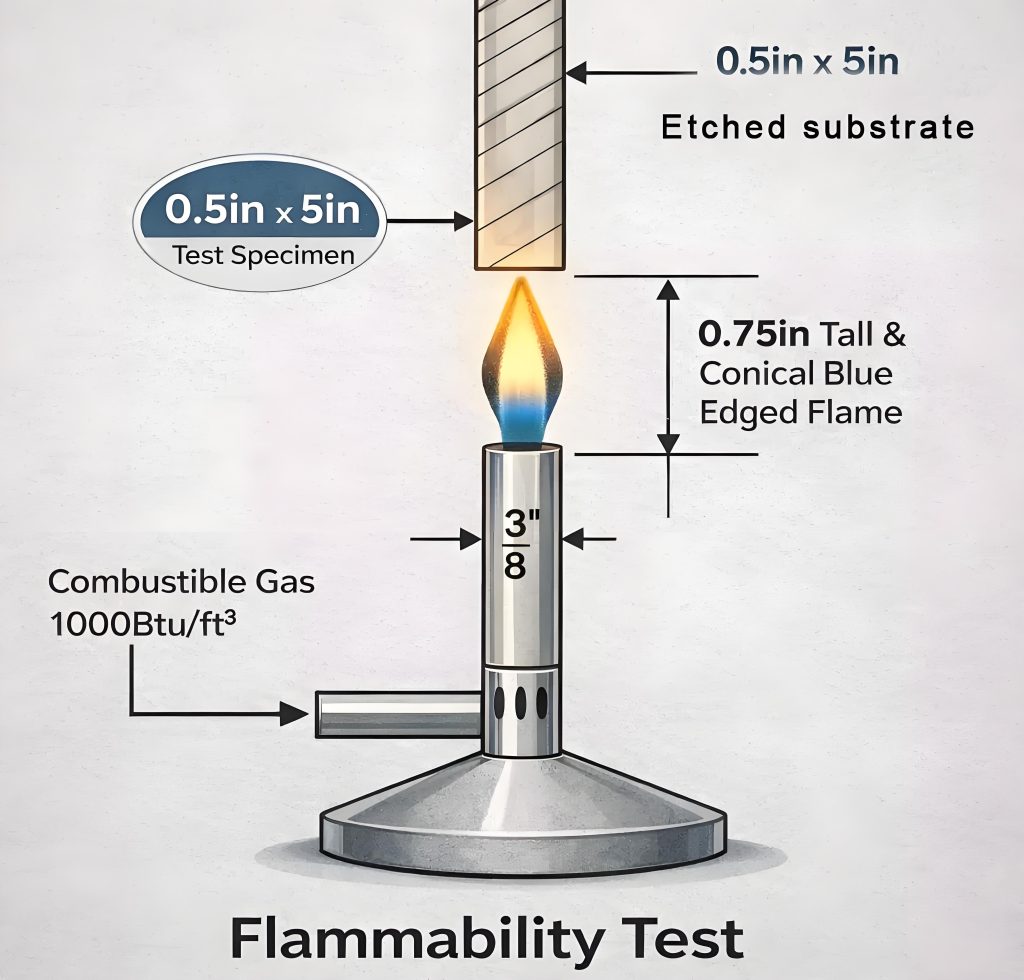
UL 94 V‑0 è il grado di infiammabilità più elevato per i materiali plastici nei dispositivi. Una classificazione V‑0 significa che il materiale si autoestinguente all'interno 10 secondi durante un test di combustione verticale. Eventuali gocce bruciate non accenderanno l'indicatore del cotone. Per avionica e attrezzature militari, UL 94 V‑0 è un requisito di sicurezza obbligatorio. RT / Duroid 5870 raggiunge questa valutazione rigorosa e supporta la saldatura senza piombo. Soddisfa pienamente le norme di sicurezza e ambientali per le applicazioni aerospaziali e della difesa.
Caratteristiche principali e vantaggi competitivi
Cinque caratteristiche tecniche principali
- Perdita elettrica minima tra i materiali ad alta frequenza in PTFE rinforzato.
- Assorbimento di umidità estremamente basso – ideale per ambienti ad elevata umidità.
- Proprietà elettriche isotrope – Dk uniforme in tutte e tre le direzioni.
- Consistenza a banda larga – prestazione elettrica stabile da 1 MHz alla banda Ku e oltre.
- Ottima resistenza chimica – resiste a tutti i prodotti chimici standard per la lavorazione dei PCB.
RT5870 rispetto a. RT5880: Come scegliere?
RT / Duroid 5870 e RT/duroid 5880 entrambi appartengono alla famiglia dei PTFE rinforzati con fibra di vetro micro‑Rogers. Ogni prodotto eccelle in ambiti diversi.
| Confronto | RT / Duroid 5870 | RT / Duroid 5880 |
|---|---|---|
| Non so @ 10 GHz | 2.33 ± 0.02 | 2.20 ± 0.02 |
| Df @ 10 GHz | 0.0012 | 0.0009 |
| CTE‑X (ppm/° C.) | 22 | 31 |
| CTE‑Y (ppm/° C.) | 28 | 48 |
| Forza della pelatura | 27.2 libbre/pollici | 31.2 libbre/pollici |
| Ideale per | Radar ad alta potenza, sistemi termicamente stabili | Comunicazione a bassissima perdita, satellitare |
La scheda RT5870 offre una maggiore stabilità termomeccanica e una maggiore robustezza. Queste qualità servono radar e avionica ad alta potenza che sopportano intensi cicli termici. In confronto, RT5880 offre un Dk leggermente inferiore (2.20) e Df (0.0009). Vince sul ritardo del segnale e sulla perdita di inserzione.
Processo di produzione e controllo qualità di PCB ad alta frequenza RT5870 di UGPCB
Preparazione e taglio del materiale
Iniziamo con l'originale Rogers RT/duroid 5870 laminati. Microincidiamo e puliamo con acido la superficie del rame. Questo passaggio rimuove ossidi e contaminanti organici.
Imaging e incisione
Utilizziamo la fotolitografia a film secco per trasferire il modello del circuito. Ottimizziamo i parametri di incisione e applichiamo la compensazione (fattore di attacco) per tenere stretto il 0.762 larghezza e spaziatura della traccia mm. Questa disciplina garantisce la coerenza dell'impedenza nel PCB ad alta frequenza.
Foratura e placcatura
Dopo la perforazione, le pareti dei fori in PTFE ricevono l'attivazione del plasma. Prossimo, applichiamo la deposizione chimica di rame. Questo passaggio metallizza i fori e crea connessioni affidabili a foro passante. UGPCB ha stabilito parametri di processo maturi appositamente per questa fase PCB in PTFE.
Finitura superficiale – ENIG
Applichiamo un processo chimico nichel-oro. Depositiamo prima uno strato di nichel di 3–6 μm. Quindi aggiungiamo uno strato d'oro di 0,05–0,1 μm. L'oro fornisce una bassa resistenza di contatto e un'eccellente saldabilità. Il nichel forma una barriera alla diffusione. Ciò garantisce l'affidabilità a lungo termine dei giunti di saldatura sul PCBA RT5870.
Test e ispezione elettrici
Eseguiamo 100% test di continuità elettrica e isolamento. Effettuiamo anche ispezioni visive secondo IPC‑A‑600. Ogni PCB ad alta frequenza soddisfa i nostri standard di spedizione.
UGPCB Garanzia di qualità
UGPCB opera secondo ISO 9001 gestione della qualità e standard di lavorazione IPC‑A‑600. La nostra produzione di PCB ad alta frequenza è completamente tracciabile. Ispezioniamo i materiali di base Rogers in entrata ed eseguiamo controlli finali su ogni tavola in uscita.
Scenari applicativi tipici per PCB RT5870 e gruppi PCBA
Antenne commerciali a banda larga aerospaziali
L'uniformità Dk e la bassa perdita di RT5870 lo rendono un materiale PCB ideale per le reti di alimentazione di antenne a banda larga nell'aria. Nelle antenne in banda Ku, i segnali attraversano i circuiti del divisore di potenza. Queste reti richiedono perdite dielettriche e coerenza di fase rigorose. I PCB ad alta frequenza RT5870 soddisfano tali requisiti.
Circuiti microstrip e stripline
Rogers originariamente progettò RT/duroid 5870 per circuiti microstrip e stripline di precisione. Sia che tu progetti filtri, Accoppiatori, divisori di potere, o reti a trasformazione di impedenza, questo laminato fornisce un ambiente dielettrico prevedibile. Le prestazioni del tuo circuito rimangono ripetibili.
Apparecchiature per onde millimetriche
Il basso fattore di dissipazione spinge l'utilizzo di RT5870 nella banda Ku e oltre. Supporta 24 GHz, 60 GHz, e persino 77 Applicazioni con onde millimetriche GHz. Questi includono piccole celle 5G mmWave, radar automobilistico, e backhaul a microonde punto a punto.
Sistemi radar militari
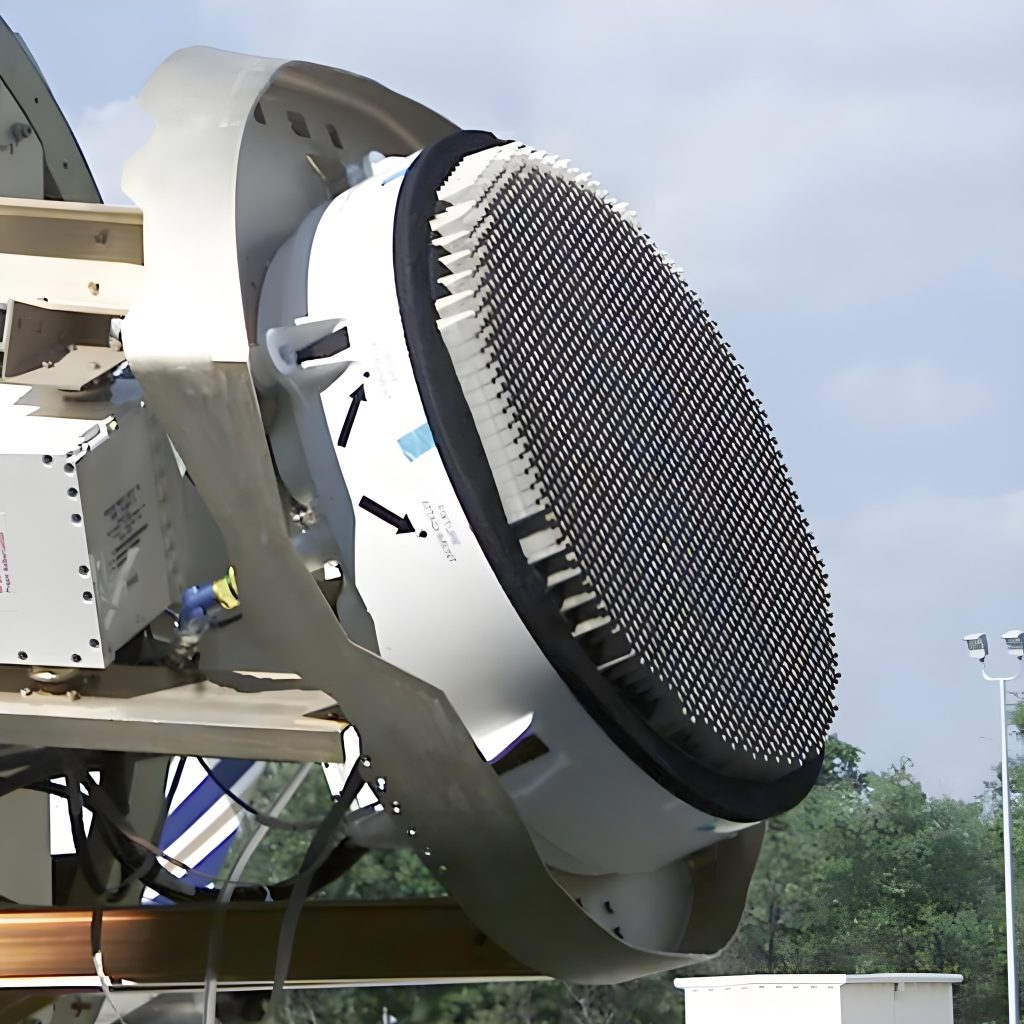
La bassa perdita e la forte stabilità termica soddisfano le rigorose esigenze del radar militare. I PCB ad alta frequenza RT5870 gestiscono impulsi lunghi, segnali ad alta potenza in modo affidabile. Li trovate nei radar antincendio aerei e nei sistemi di allarme rapido terrestri.
Sistemi di guida missilistica
I moduli ricetrasmettitori di ricerca missilistici sono esposti a temperature estreme, vibrazione, e umidità. RT5870 non assorbe quasi umidità (0.02%) e mantiene proprietà elettriche stabili in un ampio intervallo di temperature. Ciò garantisce l'integrità del segnale dal lancio al bersaglio.
Antenne RF digitali punto a punto
I collegamenti a microonde punto a punto si basano sul guadagno dell'antenna e sull'ampiezza del fascio precisi. L'uniformità Dk superiore di RT5870 garantisce un accurato allineamento di fase su grandi array di antenne. Le prestazioni del tuo PCB rimangono prevedibili da elemento a elemento.
Parametri di consegna per il PCB ad alta frequenza RT5870
| Parametro | Specifica |
|---|---|
| Materiale di base | Rogers RT/duroid 5870 |
| Conta dei strati | 2 strati |
| Spessore totale del pannello | 0.9 mm |
| Spessore dielettrico | 0.762 mm |
| Non so @ 10 GHz | 2.33 ± 0.02 |
| Df @ 10 GHz | 0.0012 |
| Rame (Base/Finito) | 0.5 oz / 1 oz |
| Larghezza della traccia / Spaziatura | 0.762 mm / 0.762 mm |
| Finitura superficiale | Essere d'accordo |
| Punteggio di infiammabilità | UL 94 V‑0 |
| Dimensioni | Costume |
| Supporto multistrato ibrido | SÌ (RT5870 + FR‑4 o altri materiali Rogers) |
Servizi PCBA UGPCB per schede ad alta frequenza
Oltre i semplici PCB ad alta frequenza, UGPCB fornisce uno sportello unico PCB (Gruppo a circuito stampato) Servizi. Per il gruppo scheda Rogers RT5870, offriamo:
- Assemblaggio SMT ad alta frequenza con design dei pad a bassa perdita e aperture precise dello stencil.
- Saldatura di componenti a passo fine (BGA, QFN, e altro).
- Profili di saldatura a riflusso strettamente controllati.
- AOI (Ispezione ottica automatizzata) E Raggi X ispezione.
- Test funzionali a livello di sistema.
Quando il tuo progetto necessita di consegna chiavi in mano PCB ad alta frequenza e PCBA, si prega di specificare i requisiti PCBA in fase di ordine.
Perché scegliere UGPCB? – Richiedi il tuo preventivo oggi
- ✅ Sourcing di canali autorizzato da Rogers – Ogni PCB ad alta frequenza RT5870 inizia con laminati originali autentici.
- ✅ 20+ Anni di produzione di PCB ad alta frequenza – Profonda esperienza nella fabbricazione di circuiti stampati RF e microonde.
- ✅ ISO 9001 Produzione certificata – Rigoroso controllo di qualità dai materiali in entrata alla spedizione finale.
- ✅ Prototipazione rapida e produzione in serie – Tempi di consegna competitivi per i prototipi e pianificazione batch flessibile.
- ✅ Logistica globale – Servire il Nord America, Europa, Asia-Pacifico, e altri mercati importanti.
- ✅ Supporto tecnico esperto – Assistenza ingegneristica dalla consulenza alla progettazione fino alla produzione di PCB e PCBA.
Contatta UGPCB per il tuo progetto PCB o PCBA ad alta frequenza Rogers RT5870.
- 📧 E-mail: sales@ugpcb.com
- 🌐 Sito web: www.ugpcb.com
- 📞 Chatta dal vivo: Disponibile sul nostro sito web
- 📋 Modulo di richiesta di offerta rapido: Invia i tuoi file e requisiti Gerber. Rispondiamo con una citazione all'interno 24 ore.
Glossario
| Termine | Definizione |
|---|---|
| Non so (Costante dielettrica) | Una misura della capacità di un materiale di immagazzinare energia del campo elettrico. |
| Df (Fattore di dissipazione) | Una misura della quantità di energia elettromagnetica che un materiale converte in calore; detta anche tangente di perdita. |
| Ptfe | Politetrafluoroetilene, un fluoropolimero ad alte prestazioni. |
| Essere d'accordo | Oro per immersione in nichel chimico, una finitura superficiale per PCB ad alta frequenza. |
| Cte | Coefficiente di dilatazione termica. |
| PTH | Foro passante placcato, un via con placcatura in rame conduttivo. |
| PIM | Intermodulazione passiva. |
| Rf | Radiofrequenza, in genere 100 MHz e superiori. |
| IPC | Associazione che collega le industrie elettroniche, editore di standard PCB. |
Domande frequenti – PCB ad alta frequenza Rogers RT5870
Q1: Come faccio a scegliere tra RT5870 e RT5880?
A1: RT5870 (Dk=2,33) fornisce una migliore stabilità termomeccanica. È adatto ai radar e all'avionica ad alta potenza. RT5880 (Dk=2,20) offre perdite ancora inferiori. È ideale per comunicazioni a frequenza ultraelevata e sistemi satellitari. Vedere la tabella comparativa nella sezione 6.2.
Q2: Qual è la larghezza e la spaziatura minima della traccia??
A2: La traccia/spazio minimo dipende dallo spessore del rame e dal design. Le nostre caratteristiche standard del prodotto RT5870 0.762 linee e spazi in mm. Per geometrie più fini, contattare il supporto tecnico UGPCB.
Q3: Supportate PCB multistrato e ibridi ad alta frequenza?
A3: SÌ. Costruiamo schede RT5870 multistrato e stackup ibridi. Combiniamo RT5870 con altri materiali Rogers (come RO4350B, RT5880) o FR‑4.
Q4: Qual è il tempo di consegna tipico??
A4: I tempi di consegna del prototipo variano in base al numero di strati e alla complessità. Il nostro team di vendita può fornire il programma più veloce disponibile. I tempi di consegna del volume appaiono nella quotazione ufficiale.
Q5: In cosa differiscono i PCB ad alta frequenza dai PCB standard?
A5: I PCB ad alta frequenza utilizzano un basso Dk, substrati speciali a basso Df come PTFE per segnali RF/microonde. Le schede FR‑4 standard hanno un Dk più elevato (4.2–4.8) e una perdita maggiore. Sono adatti solo a circuiti digitali o analogici a bassa frequenza.
Avviso legale e di conformità
Tutti i parametri tecnici provengono dal prodotto ufficiale Rogers Corporation RT/duroid 5870/5880 schede tecniche. I valori sono tipici. Possono verificarsi normali variazioni di processo tra i lotti di produzione. I riferimenti IPC‑4103 servono a indicare il sistema di classificazione e i metodi di prova per i substrati ad alta frequenza. L'UL 94 La classificazione di infiammabilità V‑0 riflette le certificazioni di prodotto pubblicate da Rogers. Le prestazioni effettive del prodotto sono soggette al rapporto finale di ispezione in uscita di UGPCB.
© 2024 UGPCB. Tutti i diritti riservati. Rogers RT/duroid è un marchio registrato di Rogers Corporation.