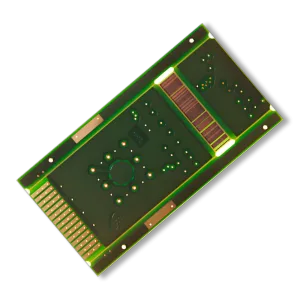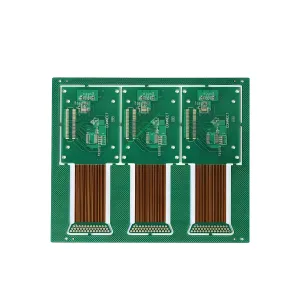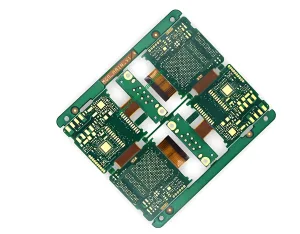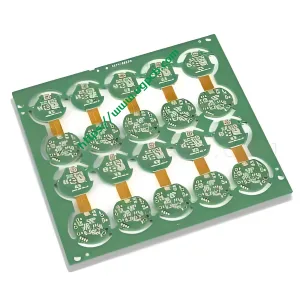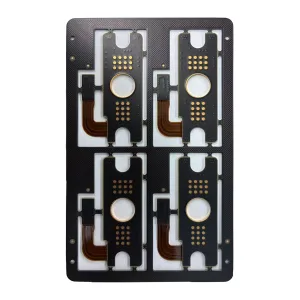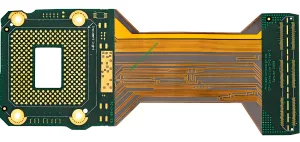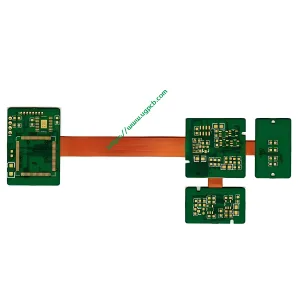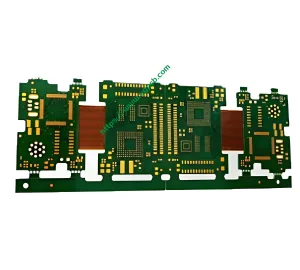
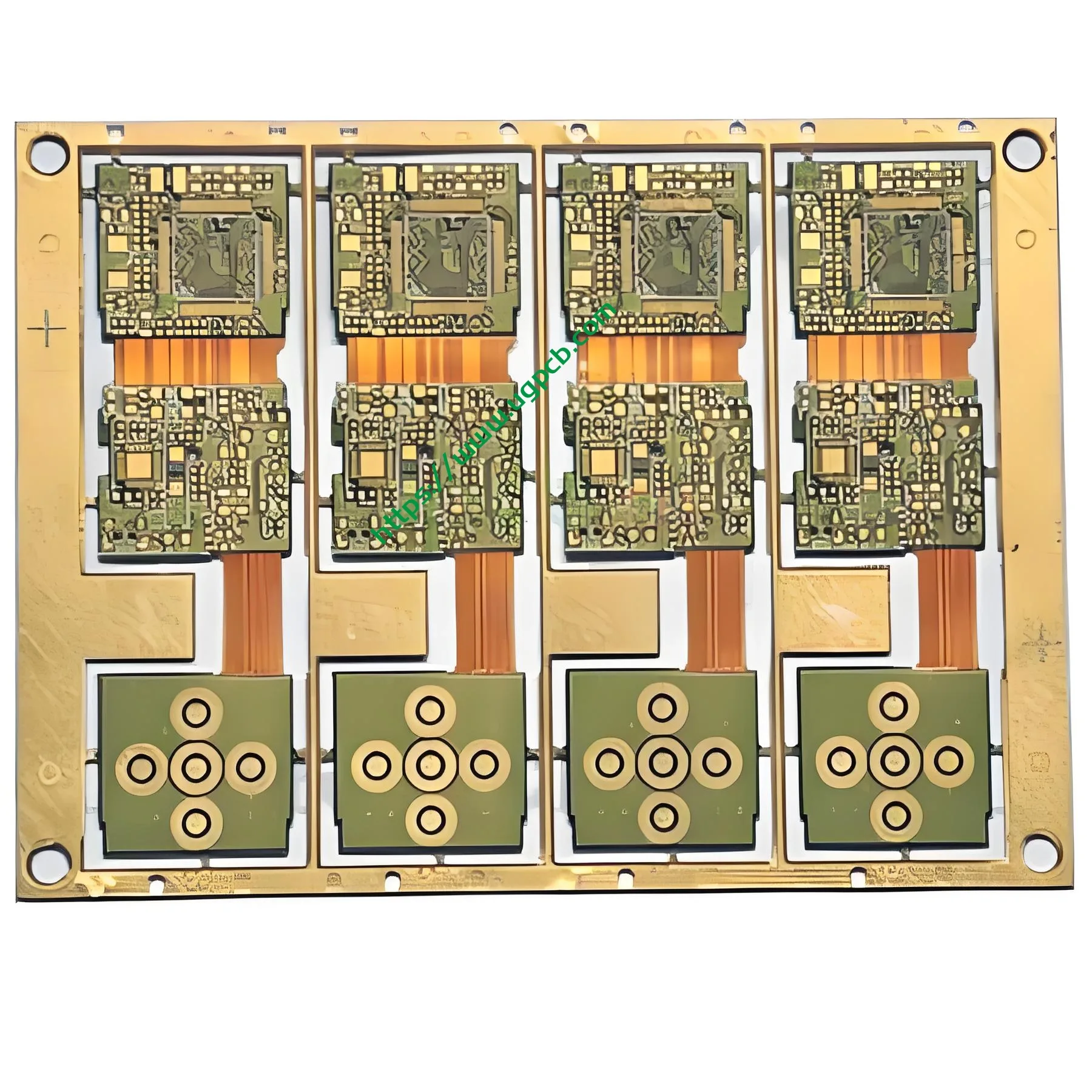
Nella rapida evoluzione odierna verso la leggerezza, magro, corto, e dispositivi elettronici compatti, IL PCB rigido-flessibile è diventato indispensabile in settori di alta precisione come le telecomunicazioni, strumenti medici, e aerospaziale. La sua combinazione unica di supporto rigido e flessibilità tridimensionale lo rende un componente di interconnessione fondamentale.
Come professionista Produttore di PCB, UGPCB presenta le sue alte prestazioni PCB rigido-flessibile Soldermask giallo (R-FPCB) . Questo articolo esplora questa scheda avanzata, costruito con FR-4 + Materiali PI e a 6-strato rigido più flessibile a 4 strati struttura. Esamineremo i suoi principi di progettazione, processi di produzione, e applicazioni, mostrando come consente una trasmissione del segnale più stabile e un layout del sistema più compatto.
1. Definizione e panoramica del prodotto
UGPCBScheda rigida-flessibile di Soldermask gialla integra un PCB rigido e un circuito flessibile in un'unica soluzione di interconnessione attraverso un processo di laminazione.
Specifiche chiave:
Impilamento dei livelli: 6 strati (6L) in sezioni rigide / 4 strati (4L) in sezioni flessibili
Combinazione di materiali: FR-4 (aree rigide) + PI (Poliimide, aree flessibili)
Colore della superficie: Maschera saldante gialla (rigido) / Copertura bianca (flettere)
Spessore finito: 0.4mm (sezioni rigide) / 0.2mm (sezioni flessibili)
Questo design mantiene il supporto strutturale e la capacità di trasporto dei componenti delle aree rigide sfruttando al tempo stesso la piegabilità delle sezioni flessibili. Raggiunge una vera integrazione rigido-flessibile, eliminando la necessità di connettori tradizionali e cavi a nastro.
2. Principi e tecnologia di progettazione
UN. Principio di lavoro
Il nucleo della tecnologia rigido-flessibile risiede nell’interconnessione senza soluzione di continuità. UGPCB lamina strati PI flessibili con strati rigidi FR-4 ad alta temperatura e pressione. Nelle zone flessibili, Il materiale FR-4 viene rimosso, lasciando la base PI con una copertura per consentire la piegatura. Nelle zone rigide, FR-4 resta da supportare componenti. Questa struttura elimina i punti di contatto fisico dai connettori, migliorando notevolmente Integrità del segnale (E) e resistenza alle vibrazioni.
B. Considerazioni di progettazione
Controllo dell'impedenza: Per PCB di comunicazione ad alta frequenza, Il controllo rigoroso della larghezza e della spaziatura della traccia di 3,5 mil garantisce un'impedenza differenziale costante (per esempio., 100OH).
Protezione della zona di transizione: La giunzione tra sezioni rigide e flessibili (il troncone) è un punto di stress. Il design dell'UGPCB utilizza transizioni arrotondate e larghezze di traccia rastremate per evitare fessurazioni durante la piegatura.
Corrispondenza dello stack: Lo spessore uniforme del rame da 1 OZ viene mantenuto per prevenire cedimenti per fatica nelle sezioni flessibili durante la flessione dinamica.
3. Analisi dei materiali e delle prestazioni
UN. Materiali core
FR-4 (Aree rigide): Un laminato epossidico rinforzato con fibra di vetro. Offre elevata resistenza meccanica, resistenza al calore, e isolamento, fornendo una piattaforma stabile per il montaggio di componenti pesanti come chip e connettori.
PI (Aree flessibili): Pellicola di poliimmide. Fornisce un'eccellente resistenza alle alte temperature (funzionamento >150°C), un basso fattore di perdita dielettrica (Df), e una vita flessibile elevata.
Finitura superficiale: Oro ad immersione (Essere d'accordo). Questo processo chimico deposita uno strato di nichel-oro sul rame.
Vantaggi: Elevata planarità superficiale adatta per circuiti a passo fine (3.5spaziatura mil), forte resistenza all'ossidazione, e buona saldabilità insieme alla capacità di incollaggio del filo di alluminio.
B. Specifiche delle prestazioni chiave
| Parametro | Specifica | Vantaggio tecnico |
|---|---|---|
| Min. Traccia/spazio | 3.5mil / 3.5mil | Supporta il routing ad alta densità per moduli di comunicazione compatti. |
| Min. Trapano meccanico | 0.1mm | La tecnologia micro-via migliora l'utilizzo del canale di instradamento e riduce la capacità parassita dell'interstrato. |
| Spessore finito | 0.4mm (Rigido) / 0.2mm (Flettere) | Il design ultrasottile consente di risparmiare spazio all'interno della custodia del dispositivo. |
| Spessore del rame | 1OZ (35μm) | Bilancia la capacità di trasporto di corrente con la resistenza alla flessione, garantendo l'integrità del segnale. |
4. Classificazione e caratteristiche strutturali
UN. Classificazione strutturale
Questo prodotto è un struttura asimmetrica (6-strato rigido + 4-strato flessibile) rientra nella categoria delle tavole multistrato rigido-flessibili. Generalmente, le tavole rigido-flessibili sono classificate come:
Tipo a strati: Gli strati flessibili si estendono indipendentemente, come visto in questo prodotto.
Tipo non stratificato: L'intera tavola utilizza materiale flessibile, con rinforzi aggiunti ad aree specifiche.
B. Caratteristiche del prodotto
Alta affidabilità: La finitura dorata a immersione combinata con il materiale PI garantisce prestazioni elettriche stabili anche in ambienti difficili (alta temperatura e umidità).
Alta precisione: Le capacità di produzione di linee sottili da 3,5 milioni e micro via da 0,1 mm risolvono le sfide di interconnessione ad alta densità.
Ottimizzazione dello spazio: Sostituisce i connettori, riducendo il volume di installazione di oltre 60% e riducendo il peso complessivo del prodotto.
Differenziazione visiva: La maschera di saldatura gialla fornisce un aspetto unico e offre un contrasto più chiaro durante l'assemblaggio SMT, facilitando l'ispezione ottica.
5. Processo di produzione e controllo qualità
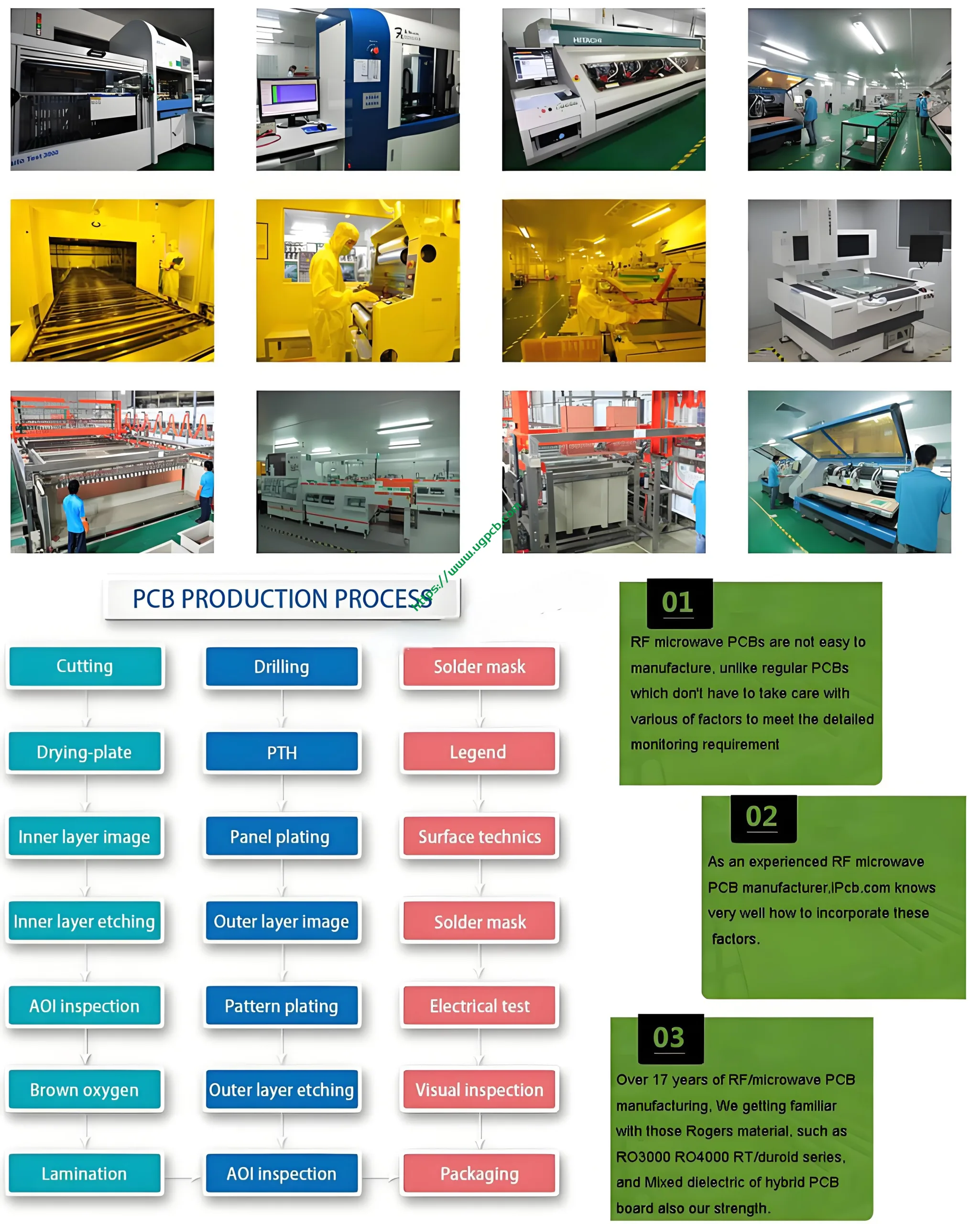
Per garantire l'affidabilità di questa complessa struttura 6L+4L, UGPCB segue un flusso di produzione rigoroso:
Circuito dello strato interno (Zona flessibile): Circuiti sottili da 3,5 mil vengono formati sul materiale di base PI utilizzando laser o fotolitografia.
Laminazione della copertura: Sul circuito flessibile è laminata una pellicola protettiva, lasciando esposte solo le aree del pad.
Laminazione: Gli strati rigidi e flessibili vengono allineati e laminati sotto vuoto. I controlli chiave sono il profilo della temperatura e il flusso di resina per prevenire vuoti.
Perforazione & Placcatura: 0.1Sono forate micro via da mm. La deposizione chimica del rame crea connessioni interstrato.
Strato esterno & Maschera di saldatura: La maschera saldante gialla viene applicata alle aree rigide; la copertura bianca rimane sulle aree flessibili.
Finitura superficiale: Oro di immersione (Essere d'accordo) viene applicato a spessore controllato: 0.05-0.1µmAu / 3-5µm Ni.
Profilazione & Prova elettrica: La fresatura laser o la punzonatura definiscono la forma finale. 100% AOI e sonda volante i test verificano l'integrità elettrica.
6. Applicazioni
Questo prodotto è rivolto principalmente ascheda di comunicazione settore. Le applicazioni chiave includono:
5Stazioni base di comunicazione G: Utilizzato per flettere le connessioni nei moduli RF, risolvendo le esigenze di interconnessione compatta tra antenne e schede madri.
Smartphone & Indossabili: La sezione flessibile da 0,2 mm consente la flessione dinamica nelle cerniere pieghevoli del telefono.
Elettronica medica: Utilizzato in dispositivi come le sonde per endoscopi a ultrasuoni, sfruttando la biocompatibilità del PI e il routing ad alta densità.
Elettronica automobilistica: Moduli telecamera ADAS che devono resistere a vibrazioni costanti e shock termici.
7. Perché scegliere UGPCB?
Gli ingegneri spesso affrontano sfide con rese basse e tempi di consegna lunghi per progetti rigidi-flessibili complessi. UGPCB è un'offerta affidabile di partner della catena di fornitura:
Capacità di produzione: Capacità di produzione di massa per 3,5 milioni di tracce/spazio, superare le barriere di interconnessione ad alta densità.
Sourcing materiale: Utilizza materiali di alta qualità provenienti da fornitori come Shengyi/ITEQ per FR-4 e DuPont/Tayoho per PI, garantendo la qualità dalla fonte.
Supporto tecnico: Fornisce DFM gratuito (Progettazione per la produzione) controlli per ottimizzare i progetti, soprattutto nella zona di transizione rigido-flessibile.
Stai progettando un circuito che deve trasportare circuiti integrati complessi e flettersi in uno spazio ristretto?
UGPCB ora offre servizi di prototipazione e produzione di massa per questo6-strato rigido + 4-PCB rigido-flessibile con maschera saldante gialla flessibile a strati.
👉 Ottieni un preventivo veloce oggi stesso
Invia i tuoi file Gerber e i requisiti tecnici a [sales@ugpcb.com] oppure fai clic sulla chat online. Il nostro team di ingegneri fornirà un rapporto DFM professionale e un preventivo competitivo all'interno 24 ore.