UGPCB LOGO
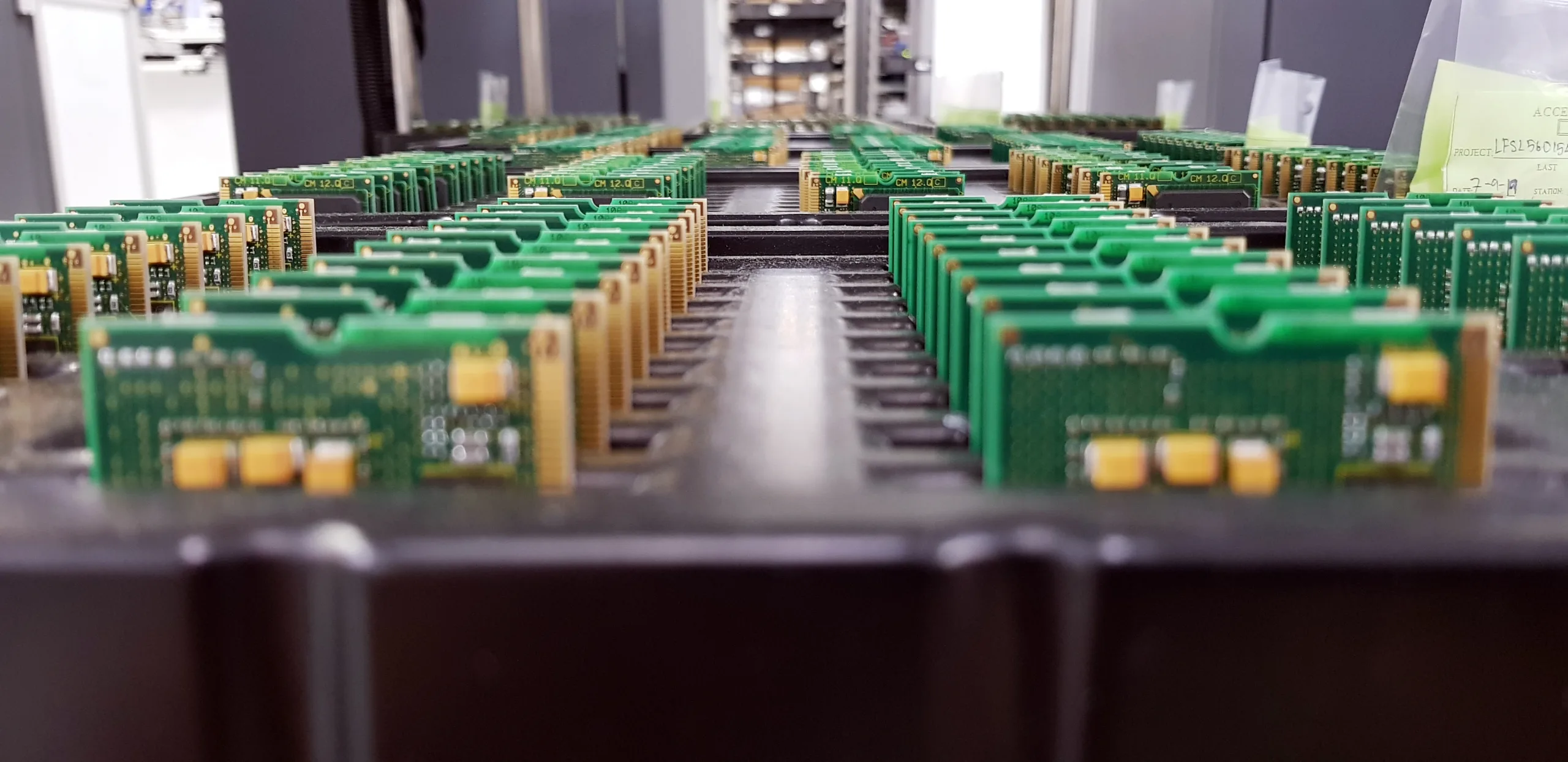
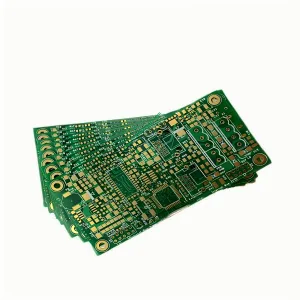
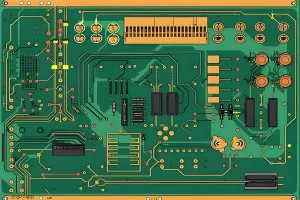
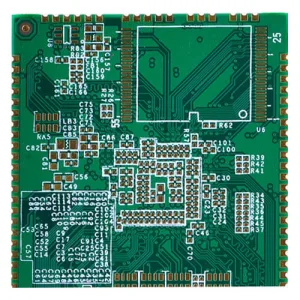
Custom 2-Layer Rigid FR-4 PCB: ENIG + Hard Gold Finish for High Reliability & Cost-Effectiveness
Discover the industry “gold standard” for balanced performance and affordability. UGPCB’s 2-layer rigid FR-4 PCB, featuring TG150 high-temperature material and a dual ENIG + Hard Gold surface finish, delivers superior reliability for demanding applications.
I. Why Choose 2-Layer Rigid FR-4 PCB?
In the era of electronic miniaturization, the demand for high reliability, low cost, and compact design has made the 2-layer rigid PCB the “golden choice” for engineers and procurement managers. Unlike single-sided boards limited by routing space or expensive multi-layer boards, the 2-layer design strikes the perfect balance between performance and price.
UGPCB enhances this baseline by utilizing FR-4 TG150 heat-resistant material and a specialized Electroless Nickel Immersion Gold (ENIG) + Hard Gold surface treatment. This combination significantly improves durability and solderability, making it suitable for a wider range of harsh environments.
II. Product Core Specifications (IPC-A-600 Compliant)
The following parameters ensure full compatibility with industry standards and optimal manufacturability (DFM).
| Parameter | Specification Details |
|---|---|
| Layer Count | 2 Layers (Double-sided: Top & Bottom routing, FR-4 core substrate) |
| Board Thickness | 1.60mm (Standard industry thickness, balancing mechanical strength & space) |
| Base Material | FR-4 TG150 (Epoxy resin glass cloth; Glass Transition Temp: 150°C; Excellent heat resistance) |
| Surface Finish | ENIG 2u” + Hard Gold 30u” (Dual protection: Chemical immersion gold + Electroplated gold for wear resistance) |
| Copper Weight | 1oz (35μm) (Standard thickness, sufficient for most current carrying requirements) |
| Solder Mask | Green (Default; Black, Blue, Red, White available upon request) |
| Silkscreen | White Epoxy Ink (Component identifiers, Logo) |
| Min. Drill Hole | 0.3mm (12mil) |
| Min. Line Width/Space | 3mil / 3mil |
III. Product Definition: What is a 2-Layer Rigid PCB?
1. Definition
A Rigid PCB is a non-flexible printed circuit board composed of a substrate, copper foil traces, solder mask, and silkscreen. It establishes fixed electrical connections through drilling and etching processes.
A 2-Layer Rigid PCB (Double-Sided Board) is the foundational type of rigid PCB, featuring copper traces on both the top and bottom sides of the substrate. Electrical connections between layers are achieved via Plated Through Holes (Vias).
2. Classification by Layer Count
- 1-Layer (Single-Sided): Circuits on one side only. Lowest cost but severe routing limitations.
- 2-Layers (Double-Sided): Circuits on both sides. Higher routing flexibility than single-sided; moderate cost. (UGPCB’s Specialty)
- Multi-Layer (4+ Layers): Three or more copper layers. Suitable for complex circuits but significantly higher cost.
UGPCB’s 2-layer offering represents the highest cost-performance ratio in the rigid PCB category.
IV. Design Guidelines for High Reliability
With limited routing space on 2-layer boards, adhering to IPC-2221 design standards is crucial for signal integrity and thermal management.
1. Power and Ground Layout
- Ground Planes: Use large copper pours for Ground (GND) to minimize signal interference and EMI.
- Power Traces: Widen VCC traces to >20mil to reduce resistance and voltage drop.
- Spacing: Maintain a minimum 10mil clearance between power and ground to improve filtering.
2. Signal Routing
- Differential Pairs: For high-frequency signals (USB, HDMI), use differential routing to reduce electromagnetic radiation.
- 3W Rule: Maintain a spacing of ≥3x the trace width between signal lines to avoid crosstalk.
- Return Paths: Avoid signal traces crossing splits in the ground plane to prevent signal reflection.
3. Via Design
- Hole Size: Minimize via diameter (e.g., 0.3mm) to save routing space.
- Via Tenting: Use solder mask to cover vias to prevent solder paste wicking during soldering.
- High Frequency: Use through-hole vias (standard for 2-layer) to minimize parasitic capacitance compared to blind/buried vias.
V. Operating Principle: How PCBs Work
The core function of a PCB is to connect electronic components (chips, resistors, capacitors) via copper traces to achieve predetermined electrical functions.
- Example: In a smartphone charging board, the PCB routes power from the USB interface to the charging management chip, distributes it to the battery, and feeds battery level data back to the system via signal lines.
- While the principle is identical to multi-layer boards, 2-layer boards require meticulous layout planning to ensure Signal Integrity (SI) within limited space.
VI. Material & Performance: Why FR-4 TG150?
1. Base Material: FR-4 TG150
FR-4 (Flame Retardant 4) is the industry standard for epoxy resin glass cloth substrates.
- High Mechanical Strength: Reinforced by glass cloth, resisting bending and breakage.
- Thermal Stability: TG150 (Glass Transition Temperature 150°C) ensures stability in high-temperature environments (industrial workshops, automotive engine compartments).
- Electrical Properties: Dielectric Constant (Dk) 4.2-4.5, Dissipation Factor (Df) 0.02, making it suitable for high-frequency signal transmission.
- Chemical Resistance: Resists corrosion from solder and flux, extending service life.
2. Surface Finish: ENIG 2u” + Hard Gold 30u”
Surface finish acts as the PCB’s “protective shield.” UGPCB combines two finishes for maximum benefit:
- ENIG (Electroless Nickel Immersion Gold): A 2u” (0.05μm) gold layer deposited chemically. Offers excellent planarity and solderability, ideal for fine-pitch components (e.g., 0.5mm pitch chips).
- Hard Gold (Electrolytic Gold): A thick 30u” (0.76μm) gold layer plated electrically. Provides superior wear resistance and conductivity, perfect for frequent plug-in/unplug cycles (USB ports, SD card slots).
Comparison: This combination outperforms HASL (Hot Air Solder Leveling) and standard OSP (Organic Solderability Preservative) in high-reliability applications like industrial control and automotive electronics.
VII. Structure & Features: Panelization Advantages
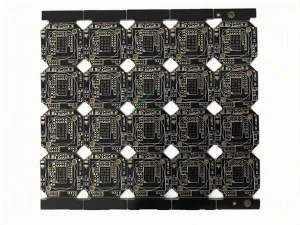
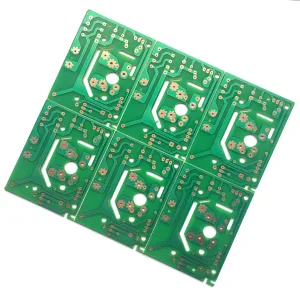
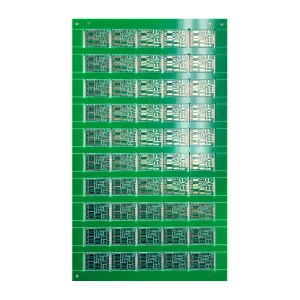
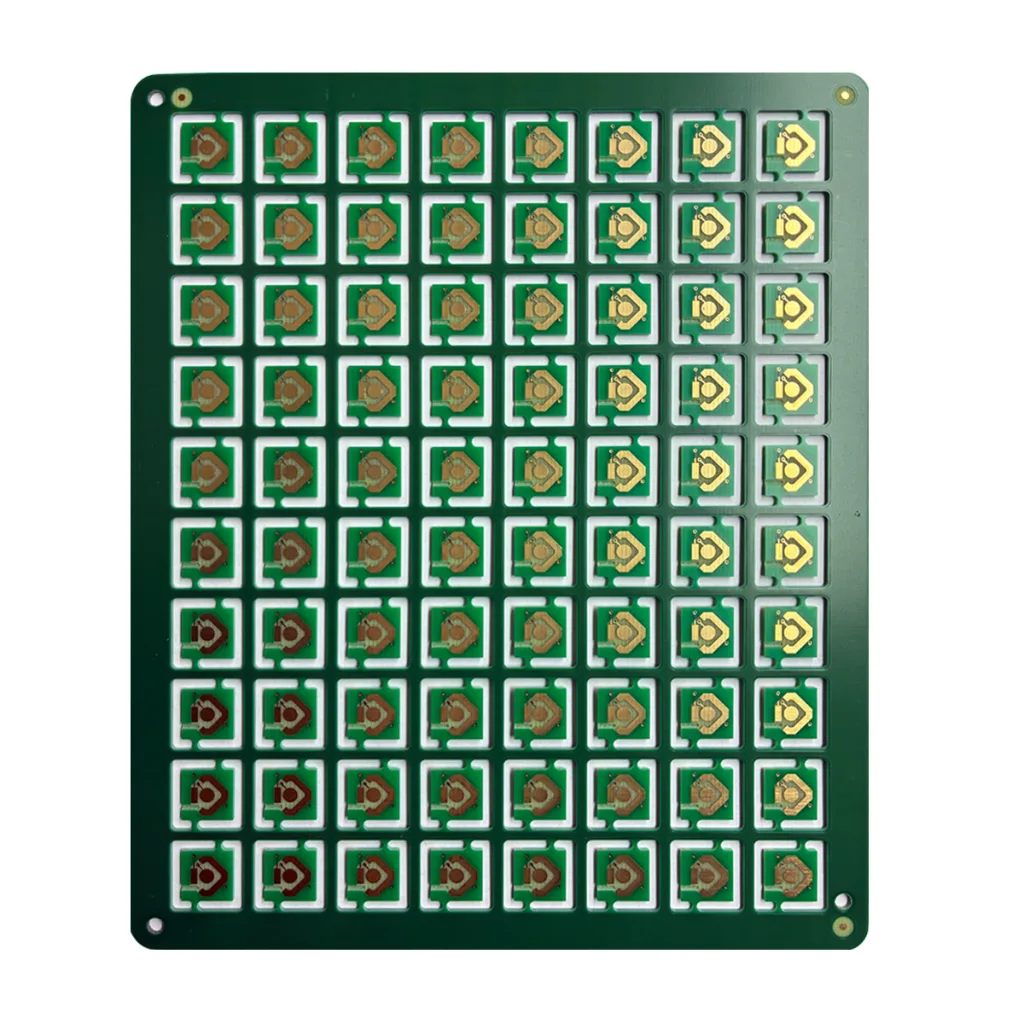
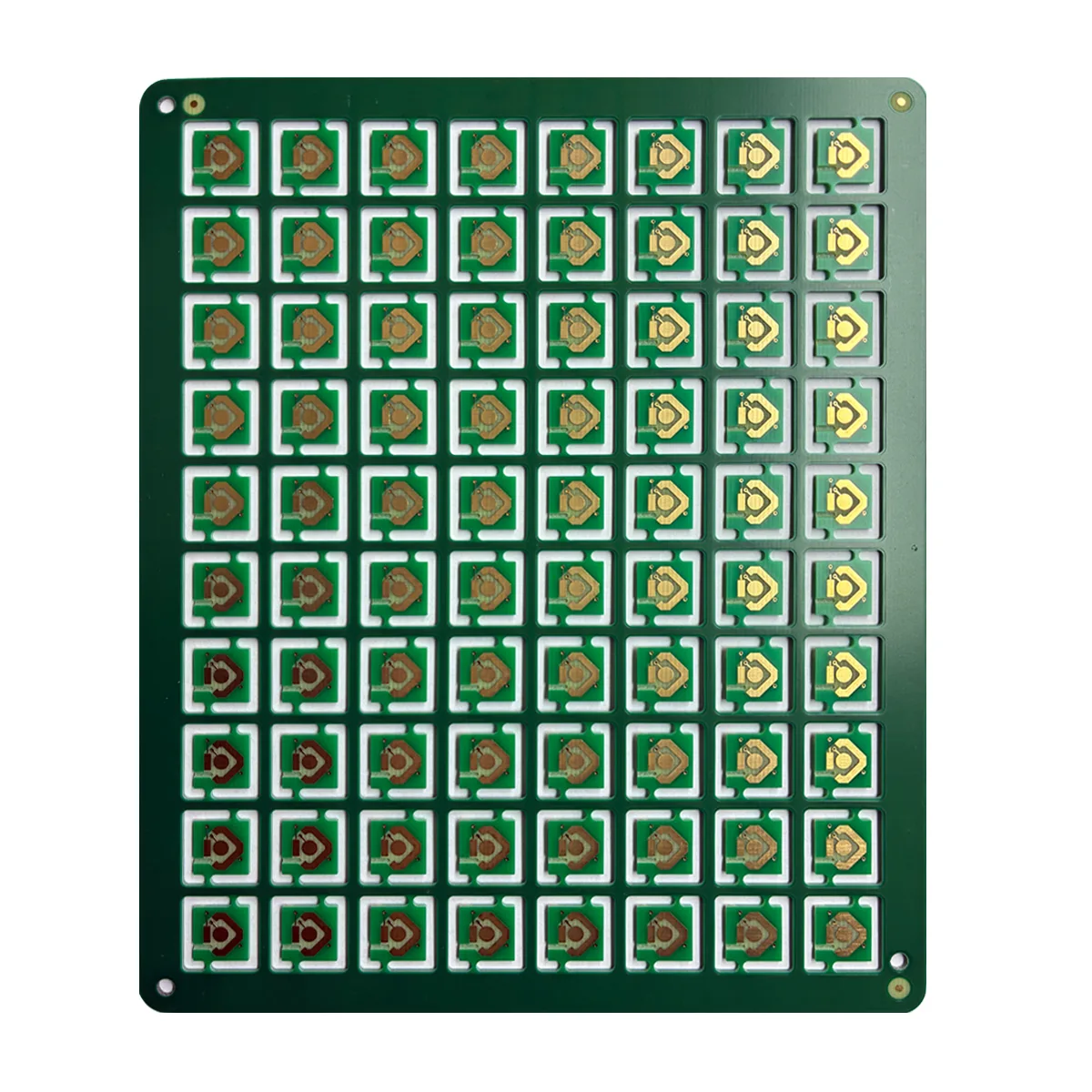
This PCB utilizes Matrix Panelization, where multiple individual PCBs (e.g., 10×10 array) are arranged on a larger production panel connected by Webs (Tabs).
Advantages of Panelization:
- Production Efficiency: Multiple PCBs produced simultaneously, reducing machine setup time.
- Cost Reduction: Minimizes scrap material and maximizes material utilization.
- Assembly Ease: Webs can be separated via routing or V-Cut (V-Scoring) without damaging individual boards.
Additional Product Features:
- High Reliability: FR-4 TG150 + ENIG/Hard Gold withstands harsh environments (high temp, humidity, vibration).
- Low Cost: Mature 2-layer process is 30%-50% cheaper than multi-layer boards.
- Customization: Supports min. 0.1mm hole size, min. 3mil trace/space, and various finishes (Immersion Silver, OSP, etc.).
- Eco-Friendly: Compliant with RoHS and REACH standards; lead-free soldering ready for global export.
VIII. Manufacturing Process: Strict IPC-A-600 & IPC-6012 Control
UGPCB’s workflow adheres strictly to IPC-A-600 (Quality Standard) and IPC-6012 (Performance Specification for Rigid PCBs).
- Cutting: Shearing FR-4 laminate to required dimensions (e.g., 18″x24″).
- Drilling: CNC drilling for component holes (0.3mm) and vias (0.2mm).
- Electroless Copper: Chemical deposition of 1-2μm copper for interlayer connectivity.
- Image Transfer: Applying photoresist, exposing, and developing to transfer circuit patterns.
- Etching: Removing excess copper to form final traces.
- Solder Mask: Coating with green solder mask ink, exposing, and curing to protect circuits.
- Surface Finish: ENIG (2u”) + Hard Gold (30u”) plating for solderability.
- Silkscreen: Printing component designators (R1, C2) and logos.
- Electrical Test: Flying Probe Test to check continuity and isolation (no shorts/opens).
- Routing/V-Cut: Separating individual PCBs from the panel and chamfering edges.
- Final Inspection: AOI (Automated Optical Inspection) for scratches, oxidation, dimensional accuracy, and reliability tests (Thermal Shock, Vibration).
IX. Application Scenarios
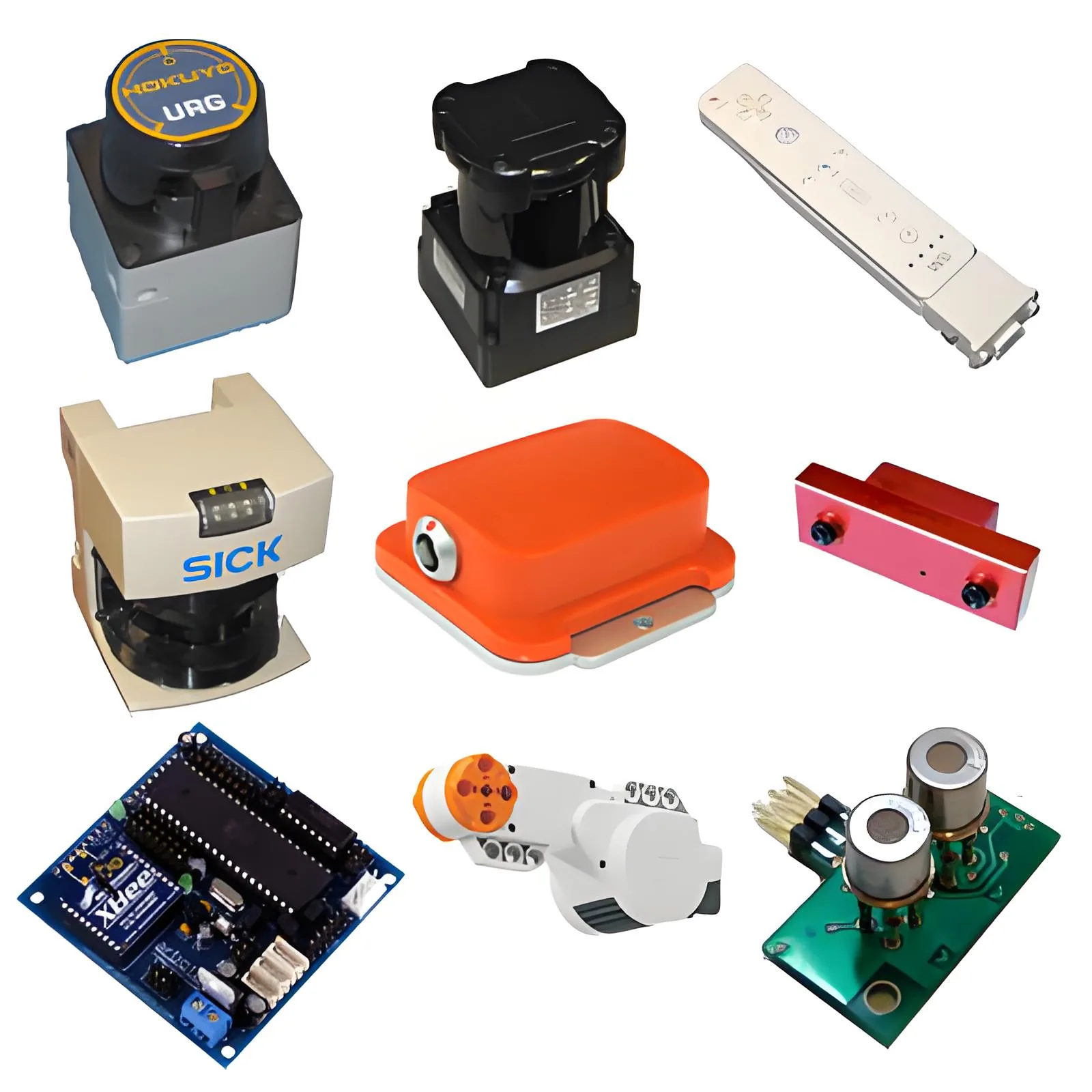
Thanks to its high reliability and cost-effectiveness, this PCB is widely used in:
- Consumer Electronics
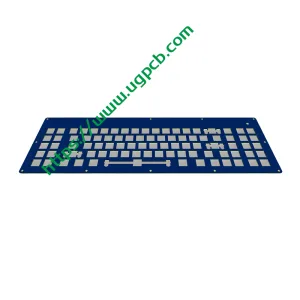
- Mobile/Tablets: Charging boards, power modules, keypads.
- Wearables: Smartwatch motherboards, fitness tracker sensors.
- Home Appliances: AC control boards, washing machine displays.
- Industrial Control
- PLC Modules: I/O boards, communication modules.
- Sensors: Signal processing for temp/pressure sensors.
- Robotics: Servo motor control, encoder interfaces.
- Automotive Electronics
- Infotainment: Navigation mainboards, audio controls.
- Safety Systems: Reverse radar control, TPMS (Tire Pressure Monitoring).
- EVs: Charging pile control, BMS (Battery Management System) auxiliary boards.
- Medical Devices
- Portable Diagnostics: Glucose meters, sphygmomanometers.
- Monitoring: ECG, pulse oximeter signal boards.
- Surgical: Control boards for minimally invasive instruments.
- Other Fields
- Telecom: Router/Switch interface cards.
- Aerospace: Drone flight controllers, satellite comms.
- Smart Home: Smart locks, smart lighting controls.
X. Why Choose UGPCB?
As a professional PCB manufacturer with over 10 years of experience, UGPCB serves 1000+ clients globally.
- Advanced Equipment: Japanese Mitsubishi drills, German LPKF exposure machines, US Test Research flying probe testers.
- Strict Quality: Certified with ISO9001, ISO14001, and IATF16949 (Automotive Industry).
- Fast Turnaround: 24-hour lead time for prototypes; 3-5 days for volume production.
- Free Services: DFM (Design for Manufacturing) Check, free quotes, and free sample testing (for first-time orders).
XI. Request a Quote: Accelerate Your Time-to-Market
If you need 2-layer rigid FR-4 PCBs or have questions about ENIG+Hard Gold or panelization, contact UGPCB today!
- ✅ Free DFM Review: Optimize your design to prevent manufacturing defects.
- ✅ Free Sample Testing: Verify performance before mass production.
- ✅ Competitive Pricing: Cost-effective solutions based on quantity and specs.
- ✅ Rapid Delivery: Prototypes in 24h, Mass production in 3-5 days.
Summary
UGPCB’s 2-Layer Rigid FR-4 PCB, featuring FR-4 TG150 base material and ENIG + Hard Gold surface finish, is the premier choice for applications demanding high reliability and low cost. Whether you are a consumer electronics manufacturer or an automotive engineer, we provide customized solutions that meet IPC-A-600 standards.
Contact us now to start your project and seize market opportunities!