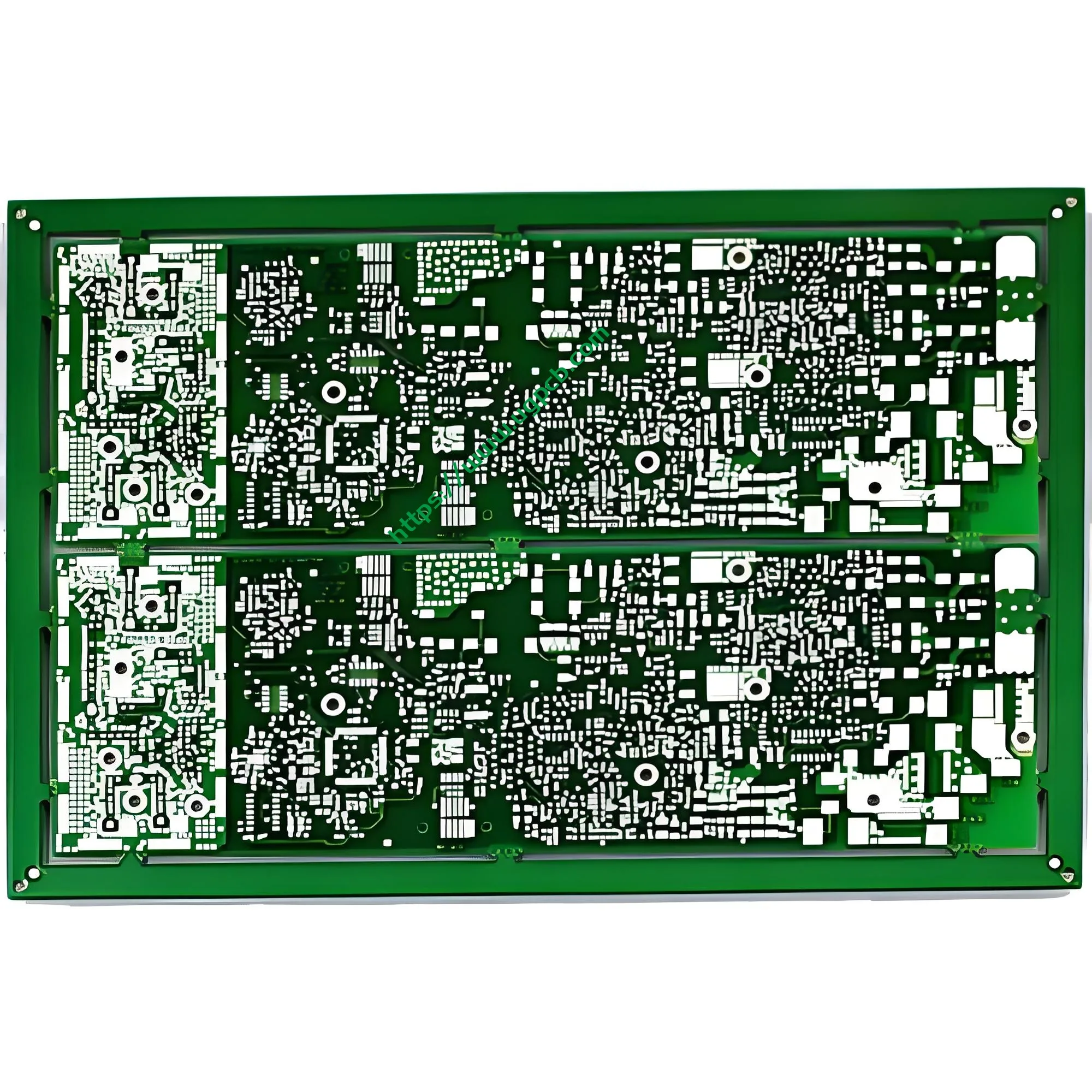
Product Overview: A Rigid PCB Engineered for Medical Device Applications
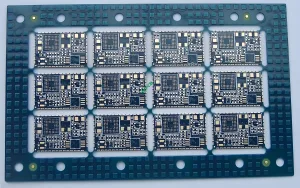
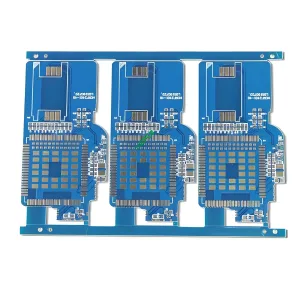
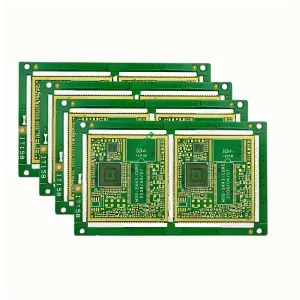
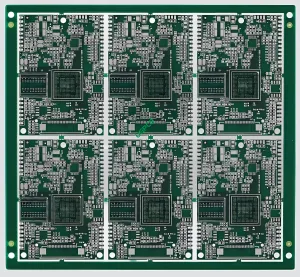
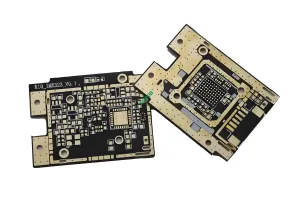
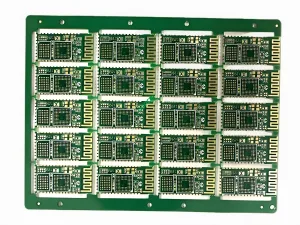
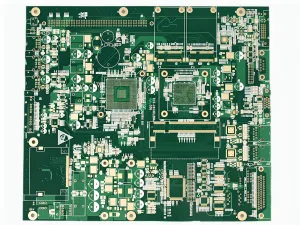
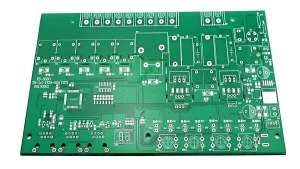
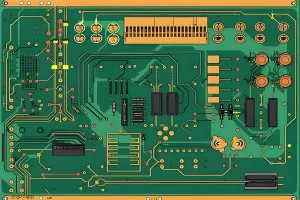
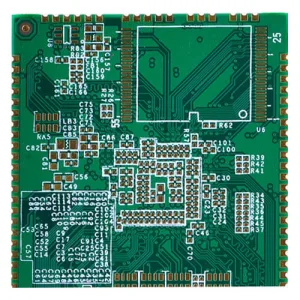
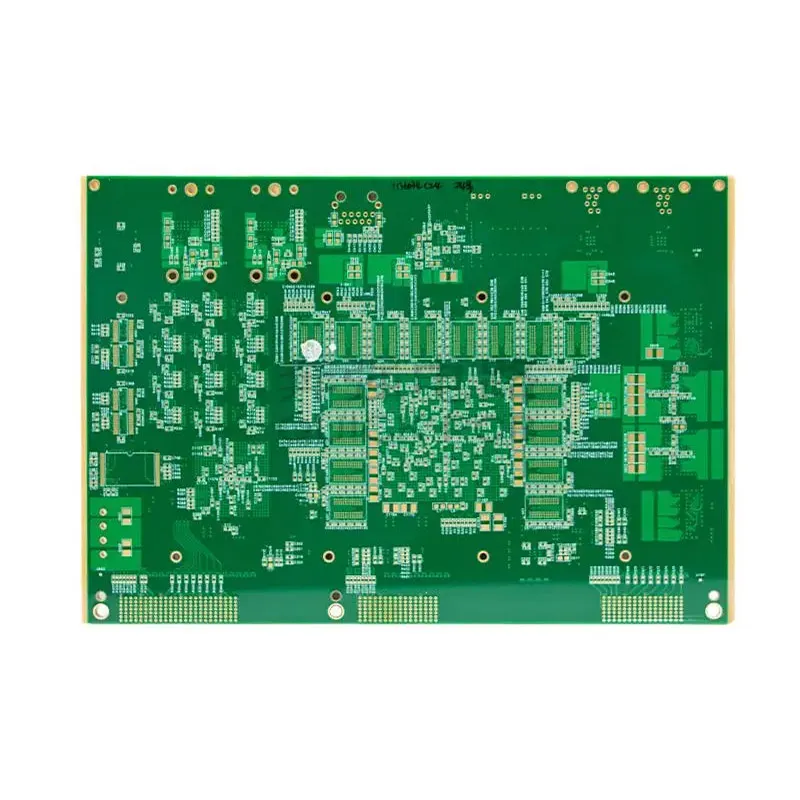
UGPCB Medical Device PCB Board is a 4-layer rigid printed circuit board manufactured in strict compliance with the IPC-6012EM Medical Applications Addendum and IPC Performance Class 3 requirements. This high-reliability medical PCB is built on Shengyi S1000H high-performance FR-4 glass-epoxy laminate, with a finished board thickness of 1.6mm and dimensions of 216.3 × 92.6mm. The board features 1oz copper foil uniformly distributed across all four layers, paired with an immersion silver (IAg) surface finish compliant with IPC-4553A, and a green solder mask with white silkscreen legend.
This medical device PCB is purpose-built for critical healthcare applications including patient monitors, medical imaging systems, infusion pumps, ventilators, and defibrillators. Under the IPC classification system for printed board reliability, Class 3 applies to high-performance electronic equipment operating in harsh environments, requiring “zero downtime” and “100% reliability”. UGPCB manufactures this 4-layer medical PCB to meet these stringent design and performance requirements.
Product Classification and Standard Compliance
Classification by IPC Reliability Level
IPC-6012 defines three reliability classes for rigid printed boards:
- Class 1: General consumer electronics
- Class 2: Dedicated service electronics
- Class 3: High-performance/harsh-environment electronics – medical devices, aerospace, military equipment
UGPCB Medical Device PCB Board is rated IPC Performance Class 3 (High-Performance) and fully complies with IPC-6012EM, the only global industry-consensus standard for medical applications of qualification and performance specifications for rigid printed boards.
Classification by Base Material
- Substrate Category: FR-4.0 high-performance glass-epoxy copper-clad laminate
- Tg Grade: Mid-Tg laminate (Tg ≈ 150–155°C)
- Flammability Rating: UL 94 V-0
Classification by Layer Count
- 4-Layer Board: Standard “Signal-Ground-Power-Signal” stackup configuration
Classification by Surface Finish
- Immersion Silver (IAg) surface finish, compliant with IPC-4553A
Design Highlights: Medical-Grade Standards Drive Precision Engineering
Material Selection – Shengyi S1000H High-Performance Laminate
The base material of a medical PCB directly determines its thermal reliability, electrical performance, and long-term service life. UGPCB selects Shengyi S1000H laminate, with the following core performance parameters:
| Parameter | Typical Value | Test Method | Engineering Significance |
|---|---|---|---|
| Tg (DSC method) | 155°C | IPC-TM-650 2.4.25 | Lead-free soldering compatible; maintains rigidity at elevated temperatures |
| Tg (TMA method) | ~170°C | IPC-TM-650 2.4.24 | Superior Z-axis expansion control |
| Td (5% weight loss) | 348°C | IPC-TM-650 2.4.24.6 | High-temperature soldering resistance; prevents thermal damage |
| CTE (Z-axis, below Tg) | 37 ppm/°C | IPC-TM-650 2.4.24 | Low Z-axis expansion ensures via reliability |
| CTE (Z-axis, above Tg) | 250–300 ppm/°C | — | Controls via stress during thermal cycling |
| Dielectric Constant Dk (1GHz) | 4.3–4.6 | — | Stable signal transmission; suitable for digital high-frequency designs |
| Dissipation Factor Df (1GHz) | 0.018–0.022 | — | Moderate signal loss; meets medical device signal integrity requirements |
| Water Absorption | ≤0.15% | — | Low moisture absorption; suitable for humid medical environments |
Source: Shengyi Technology Co., Ltd. S1000H data sheet
S1000H laminate achieves a Td of 348°C, well above the peak temperature of lead-free reflow soldering (approximately 245–260°C), ensuring no material decomposition occurs during soldering. Its T288 heat resistance time ≥5 minutes (measured up to 20 minutes) means the material withstands 288°C for over 5 minutes without delamination. These thermal properties are critical for medical PCBs operating in demanding environments.
Layer Stackup and Impedance Control
This 4-layer medical device PCB uses a classic stackup configuration:
- Layer 1 (Top): Signal layer
- Layer 2 (Inner Layer 1): Solid ground plane (GND)
- Layer 3 (Inner Layer 2): Power plane (Power)
- Layer 4 (Bottom): Signal layer
This “Signal-Ground-Power-Signal” stackup reduces loop inductance by approximately 30% and effectively suppresses electromagnetic interference (EMI), ensuring reliable transmission of sensitive analog signals and high-speed digital signals in medical electronic devices.
High-Density Routing Design
- Minimum Hole Diameter: 0.1mm – supports HDI-level design
- Minimum Trace Width/Spacing: 0.1mm/0.1mm (approximately 4mil/4mil)
- Copper Foil Thickness: 1oz/1oz/1oz/1oz (approximately 35μm) – equal copper distribution across all four layers
The 0.1mm trace width/spacing represents a high level of precision in PCB manufacturing. Combined with the 0.1mm minimum hole diameter, this medical PCB supports high-density component packages (such as BGA and QFN), meeting the miniaturization and integration trends in medical device design.
Surface Finish – Immersion Silver
This medical PCB uses immersion silver (IAg) surface finish, fully compliant with IPC-4553A Specification for Immersion Silver Plating for Printed Boards. Key advantages of immersion silver include:
- Nickel-free coating: Eliminates magnetic interference and signal issues caused by nickel layers
- High conductivity: Silver offers the best electrical conductivity among all metals
- Uniform thin deposition: Suitable for ultra-fine pitch layouts
- Excellent solderability: Reflow soldering wetting time typically under 2 seconds
- Wire bonding capability: Supports gold wire bonding required in medical devices
- RoHS compliant: Lead-free environmentally friendly process
Operating Principle and Signal Integrity
The core operating principle of a medical device PCB can be summarized as: providing mechanical support and electrical interconnection for electronic components. For this 4-layer board:
- Signal Transmission: Signal traces on the top and bottom layers carry various sensor signals, control signals, and data communication signals. The 0.1mm precision trace width/spacing ensures high-speed signals travel along the shortest possible paths.
- Power Distribution: The inner power layer (Layer 3) provides stable power distribution to all components on the PCB. The 1oz copper thickness ensures sufficient current-carrying capacity.
- Grounding and Shielding: The solid ground plane (Layer 2) provides a low-impedance return path for all signals and acts as an electromagnetic shield, preventing electromagnetic interference between different functional modules within the medical device.
- Impedance Control: By precisely controlling trace width, dielectric thickness, and dielectric constant (Dk=4.3–4.6 @ 1GHz), the design achieves controlled characteristic impedance (e.g., 50Ω single-ended, 100Ω differential), ensuring signal integrity.
Performance Specifications and Reliability Verification
Electrical Performance
| Parameter | Value/Standard | Source |
|---|---|---|
| Dielectric Constant (1GHz) | 4.3–4.6 | Shengyi S1000H data sheet |
| Dissipation Factor (1GHz) | 0.018–0.022 | Shengyi S1000H data sheet |
| Surface Resistivity | ≥10⁹ MΩ | Shengyi S1000H data sheet |
| Volume Resistivity | ≥10⁸ MΩ·cm | Shengyi S1000H data sheet |
| Dielectric Breakdown Voltage | ≥40 kV/mm | Shengyi S1000H data sheet |
Thermal Performance
| Parameter | Value | Source |
|---|---|---|
| Glass Transition Temperature Tg (DSC) | 155°C | Shengyi Technology official data |
| Thermal Decomposition Temperature Td (5% wt loss) | 348°C | Shengyi Technology official data |
| T260 (no delamination at 260°C) | ≥10 minutes | Shengyi S1000H data sheet |
| T288 (no delamination at 288°C) | ≥5 minutes (20 min measured) | Shengyi S1000H data sheet |
| Z-axis CTE (below Tg) | 37 ppm/°C | Shengyi Technology official data |
| Z-axis CTE (above Tg) | 250–300 ppm/°C | Shengyi S1000H data sheet |
Mechanical Performance
| Parameter | Value | Source |
|---|---|---|
| Flexural Strength | ≥400 MPa | Shengyi S1000H data sheet |
| Peel Strength (copper adhesion) | ≥1.0 N/mm | Shengyi S1000H data sheet |
| Young’s Modulus | ~20 GPa | Shengyi S1000H data sheet |
| Water Absorption | ≤0.15% | Shengyi S1000H data sheet |
Flammability Rating
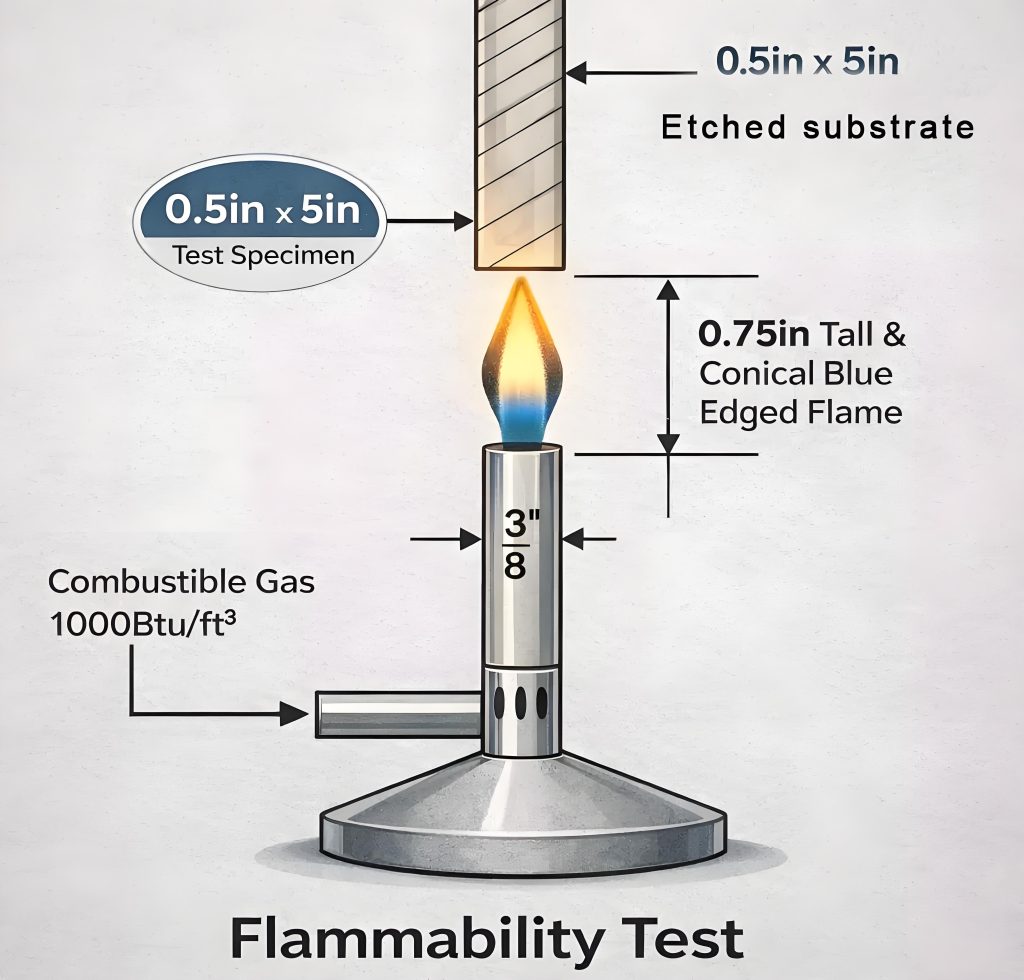
The base material of this medical device PCB complies with UL 94 V-0 – meaning that in the vertical burn test, the material self-extinguishes within 10 seconds after the flame is removed and does not drip burning particles. This is critical for fire safety in medical electronic equipment.
Manufacturing Process and Quality Control
Medical-grade PCBs require strict process control and comprehensive quality inspection. UGPCB’s manufacturing process includes:
Core Manufacturing Steps
- Material Cutting: Cut Shengyi S1000H copper-clad laminate to required dimensions
- Inner Layer Circuitry: Pattern transfer and etching for inner layers (Layer 2, Layer 3)
- Brown Oxide Treatment: Enhances adhesion between inner layer copper and prepreg
- Lamination: Press four layers together under high temperature and pressure
- Drilling: Mechanical drilling of 0.1mm minimum holes
- Electroless Copper Deposition & Panel Plating: Metallization of hole walls for interlayer connections
- Outer Layer Circuitry: Pattern transfer and etching for top and bottom layers
- Solder Mask Application: Green solder mask printing
- Surface Finish: Immersion silver (IAg) process
- Legend Printing: White silkscreen legend
- Routing: CNC profile routing
- Electrical Testing: Flying probe or fixture testing
- Final Inspection: AOI optical inspection + visual inspection
Quality Standards and Certifications
UGPCB Medical Device PCB manufacturing strictly follows these standards:
- IPC-6012EM: Medical Applications Addendum to IPC-6012E
- IPC-A-600: Acceptability of Printed Boards
- IPC-6012 Class 3: Class 3 performance requirements for rigid printed boards
- IPC-4553A: Immersion silver plating specification
- UL 94 V-0: Flammability rating
- ISO 13485: Medical devices quality management system
Application Scenarios and Operating Environments
Typical Medical Device Applications
This medical device PCB is widely used in the following medical electronic products:
- Patient Monitors: Multi-parameter monitoring (ECG, SpO₂, NIBP)
- Infusion and Syringe Pumps: Precise control of drug delivery rates
- Ventilators and Anesthesia Machines: Core control boards for life support systems
- Defibrillators (AED): High-reliability emergency medical equipment
- Medical Imaging Systems: Ultrasound diagnostic equipment, portable X-ray machines
- Portable Diagnostic Devices: Glucose meters, handheld pulse oximeters
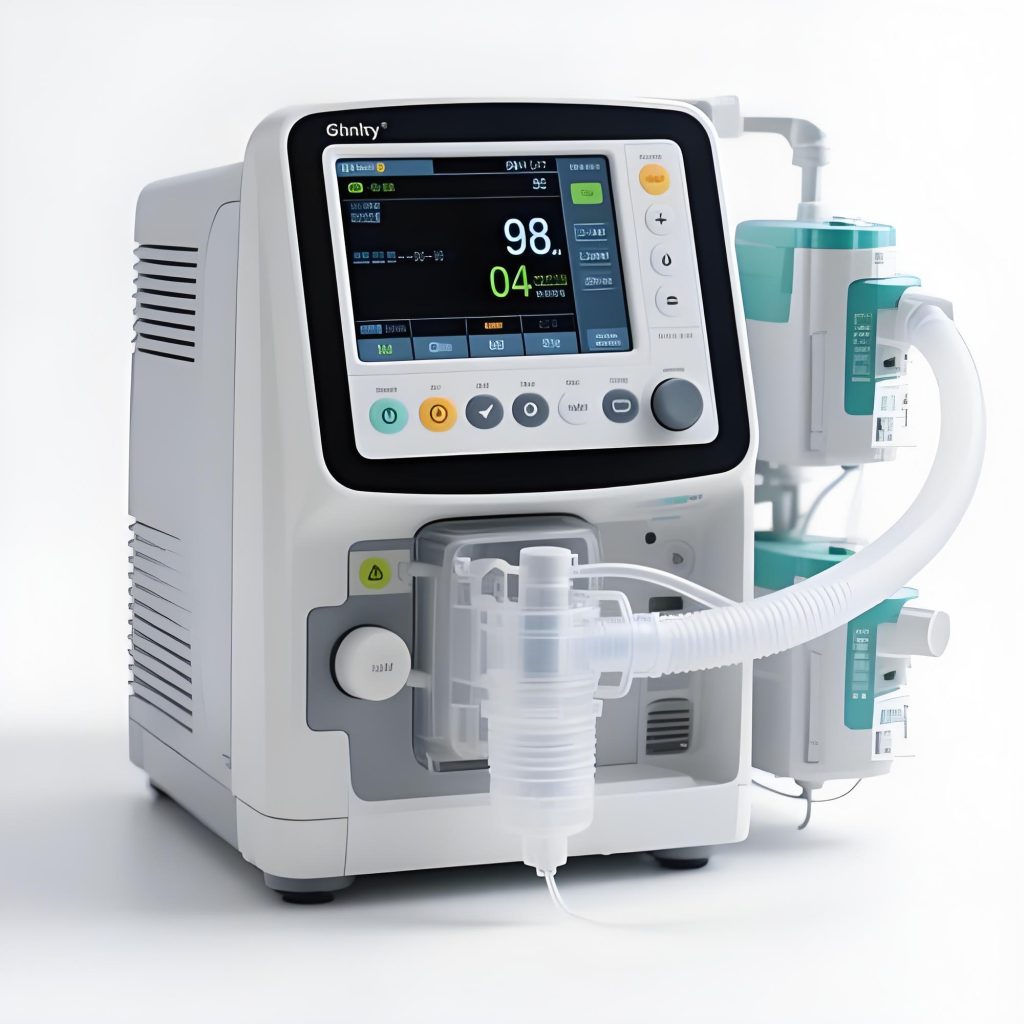
Operating Environment Requirements
- Operating Temperature Range: -40°C to +125°C (based on thermal margin of S1000H Tg=155°C)
- Relative Humidity: ≤95% (based on water absorption ≤0.15%)
- Electrical Safety: Compliant with IEC 60601 medical electrical equipment safety standards
- Reliability Requirement: IPC Class 3 “zero downtime” standard
Product Feature Summary
| Feature | Description |
|---|---|
| Medical-Grade Standard | Compliant with IPC-6012EM Medical Addendum + IPC Class 3 |
| High-Performance Laminate | Shengyi S1000H, Tg=155°C, Td=348°C, UL 94 V-0 |
| Precision Routing | Minimum trace width/spacing 0.1mm, minimum hole diameter 0.1mm |
| Equal Copper Distribution | 1oz/1oz/1oz/1oz across all four layers |
| Immersion Silver Finish | IPC-4553A compliant, nickel-free, high conductivity, excellent solderability |
| Low Z-axis CTE | CTE (Z-axis, below Tg) = 37 ppm/°C, ensures via reliability |
| CAF Resistance | Excellent resistance to conductive anodic filament formation |
| Lead-Free Compatible | Supports lead-free reflow soldering processes |
Why Choose UGPCB Medical Device PCB?
Authoritative Standard Compliance
UGPCB Medical Device PCB strictly follows IPC-6012EM – the only global industry-consensus standard for medical applications of qualification and performance specifications for rigid printed boards. This standard was developed by the IPC D-33AM Task Group to “eliminate gaps between technical and regulatory requirements”.
Material Science Excellence
The Td=348°C and T288≥5 minutes thermal performance of Shengyi S1000H laminate ensure no material decomposition or delamination occurs during lead-free soldering (peak temperature approximately 245–260°C). The Z-axis CTE=37 ppm/°C (below Tg) low expansion characteristic effectively reduces via stress in multilayer boards during thermal cycling.
Manufacturing Precision Leadership
The 0.1mm minimum trace width/spacing and 0.1mm minimum hole diameter represent a high level of precision PCB manufacturing. This precision enables the medical PCB to support high-density interconnect (HDI) designs and ultra-fine pitch component assembly.
Surface Finish Process Excellence
The immersion silver (IAg) surface finish complies with IPC-4553A. The nickel-free coating eliminates magnetic interference, and the uniform thin silver layer ensures excellent solderability and wire bonding capability – critical for medical devices that extensively use BGA, QFN, and other fine-pitch packages.
Inquiries and Ordering
UGPCB is committed to providing IPC-6012EM Class 3 compliant high-reliability medical device PCBs to medical equipment manufacturers worldwide. Whether you are a medical electronics startup in the product development phase or a large medical device OEM requiring volume production, UGPCB offers a one-stop solution from PCB design to PCBA assembly.
Contact us today for:
- Free PCB/PCBA engineering consultation and Design for Manufacturability (DFM) assessment
- Medical device PCB quotations compliant with IPC Class 3 standards
- Professional material selection recommendations for high-frequency laminates like Shengyi S1000H
- Technical support for specialty surface finishes including immersion silver
- Flexible delivery options from small-batch prototyping to high-volume production
📧 Sales Inquiries: sales@ugpcb.com
🌐 Website: www.ugpcb.com
Data Source Declaration
The technical data and standard information cited in this document are derived from the following authoritative sources:
- IPC-6012 Qualification and Performance Specification for Rigid Printed Boards – Association Connecting Electronics Industries (IPC)
- IPC-6012EM Medical Applications Addendum to IPC-6012E – IPC
- IPC-4553A Specification for Immersion Silver Plating for Printed Boards – IPC
- Shengyi S1000H Laminate Technical Data – Shengyi Technology Co., Ltd. official data sheet
- UL 94 Tests for Flammability of Plastic Materials for Parts in Devices and Appliances – UL (Underwriters Laboratories)
- IPC-2221 Generic Standard on Printed Board Design – IPC
- ISO 13485 Medical devices – Quality management systems – International Organization for Standardization (ISO)