Product Overview: A Precision-Engineered Control Core for Hair Curlers
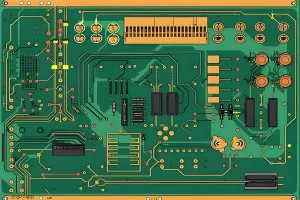
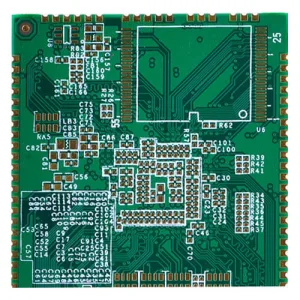
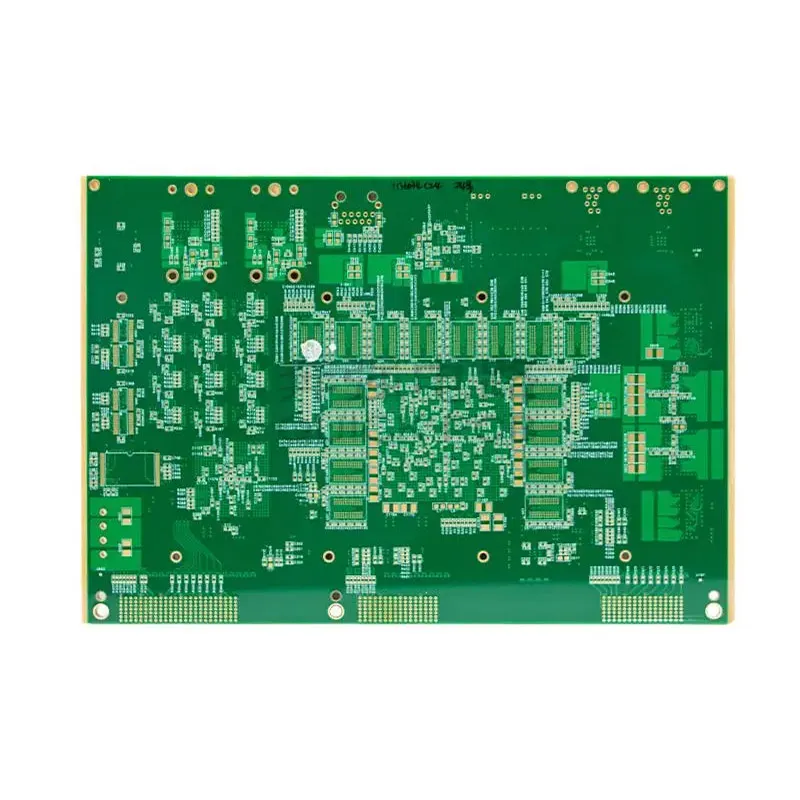
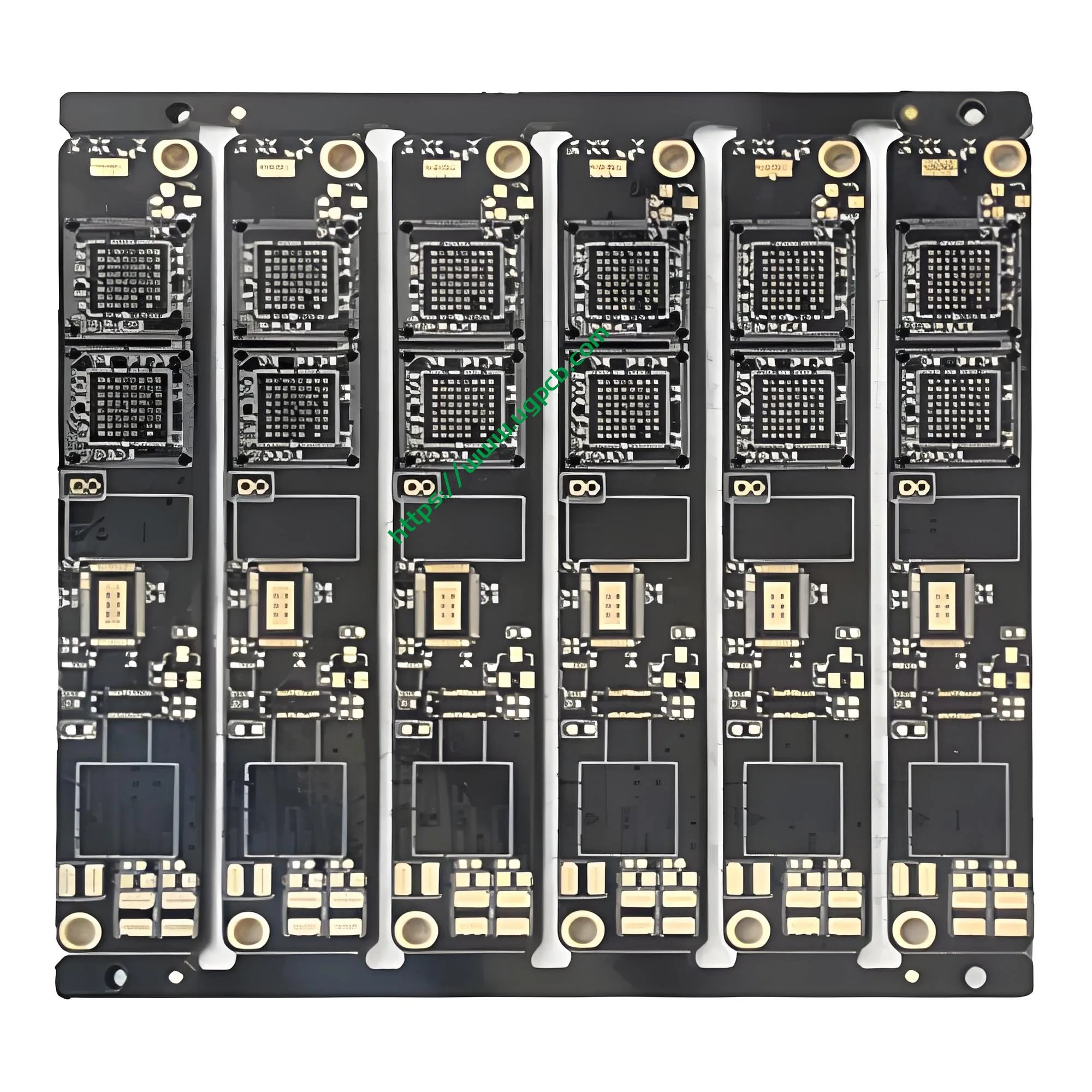
The hair curler PCB circuit board serves as the essential control component in modern hair styling devices. It manages temperature precision, power distribution, and safety protection functions. UGPCB offers this professional-grade hair curler printed circuit board with high-standard industrial design and manufacturing processes. It delivers a stable and reliable electronic control solution for various hair styling equipment.
This hair curler PCBA core board measures 76.82 × 13.6 mm. It uses FR-4 rigid glass-epoxy laminate material. FR-4 is an internationally recognized flame-retardant epoxy glass cloth laminate. Its flame retardancy meets UL 94 V-0 standards. This requires the material to self-extinguish within 10 seconds during vertical burn testing. It must also produce no flaming drips that ignite cotton. This provides fundamental safety assurance for hair curlers operating under high-power heating conditions. The material has a glass transition temperature (Tg) of 130–140°C. This ensures effective resistance to thermal stress during hair curler operation.
The product uses a 2-layer double-sided board design. Board thickness is 1.0 mm. Copper foil thickness is 1/1 OZ (approximately 35 μm per layer). Minimum aperture is 0.32 mm. Line width and spacing are 0.3 mm and 0.41 mm respectively. Surface treatment uses OSP (Organic Solderability Preservatives) antioxidant finish. Solder mask is black with white silkscreen characters. This delivers a clean and professional appearance.
This hair curler circuit board is now available on the UGPCB official website. It suits intelligent hair curlers, straightening-curling combo devices, and other hair styling equipment.
Product Definition: What Is a Hair Curler PCB?
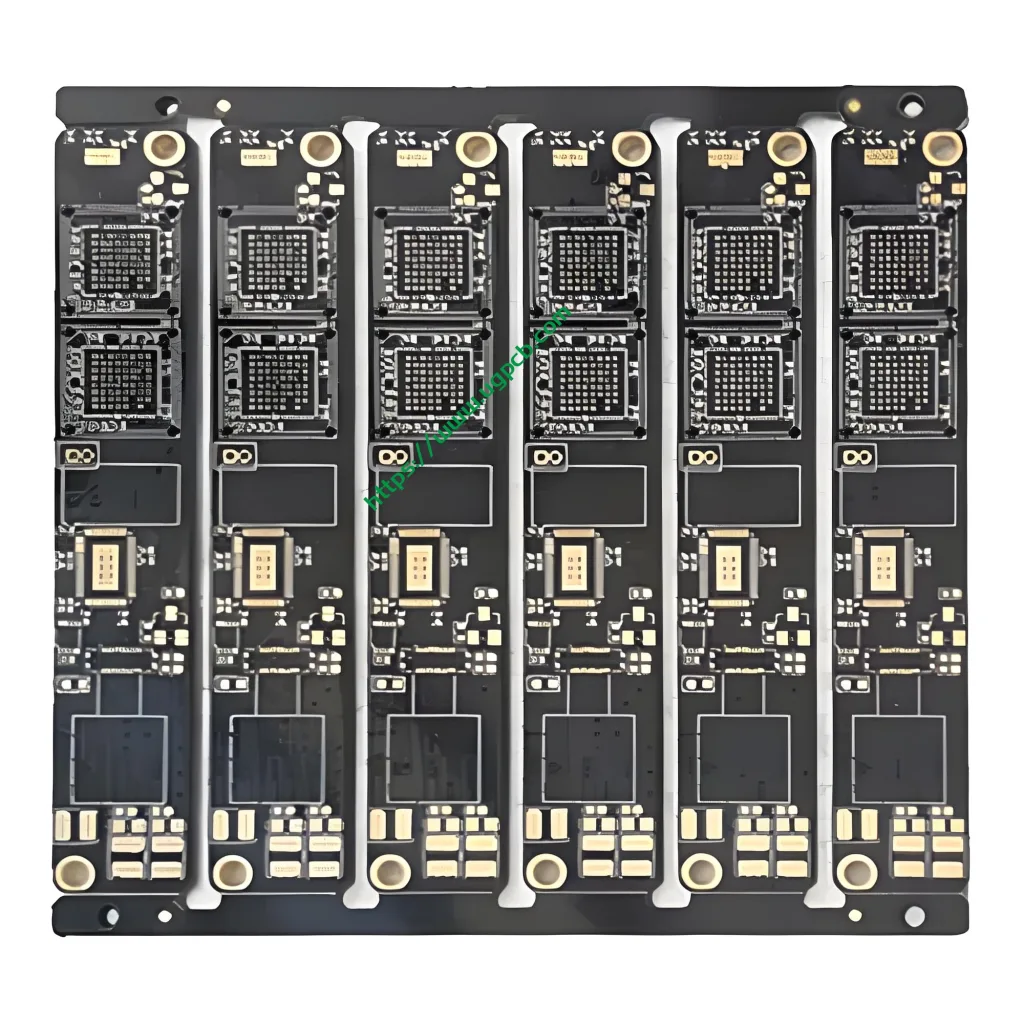
A hair curler PCB (Printed Circuit Board) is the core electronic component inside a hair curler. It provides electrical connections, signal transmission, and functional control. The board connects power input, main control chips, temperature sensors, heating elements, and display modules through conductive traces. These components form a complete functional system.
From a technical perspective, this is a consumer-grade rigid double-sided printed circuit board. It falls under the rigid printed board category defined in IPC-6012. Under IPC product class classification, this hair curler PCBA belongs to Class 2 (Dedicated Service Electronic Products). This classification applies to consumer devices requiring continuous operation and extended service life.
This hair curler circuit board integrates four core functional modules through precision circuit design:
- Power input circuit: Converts external power (AC 110V/220V or DC battery) to the operating voltage required by the device.
- Power management circuit: Regulates, filters, and distributes power to ensure stable operation of each module.
- Main control circuit: Includes the main control chip, charging detection circuit, and battery temperature detection circuit.
- Heating wire control circuit: Precisely controls heating element power on/off to achieve temperature regulation.
In terms of product form, this hair curler PCB is supplied as a bare board (without PCBA assembly). Customers can perform their own component mounting and functional customization based on specific product requirements.
Design Highlights: Precision Calculation and Engineering Expertise
Compact Dimensions with High-Density Routing
This hair curler PCB board measures just 76.82 × 13.6 mm. This long and narrow space must accommodate complete power management, main control, and heating control circuits. Design engineers face significant high-density routing challenges. The precision parameters—minimum aperture 0.32 mm, line width/spacing 0.3/0.41 mm—enable reliable trace routing within the limited board area.
Per IPC-2221 (Generic Standard on Printed Board Design), designers must consider electrical clearance (creepage distance), impedance control, and thermal management. The 0.32 mm minimum aperture ensures reliable plated-through holes while leaving sufficient space for high-density routing.
Thermal Management Design
Hair curlers generate heating element temperatures ranging from 80°C to 200°C during operation. The PCB sits close to the heat source as the control board. It must demonstrate excellent heat resistance. The FR-4 material choice (Tg 130–140°C) and 1.0 mm board thickness maintain mechanical strength while optimizing thermal dissipation paths.
Electrical Performance Design
The 1/1 OZ copper foil thickness (approximately 35 μm per layer) ensures sufficient current-carrying capacity. Per IPC-2221 current-carrying calculation standards, 1 OZ copper can carry approximately 1–1.5 A per millimeter of trace width at a 10°C temperature rise. The 0.3 mm trace width combined with 1 OZ copper thickness adequately meets the current requirements of hair curler heating control circuits.
Surface Finish Selection
OSP (Organic Solderability Preservatives) antioxidant surface treatment is selected with an OSP film thickness of 0.2–0.5 μm. This choice is based on several key considerations:
- Cost advantage: OSP offers lower cost, suitable for high-volume consumer electronics production.
- Excellent surface flatness: OSP-treated pads provide a very flat surface, ideal for SMT assembly.
- Environmentally friendly: OSP contains no lead or other hazardous substances, meeting RoHS requirements.
- Good solderability: The OSP protective film is quickly removed by flux at soldering temperatures, ensuring quality solder joints.
It is worth noting that OSP-finished PCBs should be assembled within 8 to 24 hours of unpacking to prevent copper surface oxidation. Customers should coordinate their production schedules accordingly.
Working Principle: From Power Input to Precision Temperature Control
System Workflow
The overall working principle of this hair curler control circuit follows five steps:
Step 1: Power Input and Conversion. External power (AC 110V/220V or built-in lithium battery) enters the PCB through the power input circuit. The power management circuit rectifies, filters, and regulates the voltage. It then supplies the required operating voltage to each module.
Step 2: Temperature Setting and Signal Acquisition. Users set the desired temperature (80–200°C adjustable) via buttons or knobs. Meanwhile, the on-board NTC thermistor temperature detection circuit monitors the heating element temperature in real time. It converts temperature signals into electrical signals and feeds them back to the main control chip.
Step 3: Main Control Chip Computation and Decision. The MCU (Microcontroller Unit) receives both the set temperature value and the real-time temperature feedback. It performs calculations using a PID (Proportional-Integral-Derivative) control algorithm or a simplified temperature control logic. It determines the deviation between current and target temperatures.
Step 4: PWM Drive Output. The MCU outputs PWM (Pulse Width Modulation) signals based on computation results. These signals control the heating element power through the drive circuit. When temperature falls below the set value, heating power increases. When temperature approaches or reaches the set value, heating power decreases or shuts off.
Step 5: Safety Protection Mechanism. The system continuously monitors battery temperature, heating wire temperature, and circuit current. When anomalies are detected—such as over-temperature, over-current, or short circuits—the fault detection and auto-protection circuit immediately cuts off power to ensure user safety.
Bimetal Thermostat Principle (Reference for Traditional Solutions)
Some hair curler products use bimetal strips as temperature control elements. The principle works as follows: as temperature rises, heat transfers to the bimetal disc. Because the two metals have different coefficients of thermal expansion, the disc deforms and bends. At a predetermined temperature, it rapidly actuates. Through a mechanical mechanism, it opens or closes contacts, thereby switching the circuit on or off. Modern intelligent hair curlers typically use MCU-plus-temperature-sensor electronic temperature control solutions. These offer significantly higher temperature control accuracy.
Primary Applications and Use Scenarios
Core Applications
This hair curler PCB circuit board serves as the control mainboard for hair curlers, hair straighteners, straightening-curling combo devices, and other hair styling equipment. It delivers the following functions:
- Precision temperature control: Supports multi-level temperature adjustment from 80–200°C.
- Power management: Supports both corded power and built-in lithium battery charging management.
- Safety protection: Multi-layer protection including over-temperature, over-current, and short-circuit protection.
- User interaction: Drives LED/LCD displays to show real-time temperature and operating status.
- Portable design: Cordless operation with built-in battery after full charge, convenient for travel.
Application Scenarios
| Application Scenario | Description |
|---|---|
| Home hair curlers | Personal daily styling with adjustable temperature for different hair types |
| Professional hair salons | Requires precise temperature control, fast response, and long continuous operation |
| Travel portable curlers | Lithium battery powered, USB charging, lightweight and compact |
| Smart styling devices | Intelligent curlers with integrated negative ion, steam, and other added features |
| Straightening-curling combo | Multi-functional styling devices combining straightening and curling capabilities |
Product Classification
This product can be classified along multiple dimensions:
By Substrate Material
FR-4 Rigid Printed Board – Glass-fiber reinforced epoxy resin copper-clad laminate
By Layer Count
2-Layer Double-Sided Board – Circuits on both top and bottom layers
By Surface Finish
OSP (Organic Solderability Preservatives) Finished Board
By Solder Mask Color
Black Solder Mask with White Silkscreen PCB
By IPC Performance Class
Class 2 (Dedicated Service Electronic Products) – Suitable for consumer electronics requiring continuous operation and extended service life
By Application Field
Consumer Electronics PCB / Personal Care Device PCB
By UL Certification Category
Rigid Printed Wiring Board – Compliant with UL 796 standards
Material Composition and Performance Specifications
Substrate: FR-4 Glass-Epoxy
FR-4 stands for “Flame Retardant Type 4.” This indicates glass-fiber reinforced epoxy material with a UL 94 V-0 flame retardancy rating. Key performance parameters include:
| Performance Parameter | Specification | Reference Standard |
|---|---|---|
| Glass Transition Temperature (Tg) | 130–140°C | DSC test method |
| Flame Retardancy Rating | UL 94 V-0 | UL standard |
| Thermal Conductivity | 0.25–0.3 W/m·K | — |
| Temperature Resistance | Suitable for leaded soldering processes | — |
Copper Foil
Both inner and outer layer copper foil thickness is 1 OZ (approximately 35 μm) . Copper foil serves as the primary conductor for circuit traces. Its thickness directly affects trace current-carrying capacity and impedance characteristics.
Surface Finish: OSP Antioxidant Layer
OSP (Organic Solderability Preservatives) is an organic film chemically grown on clean bare copper surfaces. This film provides oxidation resistance, thermal shock resistance, and moisture resistance. It protects copper surfaces from oxidation or sulfidation under normal environmental conditions. OSP film thickness is typically 0.2–0.5 μm.
Solder Mask and Silkscreen
- Solder mask: Black ink covering all areas except pads. Provides insulation and protection.
- Silkscreen: White characters marking component designators, polarity, and other information.
Product Structure and Features
Product Structure
This hair curler circuit board uses the following layer structure:
- Top copper layer (1 OZ) – Primary signal and power traces
- FR-4 substrate (1.0 mm) – Mechanical support and electrical insulation
- Bottom copper layer (1 OZ) – Auxiliary signal traces and ground plane
- Black solder mask – Covers top and bottom layers for circuit protection
- OSP surface finish – Protects pad copper and ensures solderability
- White silkscreen markings – Clearly labels component positions
Key Features
① High-Precision Manufacturing
Precision parameters—minimum aperture 0.32 mm, line width/spacing 0.3/0.41 mm—demonstrate high-precision PCB fabrication capability. This ensures signal integrity and reliability.
② Excellent Thermal Management
FR-4 substrate (Tg 130–140°C) combined with 1.0 mm board thickness maintains dimensional stability and electrical insulation under high-temperature hair curler operating conditions.
③ Reliable Surface Finish
OSP antioxidant finish provides excellent solderability while delivering a flat soldering surface suitable for high-density SMT assembly. The black solder mask with white silkscreen ensures clear appearance marking and reliable insulation protection.
④ Compact Form Factor
The 76.82 × 13.6 mm long and narrow dimensions are specifically designed for hair curler handle interiors. This maximizes space savings within the device.
⑤ Complete Functional Integration
A single 2-layer board integrates four major circuit modules: power input, power management, main control, and heating control. This delivers a complete control chain from power source to heating element.
⑥ International Standards Compliance
Product design and manufacturing comply with IPC-6012 (Qualification and Performance Specification for Rigid Printed Boards) and UL 796 (Standard for Printed Wiring Boards).
Manufacturing Process
UGPCB follows this standard manufacturing process for the hair curler PCB circuit board:
Step 1: Incoming Material Inspection
Inspect FR-4 copper-clad laminate to verify board thickness (1.0 mm), copper foil thickness (1/1 OZ), and other parameters meet specifications.
Step 2: Circuit Pattern Generation (Direct outer layer for double-sided boards)
- Lamination: Apply dry film photoresist to copper surfaces.
- Exposure: Transfer circuit patterns from artwork to dry film.
- Development: Remove unexposed dry film to expose copper areas for etching.
- Etching: Use etchant to remove exposed copper, forming circuit traces.
- Strip: Remove remaining dry film protective layer.
Step 3: AOI Optical Inspection
Use AOI (Automated Optical Inspection) equipment to scan circuits. Check for opens, shorts, and under-etch defects.
Step 4: Drilling
Drill holes per design specifications. Minimum aperture is 0.32 mm.
Step 5: Electroless Copper Deposition and Panel Plating
Deposit a thin copper layer on hole walls (electroless copper). Then electroplate to build up hole wall copper thickness. This achieves interlayer electrical connections.
Step 6: Outer Layer Circuit Generation (Second circuit process for double-sided boards)
Repeat lamination, exposure, development, etching, and stripping to form final circuit patterns.
Step 7: Solder Mask Application
- Print black ink: Apply black solder mask ink to board surfaces.
- Expose and develop: Expose and develop to expose pad areas.
- Cure: Heat-cure the solder mask layer.
Step 8: Surface Finish – OSP
Immerse PCBs in OSP chemistry to grow a 0.2–0.5 μm organic protective film on exposed copper surfaces.
Step 9: Silkscreen Printing
Print white silkscreen characters using high-precision laser文字 printing.
Step 10: Electrical Testing
Perform electrical continuity and insulation testing using flying probe or dedicated test fixtures.
Step 11: Final Inspection and Packaging
Conduct visual inspection, dimensional measurement, and sample reliability testing. Package in vacuum-sealed bags upon approval.
Use Scenarios and Target Customers
Typical Use Scenarios
Scenario 1: Home Hair Curler Manufacturing
Home appliance brands developing hair curler products need a stable, cost-effective PCB control board. This hair curler circuit board offers 80–200°C wide-range temperature adjustment to meet different hair type styling requirements.
Scenario 2: Professional Salon-Grade Styling Equipment
Professional salons demand higher temperature stability, response speed, and durability. FR-4 substrate and 1 OZ copper foil design ensure reliability during extended continuous operation.
Scenario 3: Portable Cordless Hair Curlers
Battery-powered portable curlers require integrated charging management, battery protection, and temperature control on a single PCB. The compact form factor (76.82 × 13.6 mm) fits perfectly inside handle enclosures.
Scenario 4: Smart Hair Styling Ecosystems
Smart curlers integrating negative ion emission, steam generation, and APP control require additional interfaces and processing capability from the PCB.

Target Customer Groups
- Hair styling device brands/OEM manufacturers: Need high-quality PCBs for hair curler, straightener, and combo device production.
- PCBA solution design companies: Require standard PCBs for solution development and validation.
- Electronics R&D institutions: Engineering teams developing innovative hair styling equipment.
- Cross-border e-commerce sellers: Seeking stable supply chains for hair styling device exports.
Why Choose UGPCB?
Professional Manufacturing Capability
UGPCB provides one-stop services from PCB design and fabrication to PCBA assembly. This hair curler PCB circuit board uses industry-leading manufacturing processes. Every board meets IPC Class 2 quality standards.
Strict Quality Control
From incoming material inspection to final product shipment, every process step undergoes rigorous quality control. AOI (Automated Optical Inspection) ensures defect-free circuits, and electrical testing guarantees 100% electrical performance compliance.
International Safety Standard Compliance
Products comply with IPC-6012 (Rigid Printed Board Performance Specification) and UL 796 (Printed Wiring Board Safety Standard). Substrate flame retardancy meets UL 94 V-0. This provides strong support for customers to pass global safety certifications.
Fast Response and Delivery
Customers simply provide Gerber files, BOM lists, and design documents. The UGPCB team delivers complete quotations within 24 hours.
Request a Quote – Get Your Custom Solution Today
UGPCB offers this hair curler PCB circuit board in standard production volumes. Customization options are also available—including size modification, layer count increase, surface finish changes (such as ENIG immersion gold, HASL hot air solder leveling), and solder mask color customization.
📧 Get a Quote: Send Gerber files + BOM list to the UGPCB official email.
💬 Online Inquiry: Visit the UGPCB official website and contact online customer service.
📞 Phone Consultation: Call the UGPCB official service hotline.
UGPCB – Your Trusted PCB/PCBA One-Stop Service Partner
Data Source Statement
The technical data and standards referenced in this article are sourced from the following authoritative organizations:
- IPC (Association Connecting Electronics Industries) – IPC-6012 Qualification and Performance Specification for Rigid Printed Boards; IPC-2221 Generic Standard on Printed Board Design
- UL (Underwriters Laboratories) – UL 796 Standard for Printed Wiring Boards; UL 94 Standard for Tests for Flammability of Plastic Materials for Parts in Devices and Appliances
- NEMA (National Electrical Manufacturers Association) – FR-4 material grade standards
- Industry Technical References – FR-4 material property parameters; OSP surface finish process parameters
All data above are sourced from publicly released standard documents and industry technical literature. For further verification, please contact us with any questions.