

Con l’elettronica che diventa più sottile e pieghevole, circuiti stampati flessibili (FPCS) stanno prendendo il centro della scena. Cavi cerniera nei telefoni pieghevoli, connessioni dei sensori negli smartwatch, e i display flessibili negli abitacoli delle auto richiedono tutti un perfetto equilibrio tra flessibilità e affidabilità. Eppure emerge una dura realtà: i dati del settore lo dimostrano 60% dei guasti sul campo nei circuiti flessibili deriva da stress meccanico, non difetti elettrici.
Progettare un FPC è facile. Progettarne uno che soddisfi le esigenze funzionali e sopravviva a piegature ripetute è difficile. Questa guida copre le regole di progettazione, parametri fondamentali del processo, Selezione del materiale, standard di qualità, e decisioni sugli appalti. Imparerai i punti chiave dalla progettazione alla produzione.
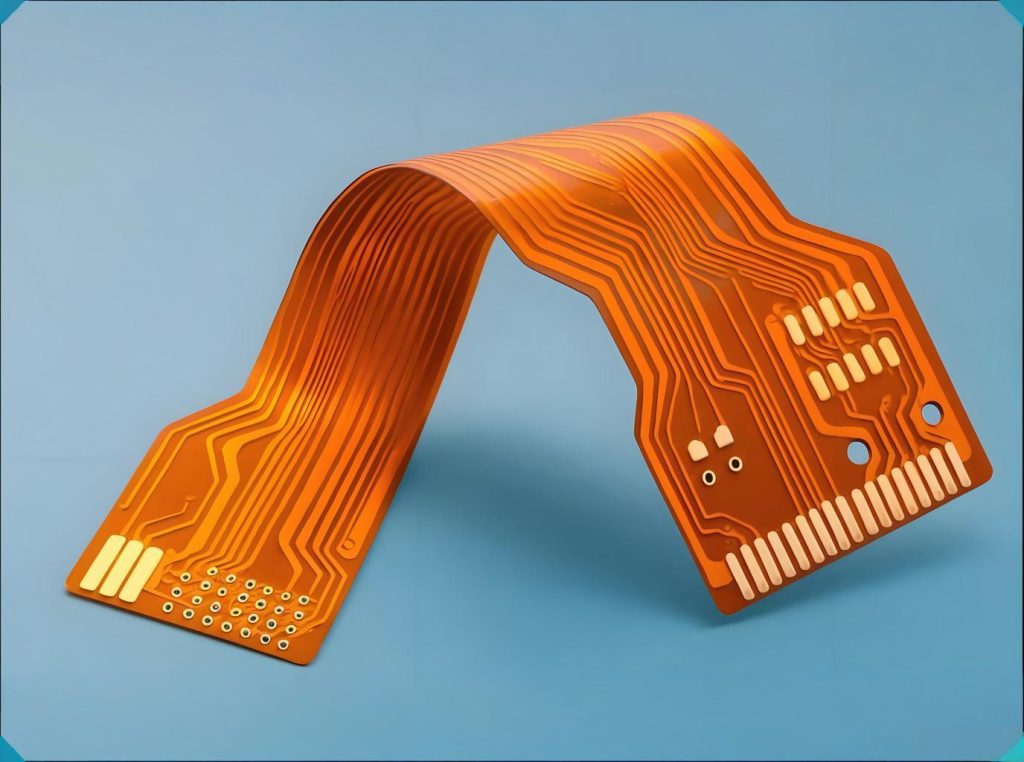
1. Primo principio della progettazione FPC: Metti la flessibilità al primo posto
Progettare FPC, devi staccarti dalla rigidità PCB pensiero. Ogni fase della progettazione di circuiti flessibili richiede la convalida dei parametri di produzione. Il risultato finale è una sinergia di design, materiale, e processo.
Definizione dell'area di piegatura: Per prima cosa decidi quali aree devono essere piegate e quali devono rimanere rigide. Le zone di piega seguono regole diverse rispetto alle zone di non piega. Non mescolarli.
Raggio di curvatura – la regola che determina la vita: Secondo IPC-2223 (lo standard di progettazione per i circuiti stampati flessibili), il raggio minimo di curvatura incide direttamente sulla durata meccanica. Le regole fondamentali sono:
- Flessione statica (riparato dopo l'installazione, nessun ulteriore movimento): Raggio minimo R ≥ 6 × spessore dell'FPC.
- Piegatura dinamica (movimenti ripetuti durante l'uso): Raggio minimo R ≥ 10 × spessore dell'FPC.
Per prodotti di consumo ad alta affidabilità come i telefoni pieghevoli, la pratica industriale spesso utilizza regole più severe. I dati mostrano che quando il raggio di curvatura aumenta a 100 × spessore dello strato flessibile, la durata della flessione dinamica può superare 200,000 cicli. Un caso di studio: una marca di telefoni pieghevoli utilizzava R = 100 × spessore e raggiunto 100 pieghe al giorno per 5 anni di utilizzo.
Tracciare le regole di instradamento nelle aree di piegatura: Eseguire le tracce perpendicolari all'asse di piegatura. Ciò distribuisce lo stress su più linee parallele. Non posizionare via o componenti nelle aree di piegatura. Mantieni almeno la larghezza e la spaziatura della linea 0.2 mm / 0.2 mm. Usa rame tratteggiato (motivo a maglie) nelle zone di piegatura. Fornisce una buona schermatura EMI pur mantenendo la flessibilità.
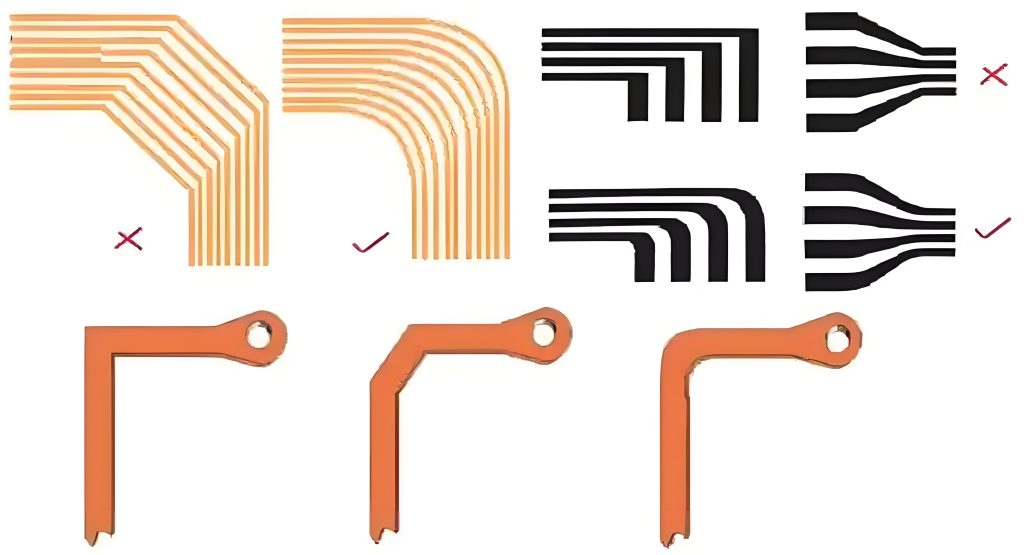
2. Uno sguardo rapido ai parametri di produzione principali degli FPC
La produzione FPC utilizza molti passaggi precisi. I parametri riportati di seguito determinano direttamente le prestazioni e l'affidabilità del prodotto.
| Fase del processo | Parametro chiave | Allineare / Requisito | Standard |
|---|---|---|---|
| Selezione dei materiali | Spessore dello strato di base PI | 12.5–50 µm | IPC-4204A |
| Lamina di rame | Allungamento del rame RA | ≥15% | IPC-4562B |
| Trasferimento del modello | Energia di esposizione | 80–120 mJ/cm² | Standard del settore |
| Incisione | Temperatura del CuCl₂ acido | 45±2°C, fattore di attacco >3.0 | IPC-2221 (tolleranza della larghezza della linea ± 0,03 mm) |
| Laminazione | Temp / Pressione / Tempo | 180±5°C, 15±2kg/cm², 60±5 minuti | Requisiti di laminazione IPC-6013 |
| Perforazione | Foro meccanico minimo | ≥0,1 mm | IPC-2223 tramite requisiti di progettazione |
3. La selezione del materiale decide il successo: Perché il rame ricotto laminato RA è insostituibile
Quando si selezionano i materiali FPC, la scelta tra ricotto laminato (Ra) rame ed elettrodepositato (Ed) il rame determina direttamente la durata alla flessione. Secondo IPC-4562B (lo standard della lamina metallica per i circuiti stampati), i due tipi di rame differiscono notevolmente nella produzione e nelle prestazioni.
Lamina di rame RA è realizzato mediante laminazione meccanica. Ha una struttura a grana orizzontale, ottima duttilità, e bassa rugosità superficiale. La lamina RA è ideale per piegature ripetute dinamiche e trasmissione di segnali ad alta velocità. Gli FPC con rame RA possono raggiungere una durata di piegatura dinamica superiore 100,000 cicli.
Lamina di rame ED è realizzato mediante elettrodeposizione. Ha una struttura a grani verticali e scarsa duttilità. Il rame ED tende a rompersi nei punti di sollecitazione durante la piegatura. Usarlo solo per la piegatura statica o una tantum.
Un errore comune: scegliere il rame ED nella piegatura dinamica per risparmiare sui costi, poi vedendo fallimenti di massa sul campo. Il pensiero corretto è: utilizzare obbligatoriamente il rame RA per la flessione dinamica. Per piegatura statica o a basso numero di cicli, potresti considerare il rame ED.
Anche il materiale di base è importante: Poliimide (PI) può resistere a temperature di 200–260°C ed è la prima scelta per la flessione dinamica. Poliestere (ANIMALE DOMESTICO) resiste a ≤120°C e costa meno, ma è adatto solo per installazioni fisse con flessione una tantum.
4. Standard di qualità IPC-6013: Come scegliere tra tre classi
IPC-6013 è la specifica di qualificazione e prestazione per i circuiti stampati flessibili e rigido-flessibili. Definisce i requisiti materiali, tolleranze dimensionali, test di costanza della qualità, e criteri di accettazione per gli FPC. Lo standard divide gli FPC in tre classi di prestazioni in base ai requisiti di utilizzo finale.
| Classe IPC-6013 | Gamma di applicazione | Tolleranza ai difetti | Industrie tipiche |
|---|---|---|---|
| Classe 1 | Prodotti elettronici generali | Massima indennità per difetti estetici | Elettronica di consumo, IoT, giocattoli |
| Classe 2 | Prodotti di servizio dedicati | Indennità moderata, controllo dimensionale più stretto | Controllo industriale, elettronica automobilistica, telecomunicazioni |
| Classe 3 | Prodotti ad alta affidabilità | Difetti prossimi allo zero, tracciabilità completa | Aerospaziale, dispositivi medici, militare |
Impatto sui costi: Per lo stesso design FPC, Classe 3 manufacturing costs 40–80% more than Class 1. La differenza deriva da ispezioni e test molto più rigorosi. Quindi abbina la classe IPC-6013 alla tua applicazione reale. Evitare l'ingegneria eccessiva o insufficiente.
Per applicazioni critiche come l'elettronica automobilistica, IPC-6013 stabilisce inoltre obiettivi di affidabilità specifici. Per esempio, indice di capacità del processo (Cpk) per i parametri chiave deve essere ≥1,33. I cicli di flessione dinamica devono essere almeno 100,000.
Per i prodotti d'esportazione, controlla anche UL 796 certificazione di sicurezza. UL 796 definisce i requisiti di sicurezza costruttiva per i circuiti stampati. Il materiale di base di solito necessita di UL 94 V-0, il grado di fiamma più alto. Nel test di combustione verticale, ciascun campione deve avere un tempo di post-fiamma ≤10 secondi, e tempo totale di post-fiamma ≤50 secondi.
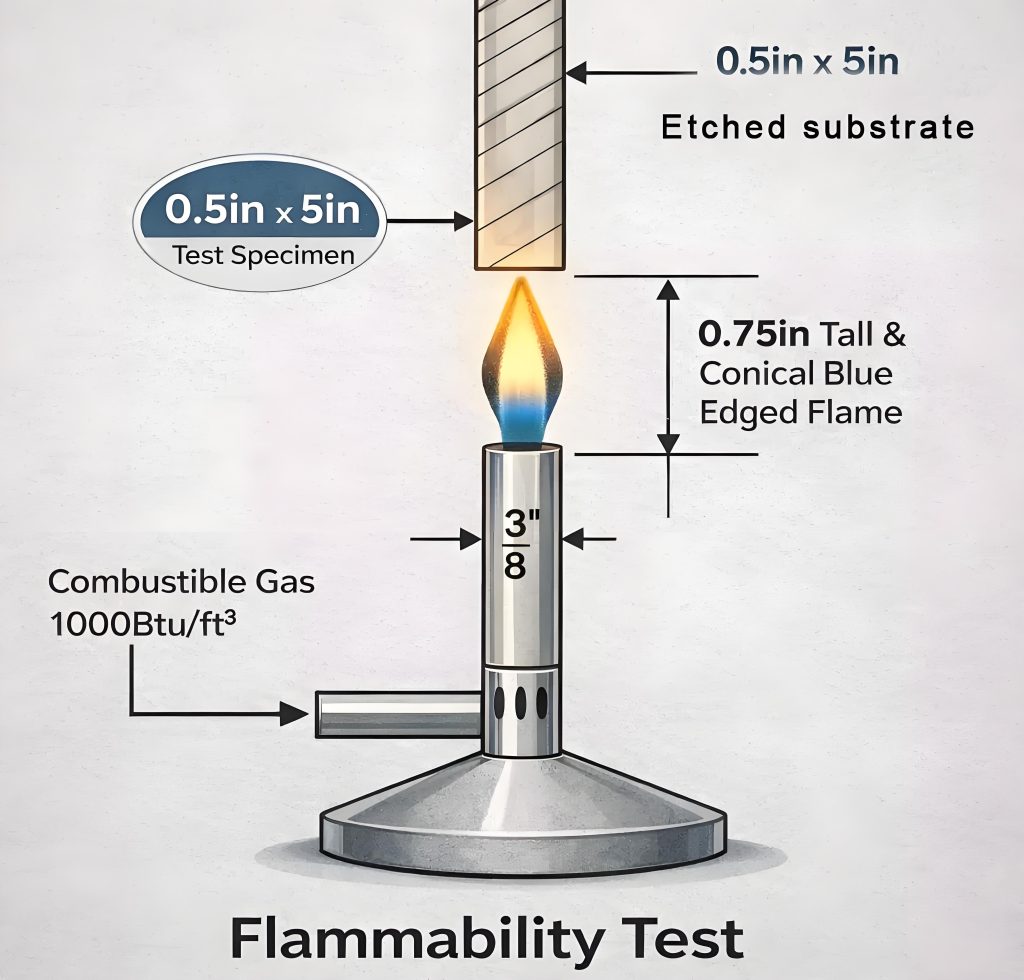
5. Dalla progettazione all'assemblaggio SMT: Dettagli del processo che non puoi ignorare
Dopo la progettazione e la fabbricazione dell'FPC, Rimangono diverse fasi critiche del processo.
Attraverso la strategia di protezione: Utilizzare vie a tendina (coprire completamente la via con la copertura PI) per gli FPC. La tenda previene l'ossidazione del rame all'interno del foro e impedisce la rottura durante la piegatura. Aprire le vie per i punti di prova nelle aree non piegate solo quando assolutamente necessario.
Design dell'irrigidimento: Aggiungi un rinforzo nelle aree in cui posizioni connettori o componenti di saldatura. I materiali di irrigidimento comuni includono PI (buono per tavole sottili e flessibili), FR4 (economico), e acciaio (elevata rigidità e supporto). L'area di irrigidimento deve evitare precisamente pad e via per evitare interferenze.
Requisiti SMT per circuiti stampati flessibili (FPCS):Il gruppo FPC a montaggio superficiale richiede un supporto magnetico dedicato per mantenere la planarità della scheda. Prima dell'SMT, cuocere l'FPC a 80–125°C per 4–8 ore per rimuovere l'umidità, prevenire i popcorn (delaminazione) durante il riflusso. Il profilo di riflusso deve essere impostato su una temperatura di picco di 230–245°C, con tempo superiore a liquidus (DI) limitato a 10 secondi o meno.
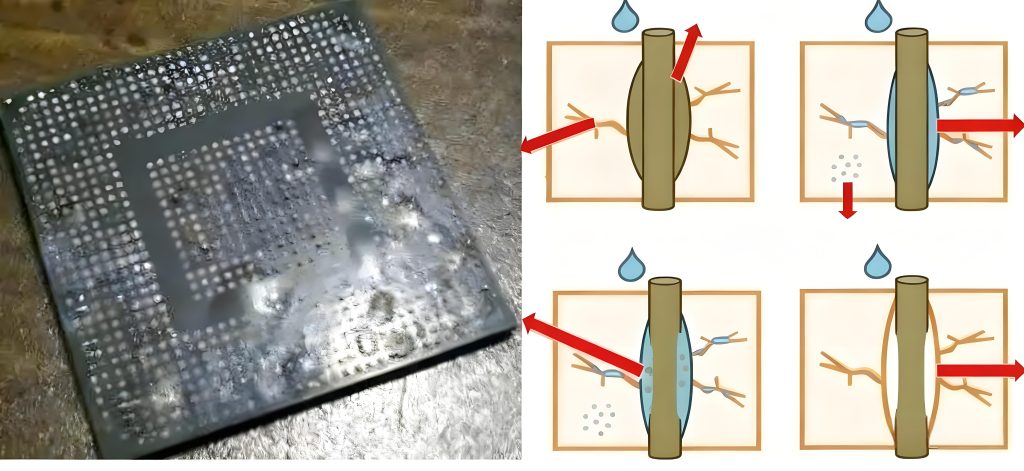
Progettazione del pannello: Evitare l'uso di morsi del mouse o tagli a V per la pannellatura FPC. Invece, utilizzocollegamenti a ponte 0.7–1,0 mm di larghezza. Tieni un 5 guida da mm su ciascun bordo. Per tavole di dimensioni inferiori a 20×20 mm, la pannellatura è fortemente consigliata.
6. Modalità di errore comuni e guida alla risoluzione dei problemi
| Fenomeno del fallimento | Possibile causa | Soluzione |
|---|---|---|
| Traccia di fessurazione dopo la piegatura | Raggio di curvatura troppo piccolo; rame sbagliato (ED utilizzato nella flessione dinamica); design scadente della zona di piegatura | Ricalcolare il raggio di curvatura; passare al rame RA; spostare i via fuori dall'area di piegatura |
| Delaminazione o formazione di vesciche del rivestimento | Scarso controllo della laminazione; elevata umidità durante lo stoccaggio; nessuna precottura prima di SMT | Controllare la laminazione (Cpk≥1,33); gestire la temperatura/umidità del magazzino; cuocere a 125±5°C per 4–6h |
| Sollevamento del pad dopo la saldatura | Rinforzo mancante nella zona di saldatura; saldatura troppo alta o troppo lunga | Aggiungere FR4 o rinforzo in acciaio; ottimizzare il profilo di riflusso |
| Tombstone o a corto di componenti SMT | Scarsa planarità dell'FPC; design asimmetrico del cuscinetto | Utilizzare un supporto magnetico; garantire cuscinetti simmetrici e di buone dimensioni |
7. Matrice decisionale per la selezione dei materiali
| Applicazione | Base consigliata | Rame consigliato | Linea/spazio minimo | Raggio di piegatura dinamico minimo |
|---|---|---|---|---|
| Smartphone / Telefono pieghevole | PI 25 μm | Rame RA | 0.075 / 0.075 mm | 5–8 mm |
| Cavo portatile | PI 25 μm | Rame RA | 0.1 / 0.1 mm | 5–7 mm |
| Elettronica automobilistica | PI 50 μm | Rame RA o ED | 0.15 / 0.15 mm | 8–12 mm |
| Dispositivi indossabili | PI 12,5–25 μm | Rame RA | 0.1 / 0.1 mm | 4–6 mm |
| Elettronica medica di fascia bassa | PET 50–75μm | Rame ED | 0.2 / 0.2 mm | Solo uso statico |
Conclusione
Una progettazione FPC di successo inizia con una profonda comprensione delle proprietà dei materiali. Si conclude nel pieno rispetto dei processi produttivi.
Se stai cercando un fornitore FPC affidabile o hai bisogno di un professionista Scheda PCB citazione, scegli un produttore con capacità interne di processo completo e un solido sistema di qualità. Quando si valutano i fornitori di FPC, controllo: il fornitore possiede la propria linea di produzione FPC (non esternalizzato)? Offre prototipazione one-stop e produzione di massa? È certificato IATF16949 o ISO13485?
Se hai bisogno di circuiti flessibili FPC personalizzati o integrati assemblaggio PCBA, selezionare il partner giusto è il primo passo per il successo del progetto. Per avere un preventivo o chiedere informazioni sulle specifiche tecniche, prepara i tuoi file Gerber e l'elenco BOM in anticipo. Ciò aiuta il fornitore a rispondere rapidamente.
Disclaimer: I dati standard IPC citati in questo articolo provengono da documenti tecnici disponibili al pubblico, incluso IPC-2221, IPC-2223, IPC-6013, IPC-4562, e IPC-TM-650. I dati relativi a UL provengono da UL 796 e UL 94. I parametri di progettazione effettivi dovrebbero basarsi sulle capacità di processo del produttore e sui requisiti applicativi specifici.