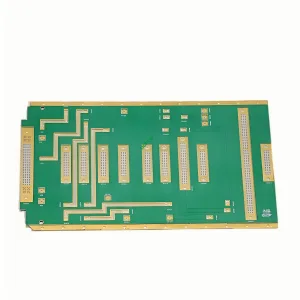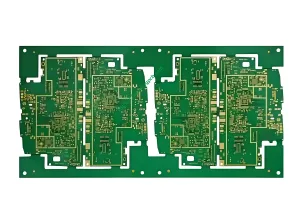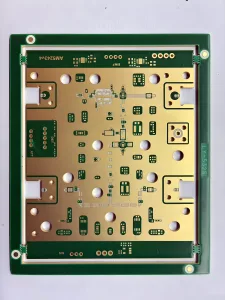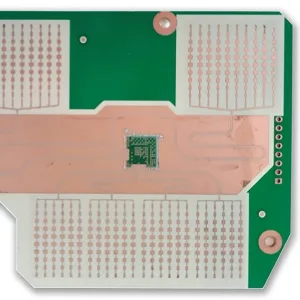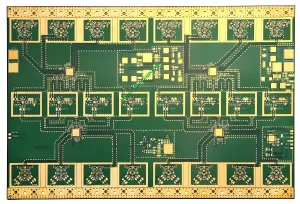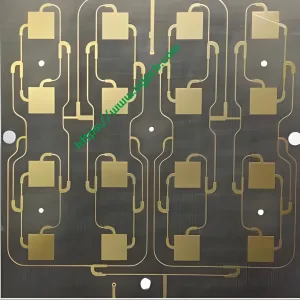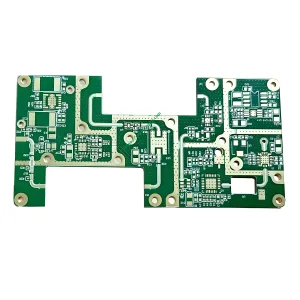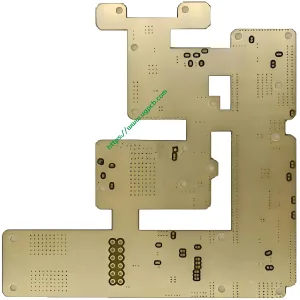
Con la rapida crescita della comunicazione 5G, Radar a onde millimetriche, e comunicazioni satellitari, Progettazione di circuiti stampati gli ingegneri si trovano di fronte a un classico dilemma. Utilizzando materiali ad alta frequenza di fascia alta come Rogers RO4350B perché l'intera scheda offre ottime prestazioni elettriche ma diventa troppo costosa. L'utilizzo dello standard FR4 per l'intera scheda consente di risparmiare sui costi, ma la perdita del segnale ad alta frequenza è elevata e la costante dielettrica è instabile.
La scheda ibrida ad alta frequenza Rogers RO4350B+FR4 di UGPCB risolve perfettamente questo problema. Questo articolo copre la panoramica del prodotto, linee guida di progettazione, principi di funzionamento, parametri tecnici, processo di produzione, e applicazioni. Fornisce un riferimento affidabile per gli ingegneri RF e i decisori degli acquisti.
1. Panoramica del prodotto: Che cos'è un PCB ibrido ad alta frequenza Rogers RO4350B+FR4?
1.1 Definizione
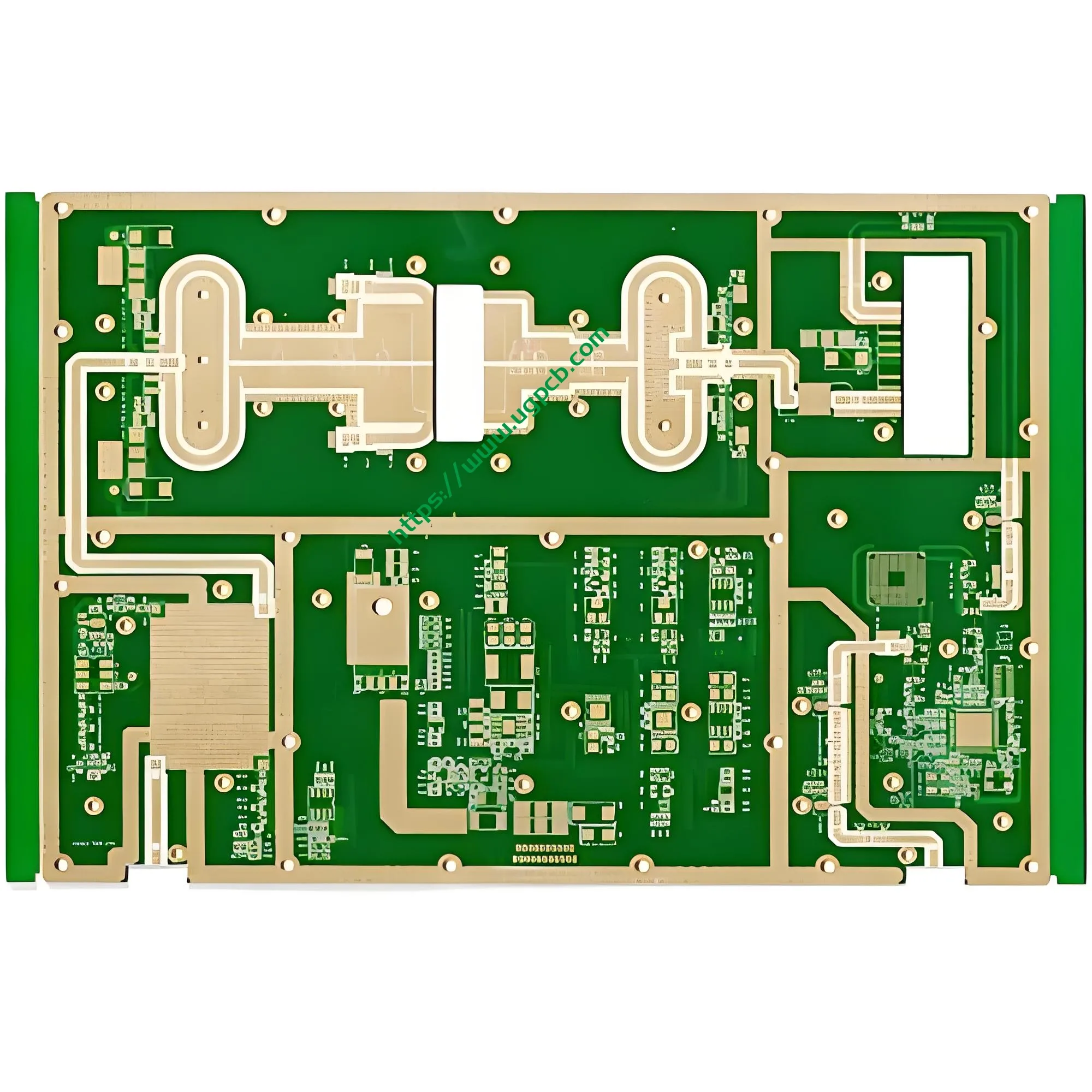
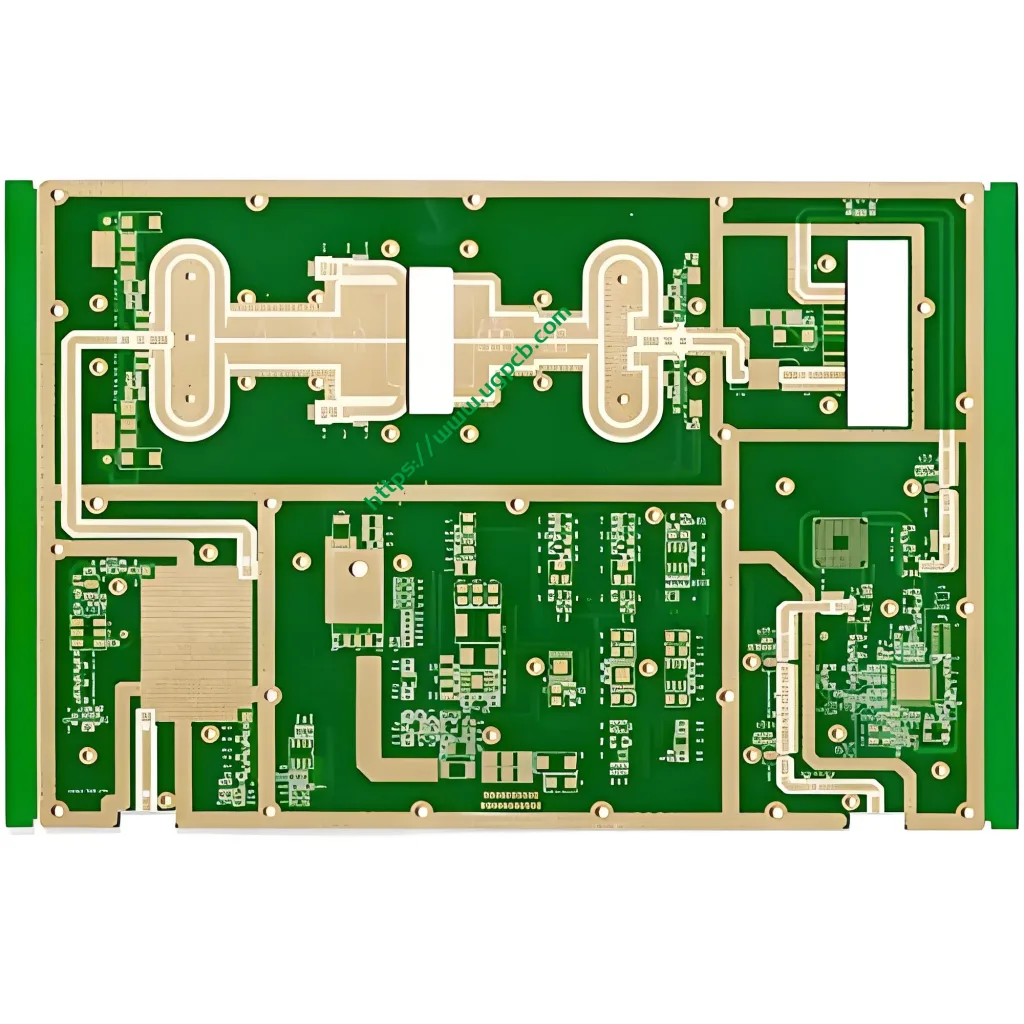
Un PCB ibrido ad alta frequenza Rogers RO4350B+FR4 utilizza sia il laminato ad alta frequenza Rogers RO4350B che il tessuto di vetro epossidico FR-4 standard sullo stesso circuito stampato. Il prodotto UGPCB utilizza uno stack-up simmetrico a 4 strati: due strati esterni di Rogers RO4350B per il routing del segnale RF, e due strati interni di FR4 per la distribuzione dell'energia e i piani di terra. Questo crea uno standard “segnale – terra – potenza – segnale” impilare.
1.2 Proposta di valore fondamentale
Questo PCB ibrido La soluzione offre un equilibrio preciso tra prestazioni e costi. Utilizza materiale Rogers ad alte prestazioni solo sugli strati esterni dove viaggiano i segnali ad alta frequenza. Utilizza FR4 a basso costo sugli strati interni. Ciò riduce significativamente il totale Produzione di PCB costo senza sacrificare le prestazioni RF. Le stime del settore mostrano una riduzione dei costi dei materiali del 30%–50% rispetto a una scheda Rogers completa.
2. Parametri tecnici chiave (Dati ufficiali di Rogers & Specifiche UGPCB)
| Parametro | Valore | Condizione di prova / Standard | Fonte |
|---|---|---|---|
| Combinazione di materiali | 2 strati Rogers RO4350B + 2 strati FR4 | 4-impilamento simmetrico degli strati | UGPCB |
| Spessore del pannello finito | 1.2 mm | - | UGPCB |
| Spessore di lamina di rame | 1 Esterno OZ / 1 Interno OZ | Rame finito | UGPCB |
| Spessore dielettrico | 0.508 mm | - | UGPCB |
| Costante dielettrica Dk | 3.48 ± 0.05 @ 10 GHz | IPC-TM-650 | Scheda tecnica ufficiale Rogers |
| Fattore di dissipazione Df | 0.0037 @ 10 GHz | IPC-TM-650 | Scheda tecnica ufficiale Rogers |
| Conducibilità termica λ | 0.69 W/m·K a 50°C | ASTM D5470 | Scheda tecnica ufficiale Rogers |
| Grado di infiammabilità | UL 94 V-0 | UL 94 | Scheda tecnica ufficiale Rogers |
| Resistività di volume ρ_v | 1.2 × 10¹⁰ Mohm·cm | - | Scheda tecnica ufficiale Rogers |
| Resistività superficiale ρ_s | 5.7 × 10⁹ Mohm | - | Scheda tecnica ufficiale Rogers |
| Asse Z CTE | 32 ppm/° C. | -55da °C a 288 °C | Scheda tecnica ufficiale Rogers |
| Densità | 1.9 g/cm³ | - | Scheda tecnica ufficiale Rogers |
3. Linee guida di progettazione per PCB ibridi Rogers RO4350B+FR4
Gli ingegneri devono concentrarsi su questi punti tecnici chiave quando progettano un PCB ibrido con Rogers RO4350B e FR4.
3.1 Progettazione dell'adattamento dell'impedenza
La differenza della costante dielettrica tra RO4350B e FR4 è significativa. RO4350B ha Dk = 3.48 A 10 GHz, mentre l'FR4 standard ha Dk in mezzo 4.2 E 4.8. L'impedenza della linea del segnale cambia a seconda dello strato del materiale.
Esempio di linea a microstriscia da 50Ω:
- Sul livello RO4350B (Dk=3,48, 1 Rame OZ), 50Ω larghezza della traccia ≈ 0.4 mm
- Sullo strato FR4 (Dk≈4.5, stesso rame), 50Ω larghezza della traccia ≈ 0.25 mm
Raccomandazioni di progettazione:
- Mantieni le tracce del segnale ad alta frequenza interamente all'interno degli strati di segnale del RO4350B. Evitare di oltrepassare i confini materiali laddove l'impedenza cambia improvvisamente.
- Se una transizione tra strati incrociati è inevitabile, utilizzare una larghezza di traccia rastremata al confine RO4350B-FR4. Oppure utilizzare la simulazione elettromagnetica per ridurre al minimo la riflessione del segnale causata dall'improvviso cambiamento Dk.
3.2 Design impilabile simmetrico
Prevenire la deformazione della scheda è una preoccupazione fondamentale nella progettazione ibrida stack-up. RO4350B ha un CTE dell'asse X/Y di circa 10/12 ppm/° C., mentre FR4 ha circa 16 ppm/° C.. Questa discrepanza è significativa.
UGPCB segue rigorosamente un principio di stack-up simmetrico. Usiamo una distribuzione dello spessore del rame di:
1 OZ RO4350B (segnale superiore) - 0.5 OZFR4 (terra) - 0.5 OZFR4 (energia) - 1 OZ RO4350B (segnale di fondo).
Ciò consente la distribuzione dello stress termico anche durante la laminazione e riduce notevolmente il rischio di deformazione.
3.3 Selezione della linea di trasmissione per PCB RF
Per applicazioni ad alta frequenza, si consiglia guida d'onda complanare messa a terra (GCPW) al posto delle tradizionali linee in microstriscia. GCPW posiziona fitte recinzioni su entrambi i lati della linea del segnale. Ciò protegge efficacemente la diafonia e riduce le interferenze elettromagnetiche. Funziona particolarmente bene per le onde millimetriche 5G e 77 Radar automobilistico GHz.
3.4 Processo di perforazione e desmear
UGPCB utilizza i parametri di perforazione consigliati da Rogers per RO4350B. Ottimizziamo anche il processo di rimozione delle macchie per il materiale misto. I residui di resina FR4 possono causare pareti dei fori ruvide. Perciò, estendiamo il tempo di rimozione delle macchie al plasma di circa 30% rispetto alle tavole Rogers pure. Ciò garantisce pareti dei fori pulite e metallizzazione di alta qualità.
4. Principio di funzionamento e prestazioni elettriche
4.1 Stabilità costante dielettrica
RO4350B appartiene alla serie RO4000 di laminati riempiti con idrocarburi/ceramica di Rogers. La sua caratteristica principale è la stretta tolleranza della costante dielettrica di ±0,05 su un'ampia gamma di frequenze. La variazione Dk con la temperatura è unica +50 ppm/° C. (meno di 0.4% passare da -50°C a 150°C). Ciò garantisce un funzionamento stabile delle apparecchiature di comunicazione nell'intero intervallo di temperature.
4.2 Analisi della perdita di segnale
A 10 GHz, il fattore di dissipazione Df del RO4350B è 0.0037. Questo è molto inferiore a quello del normale FR4 alla stessa frequenza (Df ≈ 0,015–0,025). Questa proprietà a bassa perdita mantiene l'integrità del segnale su lunghe distanze per i segnali a onde millimetriche. Nella banda delle onde millimetriche 5G (Sopra 24 GHz), La scheda ibrida di UGPCB mostra tipicamente la perdita di inserzione di seguito 0.5 dB/pollice e perdita di ritorno superiori 15 db (gli utenti dovrebbero verificare con un VNA il loro design specifico).
4.3 Conduttività termica e gestione termica
RO4350B ha una conduttività termica di 0.69 W/m · k, circa il doppio di quello del FR4 ordinario (≈0,3 W/m·K). Ciò consente al PCB ibrido ad alta frequenza di condurre in modo efficiente il calore proveniente da dispositivi ad alta potenza come gli amplificatori di potenza (PA) agli strati di rame e ai vias termici, quindi stenderlo attraverso i piani interni in rame dell'FR4. Ciò fornisce un'eccellente soluzione di gestione termica per i moduli amplificatori di potenza RF.
5. Classificazione del prodotto
| Dimensione Classificazione | Categoria |
|---|---|
| Tipo di materiale | PCB dielettrico ibrido / Pannello laminato ibrido ad alta frequenza |
| Conteggio degli strati | 4-PCB multistrato |
| Frequenza dell'applicazione | PCB RF/microonde, coprendo fino alle bande delle onde millimetriche (79 GHzmassimo) |
| Processo di produzione | Laminazione mista multistrato |
| Grado di infiammabilità | UL 94 V-0 PCB nominale |
UGPCB produce e testa secondo IPC-6012 (Specifiche di qualificazione e prestazione per circuiti stampati rigidi) e IPC-4101 (Specifiche dei materiali di base per pannelli stampati rigidi e multistrato).
6. Struttura impilabile del PCB ibrido a 4 strati da 1,2 mm
La scheda ibrida ad alta frequenza Rogers RO4350B+FR4 a 4 strati da 1,2 mm di spessore di UGPCB utilizza uno stack-up simmetrico standard:
- L1 (Strato superiore): Rogers RO4350B, 1 Rame finito OZ – Strato segnale RF
- L2 (Strato 2): FR4, 1 Rame OZ – Piano di massa
- L3 (Strato 3): FR4, 1 Rame OZ – Distribuzione energia / segnali di controllo a bassa frequenza (aereo di potenza)
- L4 (Strato inferiore): Rogers RO4350B, 1 Rame finito OZ – Strato segnale RF
Lo spessore dielettrico totale è 0.508 mm. Lo spessore del pannello finito è 1.2 mm.
Finitura superficiale: Essere d'accordo (Oro per immersione in nichel chimico) – soddisfa i requisiti di saldatura ad alta affidabilità e resistenza all'ossidazione.
7. Analisi dei materiali
7.1 Materiale ad alta frequenza Rogers RO4350B
RO4350B è un laminato composito di resina idrocarburica, riempitivo ceramico, e tessuto di vetro intrecciato. I suoi principali vantaggi includono:
- Compatibilità del processo: La fabbricazione è quasi la stessa dell'FR-4. Non è necessario alcun trattamento speciale della parete del foro (a differenza dei materiali PTFE). Il costo di produzione è molto inferiore rispetto ai tradizionali laminati per microonde.
- UL 94 V-0 grado di infiammabilità: Adatto per dispositivi attivi e progetti RF ad alta potenza.
- Asse z basso CTE (32 ppm/° C.): Garantisce un'elevata affidabilità dei fori passanti placcati (PTH) nei circuiti multistrato.
7.2 Substrato FR4
We use high Tg FR4 material (Tg ≥ 170°C) to match the thermal processing window of Rogers RO4350B. FR4 acts as the power and ground layers in the hybrid board. Its cost is only 1/5 A 1/3 that of Rogers material, greatly reducing total PCB manufacturing cost.
8. Manufacturing Process for Hybrid High Frequency PCBs
UGPCB follows a strict quality control process for high frequency hybrid boards:
- Cutting and browning: Apply browning treatment to RO4350B cores and FR4 cores to improve layer adhesion.
- Inner layer circuit patterning: Create ground and power layer patterns on inner FR4 layers.
- Laminazione ibrida (critical step): Use a stepped temperature lamination profile (per esempio., 120°C→170°C→220°C). Select prepregs compatible with both materials. Strictly control ramp rate and press time to avoid delamination or voids.
- Drilling and desmear: Use Rogers-recommended drilling parameters. Increase plasma desmear time by about 30% for mixed material to ensure clean hole walls.
- Plated through hole (PTH): Bake boards at 150°C for 2 hours before electroless copper deposition to compensate for moisture absorption differences (FR4 water absorption >0.1%, RO4350B <0.02%).
- Outer layer circuit patterning: Form signal traces on top and bottom RO4350B layers.
- Solder mask and surface finish: No solder mask on antenna openings. Use ENIG (Oro per immersione in nichel chimico).
- Electrical test and reliability inspection: 100% prova elettrica, AOI ispezione ottica, X-ray layer-to-layer alignment check, plus flatness measurement and correction before shipment.
9. Performance and Features of the Hybrid PCB
9.1 Core Performance Values
- Costante dielettrica Dk: 3.48 ± 0.05 @ 10 GHz (Ufficiale di Rogers)
- Fattore di dissipazione Df: 0.0037 @ 10 GHz
- Conducibilità termica: 0.69 W/m·K a 50°C (ASTM D5470)
- Intervallo di temperatura operativo: -50°C fino a +150°C
- Grado di infiammabilità: UL 94 V-0
- Resistività al volume: 1.2 × 10¹⁰ Mohm·cm
- Resistività alla superficie: 5.7 × 10⁹ Mohm
- Densità: 1.9 g/cm³
9.2 Caratteristiche del prodotto (Why choose this 4-layer RF microwave PCB)
- ✅ Best performance-cost balance: Saves 30%–50% material cost vs. full Rogers solution.
- ✅ Costante dielettrica stabile: ±0.05 tight tolerance, minimal variation with temperature/frequency.
- ✅ Low-loss transmission: Df=0.0037 @ 10 GHz, excellent millimeter-wave signal integrity.
- ✅ FR4-compatible process: No special hole wall treatment, high manufacturing efficiency.
- ✅ Good thermal management: Conducibilità termica 0.69 W/m · k, effective heat dissipation.
- ✅ V-0 grado di infiammabilità: Soddisfa UL 94 V-0 safety standard.
- ✅ Flexible customization: 1.2 spessore mm, supports multiple surface finishes.
10. Applications of Rogers RO4350B+FR4 High Frequency Hybrid PCBs
Thanks to excellent RF performance and cost advantages, this hybrid PCB serves many key fields:
10.1 5G Infrastruttura di comunicazione
- 5G macro base station antenna boards and power amplifier modules (PA layer uses RO4350B, power/ground layers use high Tg FR4 with 2+ oz thick copper)
- Microwave point-to-point (P2P) connection equipment
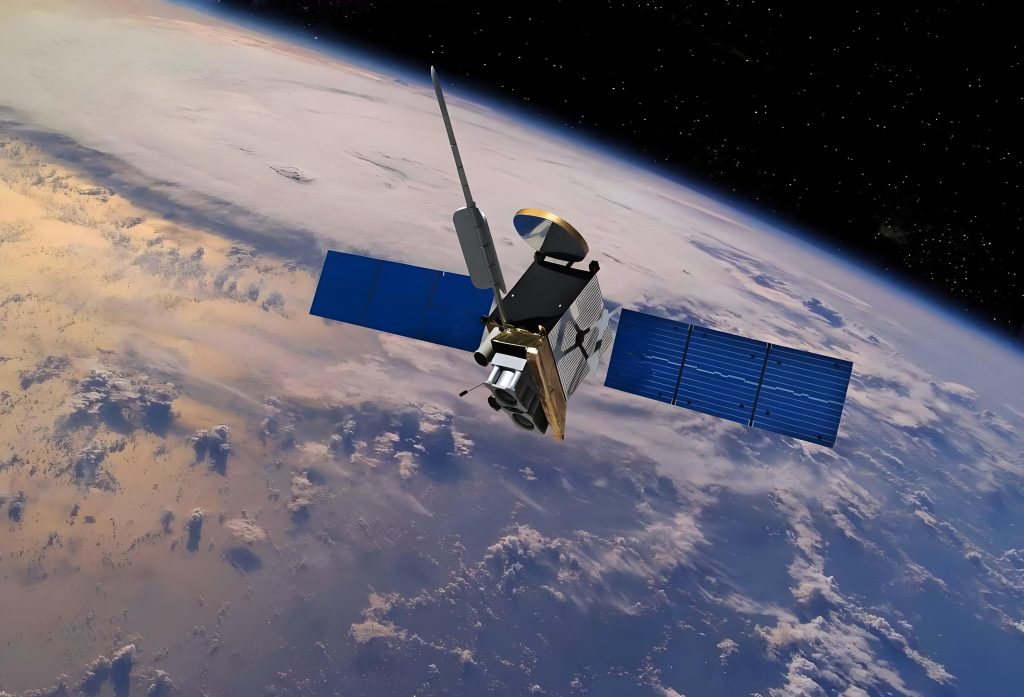
- Satellite communication ground terminal LNBs
10.2 Automotive Electronics and Autonomous Driving
- 77 GHz / 79 GHz automotive millimeter-wave radar – core sensing component for ADAS and autonomous driving; requires AEC-Q100 qualification
- Veicolo per tutto (V2X) moduli di comunicazione
- 24 GHz blind spot detection radar sensors
10.3 Moduli front-end RF
- Amplificatori di potenza (PA) and low noise amplifiers (LNA) moduli
- RF transceiver front-ends
- Millimeter-wave phased array antenna T/R modules
10.4 Attrezzature industriali e mediche
- RFID readers and tags
- High frequency signal processing circuits in medical imaging (risonanza magnetica, CT)
- Precision inspection and measurement instruments
10.5 IoT and Consumer Electronics
- 5G CPE (customer premises equipment)
- Wireless inductive communication systems
- Wi-Fi 6E/7 antenna modules
11. Why Choose UGPCB for Your High Frequency Hybrid PCB?
UGPCB has mature process systems and rich practical experience in high frequency hybrid board produzione.
- 🔧 Mature process: Master core hybrid lamination techniques – stepped press cycles, plasma desmear, layer-to-layer alignment control.
- 📋 100% tested: Full process quality control, 100% prova elettrica, AOI optical inspection, X-ray alignment verification.
- ⚡ Fast delivery: Sufficient raw material stock of RO4350B and FR4 ensures controllable lead times.
- 📞 Professional technical support: One-stop engineering support from stack-up design consulting to impedance simulation.
- 🏭 Extensive manufacturing experience: Many years in PCB ad alta frequenza produzione, serving global customers.
Get a Quick Quote & Technical Consultation
UGPCB offers free impedance design consulting and high-precision sample manufacturing.
📧Send inquiries to: sales@ugpcb.com
📝Request a fast quote: Please provide Gerber files, specifica del materiale (RO4350B+FR4), layer count (4 strati), spessore del pannello (1.2mm), spessore del rame (1 OZ), and any other process requirements
🔧Supporto tecnico: Contact UGPCB’s engineering team for stack-up design, impedance matching calculations, and hybrid lamination process parameters.
💡 Inquiry tip: To ensure an accurate quote, include complete Gerber files (with drill layer), stack-up requirements, minimum trace width/spacing, and surface finish specification.
Disclaimer & Data Accuracy Statement
All technical parameters in this document have been manually verified against the Rogers official datasheet (2025-2026 edition), Standard IPC, and UL certification documentation. Core data – Dk=3.48 (@10 GHz), Df=0,0037 (@10 GHz), conducibilità termica 0.69 W/m · k (@50°C per ASTM D5470) – come directly from the Rogers RO4350B datasheet. This article follows fair use guidelines for citation and has been reasonably adapted and restructured.
© 2026 UGPCB. All Rights Reserved. | High Frequency Hybrid PCB Design & Manufacturing Expert