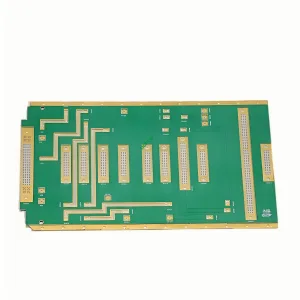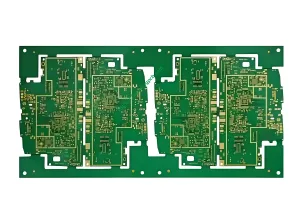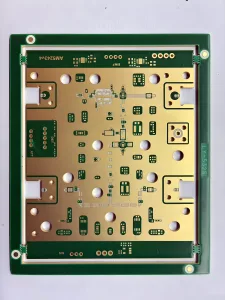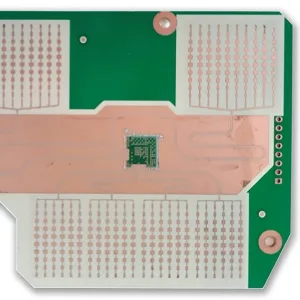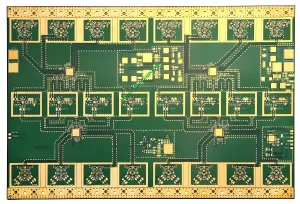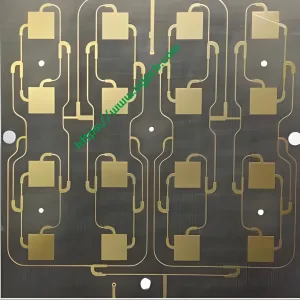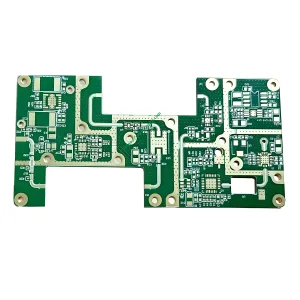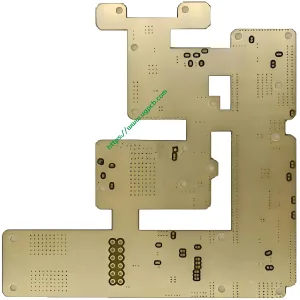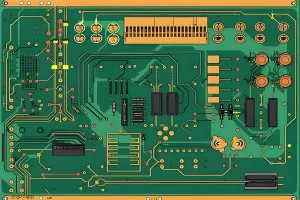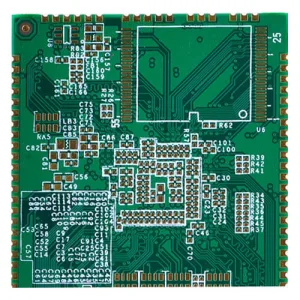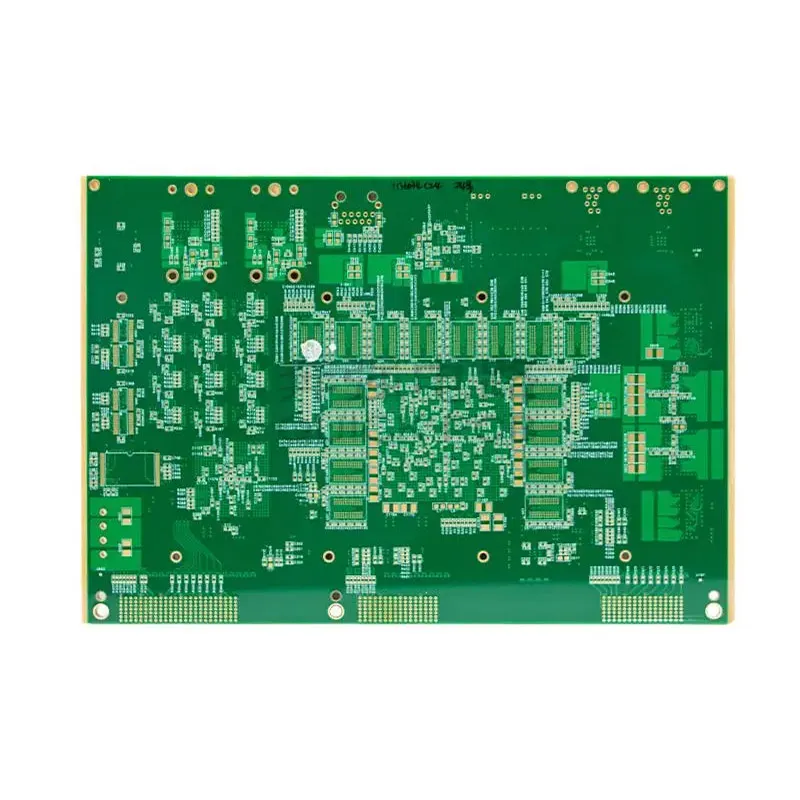
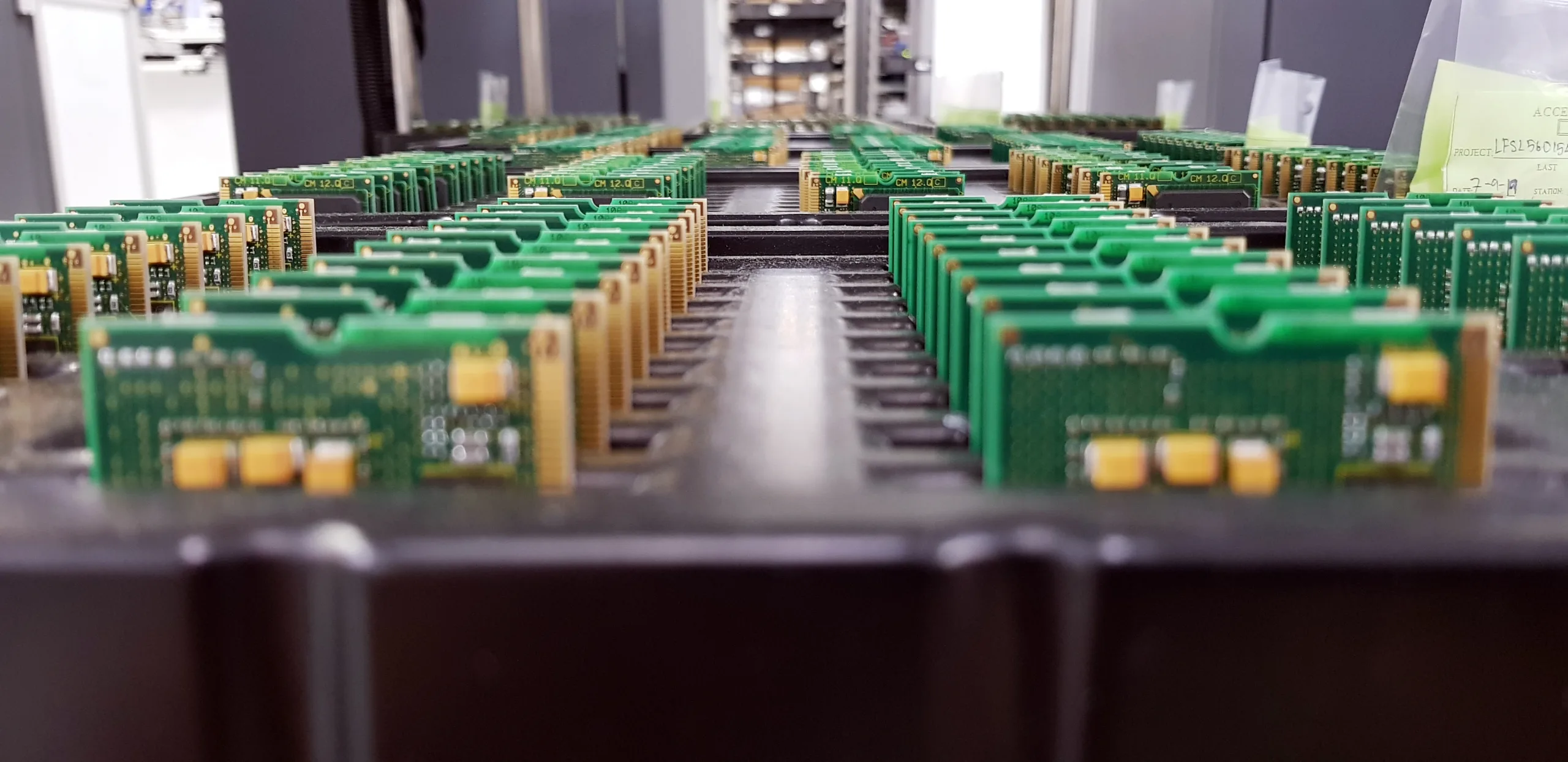
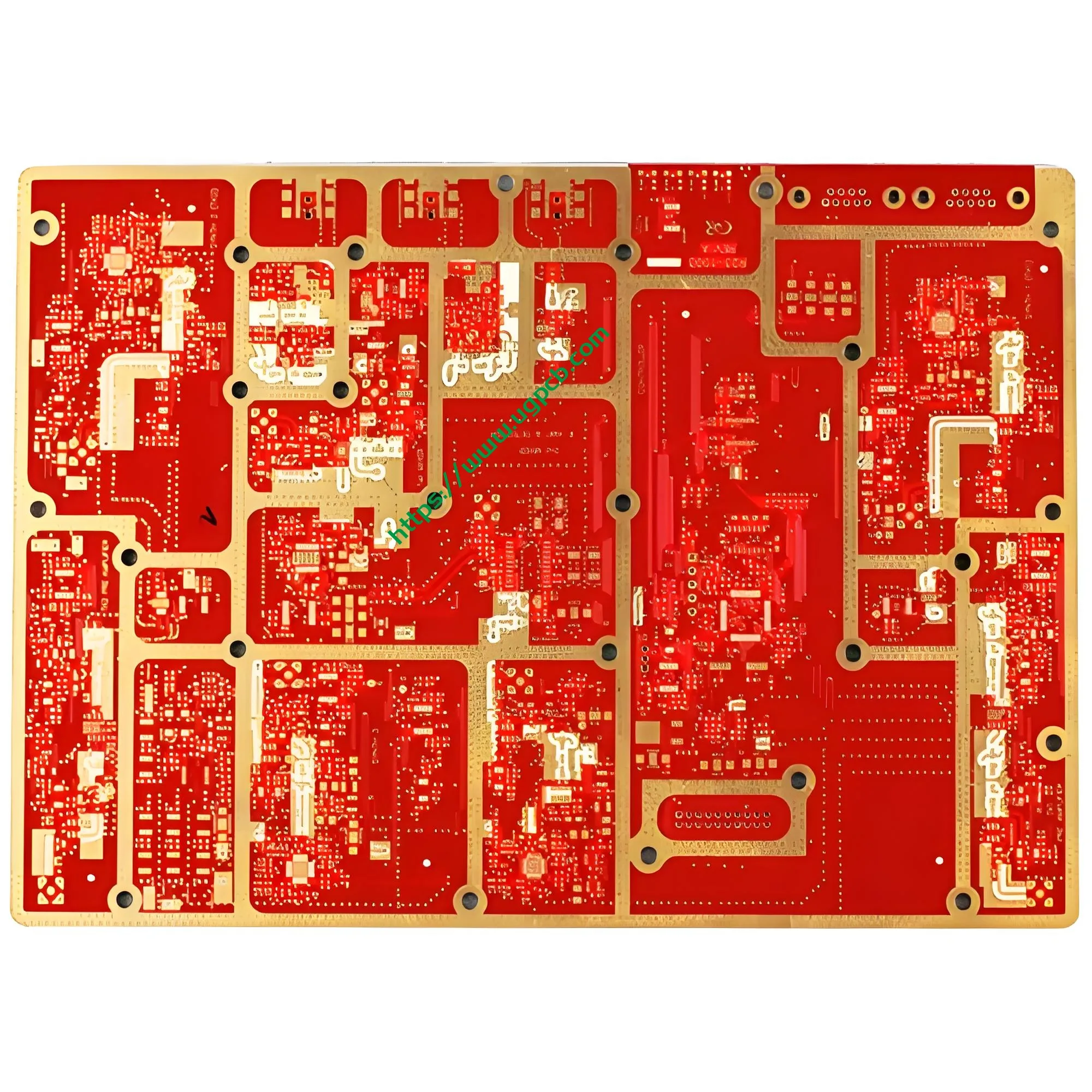
Quando i sistemi digitali e RF si spingono oltre i GHz, convenzionale Materiali PCB colpire colli di bottiglia nell'integrità del segnale, stabilità termica, E Controllo dell'impedenza. Il PCB ibrido ad alta frequenza di comunicazione di UGPCB risolve queste sfide.
1. Panoramica del prodotto
Nome prodotto: PCB ibrido ad alta frequenza con comunicazione a 6 strati UGPCB
Modello: UG‑HYBRID‑6L‑RF01
Specifiche chiave: 6 strati / Dielettrico misto Ro4350B+FR4 / 1.6spessore tavola mm / 210dimensioni mm × 280 mm / Finitura superficiale ENIG / foro meccanico minimo 0,25 mm
Posizionamento: Una soluzione di interconnessione conveniente per front-end RF e circuiti misti digitali ad alta velocità. Posizionando il laminato ad alta frequenza Rogers RO4350B sugli strati superiori del segnale RF e FR‑4 on the bottom power/ground and low‑speed digital layers, this design balances signal integrity, stabilità termica, e costo di produzione.
2. Definition – What is a High Frequency Hybrid PCB?
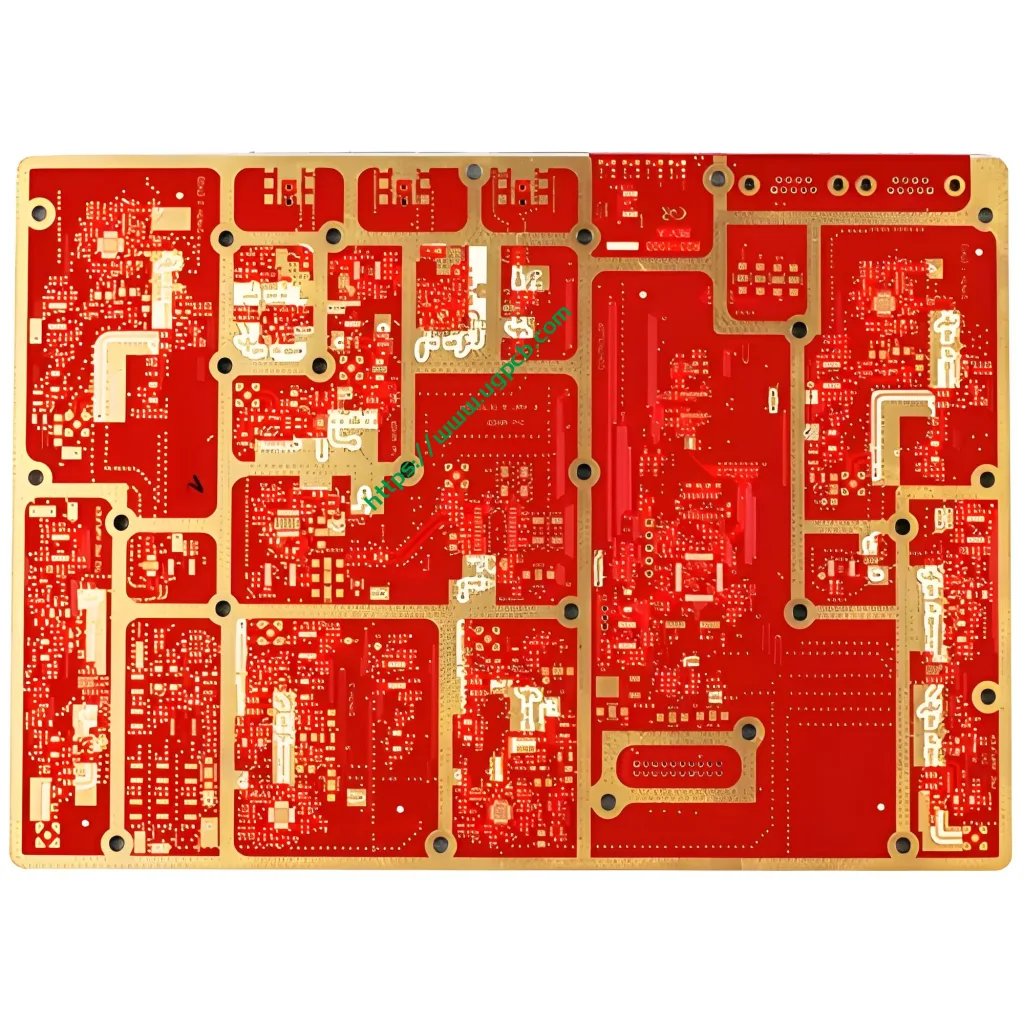
UN PCB ibrido ad alta frequenza (also called mixed dielectric multilayer board) uses two or more materials with different dielectric properties in one circuito stampato multistrato.
This 6‑layer hybrid PCB has the following stackup:
| Strato | Funzione | Materiale | Parametro chiave |
|---|---|---|---|
| L1 | Segnale RF | RO4350B (0.2mm) | Dk=3.48±0.05@10GHz, Df=0,0037 |
| L2 | RF ground | RO4350B | Low‑loss reference plane |
| L3 | High‑speed digital | RO4450™ bondply + FR‑4 | Transition, adattamento di impedenza |
| L4 | Piano di potenza | FR‑4 | Alto tg, basso costo |
| L5 | Segnale digitale | FR‑4 | Standard epoxy glass |
| L6 | Digital ground | FR‑4 | Mechanical support and heat dissipation |
“Mixed dielectric construction significantly reduces cost – using high‑frequency material only on the layers that carry RF signals, e FR-4 per il resto."
3. Linee guida per la progettazione
3.1 Parametri materiali critici
Questo prodotto utilizza Rogers RO4350B (laminato di idrocarburi caricato con ceramica) e FR‑4. Specifiche chiave del RO4350B (fonte: Scheda tecnica Rogers):
| Parametro | Valore tipico | Condizione di prova | Riferimento |
|---|---|---|---|
| Processo Dk | 3.48± 0,05 | 10GHz | IPC‑TM‑650 2.5.5.5 |
| Progettazione Dk | 3.66 | 10GHz | Correzione della rugosità del rame |
| Fattore di dissipazione (Df) | 0.0037 | 10GHz | Applicazioni RF a bassa perdita |
| CTE dell'asse Z | 32 ppm/℃ | -55℃ a 288 ℃ | Corrisponde al rame (17 ppm/℃) |
| Conducibilità termica | 0.69 W/m · k | 50℃, ASTM D5470 | Meglio di FR‑4 |
| Infiammabilità | UL 94 V‑0 | Norma UL | Per RF attiva e ad alta potenza |
Origine dati: Scheda tecnica del laminato Rogers Corporation RO4350B™
3.2 Controllo dell'impedenza
Il controllo dell'impedenza su un PCB ibrido a 6 strati è impegnativo a causa della discontinuità Dk. Utilizzare un solutore elettromagnetico 3D e applicare un fattore di correzione della rugosità del rame (tipicamente 1,2–1,5). Secondo IPC‑2141A, la tolleranza dell'impedenza caratteristica per i PCB RF deve essere compresa tra ±7%. UGPCB raggiunge ±5%.
3.3 Design impilabile in laminato (Spessore totale 1,6 mm)
- Superiore (L1‑L2): RO4350B 0,2 mm× 2 = 0,4 mm
- Mezzo (L3): Preimpregnato RO4450™ 0,1 mm + Anima FR‑4 0,6 mm = 0,7 mm
- Metter il fondo a (L4‑L6): Nucleo FR‑4 + preimpregnato = 0,5 mm
- Totale: 1.6mm
Utilizza una curva di pressione dinamica durante la laminazione per gestire lo stress derivante dalla mancata corrispondenza del CTE tra RO4350B e FR‑4.
4. Principio di lavoro
Integrità del segnale: La perdita dielettrica domina quella ad alta frequenza. La costante di attenuazione media è:
Dove:
- = costante di attenuazione dielettrica
- = permittività relativa (valore progettuale)
- = lunghezza d'onda dello spazio libero
- = fattore di dissipazione (Df)
RO4350B ha Df = 0.0037 vs. FR‑4 0.020. Ciò riduce la perdita dielettrica di circa 80%, garantendo una trasmissione a bassa perdita fino a 30 GHz.
Stabilità termomeccanica: Il CTE dell'asse Z del RO4350B è pari a 32 ppm/℃ corrisponde al rame (17 ppm/℃) molto meglio dell'FR-4 (50–70 ppm/℃). Ciò migliora il foro passante placcato (PTH) affidabilità in caso di cicli termici. Testato secondo IPC‑TM‑650 2.6.7, il consiglio sopravvive 1000 cicli da -55℃ a 125℃ senza delaminazione.
5. Applicazioni primarie
Il PCB ibrido ad alta frequenza con comunicazione a 6 strati di UGPCB serve cinque aree principali:
5.1 5Stazioni base di comunicazione G (AAU/RRU)
- Bande di frequenza: 28Onda millimetrica GHz e 39GHz
- Requisito: Perdita di inserzione < 0.31 dB/cm@40GHz, tenuta in potenza >200 W/m²@38GHz
- Vantaggio: La costruzione ibrida riduce il costo dei materiali del 30-40% rispetto alla costruzione ibrida. materiale interamente ad alta frequenza

5.2 77Radar automobilistico GHz/79GHz
- Casi d'uso: Radar per immagini 4D a guida autonoma, rilevamento degli angoli ciechi, controllo automatico della velocità adattivo
- Requisito: Errore di intervallo <0.25m da -40 ℃ a 125 ℃, risoluzione azimutale 0,08°
- Prestazione: IMS 2025 il rapporto mostra una coerenza di fase di ±0,8° sull'intero intervallo di temperature per i moduli radar ibridi da 77GHz
5.3 Carichi utili delle comunicazioni satellitari (Compagni di squadra)
- Gamma di frequenza: 17.7 - 31 GHz
- Vantaggio: 45% riduzione del peso rispetto. substrati ceramici mantenendo un'efficienza >85%.
5.4 Fibra a casa (FTTH) Attrezzatura
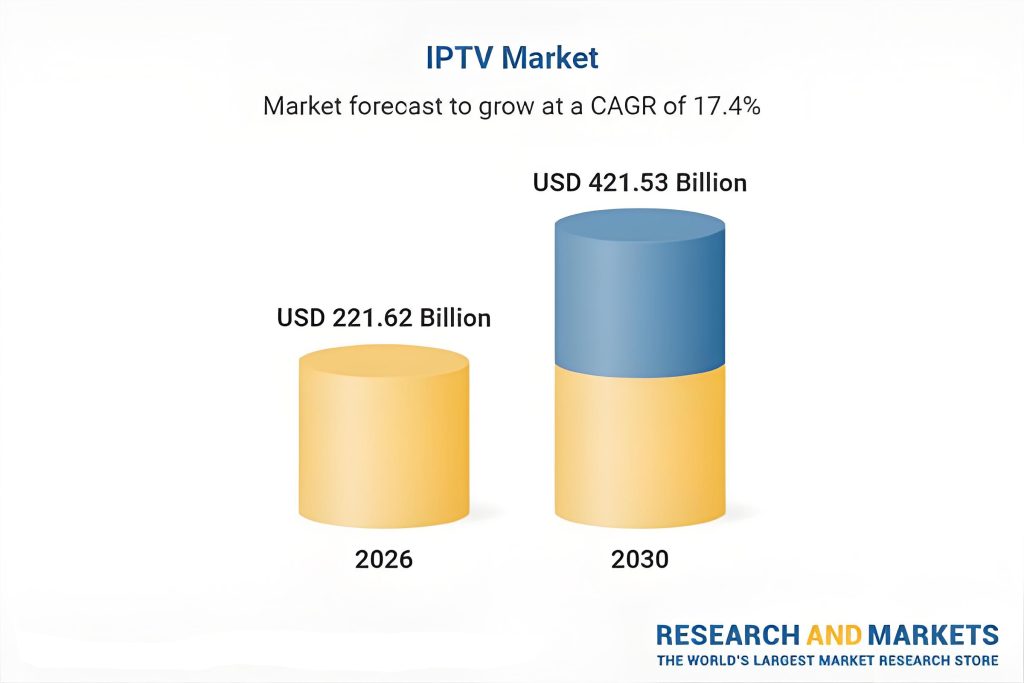
- Andamento del mercato: Mercato globale IPTV da $ 189,25 miliardi (2025) a $ 421,53 miliardi (2030), CAGR 17.4%
- Impatto: Larghezza di banda elevata, i PCB a bassa latenza sono essenziali
5.5 Sistemi a segnale misto digitale ad alta velocità
- Campi: Imaging medico, ispezione industriale ad alta frequenza, terminali di comunicazione militare
- Requisito: Coesistere 10+ Segnali digitali Gbps con segnali RF con gamma GHz
6. Classificazione scientifica (per IPC‑2221)
| Dimensione Classificazione | Categoria | Base |
|---|---|---|
| Sistema materiale | PCB dielettrico misto | RO4350B + FR‑4 |
| Caratteristica di frequenza | Rf / PCB a microonde | Fino a 30GHz |
| Conteggio degli strati | 6Pannello multistrato a ‑strato | 6 strati conduttivi |
| Difficoltà tecnica | Laminazione ibrida HDI | Corrispondenza del materiale non di espansione |
| Applicazione | PCB di comunicazione RF | Infrastruttura di telecomunicazione |
| Classe di prestazione IPC | Classe IPC‑6012 3 | Apparecchiature ad alta affidabilità |
7. Materiali in dettaglio
7.1 RO4350B Laminato ad alta frequenza
- Idrocarburo rinforzato con vetro + riempitivo ceramico
- Non so: 3.48±0,05@10GHz, coefficiente di temperatura ~ -50 ppm/℃ (-50℃ a +150 ℃)
- Df: 0.0037@10GHz
- CTE dell'asse Z: 32 ppm/℃ – corrisponde al rame per l'affidabilità del PTH
- Conducibilità termica: 0.69 W/m · k (vs. FR‑4 0,25–0,35)
- UL 94 V‑0 – adatto per progetti RF attivi e ad alta potenza
- Compatibilità del processo: Stessa elaborazione FR‑4; non è necessario alcun pretrattamento speciale (a differenza del PTFE)
7.2 FR‑4 Laminato in vetro epossidico
- Tessuto di vetro intrecciato + resina epossidica
- Non so: 4.2–4.8 (1MHz–1GHz), Df: 0.020–0,025
- Costo: 1/5 A 1/10 di RO4350B
7.3 RO4450™ Bondply ad alta frequenza
- Strato adesivo tra RO4350B e FR‑4
- Non so: 3.52±0,05@10GHz (transizione del gradiente)
- Df: 0.0040@10GHz
7.4 Finitura superficiale ENIG (Oro per immersione in nichel chimico)
- Spessore del nichel: 3–6μm (Classe IPC‑4552 2)
- Spessore dell'oro: 0.05–0,10μm
- Vantaggi: Saldabilità, planarità, resistenza all'ossidazione, assemblaggio BGA a passo fine
- Standard: IPC‑4552
8. Specifiche delle prestazioni
8.1 Prestazioni elettriche
| Parametro | Valore | Metodo di prova |
|---|---|---|
| Impedenza caratteristica (Strati RF) | 50Ω±5% (personalizzabile) | IPC‑2141A |
| Non so (Strati RF @10GHz) | 3.48± 0,05 | IPC‑TM‑650 2.5.5.5 |
| Perdita di inserzione | 0.31 dB/cm a 40 GHz | Linea microstrip VNA |
| Rigidità dielettrica | ≥40 kV/mm | IPC‑TM‑650 2.5.6 |
| Resistenza all'isolamento | >10⁹ Ah (condizione normale) | IPC‑TM‑650 2.5.17 |
| Resistere alla tensione | 1000 VDC, 60Non c'è guasto | IPC‑TM‑650 2.5.7 |
8.2 Prestazioni meccaniche
| Parametro | Valore | Metodo di prova |
|---|---|---|
| Tolleranza sullo spessore | ± 10% | IPC‑6012 |
| Stabilità dimensionale | <0.3 mm/m | IPC‑TM‑650 2.2.4 |
| Forza di buccia (1once di rame) | ≥1,0 N/mm | IPC‑TM‑650 2.4.8 |
| Resistenza alla flessione | ≥350MPa | IPC‑TM‑650 2.4.4 |
| Forza di estrazione della pastiglia | ≥5,0 kg/cm² | IPC‑TM‑650 2.4.21 |
8.3 Prestazioni termiche
| Parametro | Valore | Metodo di prova |
|---|---|---|
| Tg (Zona FR‑4) | ≥150℃ (TG150) | IPC‑TM‑650 2.4.25 |
| Stress termico | 288℃, 10s× 5 cicli | IPC‑TM‑650 2.4.13 |
| Ciclismo termico | -55℃ ↔ 125 ℃, 1000 cicli, Nessuna delaminazione | IPC‑TM‑650 2.6.7 |
| Riflusso senza piombo | 260℃, 5 cicli | IPC/JEDEC J‑STD‑020 |
| Livello di sensibilità all'umidità | MSL 1 | IPC/JEDEC J‑STD‑020 |
8.4 Certificazioni di affidabilità
- Classe IPC‑6012 3 – apparecchiature ad alta affidabilità
- IPC‑6018B – qualificazione per l'alta frequenza (Microonde) PCB
- UL 94 V‑0
- MIL‑PRF‑31032 - 1000 cicli termici da -55℃ a 125℃
100% test elettrico della sonda volante + AOI. Il prodotto finale soddisfa la classe IPC‑A‑600 3.
9. Caratteristiche strutturali
Costruzione ibrida asimmetrica a 6 strati:
- L1‑L2 (RO4350B): Front-end RF (PA, LNA, Filtri) – zona critica per l'integrità del segnale
- L3 (transizione): Corrispondenza dell'impedenza e modifica del livello del segnale: isola la RF dal digitale ad alta velocità
- L4‑L6 (FR‑4): Gestione dell'energia, controllo digitale, supporto meccanico – circuiti convenzionali a basso costo
Finitura ENIG: La superficie piatta garantisce un controllo costante dell'impedenza. Supporta BGA, QFN, pacchetti a passo fine. Lo strato dorato protegge il rame e garantisce la saldabilità dopo un lungo stoccaggio.
Foratura di precisione & PTH: Diametro minimo del foro meccanico 0,25 mm (Disponibili microvia HDI fino a 0,1 mm). Spessore rame foro ≥20μm (Classe IPC 3). Trattamento al plasma con diverse miscele di gas per strati RO4350B e FR‑4.
10. Flusso del processo di produzione
18 passaggi chiave:
① IQC → ② Imaging dello strato interno (RF e digitale separatamente) → ③ Ossido marrone → ④ Attivazione del plasma pre‑laminazione → ⑤ Laminazione ibrida → ⑥ Laminazione ad alta pressione (curva di pressione dinamica) → ⑦ Foratura del bersaglio dei raggi X → ⑧ Foratura meccanica (0.25mm min) → ⑨ Sbavatura al plasma (doppio ciclo) → ⑩ Rame chimico → ⑪ Imaging dello strato esterno → ⑫ Placcatura con motivo (rame + stagno) → ⑬ Incisione dello strato esterno (striscia di stagno) → ⑭ AOI → ⑮ Maschera di saldatura → ⑯ ENIG → ⑰ Test elettrico → ⑱ Ispezione finale/imballaggio
Dettagli critici del processo:
- Plasma di pre-laminazione (fare un passo 4): CF₄‑N₂‑O₂ per FR‑4; elio (Lui) per RO4350B
- Curva di laminazione (fare un passo 6): Pressione dinamica – FR‑4 polimerizza per primo (~180℃), quindi la pressione e la temperatura salgono a >200℃ per RO4350B
- Perforazione (fare un passo 8): L'avanzamento a passi e la gestione della durata dell'utensile gestiscono la differenza di durezza
- Desmear & PTH (passaggi 9‑10): Processo a doppio ciclo dovuto a diversi comportamenti chimici; foro rame ≥20μm
11. Vantaggi competitivi
Equilibrio costi-prestazioni: Costi del materiale a 6 strati All‑RO4350B >$200/mq. L'ibrido utilizza RO4350B solo su 25% di spessore →30‑40% di riduzione dei costi dei materiali.
Affidabilità: RO4350B CTE asse Z = 32 ppm/℃ corrisponde al rame (17 ppm/℃). L'FR‑4 completo ha 50‑70 ppm/℃. L'ibrido riduce lo stress da PTH. Passa 1000 cicli da -55 ℃ a 125 ℃ (IPC‑TM‑650 2.6.7).
Stabilità dimensionale: Il basso CTE riduce la deformazione, migliora la resa SMT.
| Direzione | RO4350B CTE | FR‑4 CTE (tipico) |
|---|---|---|
| Asse X | 10 ppm/℃ | 14 ppm/℃ |
| Asse Y | 12 ppm/℃ | 16 ppm/℃ |
| Asse Z | 32 ppm/℃ | 50‑70 ppm/℃ |
Contro. PTFE completo (per esempio., Rogers RT/duroid):
| Caratteristica | RO4350B+FR‑4 ibrido | PTFE completo |
|---|---|---|
| Compatibilità del processo | Linea FR‑4 standard | Attrezzature speciali & trattamento |
| Metallizzazione PTH | Standard | Naftalene o plasma di sodio |
| Stabilità dimensionale | Eccellente (rinforzato con vetro) | Povero, flussi |
| Costo | 30-50% in meno | Alto |
12. Riepilogo & Guida alla richiesta
Il PCB ibrido ad alta frequenza con comunicazione a 6 strati di UGPCB è l'interconnessione ideale per sistemi di segnali misti RF/digitali. Serve stazioni base 5G, carichi utili satellitari in banda Ka, 77Radar automobilistico GHz, e applicazioni digitali ad alta velocità. Posizionando RO4350B solo sugli strati RF critici, otteniamo prestazioni ottimali a un costo notevolmente inferiore.
Riepilogo dei dati principali:
✅ Dk = 3.48 ± 0.05 @10GHz (Ufficiale di Rogers)
✅ Df= 0.0037 @10GHz
✅ CTE dell'asse Z = 32 ppm/℃ (corrisponde al rame)
✅ Perdita di inserzione ≤ 0.31 dB/cm a 40 GHz (IPC‑6018B verificato)
✅30‑40% di riduzione dei costi dei materiali vs. materiale interamente ad alta frequenza
✅ Passa 1000 cicli termici -55℃ ↔ 125℃
Offerta di prototipazione a tempo limitato
📩 Ottieni il tuo preventivo personalizzato e la tua proposta tecnica
UGPCB offre a 7-servizio di consegna rapida nei giorni lavorativi per 4-10 strati PCB ibridi. Forniamo analisi DFM gratuita.
👉 Invia i tuoi file Gerber e il progetto stackup alla nostra email di supporto tecnico. Ti risponderemo con una valutazione tecnica e un preventivo preciso entro e non oltre 4 ore.
UGPCB – Il tuo produttore di fiducia di PCB ibridi ad alta frequenza. Dal prototipo alla produzione in serie, forniamo soluzioni dielettriche miste a 6 strati one-stop per accelerare i vostri prodotti radar 5G e a onde millimetriche.
*Fonti dei dati: Scheda tecnica Rogers Corporation RO4350B™, Standard IPC‑6012D/6018B, Metodi di prova IPC‑TM‑650, GSMA 2026 prospettive delle telecomunicazioni, IMS 2025 Rapporto tecnico del Simposio internazionale sulle microonde.*