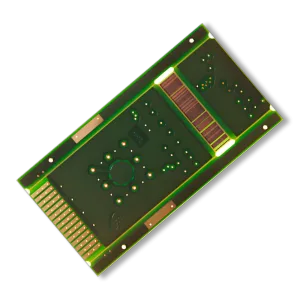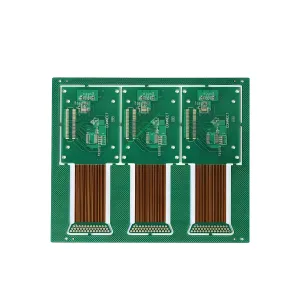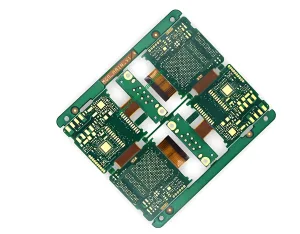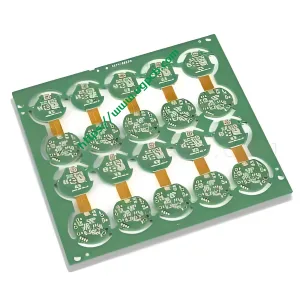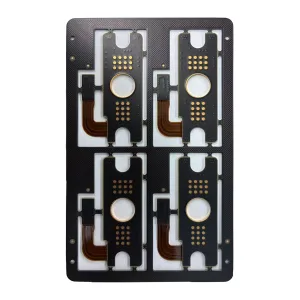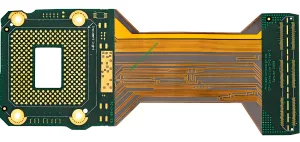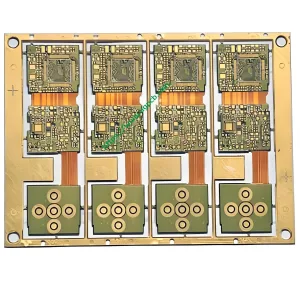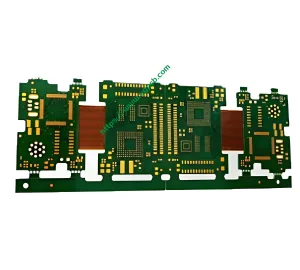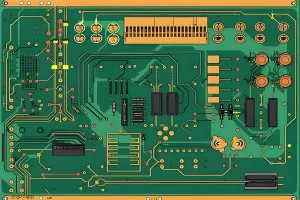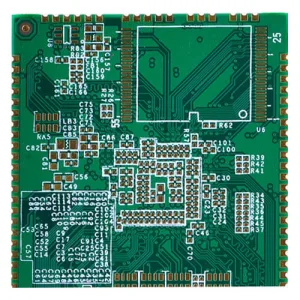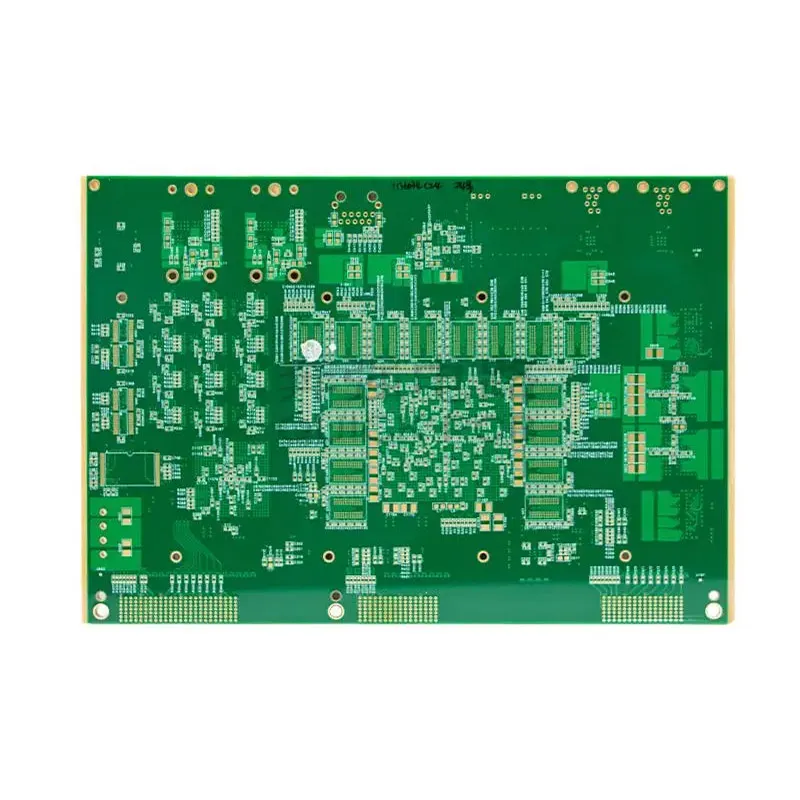
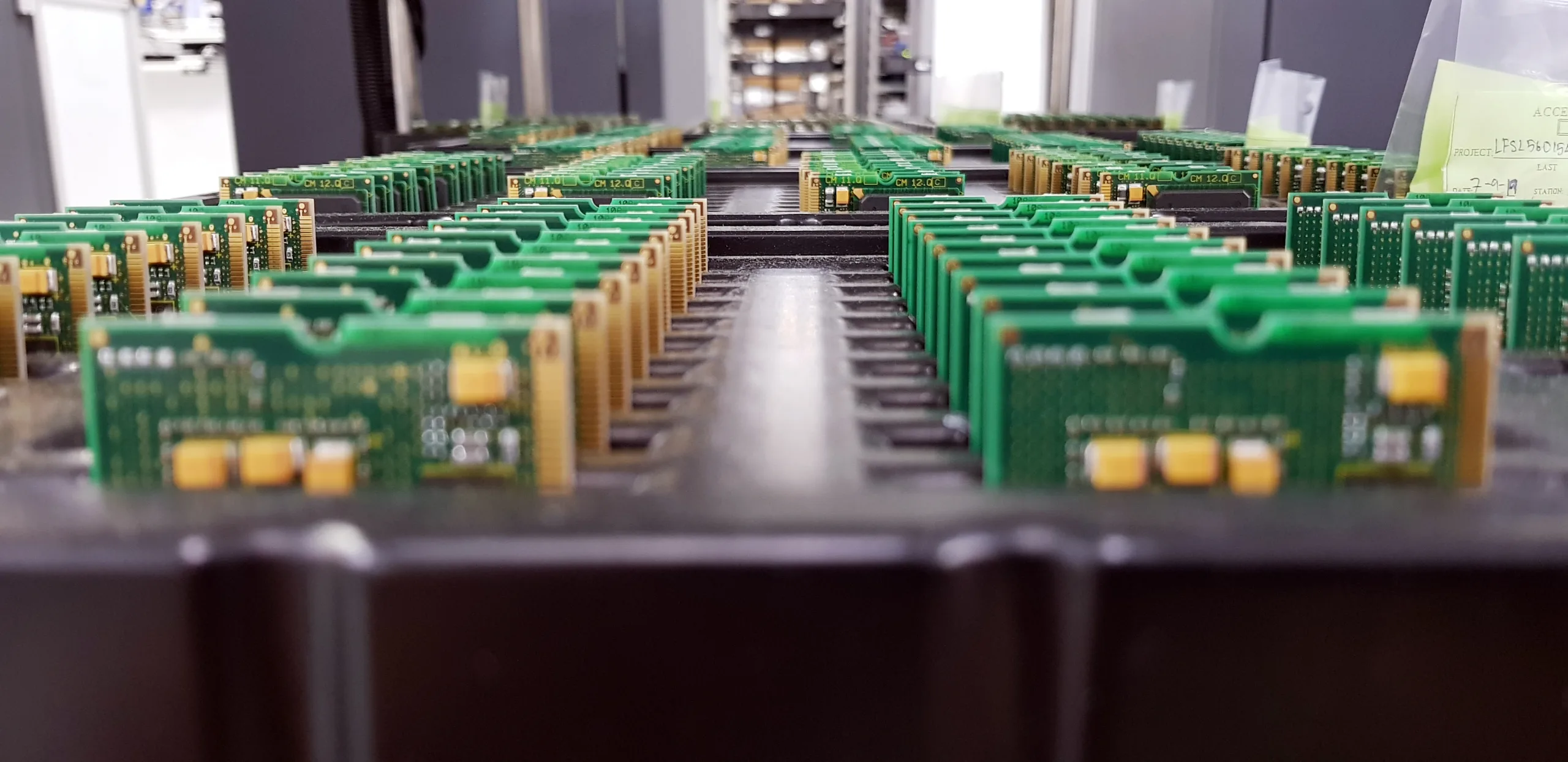
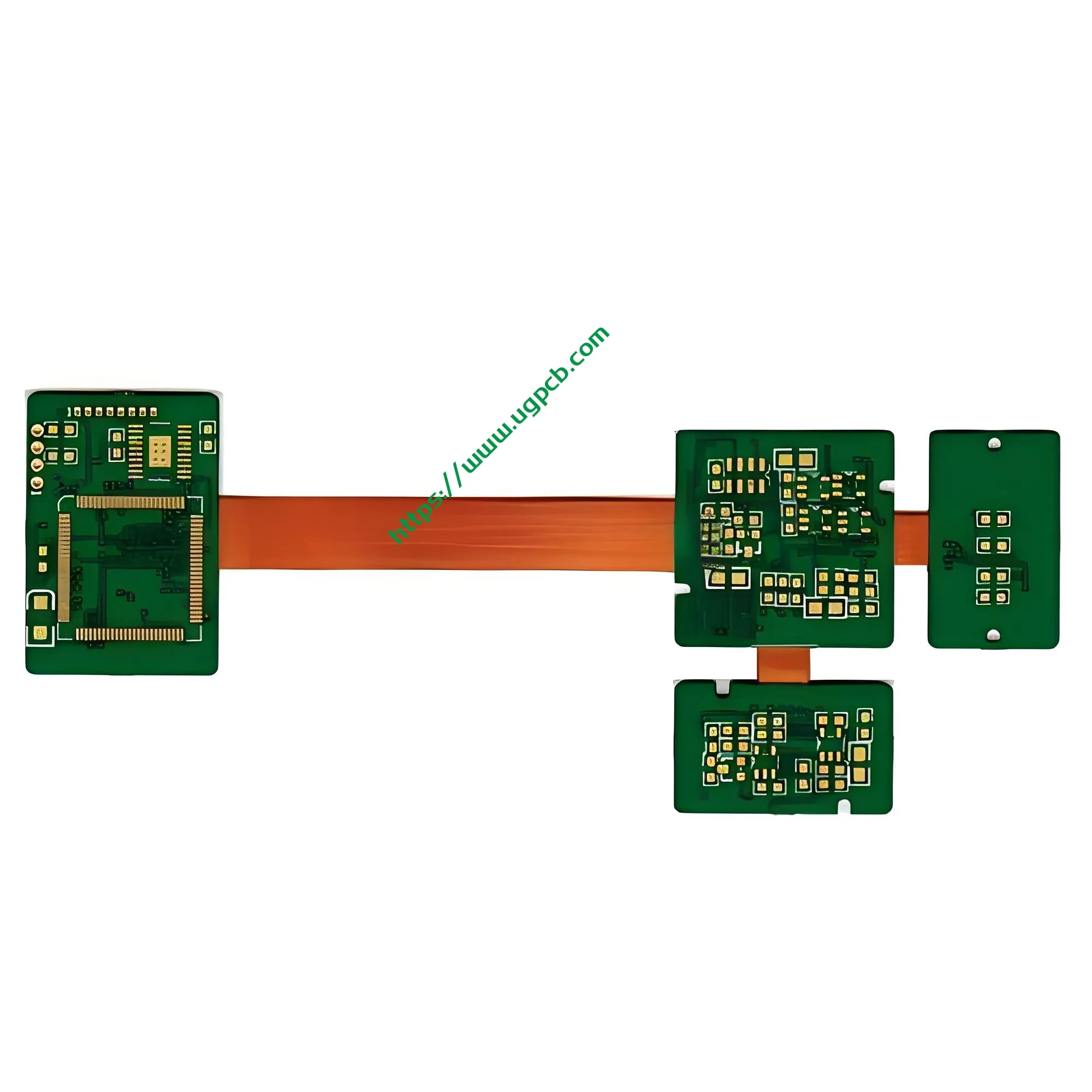
As electronic products move toward 高周波, 高速, 軽量, and foldable デザイン, traditional rigid PCBs or flexible printed circuits (FPCS) alone can no longer meet the demands of complex RF modules, smartphone cameras, or medical endoscopes. As a trusted leader in プリント基板の製造, UGPCB を紹介します 8-Layer High Speed Rigid-Flex PCB. With its unique 6-レイヤーリジッド + 2-layer flex integrated structure, this board delivers an optimal balance of 信号の完全性, 機械的安定性, and space utilization.
This article provides a detailed overview of this リジッドフレックスPCB—covering its definition, 材料, manufacturing process, and applications—to help you understand why it is the preferred choice for high-performance module PCBs.
1. Product Overview and Definition
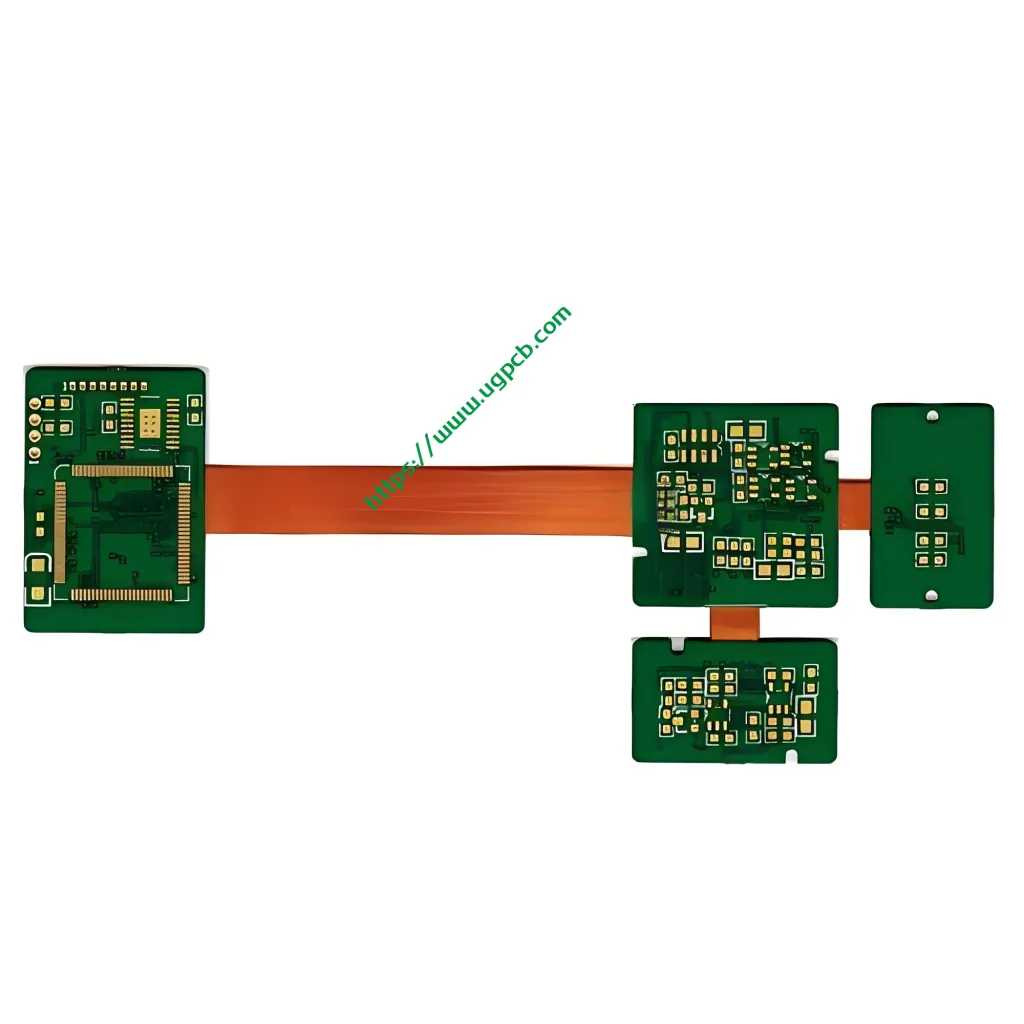
The8-Layer High Speed Rigid-Flex PCB is not simply a rigid board connected to a flex board via a connector. その代わり, it is a unified structure formed by laminatingFR4 (rigid substrate) そしてPI (ポリイミド, flexible substrate) into a single component.
- Structure Breakdown: リジッド6L (6-layer rigid section) + フレックス2L (2-layer flexible section).
- Core Positioning: Ideal for compact electronic devices requiring high-speed signal transmission, dynamic flexing, そして 高い信頼性.
This design eliminates traditional board-to-board connectors, reducing solder joint failure risks while significantly improving 電磁互換性 (EMC) . It represents a key advancement in 高速PCB テクノロジー.
2. 設計上の考慮事項と動作原理
設計上の考慮事項
When designing thisリジッドフレックスPCB, UGPCB’s engineering team focuses on three critical areas:
- インピーダンス制御: 高速信号用, we strictly control trace width and spacing. This product achieves a minimum 3ミル/3ミル トレース/スペース, ensuring consistent differential impedance (例えば。, 90Ω or 100Ω).
- 移行ゾーンの保護: The junction between rigid and flex sections is a stress concentration point. We apply teardrop compensation and optimized coverlay openings to prevent circuit breaks during dynamic bending.
- Stack-up Symmetry: To avoid warpage caused by CTE (熱膨張係数) mismatch during high-temperature soldering, the rigid section uses a 6-layer symmetrical stack-up, while the flex section uses high-modulus PI material.
作業原則
The フレックスレイヤー (PI) acts as a bridge connecting multiple rigid functional modules. During bending, the flexible section transmits high-speed data signals (such as MIPI or USB 3.0) and power, while the rigid sections carry high-density BGA コンポーネント and passive devices. This design enables the entire circuit system to fit into compact or irregular product enclosures.
3. Materials and Key Specifications
UGPCB uses premium materials from leading global brands to ensure electrical performance and reliability. Below are the key specifications for this model:
| パラメーター | 仕様 | 技術的な洞察 |
|---|---|---|
| 基本材料 | FR4 + PI | Rigid section uses high-Tg FR4 (TG > 150℃) for soldering stability; flex section uses polyimide (PI) for flexibility and heat resistance. |
| 銅の厚さ | 1 オズ | 終了した 1 oz copper supports higher current loads and helps reduce skin effect loss in高速信号. |
| 仕上がり板厚 | 1.0 mm | Balances mechanical support with thin device requirements. |
| 表面仕上げ | イマージョンゴールド | 2メートル” 金の厚さ. アパートを提供します, solderable surface with excellent oxidation resistance, ideal for fine-pitch BGAs and aluminum wire bonding. |
| 最小穴サイズ | 0.2 mm (機械的) | サポート 高密度相互接続 (HDI) デザイン; blind and buried vias can further save routing space. |
| 最小トレース / 空間 | 3ミル / 3ミル | Fine-line capability for high-density routing, ensuring signal integrity at high frequencies. |
4. Product Classification and Structural Features
科学的分類
According to IPC-2223 standards, この製品は次のように分類されますdynamic flex rigid-flex PCB.
- 構造によって: Asymmetric rigid-flex (6-レイヤーリジッド + 2-layer flex).
- アプリケーションによって: 高速, 高周波 module PCB.
構造的特徴
- Integrated Interconnection: Eliminates connectors, reducing insertion loss and signal reflection. Signal integrity improves by approximately 30% compared to traditional rigid board plus connector solutions.
- High Flex Durability: The 2-layer flex section uses rolled annealed (ra) 銅, which offers better bending life than electrodeposited (編) 銅, withstanding tens of thousands of dynamic bends.
- Thin and Light: With an overall thickness of 1.0 mm, it saves up to 60% of Z-axis space when folded.
5. 製造工程と品質管理
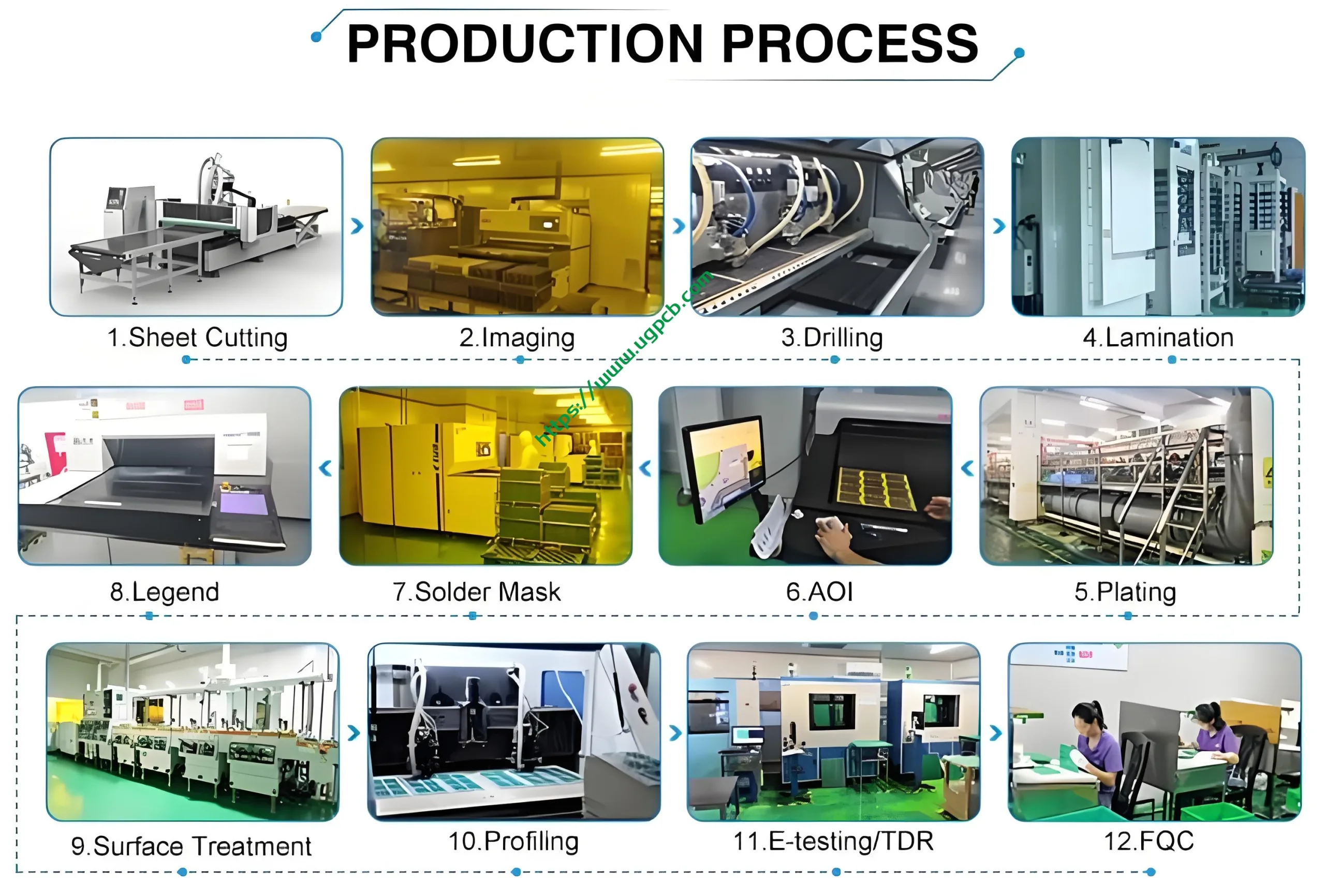
UGPCB operates a fully integrated production line to ensure everyhigh-speed rigid-flex PCB meets strict quality standards. The core process includes:
- Flex Layer Preparation: PI substrate is processed using inner-layer dry film and etching to form fine circuits (3mil trace width) in the flexible area.
- カバーレイラミネート: A coverlay is applied over the flex circuits to protect them and define the bending area.
- Rigid Layer Stacking: FR4 prepreg is precisely aligned with the processed flex layer. This is a critical step to ensure resin fills the rigid-flex interface without voids.
- ラミネート加工: The rigid and flex layers are fused under high temperature and pressure.
- 穴あけ加工とメッキ加工: 0.2 mm mechanical drilling is performed, followed by electroless copper plating to establish interlayer connections.
- 表面仕上げ: イマージョンゴールド is applied with a controlled thickness of 2メートル” to ensure solderability and oxidation resistance.
- Routing and Electrical Testing: Laser cutting or die punching shapes the board, に続く 100% flying probe or fixture testing to guarantee no shorts or opens.
6. アプリケーションシナリオ
これ8-layer high-speed rigid-flex PCB is designed for high-density, high-reliability applications, 含む:
- Smartphones and Wearables: Used in foldable phone mainboard connections and camera module (CCM) アセンブリ, leveraging bending capabilities for hinge integration.
- 医療機器: Such as ultrasound endoscopes and hearing aids. The compact size and reliability of rigid-flex PCBs ensure stable signal transmission in critical environments.
- カーエレクトロニクス: In-vehicle camera modules and LiDAR systems. Meets automotive-grade requirements for vibration resistance and temperature cycling (-40°C〜125°C).
- 航空宇宙と防御: Satellite communication modules and missile guidance systems. Reduces weight while maintaining high reliability.
- 産業管理: Robot joints and servo motor drives. The flex section absorbs mechanical stress from motion.
7. UGPCBを選択する理由?
Manufacturing rigid-flex PCBs presents technical challenges, particularly invoid-free lamination at the rigid-flex interface そしてcontrolling material shrinkage of PI. UGPCB addresses these with proven expertise:
- Precise Shrinkage Compensation: With extensive data on the different expansion rates of PI and FR4, we maintain layer-to-layer registration within ±2 mil.
- High-Speed Signal Assurance: のために 高速PCB アプリケーション, we strictly control dielectric constant (DK) および散逸率 (Df), and provide impedance test reports.
- Customization Support: From prototypes to mass production, we support tailored module PCB solutions with reliable lead times.
8. 今すぐ見積もりを入手
Is your next-generation product still limited by connector size and signal loss? It’s time to upgrade to the8-Layer High Speed Rigid-Flex PCB.
[UGPCBエンジニアにお問い合わせください] のために:
Competitive Volume Pricing.
Free DFM Analysis Report (内で 24 時間).
Impedance Optimization Recommendations.