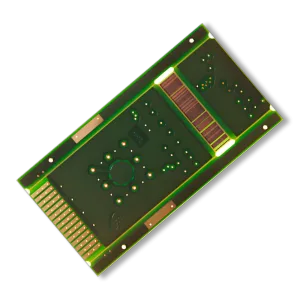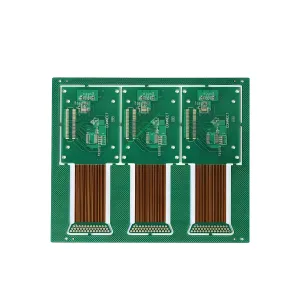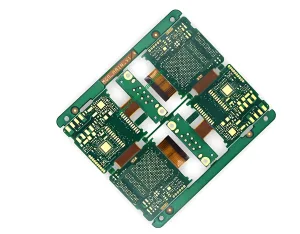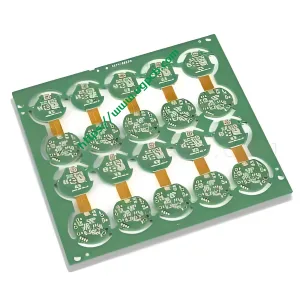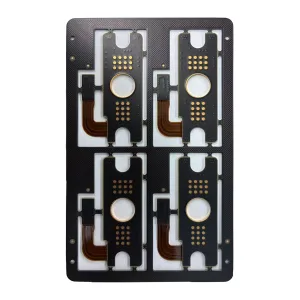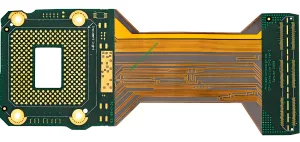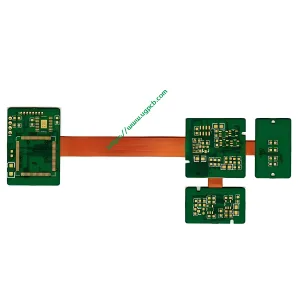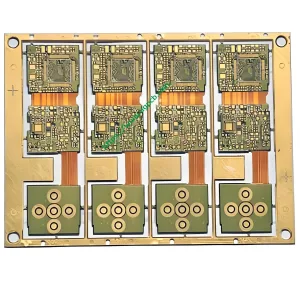
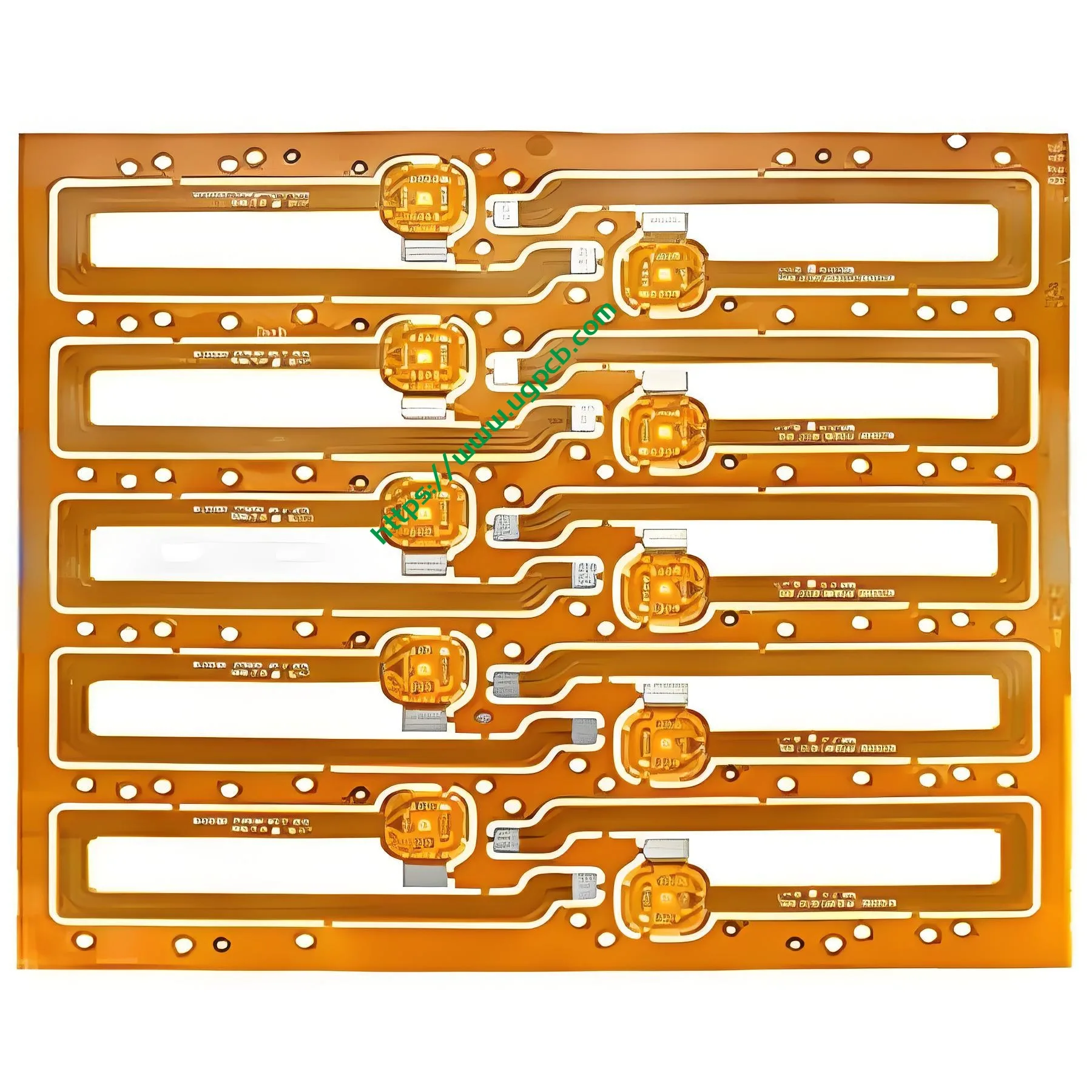
Product Introduction: Fingerprint Identification FPCB – The Critical Carrier in Biometric Era
With the rapid adoption of full-screen smartphones, smart locks, and keyless car entry systems, fingerprint identification FPCB (Flexible Printed Circuit Board for Fingerprint Identification) has become an essential component in biometric modules. UGPCB leverages over ten years of experience in flexible circuit manufacturing to deliver high-performance fingerprint identification FPC tailored for fingerprint modules. Our products combine precision engineering with stable quality to serve global customers.
This article covers product definition, design essentials, working principle, materials, structure, performance, manufacturing process, and applications. It also explains why UGPCB is a reliable partner for your fingerprint identification FPC needs.
A fingerprint identification FPCB integrates fingerprint sensing technology with a flexible printed circuit board. Using polyimide (PI) as the base material, it enables high-speed signal transmission between the fingerprint sensor and control chip. Compared to rigid PCBs, the fingerprint identification FPC is bendable, ultra-thin, and lightweight. It fits complex mounting environments such as foldable phone screens, curved covers, and compact mechanical housings.
Product Overview: UGPCB Fingerprint Identification FPCB Key Parameters
UGPCB’s fingerprint identification FPCB strictly follows IPC-6013 (Qualification and Performance Specification for Flexible Printed Boards). Key parameters are listed below.
| Parameter | Specification | Standard / Note |
|---|---|---|
| Model | Fingerprint Identification FPCB | UGPCB custom model |
| Base Material | Polyimide (PI) | UL 94 V-0 flame rating |
| Layer Count | 2 Layers | Double-sided board |
| Coverlay Color | Yellow / White | Optional |
| Finished Thickness | 0.15mm | Complies with consumer electronics standard (0.08–0.5mm) |
| Copper Thickness | 0.5 OZ (18μm) | IPC-6013D tolerance ±12% |
| Surface Finish | Immersion Gold (ENIG) | High wear resistance for fingerprint modules |
Source notes: IPC-6013D specifies base material thickness tolerance ±8% and copper thickness tolerance ±12%. UL 94 V-0 requires self-extinguishing within 10 seconds and no flaming drips. JPCA-ET04 requires minimum bending radius ≥10T (T = total thickness).
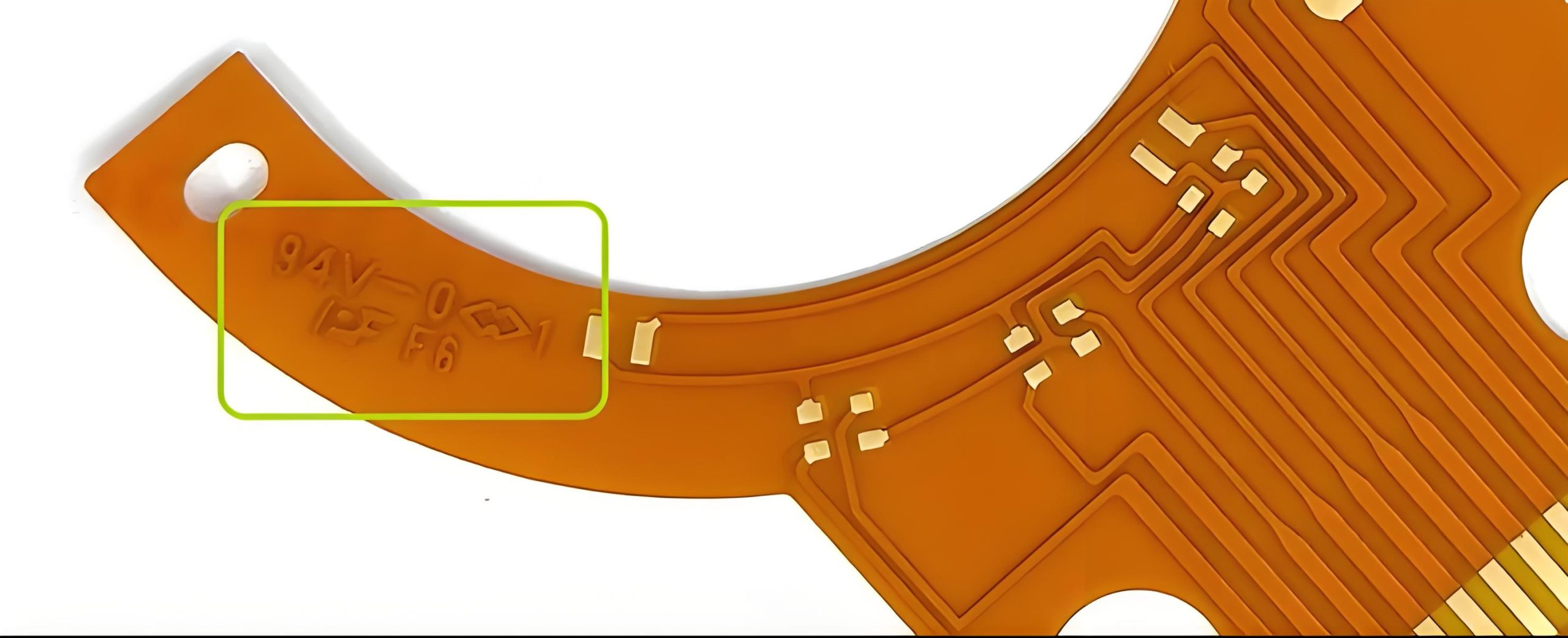
Definition and Scientific Classification of Fingerprint Identification FPCB
Definition
A fingerprint identification FPC is a specialized flexible circuit board that deeply integrates fingerprint sensing technology. It provides electrical connection and mechanical support for the fingerprint sensor, driver IC, and signal processing chip. It ensures reliable fingerprint capture, signal processing, and data transmission.
Scientific Classification
Based on fingerprint sensing principles, fingerprint identification FPCB supports three module types:
-
Capacitive Fingerprint Module FPC – Uses capacitance differences between ridges and valleys. This is the mainstream solution in consumer electronics.
-
Optical Fingerprint Module FPC – Captures fingerprint images using light refraction and reflection.
-
Ultrasonic Fingerprint Module FPC – Uses reflected ultrasound to build 3D fingerprint images. It offers strong penetration and high security.
Based on FPC structure, common types include standard double-sided FPC, FPC with raised electrodes, and rigid-flex boards. UGPCB’s 2-layer PI double-sided FPC belongs to the standard double-sided category. It provides high cost-effectiveness, mature processes, and stable performance.
Design Essentials for Fingerprint Identification FPCB
1. Stack-up and Impedance Control
Signal transmission quality directly affects fingerprint recognition speed and accuracy. UGPCB focuses on these key parameters:
-
Impedance control: 50Ω ±10% (ref. IPC-2223)
-
Signal loss: <0.3dB/cm @ 40MHz
-
Dielectric constant: PI base material 3.2±0.2 @1GHz
2. Trace Precision and Via Design
-
Min line width/space: 60μm/60μm
-
Min via diameter: 0.15mm (standard), 0.1mm (fine pitch)
-
Via copper thickness: ≥8μm (IPC-6013D compliant)
3. Board Flatness
The fingerprint identification FPC requires flatness <50μm. This ensures coplanarity and soldering reliability during SMT assembly for the sensor and IC.
4. Electromagnetic Compatibility (EMC) Design
Fingerprint modules are sensitive to electromagnetic interference (EMI). UGPCB incorporates the following measures:
-
Tight coupling between signal and ground layers to minimize loop area.
-
Ground guard traces around critical signal lines.
-
Ground resistance of stiffener steel sheet ≤1Ω for effective ESD discharge.
Working Principle of Fingerprint Identification FPCB
Using the most common capacitive fingerprint sensing as an example, the fingerprint identification FPC works in four steps.
Step 1: Fingerprint capture. When a finger touches the sensor, the finger acts as one capacitor plate and the silicon sensor array acts as the other plate. Ridges (protrusions) and valleys (gaps) create different distances, thus different capacitance values. The capacitive sensor reads these differences to capture raw fingerprint signals.
Step 2: Signal transmission. Raw fingerprint signals travel through the fingerprint identification FPC to the signal processing chip. The FPC’s low-loss design ensures signal integrity and noise immunity.
Step 3: Signal processing and matching. The processing chip enhances, refines, and extracts features from the fingerprint image. It compares the extracted features with pre-stored fingerprint templates. Matching algorithms include minutiae-based matching, texture-based matching, and deep learning methods.
Step 4: Result output. When the similarity exceeds a preset threshold, the system outputs a successful recognition signal. Today’s mainstream capacitive sensors achieve recognition + unlock speeds of 0.15–0.2 seconds. Users experience almost no noticeable delay.
Materials of Fingerprint Identification FPCB
Base Material: Polyimide (PI)
UGPCB selects polyimide (PI) as the insulating base material for the fingerprint identification FPCB. PI offers these advantages:
-
High temperature resistance: withstands reflow soldering above 260°C for SMT assembly.
-
Excellent electrical insulation: volume resistivity >10¹⁶ Ω·cm, high dielectric strength.
-
Good mechanical flexibility: outstanding flexural fatigue life for dynamic bending.
-
Flame rating: UL 94 V-0 compliant – self-extinguishes within 10 seconds, no flaming drips.
Copper Foil: 0.5 OZ Rolled Annealed Copper
-
Thickness: 0.5 OZ ≈ 18μm
-
Type: Rolled annealed copper – better flexibility and bending resistance than electro-deposited copper.
-
Purity: ≥99.8% Cu
Surface Finish: Immersion Gold (ENIG)
-
Process: Electroless nickel immersion gold (ENIG) – nickel layer 2–6μm, gold layer ≥0.05μm.
-
Advantages: excellent flatness, good solderability, oxidation resistance, corrosion resistance, and multiple insertion cycles.
-
Applications: wire bonding and SMT assembly for fingerprint sensors.
Performance of Fingerprint Identification FPCB
Electrical Performance
| Parameter | Value |
|---|---|
| Insulation resistance | ≥10⁸ Ω (normal condition) |
| Dielectric withstand | 500V DC, 1 min no breakdown |
| Conductor resistance | ≤100Ω/100mm (specific traces) |
| Impedance control | 50Ω ±10% |
Mechanical Performance
| Parameter | Value | Standard |
|---|---|---|
| Flexural fatigue life | ≥100,000 cycles (R=3mm, 90° bend) | – |
| Minimum bending radius | ≥10T (T = total thickness) | JPCA-ET04 |
| Peel strength | ≥0.8kgf/cm | IPC-TM-650 |
Environmental Reliability
| Test Item | Condition | Requirement |
|---|---|---|
| High temperature storage | 85°C, 1000h | No blister, no delamination |
| Low temperature storage | -40°C, 1000h | Electrical performance normal |
| Damp heat (steady state) | 85°C/85%RH, 500h | Insulation resistance ≥10⁸ Ω |
| Thermal shock | -40°C ↔ 85°C, 100 cycles | No open, no short |
| Solderability | 245°C±5°C, 3–5 sec | Good wetting ≥95% |
Manufacturing Process of Fingerprint Identification FPCB
UGPCB follows IPC-6013 standards. The production process for fingerprint identification FPCB includes the following key steps.
Process Overview
Bare FPC fabrication → Solder paste printing → SMT pick-and-place → Reflow soldering → AOI inspection → Component dispensing → Laser cutting & singulation → Underfill → Baking → Metal ring/cover attachment → Pressure baking → Final electrical test → Packaging & shipping
Key Quality Control Points
-
Circuit patterning: LDI laser direct imaging with line width tolerance ±10%.
-
Lamination: Vacuum hot press with pressure fluctuation <5% for good layer adhesion.
-
Surface finish: In-line gold thickness monitoring for ENIG – gold layer 0.05–0.1μm.
-
Inspection: AOI + flying probe test + 4-wire low-resistance test for 100% electrical yield.
Key SMT Assembly Processes
For fingerprint identification FPC, special attention is needed during SMT:
-
Stencil design: For BGA fingerprint sensors, use square openings with rounded corners. Area ratio ≥0.66.
-
Reflow profile: Peak temperature 240–250°C, time above 220°C for 60–90 seconds.
-
Placement accuracy: Pick-and-place machine accuracy ±0.05mm for precise chip-to-pad alignment.
Features and Core Advantages
-
Ultra-thin and lightweight: Finished thickness 0.15mm saves valuable internal space.
-
High flexibility: Adapts to curved and folded complex housings. Dynamic bending life exceeds 100,000 cycles.
-
Stable signal transmission: PI’s low dielectric loss ensures fingerprint signal integrity.
-
High integration: Supports integration of fingerprint sensor, driver IC, and encryption IC on one board.
-
High reliability: Meets UL 94 V-0 flame rating and IPC-6013 performance requirements.
-
Excellent solderability: ENIG surface finish ensures high SMT assembly yield.
Main Applications and Use Scenarios
1. Smartphones
The fingerprint identification FPC is a core component for under-display fingerprint unlocking and side-mounted fingerprint sensors. In under-display solutions, the FPC connects the fingerprint sensor to the mainboard for high-speed signal transmission. Today, fingerprint recognition penetration in smartphones exceeds 70%, with under-display as a standard feature in mid-to-high-end models.
2. Laptops
Used for user authentication and system login. The fingerprint identification FPC integrates the fingerprint sensor with an encryption chip, enabling fast login, file encryption, and data protection.
3. Smart Locks
In smart locks, the fingerprint identification FPCB must resist water, dust, and electrostatic discharge. It ensures long-term stable operation in harsh outdoor environments. Over 90% of smart locks now include fingerprint recognition.
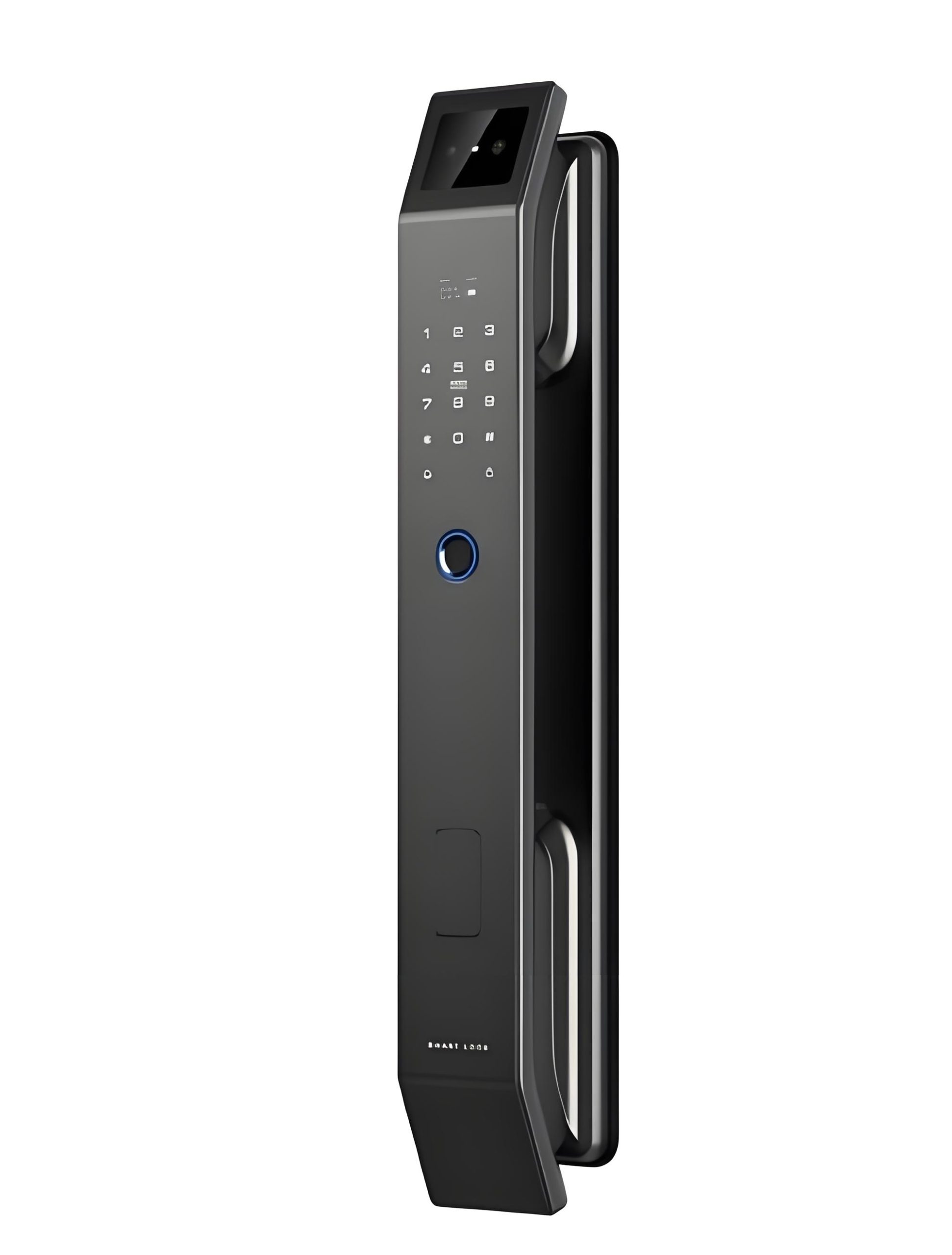
Smart Lock
4. Automotive Electronics
Applications include keyless entry systems, start buttons, and steering wheel fingerprint recognition. These systems verify driver identity and improve vehicle security.
5. Financial Payment Terminals
POS systems and self-service financial kiosks use fingerprint identification FPC for payment verification and transaction authorization.
6. Smart Wearables
Smartwatches and fitness bands require extremely compact and lightweight designs. The fingerprint identification FPC enables high-density integration in these devices.
Market Outlook and Industry Trends
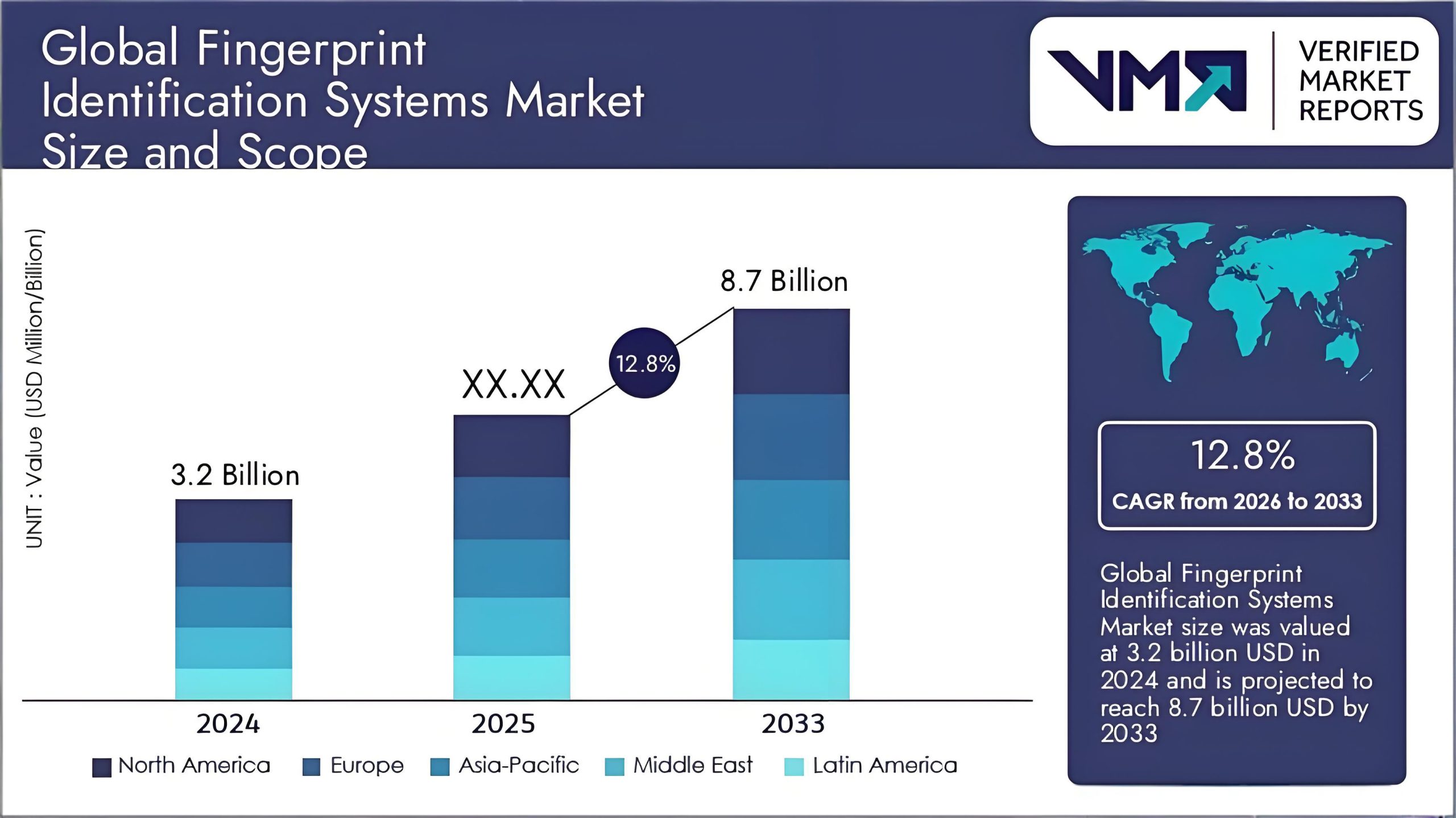
According to market research, the global capacitive fingerprint module market is expected to grow from $8.857 billion in 2025 to $16.290 billion by 2031, at a CAGR of 10.7%. The fingerprint sensor market was valued at approximately $4.8 billion in 2024 and is projected to reach $8.9 billion by 2031, with a CAGR of about 5.50%.
In China, the fingerprint recognition market is estimated at ¥20 billion. Consumer electronics account for about 60%, and smart security (including smart locks) accounts for about 25%. Emerging applications like smart locks, wearables, and automotive are becoming the second growth curve for fingerprint recognition.
Why Choose UGPCB Fingerprint Identification FPCB?
Professional Manufacturing Capability
-
Over ten years of FPC R&D and manufacturing experience.
-
Full compliance with IPC-6013 and UL standards.
-
100% electrical testing and reliability verification.
Quality Assurance System
-
UL 94 V-0 flame rating certification.
-
Three-tier quality control: incoming inspection, in-process control, and final full inspection.
Flexible Customization Services
-
Supports customization of color, thickness, surface finish, and more.
-
One-stop service from design review, prototype sampling, to mass production.
Get Your UGPCB Fingerprint Identification FPCB Sample and Quote Today
UGPCB is committed to providing high-quality, cost-effective fingerprint identification FPCB to global customers. Whether you are developing smartphone fingerprint modules, smart lock solutions, or automotive electronics projects, UGPCB offers professional flexible circuit board solutions.
Take action now:
-
📞 Call our support hotline for technical assistance.
-
📧 Send your design files to our sales email for a fast quote.
-
🌐 Visit the UGPCB website to submit your inquiry online.
UGPCB’s professional team will respond within 24 hours. We support fingerprint identification FPC sample prototyping, mass production, and custom services.