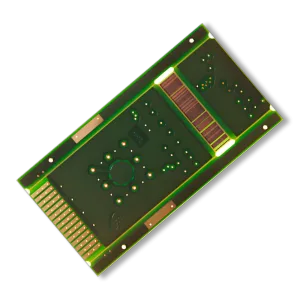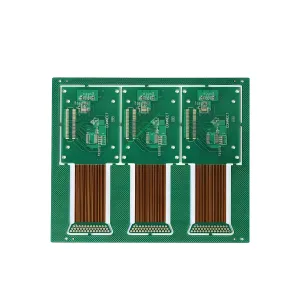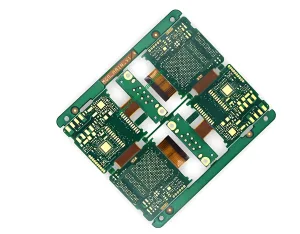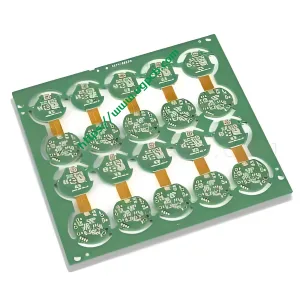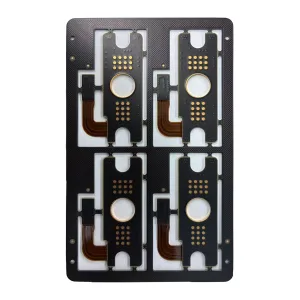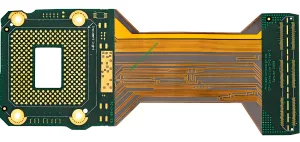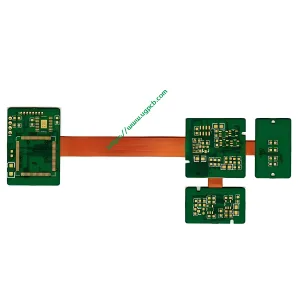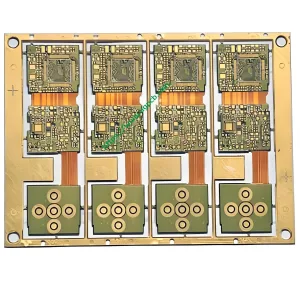
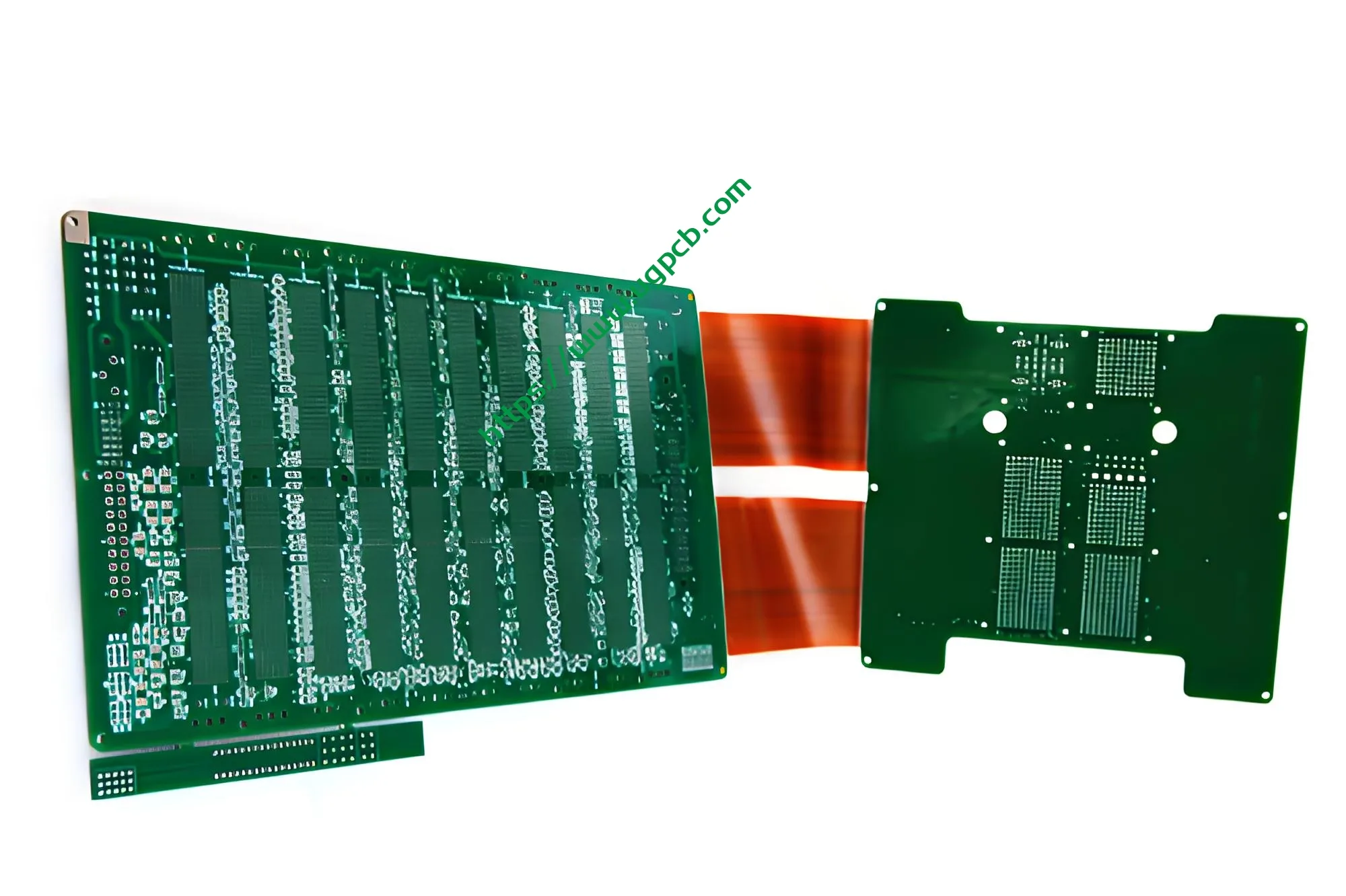
In today’s fast-paced electronics landscape, the demand for compact, lightweight, and highly reliable interconnect solutions has never been greater. Whether you are developing wearable devices, medical instruments, or advanced digital systems, rigid-flex PCBs are the cornerstone technology that bridges the gap between rigid stability and dynamic flexibility. At UGPCB, we specialize in delivering precision-engineered rigid-flex PCB prototypes that meet the most stringent design and performance requirements. This guide will walk you through every aspect of our featured product — a 2+2+2 rigid-flex PCB built with FR-4 and polyimide — and show you why it is the optimal choice for your next digital PCB prototype project.
What is a Rigid-Flex PCB (R-FPCB)?
A rigid-flex PCB, often abbreviated as R-FPCB, is a hybrid printed circuit board that combines rigid and flexible substrate materials into a single integrated structure. Unlike traditional rigid PCBs that use only stiff laminates, or standalone flexible circuits, rigid-flex PCBs allow for three-dimensional packaging by eliminating connectors and ribbon cables between rigid sections. This seamless integration significantly enhances signal integrity, reduces assembly costs, and improves overall device reliability. The “2+2+2” designation describes the layer stack-up: two rigid outer layers, two flexible inner layers, and two additional rigid layers bonded together, creating a 6-layer rigid-flex PCB perfectly suited for digital applications where space and weight are at a premium.
[Image Suggestion: Cross-sectional diagram of a 2+2+2 rigid-flex PCB showing rigid FR-4 sections, flexible polyimide layers, and plated through-holes.
Alt text: Cross-section of 2+2+2 rigid-flex PCB stackup with FR-4 rigid layers and PI flexible layers]
Product Overview: UGPCB 2+2+2 Rigid-Flex PCB Prototype
At UGPCB, our standard rigid-flex PCB prototype offering is engineered to accelerate your product development cycle. The key specifications of our featured build are:
-
Model: Rigid-Flex PCB (R-FPCB)
-
Material: FR-4 (rigid) + PI – Polyimide (flexible)
-
Layer Structure: 2+2+2 (6-layer rigid-flex construction)
-
Solder Mask Color: Green / White
-
Finished Thickness: 1.0 mm (rigid area) + 0.15 mm (flexible area)
-
Copper Thickness: 0.035 mm (1 oz) on all layers
-
Surface Treatment: Immersion Gold (ENIG)
-
Minimum Line Width / Distance: 0.1 mm / 0.1 mm
-
Application: Digital rigid-flex PCB prototype fabrication
This configuration is optimized for high-density digital circuits that require both mechanical bending and rigid component mounting zones.
How a Rigid-Flex PCB Works
The operating principle of a rigid-flex PCB leverages the unique material properties of its constituents. Rigid layers, typically made from FR-4 epoxy glass laminate, provide structural support and a stable platform for surface-mount and through-hole components. Flexible layers, constructed from polyimide (PI) film, act as integrated “hinges” that can be dynamically bent or statically folded to fit into compact enclosures. Electrically, the layers are interconnected through plated through-holes and buried vias, forming a continuous PCB circuit. By eliminating board-to-board connectors, the rigid-flex PCB reduces signal attenuation and reflection, which is critical in high-speed digital applications. When the flexible section is bent, the polyimide substrate withstands stress far better than FR-4, provided the bend radius respects the material’s mechanical limits.
Design Essentials for 2+2+2 Rigid-Flex PCBs
Designing a 2+2+2 rigid-flex PCB requires a deep understanding of mechanical and electrical constraints. Key rigid-flex PCB design considerations include:
-
Bend Radius Calculation: According to IPC-2223, for dynamic flex applications, the minimum bend radius should be at least 10 times the flex circuit thickness. With our 0.15 mm flexible layer, the recommended minimum bend radius is 1.5 mm.
-
Trace Routing in Bend Areas: Lines and spaces must align perpendicular to the bend axis to avoid copper cracking. Our 0.1 mm trace/space capability allows dense routing while maintaining reliability.
-
Layer Cross-Section: The transition zone from rigid to flex must be carefully modeled to avoid stress concentrators. Bookbinder-style construction is used to progressively release the flexible layers from the rigid stack.
-
Via Placement: No plated vias should be placed within the bend zone, as they are prone to fatigue failure. Blind and buried vias in rigid sections enhance via-in-pad designs for high-density PCBA.
By addressing these rigid-flex PCB design guidelines, UGPCB can transform your schematic into a robust digital rigid-flex prototype that performs flawlessly.
Applications and Use Cases
The versatility of a 2+2+2 rigid-flex PCB makes it ideal for a wide array of digital and mixed-signal systems. Common rigid-flex PCB applications include:
-
Wearable Electronics: Smartwatches, fitness trackers, and medical patches where the board must conform to body contours.
-
Medical Devices: Implantable diagnostics, hearing aids, and endoscopic imaging systems requiring repeated sterilization cycles and high reliability.
-
Industrial IoT Sensors: Compact sensor nodes that must fit into small housings and withstand vibration.
-
Aerospace and Defense: Avionics, satellite systems, and missile guidance electronics benefiting from weight reduction and high shock resistance.
-
Consumer Digital Products: Foldable smartphones, cameras, and portable gaming devices relying on rigid-flex PCB technology for miniaturization.
In digital PCB prototyping, the ability to test full system functionality with integrated flex eliminates the variables introduced by connectors, enabling faster validation of signal integrity and power distribution.
Classification of Rigid-Flex PCBs
To properly situate our product within industry standards, rigid-flex boards are classified according to IPC-6013 based on construction and intended end-use:
-
Type 1: Single-sided flexible PCB
-
Type 2: Double-sided flexible PCB with plated through-holes
-
Type 3: Multilayer flexible PCB
-
Type 4: Rigid-flex multilayer PCB – Our 2+2+2 configuration falls squarely into this category, where rigid and flexible layers are intermixed to form a single integrated circuit board.
-
Type 5: Flex or rigid-flex multilayer with rigidized stiffeners
Type 4 is the most prevalent for digital applications because it allows complex interconnects across multiple rigid domains while maintaining full PCBA compatibility.
Materials and Their Performance
In a 2+2+2 rigid-flex PCB, material selection directly impacts performance and longevity.
-
FR-4 (Rigid Laminate): A flame-retardant epoxy/glass composite that provides excellent dimensional stability, a dielectric constant (Dk) of approximately 4.2–4.6 at 1 MHz, and a glass transition temperature (Tg) typically around 135°C to 170°C. In our build, high-Tg FR-4 is standard to withstand lead-free assembly temperatures.
-
Polyimide (Flexible Laminate): The polyimide film offers outstanding thermal resistance (continuous service up to 200°C), extremely low outgassing, and a Dk of around 3.5 at 1 MHz. Its flexibility endures millions of dynamic bend cycles when the bend radius guideline is followed.
-
Immersion Gold (ENIG) Surface Finish: Electroless Nickel Immersion Gold provides a flat, solderable surface with a typical nickel thickness of 3–6 µm and gold thickness of 0.05–0.15 µm. It ensures excellent shelf life, wire-bonding capability, and uniform coplanarity for fine-pitch components – critical in high-density PCBA assembly.
Key Features and Benefits
UGPCB’s 2+2+2 rigid-flex PCB prototype offers distinct advantages tailored for the digital designer:
-
Ultra-Miniaturization: Combines six layers of interconnect in a package that can fold into a fraction of the space required by separate rigid boards and cabling.
-
Superior Signal Integrity: Controlled impedance traces are maintained across the entire PCB without connector discontinuities. For a 0.1 mm trace width, the characteristic impedance can be precisely tuned to 50 Ω or 100 Ω differential, essential for high-speed digital protocols like USB 3.0, DDR memory, and MIPI.
-
High Reliability: The nickel-gold surface protects copper from oxidation, ensuring robust solder joints. Following IPC-A-600 class 2 acceptance criteria, our boards are subjected to rigorous inspection.
-
Cost-Effective Prototyping: By providing quick-turn rigid-flex PCB prototype services, we enable design teams to iterate rapidly before committing to volume production.
-
Seamless Integration with PCBA: The board is fully compatible with automated SMT assembly processes. Its flatness and surface finish allow high-yield component placement, turning your PCB into a complete PCBA with minimal rework.
Rigid-Flex PCB Production Process
Manufacturing a reliable 2+2+2 rigid-flex PCB demands precise process control. UGPCB follows a proven flow:
-
Inner Layer Imaging & Etch: Both rigid FR-4 and flexible polyimide core layers are imaged and etched to form the desired circuit patterns, maintaining the 0.1 mm line width tolerance.
-
Lamination: Flexible layers are sandwiched between no-flow prepregs and rigid FR-4 outer layers. Under high temperature and pressure, the stack is permanently bonded. The “bookbinder” technique creates a gradual transition zone.
-
Drilling & Plating: Mechanical or laser drilling creates vias. Direct metallization and electrolytic copper plating build the 0.035 mm (1 oz) copper thickness in all barrels.
-
Outer Layer Imaging & Etch: Outer rigid layers are patterned, defining pads and traces.
-
Solder Mask Application: Green or white solder mask is applied and photoimaged on rigid sections, leaving flexible areas exposed.
-
Surface Finish: Electroless nickel immersion gold is deposited, ensuring a perfect soldering interface.
-
Routing & Laser Cutting: Rigid outlines are routed, and flexible sections are precisely cut using UV lasers to prevent mechanical stress.
-
Electrical Testing & AOI: Every PCB is 100% netlist tested and optically inspected to guarantee no opens or shorts.
Why Choose UGPCB for Your Digital Rigid-Flex PCB Prototype?
Imagine holding a one-piece circuit that replaces three rigid boards and two intricate wiring harnesses. That’s the power of a 2+2+2 rigid-flex PCB from UGPCB. Our engineering support team assists with stack-up design, impedance calculation, and bend radius validation to ensure your prototype meets IEEE and IPC standards. We provide a seamless quote-to-delivery experience, with transparent pricing and on-time shipment.
Ready to transform your digital design into a high-performance reality? Submit your Gerber files today via our online portal to receive an instant quote on your rigid-flex PCB prototype. Our experts are on standby to review your requirements and help you avoid common pitfalls. Click the “Get a Quote” button now and take the first step toward a lighter, faster, and more reliable product.