โลโก้ UGPCB

As smart wearables, อุปกรณ์อิเล็กทรอนิกส์ยานยนต์, and outdoor drones become ubiquitous, a persistent challenge remains: how to ensure พีซีบี reliability in harsh environments involving high humidity, salt spray, or even direct immersion. Traditional conformal coatings, despite their name, often fall short due to issues like bubbles, uncovered areas, environmental concerns, and difficult rework. วันนี้, a nanotechnology revolution driven by plasma-enhanced chemical vapor deposition is fundamentally changing this landscape. This article explores PECVD vacuum nano coating technology and demonstrates how it achieves 360-degree protection and exceptional cost-effectiveness, positioning it as the optimal replacement for conventional methods.
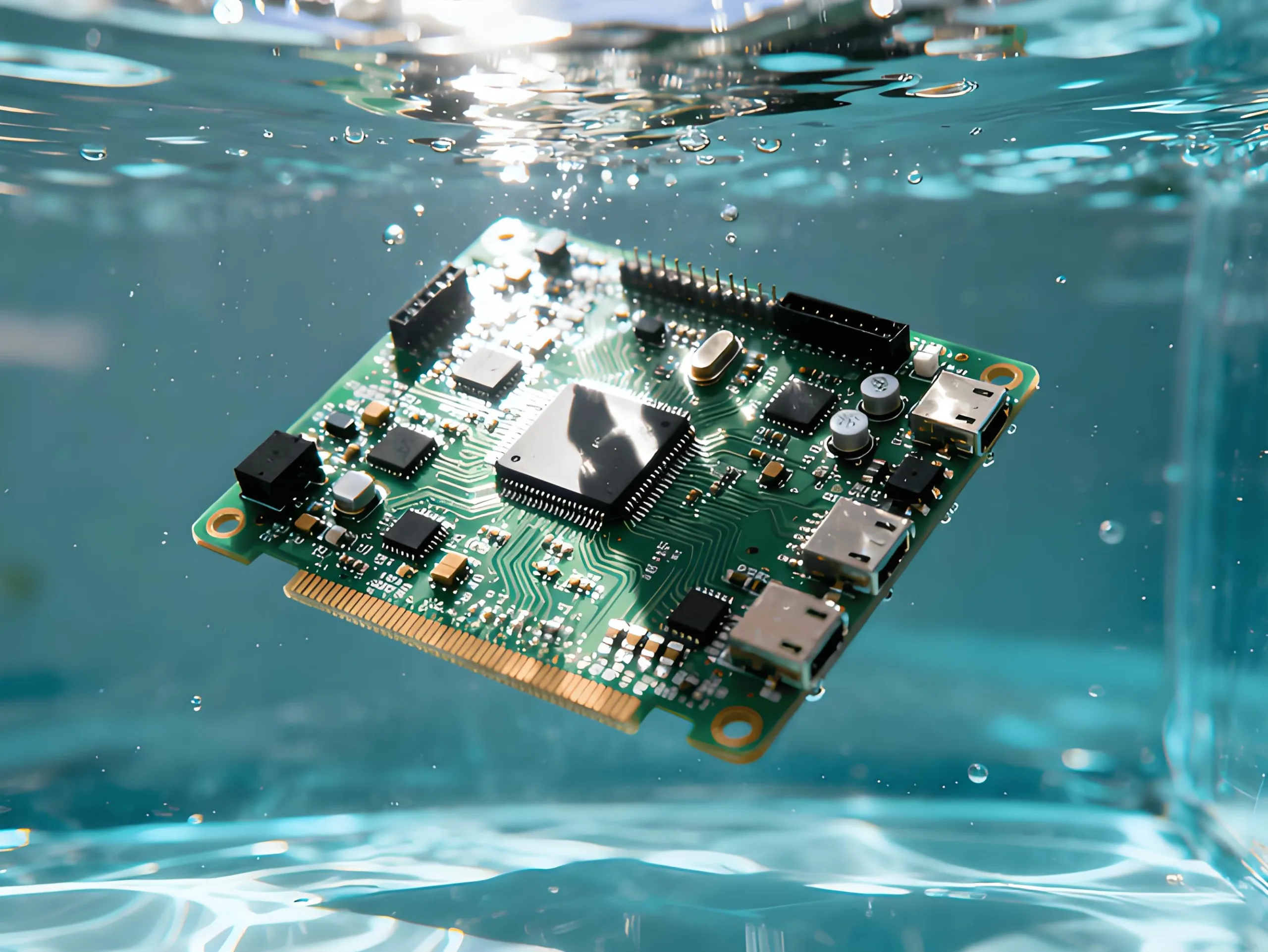
From Micron-Level Coating to Nano-Level Growth: The Core of PECVD Technology
Traditional conformal coatings rely on a “wet coating” process, using liquid solvents that flow physically over the surface. The resulting thickness is typically between 20 และ 50 ไมครอน. This method often leads to uncovered “dead zones” and bubbles in tight spaces beneath high-density ส่วนประกอบ or BGA chips. ในทางตรงกันข้าม, UGPCB’s PECVD technology represents a fundamental shift.
PECVD stands for plasma-enhanced chemical vapor deposition. In a vacuum chamber, a high-frequency electromagnetic field generates plasma, which ionizes liquid polymer inert materials (monomers) and deposits them onto the PCBA surface. An in-situ chemical reaction forms an invisible nanoscale thin film. This film is not merely attached but bonds chemically to the substrate, ensuring exceptional adhesion strength.
ตามโครงสร้าง, UGPCB’s nano coating employs a sophisticated multi-layer design:
-
Adhesion Layer: Ensures superior bonding strength between the film and PCB materials (including gold, ทองแดง, and mold compound).
-
Anti-Corrosion Layer: Blocks the ingress of external moisture, salt spray, and chemicals.
-
Hydrophobic Top Layer: Creates a microscale rough surface structure, producing the “lotus effect” where liquid water beads up and cannot spread.
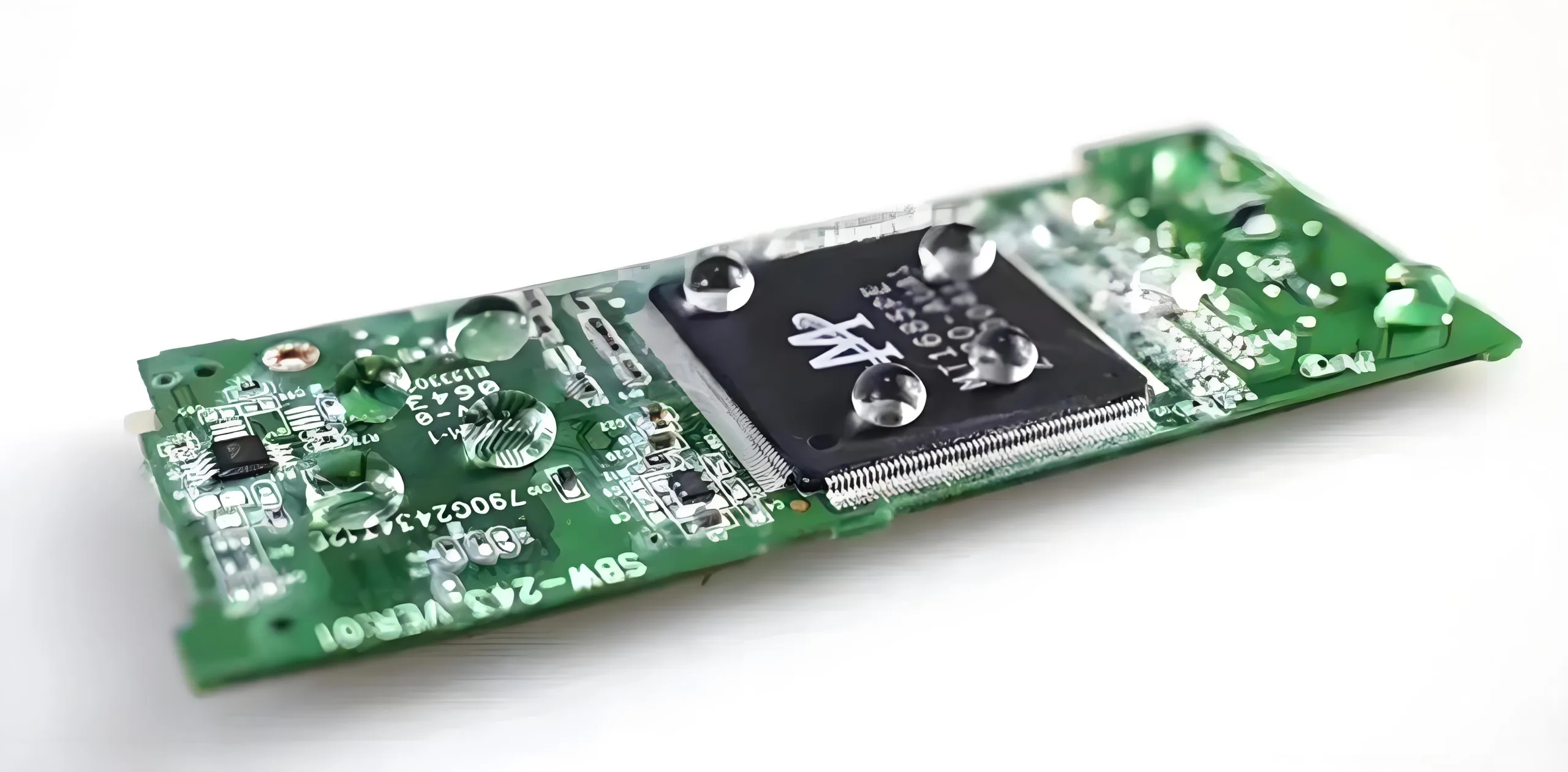
This three-layer structure provides complete encapsulation. The total thickness is controlled at the nanoscale—typically between 300 และ 2,500 nanometers per IPC standards for PCBA protection—making it about one hundredth the thickness of traditional coatings. เพราะเหตุนี้, it has a negligible impact on heat dissipation and electrical performance.
Data and Standards Validation: Why Engineers Choose PECVD
Evaluating a protective process requires assessing its performance under rigorous standards. Compared to traditional methods, PECVD nano coating offers several key advantages:
Conformal Coverage and Reliability
Traditional spraying methods suffer from shadowing effects like the Faraday cage effect. อย่างไรก็ตาม, PECVD is a deposition process performed under vacuum. Gas molecules can penetrate virtually anywhere, covering component undersides and tiny gaps for 360-degree protection. According to the stringent insulation resistance tests outlined in IPC-TM-650 2.6.3.4, the dense film formed by PECVD effectively inhibits electrochemical migration in humid environments. This ensures that insulation resistance between conductors does not degrade significantly due to moisture.
Environmental Compliance and Longevity
Traditional conformal coatings are often solvent-based, containing high levels of volatile organic compounds. Some materials are even restricted by environmental regulations in certain markets. Conversely, the solid or liquid sources used in the PECVD process are polymer inert materials. The production process yields zero VOC emissions and fully complies with RoHS, REACH, and other EU certifications. Independent testing indicates that บอร์ด PCBA protected with this nano coating can withstand salt spray and aging for over ten years.
Heat Dissipation and Electrical Performance
The thicker micron-level coating of traditional conformal coatings acts like a blanket on the circuit board, trapping heat. Because the PECVD film is extremely thin (nanoscale), application data from UGPCB shows significantly better heat dissipation compared to traditional processes. นอกจากนี้, due to the inert materials used, the film possesses high dielectric strength and causes virtually no signal loss for high-frequency transmission, effectively resolving the electrical performance concerns associated with older methods.
ประสิทธิภาพต้นทุน: Total Cost of Ownership and Rework Rates
In manufacturing, process evolution is driven by both quality and cost. While the initial investment for UGPCB’s vacuum nano coating equipment might be higher, its total cost of ownership often undercuts traditional methods.
| Cost Component | Traditional Conformal Coating / Selective Coating | PECVD Vacuum Nano Coating |
|---|---|---|
| ค่าวัสดุ | Lower unit price, but low utilization; requires masking/demasking | High utilization of liquid sources, minimal waste |
| Labor & Energy | Requires preheating, curing, and longer production lines; high energy consumption | One-step process at room temperature; automated one-button operation; single cycle time 0.5–1 hour |
| Rework Cost | Rework is extremely difficult, requiring chemical stripping that often damages the board | Coating is deposited on the surface; soldering can penetrate the film, or localized micro-processing is possible; rework success rate improves by over 90% |
| Total Cost | Lower explicit costs, but higher hidden costs from scrap | Total cost comparable to or even lower than traditional coating |
Applications and How to Proceed
PECVD nano coating technology now extends beyond consumer electronics splash protection (like phones and earbuds) to high-reliability sectors such as automotive domain controllers, ล็อคอัจฉริยะ, outdoor LED displays, and medical ventilators. In robotic vacuum cleaners, this technology has reduced failure rates in high-temperature, high-humidity conditions by 30%.

If you are searching for a high-performance PCBA protection solution and want to request sample testing or receive a quote, please contact the professional UGPCB team. As a trusted PCBA nano coating supplier, we offer integrated services including equipment, formulations, and contract manufacturing. Click for a quote today and equip your products with a “nano raincoat.”
บทสรุป
As electronic products evolve towards greater miniaturization, integration, และความน่าเชื่อถือ, the era of traditional conformal coatings is drawing to a close. PECVD vacuum nano coating, with its atomic-level density, environmental compatibility, superior heat dissipation, and competitive total cost, is establishing itself as the benchmark process for next-generation PCBA protection. Choosing nano coating is not just selecting a protective layer; it is ensuring your products maintain lasting market competitiveness in challenging environments.