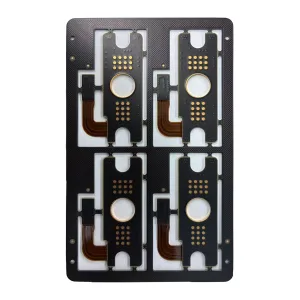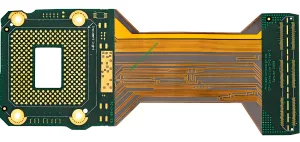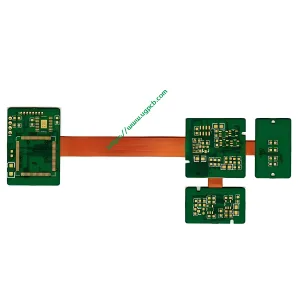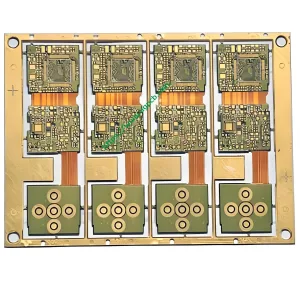
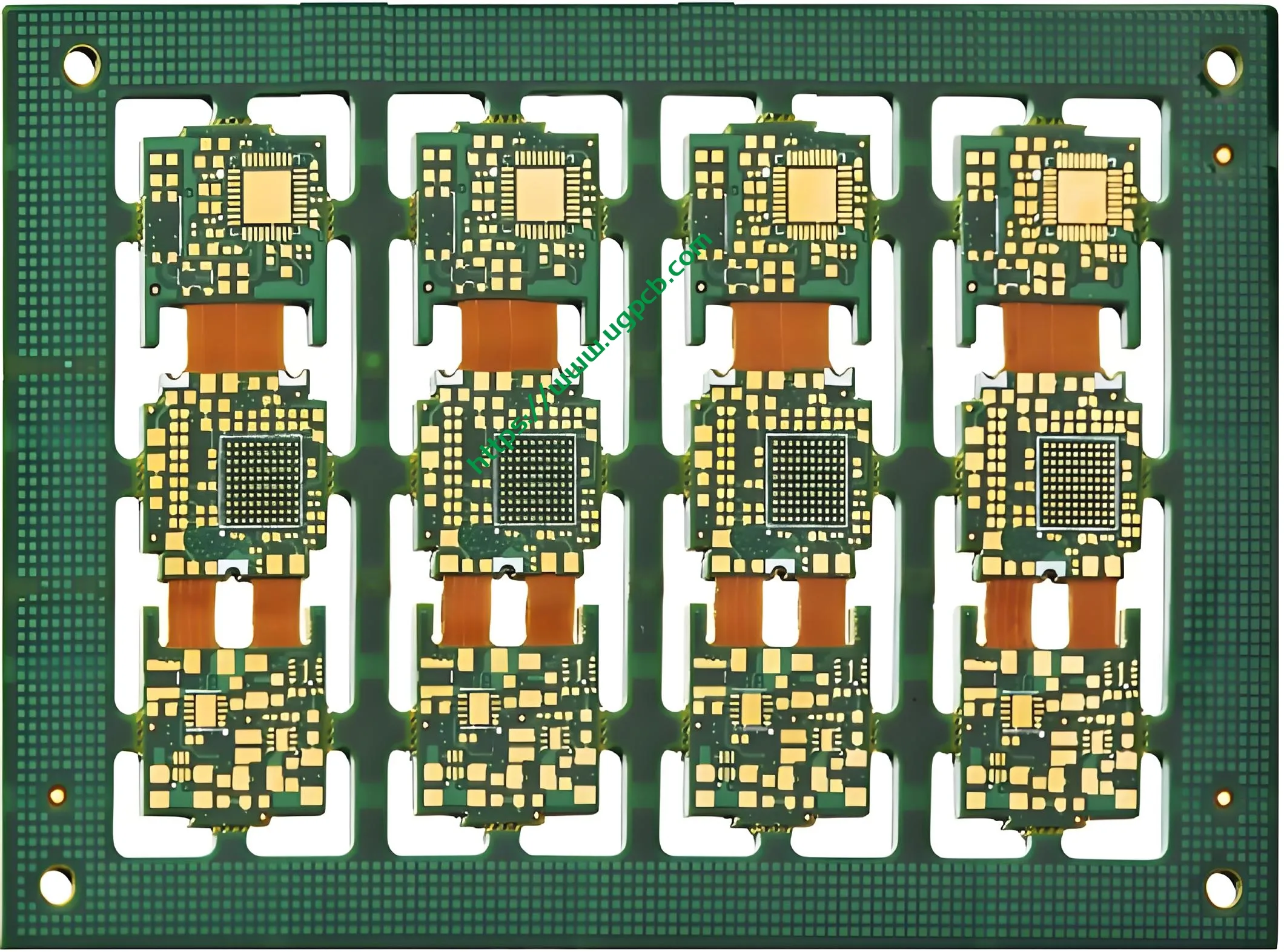
製品の概要 | 統合された & 合理化されたエレクトロニクス アーキテクチャ
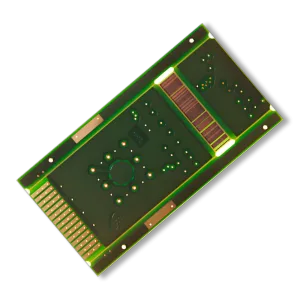
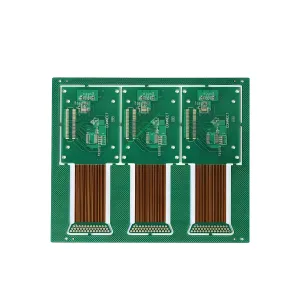
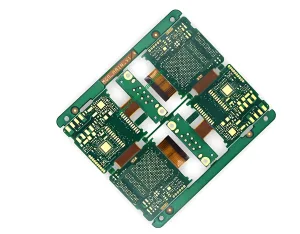
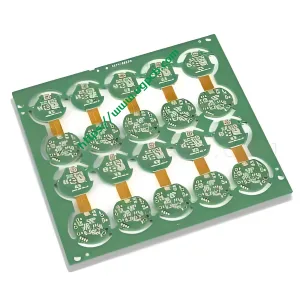
The 6 多層リジッドフレックス PCB は、正確な積層プロセスを通じて多層リジッド基板とフレキシブル回路を結合します。. この構造により、3D アセンブリ機能が新たなレベルに引き上げられます。. UGPCB このモデルは、要求の厳しい医療用途向けに特別に設計されています. 最終的な板厚は1.0mmです. 表面はENIG 2μ”を使用 (浸漬ゴールド). この仕上げにより、優れた平坦性が確保され、高密度の部品配置に優れた電気的性能が実現されます。.
技術的定義 & 分類 | IPC-6013E 準拠
IPC-6013Eによると, a リジッドフレックスプリント基板 3層以上の導電層を有する. メッキされたスルーホールを備えた硬質材料と柔軟な材料の両方が含まれています. 正確なデータ追跡とトレーサビリティのために, これらの寸法を使用して製品を分類する:
-
スタックアップ分類: 2+2+2 多層ハイブリッド (1.0総厚 mm)
-
IPCパフォーマンスクラス: クラス 3 (連続稼働が必要な医療機器にとって重要)
-
材料系: 複合 (FR-4 リジッドエリア + PIポリイミドフレックスエリア)
-
表面仕上げ: 同意します 2μ” (浸漬ゴールド)
-
応用分野: 専門的な医療用電子機器
材料の選択 & 積み重ね | PIとFR-4ゴールドの組み合わせ
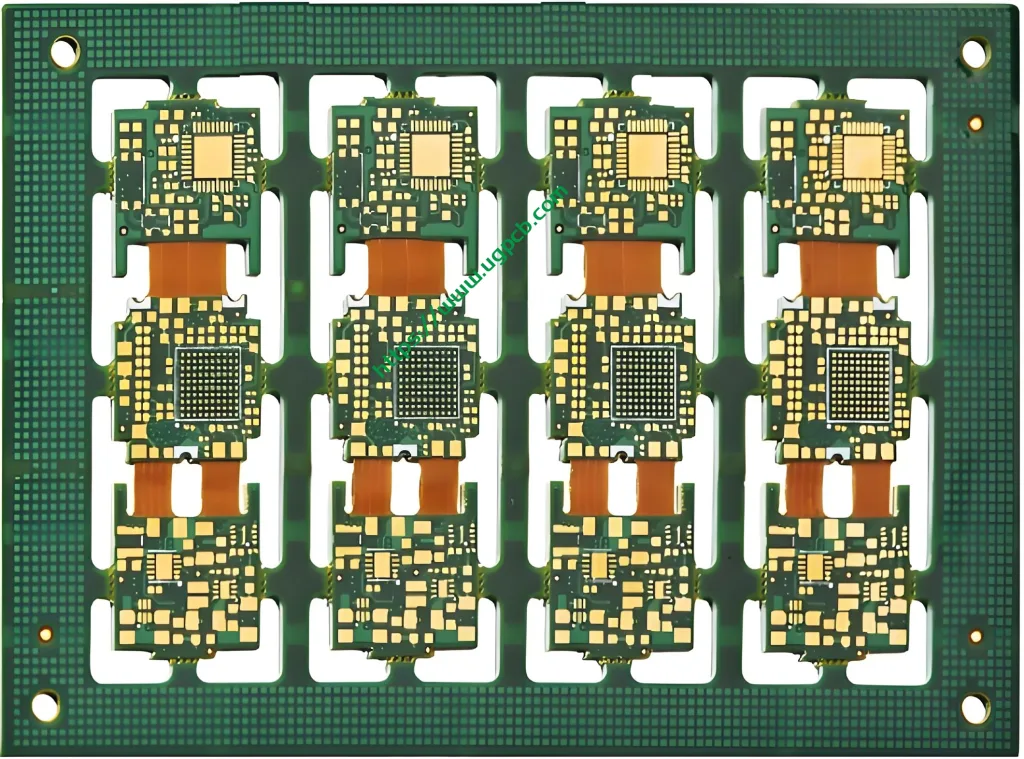
材料の選択により、あらゆる性能の上限が決まります。 6 層リジッドフレックス PCB. UGPCB は先進的な FR-4 を使用します + PI複合システム.
-
硬い領域 (FR-4): 高 Tg 材料が大きなチップの機械的サポートと放熱を実現, コネクタ, そして重いコンポーネント.
-
フレックスエリア (ポリイミド – PI): フレキシブルコアにはポリイミドを使用. 2LFCCL (接着剤不要の銅) 3L FCCL よりも優れた高温寸法安定性と曲げ寿命を実現します。. 剥離強度は IPC-TM-650 を満たす必要があります 2.4.9, 通常 ≥0.8 N/mm, 動的曲げ時の剥離を防止.
-
スタックアップデザイン (2+2+2): 2 つの柔軟な層と 4 つの硬い層が連動します. このサンドイッチ構造により、信号層を完全にシールドしながら総厚を 1.0mm に保ちます。.
作業原則 & 信号の完全性 | シームレスな相互接続
電気経路から見た場合, の動作原理 6 多層リジッドフレックス PCB は単純かつ賢明です. 従来の「PCB」では、 + コネクタ + 「FPC」のセットアップ, 各コネクタにより、インピーダンスの不連続性と挿入損失が発生します。.
リジッドフレックスボードでは, フレックス層とリジッド層の間の銅トレースは、メッキされたスルーホールを通じて直接接続されます。 (PTH), ブラインドビア, 埋め込みビア. このシームレスな接続により、接続中の信号反射が軽減されます。 PCBAアセンブリ. GHz周波数で動作する高精度医用画像機器向け, シームレスな相互接続は、画像の鮮明さとアルゴリズムによる回復に直接影響します。.
主要な設計仕様 & パラメータ | エンジニアリングメトリクス
UGPCB は、厳しい設計および製造公差を設定します。 6 リジッドフレックス PCB を積層して生産性と高い信頼性を確保. 以下の表を参照してください.
| パラメーター | 仕様 | エンジニアリングノート & 標準 |
|---|---|---|
| 製品型式 | 6 層 リジッドフレックス PCB | 高密度ハイブリッド構造 |
| レイヤースタック | 2+2+2 | 6 回路層 (4 硬い, 2 フレックス) |
| 仕上げた厚さ | 1.0 mm | コンパクトな医療機器ハウジングに適合 |
| 基材 | FR-4 + PI | 機械的サポート + ダイナミックベンディング |
| 最小線幅/スペース | 0.15 mm / 0.15 mm | 複雑な高密度配線が可能 |
| 銅の厚さ | 1 オンス (35 μm) | フレックスゾーンでの電流容量と銅の延性を確保 |
| 表面仕上げ | 同意します 2μ” (浸漬ゴールド) | RoHS対応, 良好なはんだ付け性と耐酸化性 |
| ソルダーマスクの色 | 緑 / 白 | 医療機器の一般的な色 |
| 動作温度 | -40°C〜 +125°C | 過酷な医療環境向けの熱サイクルテストに合格 |
*設計はIPC-2223に準拠しています. 動的曲げにおける最小曲げ半径は、板厚の 10 倍以上でなければなりません. 静的な曲げや取り付けに, 銅疲労破壊を避けるために、厚さの 6 倍以上を使用してください。*
主な特長 & 設計上の利点 | 構造上の利点
UGPCB 6 多層リジッドフレックス PCB は、これらの主要な競争上の利点を提供します:
-
シームレスな内部相互接続: 基板対基板コネクタを排除, BOM B2B コネクタ数と全体の削減 プリント基板 重さ.
-
優れた3D空間適応性: 1.0 mm のスリムなプロファイルと PI 素材により、異形レイアウトの医療機器ハウジングの曲線に沿った最大限の曲げが可能になります。.
-
高い耐振動性: 最も弱い機械的リンクの除去 (コネクタ) リジッドフレックスボードは、振動下でのペースメーカーやポータブルモニターに優れたパフォーマンスを提供します.
-
シグナルインテグリティ: 6層スタックで, 内層は強固な電源プレーンおよびグランドプレーンとして機能できます。. これらは、ENIG 2µ” 仕上げの最上層信号に完璧なリファレンス プレーンを提供します。.
製造工程, QA & IPC規格 | 厳格なプロセス制御
製造 6 リジッドフレックス PCB は通常の多層基板よりもはるかに複雑です。. UGPCB は、IPC-6013 クラスを満たすためにこれらの重要な手順を厳密に管理します 3, 医療用の最高の信頼性基準, 航空宇宙, および軍事用途.
-
切断 & 内層イメージング
きれいな銅箔, FR-4, およびPI基板. 使用 LDI (レーザー直接イメージング) ±20 µm の位置合わせ精度を達成するには 0.15 mmの細い線. -
ラミネート加工 (重要なステップ)
真空ラミネーター内で、180°C ±5°C で正確な圧力をかけて、硬い FR-4 セクションと柔軟な PI セクションを接着します。. 接着剤の流れを制御して、曲げ領域への樹脂の染み出しを防ぎます。, 接着剤を使用しないでください. -
掘削 & 金属化
機械的穴あけとレーザー穴あけを組み合わせる. PIとFR-4は違うので, プラズマデスミアプロセスを使用して、PTH ホール壁の良好な粗さと密着性を確保します. -
メッキ & 表面仕上げ
全面銅メッキ後, ENIG 2μ” 浸漬金を塗布. 医療業界では、その平坦な表面と優れた生体適合性により、この仕上げが好まれています。. -
IPC-TM-650 に準拠した信頼性テスト
-
曲げサイクル試験: 屈曲寿命を評価します
-
熱応力試験: リフローと熱衝撃をシミュレートします
-
微細断面分析: PTH 銅の完全性とラミネートのボンド ラインを検証します
-
アプリケーション | 医学 & ハイエンド産業に重点を置く
UGPCBはこの1.0mmを開発しました 6 最大限のスペース利用と信頼性を必要とする高水準のシナリオ向けにリジッドフレックス PCB を積層.
-
医用画像処理 & 超音波プローブ: 小さなトランスデューサーハンドルの内側, 高密度のコンポーネントでは、ボードを狭い 3D スペースで折りたたんで組み立てる必要があります.
-
埋め込み型医療機器: ペースメーカーと神経刺激装置は小型サイズを必要とします, 軽量, コネクタレスで高信頼性.
-
ポータブルモニター: 剛性部が切りくずを十分な強度でサポート, フレックスエリアはスクリーン接続のために折りたたまれます。.
-
低侵襲手術器具: 腹腔鏡およびロボット器具には、非常に狭い内径内に高度に統合された PCBA コンポーネントが必要です.
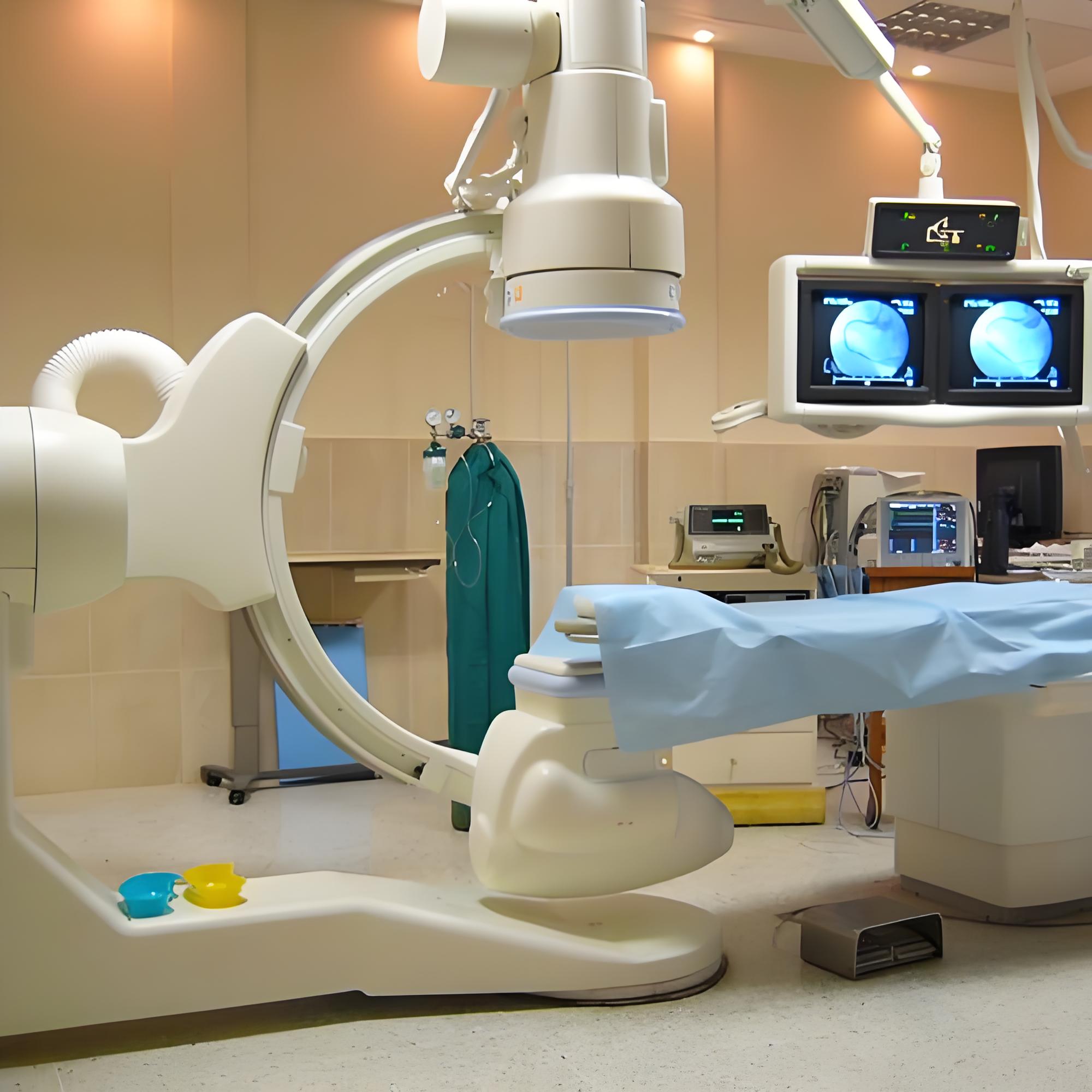
市場動向: グローバルな リジッドフレックスPCB 市場の価値は約 2.6042025 年に 10 億に到達すると予想されます3.726 10億 2032, CAGR は 5.25%. 医療用PCB分野では, 成長の原動力は特に強い. デザイナーはより細いライン/スペースと HDI テクノロジーをより広く採用しています.
なぜugpcb? | あなたの 6 レイヤ リジッドフレックス PCB メーカー
複雑な 6 層リジッドフレックス PCB プロジェクトには、成熟したテクノロジーとエンジニアリング サポートを備えたメーカーが必要です. UGPCB には高度な機能があります。 HDI制作 フレックスラミネートを専門とするラインと経験豊富なエンジニア. 私たちは約束します:
-
無料のDFMチェック: 注文前にリジッドフレックス移行領域に関する製造可能性のフィードバックを入手.
-
厳格な IPC コンプライアンス: 量産はIPC-6013クラスに準拠します 3 / クラス 2 標準.
-
質の高いサービス: 試作も量産もトップレベルの品質を実現.
-
クイックターンプロトタイピング: 医療プロジェクトの迅速なニーズに対応, 迅速な生産を提供します.
📞 PCB の簡単な見積もりを取得する
UGPCB はカスタムを提供します 6 ENIG 2µ” 仕上げと 1.0mm の特別な厚さ制御を備えた層のリジッドフレックス PCB ソリューション. 当社の公式 Web サイトにアクセスするか、技術サポートが必要な場合はガーバー ファイルを sales@ugpcb.com に送信してください。.