

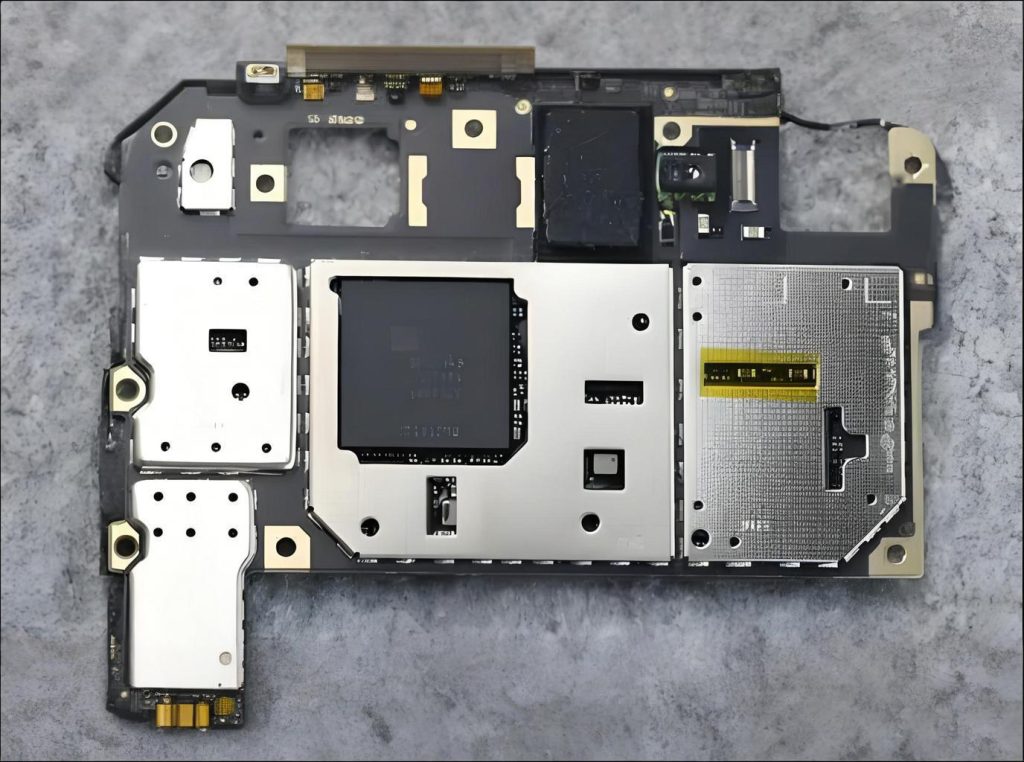
En diseño de PCB, Los ingenieros suelen tratar una lata de protección como una simple cubierta de metal.. Sin embargo, en módulos de comunicación 5G, controladores de conducción autónomos, y equipos de imágenes médicas, El escudo puede transformarse de una cubierta opcional a una estructura central que determina si un producto pasa la certificación EMC.. Este artículo analiza el diseño de latas protectoras desde tres dimensiones.: teoría del campo electromagnético, estándares de la industria, y práctica de ingeniería.
1. Efectividad del blindaje: Definición de inmunidad a la interferencia con matemáticas
La función principal de un escudo puede utilizar un término profesional para una medición precisa.: Efectividad del blindaje (Con). Según IEEE STD-299.1-2013, SE se define como veinte veces el logaritmo de base 10 de la relación entre la intensidad del campo incidente y la intensidad del campo transmitido.:
ES = 20·log2(E₀ / mi₁) (db)
Donde E₀ es la intensidad del campo incidente y E₁ es la intensidad del campo transmitido. Esta fórmula cuantifica cuánto puede atenuar un escudo las ondas electromagnéticas. Por ejemplo, SE = 30 dB significa que la intensidad del campo transmitido es aproximadamente una milésima parte del campo incidente. SE = 60 dB corresponde a una atenuación de una parte por millón.
Los parámetros de medición prácticos para la efectividad del blindaje incluyen el rango de frecuencia de prueba. (100 MHz a 6 GHz), precisión de la medición (±0,5 dB), y rango dinámico (≥80dB). Para circuitos centrales como módulos frontales de RF (Pensilvania, VCO, LNA), el SE de un escudo normalmente requiere entre 60 y 100 dB.
La esencia física de un escudo sigue el principio de la jaula de Faraday.. Cuando una onda electromagnética golpea la superficie de una cavidad metálica., La corriente superficial inducida genera un campo electromagnético opuesto que cancela el campo incidente.. Cada apertura, brecha, o un punto mal conectado a tierra en la cavidad puede reducir drásticamente el SE y crear un llamado “fuga electromagnética.”
2. Función dual: Bloquear la interferencia externa y suprimir la radiación interna
Un escudo puede desempeñar dos funciones en un tarjeta de circuito impreso.
Rol uno: Bloquee la interferencia externa para que no entre en circuitos críticos. Módulos como CPU, DDR, Destello, Wi-Fi, y Bluetooth son muy sensibles a la estabilidad de la señal. Si se coloca junto a un módulo de alimentación, un circuito de conmutación de alta frecuencia, o una señal de RF fuerte, el sistema puede experimentar errores de bits ocasionales o incluso un bloqueo total. Los estudios demuestran que 90% de los problemas EMC se originan por defectos de diseño de PCB.
Rol dos: Suprimir la radiación del circuito interno.. Convertidores DCDC, circuitos integrados de administración de energía, y los circuitos de reloj de alta velocidad generan una fuerte radiación electromagnética durante el funcionamiento. Sin blindaje adecuado, sus armónicos pueden acoplarse en las rutas de la antena o del sensor y hacer que todo el producto falle las pruebas EMI.. Esta es la razón más común por la que falla la certificación en la electrónica de consumo., dispositivos medicos, y controladores automotrices.
3. Pautas de diseño: De las vías de conexión a tierra a la prevención de resonancias
El diseño de la lata de escudo no es simple. “una cubierta más almohadillas de soldadura.” Debe considerar tanto la integridad del campo electromagnético como la capacidad de fabricación..
3.1 Continuidad de puesta a tierra y diseño de matriz vía
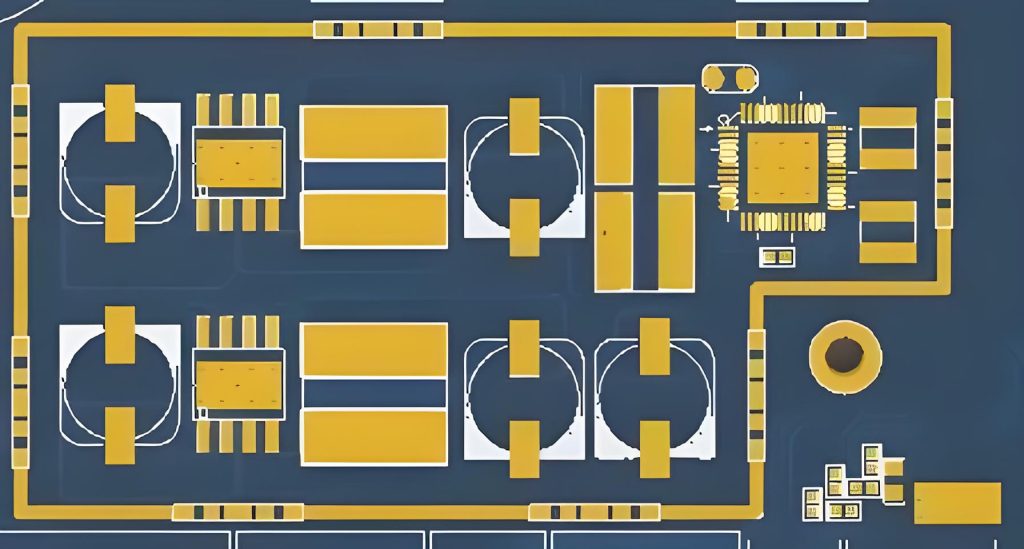
La conexión de baja impedancia entre la lata de blindaje y el plano de tierra de la PCB es fundamental para una alta efectividad del blindaje.. Según la práctica estándar de ingeniería., Coloque las vías de conexión a tierra uniformemente a lo largo del interior del marco del blindaje.. El diámetro de vía recomendado es 0.3 milímetros, y el espacio entre las vías adyacentes debe ser de 1 a 2 mm. En esquinas y puntos de interfaz, reducir aún más el espacio a ≤1 mm. La parte inferior de la lata de protección debe hacer contacto multipunto con el plano de tierra de la PCB.. Coloque una plataforma de tierra cada 5 mm para lograr una conexión a tierra perfecta de 360°.
Además, Debe haber un plano de tierra completo directamente debajo del área blindada.. No enrutar ninguna línea dividida, rastros de señal, o rastros de energía en esta área, porque tales caminos debilitarán la barrera electromagnética.
3.2 Restricciones de apertura y evitación de resonancia
Orificios de ventilación, puertos de depuración, y las aberturas de los puntos de prueba en una lata de protección a veces son inevitables. Según la teoría de la guía de ondas rectangular, la frecuencia de corte para una sola apertura redonda es aproximadamente:
f_c ≈ 170 / d (GHz)
Donde d es el diámetro de apertura en mm. De esta fórmula: a 0.8 El orificio de mm comenzará a perder efectividad de protección por encima 21 GHz. Si reduce el diámetro del agujero a 0.3 milímetros, la frecuencia de corte aumenta a 56 GHz, que cubre la banda 5G mmWave.
Debes mantener el número de aperturas al mínimo.. Utilice un patrón de panal para un mejor rendimiento de blindaje. Si las aberturas están demasiado separadas, pueden crear canales de ondas estacionarias en las longitudes de onda correspondientes y provocar caídas periódicas en la eficacia del blindaje.. En una prueba real de un módulo RF 5G NR n77, a 0.5 mm de apertura con 1.2 El espaciado de mm provocó un 18 caída de atenuación dB en 3.8 GHz.
4. ¿Qué módulos necesitan más un escudo??
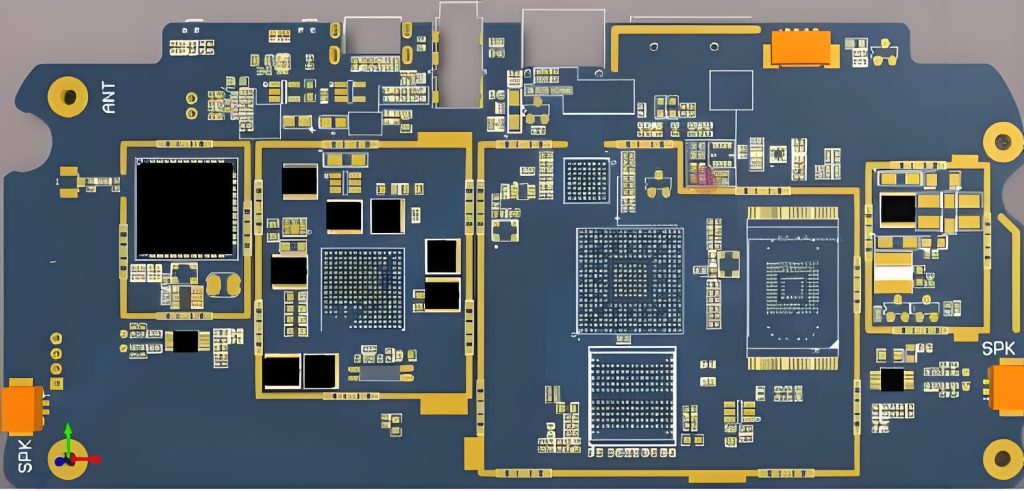
Consideración de los niveles y la sensibilidad de las fuentes de interferencia, Se deben priorizar los siguientes tres tipos de módulos para el blindaje..
| Tipo de módulo | Circuitos integrados típicos | Características de interferencia | Prioridad de blindaje |
|---|---|---|---|
| Módulo de potencia | UGP, DCDC, LDO | Fuerte fuente de interferencia: conmutación de alta frecuencia | ★★★★★ |
| Módulo principal | UPC, DDR, EMMC | circuito sensible: se requiere alta inmunidad | ★★★★★ |
| Módulo inalámbrico | WiFi 6E/7 SoC, bluetooth | Sensible a la señal de RF | ★★★★★ |
Los módulos de potencia son a la vez fuentes de calor y fuentes de interferencias.. La acción de conmutación de alta frecuencia de la fuente de alimentación conmutada genera una fuerte radiación electromagnética.. Si un módulo central experimenta interferencia, El sistema puede mostrar un comportamiento anormal ocasional o incluso fallar y reiniciarse.. Este modo de falla es el menos aceptable en cualquier producto.. Los módulos inalámbricos son extremadamente sensibles a las interferencias. Debes colocar el área de la antena cerca del borde del tablero en un lugar relativamente limpio., lejos de circuitos complejos.
5. Tendencias de la industria: Cuando las latas Shield se encuentran con 5G
La adopción generalizada de la tecnología 5G está planteando nuevos desafíos al diseño de latas de protección.
Tendencia uno: Eficacia de blindaje reducida en bandas mmWave. 5Las bandas G mmWave ahora alcanzan 28 GHz. En tales frecuencias, el efecto de la piel se vuelve significativo. La corriente se concentra en una capa sólo aproximadamente 0.03 mm de profundidad en la superficie del conductor. Las capas de protección metálica tradicionales pierden aproximadamente 40% de su efectividad. Las pruebas típicas de estaciones base muestran que un 28 Experiencias de señal de GHz 2.1 Pérdida dB/cm mayor en material FR4 ordinario que en materiales especiales de alta frecuencia.
Tendencia dos: Requisitos estrictos de pureza de señal para Wi-Fi 6E y el 6 banda de GHz. Wi-Fi 6E extiende el funcionamiento a 6 GHz. Wi-Fi 7 no sólo apoya 320 Ancho de banda del canal MHz pero también introduce la modulación 4096-QAM. Las frecuencias más altas hacen que el acoplamiento EMI sea más severo. El diseño de la lata de escudo debe actualizarse desde simple “bloqueo espacial” a un enfoque híbrido que combina puesta a tierra de baja impedancia de banda completa y supresión de resonancia de cavidad.
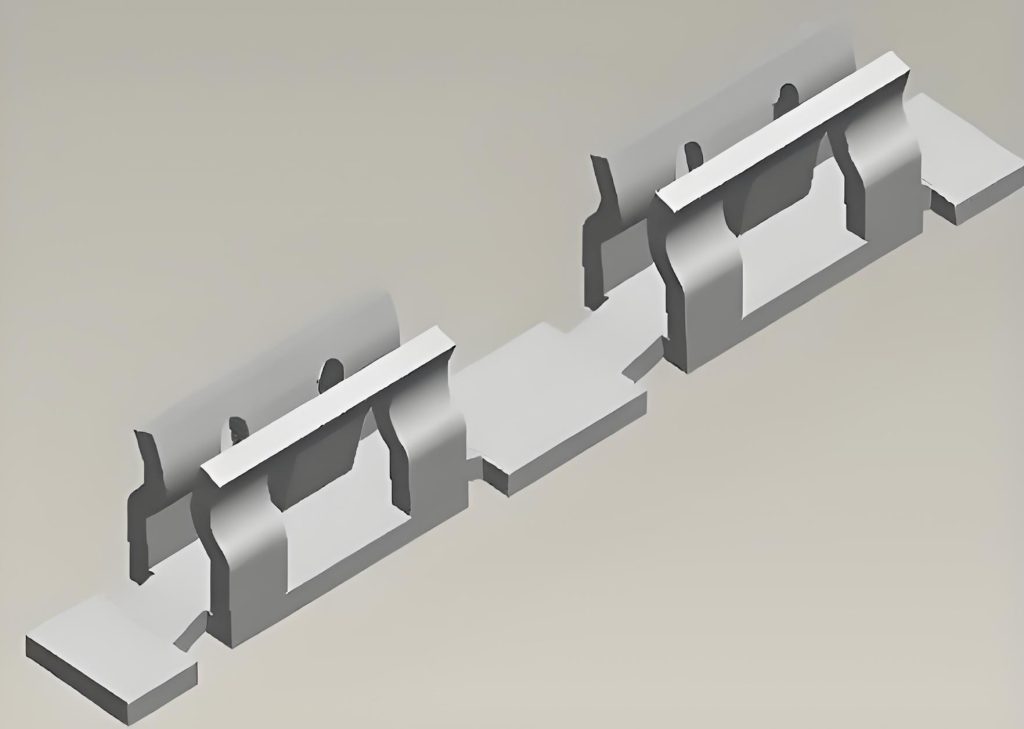
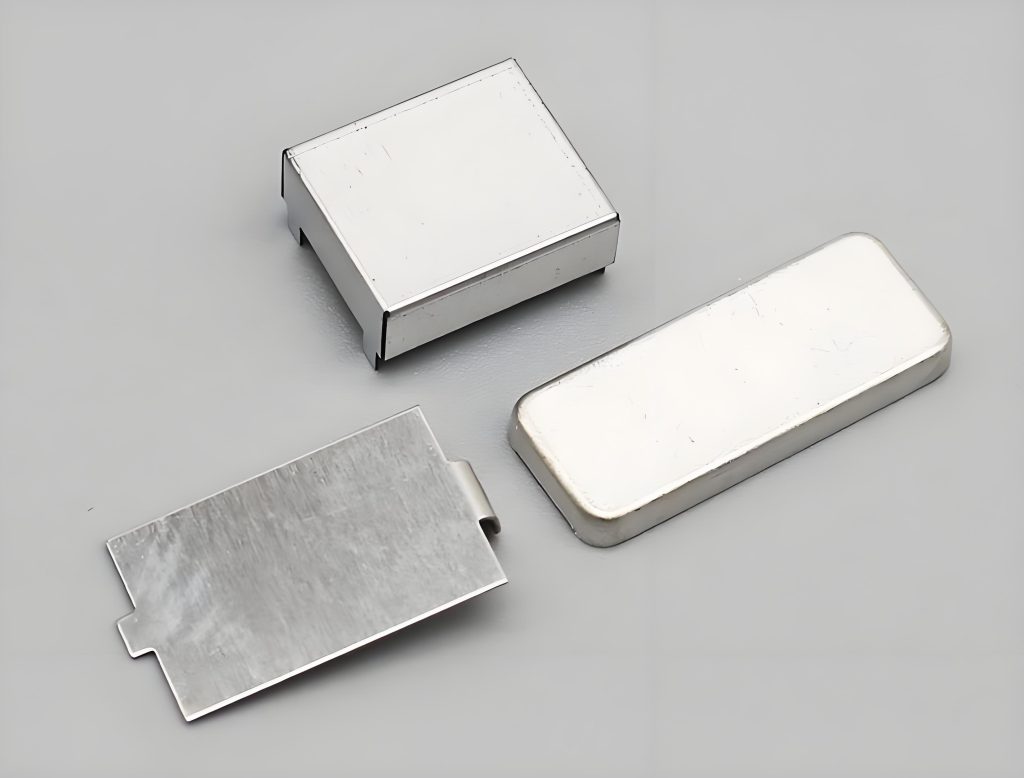
Tendencia tres: Conjunto de escudo que pasa de la automatización manual a la SMT. Los clips de protección se pueden ensamblar mediante SMT. Tienen tamaño pequeño y reducen los costos de molde.. En general, Puedes colocar clips de protección con un paso de aproximadamente 25 milímetros. en las esquinas, Coloque clips para ayudar con la alineación del ensamblaje.. Los datos de la industria muestran que el mercado global de protectores EMI de placas de circuito alcanzó $55.48 millones en ventas en 2025 y se espera que alcance $82.79 millones por 2031, con una CAGR de 6.90%. Porcelana, como el mundo fabricación de PCB centro, ha visto el surgimiento de proveedores profesionales de latas protectoras con estampado progresivo de precisión e inspección óptica totalmente automatizada.. Los productos típicos pueden lograr un escudo 30 dB efectividad del blindaje en 1 GHz, planitud ≤0,02 mm, y consistencia del lote tan alta como 99.95%.
Conclusión
El diseño de la lata de escudo puede parecer un pequeño detalle, pero pone a prueba la comprensión integral de un ingeniero sobre EMI, estructura mecanica, proceso, y producción en masa. Si está desarrollando un producto con estrictos requisitos de EMC, por favor contacte a nuestro tarjeta de circuito impreso equipo para un cita. O visita nuestro proveedor plataforma para aprender sobre ventanilla única tarjeta de circuito impreso fabricación y tarjeta de circuito impreso servicios de montaje. Los diseñadores verdaderamente expertos no tratan las latas protectoras como una solución de último momento. En cambio, Consideran el blindaje como un elemento central desde el principio de la etapa de diseño..
*Los datos de este artículo hacen referencia a IEEE STD-299.1, IPC-2221, GB/T 9254, CEI 61000-4-21, Informes de la industria QYResearch, y mediciones reales de múltiples proveedores acreditados de latas protectoras. Algunos datos provienen de documentos técnicos de la industria e informes de investigación de mercado de 2025-2026.*