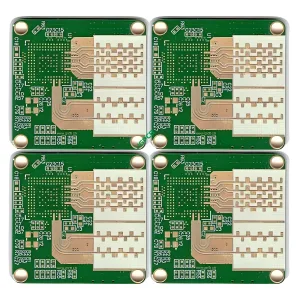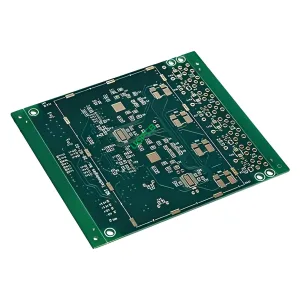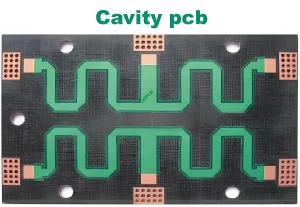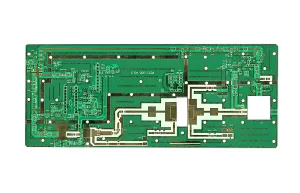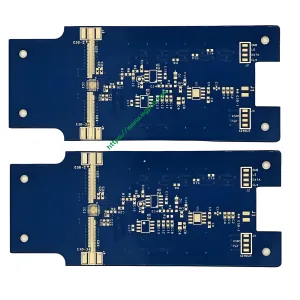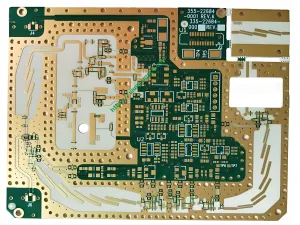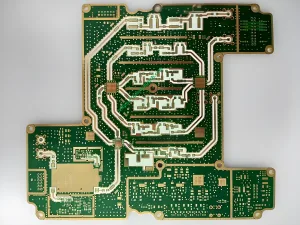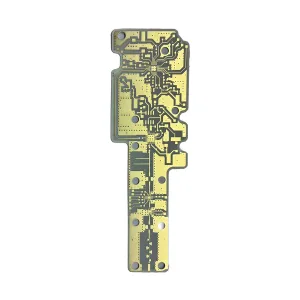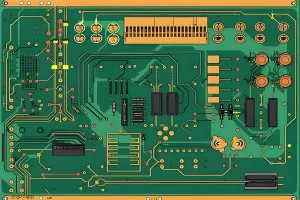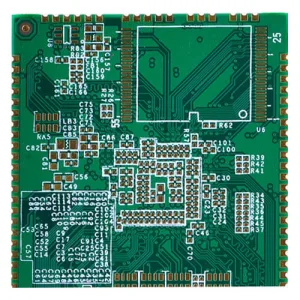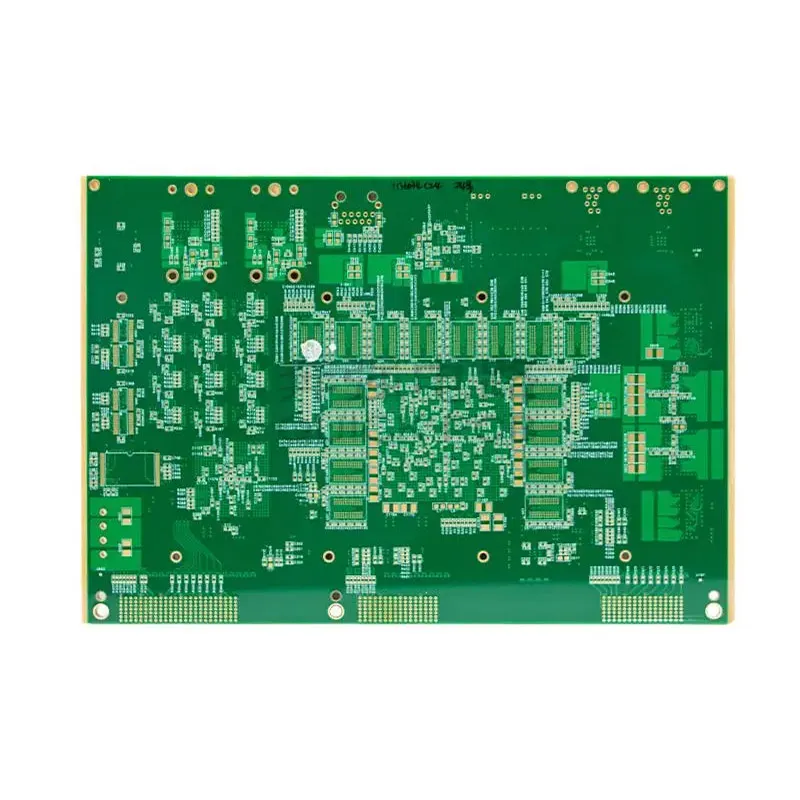
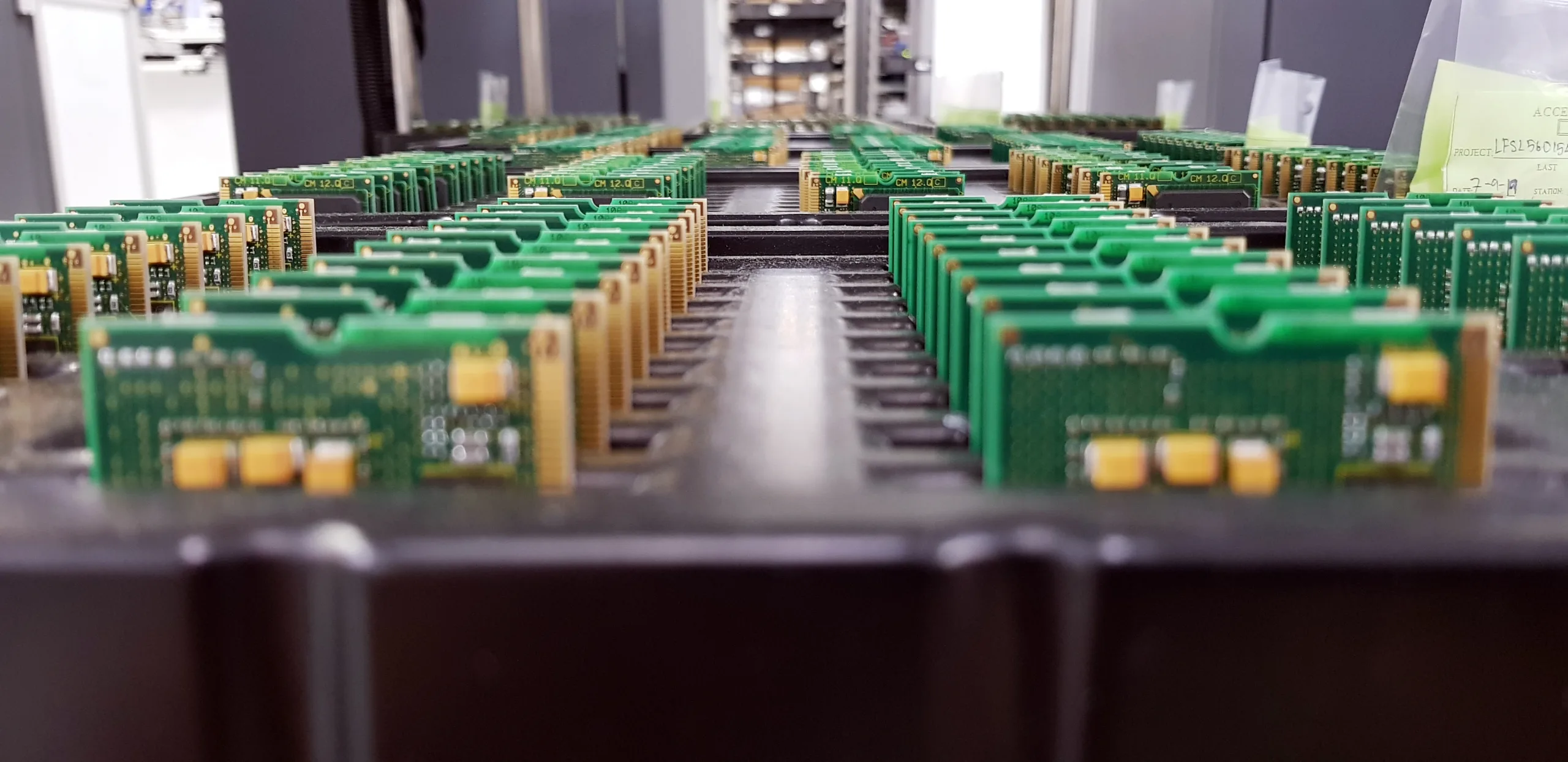
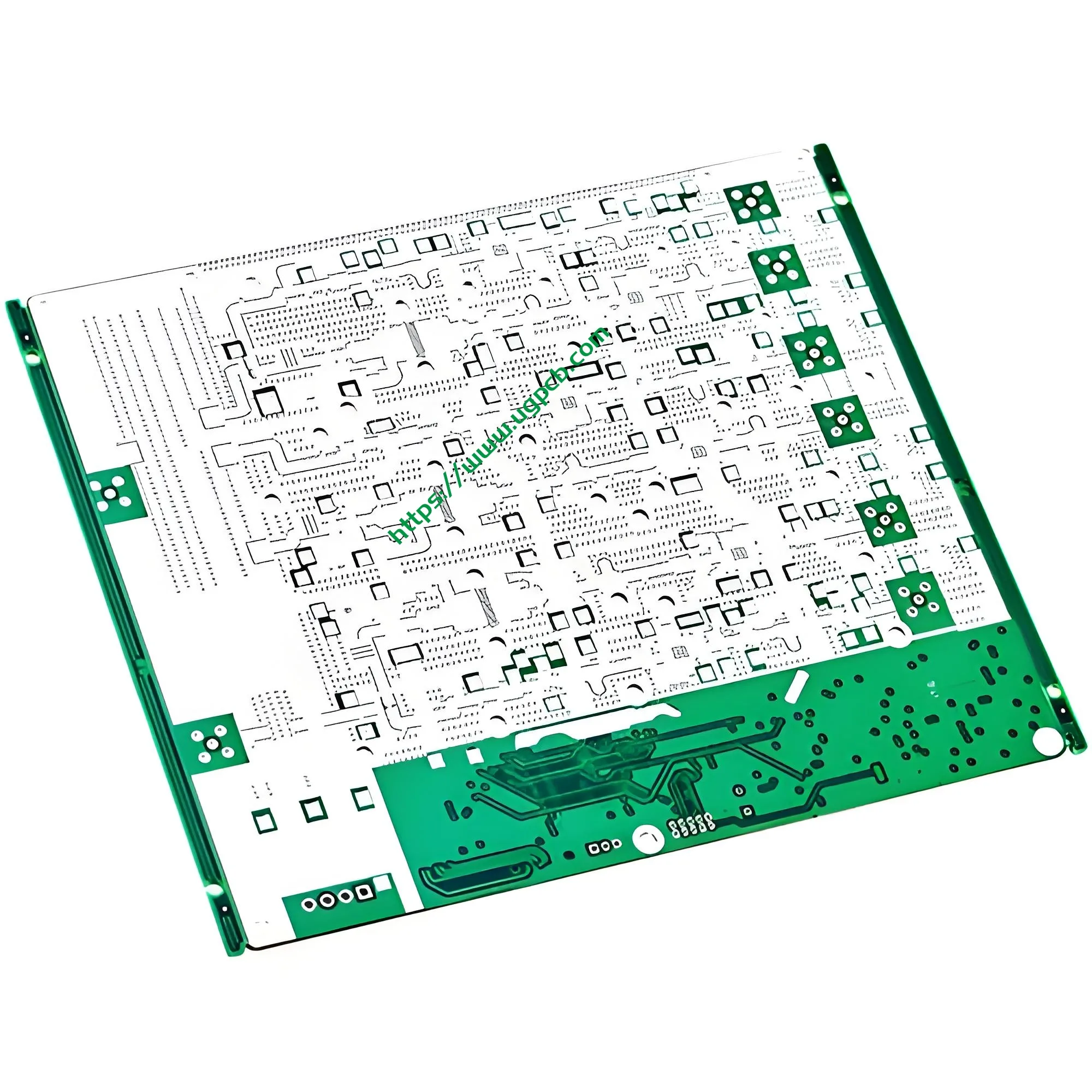
Descripción general del producto: ¿Qué es una placa PCB de estaño en aerosol Rogers de 4 capas??
A 4-capa de placa PCB de estaño en aerosol Rogers usos Rogers RO4350B laminado de alta frecuencia como material central. Aplica una nivelación de soldadura de aire caliente sin plomo. (HASL) finalizar. Esta placa de circuito impreso multicapa de alta frecuencia sirve para estaciones base de comunicación 5G, Módulos frontales de RF, y sistemas de radar de ondas milimétricas. UGPCB ofrece este producto como solución clave en nuestro PCB de alta frecuencia línea.
La alta frecuencia global y PCB de alta velocidad El mercado sigue creciendo rápidamente.. Según QYResearch, el tamaño del mercado alcanzó aproximadamente USD 3.611 mil millones en 2024 y espera crecer a alrededor de USD 6.924 mil millones por 2031. Esto representa una tasa de crecimiento anual compuesta. (Tocón) de 9.95%. El 4-capa de placa PCB de estaño en aerosol Rogers juega un papel importante en este mercado en expansión.
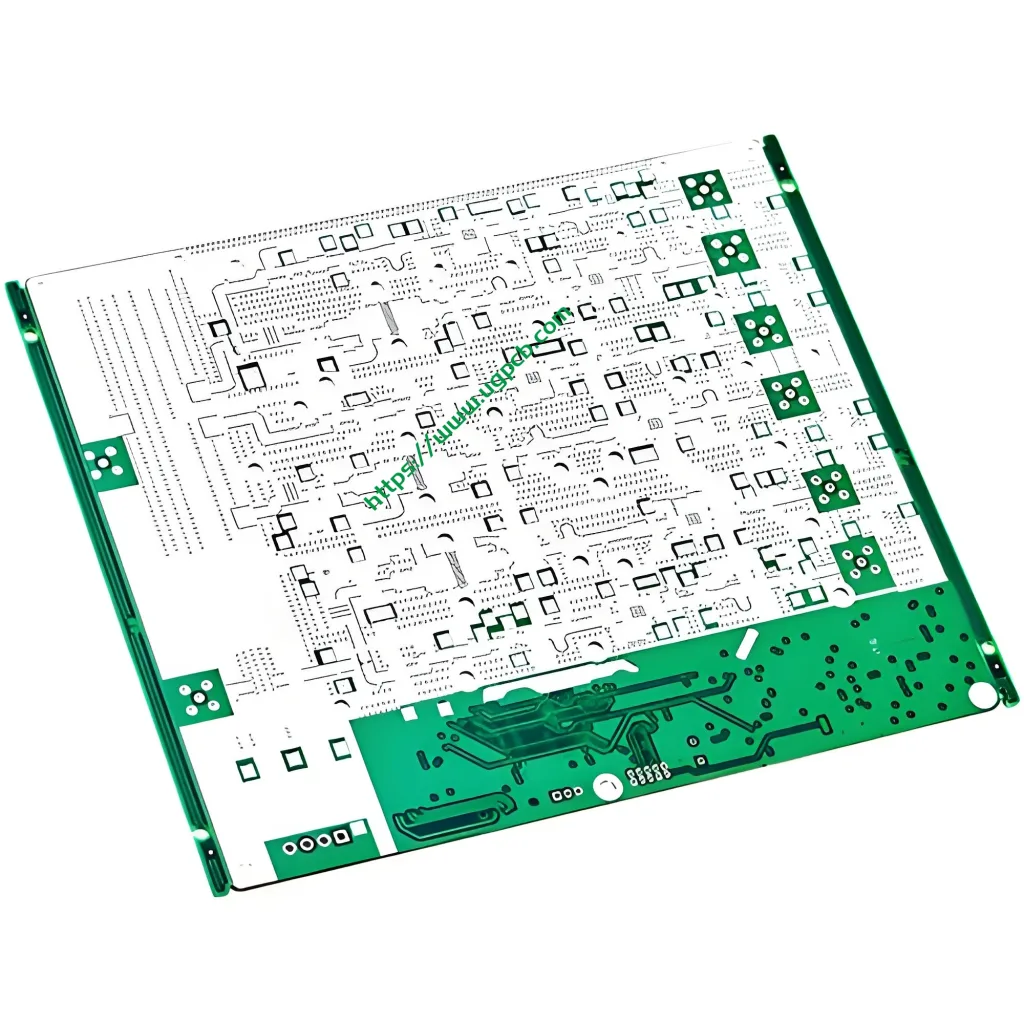
Clasificación de productos científica y precisa
Basado en IPC-6012 Especificación de calificación y rendimiento para tableros impresos rígidos, este producto cae en la siguiente categoría: tablero impreso rígido multicapa con agujeros pasantes chapados, laminado de alta frecuencia, 4-estructura de capas, acabado HASL sin plomo. Bajo clasificación de materiales, pertenece a Laminados revestidos de cobre de alta frecuencia con resina de hidrocarburo rellena de cerámica. (Serie RO4000), específicamente el tipo RO4350B. Para la aplicación, lo clasificamos como un placa de circuito impreso de RF/microondas de estación base.
Definición del producto y especificaciones técnicas
UGPCB diseña y fabrica este 4-capa de placa PCB de estaño en aerosol Rogers como placa de circuito multicapa de alta frecuencia. Utiliza laminado Rogers RO4350B como material principal.. La estructura de 4 capas logra la transmisión de señales de alta frecuencia y la interconexión eléctrica.. El proceso HASL sin plomo completa el acabado de la superficie de la almohadilla.. Este diseño cumple con los requisitos de cumplimiento ambiental y de rendimiento de alta frecuencia para subplacas de estaciones base..
Tabla de parámetros clave
| Parámetro | Especificación |
|---|---|
| Materia prima | Rogers RO4350B |
| Recuento de capas | 4 capas |
| Grosor del tablero terminado | 1.6 milímetros |
| Espesor exterior de cobre | 2 ONZ (≈70 µm) |
| Espesor interior de cobre | 1 ONZ (≈35 µm) |
| Diámetro mínimo del orificio perforado | 0.3 milímetros |
| Ancho mínimo de línea / Espaciado | 5 mil (≈0,127mm) |
| Acabado superficial | HASL sin plomo (Nivelación de soldadura por aire caliente) |
| Grado de proceso | Proceso sin plomo (Cumplimiento de ROHS) |
Principio de funcionamiento y características eléctricas.
El 4-capa de placa PCB de estaño en aerosol Rogers opera basándose en teorías de líneas de transmisión tales como microtira, línea de striptease, y guía de ondas coplanar. Cuando las señales de alta frecuencia viajan a lo largo del circuito., la constante dieléctrica (Dk) del sustrato determina la velocidad de propagación de la señal y la longitud de onda. El factor de disipación (df) Determina la pérdida de energía durante la transmisión..
El material Rogers RO4350B ofrece excelentes propiedades:
-
Constante dieléctrica (Dk): valor típico de 3.48 (Tolerancia ±0,05) en 10 GHz. Este valor Dk estrictamente controlado permite un control preciso de la impedancia para alcanzar valores objetivo como 50 Ω o 75 Ω. Esto forma la base física para el rendimiento estable del circuito de alta frecuencia.. Los datos oficiales de Rogers confirman que tanto RO4350B como RO4835 mantienen la tolerancia Dk dentro de ±0,05. Esto supera con creces la variación de ±0,2 o superior típica del estándar. FR-4 materiales.
-
Factor de disipación (df): valor típico de 0.0037 en 10 GHz. Esto sigue siendo mucho menor que la pérdida del FR-4 ordinario. (≈0,02). Reduce eficazmente la pérdida de energía de la señal de alta frecuencia., Garantizar la eficiencia de transmisión de la señal RF y la relación señal-ruido..
-
Estabilidad de temperatura: La constante dieléctrica del RO4350B muestra una excelente estabilidad en un amplio rango de temperaturas de -50 °C a 150 °C. La tasa de variación se mantiene muy baja (menos que 0.05 ppm/°C). Esto garantiza un funcionamiento estable del equipo de la estación base incluso en entornos hostiles con temperaturas altas o bajas..
Estructura del producto y diseño de apilamiento.
Este 4-capa de placa PCB de estaño en aerosol Rogers utiliza una configuración típica de apilamiento de 4 capas de alta frecuencia. Como tablero impreso rígido multicapa, debe cumplir con los requisitos de especificación IPC-6012. Esta norma cubre los requisitos del producto final y del acabado superficial., conductor y vía frecuencias de prueba de aceptación, e inspecciones de conformidad de calidad. También aborda la electricidad., mecánico, y criterios de desempeño ambiental.
Características del producto y ventajas principales
✅ Excelente rendimiento de alta frecuencia
El sustrato RO4350B presenta una estricta tolerancia Dk de 3,48 ± 0,05 combinada con un bajo Df de 0.0037. Esto permite que el 4-capa de placa PCB de estaño en aerosol Rogers para soportar la transmisión de señales hasta 10 GHz e incluso bandas de frecuencia más altas. Funciona especialmente bien para aplicaciones frontales de RF, como subplacas de estaciones base..
✅ Estabilidad térmica superior
El material RO4350B exhibe un coeficiente de expansión térmica (CTE) que se asemeja mucho a la lámina de cobre. En pruebas de ciclos térmicos de -50°C a 150°C, el CTE del eje Z permanece aproximadamente 40 ppm/°C. Esto reduce significativamente el riesgo de delaminación en comparación con los materiales FR-4 estándar. (que van desde 60 a 70 ppm/°C). De este modo, este 4-capa de placa PCB de estaño en aerosol Rogers garantiza una alta confiabilidad durante el funcionamiento a largo plazo de la estación base.
✅ Buena facilidad de fabricación
A diferencia del PTFE tradicional (politetrafluoroetileno) materiales de alta frecuencia, RO4350B es un compuesto cerámico de hidrocarburo termoestable. Su método de procesamiento coincide con el epoxi/vidrio estándar. (FR-4). No requiere ningún tratamiento vía especial ni activación plasmática.. Por lo tanto, costos de producción para este 4-capa de placa PCB de estaño en aerosol Rogers permanece mucho más bajo que para los laminados de microondas convencionales.
✅ Fuerte compatibilidad de procesos
El tratamiento de superficie HASL sin plomo utiliza aleación SAC305 (Sn96.5Ag3.0Cu0.5). Esto cumple con las directivas medioambientales RoHS.. HASL sin plomo ofrece un costo relativamente bajo, buena soldabilidad, y buena resistencia a la corrosión. Según estándares de la industria como IPC-A-610 e IPC-6012, Los PCB con acabado HASL tienen una vida útil de aproximadamente 12 meses. El espesor típico de la capa de estaño varía de 1 a 40 μm.
✅ Excelente retardo de llama
El material RO4350B logra UL 94 V-0 calificación de llamas. Esto representa el nivel de retardo de llama más alto en la norma para pruebas de inflamabilidad de materiales plásticos.. Después de retirar la llama, el material se autoextingue dentro 10 segundos y no produce goteos llameantes. Esta característica permite al 4-capa de placa PCB de estaño en aerosol Rogers para cumplir con los requisitos de seguridad y protección contra incendios de los equipos de la estación base.
✅ Certificaciones autorizadas
UGPCB 4-capa de placa PCB de estaño en aerosol Rogers Cumple totalmente con los sistemas estándar internacionales.. Estos incluyen ISO 9001:2015 certificación de gestión de calidad, UL 94 V-0 calificación de llamas, Calificación de tablero rígido IPC-6012 y especificación de rendimiento, y estándar de aceptación de tableros impresos IPC-A-600.
Directrices de diseño y consideraciones clave
Al diseñar un 4-capa de placa PCB de estaño en aerosol Rogers, Los ingenieros deben centrarse en las siguientes áreas.:
1. Diseño de control de impedancia
La teoría de la línea de transmisión proporciona la impedancia característica de una línea microstrip:

Donde εr es la constante dieléctrica (3.48 para RO4350B), H es el grosor dieléctrico, w es el ancho de la traza, y t es el grosor de cobre. El Dk estable de este 4-capa de placa PCB de estaño en aerosol Rogers Proporciona una base física para un control preciso de la impedancia.. Recomendamos utilizar un software de cálculo de impedancia para una simulación precisa..
2. Límites mínimos de ancho de línea y espaciado
Este producto admite un ancho de línea mínimo y un espaciado de 5 mil (≈0,127mm) y un diámetro mínimo del orificio perforado de 0.3 milímetros. Los diseñadores deben considerar las tolerancias de fabricación.. Para necesidades de interconexión de alta densidad, Mantener el espacio adecuado entre las líneas de señal y los planos de tierra para optimizar la integridad de la señal..
3. Diseño de gestión térmica
El espesor exterior del cobre alcanza 2 ONZ (≈70 µm) mientras que el espesor interior del cobre es 1 ONZ (≈35 µm). Este diseño de capa de cobre más gruesa no sólo mejora la capacidad de transporte de corriente del 4-capa de placa PCB de estaño en aerosol Rogers pero también proporciona una excelente disipación del calor. Para aplicaciones de alta potencia como subplacas de estaciones base, Optimice la distribución del calor agregando tierra a través de matrices y almohadillas térmicas..
4. Adaptación del proceso HASL
HASL sin plomo requiere temperaturas más altas en el crisol y el aire caliente (normalmente entre 235 y 250 °C). La temperatura de soldadura puede alcanzar los 255 ± 5 °C.. Al diseñar este 4-capa de placa PCB de estaño en aerosol Rogers, evitar denso, almohadillas de paso fino en grandes áreas de cobre. También asegúrese de que el ancho del dique de la máscara de soldadura sea adecuado.. Esto evita problemas de puentes de soldadura causados por un espesor desigual de la capa de estaño..
5. Control de procesos sin plomo
HASL sin plomo exige un estricto control del proceso. El crisol debe utilizar aleación de titanio o hierro fundido para resistir la corrosión a alta temperatura de la soldadura sin plomo.. La diferencia de temperatura a través de la olla debe permanecer dentro de ±2°C.. Un potente sistema de aire caliente y un módulo de enfriamiento de aire rápido garantizan una aplicación y nivelación uniforme de la capa de estaño.
Proceso de fabricación y control de calidad.
UGPCB sigue un flujo de proceso estandarizado para producir el 4-capa de placa PCB de estaño en aerosol Rogers. Esto garantiza una calidad y confiabilidad constante del producto.. Los pasos principales de fabricación de PCB rígidos multicapa incluyen formación del circuito de la capa interna, laminación y prensado, perforación y vía metalización, formación del circuito de la capa exterior, máscara de soldadura, y acabado de superficies. UGPCB establece puntos de inspección en cada etapa crítica. Todos los productos cumplen plenamente con los requisitos de calificación y rendimiento de IPC-6012..
Escenarios de aplicación y casos de uso
Aplicación primaria: Subplaca de estación base
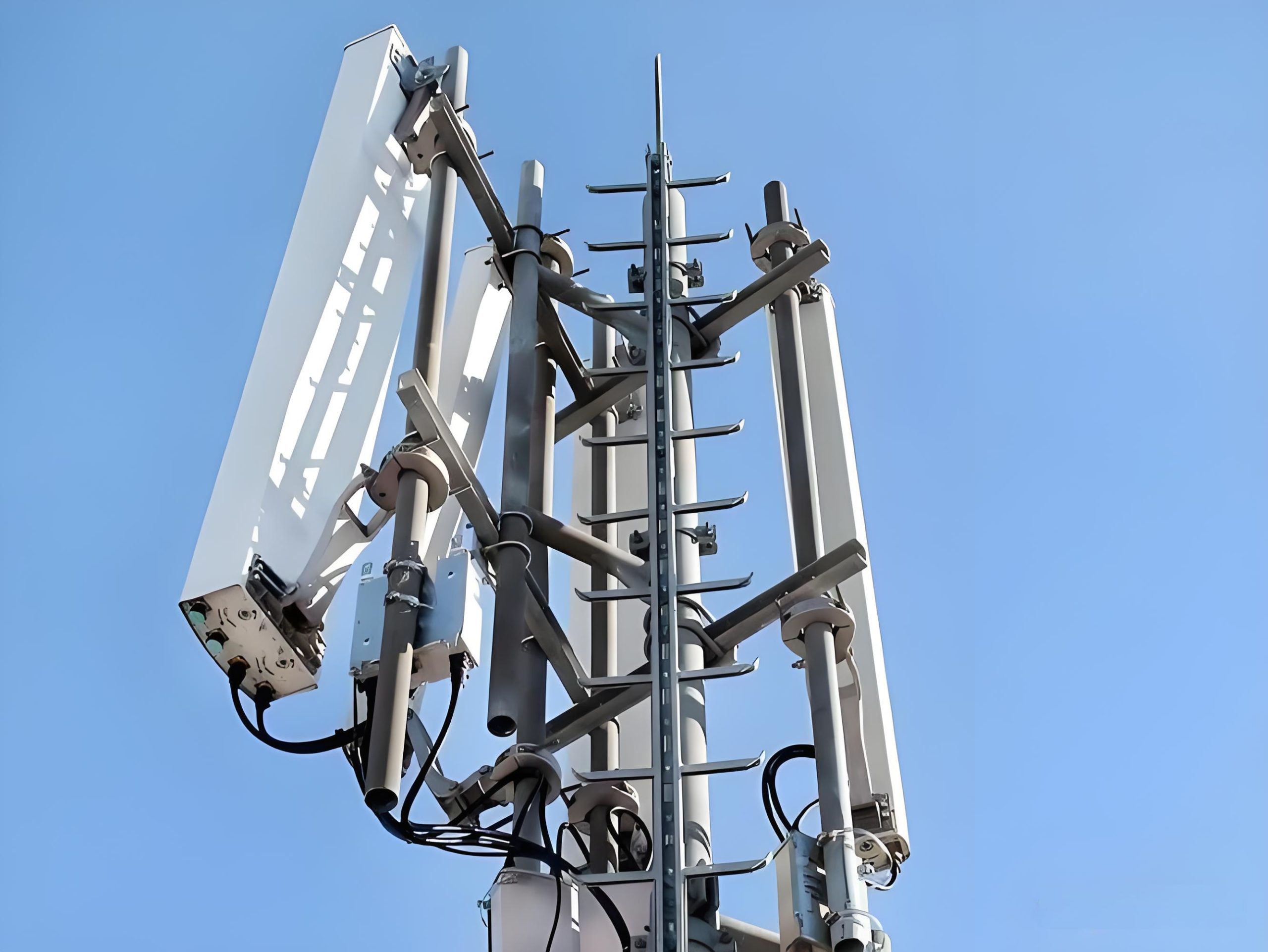
Este 4-capa de placa PCB de estaño en aerosol Rogers está diseñado específicamente para subplacas de estaciones base. Sirve como portador de interconexión crítico en módulos transceptores de RF., módulos amplificadores de potencia, módulos de sintonización de antena, y filtros dentro de estaciones base de comunicación 5G/4G.
Casos de uso típicos
| Área de aplicación | Uso específico |
|---|---|
| Infraestructura de comunicación | 5G macro/células pequeñas, unidades de radio remotas (RRU), unidades de antena activa (UCA) |
| Sistemas de RF y microondas | Módulos frontales de RF, sintetizadores de frecuencia, circuitos transceptores de microondas, redes de formación de haces |
| Radar de ondas milimétricas | Radar automotriz de 77 GHz/79 GHz, radar de alcance industrial, radar para evitar colisiones con drones |
| Comunicaciones por satélite | Antenas de matriz en fase, terminales terrestres de satélites de órbita terrestre baja, receptores de navegación por satélite |
| Sistemas digitales de alta velocidad | Planos posteriores de alta velocidad, tableros de prueba de integridad de señal, 100Placas de módulo óptico G/400G |
| Prueba & Instrumentos de medición | Placas de calibración de analizadores de red., módulos frontales del analizador de espectro, placas adaptadoras de sonda de osciloscopio |
Solicite una cotización o soporte técnico
UGPCB proporciona alta calidad 4-capa de placas PCB de estaño en aerosol Rogers y soluciones completas de PCB de alta frecuencia para clientes globales. Operamos líneas de producción de PCB avanzadas de alta frecuencia y mantenemos un equipo de ingeniería profesional.. Implementamos un control de calidad de proceso completo desde la entrada del diseño del cliente hasta la entrega del producto final..
📩 Cómo solicitar una cotización o contactar al soporte técnico
Puede comunicarse con nosotros a través de cualquiera de los siguientes métodos:
-
Visita el sitio web oficial de la UGPCB (www.ugpcb.com) y envíe un formulario de consulta en línea
-
Envía tus archivos de diseño (Archivos Gerber) a nuestra dirección de correo electrónico de ventas
-
Llame a nuestra línea directa para discutir sus requisitos técnicos con nuestros ingenieros.
Para agilizar tu consulta, por favor proporcione la siguiente información:
-
Archivos de diseño: Archivos Gerber, archivos de perforación, diagrama de apilado, requisitos de control de impedancia
-
Especificaciones técnicas: Requisitos especiales Dk/Df, tolerancias, estándares de prueba y aceptación para el 4-capa de placa PCB de estaño en aerosol Rogers
-
Cantidad y plazo de entrega: Prototipo o fase de producción, calendario de entrega objetivo
-
Requisitos especiales: Prueba de sonda voladora, inspección AOI, 100% prueba electrica
Declaración de datos de origen
Este artículo cita datos técnicos de las siguientes fuentes autorizadas.:
-
Hoja de datos oficial de Rogers Corporation: Hoja de datos de materiales del circuito de alta frecuencia serie RO4000®
-
Estándares de PCI: IPC-6012 Especificación de calificación y rendimiento para tableros impresos rígidos, IPC-A-610, IPC-TM-650
-
Estándares de seguridad UL: UL 94 Norma para pruebas de inflamabilidad de materiales plásticos
-
Informe de análisis de mercado: QYInvestigación *Informe de investigación de mercado global de tableros de alta frecuencia y alta velocidad 2025*