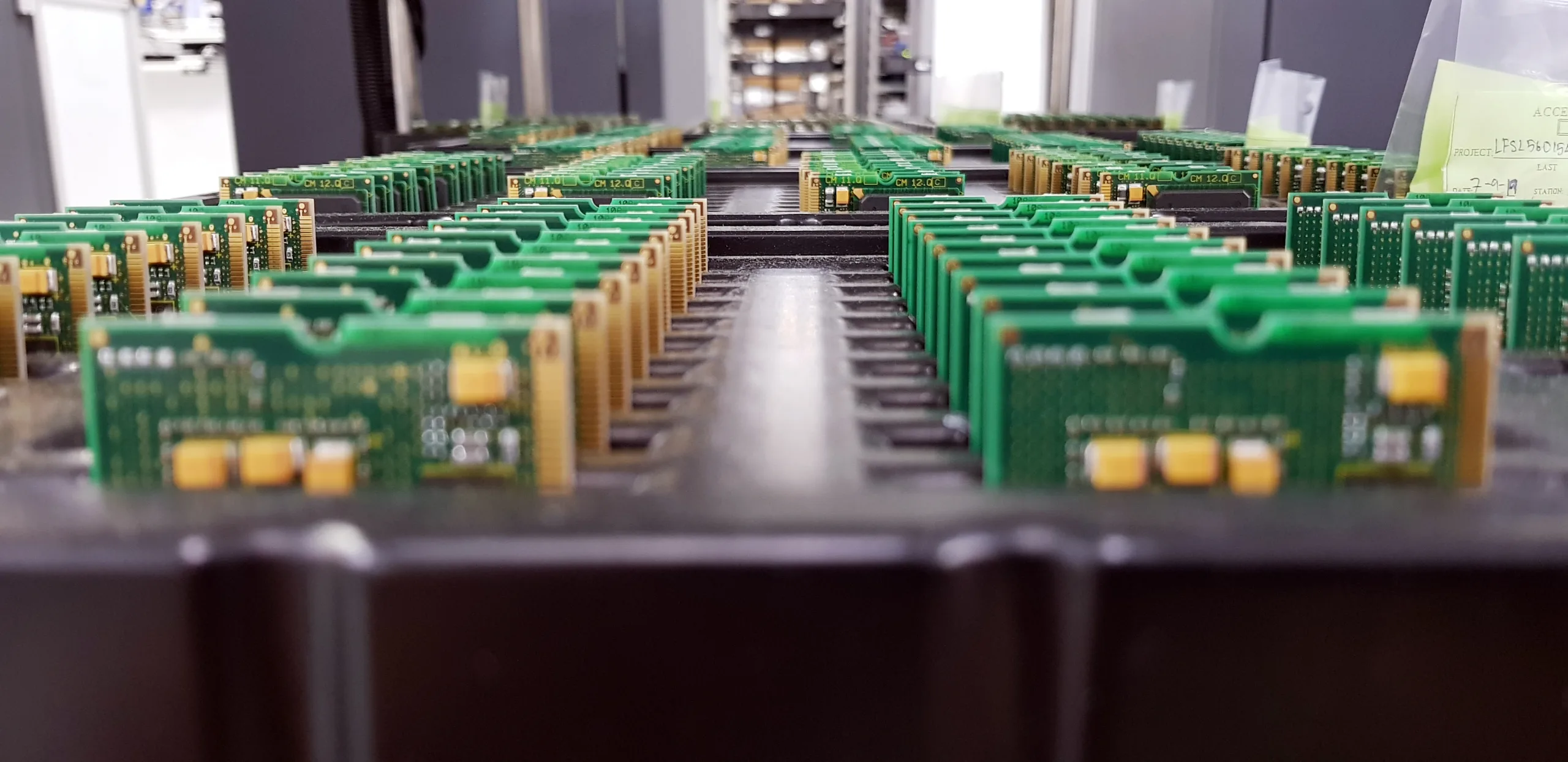
1. ความเป็นมาของตลาด: เหตุใดอุปกรณ์อิเล็กทรอนิกส์ในยานยนต์จึงต้องการ PCB ที่มีความน่าเชื่อถือสูง
รถยนต์ไฟฟ้าสมัยใหม่และระบบ ADAS ใช้ชิ้นส่วนอิเล็กทรอนิกส์มากขึ้นทุกปี.
ข้อมูลจากสถาบันวิจัยอุตสาหกรรมเชิงพาณิชย์ของจีนแสดงให้เห็น: ตลาดอิเล็กทรอนิกส์ยานยนต์ของจีนมีมูลค่าประมาณ 169 พันล้านดอลลาร์สหรัฐ 2024, ด้วย 10.95% การเติบโตปีต่อปี. ความต้องการนี้ผลักดันให้วิศวกรเปลี่ยนรูปแบบความแข็งแกร่งแบบเดิมๆ PCBS + ชุดสายไฟพร้อมโซลูชันที่กะทัดรัดและเชื่อถือได้มากขึ้น.
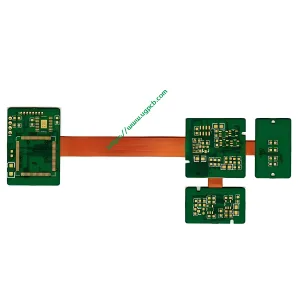
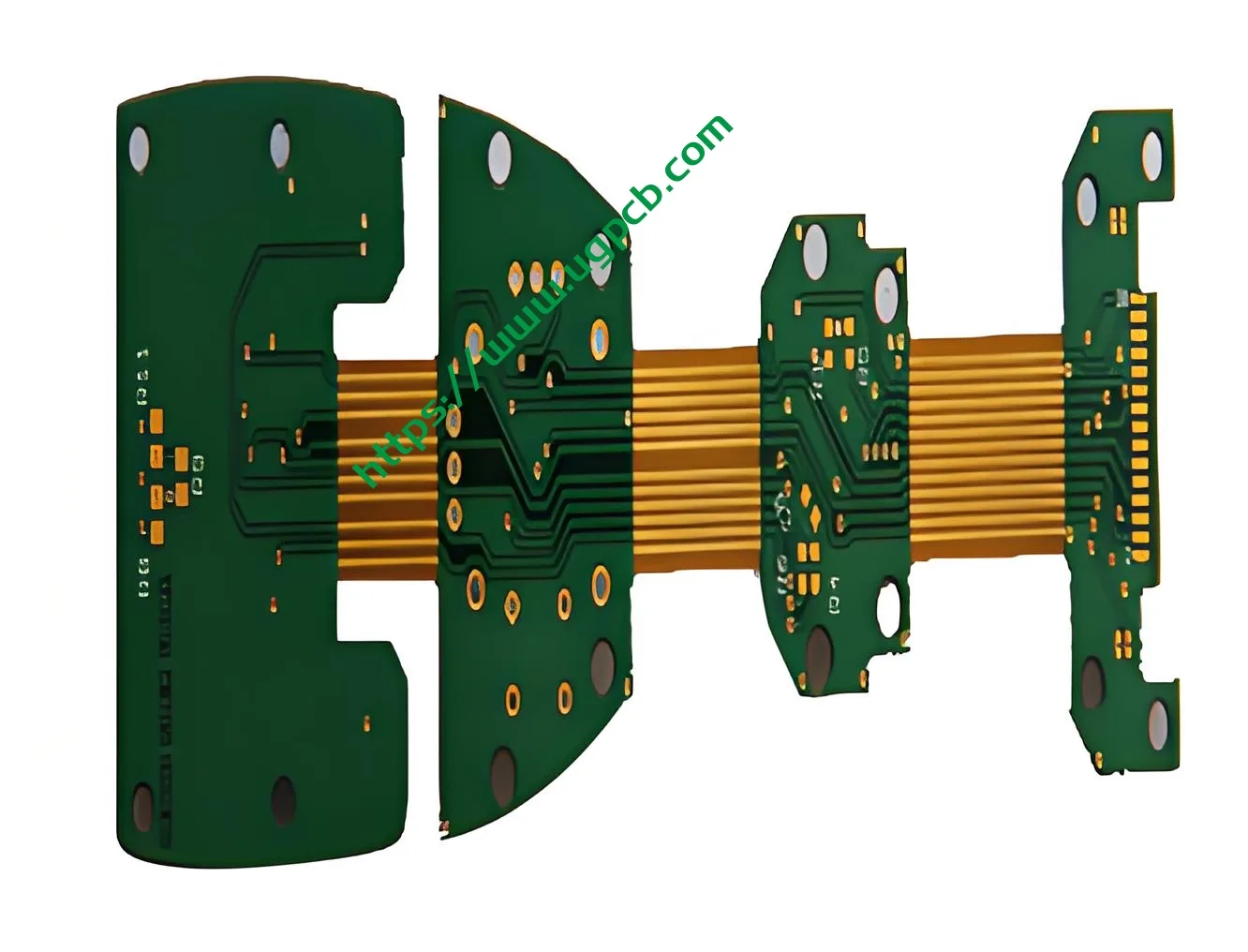
อัน PCB แบบยืดหยุ่น ผสมผสานความเสถียรของบอร์ดแบบแข็งเข้ากับความสามารถในการโค้งงอของวงจรดิ้น.
การศึกษาในอุตสาหกรรมแสดงให้เห็นว่าการเปลี่ยนไปใช้กระป๋องแบบแข็งเกร็ง:
-
ประหยัดพื้นที่การติดตั้งประมาณ 40%
-
ลดความล้มเหลวที่เกี่ยวข้องกับการสั่นสะเทือนลง ~65%
-
ลดต้นทุน BOM ประมาณ 22% ผ่านการบูรณาการที่สูงขึ้น
ตลาด PCB แบบแข็งสำหรับยานยนต์ทั่วโลกคาดว่าจะเกินดอลลาร์สหรัฐ 5 พันล้านโดย 2025.
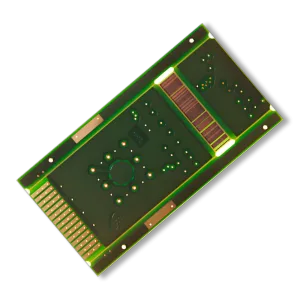
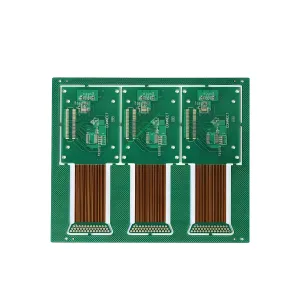
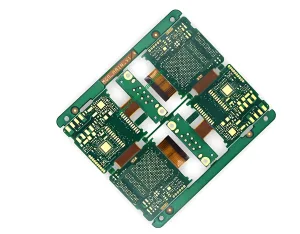
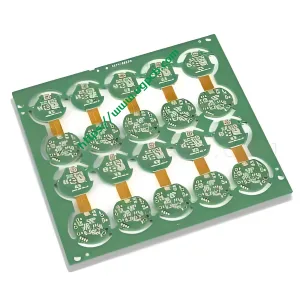
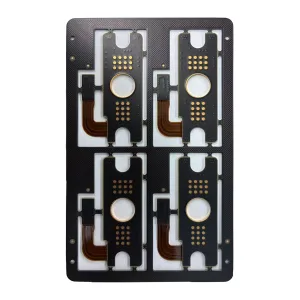
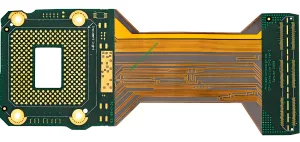
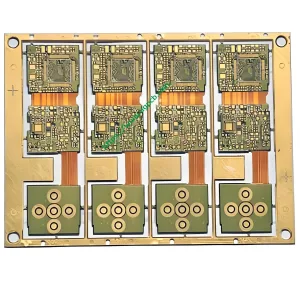
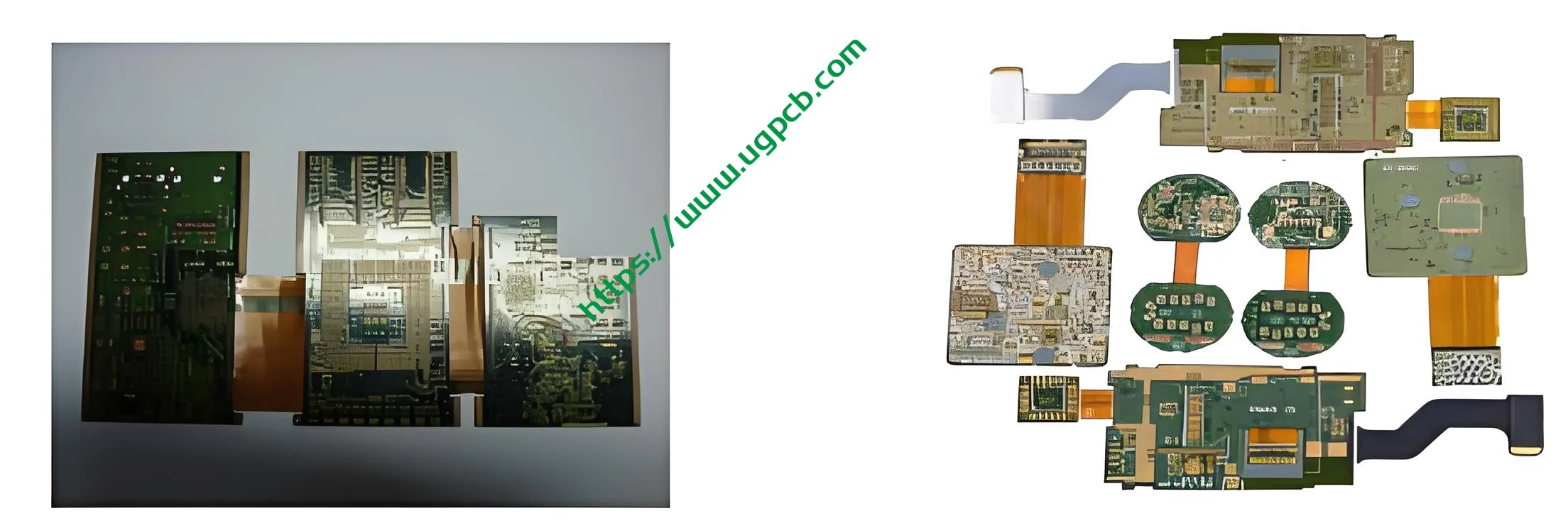
UGPCB ออกแบบ PCB ของยานยนต์ (HDI R-FPCB) – บอร์ดเฟล็กซ์แข็งที่เชื่อมต่อระหว่างกันความหนาแน่นสูงที่ตรงตามมาตรฐาน ISO 26262 และคลาส IPC‑6012DA 3 ความต้องการ. เป็นตัวเลือกที่เหมาะสำหรับคุณ ต้นแบบ PCB แบบแข็งเกร็งของยานยนต์.
2. คำจำกัดความของผลิตภัณฑ์ & การจำแนกประเภททางวิทยาศาสตร์
2.1 ชื่อสินค้า & แบบอย่าง
-
ชื่อสินค้า: PCB ของยานยนต์ (HDI R-FPCB) – PCB HDI แบบแข็งเกรดยานยนต์
-
รหัสรุ่น: HDI R-FPCB 1+2+1 โครงสร้าง
-
โฟกัสคำสำคัญ: ต้นแบบ PCB แบบแข็งเกร็งสำหรับยานยนต์ (คำหลักเน้น Yoast SEO)
2.2 การจำแนกประเภททางวิทยาศาสตร์ (ขึ้นอยู่กับ IPC & มาตรฐานยูแอล)
| วิธีการจำแนกประเภท | มาตรฐาน | หมวดหมู่ |
|---|---|---|
| ตามโครงสร้าง | IPC-2223 | บอร์ดหลายชั้น Rigid-Flex (≥3ชั้นสื่อกระแสไฟฟ้า) |
| ด้วยเทคโนโลยี HDI | IPC-2226 | ประเภท III – HDI 2 ขั้นตอนพร้อมการซ้อน “1+2+1”, เลเซอร์ไมโครเวีย |
| ตามระดับการแสดง | ไอพีซี-6013 | ระดับ 3 (ความน่าเชื่อถือสูง, การดำเนินงานอย่างต่อเนื่อง) |
| โดยการสมัคร | - | อิเล็กทรอนิกส์ยานยนต์ – ECU, อดาส, BMS, สาระบันเทิง |
2.3 พารามิเตอร์ที่สำคัญ (ตารางอ้างอิงด่วน)
| พารามิเตอร์ | ข้อมูลจำเพาะ |
|---|---|
| แบบอย่าง | PCB ของยานยนต์ (HDI R-FPCB) |
| วัสดุ | FR-4 + PI (โพลีอิมด์) |
| ซ้อนเลเยอร์ | 1+2+1 (2ขั้น HDI แข็ง ‑ ดิ้น) |
| สีหน้ากากประสาน | สีเขียว / สีขาว |
| ความหนาสำเร็จรูป | 1.2 มม |
| ความหนาของทองแดง | 0.035 มม (1 ออนซ์) |
| พื้นผิวเสร็จสิ้น | เพียง 2U” (ทองคำแช่นิเกิลแบบไม่ใช้ไฟฟ้า) |
| นาที. ความกว้างของเส้น / ระยะห่าง | 0.1 มม / 0.1 มม |
| แอปพลิเคชัน | ต้นแบบ PCB แบบแข็งของอิเล็กทรอนิกส์สำหรับยานยนต์ |
โต๊ะ 1 – ข้อกำหนดหลักของ UGPCB Automotive PCB (HDI R-FPCB).
3. กองซ้อน & โครงสร้าง: “1+2+1” HDI Rigid-Flex แบบ 2 ขั้นตอน
3.1 ที่ 1+2+1 อธิบาย Stackup แล้ว
นี้ ต้นแบบ PCB แบบแข็งเกร็งของยานยนต์ คุณสมบัติ 1+2+1 การสะสม HDI:
-
ชั้น 1 – ชั้นนอกแข็ง (การติดตั้งส่วนประกอบ & การกำหนดเส้นทาง)
-
ชั้น 2 – ที่ 1 HDI สร้างขึ้น (ฝังอยู่ / ไมโครเวียตาบอด)
-
ชั้น 3 – ชั้นแกนกลาง (มีพื้นที่ PI flex)
-
ชั้น 4 – การสะสม HDI ครั้งที่ 2
-
ชั้น 5 – ชั้นนอกแข็ง (เส้นทางด้านล่าง & การบัดกรี)
พื้นที่ดิ้นจะอยู่บนแกน PI และเปิดผ่านแผ่นปิดที่แข็ง. การออกแบบนี้ช่วยให้คุณมีความหนาแน่นของเส้นทางสูง (เอชดีไอ พีซีบี) และการดัดงอแบบ 3 มิติ (PCB แบบยืดหยุ่น).
3.2 การจำแนกประเภท HDI ตาม IPC‑2226
IPC‑2226 กำหนด HDI โดย: ความกว้างของเส้น/ระยะห่าง ≤ 100 ไมโครเมตร, แผ่นไมโครเวีย < 400 ไมโครเมตร, และความหนาแน่น > 20 แผ่น/ซม.².
ของเรา 0.1 เส้น/ช่องว่าง มม. เป็นไปตามมาตรฐาน. Laser microvias ช่วยให้สามารถ 1+2+1 โครงสร้างเป็น ประเภทที่สอง (2ขั้น HDI) – เหมาะสำหรับอุปกรณ์อิเล็กทรอนิกส์ในยานยนต์.
| ประเภท HDI (IPC-2226) | คุณสมบัติการสร้าง | การใช้งานทั่วไป |
|---|---|---|
| ประเภทที่ 1 (1‐ขั้นตอน) | ชั้น microvia ชั้นเดียวบนแกนกลาง | อุปกรณ์อิเล็กทรอนิกส์สำหรับผู้บริโภค |
| ประเภทที่สอง (2‐ขั้นตอน) | สร้างขึ้นสองชั้นต่อด้าน | เกี่ยวกับยานยนต์, ทางอุตสาหกรรม, อุปกรณ์ระดับไฮเอนด์ |
| ประเภทที่สาม (≥3ขั้น) | การเชื่อมต่อระหว่างกันทุกชั้น | สมาร์ทโฟนเรือธง |
3.3 วัสดุ: FR-4 + PI
-
พื้นที่แข็งตัว (FR-4) – ผ้าทอแก้วอีพ็อกซี่. ให้การสนับสนุนทางกลที่แข็งแกร่งสำหรับส่วนประกอบที่มีน้ำหนักมาก (ขั้วต่อ, ไอซีขนาดใหญ่).
-
พื้นที่เฟล็กซ์ (PI) – ฟิล์มโพลีอิไมด์ (เอฟซีซีแอล). ทีจี > 260องศาเซลเซียส, อล 94 พิกัด V-0. ทนทานต่ออุณหภูมิห้องเครื่องยนต์.
ซีทีอี (ค่าสัมประสิทธิ์การขยายตัวทางความร้อน) ความแตกต่างระหว่างพีไอ (16–20 ppm/°C) และ FR-4 (14–18 ppm/°C) เป็นสิ่งสำคัญ. UGPCB ควบคุมพารามิเตอร์การเคลือบเพื่อหลีกเลี่ยงการแยกออกจาก –40°C ถึง +125°C วงจรความร้อน.
4. แนวทางการออกแบบสำหรับ PCB HDI แบบแข็งประสิทธิภาพสูง
4.1 ไฟน์ไลน์ & ช่องว่าง (0.1 มม / 0.1 มม)
การบรรลุเป้าหมาย 0.1 มม. ติดตาม/ช่องว่างด้วย 1 ทองแดงออนซ์ช่วยให้ 50% ความหนาแน่นของเส้นทางที่สูงกว่า 0.15 การออกแบบมม.
สำหรับรถยนต์ พีซีบี การประกอบในภายหลัง, ปฏิบัติตามกฎเหล่านี้:
-
การควบคุมความต้านทาน – จับคู่อิมพีแดนซ์ของคู่ดิฟเฟอเรนเชียล (90 โอ้ / 100 โอ้) ทั่วทั้งโซน FR-4 และ PI.
-
จับคู่ความยาว – รักษาความไม่ตรงกันของคู่ภายใน < 0.5 มม. บนพื้นที่ดิ้นเพราะ Dk ของ PI (3.4–3.5) แตกต่างจาก FR-4 (4.2–4.5).
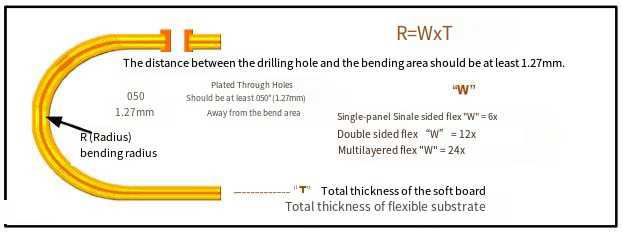
4.2 การคำนวณรัศมีโค้ง (IPC-2223)
PCB แบบแข็งยืดหยุ่นต้องคำนึงถึงรัศมีการโค้งงอขั้นต่ำเพื่อความน่าเชื่อถือ.
ตามมาตรฐาน IPC‑2223 และหลักปฏิบัติทางอุตสาหกรรม:
รมิน, คงที่=(6 ถึง 12)×tflexรมิน, ไดนามิก≥10×tflex
ที่ไหน ทีเฟล็กซ์ = ความหนาพื้นที่โค้งงอทั้งหมด (ทองแดง + แผ่นปิด).
สำหรับแบบทั่วไป 0.2 มม. สแต็กดิ้น, รัศมีขั้นต่ำคงที่คือ 1.2–2.4 มม. UGPCB แนะนำ R ≥ 6 มม. สำหรับการโค้งงอแบบไดนามิกในบานพับประตูหรือตัวปรับที่นั่ง.
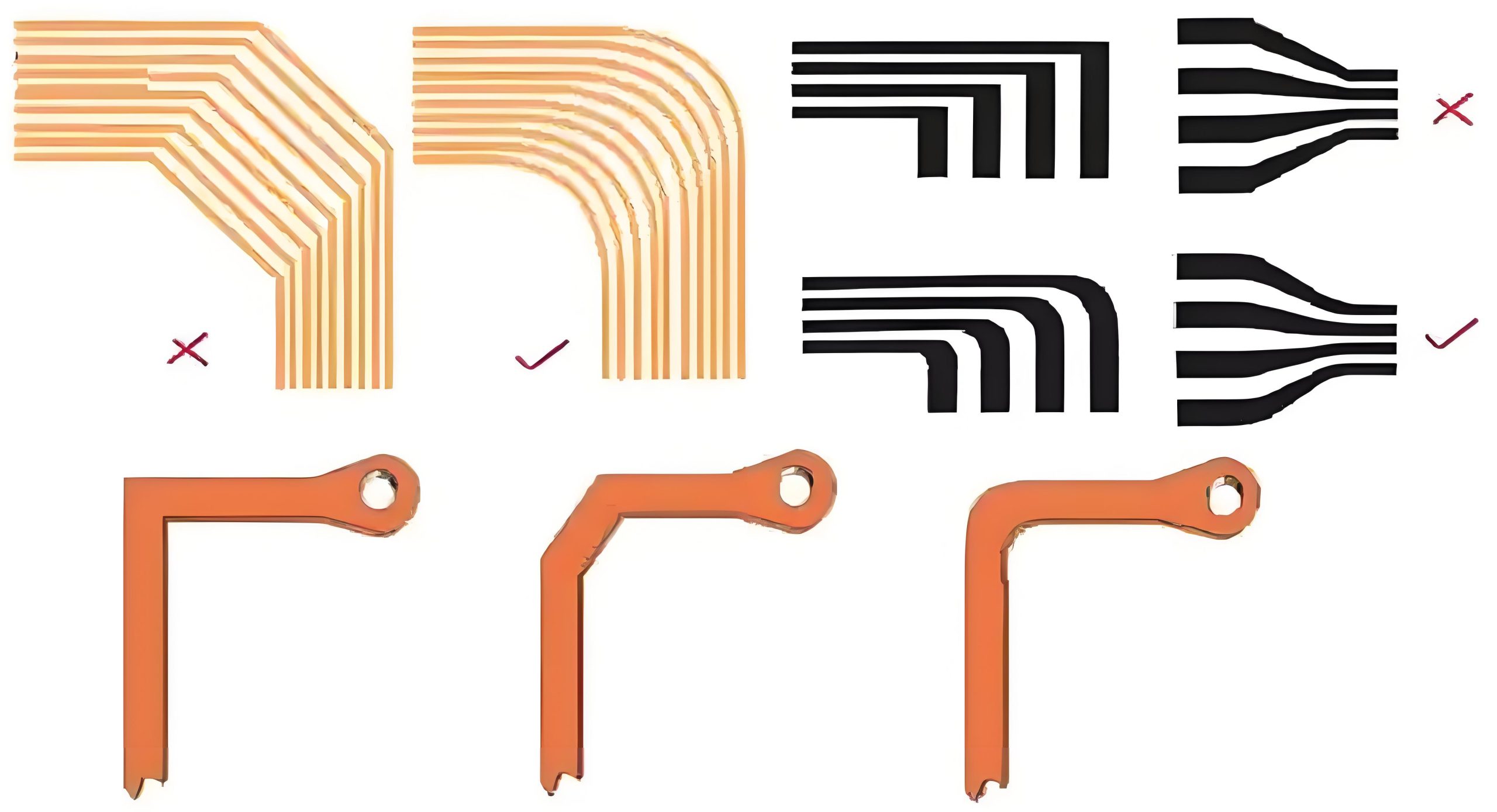
4.3 โซนการเปลี่ยนผ่านแบบ Rigid-Flex – ประเด็นสำคัญ
-
45°อินเทอร์เฟซแบบเรียว – หลีกเลี่ยงความเข้มข้นของความเครียด.
-
ติดตามเส้นทางขนานกับแกนโค้ง – ห้ามข้ามบริเวณโค้งในแนวตั้งฉาก.
-
แผ่นน้ำตา & ช่องเปิดครอบโค้งมน – กระจายความเครียดทางกล.
-
ใช้ 0.5 ทองแดง OZ บนโซนยืดหยุ่นสูง - 1 OZ แข็งแกร่งกว่าแต่ยืดหยุ่นน้อยกว่า.
5. ผังกระบวนการผลิต (ISO & เป็นไปตามมาตรฐาน IPC)
UGPCB เป็นไปตาม IPC‑6013D สำหรับคุณสมบัติแบบแข็งเกร็ง. ขั้นตอนสำคัญ:
-
การถ่ายภาพชั้นใน – แกน FR-4 และชั้น PI flex แยกกัน. เอโอไอตรวจสอบแล้ว 0.1 เส้น มม.
-
การขุดเจาะเลเซอร์ (ตาบอด / ไมโครเวียที่ฝังอยู่) - เลเซอร์ CO₂ ถอด FR-4 ออก; เลเซอร์ยูวีสำหรับ < 50 รู ไมโครเมตร.
-
desmear & ทองแดงแบบไม่ใช้ไฟฟ้า – เปิดใช้งานผนังรูสำหรับการชุบ.
-
ผ่านการเติม & การชุบแผง – จุดแวะตาบอดที่เต็มไปด้วยทองแดง (อัตราโมฆะ < 5%).
-
การเคลือบตามลำดับ – สร้าง 1+2+1 ซ้อนกันในสองขั้นตอน. พื้นที่ยืดหยุ่นถูกปกปิดระหว่างการเคลือบชั้นแข็ง.
-
ชั้นนอก & หน้ากากประสาน – ใช้หน้ากากประสาน LPI สีเขียวหรือสีขาว.
-
เพียง 2U” พื้นผิวเสร็จสิ้น – ตรงตามมาตรฐาน IPC‑4552: 3–7 µm นิ + ≥0.05 µm Au. ความหนาของทองคำสองเท่าเพื่อความทนทานต่อการกัดกร่อน.
-
การกำหนดเส้นทาง & การทดสอบทางไฟฟ้า - 100% การทดสอบการบินหรือฟิกซ์เจอร์.
6. ผลงาน & ข้อมูลความน่าเชื่อถือ (IPC‑TM‑650)
| ทดสอบ | เงื่อนไข | ความต้องการ | มาตรฐาน |
|---|---|---|---|
| แรงดันไฟฟ้าทนอิเล็กทริก | ≥1000VDC | ไม่มีการพังทลาย | IPC‑TM‑650 2.5.7 |
| ความต้านทานของฉนวน (ปกติ) | ≥10^11 โอห์ม | ผ่าน | IPC‑TM‑650 2.5.3 |
| การปั่นจักรยานด้วยความร้อน | –40°ซ ↔125°ซ, 1000 รอบ | ไม่มีการหลุดร่อน, ∆R < 10% | IPC‑TM‑650 2.6.7 |
| ความร้อนชื้น | 85องศาเซลเซียส / 85% RH, 1000ชม. | IR ≥ 10^9 โอห์ม | คลาส IPC‑6013 3 |
| การสั่นสะเทือน | 10–2000 เฮิรตซ์, 20ก, 4ชั่วโมง/แกน | ไม่มีการเปิดเป็นระยะๆ | ISO 16750-3 |
| การดัดงอแบบไดนามิก | r = 5 มม, 5000 รอบ | ไม่มีวงจรเปิด | มาตรฐานอุตสาหกรรม |
การทดสอบทั้งหมดเป็นไปตามวิธี IPC‑TM‑650 และคลาส IPC‑6013 3 ความต้องการ.
7. คุณสมบัติที่สำคัญ & สถานการณ์การใช้งาน
7.1 เหตุใดจึงเลือก PCB HDI แบบแข็งสำหรับยานยนต์นี้
-
1+2+1 HDI + แข็งเกร็ง – ความหนาแน่นสูงพร้อมความโค้งงอได้.
-
0.1 มม. เส้น/ช่องว่าง – รองรับระดับเสียง BGA ≤ 0.5 มม.
-
อล 94 วี-0 – สารหน่วงไฟ (ดับไปในตัว 10 ไม่กี่วินาที).
-
เพียง 2U” – ความหนาของทองคำสองเท่าเพื่ออายุการใช้งานยานยนต์ 10–15 ปี.
-
ต้นแบบเลี้ยวเร็ว – ตัวอย่างพร้อมภายใน 7-10 วัน.
7.2 กรณีการใช้งานทั่วไปสำหรับต้นแบบ PCB อิเล็กทรอนิกส์สำหรับยานยนต์ของคุณ
-
กล่องอีซียู (หน่วยควบคุมเครื่องยนต์) – สัญญาณเซ็นเซอร์รวมเข้ากับ PI flex โดยตรง, กำจัดตัวเชื่อมต่อ.
-
ตัวควบคุมโดเมน ADAS – เรดาร์ / โมดูลกล้องต้องการสัญญาณความเร็วสูงและโครงสร้างแบบพับได้.
-
ระบบสาระบันเทิง – เปลี่ยน FPC + ขั้วต่อ BTB พร้อม PCB แบบแข็งหนึ่งตัว.
-
BMS (ระบบการจัดการแบตเตอรี่) – ช่องแรงดันไฟฟ้า/อุณหภูมิแบบเรียงซ้อนพร้อม UL 94 การปฏิบัติตามข้อกำหนด V-0.
-
โมดูลกล้องติดรถยนต์ – ส่วนโค้งงอผ่านบานพับประตูโดยไม่ต้องใช้สายรัด.
8. เหตุใดจึงต้องร่วมมือกับ UGPCB สำหรับต้นแบบ PCB แบบแข็งสำหรับยานยนต์ของคุณ?
-
สมาชิกไอพีซี + ได้รับการรับรองมาตรฐาน UL – สอดคล้องกับ IPC‑6012DA โดยสมบูรณ์ & IPC-6013D.
-
16,000 ตร.ม. ต้นไม้ทันสมัย – กำลังการผลิตต่อปี 600,000 ตารางเมตร, สายการผลิต HDI โดยเฉพาะ.
-
รีวิว DFM ฟรี - 15+ ประสบการณ์เฉลี่ยปี. UGPCB ช่วยคุณปรับรัศมีสแต็กอัพและโค้งงอให้เหมาะสม.
-
การส่งมอบต้นแบบที่รวดเร็ว – 7–10 วันสำหรับตัวอย่างแบบแข็งเกร็ง.
-
ให้คำปรึกษาด้านวิศวกรรมฟรี – การวิเคราะห์ที่ไม่ตรงกันของ CTE, การปรับความต้านทาน, และคำแนะนำในการประกอบ SMT.
9. รับใบเสนอราคา – เริ่มต้นแบบ PCB HDI แบบแข็งสำหรับยานยนต์ของคุณเลยวันนี้
ส่งไฟล์ Gerber ของคุณหรือแบ่งปันข้อกำหนดทางเทคนิคของคุณ. UGPCB ตอบสนองภายใน 2 ชั่วโมงพร้อมคำแนะนำการซ้อนและการประมาณการราคาฟรี.
ติดต่อเราตอนนี้ – เพียงกรอกแบบฟอร์มสั้นๆ ด้านล่าง:
-
ชื่อบริษัท
-
โทรศัพท์ / วีแชท / วอทส์แอพพ์
-
ความต้องการการออกแบบหรืองบประมาณเป้าหมาย
UGPCB ช่วยให้คุณสร้างความน่าเชื่อถือสูง, ระบบอิเล็กทรอนิกส์ยานยนต์ที่มีการบูรณาการสูง – PCB แบบแข็งยืดหยุ่นครั้งละหนึ่งแผ่น.
คำประกาศ
ข้อมูลจำเพาะและข้อมูลทั้งหมดในเอกสารนี้อิงตาม IPC‑2223, IPC-2226, ไอพีซี-6013, อล 94, และรายงานการตลาดที่เปิดเผยต่อสาธารณะ (สถาบันวิจัยอุตสาหกรรมเชิงพาณิชย์ของจีน, 2025). UGPCB ขอสงวนสิทธิ์ในการอัปเดตข้อมูลทางเทคนิค. โปรดติดต่อฝ่ายขายของ UGPCB เพื่อขอคำแนะนำทางวิศวกรรมล่าสุด.