Diseñado para el borde de la innovación
La evolución hacia pantallas sin bisel y sistemas de cámaras con múltiples lentes en los teléfonos inteligentes, junto con la demanda de miniaturización en endoscopia médica, presenta un desafío universal: Cada milímetro de espacio interno ahorrado se traduce en importantes mejoras en el diseño.. Rígido tradicional PCB no puede doblarse, mientras que los circuitos flexibles (FPCS) a menudo carecen de soporte adecuado en áreas con gran densidad de componentes.
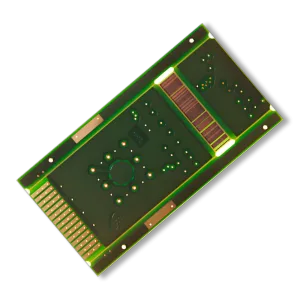
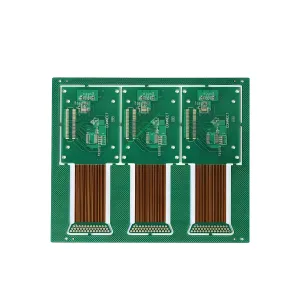
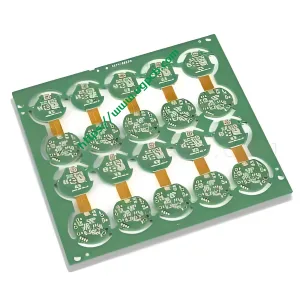
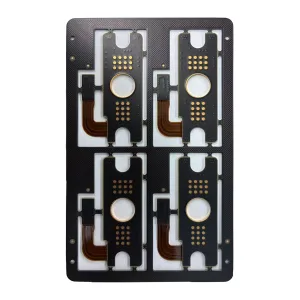
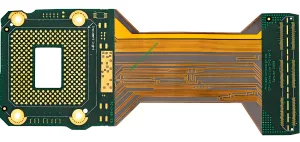
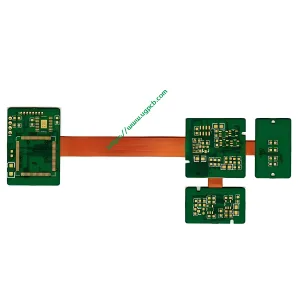
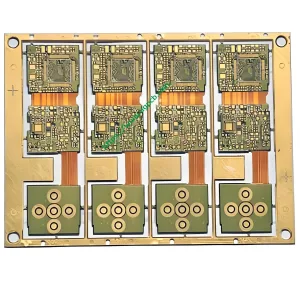
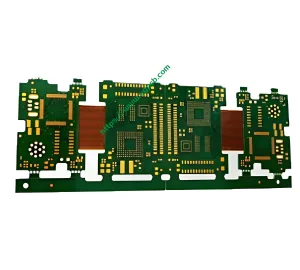
UGPCB presenta su avanzado PCB del módulo de cámara rígido-flexible, una solución que combina magistralmente la estabilidad mecánica del FR-4 con la flexibilidad dinámica de la poliimida (PI). Esta innovadora interconexión elimina conectores y arneses., proporcionando un directo, confiable, y enlace que ahorra espacio para sistemas de cámaras compactas.
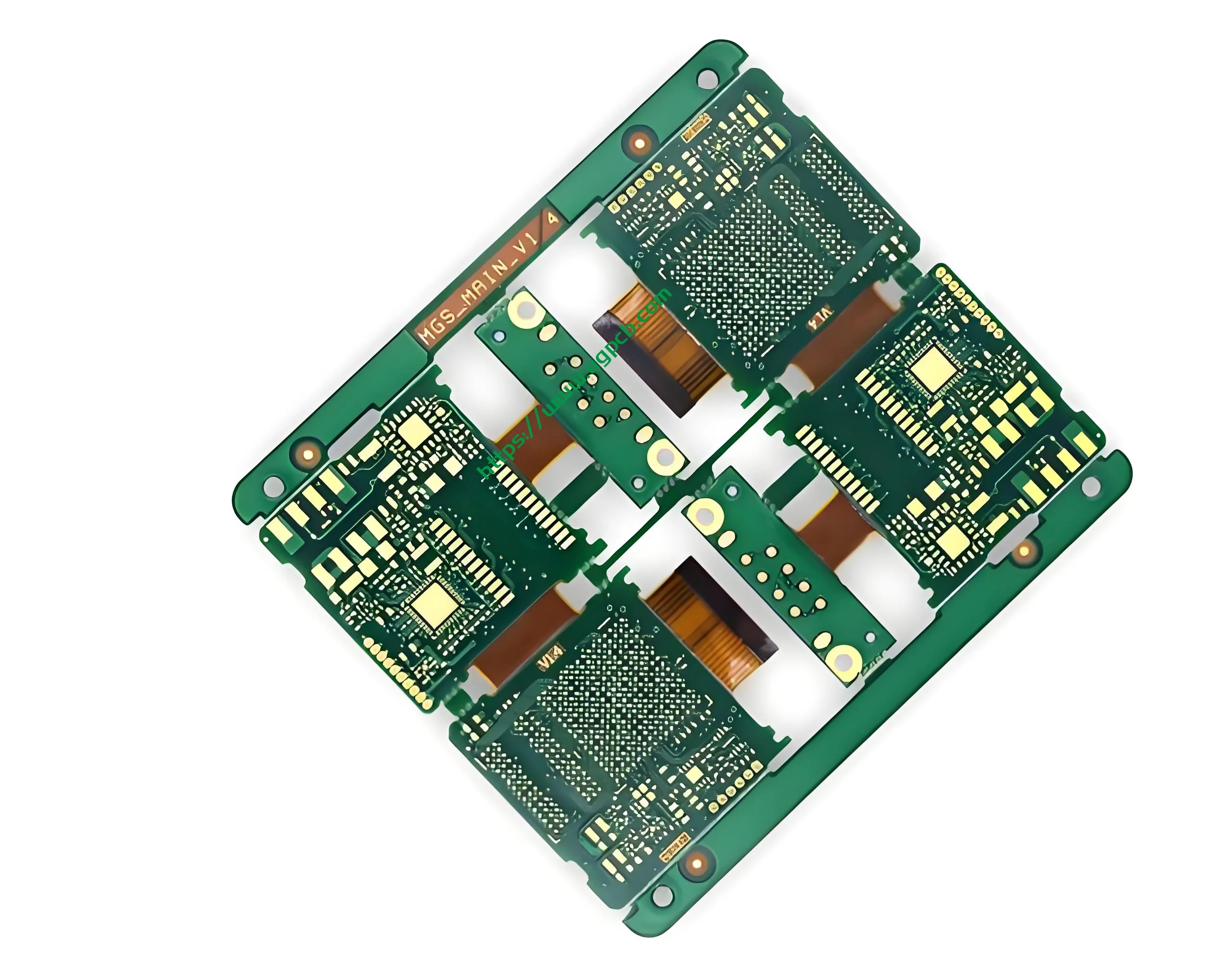
1. Descripción general del producto: Definición de la PCB del módulo de cámara rígido-flexible
A PCB rígido-flexible no es un simple conjunto de una placa rígida y un cable flexible conectados por un conector. es un monolitico, estructura inseparable formada por laminaciones finas, Sustratos de poliimida flexibles con núcleos robustos reforzados con vidrio epóxico FR-4 mediante procesos avanzados de laminación al vacío. .
La oferta de UGPCB está diseñada específicamente para módulos de cámara. Cuenta con un 2-capa rígida + 2-capa flexible construcción. Este diseño reemplaza los voluminosos conectores y cables que se encuentran en las configuraciones tradicionales., acortando drásticamente la ruta de la señal entre el sensor de imagen CMOS y el procesador de aplicaciones principal.
2. Principios de diseño: El arte de equilibrar rigidez y flexibilidad
El diseño de este tipo de PCB requiere una planificación 3D precisa para equilibrar el rendimiento eléctrico con la resistencia mecánica.. La ingeniería de UGPCB se centra en varios aspectos críticos:
-
Arquitectura de apilamiento: El diseño emplea una construcción simétrica con un espesor de sección rígida de 0,4 mm y un Grosor de la sección flexible de solo 0,15 mm.. Este control preciso garantiza que durante el doblado, El eje neutro de la región flexible se alinea con el conductor de cobre., reduciendo significativamente el estrés y previniendo la fractura del rastro.
-
Gestión de la zona de transición: La interfaz entre áreas rígidas y flexibles es la zona más crítica del producto.. UGPCB utiliza técnicas de flujo de adhesivo controlado y mediante taponamiento para evitar la delaminación o concentración de tensión durante ciclos de flexión repetidos.
-
Integridad de señal: Para manejar datos de alta velocidad de sensores de imagen modernos, el diseño se adhiere a un estricto control de impedancia, facilitado por un rastro/espacio mínimo de 3mil/3mil. Esto garantiza una transmisión de señal limpia., libre de ruido o interferencias que podrían degradar la calidad de la imagen.
3. Materiales & Actuación: Construido sobre una base de calidad
El rendimiento excepcional de esta PCB se debe a una rigurosa selección de materiales de primera calidad.:
-
Material de capa rígida: Alto grado FR-4 proporciona la resistencia mecánica necesaria. Garantiza una planitud absoluta para el montaje del sensor CMOS., un requisito no negociable para mantener el plano focal preciso del módulo de la cámara.
-
Material de capa flexible: poliimida (PI) La película es el estándar de la industria para las capas flexibles. . PI ofrece una resistencia al calor excepcional (resistente a perfiles de reflujo sin plomo), Excelente resistencia a la flexión para aplicaciones de flexión tanto estáticas como dinámicas., y excelente estabilidad química.
-
Acabado superficial: La PCB presenta un Níquel electrozados con electricidad de oro de paladio (ENÉPICO) finalizar. Este tratamiento superficial avanzado deposita capas de níquel., paladio, y oro . Proporciona una superficie perfectamente plana., excelente soldabilidad para componentes en miniatura, y es ideal para unir cables de aluminio u oro., que a menudo se requiere en el embalaje de sensores .
4. Especificaciones clave
Los siguientes parámetros demuestran la capacidad de UGPCB en alta precisión., fabricación miniaturizada:
-
Modelo: PCB del módulo de cámara rígido-flexible
-
Combinación de materiales: FR-4 (Rígido) + PI (Doblar)
-
Configuración de capa: Rígido 2 capas / Doblar 2 capas
-
Color de máscara de soldadura: Verde / Blanco (Opcional)
-
Espesor terminado: Área rígida 0,4 mm / Área flexible 0,15 mm
-
Peso del cobre: 1 onz (aprox. 35µm)
-
Ancho/espacio mínimo de línea: 3mil / 3mil
-
Tratamiento superficial: ENÉPICO (NiPdAu)
-
Aplicación primaria: PCB del módulo de cámara (para teléfonos inteligentes, automotor, médico, drones)
5. Cómo funciona: Estructura y funcionalidad
Estructuralmente, Este PCB se puede visualizar como un “isla rígida” flotando en un “mar flexible.”
-
Zona Rígida: cuanto más grueso (0.4milímetros) Las áreas FR-4 sirven como plataforma de montaje para el sensor de imagen y los componentes pasivos.. Esta rigidez garantiza que durante el enfoque automático o la estabilización óptica de imagen, Las uniones de soldadura que conectan el sensor no están sujetas a tensión mecánica..
-
Zona Flexible: El ultrafino (0.15milímetros) Las áreas basadas en PI actúan como un cable plano, enrutar datos de imágenes de alta velocidad desde la isla rígida a la placa lógica principal. Su perfil delgado permite doblarlo en forma de Z o U apretada., amoldándose perfectamente al espacio limitado dentro de un teléfono inteligente, zumbido, o cámara endoscópica.
-
Principio operativo: Cuando la luz incide en el sensor de la cámara, Las señales eléctricas generadas viajan a través de las trazas de cobre grabadas con precisión dentro de la zona flexible.. La integridad de estas señales se mantiene mediante el diseño controlado por impedancia., garantizar que la imagen final sea nítida y libre de artefactos.
6. Proceso de fabricación: Un viaje de precisión
UGPCB sigue procesos líderes en la industria, alineado con los estándares IPC, para garantizar que cada PCB rígido-flexible cumpla con los más altos estándares de confiabilidad :
-
Preparación de material & Limpieza: Los materiales base FR-4 y PI se cortan a medida. El material PI se somete a un tratamiento con plasma para mejorar la energía superficial., asegurando una fuerte adhesión durante la laminación.
-
Imágenes de la capa interna: Usando fotolitografía, la multa 3mil Los circuitos están grabados en capas rígidas y flexibles.. Inspección óptica automatizada (AOI) verifica la ausencia de defectos como aperturas o cortos .
-
Laminación & Unión al vacío: Las capas interiores preparadas se apilan con láminas adhesivas. (preparar) y laminado bajo alta temperatura y presión en un ambiente de vacío. Este proceso fusiona las secciones rígidas y flexibles en una sola, unidad inseparable sin sangrado de adhesivo no deseado .
-
Perforación & Enchapado: Mecánico y Perforación con láser UV crear microvías para la interconexión de capas. Luego, estos orificios se vuelven conductores mediante un revestimiento de cobre no electrolítico y se refuerzan con cobre galvanizado..
-
Capa exterior & Acabado superficial: Las capas del circuito exterior se forman., seguido de la aplicación de la ENÉPICO acabado superficial.
-
Aplicación de cobertura & Perfilado: Se aplica una capa protectora de poliimida.. Corte por láser luego se utiliza para precisamente “abierto” la cubierta sobre las almohadillas y para perfilar la forma final del tablero, asegurando cero estrés mecánico en las delicadas áreas flexibles .
7. Clasificación científica
Según los estándares de la industria, este producto está clasificado como:
-
Por estructura: Placa de circuito impreso rígido-flexible multicapa (específicamente una construcción 2R+2F).
-
Por aplicación: PCB del módulo optoelectrónico (Módulo de cámara).
-
Por tecnología: IDH PCB rígido-flexible, debido a su fino ancho de traza de 3 mil y requisitos de microvía.
8. Aplicaciones: Más allá del teléfono inteligente
Aunque optimizado para módulos de cámara, Los atributos de esta PCB la hacen ideal para una variedad de aplicaciones exigentes.:
-
Electrónica de Consumo: Módulos multicámara en teléfonos inteligentes emblemáticos, cámaras en dispositivos plegables, y cámaras web ultradelgadas para portátiles.
-
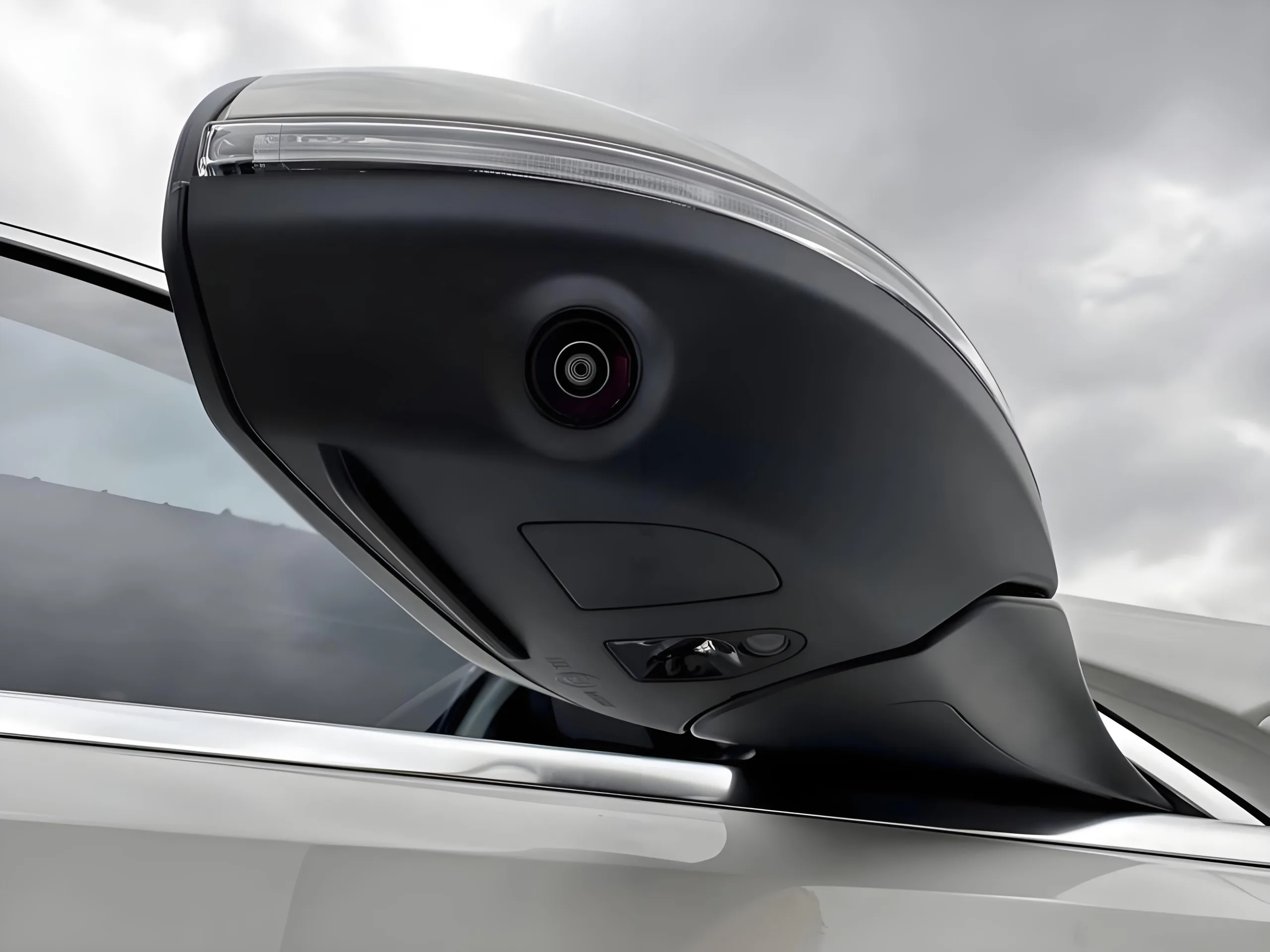
Electrónica automotriz: 360-cámaras de visión envolvente de grado y sistemas de monitoreo del conductor (DMS). Estos entornos exigen confiabilidad bajo vibraciones extremas y fluctuaciones de temperatura. (-40°C a +85°C), donde las placas rígido-flexibles eliminan el riesgo de falla del conector.
-
Dispositivos médicos: Endoscopios en miniatura y sondas de imágenes.. La combinación de extrema delgadez y alta confiabilidad permite la inserción en cavidades pequeñas mientras se transmite video de alta definición..
9. ¿Por qué asociarse con UGPCB para sus necesidades de módulos de cámara??
-
Desbloquear espacio: La combinación de una zona rígida de 0,4 mm y una zona flexible de 0,15 mm puede ahorrar más de 60% del espacio respecto a los tradicionales “placa a cable” soluciones de interconexión.
-
Mejorar la confiabilidad: Eliminando conectores y uniones soldadas., La tasa de fallos en entornos de alta vibración se puede reducir hasta en 70%.
-
Garantizar la fidelidad de la señal: Las líneas de precisión de 3 mil/3 mil garantizan canales de transmisión estables para interfaces de alta velocidad como MIPI, Preservar la integridad de la imagen desde el sensor al procesador..
Obtenga una cotización y potencie su producto de próxima generación
UGPCB es más que un fabricante; somos un socio en innovación. Ya sea que esté desarrollando un teléfono inteligente emblemático o un dispositivo de imágenes médicas de vanguardia, nuestro PCB del módulo de cámara rígido-flexible está diseñado para satisfacer sus requisitos de espacio más exigentes, peso, y confiabilidad.
Envíe sus archivos Gerber o consultas de diseño a [ventas@ugpcb.com] . Nuestro equipo de ingeniería proporcionará un DFM profesional. (Diseño para la fabricación) análisis y una cotización de volumen competitiva dentro 24 horas. Elija UGPCB para obtener una precisión en la que puede confiar.


No suelo comentar pero debo saludar la publicación en este especial. : D.