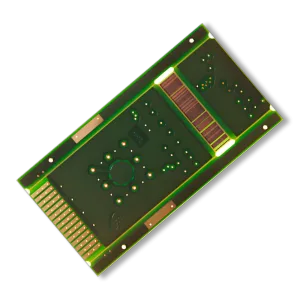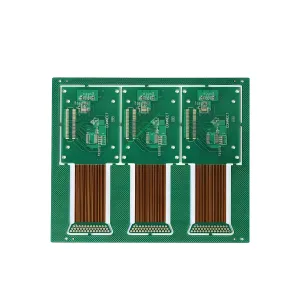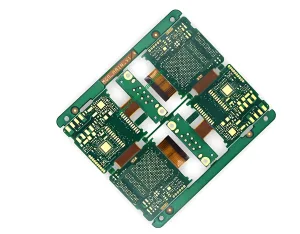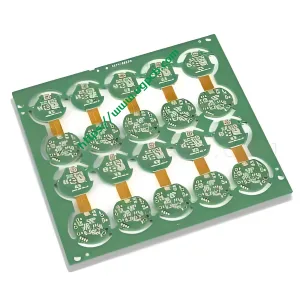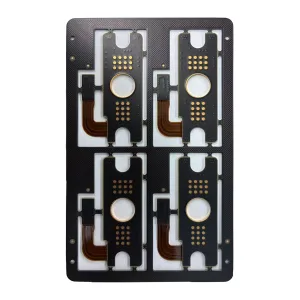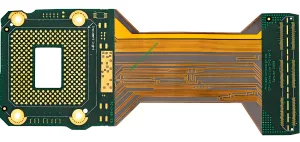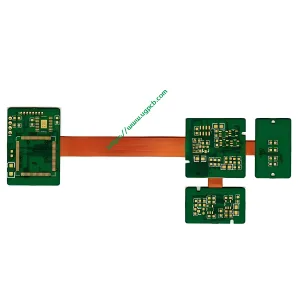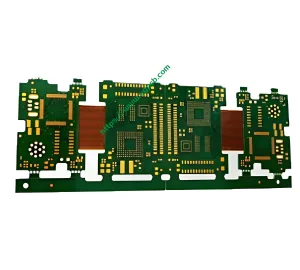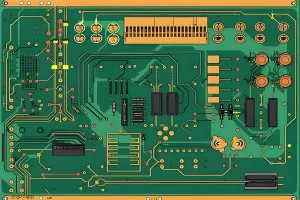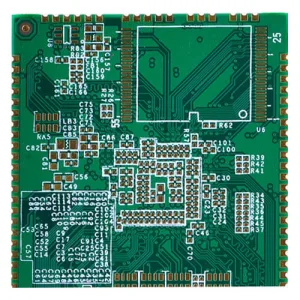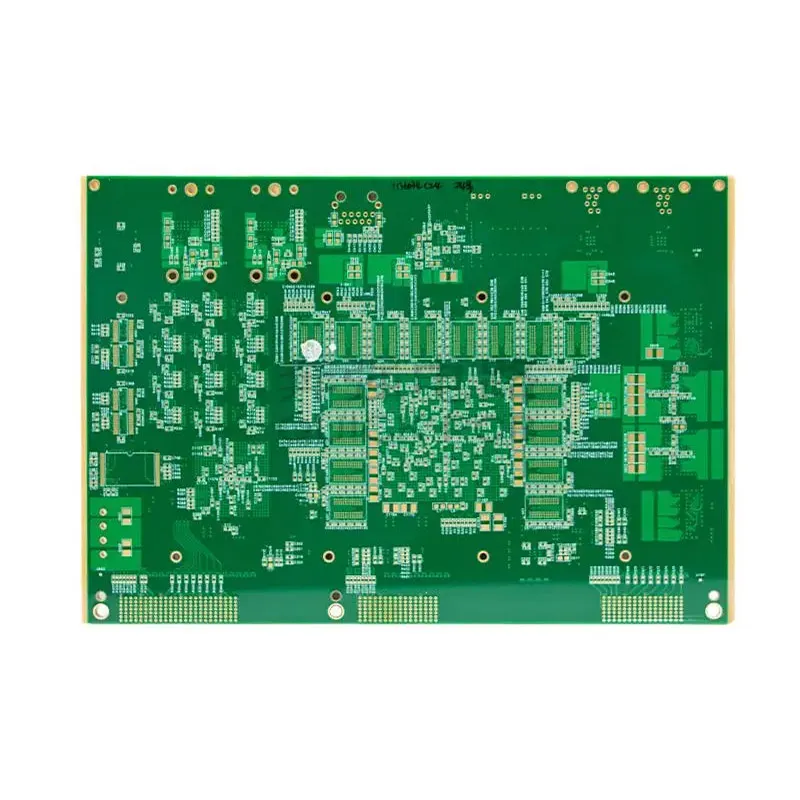
En la rápida evolución actual hacia el peso ligero, delgado, corto, y dispositivos electrónicos compactos, el PCB rígido-flexible Se ha vuelto indispensable en campos de alta precisión como las telecomunicaciones., instrumentos medicos, y aeroespacial. Su combinación única de soporte rígido y flexibilidad tridimensional lo convierte en un componente de interconexión fundamental..
como profesional fabricante de PCB, UGPCB presenta su alto rendimiento PCB rígido-flexible con máscara de soldadura amarilla (R-FPCB) . Este artículo explora esta placa avanzada., construido con FR-4 + materiales PI y un 6-capa rígida más 4 capas flexible estructura. Examinaremos sus principios de diseño., procesos de fabricación, y aplicaciones, mostrando cómo permite una transmisión de señal más estable y un diseño de sistema más compacto.
1. Definición y descripción general del producto
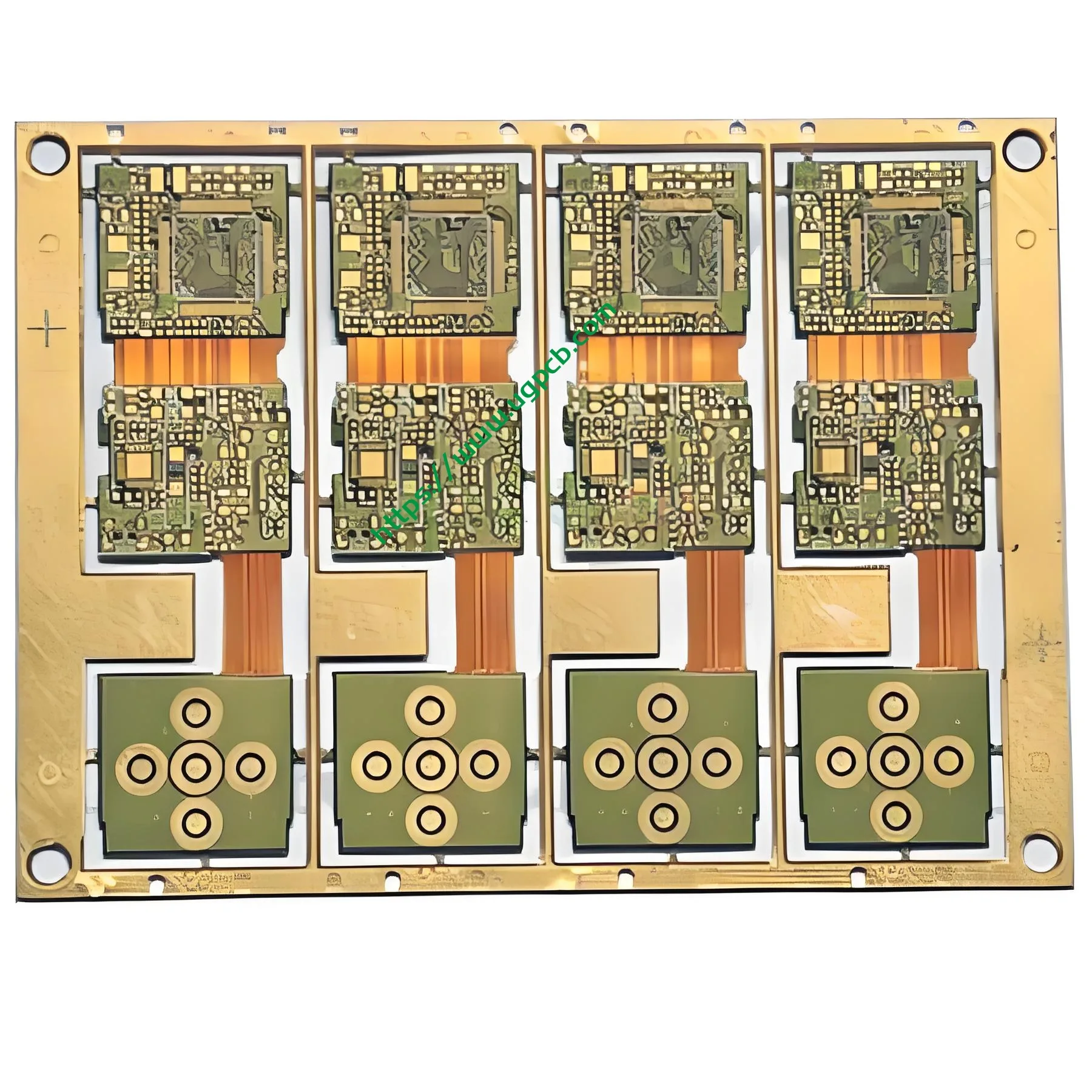
UGPCBPlaca rígida-flexible con máscara de soldadura amarilla integra una PCB rígida y una placa de circuito flexible en una única solución de interconexión a través de un proceso de laminación.
Especificaciones clave:
Apilamiento de capas: 6 capas (6l) en secciones rígidas / 4 capas (4l) en secciones flexibles
Combinación de materiales: FR-4 (áreas rígidas) + PI (poliimida, áreas flexibles)
Color de superficie: Máscara de soldadura amarilla (rígido) / Cobertor blanco (doblar)
Espesor terminado: 0.4milímetros (secciones rígidas) / 0.2milímetros (secciones flexibles)
Este diseño conserva el soporte estructural y la capacidad de transporte de componentes de las áreas rígidas mientras utiliza la capacidad de flexión de las secciones flexibles.. Se consigue una auténtica integración rígido-flexible., eliminando la necesidad de conectores tradicionales y cables planos.
2. Principios de diseño y tecnología.
A. Principio de trabajo
El núcleo de la tecnología rígido-flexible reside en una interconexión perfecta. UGPCB lamina capas de PI flexibles con capas rígidas de FR-4 bajo alta temperatura y presión. En zonas flexibles, Se elimina el material FR-4, dejando la base PI con una cubierta para permitir la flexión. En zonas rígidas, FR-4 sigue siendo compatible componentes. Esta estructura elimina los puntos de contacto físico de los conectores., mejorando significativamente Integridad de señal (Y) y resistencia a las vibraciones.
B. Consideraciones de diseño
Control de impedancia: Para PCB de comunicación de alta frecuencia, El control estricto del ancho y espaciado de la traza de 3,5 mil garantiza una impedancia diferencial constante. (p.ej., 100Oh).
Protección de la zona de transición: La unión entre secciones rígidas y flexibles (el trozo) es un punto de estrés. El diseño de UGPCB utiliza transiciones redondeadas y anchos de traza cónicos para evitar grietas durante la flexión..
Coincidencia de apilados: Se mantiene un espesor de cobre uniforme de 1 oz para evitar fallas por fatiga en las secciones flexibles durante la flexión dinámica..
3. Análisis de materiales y rendimiento
A. Materiales núcleos
FR-4 (Áreas rígidas): Un laminado epoxi reforzado con fibra de vidrio. Ofrece alta resistencia mecánica., resistencia al calor, y aislamiento, proporcionando una plataforma estable para montar componentes pesados como chips y conectores.
PI (Áreas flexibles): Película de poliimida. Proporciona una excelente resistencia a altas temperaturas. (funcionamiento >150°C), un bajo factor de pérdida dieléctrica (df), y una alta vida flexible.
Acabado superficial: Oro de inmersión (ACEPTAR). Este proceso químico deposita una capa de níquel-oro sobre el cobre..
Ventajas: Alta planitud superficial adecuada para circuitos de paso fino (3.5espaciado mil), fuerte resistencia a la oxidación, y buena soldabilidad junto con capacidad de unión de alambre de aluminio.
B. Especificaciones clave de rendimiento
| Parámetro | Especificación | Ventaja técnica |
|---|---|---|
| mín.. Traza/Espacio | 3.5mil / 3.5mil | Admite enrutamiento de alta densidad para módulos de comunicación compactos. |
| mín.. Taladro Mecánico | 0.1milímetros | La tecnología de microvía mejora la utilización del canal de enrutamiento y reduce la capacitancia parásita entre capas. |
| Espesor terminado | 0.4milímetros (Rígido) / 0.2milímetros (Doblar) | El diseño ultrafino ahorra espacio dentro de la carcasa del dispositivo. |
| Espesor de cobre | 1ONZ (35μm) | Equilibra la capacidad de transporte de corriente con la resistencia a la flexión, asegurando la integridad de la señal. |
4. Clasificación estructural y características.
A. Clasificación estructural
Este producto es un estructura asimétrica (6-capa rígida + 4-capa flexible) dentro de la categoría de tableros rígido-flex multicapa. Generalmente, Los tableros rígido-flexibles se clasifican en:
Tipo en capas: Las capas flexibles se extienden de forma independiente, como se ve en este producto.
Tipo sin capas: Todo el tablero utiliza material flexible., con refuerzos agregados a áreas específicas.
B. Características del producto
Alta fiabilidad: El acabado en oro por inmersión combinado con material PI garantiza un rendimiento eléctrico estable incluso en entornos hostiles. (alta temperatura y humedad).
Alta precisión: Las capacidades de fabricación para líneas finas de 3,5 mil y microvías de 0,1 mm resuelven los desafíos de interconexión de alta densidad.
Optimización del espacio: Reemplaza conectores, reduciendo el volumen de instalación en más 60% y reducir el peso total del producto.
Diferenciación visual: La máscara de soldadura amarilla proporciona una apariencia única y ofrece un contraste más claro durante el ensamblaje SMT., facilitando la inspección óptica.
5. Proceso de fabricación y control de calidad.
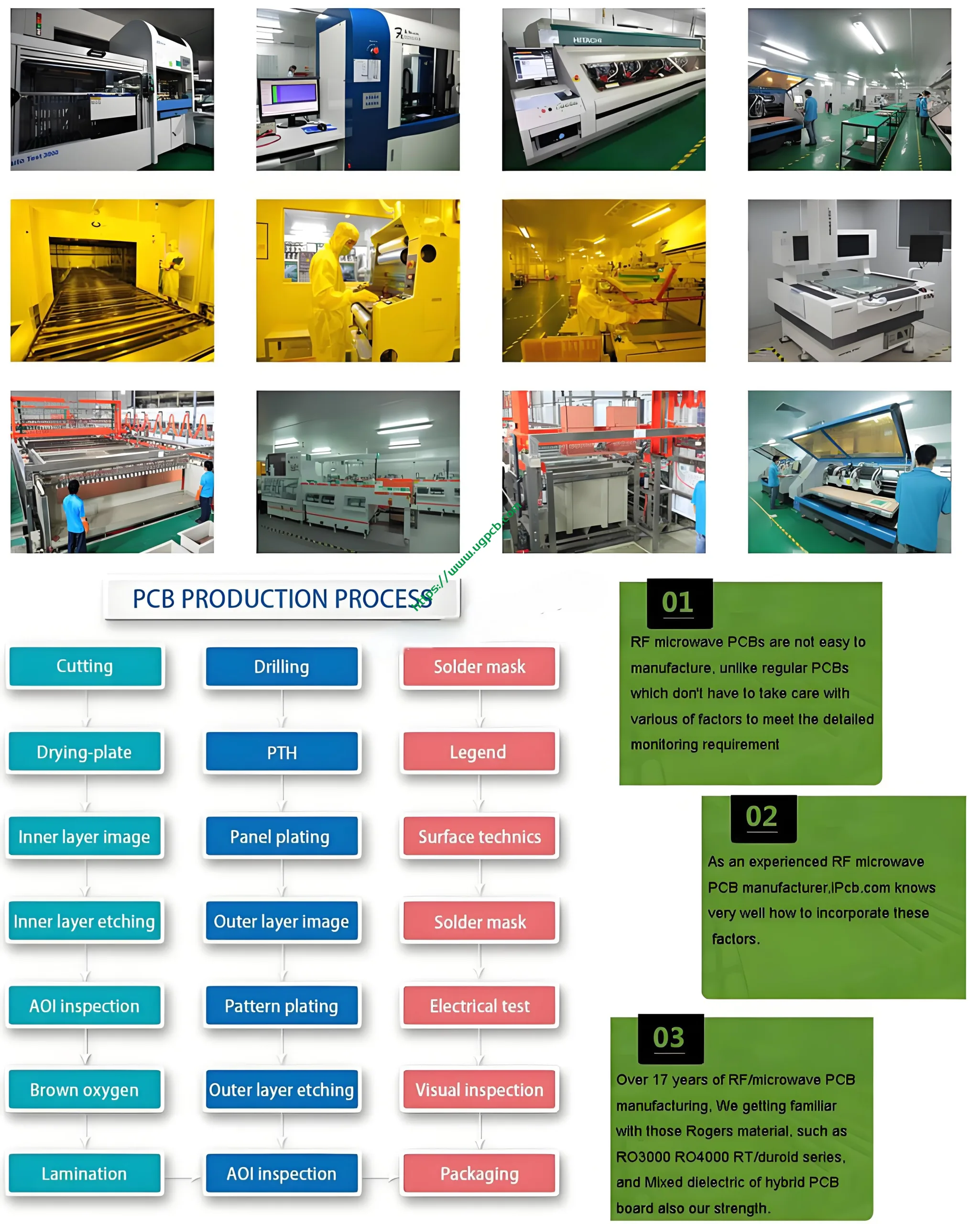
Para garantizar la fiabilidad de esta compleja estructura de 6L+4L, UGPCB sigue un riguroso flujo de producción:
Circuito de capa interior (Área flexible): Se forman circuitos finos de 3,5 mil sobre el material base PI mediante láser o fotolitografía..
Laminación de cubierta: Se lamina una película protectora sobre el circuito flexible., dejando solo las áreas de la almohadilla expuestas.
Laminación: Las capas rígidas y flexibles se alinean y laminan al vacío.. Los controles clave son el perfil de temperatura y el flujo de resina para evitar huecos..
Perforación & Enchapado: 0.1Se perforan microvías de mm.. La deposición de cobre no electrolítica crea conexiones entre capas.
Capa exterior & Soldermasta: Se aplica máscara de soldadura amarilla en áreas rígidas.; La capa de cobertura blanca permanece en áreas flexibles..
Acabado superficial: Oro de inmersión (ACEPTAR) se aplica con espesor controlado: 0.05-0.1µm Au / 3-5micras Ni.
Perfilado & Prueba eléctrica: El enrutamiento por láser o el punzonado definen la forma final. 100% AOI y sonda voladora Las pruebas verifican la integridad eléctrica..
6. Aplicaciones
Este producto está dirigido principalmente alPCB de comunicación sector. Las aplicaciones clave incluyen:
5Estaciones base de comunicación G: Se utiliza para flexionar conexiones en módulos de RF., resolviendo necesidades de interconexión compacta entre antenas y placas base.
Teléfonos inteligentes & Wearables: La sección flexible de 0,2 mm permite la flexión dinámica en bisagras de teléfonos plegables.
Electrónica médica: Utilizado en dispositivos como sondas de endoscopio ultrasónico., aprovechando la biocompatibilidad y el enrutamiento de alta densidad de PI.
Electrónica automotriz: Módulos de cámara ADAS que deben soportar vibraciones constantes y choques térmicos.
7. Por qué elegir UGPCB?
Los ingenieros a menudo enfrentan desafíos con bajos rendimientos y largos plazos de entrega para diseños complejos rígido-flexibles.. UGPCB es un socio confiable de la cadena de suministro que ofrece:
Capacidad de fabricación: Capacidad de producción en masa para trazas/espacio de 3,5 mil, superar las barreras de interconexión de alta densidad.
Abastecimiento de materiales: Utiliza materiales de alta calidad de proveedores como Shengyi/ITEQ para FR-4 y DuPont/Tayoho para PI, asegurando la calidad desde la fuente.
Soporte de ingeniería: Proporciona DFM gratuito (Diseño para la fabricación) controles para ayudar a optimizar los diseños, especialmente en la zona de transición rígido-flexible.
¿Está diseñando una placa de circuito que debe transportar circuitos integrados complejos y flexionarse en un espacio reducido??
UGPCB ahora ofrece servicios de creación de prototipos y producción en masa para esto.6-capa rígida + 4-PCB rígido-flexible con máscara de soldadura amarilla flexible de capa.
👉 Obtenga una cotización rápida hoy
Envíe sus archivos Gerber y requisitos técnicos a [ventas@ugpcb.com] o haz clic en el chat en línea. Nuestro equipo de ingeniería proporcionará un informe DFM profesional y una cotización competitiva dentro de 24 horas.