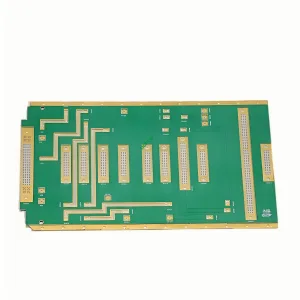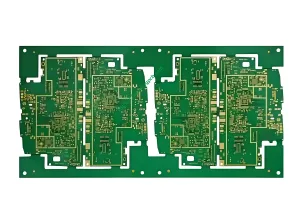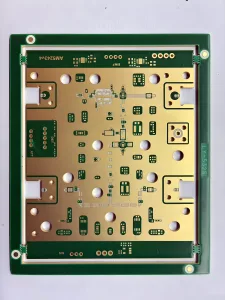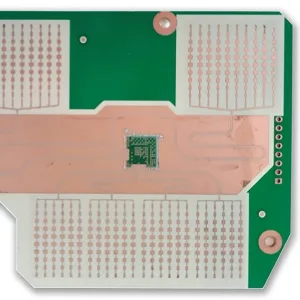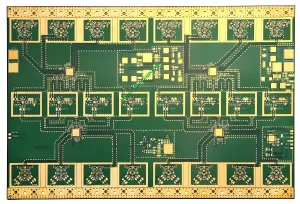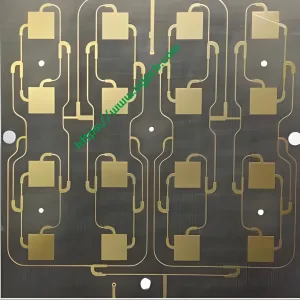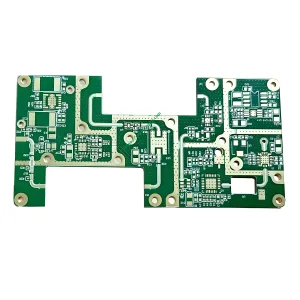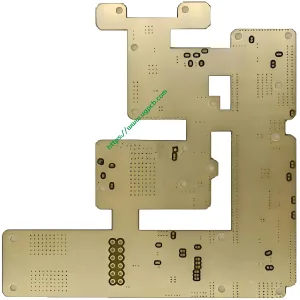
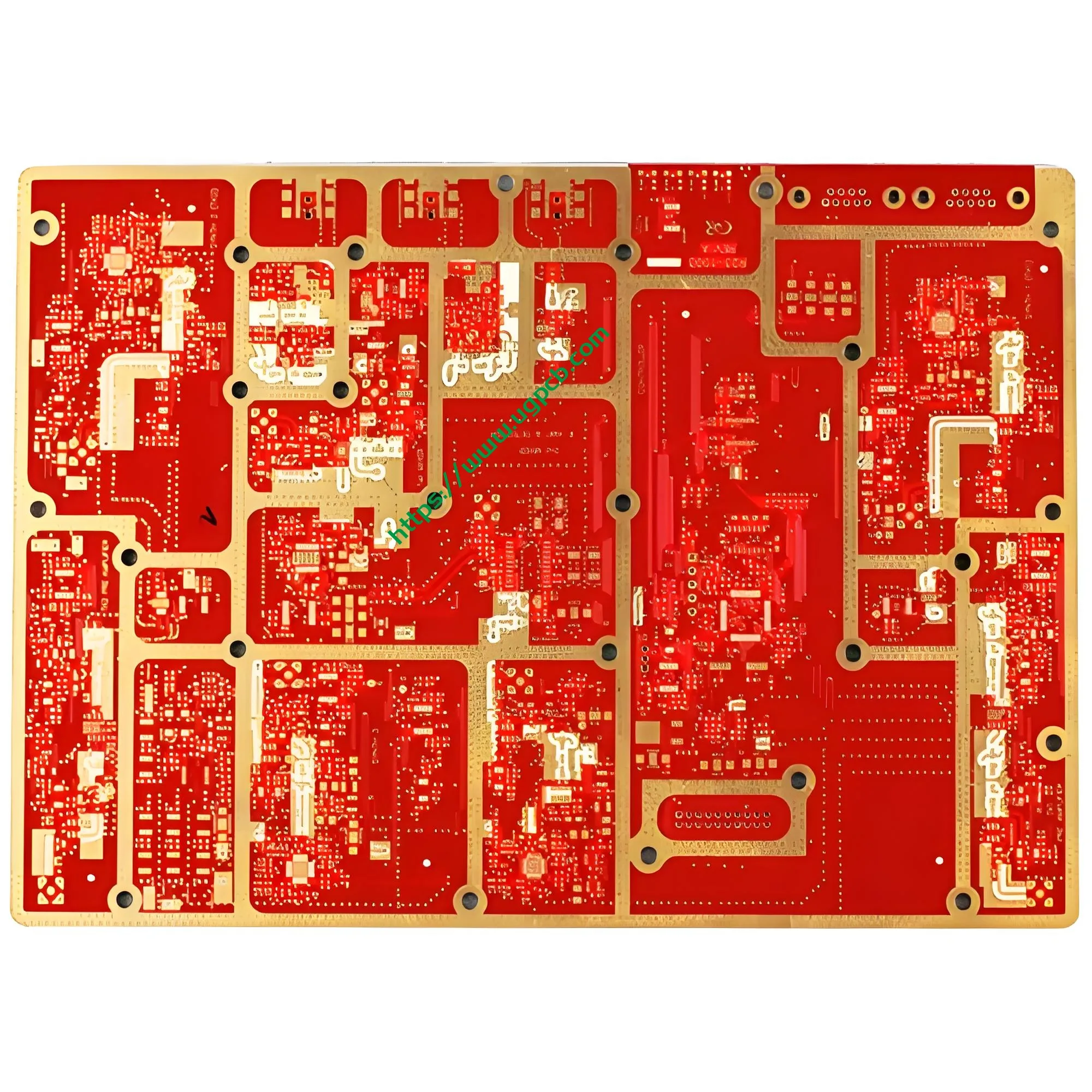
Cuando los sistemas digitales y de RF superan los múltiples GHz, convencional Materiales de PCB Golpear cuellos de botella en la integridad de la señal., estabilidad térmica, y control de impedancia. La PCB híbrida de comunicación de alta frecuencia de UGPCB resuelve estos desafíos.
1. Descripción general del producto
Nombre del producto: PCB híbrido de alta frecuencia de comunicación de 6 capas UGPCB
Modelo: UG‑HÍBRIDO‑6L‑RF01
Especificaciones clave: 6 capas / Dieléctrico mixto Ro4350B+FR4 / 1.6mm de espesor del tablero / 210mm × 280 mm de tamaño / Acabado superficial ENIG / Agujero perforado mecánico mínimo 0,25 mm.
Posicionamiento: Una solución de interconexión rentable para terminales de RF y circuitos mixtos digitales de alta velocidad. Al colocar el laminado de alta frecuencia Rogers RO4350B en las capas superiores de señal de RF y FR‑4 en las capas inferiores de energía/tierra y digitales de baja velocidad, este diseño equilibra la integridad de la señal, estabilidad térmica, y costo de fabricación.
2. Definición: ¿Qué es una PCB híbrida de alta frecuencia??
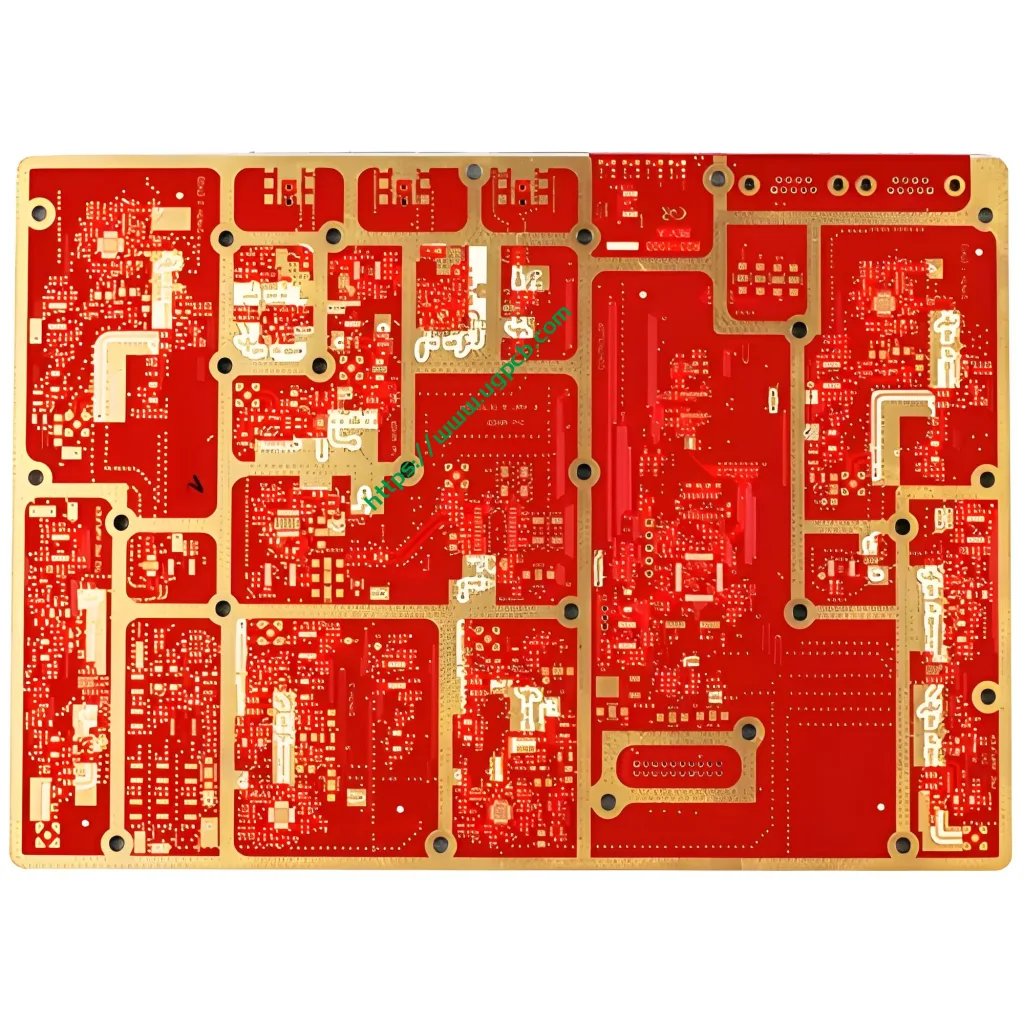
A PCB híbrido de alta frecuencia (también llamado tablero multicapa dieléctrico mixto) Utiliza dos o más materiales con diferentes propiedades dieléctricas en uno. placa de circuito impreso multicapa.
Esta PCB híbrida de 6 capas tiene el siguiente apilamiento:
| Capa | Función | Material | Parámetro clave |
|---|---|---|---|
| L1 | señal de radiofrecuencia | RO4350B (0.2milímetros) | Dk=3,48±0,05@10GHz, Gl=0,0037 |
| L2 | Tierra de RF | RO4350B | Plano de referencia de bajas pérdidas |
| L3 | Digital de alta velocidad | Capa adhesiva RO4450™ + FR‑4 | Transición, coincidencia de impedancia |
| L4 | Avión de poder | FR‑4 | Tg alta, bajo costo |
| L5 | señal digital | FR‑4 | Vidrio epoxi estándar |
| L6 | Tierra digital | FR‑4 | Soporte mecánico y disipación de calor. |
“La construcción dieléctrica mixta reduce significativamente los costos: utiliza material de alta frecuencia solo en las capas que transportan señales de RF, y FR‑4 para el resto”.
3. Pautas de diseño
3.1 Parámetros críticos del material
Este producto utiliza Rogers RO4350B (laminado de hidrocarburos relleno de cerámica) y FR‑4. Especificaciones clave del RO4350B (fuente: Hoja de datos de Rogers):
| Parámetro | Valor típico | Condición de prueba | Referencia |
|---|---|---|---|
| Proceso Dk | 3.48±0,05 | 10GHz | IPC‑TM‑650 2.5.5.5 |
| Diseño Dk | 3.66 | 10GHz | Corrección de rugosidad del cobre. |
| factor de disipación (df) | 0.0037 | 10GHz | Aplicaciones de RF de baja pérdida |
| CTE del eje Z | 32 PPM/℃ | -55℃ a 288 ℃ | Coincide con el cobre (17 PPM/℃) |
| Conductividad térmica | 0.69 W/m·K | 50℃, Norma ASTM D5470 | Mejor que el FR‑4 |
| Inflamabilidad | UL 94 V‑0 | Estándar UL | Para RF activa y de alta potencia |
fuente de datos: Hoja de datos del laminado RO4350B™ de Rogers Corporation
3.2 Control de impedancia
El control de impedancia en una PCB híbrida de 6 capas es un desafío debido a la discontinuidad Dk. Utilice un solucionador electromagnético 3D y aplique un factor de corrección de rugosidad del cobre (normalmente entre 1,2 y 1,5). Según IPC‑2141A, La tolerancia de impedancia característica para PCB de RF debe estar dentro del ±7%.. UGPCB alcanza ±5%.
3.3 Diseño de apilamiento de laminado (Espesor total 1,6 mm)
- Arriba (L1‑L2): RO4350B 0,2 mm × 2 = 0,4 mm
- Medio (L3): Preimpregnado RO4450™ de 0,1 mm + Núcleo FR‑4 0,6 mm = 0,7 mm
- Abajo (L4-L6): Núcleo FR‑4 + preimpregnado = 0,5 mm
- Total: 1.6milímetros
Utilice una curva de presión dinámica durante la laminación para gestionar la tensión causada por la falta de coincidencia de CTE entre RO4350B y FR‑4.
4. Principio de trabajo
Integridad de la señal: La pérdida dieléctrica domina la pérdida de alta frecuencia. La constante de atenuación media es:
Dónde:
- = constante de atenuación dieléctrica
- = Permitividad relativa (valor de diseño)
- = longitud de onda en el espacio libre
- = factor de disipación (df)
RO4350B tiene Df = 0.0037 VS. FR-4 0.020. Eso reduce la pérdida dieléctrica en aproximadamente 80%, asegurando una transmisión de baja pérdida hasta 30GHz.
Estabilidad termomecánica: CTE del eje Z del RO4350B de 32 ppm/℃ coincide con el cobre (17 PPM/℃) mucho mejor que el FR‑4 (50–70 ppm/℃). Esto mejora la calidad del orificio pasante. (PTH) confiabilidad bajo ciclo térmico. Probado según IPC‑TM‑650 2.6.7, el tablero sobrevive 1000 ciclos de -55 ℃ a 125 ℃ sin delaminación.
5. Aplicaciones primarias
La PCB híbrida de alta frecuencia y comunicación de 6 capas de UGPCB sirve a cinco áreas principales:
5.1 5Estaciones base de comunicación G (AAU/RRU)
- Bandas de frecuencia: 28Onda milimétrica de GHz y 39 GHz
- Requisito: Pérdida de inserción < 0.31 dB/cm@40GHz, manejo de potencia >200 W/m²@38GHz
- Ventaja: La construcción híbrida reduce el costo de materiales entre un 30% y un 40% en comparación con. material totalmente de alta frecuencia

5.2 77Radar automotriz GHz/79 GHz
- Casos de uso: Radar de imágenes 4D de conducción autónoma, detección de punto ciego, control de crucero adaptativo
- Requisito: error de rango <0.25m de -40 ℃ a 125 ℃, resolución de azimut 0,08°
- Actuación: SMI 2025 El informe muestra una consistencia de fase de ±0,8° en todo el rango de temperatura para módulos de radar híbridos de 77 GHz.
5.3 Cargas útiles de comunicación por satélite (Compañeros de equipo)
- Rango de frecuencia: 17.7 - 31 GHz
- Ventaja: 45% reducción de peso frente a. sustratos cerámicos manteniendo >85% de eficiencia
5.4 Fibra hasta el hogar (FTTH) Equipo
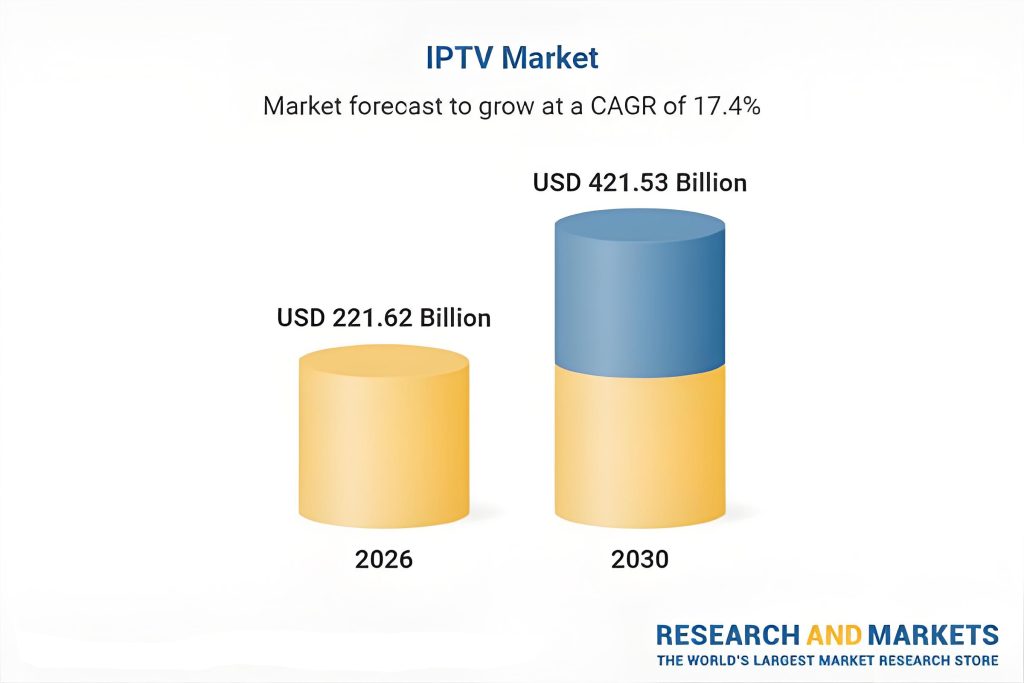
- Tendencia del mercado: Mercado global de IPTV desde 189.250 millones de dólares (2025) a $ 421,53 mil millones (2030), Tocón 17.4%
- Impacto: Alto ancho de banda, Los PCB de baja latencia son esenciales
5.5 Sistemas digitales de señal mixta de alta velocidad
- Campos: imagen médica, inspección industrial de alta frecuencia, terminales de comunicaciones militares
- Requisito: Coexistir 10+ Señales digitales de Gbps con señales de RF en el rango de GHz
6. Clasificación científica (para IPC‑2221)
| Dimensión de clasificación | Categoría | Base |
|---|---|---|
| Sistema de materiales | PCB dieléctrico mixto | RO4350B + FR‑4 |
| Característica de frecuencia | RF / PCB de microondas | Hasta 30GHz |
| Recuento de capas | 6tablero multicapa de ‑capas | 6 capas conductoras |
| Dificultad técnica | Laminación híbrida HDI | Coincidencia de materiales sin expansión |
| Solicitud | PCB de comunicación RF | infraestructura de telecomunicaciones |
| Clase de rendimiento IPC | Clase IPC‑6012 3 | Equipos de alta confiabilidad |
7. Materiales en detalle
7.1 Laminado de alta frecuencia RO4350B
- Hidrocarburo reforzado con vidrio + relleno cerámico
- Dk: 3.48±0,05 a 10 GHz, coeficiente de temperatura ~ -50 PPM/℃ (-50℃ a +150℃)
- df: 0.0037@10ghz
- CTE del eje Z: 32 ppm/℃: coincide con el cobre para brindar confiabilidad de PTH
- Conductividad térmica: 0.69 W/m·K (VS. FR‑4 0,25–0,35)
- UL 94 V‑0 – adecuado para diseños RF activos y de alta potencia
- Compatibilidad de procesos: Mismo procesamiento FR‑4; no se necesita ningún tratamiento previo especial (a diferencia del PTFE)
7.2 Laminado de vidrio epoxi FR‑4
- Tejido de vidrio tejido + resina epoxídica
- Dk: 4.2–4,8 (1MHz-1GHz), df: 0.020–0,025
- Costo: 1/5 a 1/10 de RO4350B
7.3 Bondply de alta frecuencia RO4450™
- Capa de unión entre RO4350B y FR‑4
- Dk: 3.52±0,05 a 10 GHz (transición de gradiente)
- df: 0.0040@10ghz
7.4 Acabado superficial ENIG (Oro de inmersión de níquel químico)
- Espesor del níquel: 3–6 μm (Clase IPC‑4552 2)
- Espesor del oro: 0.05–0,10 µm
- Ventajas: Soldabilidad, llanura, resistencia a la oxidación, ensamblaje BGA de paso fino
- Estándar: IPC-4552
8. Especificaciones de rendimiento
8.1 Rendimiento eléctrico
| Parámetro | Valor | Método de prueba |
|---|---|---|
| Impedancia característica (capas de radiofrecuencia) | 50Ω ±5% (personalizable) | IPC-2141A |
| Dk (Capas de RF a 10 GHz) | 3.48±0,05 | IPC‑TM‑650 2.5.5.5 |
| Pérdida de inserción | 0.31 dB/cm@40GHz | Línea microstrip VNA |
| Rigidez dieléctrica | ≥40kV/mm | IPC‑TM‑650 2.5.6 |
| Resistencia de aislamiento | >10⁹ Oh (condición normal) | IPC‑TM‑650 2.5.17 |
| Tensión soportada | 1000 VCC, 60No hay avería | IPC‑TM‑650 2.5.7 |
8.2 Rendimiento mecánico
| Parámetro | Valor | Método de prueba |
|---|---|---|
| Tolerancia de espesor | ± 10% | IPC-6012 |
| Estabilidad dimensional | <0.3 mmm | IPC‑TM‑650 2.2.4 |
| Fuerza de pelado (1onzas de cobre) | ≥1,0N/mm | IPC‑TM‑650 2.4.8 |
| Resistencia a la flexión | ≥350MPa | IPC‑TM‑650 2.4.4 |
| Fuerza de extracción de la almohadilla | ≥5,0 kg/cm² | IPC‑TM‑650 2.4.21 |
8.3 Rendimiento térmico
| Parámetro | Valor | Método de prueba |
|---|---|---|
| tg (Zona FR‑4) | ≥150℃ (TG150) | IPC‑TM‑650 2.4.25 |
| Estrés térmico | 288℃, 10s× 5 ciclos | IPC‑TM‑650 2.4.13 |
| Ciclismo térmico | -55℃↔ 125℃, 1000 ciclos, Sin delaminación | IPC‑TM‑650 2.6.7 |
| Reflujo sin plomo | 260℃, 5 ciclos | IPC/JEDEC J‑STD‑020 |
| Nivel de sensibilidad a la humedad | MSL 1 | IPC/JEDEC J‑STD‑020 |
8.4 Certificaciones de confiabilidad
- Clase IPC‑6012 3 – equipos de alta confiabilidad
- IPC-6018B – calificación para alta frecuencia (microonda) PCB
- UL 94 V‑0
- MIL‑PRF‑31032 - 1000 ciclos térmicos de -55 ℃ a 125 ℃
100% prueba eléctrica de sonda voladora + AOI. El producto final cumple con la clase IPC‑A‑600 3.
9. Características estructurales
Construcción híbrida asimétrica de 6 capas:
- L1‑L2 (RO4350B): Interfaz de RF (Pensilvania, LNA, filtros) – zona crítica de integridad de la señal
- L3 (transición): Adaptación de impedancia y cambio de capa de señal: aísla la RF de la señal digital de alta velocidad
- L4-L6 (FR‑4): Gestión de energía, controles digitales, soporte mecánico – circuitos convencionales de bajo coste
Acabado ENIG: La superficie plana garantiza un control de impedancia constante. Soporta BGA, QFN, paquetes de tono fino. La capa de oro protege el cobre y garantiza la soldabilidad después de un almacenamiento prolongado..
Perforación de precisión & PTH: Diámetro mínimo del orificio mecánico 0,25 mm. (Microvías HDI de hasta 0,1 mm disponibles). Grosor del cobre del agujero ≥20μm (Clase IPC 3). Tratamiento con plasma con diferentes mezclas de gases para capas RO4350B y FR‑4.
10. Flujo del proceso de fabricación
18 pasos clave:
① IQC → ② Imagen de la capa interna (RF y digital por separado) → ③ Óxido marrón → ④ Activación por plasma de prelaminación → ⑤ Laminado híbrido → ⑥ Laminación de alta presión (curva de presión dinámica) → ⑦ Perforación objetivo con rayos X → ⑧ Perforación mecánica (0.25mm min) → ⑨ Desmechado de plasma (ciclo dual) → ⑩ Cobre químico → ⑪ Imagen de la capa exterior → ⑫ Recubrimiento de patrón (cobre + estaño) → ⑬ Grabado de la capa exterior (tira de estaño) → ⑭ AOI → ⑮ Máscara de soldadura → ⑯ ENIG → ⑰ Prueba eléctrica → ⑱ Inspección final/embalaje
Detalles críticos del proceso:
- Plasma de prelaminación (paso 4): CF₄‑N₂‑O₂ para FR‑4; helio (Él) para RO4350B
- Curva de laminación (paso 6): Presión dinámica: el FR‑4 cura primero (~ 180 ℃), luego la presión y la temperatura aumentan a >200 ℃ para RO4350B
- Perforación (paso 8): El avance por pasos y la gestión de la vida útil de la herramienta manejan la diferencia de dureza
- desmechar & PTH (pasos 9‑10): Proceso de doble ciclo debido a diferentes comportamientos químicos; agujero de cobre ≥20μm
11. Ventajas competitivas
Equilibrio costo-rendimiento: Costos del material All-RO4350B de 6 capas >$200/m². Híbrido usa RO4350B solo en 25% de espesor →30-40% de reducción de costos de materiales.
Fiabilidad: RO4350B CTE del eje Z = 32 ppm/℃ coincide con el cobre (17 PPM/℃). Full FR‑4 tiene 50‑70 ppm/℃. El híbrido reduce el estrés por PTH. Pases 1000 ciclos -55 ℃ a 125 ℃ (IPC‑TM‑650 2.6.7).
Estabilidad dimensional: El CTE bajo reduce la deformación, mejora el rendimiento SMT.
| Dirección | RO4350B CTE | FR-4 CTE (típico) |
|---|---|---|
| Eje X | 10 PPM/℃ | 14 PPM/℃ |
| Eje Y | 12 PPM/℃ | 16 PPM/℃ |
| Eje Z | 32 PPM/℃ | 50-70 ppm/℃ |
contra. PTFE completo (p.ej., Rogers RT/Duroid):
| Característica | RO4350B+FR‑4 híbrido | PTFE completo |
|---|---|---|
| Compatibilidad de procesos | Línea FR‑4 estándar | Equipo especial & tratamiento |
| metalización de PTH | Estándar | Naftaleno de sodio o plasma |
| Estabilidad dimensional | Excelente (reforzado con vidrio) | Pobre, fluye |
| Costo | 30-50% menos | Alto |
12. Resumen & Guía de consulta
La PCB híbrida de alta frecuencia de comunicación de 6 capas de UGPCB es la interconexión ideal para sistemas de señal mixta digital/RF. Sirve estaciones base 5G, Cargas útiles de satélite en banda Ka, 77radar automotriz GHz, y aplicaciones digitales de alta velocidad. Colocando RO4350B solo en las capas críticas de RF, logramos un rendimiento óptimo a un costo significativamente menor.
Resumen de datos clave:
✅Dk = 3.48 ± 0.05 @10ghz (oficial de rogers)
✅Df= 0.0037 @10ghz
✅ CTE del eje Z = 32 PPM/℃ (coincide con el cobre)
✅ Pérdida de inserción ≤ 0.31 dB/cm@40GHz (IPC‑6018B verificado)
✅30-40% de reducción de costos de materiales VS. material totalmente de alta frecuencia
✅ Pases 1000 ciclos térmicos -55 ℃ ↔ 125 ℃
Oferta de creación de prototipos por tiempo limitado
📩 Obtenga su cotización personalizada y propuesta técnica
La UGPCB ofrece una 7-servicio de turno rápido en días laborables para 4 a 10 capas PCB híbridos. Proporcionamos análisis DFM gratuito.
👉 Envíe sus archivos Gerber y diseño de stackup a nuestro correo electrónico de soporte técnico. Le responderemos con una evaluación técnica y una cotización precisa dentro de 4 horas.
UGPCB – Su fabricante de PCB híbrido de alta frecuencia de confianza. Del prototipo a la producción en volumen, Ofrecemos soluciones dieléctricas mixtas integrales de 6 capas para acelerar sus productos de radar 5G y de ondas milimétricas..
*Fuentes de datos: Hoja de datos de Rogers Corporation RO4350B™, Estándares IPC‑6012D/6018B, Métodos de prueba IPC‑TM‑650, GSMA 2026 perspectiva de las telecomunicaciones, SMI 2025 Informe técnico del Simposio Internacional de Microondas.*