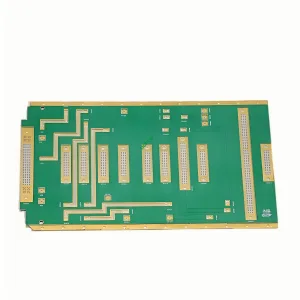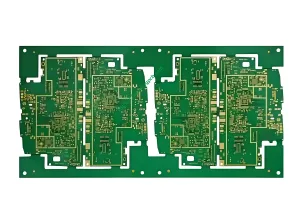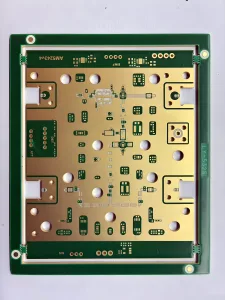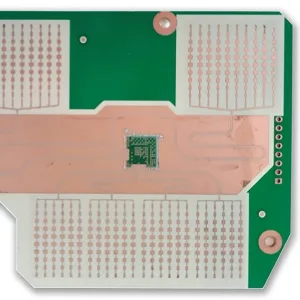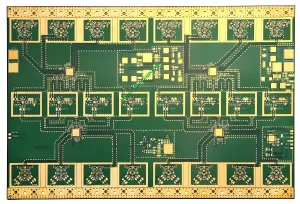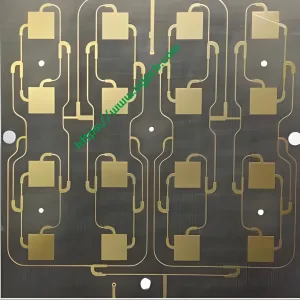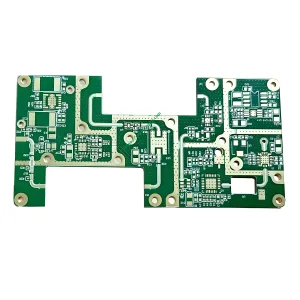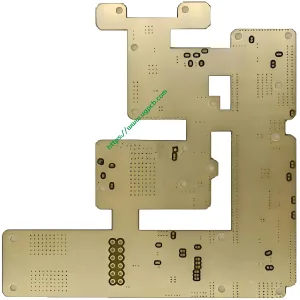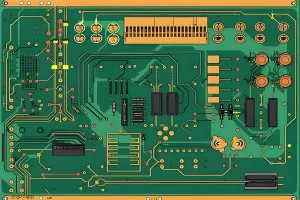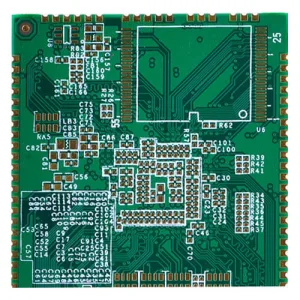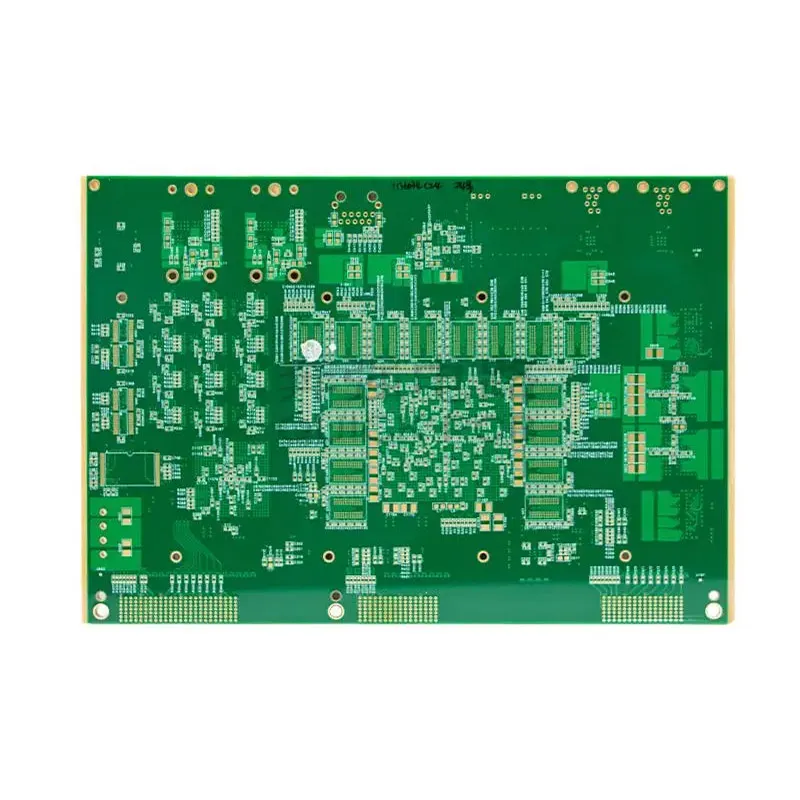
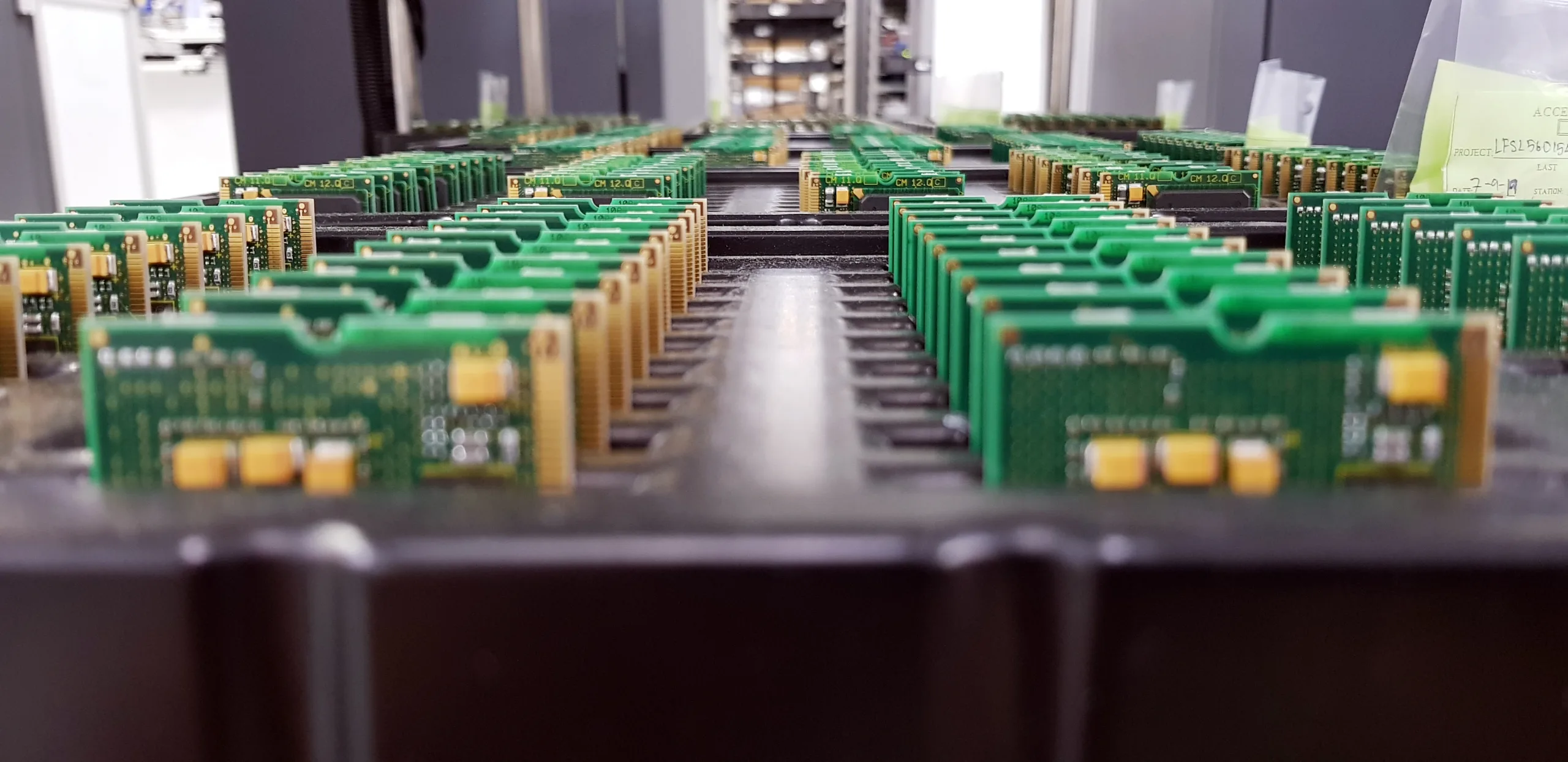
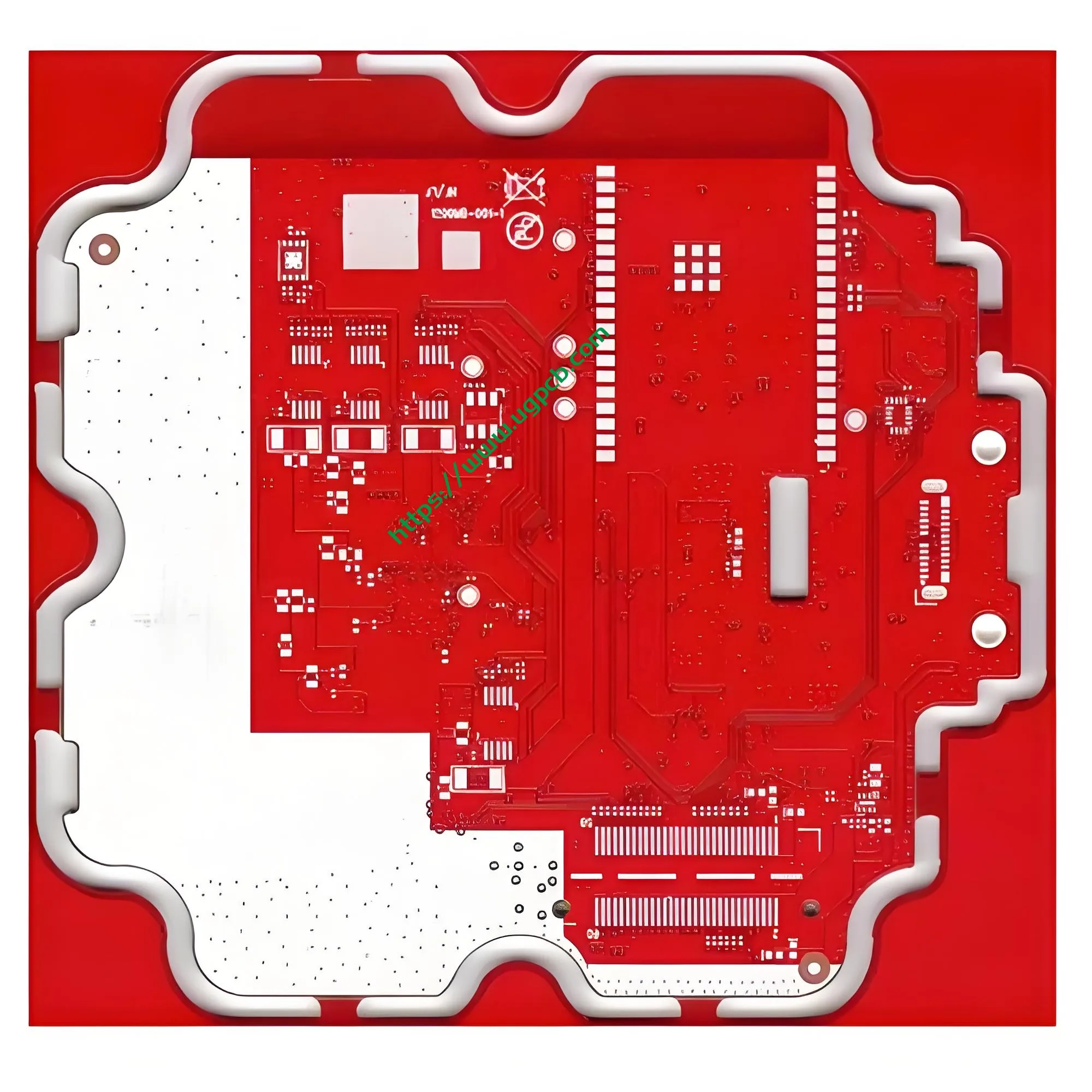
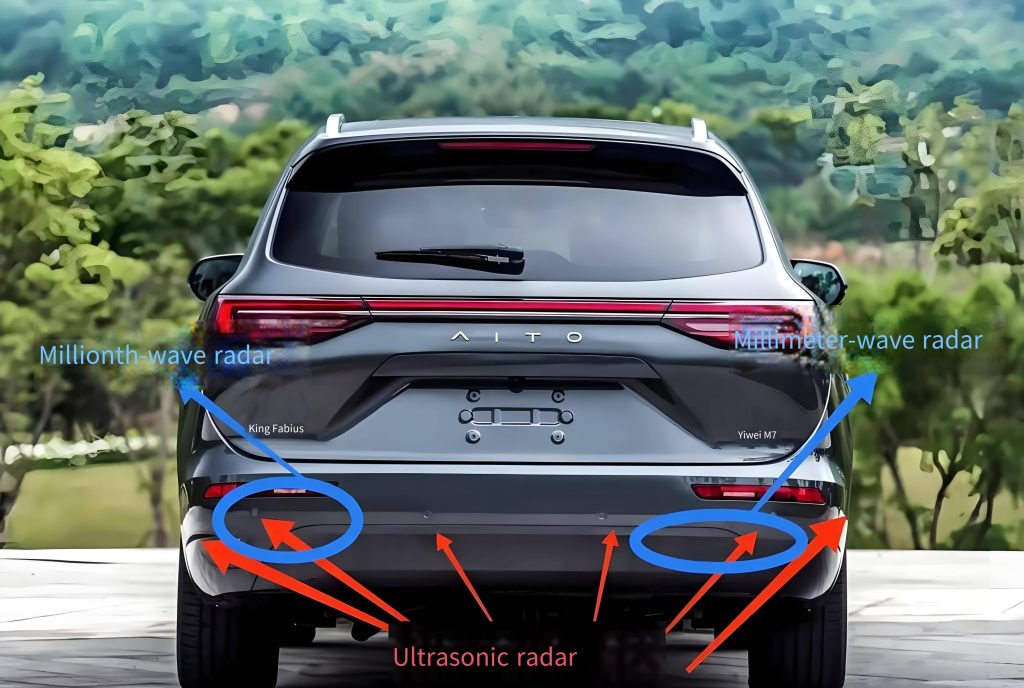
A medida que la tecnología de conducción autónoma L2+ a L4 crece rápidamente, cada vehículo ahora necesita 5 a 8 Unidades de radar de onda milimétrica. El antiguo número era sólo 1 a 3. El radar mmWave de 77 GHz ofrece mayor resolución y menor tamaño. Se convierte en el sensor central de los sistemas avanzados de asistencia al conductor. (ADA).
Sin embargo, 77Las señales de GHz enfrentan un gran desafío en PCB estándar. El material FR-4 normal tiene un factor de pérdida (df) de aproximadamente 0.02. eso no es aceptable. Debemos utilizar materiales de alta frecuencia con bajas pérdidas y laminación híbrida precisa..
UGPCB sigue estándares líderes en la industria. Lanzamos la placa de radar UGPCB Rogers RO4835 77G mmWave. Esta es una alta frecuencia profundamente optimizada. PCB híbrido para la banda de 77GHz. Garantiza la integridad de la señal y reduce en gran medida los costos de material..
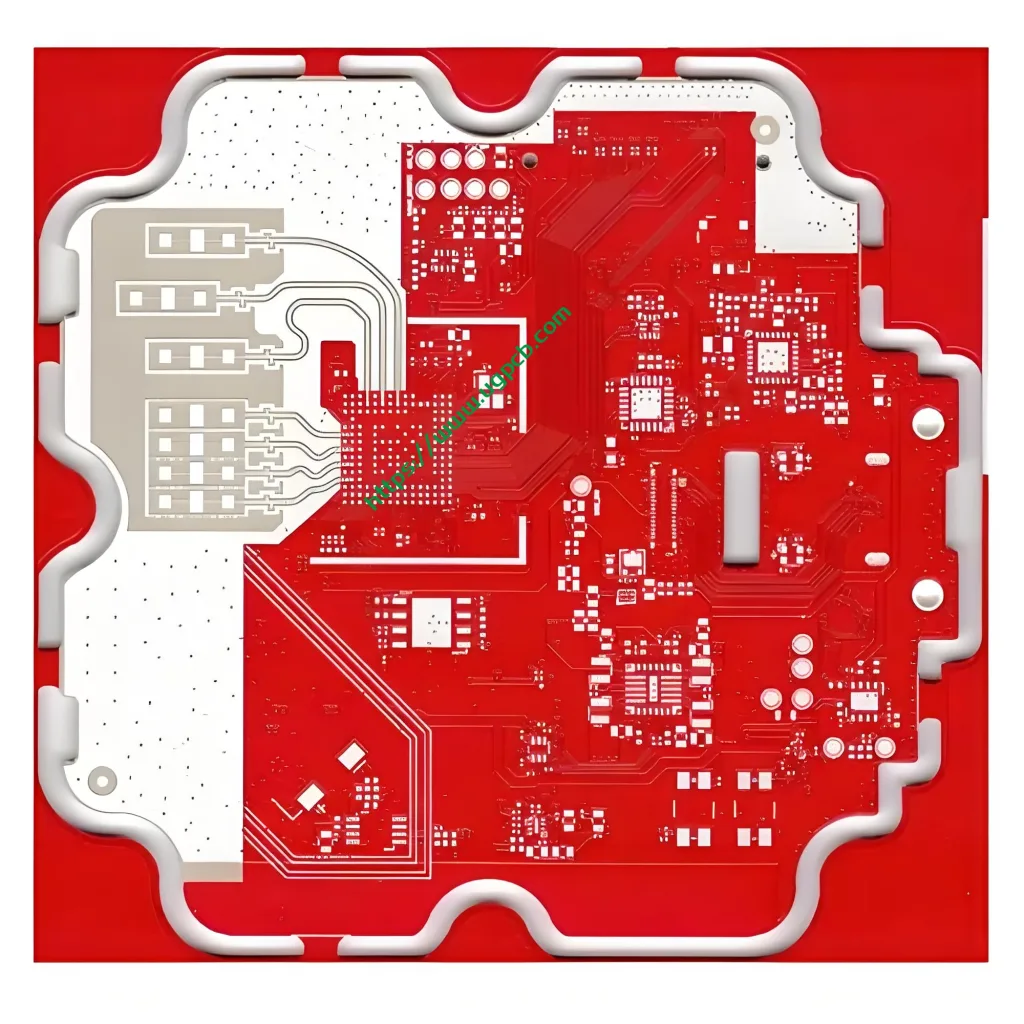
Descripción general del producto | Parámetros clave de la PCB de radar de onda mm de 77G
Usos de la PCB de radar 77G mmWave de UGPCB ROGERS RO4835 material de alta frecuencia y solución híbrida FR-4. Este rígido de 6 capas PCB de alta frecuencia está especialmente diseñado para antenas de radar mmWave y frontales de RF.
Principales parámetros técnicos. (datos basados en la hoja de datos oficial de Rogers y los métodos de prueba estándar del IPC):
| Parámetro | Valor | Estándar de prueba / Nota |
|---|---|---|
| Material del tablero | ROGERS RO4835 (capa de alta frecuencia) + FR-4 (capa híbrida) | - |
| Constante dieléctrica (Dk) | 3.48 ± 0.05 @10ghz | IPC-TM-650 2.5.5.5 |
| Factor de disipación (df) | 0.0037 @10ghz | Hoja de datos de Rogers (corregido) |
| Espesor dieléctrico | 4mil (0.1milímetros) | - |
| Número de capas | 6 capas | - |
| Grosor total del tablero | 1.2milímetros | - |
| Espesor de cobre | 1onz (35μm) interno & exterior | - |
| Vía proceso | Taponamiento de resina | - |
| Acabado superficial | ACEPTAR (Oro de inmersión de níquel químico) | - |
| Conductividad térmica | 0.69 W/m·K | Norma ASTM D5470 |
| Pérdida (df) | 0.0037 @10ghz | Consistente con lo anterior |
Estos parámetros muestran una pérdida dieléctrica muy baja y una tolerancia Dk estable.. La PCB híbrida de alta frecuencia cumple totalmente con los requisitos de transmisión de ondas mm de 77 GHz..
Definición | ¿Qué es una PCB de radar de onda mm de 77 GHz??
Una PCB de radar mmWave de 77 GHz es una placa de circuito impreso especialmente diseñada para módulos de radar mmWave que funcionan a 77 GHz.. Este tipo de tarjeta de circuito impreso debe tener Dk bajo, bajo gl, alta estabilidad dimensional, y excelente gestión térmica.
La placa de radar Rogers RO4835 77G mmWave de UGPCB utiliza RO4835 en la capa central de RF. Utiliza FR-4 rentable en otras capas.. Esto crea una solución típica de PCB híbrida de alta frecuencia.. La solución protege la integridad de la señal mmWave y controla bien el costo total. Es una opción ideal para radar delantero., radar de esquina, y radar de imágenes 4D.
Puntos clave del diseño | Consideraciones principales para PCB de radar mmWave
77GHz es una frecuencia operativa típica en la banda mmWave. En esta frecuencia, El diseño de PCB debe seguir estrictamente reglas de alta frecuencia.
1. Control de impedancia
La cadena de RF (antena, transceptor, filtrar) en un circuito de 77 GHz utiliza una línea base de impedancia característica de 50 Ω. Los ingenieros utilizan herramientas de cálculo de impedancia como Polar SI9000. Ajustan con precisión el ancho de línea, espesor dieléctrico, y grosor de cobre. El objetivo es una tolerancia de ±5 % para 50 Ω de un solo extremo y 100 Ω diferenciales.. Para PCB de microondas de alta frecuencia, La industria requiere un control de impedancia mejor que ±5%. (eso significa 47,5–52,5Ω).
2. Selección de material
El FR-4 estándar tiene un Df de aproximadamente 0.02. Rogers RO4835 tiene un Df de sólo 0.0037 (@10ghz). La pérdida de transmisión de señal difiere en más de 5 veces. La elección incorrecta del material reduce drásticamente la distancia de detección del radar.
3. Diseño de estructura apilable
En el tablero de radar de 6 capas de UGPCB, Los rastros de señal de RF corren dentro del dieléctrico RO4835 entre la capa superior (L1) y L2. Las otras capas utilizan material FR-4.. Esto garantiza una transmisión con bajas pérdidas en las capas de señal.. Mientras tanto, Las capas FR-4 se encargan de la distribución de energía y el filtrado de señales.. Esta combinación se denomina diseño asimétrico para PCB híbridos de alta frecuencia..
4. Vía Diseño
77Las vías de señal de GHz necesitan una discontinuidad de impedancia controlada. UGPCB utiliza tapones de resina. Rellenamos vias con resina y aplanamos la superficie. Esto evita la reflexión de la señal y la pérdida causada por espacios de aire..
Principio de trabajo | ¿Cómo se transmite una señal de 77 GHz en la PCB??
En una línea de transmisión de PCB, La integridad de la señal de alta frecuencia depende de Dk y Df.. La placa de radar mmWave de 77 GHz utiliza la propiedad de bajo Df del RO4835. Las ondas electromagnéticas de alta frecuencia viajan en microstrip o stripline con muy poca pérdida de energía.
La antena irradia ondas de radar al espacio.. Luego, la antena receptora envía señales de eco al chip transceptor. (como NXP, Infineón, o chipset de radar TI 77GHz). La capa híbrida FR-4 proporciona señales de control de potencia y de baja velocidad.. Esto mantiene todo el módulo funcionando de manera estable en los sistemas ADAS..
UGPCB Capacidad de PCBA admite aún más el montaje y las pruebas de componentes. Ofrecemos una verdadera fabricación integral de módulos de radar..
Aplicaciones | Dónde utilizar la PCB de radar de onda mm de 77G
La placa de radar 77G mmWave de UGPCB se adapta a muchos campos:
- Radar delantero automotriz – para control de crucero adaptativo (Accidentista) y frenado automático de emergencia (AEB)
- Radar de esquina – para detección de puntos ciegos (BSD) y asistente de cambio de carril (LCA)
- 4radar de imágenes D – para resolución del ángulo de elevación y clasificación de objetivos
- Radar industrial de onda milimétrica – control de automatización, detección de nivel de material, monitoreo de seguridad
- V2X y tráfico inteligente – sensores de radar en unidades de carretera (RSU)
Clasificación | Categorización científica de PCB de radar de onda mm de 77G
Según los estándares de la industria y los sistemas de materiales., La placa de radar Rogers RO4835 77G mmWave de UGPCB tiene múltiples clasificaciones:
- Por sistema de materiales – Resina de hidrocarburo RO4835 + laminado de alta frecuencia relleno de cerámica (cumple con IPC-4103)
- Por estructura de fabricación – PCB híbrido de alta frecuencia (Capa RF RO4835, capa ordinaria FR-4)
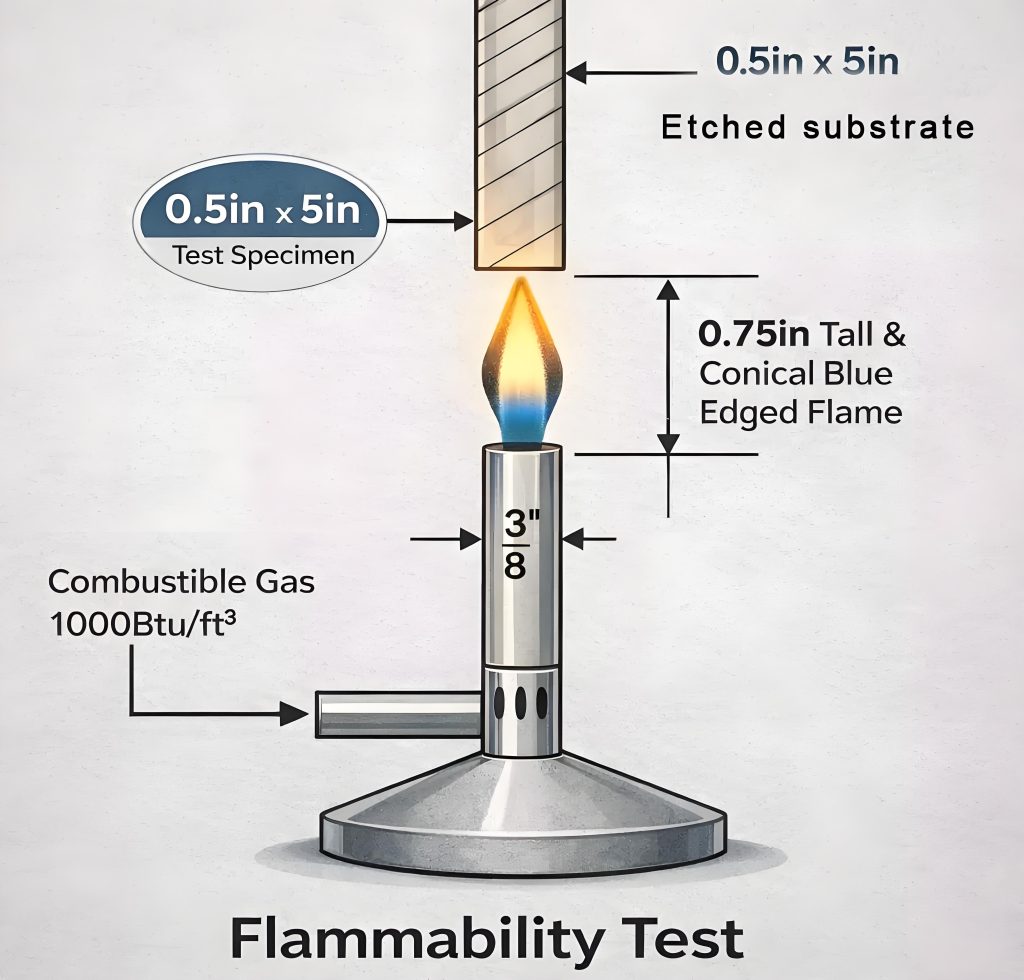
- Por clasificación de llama – UL 94 V-0 (se autoextingue dentro 10 segundos después de retirar la llama, ningún goteo llameante enciende el algodón)
- Por nivel de PCB – Rígido de 6 capas tablero multicapa
- Por acabado superficial - ACEPTAR (Oro de inmersión de níquel químico)
Nota de referencia: El laminado RO4835 cumple con la “Especificación para alta frecuencia” IPC-4103. (Microonda) Materiales base” y cumple con UL 94 V-0 calificación de llamas. PCB 94V-0 significa que el material se autoextingue dentro 10 Segundos después de retirar la fuente de llama., y ningún goteo ardiente enciende el algodón.
Materiales utilizados | Combinación científica de RO4835 y FR-4
UGPCB selecciona con precisión dos materiales complementarios para la placa del radar:
- ROGERS RO4835 – un laminado para microondas relleno de cerámica y resina de hidrocarburo. A 10GHz, Dk es 3,48±0,05 y Df es 0.0037. La resistencia a la oxidación es 10 veces mejor que los materiales termoestables tradicionales.
- FR-4 – un laminado de tejido de vidrio tejido epoxi ignífugo y rentable, UL 94 V-0 calificado. En el tablero híbrido, FR-4 maneja capas de energía, capas de tierra, y capas de señal de baja frecuencia.
Porque RO4835 y FR-4 tienen diferentes coeficientes de expansión térmica (CTE), la laminación requiere un perfil de calentamiento gradual y capas tampón preimpregnadas. Esto evita la deformación y la delaminación..
Actuación | Dieléctrico, Pérdida, y conductividad térmica: tres en uno
La placa de radar Rogers RO4835 mmWave de UGPCB sobresale en tres indicadores clave de rendimiento:
| Parámetro | Valor @10GHz | Estándar de prueba / Fuente |
|---|---|---|
| Constante dieléctrica (Dk) | 3.48 ± 0.05 | IPC-TM-650 2.5.5.5 |
| Factor de disipación (df) | 0.0037 | Ficha técnica oficial de Rogers |
| Conductividad térmica | 0.69 W/m·K | Norma ASTM D5470 |
| Clasificación de llama | UL 94 V-0 | Certificación UL |
| Mejora de la oxidación | 10x mejor que el termoestable tradicional | Hoja de datos de Rogers RO4835 |
Este material tiene un coeficiente de temperatura Dk de aproximadamente 50 ppm/°C de -50°C a 150°C. Su CTE del eje Z es 31 ppm/°C. Esto significa que la placa de radar 77G mmWave mantiene la estabilidad de fase en el amplio rango de temperatura del automóvil..
Estructura | Diseño fino de apilamiento híbrido de 6 capas
Apilamiento típico de PCB híbrido de alta frecuencia de 6 capas de UGPCB:
| Capa | Cobre | Material | Función |
|---|---|---|---|
| L1 (Arriba) | 1onz | RO4835 | Señal: trazas de RF de 77 GHz (microtira) |
| L2 | 1onz | RO4835 | Tierra: tierra de referencia de RF completa |
| Dieléctrico | - | RO4835 (4mil/0,1 mm) | Medio de bajas pérdidas |
| L3 | 1onz | Transición RO4835/FR-4 | Línea de banda RF / distribución de energía |
| L4-L6 | 1onz | FR-4 | señal convencional & capas de alimentación |
Esta estructura garantiza que las señales de RF viajen entre L1 y L2 utilizando baja Dk., material de bajas pérdidas. La parte FR-4 maneja la lógica del sistema y la integridad de la energía..
Características | Ventajas únicas de la PCB de radar de onda mm de 77G
- Estabilidad a la oxidación – Ofertas RO4835 10 veces mejor resistencia a la oxidación que los materiales termoestables tradicionales. Esto prolonga enormemente la vida útil de la placa de radar en entornos automotrices hostiles..
- Diseño de baja pérdida de inserción – Df=0,0037 garantiza una atenuación controlable para la transmisión de señales de larga distancia de 77 GHz.
- Compatible sin plomo – Totalmente compatible con RoHS, admite soldadura por reflujo sin plomo.
- Alta confiabilidad de PTH – RO4835 proporciona confiabilidad de orificio pasante chapado de alta calidad en placas multicapa, sin ampollas ni delaminación.
- Reducción de costes con el híbrido FR-4 – El diseño híbrido reduce el costo total del material en 30% a 60%, mejorando significativamente el valor del proyecto.
- superficie ENIG – El oro por inmersión en níquel no electrolítico garantiza la confiabilidad de la soldadura y la viabilidad de la unión con alambre de oro..
Proceso de fabricación | Precisión desde el material hasta el tablero terminado
UGPCB sigue un estricto proceso híbrido de alta frecuencia para placas de radar 77G mmWave:
- Preparación de materiales – Limpie y hornee el material de alta frecuencia RO4835 y los sustratos FR-4 para mantener una baja absorción de humedad..
- Circuito de capa interior – Utilice alta precisión LDI exposición y grabado fino para capas de señal de alta frecuencia L1-L2. Control del ancho de línea mejor que ±8μm.
- inspección AOI – La inspección óptica completamente automática garantiza que no haya defectos en los patrones de las capas internas..
- Laminación – Utilice un perfil de presión y calentamiento gradual con capas tampón preimpregnadas. Esto libera la tensión de desajuste del CTE y previene la delaminación y la deformación..
- Perforación – Optimice los parámetros de perforación por separado para RO4835 y FR-4. Utilice alimentación baja, alta velocidad, más desmechado con plasma.
- Taponamiento de resina – Rellenar todas las vías con resina y aplanar..
- Patrón de capa exterior y revestimiento. – Placa exterior de cobre a 1oz., luego grabar los rastros finales.
- Acabado superficial ENIG – Oro por inmersión en níquel no electrolítico, El espesor cumple con la clase IPC 2/3.
- prueba de impedancia - 100% La prueba TDR verifica una impedancia de 50 Ω con una precisión del ±5 % en cada placa.
- Inspección final y prueba eléctrica. – La prueba de sonda voladora más la inspección visual garantizan el rendimiento eléctrico.
Escenarios de uso | Implementación de la placa de radar UGPCB en sistemas reales
La PCB de radar 77G mmWave de UGPCB se puede implementar directamente en estos módulos de radar típicos:
- Tablero principal del radar delantero – Integra la capa de antena Rogers RO4835 con chip RF y MCU, respaldado por el servicio integral de ensamblaje de PCBA de UGPCB.
- Módulo de antena de radar de esquina – El híbrido RO4835+FR4 proporciona una detección lateral estable al menor coste.
- 4radar de imágenes D – El apilamiento híbrido de alta frecuencia multicapa admite conjuntos de antenas MIMO multicanal.
- Sensores de radar industriales – Adecuado para aplicaciones de alta frecuencia no automotrices, como AGV de almacén inteligentes y radares de seguridad..
Por qué elegir UGPCB? – Obtenga su cotización ahora
como profesional fabricación de PCB y proveedor de servicios PCBA, UGPCB ofrece garantías únicas:
- Experiencia híbrida de alta frecuencia – Línea de producción dedicada para Rogers, PTFE y otros materiales de alta frecuencia híbridos con FR-4 para producción en volumen.
- Alta precisión – Control de ancho de línea dentro 10%, 100% Pruebas TDR, precisión de impedancia ±5%.
- Sistema de calidad de grado automotriz – Conozca la IATF 16949 requisitos de certificación automotriz.
- Servicio de giro rápido – Muestras entregadas en 7-10 días para iteración rápida.
- PCBA todo en uno – Servicio completo desde la producción de placas de radar hasta el montaje de componentes y pruebas funcionales..
👉 Para prototipos de PCB de radar 77G mmWave o producción en masa, contáctanos ahora. El equipo técnico de UGPCB ofrece revisión DFM gratuita y asesoramiento sobre optimización del diseño de impedancia. Envía tus archivos Gerber y requerimientos técnicos. Proporcionaremos los precios y plazos de entrega de PCB híbridos de alta frecuencia más competitivos.
Obtenga su cotización ahora → Formulario de consulta rápida de UGPCB
Conclusión
En 2026, a medida que la conducción autónoma y la IA se fusionan rápidamente, El radar mmWave de 77 GHz se convierte en la base fundamental de la percepción inteligente de los vehículos.. UGPCB confía en la baja pérdida y la alta resistencia a la oxidación de Rogers RO4835. Lo combinamos con la estructura de costos flexible de FR-4. El resultado es una solución de PCB híbrida de alta frecuencia que realmente equilibra el rendimiento y la producción en masa..
Para obtener la hoja de datos completa o soporte de diseño técnico, por favor visite el sitio web de UGPCB. Nuestros ingenieros de aplicaciones de RF lo ayudarán desde el diseño del diseño hasta la producción en masa de la placa de radar..
Aviso de derechos de autor: Todos los parámetros técnicos de este documento provienen de las hojas de datos oficiales de Rogers y de los estándares industriales IPC disponibles públicamente.. Nuestros ingenieros superiores han verificado los datos para garantizar la precisión.. UGPCB se reserva el derecho de interpretación final de este documento..