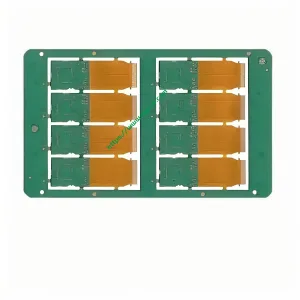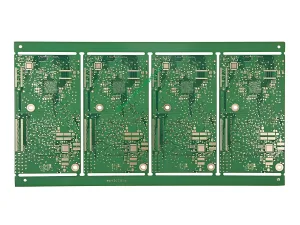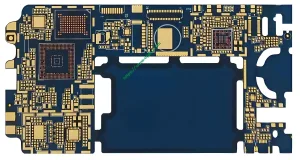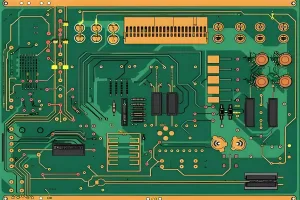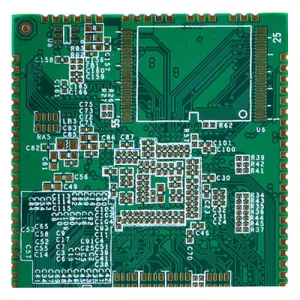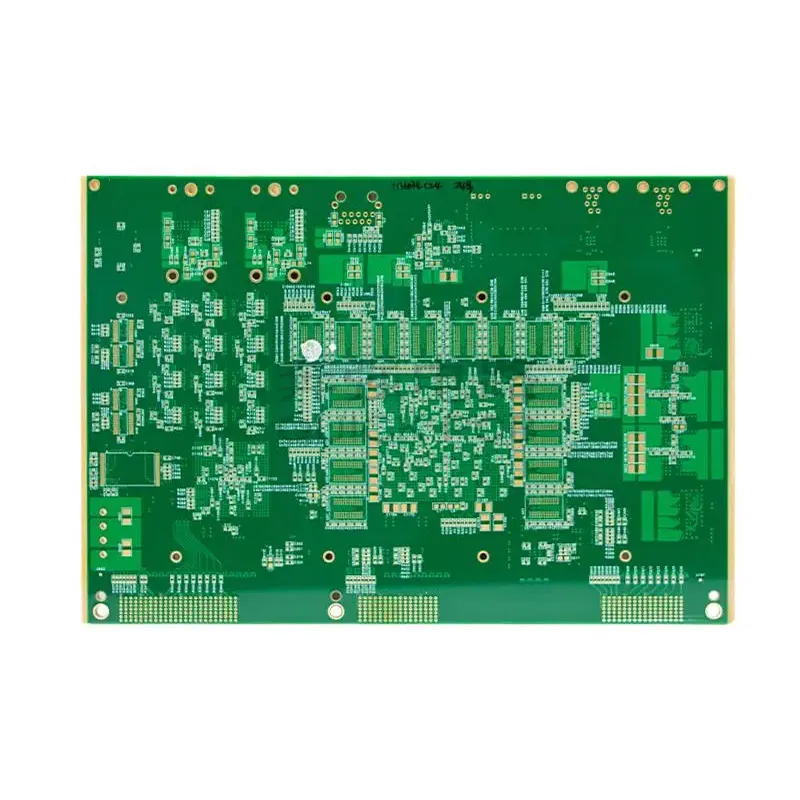

제품개요: What Is a 10-Layer 3-Stage HDI PCB?
A 10-layer 3-stage HDI PCB is a high-density interconnect printed circuit board. It uses three sequential lamination cycles and three laser drilling steps. The 3+N+3 stackup has three build-up layers on each side. The middle N section contains four core layers. Total layer count is ten. This structure enables high-density routing and reliable signal transmission.

IPC-2226 defines this 3+N+3 structure as Type III HDI. 메모: Some older sources call 3+N+3 Type II. That label is incorrect. IPC-2226 defines Type III for 3+N+3.
The electronics industry keeps shrinking devices. 전통적인 PCB technology is near its physical limits. HDI technology solves this problem. It packs more routing into less space. 결과적으로, HDI PCB power modern high-end electronics.
핵심 사양
| 매개 변수 | 사양 |
|---|---|
| 레이어 수 / 단계 | 10 레이어 / 3-단계 (3+n+3) |
| 기본 재료 | FR4 Tg170 (IPC-4101) |
| 보드 두께 | 1.2 mm |
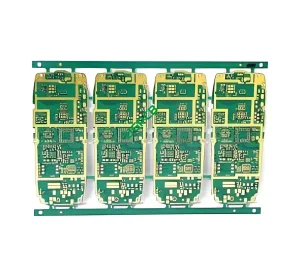
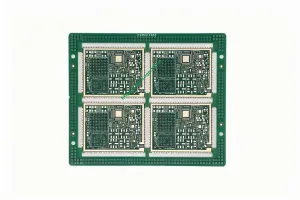
| 패널 크기 | 126 × 118 mm / 4-위로 |
| 외부 구리 두께 | 35 μm (대략. 1 온스) |
| 내부 구리 두께 | 18 μm (대략. 0.5 온스) |
| 최소 관통 구멍 | 0.20 mm |
| Minimum blind via | 0.10 mm |
| 최소 BGA | 0.25 mm |
| 선 너비 및 간격 | 2.8/3.2 밀 (0.071/0.081 mm) |
Industry Standard Classification: HDI Types Under IPC-2226
IPC-2226 defines HDI types by build-up layers per side.
| HDI 유형 | 스택업 | Build-Up Layers Per Side | IPC-2226 Status |
|---|---|---|---|
| I 형 I | 1+N+1 | 1 | Standard type |
| II 형 | 2+n+2 | 2 | Standard type |
| III 형 | 3+n+3 | 3 | Standard type |
| 엘릭 | Any-layer | 3+ | Industry term, not an IPC-2226 type |
This product is IPC-2226 Type III. It uses 3+N+3. 지원합니다 0.25 mm BGA pitch. It also supports 0.10 mm blind vias.

IPC-T-50M defines a microvia as a blind via with:
- Diameter ≤ 0.15 mm
- Aspect ratio ≤ 1:1
- Depth ≤ 0.25 mm
UGPCB 0.10 mm blind via meets this definition.
Stackup Structure: Engineering Logic of 3+N+3
The 3+N+3 stackup uses three build-up layers on each side. For a 10-layer board, N equals 4. The full stackup is 3+4+3.
- Outer layers: three signal layers on each side.
- Middle layers: four core layers.
- Inner layers: power and ground planes.

This arrangement supports high-speed signals and stable power delivery.
Key design points:
- 신호 무결성: 제어 50 Ω single-ended impedance. 제어 90 ω와 100 Ω differential impedance.
- Power distribution: Use split power and ground planes. Keep inner copper at 18 μm or higher.
- Microvia design: Follow IPC-2226. Keep microvia aspect ratio at or below 1:1.
- BGA fanout: 지원하다 0.25 mm BGA pitch. This pitch suits advanced packages.
작동 방식: Microvia Technology for High-Density Interconnect
HDI PCBs use microvias instead of through holes. A microvia connects only the layers that need a connection. This design frees routing space.
UGPCB builds this 10-layer 3-stage HDI PCB in three stages.
- 단계 1: Laser drills form blind vias between L1-L2 and L9-L10.
- 단계 2: Laser drills form blind vias between L2-L3 and L8-L9.
- 단계 3: Laser drills form blind vias between L3-L4 and L7-L8.
Three lamination cycles build all microvia layers. This process creates a true 3D interconnect structure.
Reliability matters. IPC-6012 클래스 3 최소한의 요구 사항 20 μm copper in holes. It also requires an average of 25 μm. Plating must reach the bottom of each blind via. Engineers control aspect ratio to prevent voids.
Key Materials and Performance
FR4 Tg170 Base Material
이 제품은 FR4 Tg170 laminate. It meets IPC-4101. Tg means glass transition temperature. Tg170 means the material stays rigid below 170°C.
High-Tg materials offer key benefits:
- Thermal reliability: Z-axis CTE is about 45–55 ppm/°C below Tg. IPC-4101 sets a maximum of 60 ppm/°C for many high-Tg FR4 grades.
- 납땜 가능성: The material withstands lead-free reflow. Peak temperature reaches about 260°C.
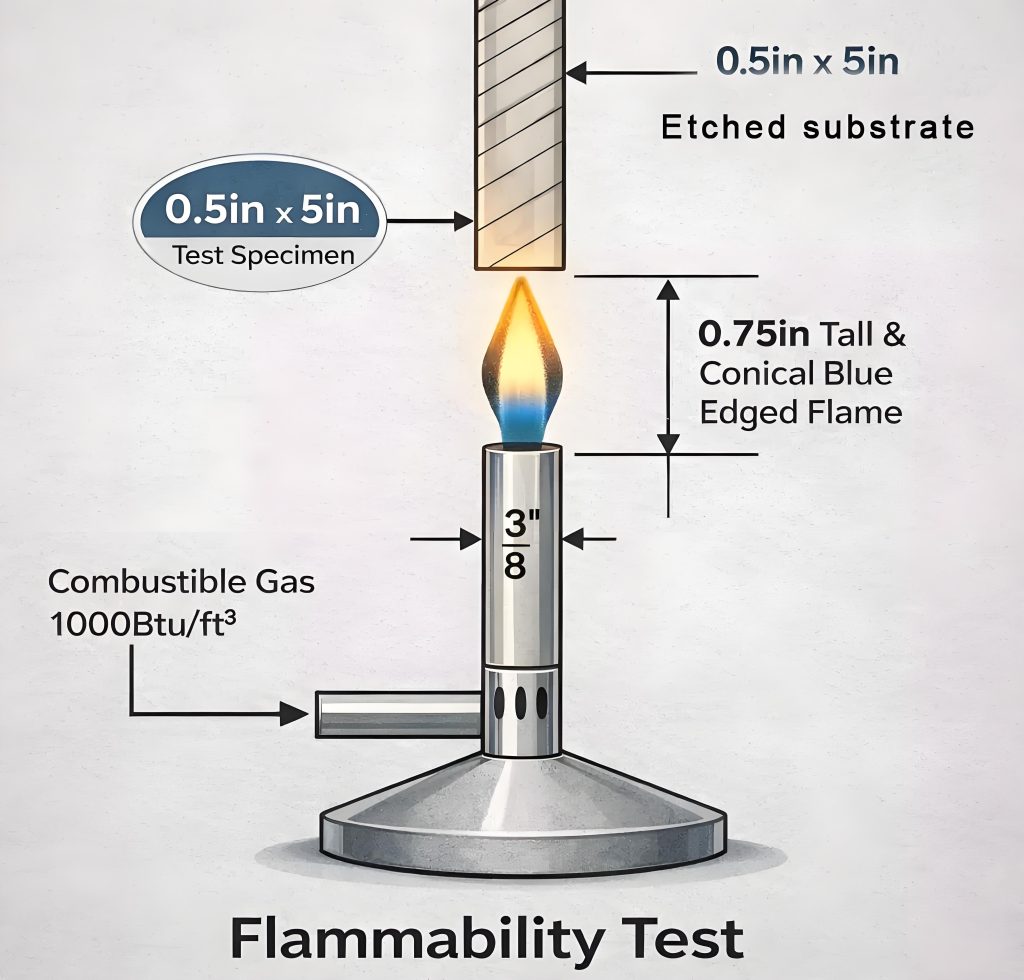
- 화염등급: FR4 meets UL94 V-0. It self-extinguishes within 10 초. It does not produce flaming drips that ignite cotton.
구리 두께
- Outer copper: 35 μm, ~에 대한 1 온스. It carries current and spreads heat.
- 내부 구리: 18 μm, ~에 대한 0.5 온스. It supports fine-line etching.
Line Width and Spacing
이사회는 다음과 같은 목표를 달성합니다. 2.8/3.2 mil line width and spacing. That equals 0.071/0.081 mm. This range falls into fine-line PCB 설계.
IPC-2221B requires 0.10 mm minimum spacing for external uncoated conductors at 0–15 V. This product’s 3.2 mil spacing is close to that limit. It demands tight etching control and high-precision AOI.
제조공정: From Core to Finished HDI PCB
UGPCB follows a multi-stage sequential lamination process.
단계 1: 코어 제작
The process starts with double-sided copper-clad laminate. Mechanical drilling forms through holes down to 0.20 mm. 도금, 이미징, and etching form inner-layer circuits.
단계 2: First Build-Up Lamination and Laser Drilling
The team stacks prepreg and copper foil on both sides. A high-temperature press bonds the layers. A UV laser drills 0.10 mm blind vias. Plating fills the vias and forms L1-L2 interconnects.
단계 3: Second Build-Up Lamination and Laser Drilling
The team repeats lamination, 레이저 드릴링, 그리고 도금. This step forms L2-L3 interconnects.
단계 4: Third Build-Up Lamination and Laser Drilling
The team completes the third build-up. This step forms L3-L4 interconnects. All ten layers now have interconnections.
단계 5: Outer Patterning and Finishing
The process forms outer circuits with 2.8/3.2 mil line width and spacing. Then comes solder mask, 표면 마감, and routing. Surface finish options include ENIG, OSP, 무연 HASL. Final checks include AOI, 엑스레이, 비행 프로브 테스트.
Applications of 10-Layer 3-Stage HDI PCB
5G Communication Equipment
5G smartphones need high routing density. The 10-layer 3-stage HDI PCB supports 0.25 mm BGA and mmWave modules. UGPCB’s HDI PCB solutions serve this market.
AI Servers and High-Performance Computing
AI servers use FPGAs and GPUs with high pin counts. A 10-layer 3-stage HDI PCB provides fine lines and small vias. It supports high-speed interconnects.
자동차 전자
Advanced driver-assistance systems use radar, LIDAR, and domain controllers. These systems need high-frequency HDI boards. The 10-layer 3-stage HDI PCB meets that need.
고급 소비자 전자 제품
Flagship tablets, 웨어러블, and imaging devices benefit from HDI technology. They gain thinner designs and better performance.
Why Choose UGPCB for Your 10-Layer 3-Stage HDI PCB?
UGPCB offers high-order HDI mass production. We build 1-stage to 3-stage HDI PCBs and beyond.
We follow IPC standards. Our process covers IPC-2226 design rules and IPC-6012 acceptance criteria.
We use high-quality FR4 Tg170 laminate. The material meets IPC-4101 and UL94 V-0.
We deliver fine-line capability. Our lines reach 2.8/3.2 밀. Our laser vias reach 0.10 mm.
We provide PCB and PCBA turnkey services. You can source bare boards and full PCBA assembly from one partner.
Get a Quote for Your HDI PCB Project
Need a 10-layer 3-stage HDI PCB quote? Need HDI PCB prototyping? Need PCBA turnkey 서비스?
UGPCB 제공:
- Free technical review and stackup advice
- 빠른 프로토타이핑
- Flexible volumes from small batch to mass production
UGPCB에 문의하세요 today. Upload your Gerber files and technical requirements. 우리 엔지니어들이 이내에 답변을 드릴 것입니다. 24 hours with pricing and technical feedback.
Visit UGPCB’s website to start your HDI PCB order.
Product parameters come from UGPCB’s manufacturing data. Industry process descriptions come from public technical references.
데이터 소스 선언
This article cites the following standards and sources:
- IPC-2226, Design Guidelines for High Density Interconnect Structures. Defines HDI Type I, II 형, 그리고 III 형. Defines 3+N+3 as Type III.
- IPC-6012, 경질 인쇄 기판의 자격 및 성능 사양. 수업 3 requires 20 μm minimum and 25 μm average copper in holes.
- IPC-4101, 경질 및 다층 인쇄 기판용 기본 재료 사양. Covers FR4 Tg170 and Z-axis CTE limits.
- IPC-2221B, 인쇄 기판 설계에 대한 일반 표준. Lists 0.10 mm minimum spacing for external uncoated conductors at 0–15 V.
- IPC-T-50M, Terms and Definitions for Interconnecting and Packaging Electronic Circuits. Defines microvia as ≤ 0.15 mm diameter, ≤ 1:1 종횡비, and ≤ 0.25 mm depth.
- UL 94, 기기 및 가전제품 부품용 플라스틱 재료의 가연성 테스트. UL94V-0 내에서 자체 소화가 필요합니다. 10 seconds and no flaming drips that ignite cotton.
- UGPCB product specification sheet for the 10-layer 3-stage HDI PCB.