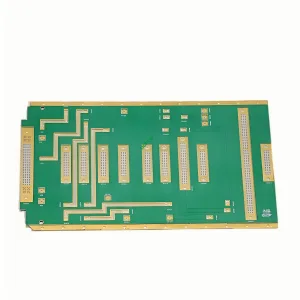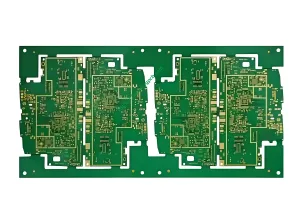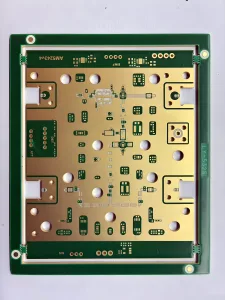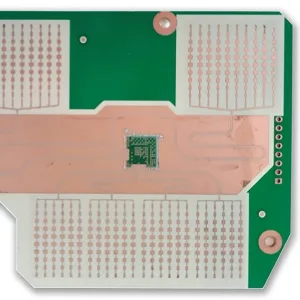
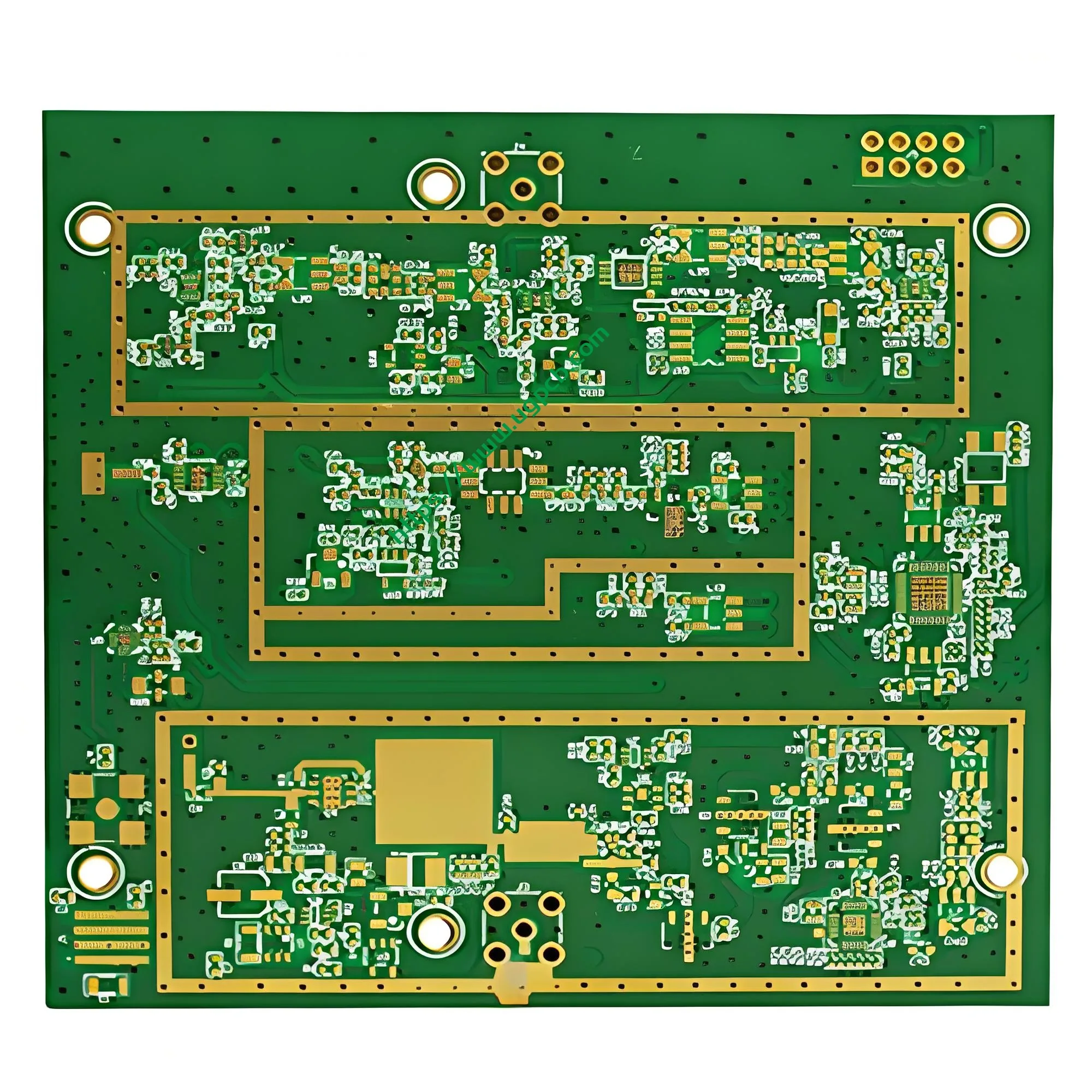
1. 제품 정의: What Is a 6-Layer Rogers + FR4 하이브리드 스택 PCB?
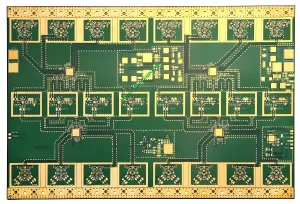
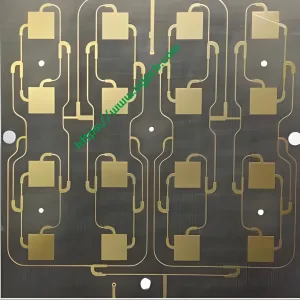
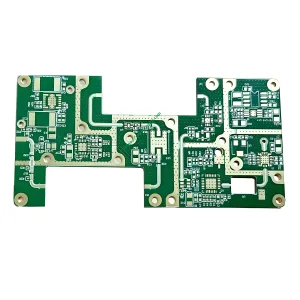
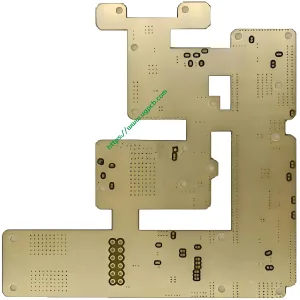
A 6-layer Rogers + FR4 hybrid stacked PCB is a multi-dielectric laminated circuit board. It combines Rogers high-frequency materials (typically RO4000 series) with standard FR-4 substrates in a single stack-up.
이 6층 PCB에서는, Rogers layers carry high-frequency RF signals. FR4 layers handle low-speed signals, 전력 분배, and mechanical support. Special bondply sheets bond the different materials under high temperature and pressure. For a symmetric stack-up where Rogers sits on the outer layers and FR4 on the inner layers, the hybrid solution saves 30% 에게 50% 전체 Rogers 디자인과 비교한 재료 비용. 동시에, RF performance remains almost the same.
2. 과학적 분류 & Naming Standards
This product falls under the following industry-standard categories:
- By material structure: Mixed dielectric high-frequency PCB
- 레이어 수별: 6-layer rigid multilayer board
- By IPC standards: IPC-6012 (Rigid Printed Boards) / IPC-4103 (High-Frequency Base Materials)
- 응용 프로그램별: 5G base station power amplifier module
- By process feature: 하이브리드 라미네이션 / hybrid pressing PCB
3. 주요 매개변수 & 재료 사양
3.1 기판: 로저스 + FR4 하이브리드
This 6-layer hybrid stacked PCB uses Rogers hydrocarbon ceramic materials (RO4350B is the most common type) combined with FR4. RO4350B complies with IPC-4103 for high-speed and high-frequency base materials. It can be processed on standard FR4 production lines.
The table below shows key electrical properties from the Rogers official data book:
| 재료 | Dk @ 10GHz | Df @ 10GHz | Tg (℃) | UL 94 가연성 | 열전도율 (w/m · k) |
|---|---|---|---|---|---|
| RO4350B | 3.48 ± 0.05 | 0.0037 | >280 | 다섯-0 | 0.62 |
| RO4003C | 3.38 ± 0.05 | 0.0027 | >280 | N/A | 0.71 |
| RO4835 | 3.48 ± 0.05 | 0.0037 | >280 | 다섯-0 | 0.66 |
데이터 소스: Rogers RO4000 Series Data Sheet
The FR4 part uses a high-Tg reinforced laminate (Tg >= 170°C) according to IPC-4101/126. This meets the thermal cycling stability required for communication equipment.
3.2 구리 두께 & 보드 두께
- 구리 두께: 1 온스 (35 μm) finished copper on all signal, 힘, 그리고지면 층.
- Total board thickness: 2.3 mm. This thickness balances mechanical rigidity, lamination stability, and heat spreading for high-current networks.
3.3 솔더 마스크 & 실크 스크린
- 솔더 마스크 색상: 녹색 (맞춤형)
- 실크스크린 컬러: 하얀색 (맞춤형)
3.4 표면 마감 – ENIG (무전해 니켈 침지 금)
This 6-layer PCB uses ENIG as the final surface finish. The nickel layer provides a diffusion barrier and mechanical protection. The gold layer ensures solderability, 내산화성, 낮은 접촉 저항. ENIG also tolerates multiple reflow cycles. For high-frequency channels, the smooth surface reduces skin-effect losses.
3.5 Outer Layer Trace Width / 간격
The outer layer design uses7 mil 트레이스 폭 및 7 밀 간격 (대략. 178 μm / 178 μm). This choice meets several needs:
- 달성 50 Ohm characteristic impedance for RF signals on the 6-layer hybrid stack-up.
- Matches the high-yield window for pattern transfer in mainstream PCB manufacturing.
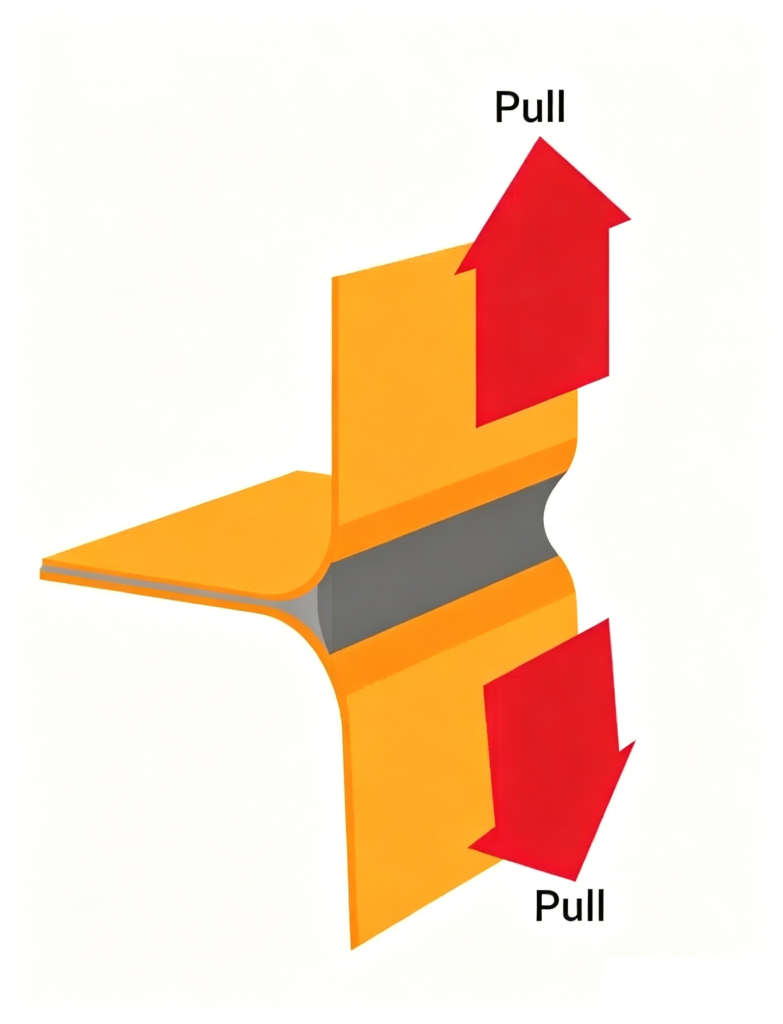
- Provides enough copper peel strength and current-carrying capacity.
4. Stack-Up Structure & Design Principles for 6-Layer PCBs
Stack-up design is the core of hybrid medium PCB 제조. According to IPC-2221B, a 6-layer hybrid stack-up must follow these principles.
4.1 Symmetry Principle (Low Warpage)
This product uses a symmetric stack-up: 층 1 및 레이어 6 are Rogers materials (carrying RF microstrip signals). 레이어 2 에게 5 are FR4 (containing full ground planes, 동력 비행기, and low-speed control traces).
A symmetric stack-up balances thermal stress during high-temperature lamination and reflow soldering. Warpage stays below 0.6% in typical production lines. A non-symmetric design can reach warpage above 1.2%.
4.2 Signal – Reference Plane Adjacency (RF Signal Integrity)
The high-speed RF signal layer (층 1) sits directly next to a solid ground reference plane (층 2). This forms a microstrip or coplanar waveguide structure. Return current follows the shortest path, which reduces loop inductance and radiated EMI.
이 6층 PCB에서는, every signal layer has an adjacent complete copper plane. This suppresses crosstalk and improves EMI immunity.
4.3 Power – Ground Plane Pairing (Low PDN Impedance)
층 3 및 레이어 4 act as the power distribution plane and the main ground plane, 각기. They are tightly coupled. By controlling the dielectric thickness between them within the 2.3mm board, the power distribution network (PDN) impedance can drop to tens of milliohms. This supports the transient current demands of a power amplifier (아빠) transistor.
4.4 프로세스 호환성 & 임피던스 제어
IPC-2221에 따르면, typical impedance tolerance for high-speed PCBs is +/-5%. Precision high-frequency microwave designs or 100Gbps+ digital interconnects may require +/-3%. This product targets the +/-5% tolerance for validation.
5. 작동 원리: Electromagnetic Signal Transmission in a Mixed Dielectric
5.1 RF Signal Propagation
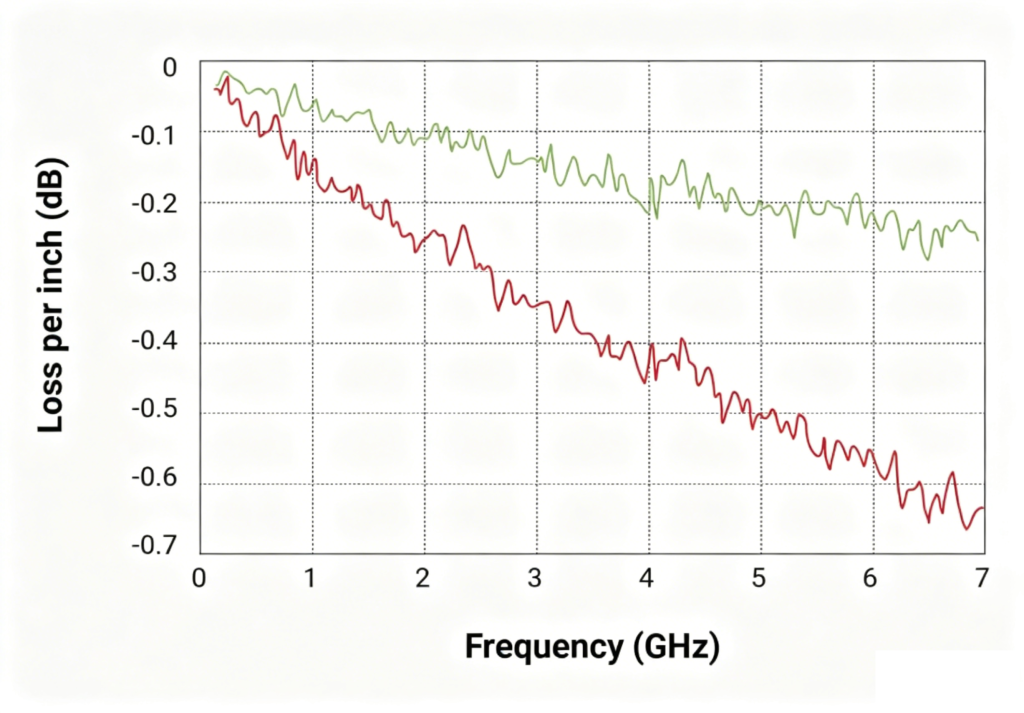
In this 6-layer Rogers+FR4 hybrid PCB, high-frequency microwave signals travel inside microstrip or stripline structures on the Rogers dielectric. Rogers material has an ultra-low dissipation factor (Df = 0.0037 for RO4350B at 10GHz) and a stable dielectric constant (dk = 3.48 +/-0.05). 결과적으로, signal attenuation at GHz frequencies is much lower than on FR4.
For a microstrip line on RO4350B, the insertion loss at 28GHz is approximately 0.4 DB/인치. Standard FR4 material at the same frequency shows more than 1.2 DB/인치.
5.2 Signal Integrity in a Hybrid Medium
The hybrid stack-up uses a material segregation strategy. High-frequency sensitive signals run on Rogers layers (outer or inner with low-loss dielectric). Power distribution and digital control use FR4 inner layers. This approach greatly reduces cost compared to a full-Rogers design. To avoid reflections and timing errors at the boundary between different dielectric constants, engineers must precisely calculate the dielectric thickness, 추적 너비, and reference plane spacing. Then they verify the design with TDR impedance testing.
6. 애플리케이션: Power Amplifiers in the Communication Industry
이 6층 하이브리드 PCB is designed specifically for전력 증폭기 (아니다) in thecommunication industry. Typical use cases include:
- 5G macro and small cell base stations (RF 프런트엔드 모듈) : PA output power in Sub-6GHz and mmWave bands often exceeds 30W. Macro base station PAs can reach above 50W. The board must provide both low-loss RF paths and reliable heat dissipation.
- Massive MIMO antenna arrays: The high-frequency substrate must host multiple transceiver (TR) components and control circuits. The 6-layer hybrid structure separates RF and digital sections efficiently.
- 활성 안테나 장치 (AAU) and small cells: These require a balance of signal integrity and power integrity. The hybrid 6-layer design meets dense routing requirements through optimized layer function assignment.
The core advantage is clear: Rogers layers provide ultra-low loss for RF signals, while inner FR4 layers carry DC power and control logic for GaN/GaAs PA transistors. This keeps overall insertion loss and thermal resistance within the strict limits of communication PAs.
7. 제품 성능: 전기 같은, 열의 & 신뢰성 지표
7.1 RF Electrical Performance
- Dielectric constant stability: RO4350B has a typical Dk of 3.48 at 10GHz with a tolerance of +/-0.05. It also maintains good temperature stability from -50°C to 150°C (TCDk ≈ 50 ppm/°C).
- 소산 인자: Df <= 0.004 from 3.5GHz to 28GHz. This ensures RF channel insertion loss meets 5G requirements. 예를 들어, at 28GHz, Df = 0.0037 gives much lower loss than a standard FR4 board of the same thickness.
- 임피던스 제어: With 7/7mil trace/space and proper dielectric thickness and reference plane layout, the board achieves 50 Ohm +/-10% 임피던스. This matches the RF port requirements of standard communication modules.
7.2 열 성능
- 열전도율: RO4350B provides 0.62 w/m · k, better than standard FR4. This helps spread heat from PA hot spots through copper vias and pads.
- 유리전이온도: Rogers material has Tg > 280℃. The high-Tg FR4 inner layers have Tg >= 170°C. This ensures rigidity over a wide temperature range and provides good reflow soldering margin.
7.3 Reliability Indicators
- 가연성 등급: RO4350B is UL 94 다섯-0 인증됨, meeting communication equipment safety standards.
- 수분 흡수: RO4350B has moisture absorption <= 0.06%. Electrical performance remains stable in humid environments.
- Lamination adhesion: A dedicated bondply (예를 들어, RO4450F) ensures a strong bond between Rogers and FR4. Thermal cycle tests show no delamination.
- PCB 제조 & 점검: This product is manufactured and accepted according to IPC-6012. All key performance indicators are fully or sample-tested before shipment.
8. 구조적 특징
①Hybrid dielectric separation: RF signal layers use low-loss Rogers. The remaining layers use high-Tg FR4. This gives a precise trade-off between performance and cost.
②Fully symmetric stack-up: L1 and L6 are Rogers. L2 to L5 are FR4. Symmetry minimizes warpage.
③Embedded power and ground planes: Full copper inner planes provide low-impedance paths and EMI shielding.
④Thick board design (2.3mm) : Provides structural rigidity and thermal mass for high-power PA devices.
⑤High-precision outer layer pattern: 7/7mil trace/space enables accurate 50 Ohm RF transmission lines.
⑥ENIG 표면 마감: The flat, low-roughness pad surface minimizes skin-effect losses at high frequencies while ensuring solderability and contact reliability.
9. 제조공정: 8 Key Steps
① Material preparation & 입고 검사 – Check Rogers high-frequency laminates and FR4 cores against IPC-4103 and IPC-4101.
② Inner layer imaging (L2 to L5) - 사용 LDI exposure and alkaline etching to form power planes, 지상 비행기, and control traces on FR4 cores.
③ Inner layer AOI & oxide treatment – Perform automatic optical inspection and then black oxide / brown oxide treatment to improve lamination adhesion.
④ Hybrid lamination prep & 누르는 것 – Stack Rogers cores, bondply, and FR4 inner layers alternately according to the stack-up. Laminate under high temperature and pressure. Typical lamination temperature: 190°C to 218°C. 압력: 200 에게 300 psi (대략. 14 에게 21 bar).
⑤ 드릴링 & 금속화 – Drill through-holes with high-quality tungsten carbide bits. Then perform desmear, 무전해 구리 증착, and panel plating to create layer-to-layer connections. Some critical ground vias may be resin-plugged.
⑥ Outer layer imaging (L1 and L6) – Expose, 개발하다, and etch to form 7/7mil RF microstrip lines.
⑦ Solder mask & legend – Apply green solder mask ink over the whole board. Cure at high temperature and then screen-print white legend.
⑧ Surface finish – ENIG – Deposit 0.05~0.1μm gold over 3~5μm nickel on the circuit pads. 마지막으로, perform electrical testing and final inspection, then vacuum-pack for shipment.
During the special process of hybrid lamination, control the ramp rate, 압력, and bondply material matching carefully. This ensures a dense, void-free bond between different dielectrics.
10. Why Choose UGPCB’s 6-Layer Rogers+FR4 Hybrid High-Frequency PCB?
❶17+ years of RF PCB manufacturing experience – UGPCB has over 10 수년간의 경험 고주파 PCB development and production in China. We have mature process control for Rogers+FR4 hybrid lamination.
❷Cost saving of 30% 또는 그 이상 – By using Rogers only on critical RF layers and FR4 elsewhere, we save at least 30% 전체 Rogers 디자인과 비교한 재료 비용.
❸UL 94 다섯-0 and IPC compliance – We use RO4350B with V-0 rating and high-Tg FR4. This meets fire safety requirements for communication base stations and industry quality systems.
❹원스톱 서비스 – UGPCB handles everything from Gerber design review, hybrid stack-up process simulation, 샘플 프로토타이핑, 대량 생산에. This reduces supply chain communication overhead.
❺100% electrical testing and impedance verification – We use 비행 프로브 or fixture testing for all boards. We perform TDR testing on critical impedance lines to ensure the product matches the design expectations.
11. How to Request a Quote?
Engineers, procurement specialists, 그리고 r&D managers are welcome to submit an RFQ to UGPCB. If you need 6-layer Rogers+FR4 hybrid PCBs or similar high-frequency PCBA manufacturing services, please contact us as follows:
- Gerber 파일 제출, a PCB specification sheet (including 2.3mm thickness, 1온스 구리, ENIG 마감), and your target impedance requirements.
- Specify your application (communication power amplifier) and volume requirements.
지금 견적을 요청하세요 – UGPCB will provide fast engineering review and competitive volume pricing. Our technical support team will help you with hybrid stack-up design review. We will help you achieve the best balance between high-frequency performance and mass production manufacturability.
Important Note: The Rogers RO4000 series electrical properties (DK, Df, Tg, 열전도도, 등.) cited in this document come from the Rogers official data sheet. References to IPC-2221B, IPC-6012, IPC-4103, and other IPC standards are based on publicly available IPC technical literature. All data should be verified against the original manufacturer and IPC published documents as the final reference.