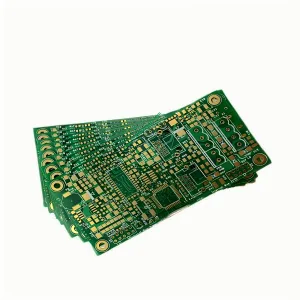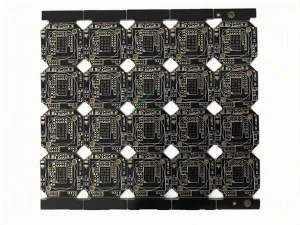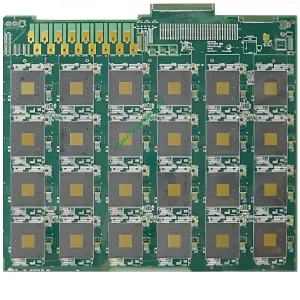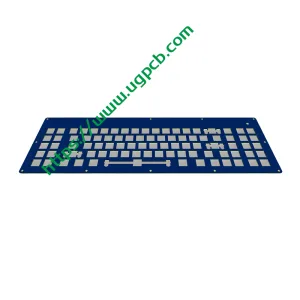
Descripción general del producto
Como fabricación de PCB costs continue to rise, engineers and procurement professionals are actively seeking cost-effective solutions that do not compromise performance. El double-sided carbon oil circuit board offers a compelling answer to this challenge.
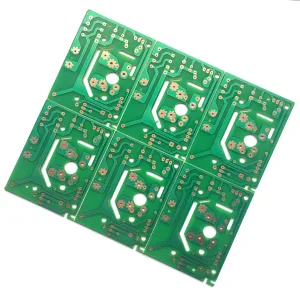
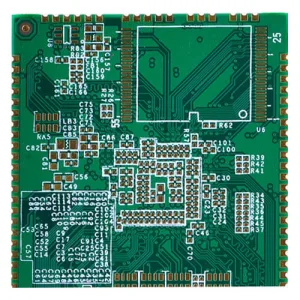
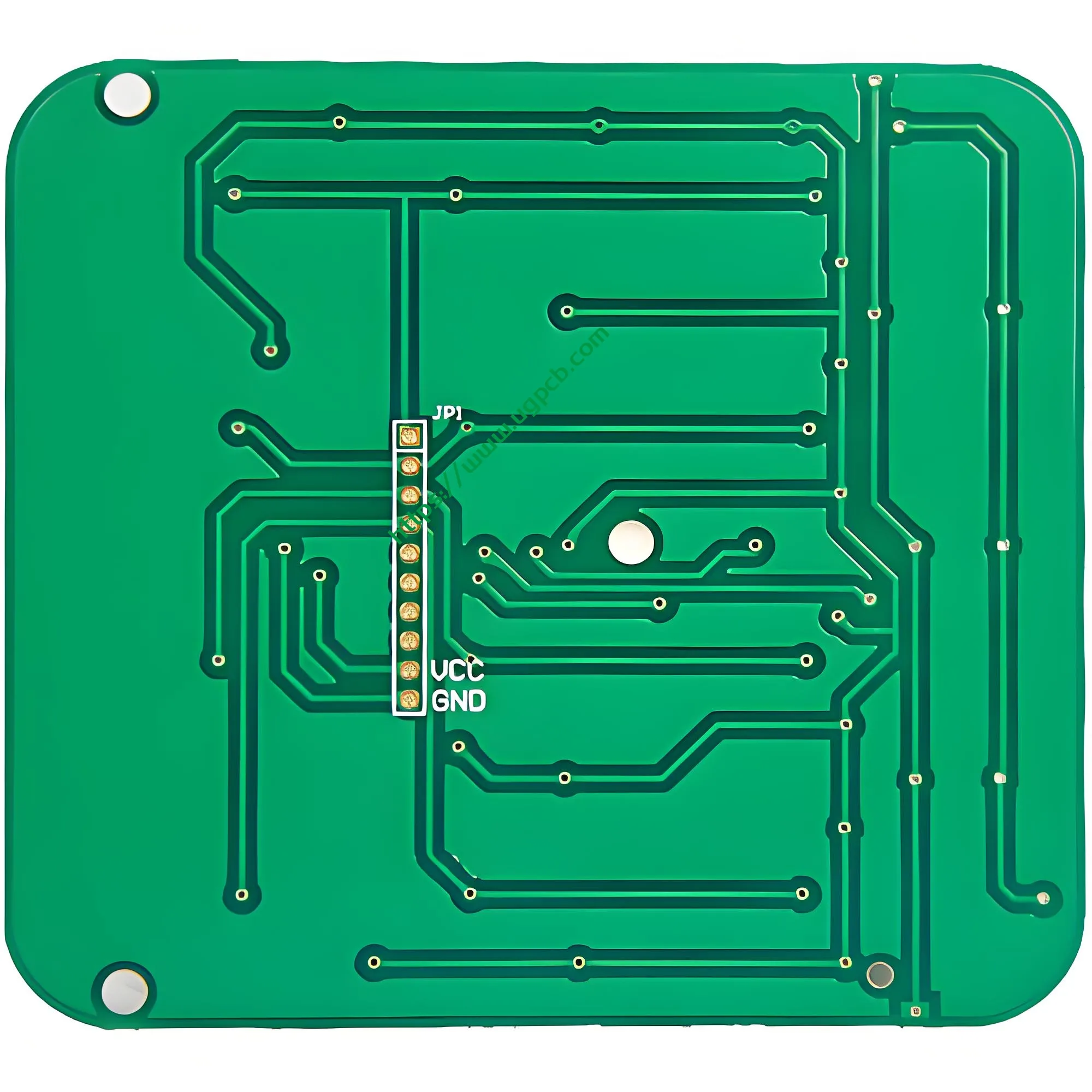
UGPCB presenta estedouble-sided carbon oil circuit board with the following specifications:
| Parámetro | Especificación |
|---|---|
| Materia prima | FR4 |
| Grosor del tablero | 1.6milímetros |
| Recuento de capas | 2 capas (de dos caras) |
| Tamaño de tablero | 43.68 × 38.9mm |
| Diámetro mínimo del agujero | 0.33milímetros |
| Ancho de rastreo / Espaciado | 0.32 × 0.36mm |
| Espesor de lámina de cobre | 35/35μm (1OZ on both sides) |
| Acabado superficial | Carbon oil process |
| Máscara de soldadura / Leyenda | Máscara de soldadura verde / white silkscreen |
Este es unstandard rigid double-sided PCB. It combines traditional copper traces with acarbon oil surface finish that forms conductive carbon film pads at designated locations. The result is a board that offers both the excellent conductivity of copper traces and the superior wear resistance of carbon film contacts. This makes it an ideal choice for keypad applications across consumer electronics, electrónica automotriz, y dispositivos médicos.
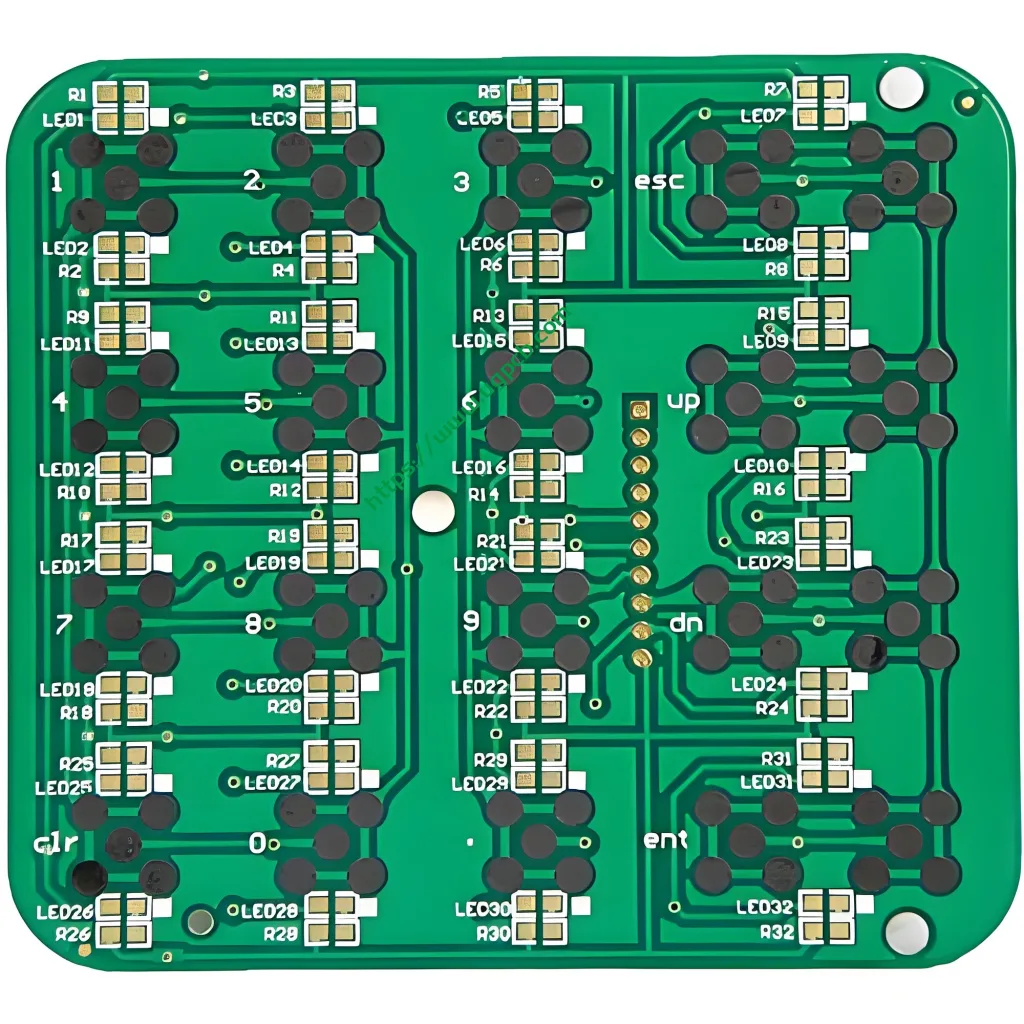
What Is a Double-Sided Carbon Oil Circuit Board?
A double-sided carbon oil circuit board is a printed circuit board that uses carbon-based conductive ink (commonly referred to as carbon oil or carbon ink) applied through screen printing onto designated areas of the Sustrato de PCB. After curing, this forms a carbon film conductive pattern.
Carbon oil is a conductive ink composed primarily of conductive carbon powder, thermosetting resin, and various additives. It is precisely printed onto specific locations on the tarjeta de circuitos – typically keypad contact areas – using screen printing technology. Después del curado a alta temperatura, the carbon oil forms a carbon film with a defined resistance value.
Comparado con el tradicionalgold-plated keypads, Los teclados de aceite de carbono ofrecen una clara ventaja.Los teclados de aceite de carbón son altamente resistentes al desgaste y pueden soportar operaciones repetidas, generalmente duran cientos de miles o incluso millones de ciclos de conmutación. Reemplazar los costosos teclados dorados por teclados de aceite de carbón se ha convertido en una tendencia importante en la industria.
Las placas de aceite de carbono son un método de tratamiento de superficies común para PCB de una y dos caras.. A través de una serie de procesos que incluyen la inspección, pruebas, y pruebas de quemado, estos PCB lograr un funcionamiento fiable a largo plazo.
Pautas de diseño
Diseñando undouble-sided carbon oil circuit board Requiere atención a los siguientes aspectos técnicos clave.:
Ancho y espaciado del rastro de aceite de carbono
Según las especificaciones de fabricación de aceite de carbono de PCB de la industria, El ancho de la traza de aceite de carbono debe ser superior a 6 mil. (aproximadamente 0,152 mm). Las películas de aceite de carbono se identifican como “GTC” (capa superior) o “GBC” (capa inferior) y se emiten como películas positivas..
Debido a la excelente conductividad del aceite de carbón., Se debe mantener un espacio adecuado entre las características del aceite de carbón en el tablero terminado para evitar cortocircuitos.. Las distancias mínimas típicas son:
La tolerancia mínima de alineación para el aceite de carbón es±6mil.
Espaciado entre la ventana de aceite de carbono y el patrón de cobre
Para tener en cuenta las tolerancias de alineación y evitar fugas de aceite que podrían exponer el cobre., La almohadilla de aceite de carbón debe ser más grande que la almohadilla de cobre.:
Se debe mantener el mismo espacio libre entre la ventana de aceite de carbón y los patrones de cobre circundantes para evitar que el aceite de carbón cubra los rastros de cobre adyacentes y cause cortocircuitos..
Control del espesor del aceite de carbón
El espesor del aceite de carbono afecta directamente la resistencia de la lámina y la resistencia al desgaste.. Las especificaciones estándar de la industria son las siguientes:
- Espesor del aceite de carbono de impresión única: 0.3–1,0 mil, tolerancia ±0.3mil
- Espesor del aceite de carbono de doble impresión: 1.0–2,0 millones, tolerancia ±0.4mil
Para espesores de aceite de carbón superiores a 1,0 mil, se requiere un proceso de doble impresión. La película de aceite de carbón para la segunda impresión debe ser 3 mil más pequeña en cada lado que la película de la primera impresión..
Referencias estándar de diseño
Al diseñar undouble-sided carbon oil circuit board, Se deben seguir las siguientes normas internacionales.:
- IPC-2221: Norma genérica sobre diseño de tableros impresos: cubre el espaciado, autorización, y requisitos de diseño estructural
- IPC-6012: Especificación de calificación y rendimiento para tableros impresos rígidos: define los requisitos de rendimiento y los criterios de calificación del producto.
- IPC-TM-650: Manual de métodos de prueba: proporciona procedimientos de prueba estandarizados para el rendimiento de PCB de aceite de carbono
Principio de trabajo
Eldouble-sided carbon oil circuit board opera en dos niveles fundamentales:
Principio de conducción
La conductividad del aceite de carbón está determinada por su formulación., que consiste en polvo de carbón conductor, thermosetting resin, and various additives. La conductividad se mide porresistencia de la hoja (unidad: Ah/□).
Según la ley de Ohm:
R = ρ×L / S
Donde R es la resistencia, ρ es resistividad, L es la longitud del conductor, y S es el área de la sección transversal del conductor. Para la capa conductora de película de carbono., La resistencia de la lámina es inversamente proporcional al espesor de la película.: Rs = ρ / t (donde t es el espesor de la película de carbono).
Los tableros de aceite de carbono generalmente alcanzan una resistencia laminar de ≤20Ω/□, ofreciendo una excelente relación costo-rendimiento. Algunas formulaciones de aceite de carbono de baja resistencia también incorporan una pequeña cantidad de aceite de plata para mejorar aún más la conductividad..
Principio de conmutación del teclado
En aplicaciones de teclado, eldouble-sided carbon oil circuit board funciona de la siguiente manera: cuando un teclado de goma (u otro elemento elástico) esta presionado, Las partículas de carbón conductor en la parte inferior del teclado entran en contacto con elalmohadilla de aceite de carbono en la PCB, completando el circuito. La almohadilla de aceite de carbón sirve como base del teclado.conductor de contacto, reemplazando los contactos tradicionales chapados en oro.
Las ventajas de los contactos de aceite de carbono incluyen:
- Alta dureza superficial yexcelente resistencia al desgaste
- Baja resistencia de contacto ytiempo de respuesta rápido
- Inercia química, ofrendaresistencia a la corrosión y resistencia a la oxidación
Aplicaciones
Placas de circuito de aceite de carbón de doble cara son ampliamente utilizados en diversas industrias:
Electrónica de Consumo
- Controles remotos: controles remotos de televisión, controles remotos de aire acondicionado
- Calculadoras: Paneles de teclado
- Teclados: teclados de computadora, teclados de membrana
- Dispositivos de juego y teclados electrónicos.
Electrónica automotriz
- Tableros de control de interruptor de ventana
- Paneles de control de aire acondicionado
- Grupos de instrumentos y controladores de asientos
Dispositivos médicos
- Paneles de operador de equipos médicos
- Electrodos para tiras reactivas de glucosa en sangre
Industrial y Comunicaciones
- Paneles de equipos de control industrial.
- Equipo de comunicación
- Etiqueta inteligente RFID
Alternativas rentables
Placas de circuito de aceite de carbono puede reemplazar los siguientes procesos tradicionales:
- Procesos de orificio pasante recubiertos de cobre
- Procesos de llenado vía de pasta de plata
- Procesos de llenado vía de pasta de cobre
Respetuoso con el medio ambiente, El llenado vía de pasta de carbón de bajo costo es una tendencia dominante en la industria. Microsoft ha adoptado aceite de carbono para el llenado de vías en placas de alimentación, Reemplazo completo de tableros de doble capa con orificios recubiertos de cobre..
Clasificación de productos
Placas de circuito de aceite de carbón de doble cara se puede clasificar según las siguientes dimensiones:
Por tipo de conductividad
- Placas de aceite de carbono de baja resistencia.: Resistencia laminar ≤20Ω/□ – adecuada para contactos de teclado
- Tableros de aceite de carbono de alta resistencia: Adecuado para potenciómetros y capas de resistencia.
- Tableros rellenos de vía de aceite de carbono.: Utilice aceite de carbón para llenar los orificios pasantes para las conexiones entre capas.
Por material base
- Tableros de aceite de carbono FR4: Sustrato de fibra de vidrio/epóxido (este producto)
- Placas de aceite de carbono CEM-1: Sustrato de material epoxi compuesto
- Tableros de aceite de poliimida y carbono: Sustrato flexible
Por recuento de capas
- Tableros de aceite de carbono de una cara
- Tableros de aceite de carbono de doble cara. (este producto)
- Tableros de aceite de carbono multicapa
Por combinación de acabado superficial
- ACEPTAR + aceite de carbono
- HASL + aceite de carbono
- OSP + aceite de carbono
- aceite de carbono + inmersión lata (Actualmente no es adecuado para la producción en masa debido a problemas de contaminación de la superficie del estaño.)
Materiales
Material base: FR4
Este producto utiliza FR4 como material base. FR4 es la designación industrial para el laminado revestido de cobre con resina epoxi reforzada con fibra de vidrio., ofrenda:
- Excelente resistencia mecánica y estabilidad dimensional.
- Propiedades superiores de aislamiento eléctrico
- Buena resistencia a la humedad y al calor.
- Constante dieléctrica de aproximadamente 4,2–4,3
FR4 es el material base más utilizado para PCB rígidos y ofrece buena compatibilidad de adhesión con aceite de carbono..
Capa conductora – Lámina de cobre
Ambos lados usan35μm (1ONZ) lámina de cobre, asegurando una excelente conductividad y capacidad de transporte de corriente.
Material de aceite de carbono
Carbon oil is acarbon-based conductive ink compuesto por:
- Polvo de carbón conductor: 30%–50% de contenido – determina la conductividad
- resina termoendurecible: Proporciona propiedades de adhesión y curado.
- Varios aditivos: Regular las características de flujo y el rendimiento de adhesión.
El aceite de carbono debe exhibirfuerte adherencia, resistencia al pelado, y resistencia al desgaste.
Máscara de soldadura y leyenda
- máscara de soldadura: Tinta verde: protege los circuitos y previene cortocircuitos
- Leyenda: Serigrafía blanca: identifica las ubicaciones de los componentes y los números de placa
Especificaciones de rendimiento
Rendimiento eléctrico
| Parámetro | Especificación | Referencia |
|---|---|---|
| Resistencia de la hoja | ≤20Ω/□ | Estándar de la industria |
| Tasa de cambio de resistencia | ≤10% (después 1 millones de ciclos) | Estándar de la industria |
Rendimiento mecánico
Precisión dimensional
| Parámetro | Especificación |
|---|---|
| Diámetro mínimo del agujero | 0.33milímetros |
| Ancho mínimo de traza | 0.32milímetros |
| Espaciado mínimo de traza | 0.36milímetros |
| Grosor del tablero | 1.6milímetros |
Confiabilidad ambiental
PorIPC-TM-650 requisitos estándar:
- Prueba de calor húmedo (IPC-TM-650 2.6.3.7): 1000 horas a 40°C / 90% RH – cambio de resistencia de la lámina de aceite de carbono ≤20%
- Prueba de ciclos de temperatura (IPC-TM-650 2.6.7): 100 ciclos de -40°C a 85°C – sin craqueo del aceite de carbón, fluctuación de resistencia ≤15%
- Prueba de resistencia a la abrasión (IPC-TM-650 2.5.9): Después 1000 ciclos – coeficiente de abrasión ≤5 mg
Estructura del producto
La estructura típica de undouble-sided carbon oil circuit board (de arriba a abajo):
- Capa de leyenda (blanco): Designadores de referencia de componentes
- Capa de máscara de soldadura (verde): Protección de circuitos y prevención de cortocircuitos.
- capa de aceite de carbono: Película de carbón conductora en ubicaciones designadas para el teclado
- Rastros de cobre superiores (35μm): Circuito conductivo
- Sustrato FR4 (1.6milímetros): Soporte aislante
- Rastros de cobre inferiores (35μm): Circuito conductivo
- Capa de máscara de soldadura (verde): Protección del circuito de la capa inferior
- Capa de leyenda (blanco): Identificadores de capa inferior
La capa de aceite de carbón se aplica solo a áreas de contacto del teclado designadas o zonas conductoras., no en todos los ámbitos.
Características clave
Importante ventaja de costos
El proceso de aceite de carbón elimina ciertos pasos de cobreado y grabado., Reducir los costos de materiales entre un 15% y un 25%.. En comparación con el baño de oro duro, Los costos de la tinta de carbón son entre un 40% y un 60% más bajos..
Larga vida útil
Los teclados de aceite de carbono ofrecen una resistencia al desgaste excepcional, durando más 1 millones de ciclos de conmutación con una tasa de cambio de resistencia de ≤10%.
Simple, Proceso eficiente
Usos de la aplicación de aceite de carbono.serigrafía en lugar de largos procesos de galvanoplastia. Los plazos de producción pueden seracortado por más 30%.
Excelente resistencia ambiental
El aceite de carbono esquímicamente inerte, ofreciendo mejor resistencia a ácidos y álcalis que el cobre. Funciona de manera más confiable en ambientes húmedos o polvorientos.. La dureza de la superficie de la película de carbono alcanza3h (prueba de dureza del lápiz), superando superficies de cobre desprotegidas (1-2H).
Opciones de diseño flexibles
El aceite de carbono se puede imprimir directamente para formar resistencias., teclados, y otros módulos funcionales, Reducir el número de juntas de soldadura entre un 30 % y un 50 %..
Proceso de fabricación
El proceso de fabricación típico de undouble-sided carbon oil circuit board:
- corte de materiales: Corte el laminado revestido de cobre FR4 a las dimensiones de trabajo
- Perforación: Taladrar a través de agujeros y agujeros de montaje. (diámetro mínimo 0,33 mm)
- Limpieza de superficies: Limpieza química para eliminar óxidos., aceites, y contaminantes
- Cobre no electrolítico / galvanoplastia: Revestimiento mediante orificios para conexiones entre capas
- Transferencia de patrón: Exposición y desarrollo para formar patrones de circuitos.
- Aguafuerte: Retire la lámina de cobre de las áreas que no sean circuitos.
- Banda: Retire la película seca resistente
- Impresión de máscara de soldadura: Aplicar tinta de máscara de soldadura verde
- Curado de máscara de soldadura: Curado a alta temperatura de máscara de soldadura
- Acabado superficial: impresión con aceite de carbono:
- Aceite de carbono para serigrafía en lugares designados (impresión simple o doble)
- Pre-horneado (80° C × 30 minutos)
- Cura principal (150°C × 30–60 minutos)
- Impresión de leyenda: Imprimir identificadores serigrafiados en blanco
- Perfilado: Enrutamiento del enrutador, corte en V, etc..
- Pruebas electricas: Pruebas de continuidad, pruebas de aislamiento
- Inspección final y embalaje.
Para PCB conACEPTAR + aceite de carbono acabado combinado, La impresión con aceite de carbón generalmente se realiza después de ENIG., Con cinta azul aplicada para proteger las áreas de aceite de carbón..
Escenarios de aplicación
Controles remotos y paneles de control de electrodomésticos
Oferta de contactos de aceite de carbonolarga vida útil de la prensa y baja resistencia de contacto para una respuesta rápida. Las aplicaciones típicas incluyen controles remotos de TV, controles remotos de aire acondicionado, y paneles de control de lavadora.

Módulos de control electrónico automotriz
Oferta de circuitos de aceite de carbono en el interior de los paneles de las puertas de los vehículosfuerte resistencia a la corrosión, Funciona de manera confiable en entornos automotrices complejos y resuelve los problemas de oxidación y rotura comunes con las soluciones tradicionales..
Paneles de operador de dispositivos médicos
Las áreas de detección táctil impresas con aceite de carbono mantienen un funcionamiento estable en entornos aceitosos., ambientes húmedos. Los materiales de aceite de carbono también ofrecen excelentesbiocompatibilidad.
Teclados industriales y sistemas POS
En terminales POS y teclados industriales, Los circuitos que combinan aceite de carbón con sustratos FR4 se adaptan a las variaciones de temperatura y brindan estabilidad., rendimiento confiable.
¿Por qué elegir UGPCB para su placa de circuito de aceite de carbono de doble cara??
✅ Cumplimiento de estándares internacionales
El diseño y la fabricación del producto siguen estrictamenteIPC-2221 (Norma genérica sobre diseño de tableros impresos), IPC-6012 (Especificación de rendimiento del tablero rígido), yIPC-TM-650 (Manual de métodos de prueba).
✅ Capacidades de fabricación de precisión
- Diámetro mínimo del orificio 0,33 mm: admite diseños de alta densidad
- Ancho de traza mínimo/espaciado 0.32 × 0,36 mm: precisión líder en la industria
- Resistencia de la lámina de aceite de carbono ≤20Ω/□ – excelente conductividad
✅ Servicio integral
UGPCB proporciona servicios de extremo a extremo desde diseño de PCB y fabricación para Asamblea de PCBA.
✅ Garantía de alta confiabilidad
Los contactos de aceite de carbono ofrecen vida útil≥1 millón de ciclos con tasa de cambio de resistencia ≤10%, asegurando un funcionamiento estable a largo plazo.
Solicite una cotización hoy
Eldouble-sided carbon oil circuit board es unsolución altamente rentable para aplicaciones de teclado en electrónica de consumo, electrónica automotriz, y dispositivos médicos.
Si necesitas Prototipos de PCB, producción en volumen, o Servicios PCBA llave en mano, UGPCB ofrece soporte técnico profesional y precios competitivos.
📧Contáctenos hoy para una consulta técnica gratuita y una cotización personalizada!
- Sitio web: www.ugpcb.com
- Servicios integrales: diseño de PCB, fabricación, y montaje de PCBA
Declaración de fuente de datos
Los datos técnicos y los estándares citados en este artículo se derivan de las siguientes fuentes autorizadas.:
- PCI (Asociación que conecta industrias electrónicas) Estándares:
- IPC-2221 – Norma genérica sobre diseño de tableros impresos
- IPC-6012 – Especificación de calificación y rendimiento para tableros impresos rígidos
- IPC-TM-650 – Manual de métodos de prueba
- Especificaciones técnicas estándar de la industria:
- Requisitos de fabricación de aceite de carbono de PCB (ancho de traza de aceite de carbono ≥6mil, convenciones de nomenclatura de películas, etc.)
- Especificaciones de control de espesor de serigrafía con aceite de carbono. (impresión única: 0.3–1,0 mil; doble impresión: 1.0–2,0 millones)
- Literatura técnica de la industria:
- Especificaciones de fabricación de PCB con aceite de carbono: tres dimensiones clave
- Análisis técnico de PCB de proceso de aceite de carbono
- PCB de aceite de carbono vs.. comparación de PCB estándar