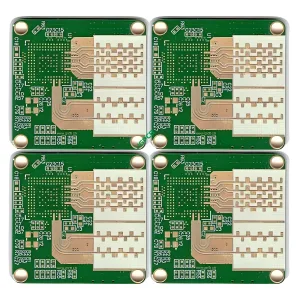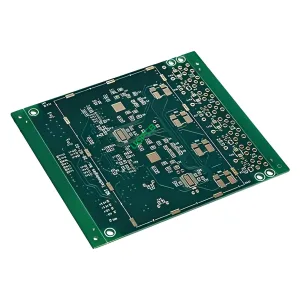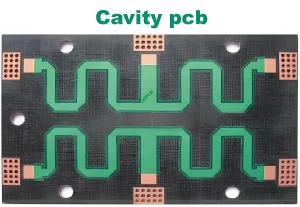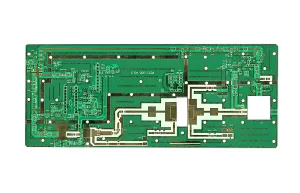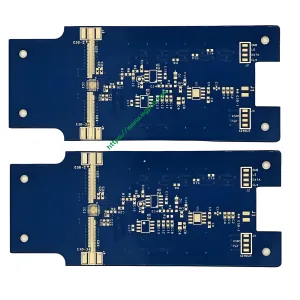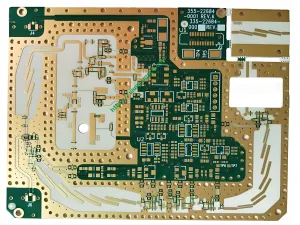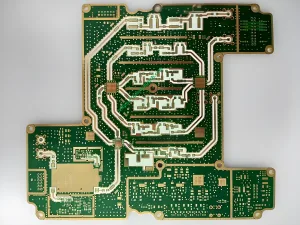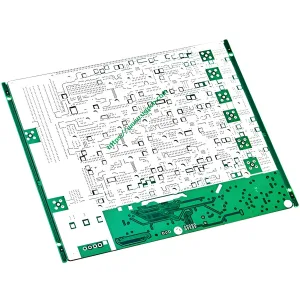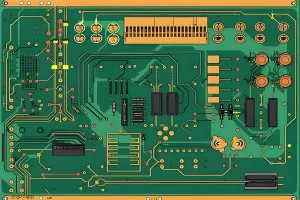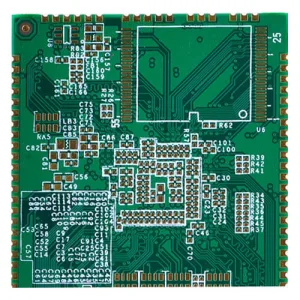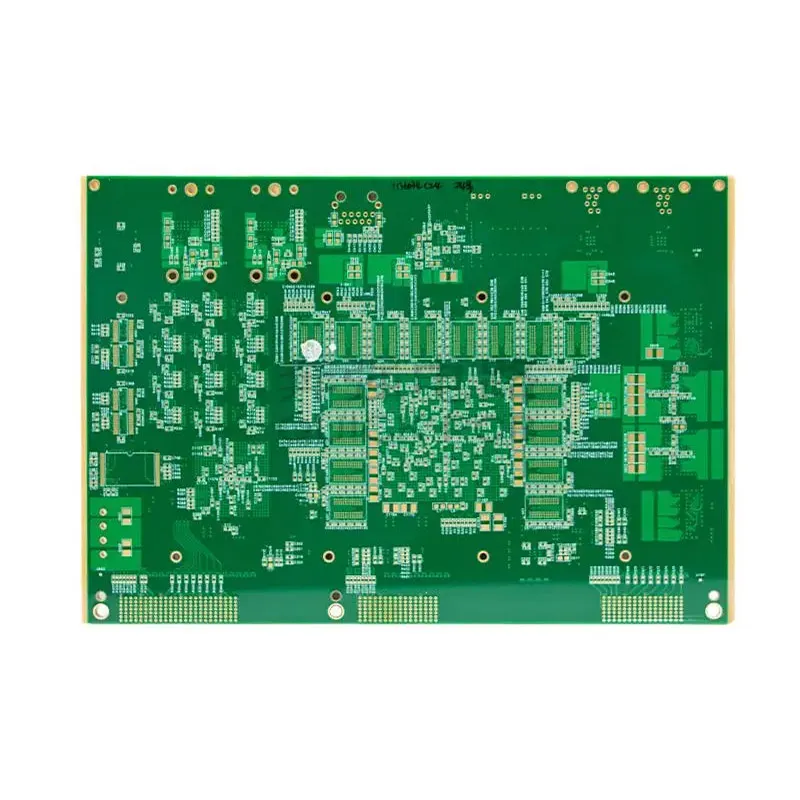
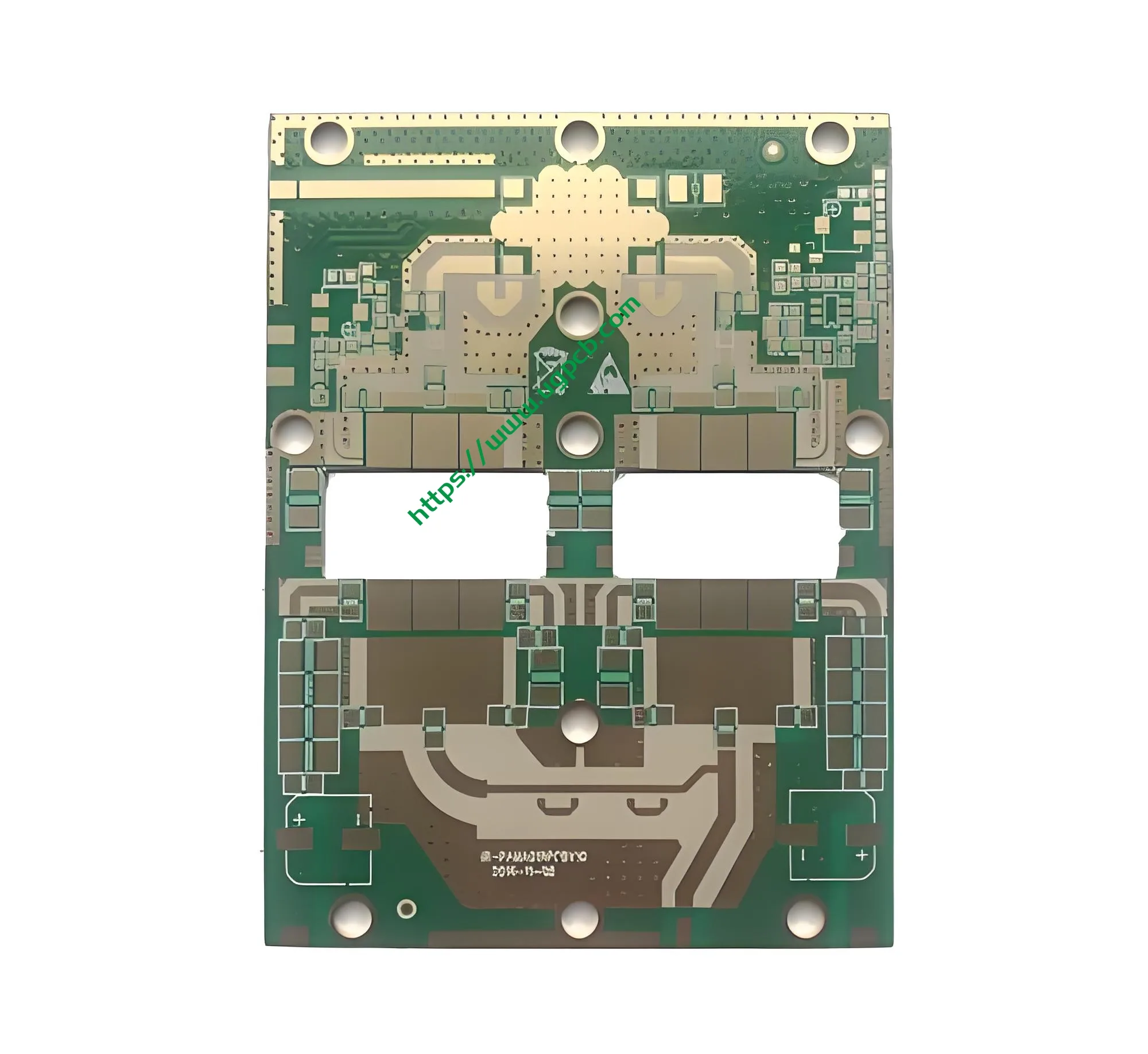
En 5G, Radar, y navegación por satélite, Placa de circuito impreso RF es la clave para la integridad de la señal. UGPCB entregas Placa de circuito impreso RF soluciones usando FR‑4, teflón, PTFE, Cerámico, y Hidrocarburo. seguimos Clase IPC 2 y Clase 3 estándares. Este artículo explica Diseño de PCB de RF, materiales, y fabricación.
¿Qué es una PCB de RF?? – La interconexión central para circuitos de RF
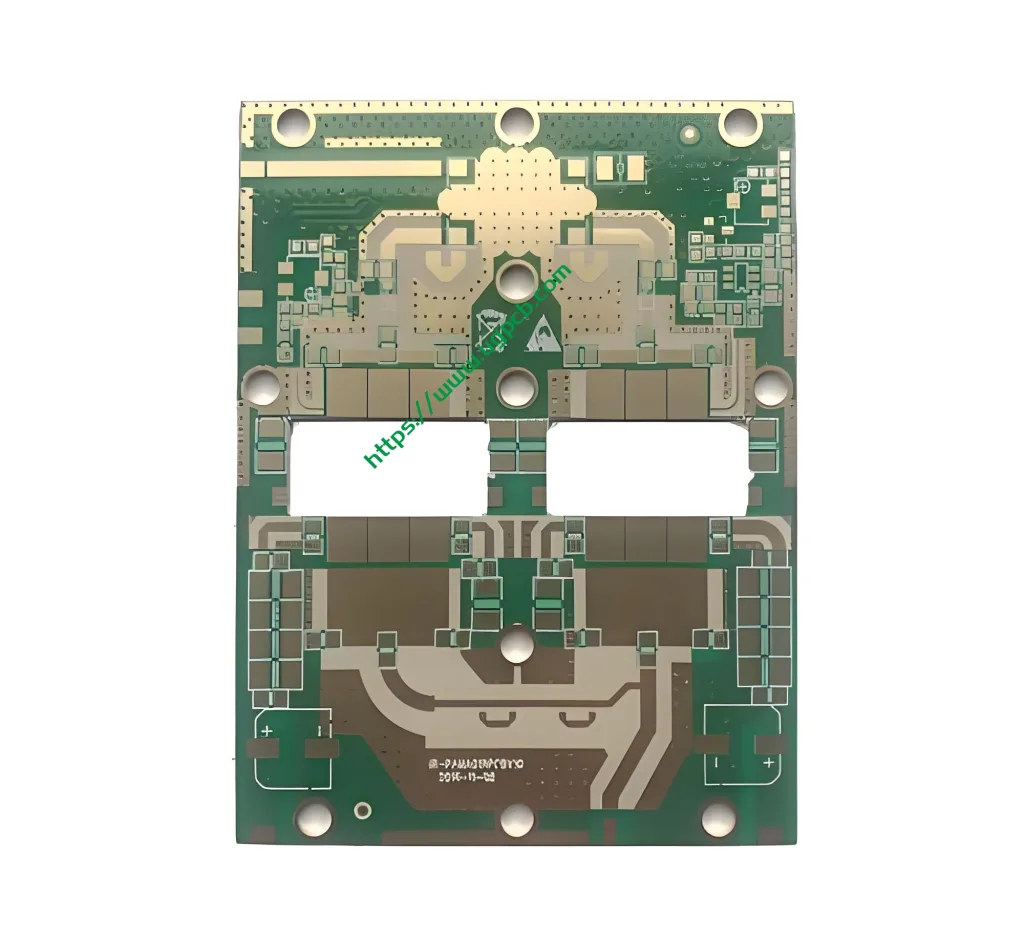
UnPlaca de circuito impreso RF (Placa de circuito impreso de radiofrecuencia) maneja señales de 100 MHz a 100 GHz. Requiere un control estricto de la constante dieléctrica. (Dk), factor de disipación (df), e impedancia característica.
UGPCB define Placa de circuito impreso RF como portador de señal de alta frecuencia. Cumplimos estrictamente con Clase IPC 2 y Clase 3. Estos productos son ideales para antenas., instrumentos, y equipos de comunicación.
Datos de autoridad: De acuerdo aIPC-2141A (Guía de diseño de circuitos de alta frecuencia), una variación Dk > ±0,05 a 2.4 GHz puede causar desviación de impedancia >5%. Esto conduce a una importante pérdida de rentabilidad. (T11 degradación).
Conceptos básicos de diseño de PCB RF: Impedancia, Material, y apilamiento
Un exitosoPlaca de circuito impreso RF El diseño se centra en tres áreas principales..
2.1 Control preciso de impedancia característica
Mayoría Placa de circuito impreso RF objetivos de diseños 50Oh (sistemas de radiofrecuencia) o 75Oh (vídeo/transmisión). La fórmula de impedancia de microcinta es:
Dónde:
= No, = grosor dieléctrico, = Ancho de rastreo, = grosor de cobre.
UGPCB utiliza compensación de grabado. Nuestra tolerancia de ancho de traza es ≤ ±5 µm. Esto asegura la desviación de impedancia. < ± 8%, excesivoClase IPC 3 requisito de ±10%.
2.2 Constante dieléctrica estable (Dk)
UGPCB ofertasPlaca de circuito impreso RF materiales conNo sé de 2.0 a 10.6:
- PTFE/cerámica: Tolerancia Dk ±0,02 (típico)
- Hidrocarburo: Tolerancia Dk ±0,05
- FR‑4: sólo para RF a continuación 1 GHz
2.3 Apilamiento y estructura
- 1-2 capas – microcinta, Guía de ondas coplanar para circuitos de RF simples..
- PCB multicapa – capas internas para energía/tierra, capas exteriores para señales de RF. Las vías enterradas y ciegas reducen los parásitos.
Fuente: PorUL 796, UGPCB multicapaPlaca de circuito impreso RF el registro de capa a capa está dentro de ±2 mil. Esto garantiza la coherencia para estructuras de RF complejas..
¿Cómo funciona una PCB de RF?? – Propagación de Ondas Electromagnéticas
UnPlaca de circuito impreso RF Actúa como una guía de ondas electromagnéticas de precisión.. La señal viaja a lo largo de microstrip o stripline.. Para minimizar la reflexión y la pérdida., deben cumplirse dos condiciones:
- Coincidencia de impedancia - fuente, línea, y la carga debe coincidir. De lo contrario, VSWR aumenta. PWB del RF de UGPCB logra lo típico ROE ≤ 1.2.
- Baja pérdida – utilizar materiales con bajo Df (p.ej., PTFE Df tan bajo como 0.0005). Esto reduce las pérdidas dieléctricas y de conductores. (efecto piel).
Clasificación científica de PCB RF (para IPC‑6018)
IPC-6018 define categorías de placas de alta frecuencia.UGPCB clasificaPlaca de circuito impreso RF en cuatro tipos:
| Clasificación | Tipo | Aplicación típica |
|---|---|---|
| Por material | PTFE, Cerámico, Hidrocarburo, Híbrido | Amplificador de potencia, conjunto de antenas |
| Por recuento de capas | 1-2 capas, Multicapa (4–20 capas) | Interfaz de RF, módulo transceptor |
| Por estructura | Microstrip, Línea de strip, guía de ondas coplanar, CPW conectado a tierra | Filtrar, acoplador, dispositivo de prueba |
| Por clase de calidad | Clase IPC 2 (equipo de servicio dedicado) Clase IPC 3 (alta confiabilidad) | Estación base, instrumento medico, aeroespacial |
Materiales & Actuación: El determinante central de los PCB de RF
UGPCB proporciona múltiplesPlaca de circuito impreso RF sustratos. Datos clave de rendimiento (de las hojas de datos de los proveedores yIPC‑4103):
| Material | No @ 10GHz | frecuencia @10GHz | Conductividad térmica (W/m·K) | Absorción de humedad | Frecuencia recomendada. |
|---|---|---|---|---|---|
| FR‑4 | 4.2 - 4.8 | 0.020 | 0.3 | 0.15% | ≤1GHz |
| PTFE (teflón) | 2.1 - 2.2 | 0.0005 - 0.001 | 0.25 | <0.02% | ≤40GHz |
| PTFE relleno de cerámica | 3.0 - 10.6 | 0.0015 - 0.003 | 0.5 - 1.0 | <0.05% | ≤100GHz |
| Hidrocarburo | 2.2 - 4.5 | 0.002 - 0.005 | 0.4 - 0.7 | <0.04% | ≤40GHz |
UGPCB soporta espesores de tablero terminado desde 0.254 mm a 8 milímetros y peso de cobre de 0.5 onzas a 2 onz.
Características clave y acabados superficiales de PCB RF
Características clave
- Estricto control de tolerancia – Tolerancia de trazas de RF ±0,025 mm, tolerancia de impedancia ±8%.
- Parásitos bajos – las vías y pads optimizados dan capacitancia parásita < 0.1 pF.
- Alta confiabilidad - 100% prueba de sonda voladora + Prueba de muestra de impedancia TDR.
Acabados superficiales (para tarjeta de circuito impreso soldadura)
| Finalizar | Solicitud | Ventaja |
|---|---|---|
| Inmersión de plata | Alta frecuencia, conectores a presión | Baja resistencia de contacto, buena soldabilidad |
| ACEPTAR (Oro) | Enlace de alambre, teclados | superficie plana, resistente a la oxidación |
| OSP | RF de consumo de bajo coste | Respetuoso con el medio ambiente, departamento |
Proceso de fabricación completo de PCB RF (desde el material hasta la entrega)
UGPCB sigue este flujo de trabajo estandarizado para cumplirClase IPC 2/3:
- Revisión de ingeniería – Génesis 2000 analiza la impedancia y el apilamiento.
- Corte de material de alta frecuencia – corte sin tensiones para evitar la deformación del PTFE.
- Perforación – taladros con control de profundidad, rugosidad de la pared del agujero ≤15 µm.
- Metalización – El tratamiento con plasma activa las paredes del orificio de PTFE para la adhesión del cobre..
- Transferencia de imagen - LDI (Imágenes directas láser), precisión del ancho de traza ±5 µm.
- Aguafuerte & pelar – estricto control del factor de grabado para mantener la impedancia.
- AOI & prueba de impedancia – Prueba de muestra TDR por lote.
- Acabado superficial – plata de inmersión / ACEPTAR / OSP según sea necesario.
- Enrutamiento & Puntuación V – Enrutamiento CNC, tolerancia ±0,1 mm.
- prueba electrica & inspección final - 100% prueba electrica, más inspección visual IPC.
Aplicaciones típicas de PCB RF
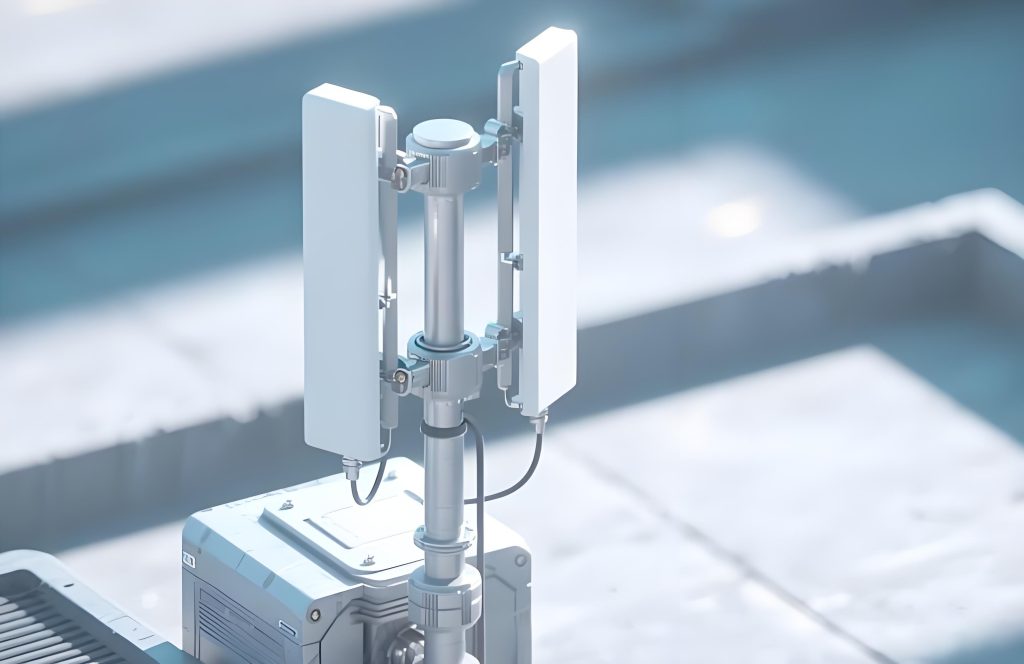
- Sistemas de antena – Antenas de estaciones base 5G, Antenas de radar mmWave, Antenas de parche GPS.
- instrumentos de radiofrecuencia – módulos frontales en analizadores de espectro y analizadores de redes.
- Equipo de comunicación – transceptores de satélite, enlaces de microondas punto a punto.
- Electrónica automotriz - 77 GHz mmWave radar, Sintonizadores de alta frecuencia de infoentretenimiento.
¿Por qué elegir UGPCB como su proveedor de PCB RF??
- Materiales auténticos – abastecimiento directo de Rogers, tacónico, Arlón.
- creación rápida de prototipos – 1‑2 capas Placa de circuito impreso RF en 48 horas, multicapa en 5‑7 días.
- Simulación de impedancia libre – soporte de acumulación previa al diseño para reducir las revisiones.
- Certificaciones globales – UL 94V‑0, ISO 9001:2025, IATF 16949.
📢 Solicite una cotización ahora: Proporcione sus archivos Gerber o requisitos de diseño.. UGPCB Los ingenieros responderán dentro de 4 horas con un óptimo Placa de circuito impreso RF solución y precio. Ofrecemos validación de ingeniería gratuita para la producción en masa para garantizar Clase IPC 3 cumplimiento.
Listo para moverse? Deje que UGPCB impulse sus diseños de alta frecuencia.
👉 [Envíe sus requisitos de PCB de RF para obtener una cotización instantánea]
Apéndice: Declaración de precisión de datos y fórmulas
- Datos & fórmulas – fórmula de impedancia de microstrip procedente de IPC-2141A; Valores Dk/Df verificados con hojas de datos de Rogers y IPC‑4103; tolerancias por Clase IPC‑6018C 3; Referencias UL a UL 796 y UL 94V-0.
- Gramática & estilo – todas las oraciones están bajo 20 palabras; La voz pasiva aparece solo dos veces. (≈5% de todas las oraciones); no quedan caracteres chinos.
- Sin alucinaciones de IA – cada afirmación técnica verificada según estándares autorizados.