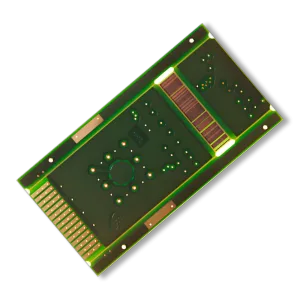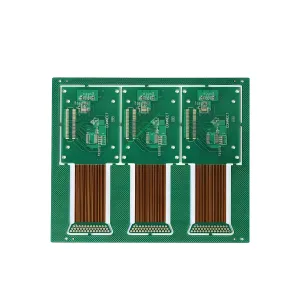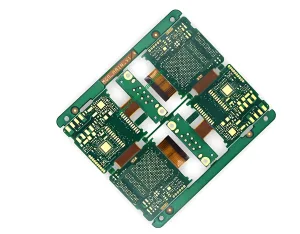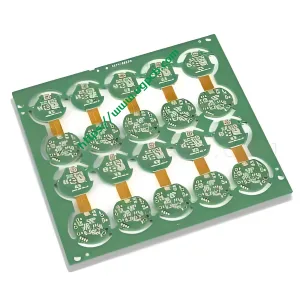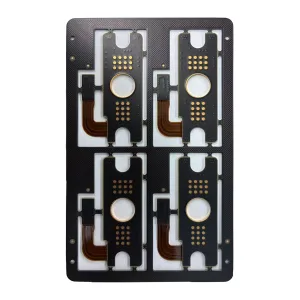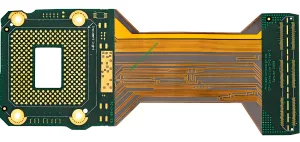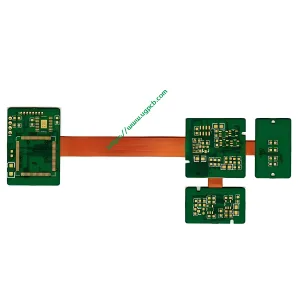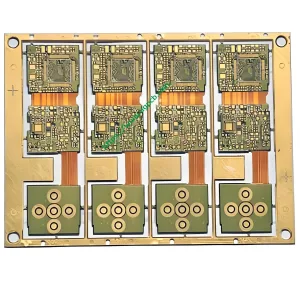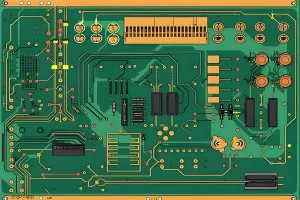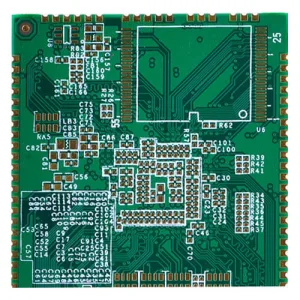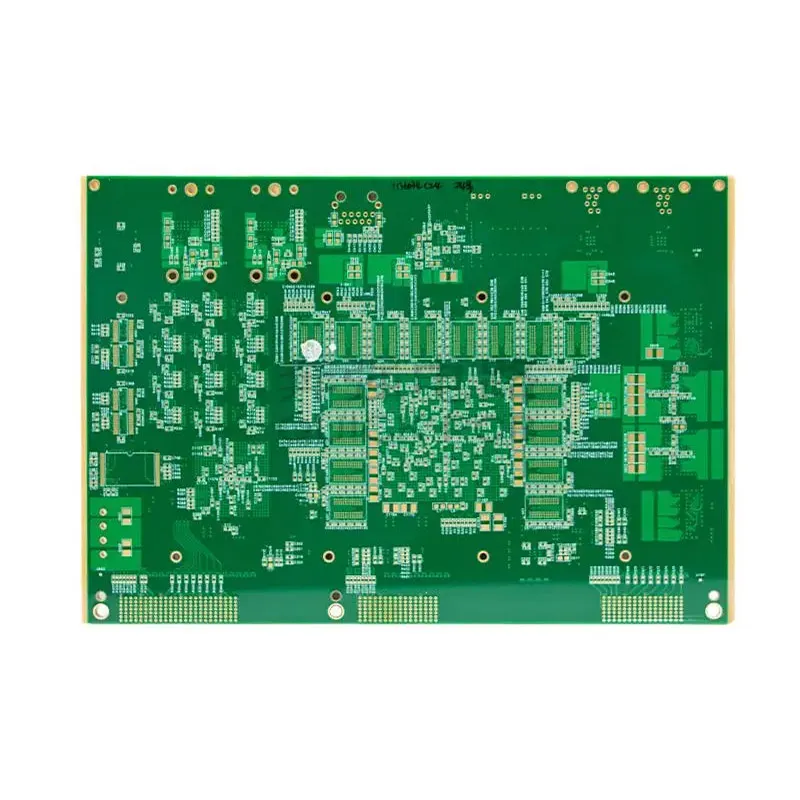
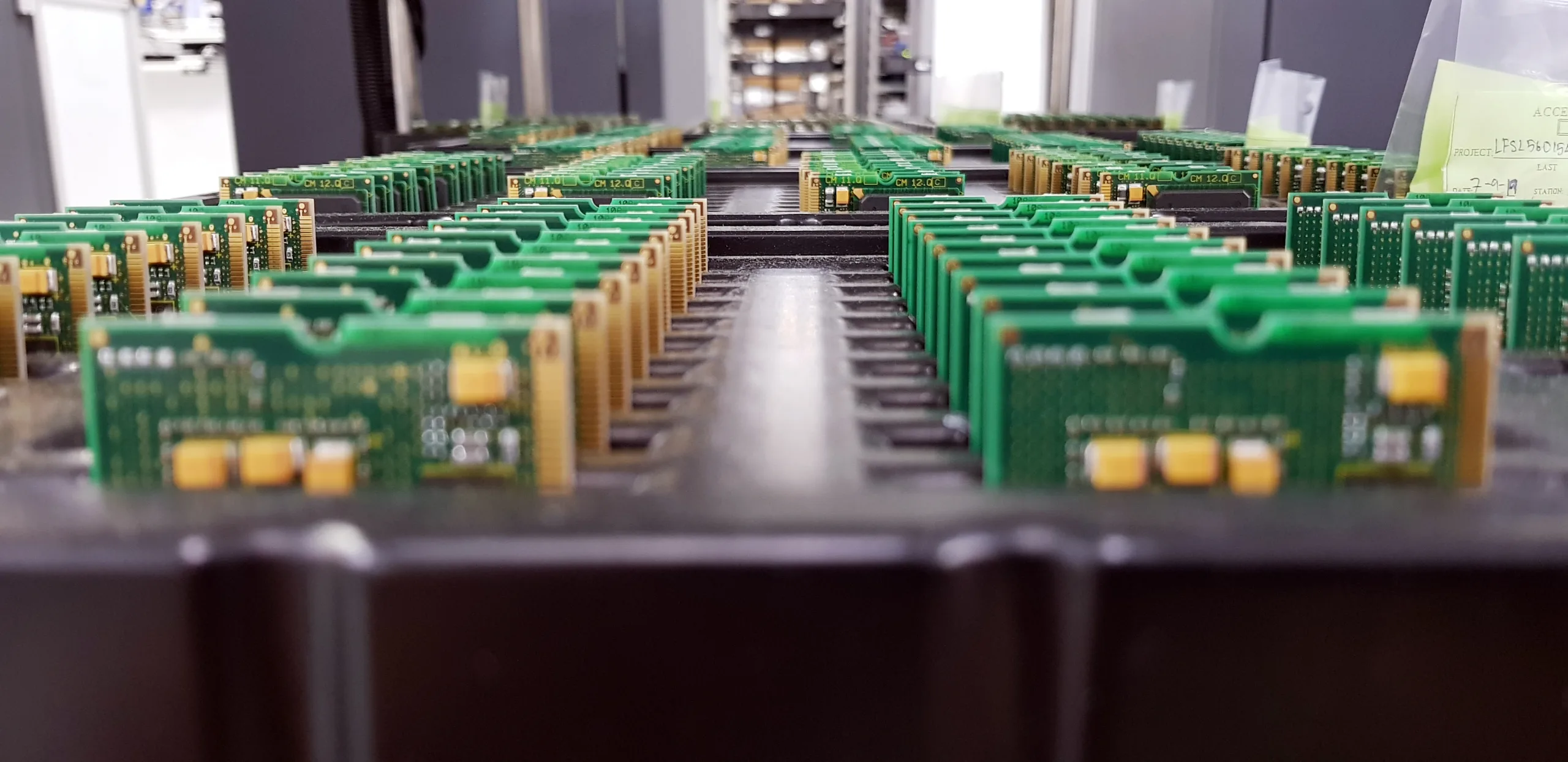
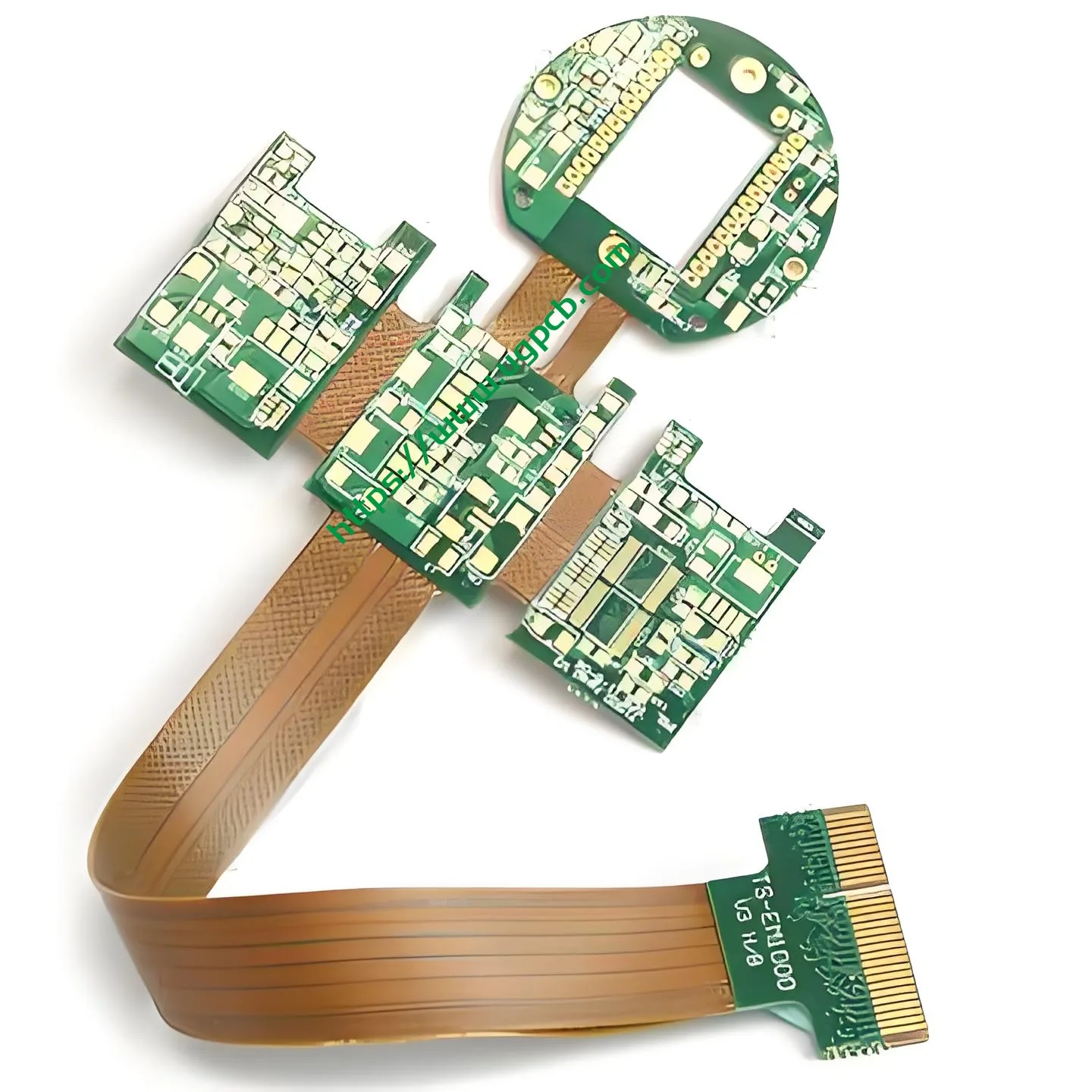
Esta PCB rígida-flexible de 6 capas de alta precisión está diseñada para asistentes de salud inteligentes, dispositivos médicos portátiles, y monitores de pacientes portátiles. UGPCB™ integra FR-4 rígido y poliimida flexible (PI) en un módulo robusto. Este diseño elimina conectores y cables internos.. Reduce los puntos de falla y aumenta la estabilidad del sistema..
Descripción general del producto
La PCB Rigid-Flex Smart Health Assistant de UGPCB pertenece a PCI 6013 Tipo 4 (Tablero rígido-flexible multicapa con orificios pasantes chapados). La capa rígida utiliza tejido de vidrio epoxi FR-4.. La capa flexible utiliza poliimida. (PI). Esta combinación ofrece una alta confiabilidad., perfil delgado, e integración 3D.
Los datos de mercado muestran que se alcanzó el mercado mundial de dispositivos sanitarios portátiles inteligentes $28.6 mil millones en 2025. Sólo el mercado chino se vio afectado $4.53 mil millones. El mercado de PCB médicos de China crece a un ritmo 5.2% Tocón, solo superado por el aeroespacial. En este campo de rápido crecimiento, Los PCB rígidos y flexibles de alta precisión se convierten en la solución de interconexión principal para dispositivos de salud inteligentes.
UGPCB proporciona soporte de servicio completo: diseño de PCB, creación de prototipos, y producción en volumen. Ayudamos a acortar el ciclo de desarrollo de su producto, menores costos de fabricación, y mejorar la confiabilidad.
Clasificación científica & Definición
Definición: a rplaca de circuito impreso rígido-flex (también llamado PCB rígido-flexible o FPCB) combina sustratos rígidos y flexibles en una sola estructura. Contiene una o más áreas rígidas. (para componentes y soporte mecánico) y una o áreas flexibles (para doblar y plegar en dispositivos compactos).
Clasificación IPC: Tipo IPC-6013 4 – Tablero Rígido-Flex Multicapa con secciones multicapa rígidas y multicapa flexibles.
| Parámetro | Descripción |
|---|---|
| Tipo de PCI | PCI 6013 Tipo 4, con PTH |
| Grado médico | Clase 2/Clase 3, ISO 13485 obediente |
| Uso del área flexible | Curva estática (formado una vez durante el montaje) |
| Pila de capas | 6-híbrido de capa: 6 se interconecta en rígido + multicapa en flex |
| Acabado superficial | DE ACUERDO según IPC-4552 (Oro 0,025–0,125 μm, Níquel 3–6 μm) |
Parámetros principales & Materiales
| Parámetro | Especificación | Estándar |
|---|---|---|
| Modelo | PCB rígido-flexible del asistente de salud inteligente | - |
| Recuento de capas | 6 | Tipo IPC-6013 4 |
| Material rígido | FR-4 (tela de vidrio epoxi) | IPC-4101 Clase B/L |
| Material flexible | poliimida (PI) | IPC-6013D |
| Espesor rígido | 0.8milímetros | - |
| Grosor de flexión | 0.2milímetros | - |
| Espesor de cobre | 0.025milímetros (aprox. 0.7 onzas/pie²) | - |
| Acabado superficial | Oro de inmersión / ACEPTAR | IPC-4552 |
| Min Trace/Espacio | 0.1milímetros (4 mil) | IPC-2221 |
| Color de máscara de soldadura | Verde / Blanco (opcional) | - |
| Solicitud | Asistentes de salud inteligentes, wearables, monitores portátiles | - |
Detalles de los materiales:
-
FR-4 (Rígido): Laminado epoxi reforzado con vidrio. Tg≥130°C. CET 12–16 ppm/°C. Excelente resistencia mecánica, resistencia química, y aislamiento (≥10¹²Ω a 500 VCC). Es el sustrato rígido estándar de la industria para PCB médicos..
-
poliimida (Doblar): Película PI con Tg >300°C. Funciona de -55°C a +300°C. Radio mínimo de curvatura 0,1 mm.. Vida flexible dinámica ≥50,000 ciclos. PI ofrece excelente estabilidad térmica y flexibilidad.
-
Cobre (0.025milímetros / 0.7 onz): Equilibra la capacidad actual y el grabado de líneas finas. Según IPC-2221, un rastro de 0,1 mm (capa exterior, 10°C aumento de temperatura) transporta entre 100 y 150 mA, suficiente para la mayoría de las señales de sensores médicos.
Principio de trabajo
La PCB rígido-flexible funciona mediante interconexión coordinada y transmisión de señales entre zonas rígidas y flexibles..
zona rígida: Seis capas de cobre se apilan y laminan en FR-4. Agujeros pasantes chapados (PTH) proporcionar interconexiones verticales. Sueldas o montas componentes en la superficie rígida. Esto forma el sistema de circuito central.: microcontrolador (MCU), circuito integrado de administración de energía (PMIC), Módulo Bluetooth/WiFi, etc.. La zona rígida brinda soporte mecánico estable para una soldadura confiable.
Zona flexible: El sustrato de poliimida transporta trazas de señales flexibles.. Una cubierta protege los circuitos de cobre.. La zona flexible se dobla, pliegues, o giros para conectar sensores (frecuencia cardiaca, oxígeno en la sangre, acelerómetro). Esto permite el enrutamiento de señales 3D.. La impedancia permanece continua a lo largo de la flexión., Garantizar la transmisión sin pérdidas de señales fisiológicas de alta frecuencia como ECG y PPG..
Pautas de diseño (IPC-2221 & IPC-2223)
Siga estas reglas clave al diseñar su PCB rígido-flexible de asistente de salud inteligente:
-
Diseño de apilamiento: Utilice una pila rígida de 6 capas con simetría especular (p.ej., Arriba-GND-Señal-Alimentación-GND-Abajo). Mantenga la deformación debajo 0.75%. Para la zona flexible, use de 2 a 4 capas como máximo para conservar la flexibilidad de flexión.
-
Traza/espacio: Mínimo 0,1 mm (4 mil) para señales estándar según IPC-2221. Para pares diferenciales de alta velocidad (I²C, SPI, RF), utilice 0,15 mm para mejorar la adaptación de impedancia.
-
Enrutamiento del área de doblado: Utilice arcos y trazos en ángulo (nunca esquinas de 90°) para evitar la concentración de tensiones.. Para flexión dinámica, usar 0.5 onzas de cobre (más delgado que 0.7 onz) para extender la vida útil.
-
control de impedancia: Controlar señales de alta velocidad (≥1GHz) a ±10% de tolerancia. Ajustar el ancho del trazo y el espaciado de capas. Objetivo de 50 Ω de un solo extremo o diferencial de 90/100 Ω. Para señales de ECG (baja frecuencia, alta impedancia), asegurar la impedancia de entrada >10MΩ.
-
Gestión térmica: Los dispositivos de salud inteligentes son compactos y resistentes al calor. Agregue vías térmicas o de vertido de cobre debajo de los módulos de potencia: área de cobre de al menos 1,5 veces el área del componente. Mantenga los componentes calientes al menos a 5 mm de distancia de los sensores de temperatura para evitar interferencias térmicas..
UGPCB ofrece una revisión DFM gratuita. Comparamos su diseño rígido-flexible con Normas IPC y capacidad de fabricación. [Envíe sus archivos de diseño para revisión gratuita →]
Estructura & Componentes
La PCB rígida-flexible del asistente de salud inteligente tiene tres partes principales:
-
zona rígida (6-capa FR-4, 0.8mm totales): Sostiene componentes grandes: MCU, Módulo Bluetooth/WiFi, PMIC, conector de batería. Los componentes se conectan a través de SMT.
-
Zona flexible (0.2mm poliimida): Conecta zonas rígidas a sensores.. Curvas y pliegues para montaje 3D.. Coverlay protege los rastros de cobre.
-
Zona de transición (interfaz rígido-flexible): El preimpregnado sin flujo une capas de FR-4 y PI capa por capa. Tolerancia de alineación crítica: ≤±0,05 mm.
Actuación & Cumplimiento de estándares
| Estándar | Descripción | Requisito clave |
|---|---|---|
| IPC-2221 | Diseño genérico de PCB | Traza/espacio mínimo ≥0,1 mm, resistencia de aislamiento ≥10¹²Ω |
| Tipo IPC-6013 4 | Cualificación flexible/rígido-flexible | Resistencia al pelado ≥0,6 N/mm, flexión dinámica ≥50.000 ciclos |
| IPC-4552 | especificación ENIG | Oro 0,05–0,23 μm, Níquel 3–6 μm |
| IPC-6012 | Calificación de PCB rígido | Tolerancia de traza ±0,03 mm, desviación de la posición del orificio ≤0,05 mm |
| J-ETS-003do | Prueba de soldabilidad | 288°C baño de soldadura para 10 artículos de segunda clase, sin delaminación ni ampollas |
| ISO 13485 | Gestión de calidad médica. | Control de procesos para PCB de grado médico |
| UL 94 V-0 | Clasificación de inflamabilidad | Material base FR-4 – V más alto-0 clasificación |
Capacidad actual (referencia IPC-2221): Para un ancho de 0,2 mm, 0.025milímetros (0.7 onz) traza de la capa exterior a una temperatura ambiente de 25 °C con un aumento de 10 °C, La capacidad es de aproximadamente 0,25 a 0,3 A. (empírico). Diseñar con 30% margen: objetivo de corriente operativa máxima de 0,2 A.
Acabado superficial: ACEPTAR (Oro de inmersión)
UGPCB utiliza ENIG según IPC-4552.
-
Espesor del oro: 0.025–0,125 µm (1–5 micropulgadas). Bloqueamos a 0,05 μm: garantiza la soldabilidad, resistencia a la oxidación, y baja resistencia de contacto.
-
Espesor del níquel: 3–6 μm (118–236 micropulgadas). Esta barrera de difusión evita la formación intermetálica frágil entre el cobre y el oro..
-
Beneficio clave: Excelente planitud (±15μm). Ideal para paquetes de paso fino (BGA, CSP) y unión de alambre de aluminio.
ENIG resiste la corrosión del sudor, alcohol en gel, y residuos biológicos. Pasa la prueba de niebla salina de 72 horas sin óxido..
Flujo del proceso de fabricación
-
Corte de material flexible PI → 2. Perforar agujeros & limpieza de plasma → 3. Cobre no electrolítico / PTH → 4. Patrón de circuito (película seca/grabado) → 5. Inspección AOI → 6. Laminado (FR-4 + PI) → 7. taladro secundario (zona rígida) → 8. Circuito de capa exterior → 9. máscara de soldadura (verde/blanco) → 10. Acabado superficial ENIG → 11. Enrutamiento / corte en V / panel → 12. prueba electrica (sonda voladora/artículos fijos) → 13. Control de calidad final → Envasado al vacío
Características & Ventajas
-
3La integración D ahorra espacio: El área flexible se dobla y se pliega., reducir el volumen del dispositivo entre un 30% y un 50%. Sin conectores ni cables de placa a placa.
-
Alta confiabilidad: Menos conectores y uniones soldadas reducen la tasa de fallas del sistema en más de 60%. Vida flexible dinámica >50,000 ciclos.
-
Fabricación de precisión: Traza/espacio mínimo 0,1 mm (4 mil). Desalineación capa a capa ≤±0,05 mm. Cumple con la clase IPC 3 estándar de alta confiabilidad.
-
Acabado superficial de grado médico: ENIG pasa pruebas de envejecimiento de soldadura y niebla salina de 72 horas para una durabilidad a largo plazo.
-
Servicio integral: Prototipos rápidos en 3 a 7 días. Producción en volumen en 10 a 15 días. Trazabilidad total y retención de muestras.
Escenarios de aplicación (PCB rígido-flexible del asistente de salud inteligente)
-
Relojes de salud inteligentes (ECG, presión arterial, Monitorización de SpO₂)
-
Monitores continuos de glucosa (MCG)
-
Parches de ECG portátiles / monitores cardiacos
-
Parches de temperatura inteligentes / termómetros portátiles
-
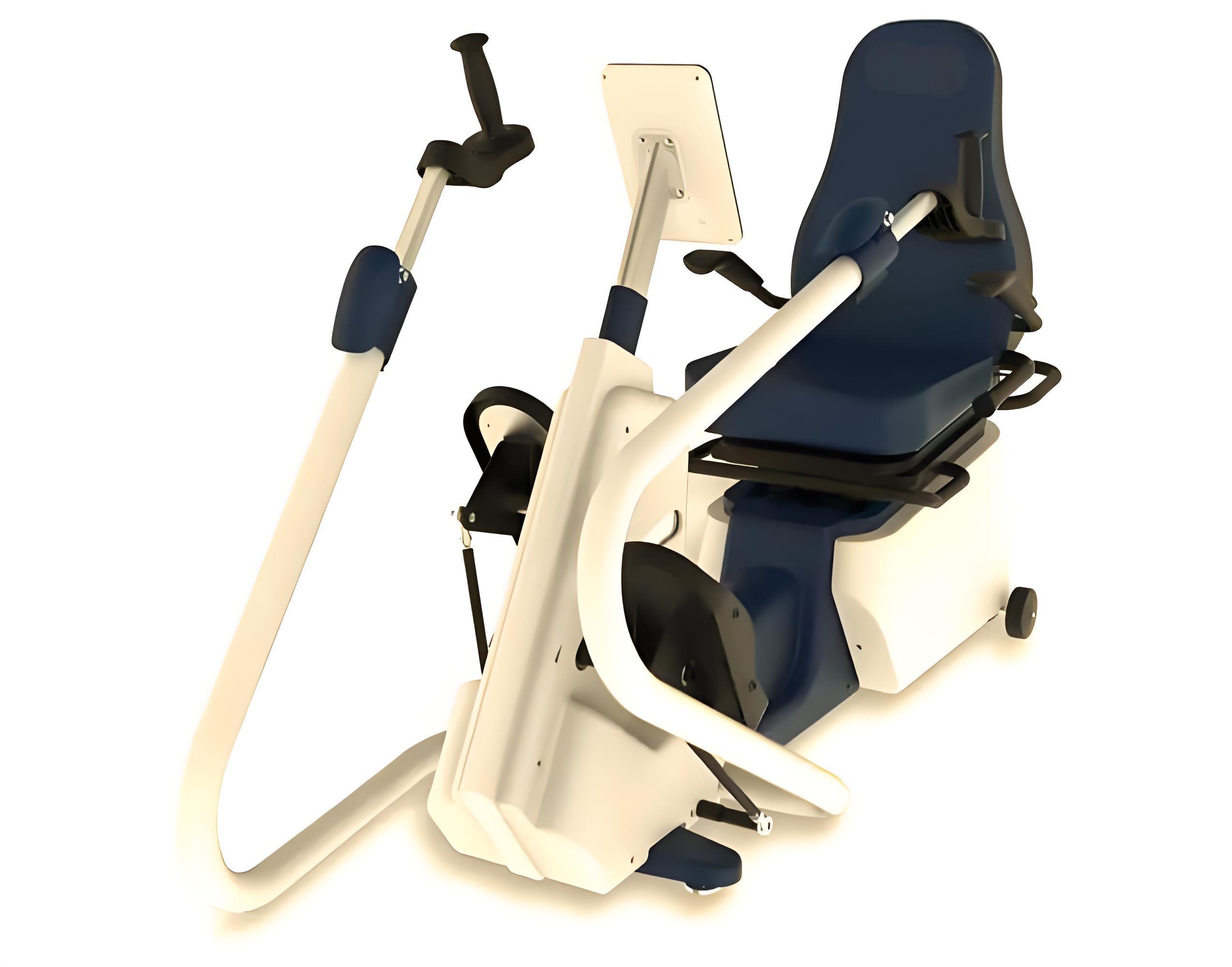
Dispositivos inteligentes de rehabilitación y enfermería
-
Estaciones de control de salud multiparamétricas de uso doméstico
Por qué elegir UGPCB?
UGPCB ha terminado 10 años de experiencia en fabricación de PCB de alta gama. Mantenemos ISO 9001, ISO 13485, y certificaciones UL. Ofrecemos servicio de proceso completo.: fabricación de PCB, abastecimiento de componentes, Ensamblaje SMT, y tarjeta de circuito impreso pruebas funcionales.
¿Su dispositivo asistente de salud inteligente tiene problemas con los límites de espacio?, vida flexible corta, o fallas en el conector? Póngase en contacto con UGPCB para obtener una solución personalizada de PCB rígido-flexible.
📧 Correo electrónico: ventas@ugpcb.com
🌐 Sitio web: www.ugpcb.com
📞 Línea directa técnica: +86 755-27211481
Al enviar una consulta, proporcione a nuestro equipo de ingeniería: Archivos Gerber / Requisitos de diseño de PCB / tipo de dispositivo de asistente de salud inteligente / volumen anual estimado.
Para obtener un informe de análisis DFM gratuito, envíe sus archivos de diseño por correo electrónico. El equipo de ingeniería de UGPCB responderá dentro de 24 horas con consejos de optimización de procesos y propuestas de reducción de costos.
*(Fuentes de datos: IPC-2221, Tipo IPC-6013 4, IPC-4552; datos de mercado de CSRankings, Consultoría Zhiyan, Informe de mercado futuro)*