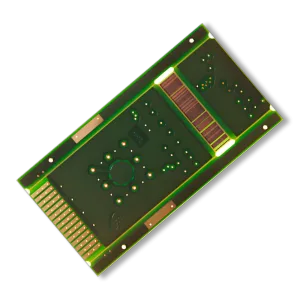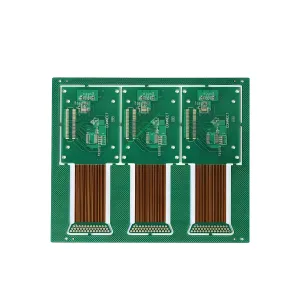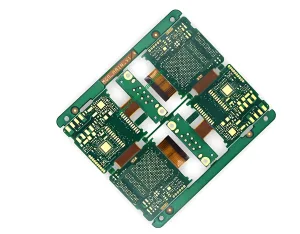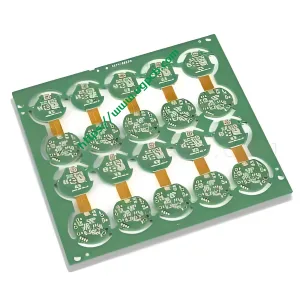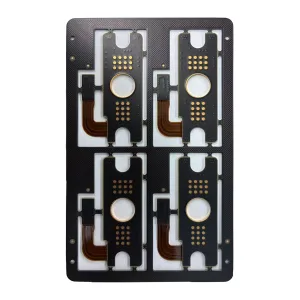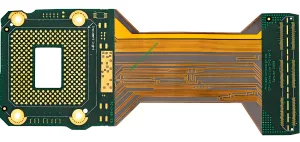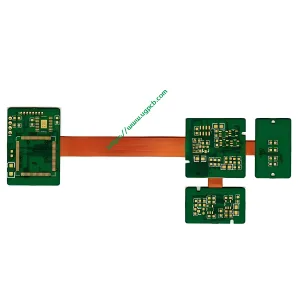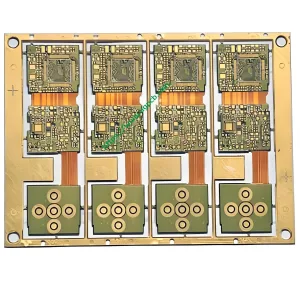
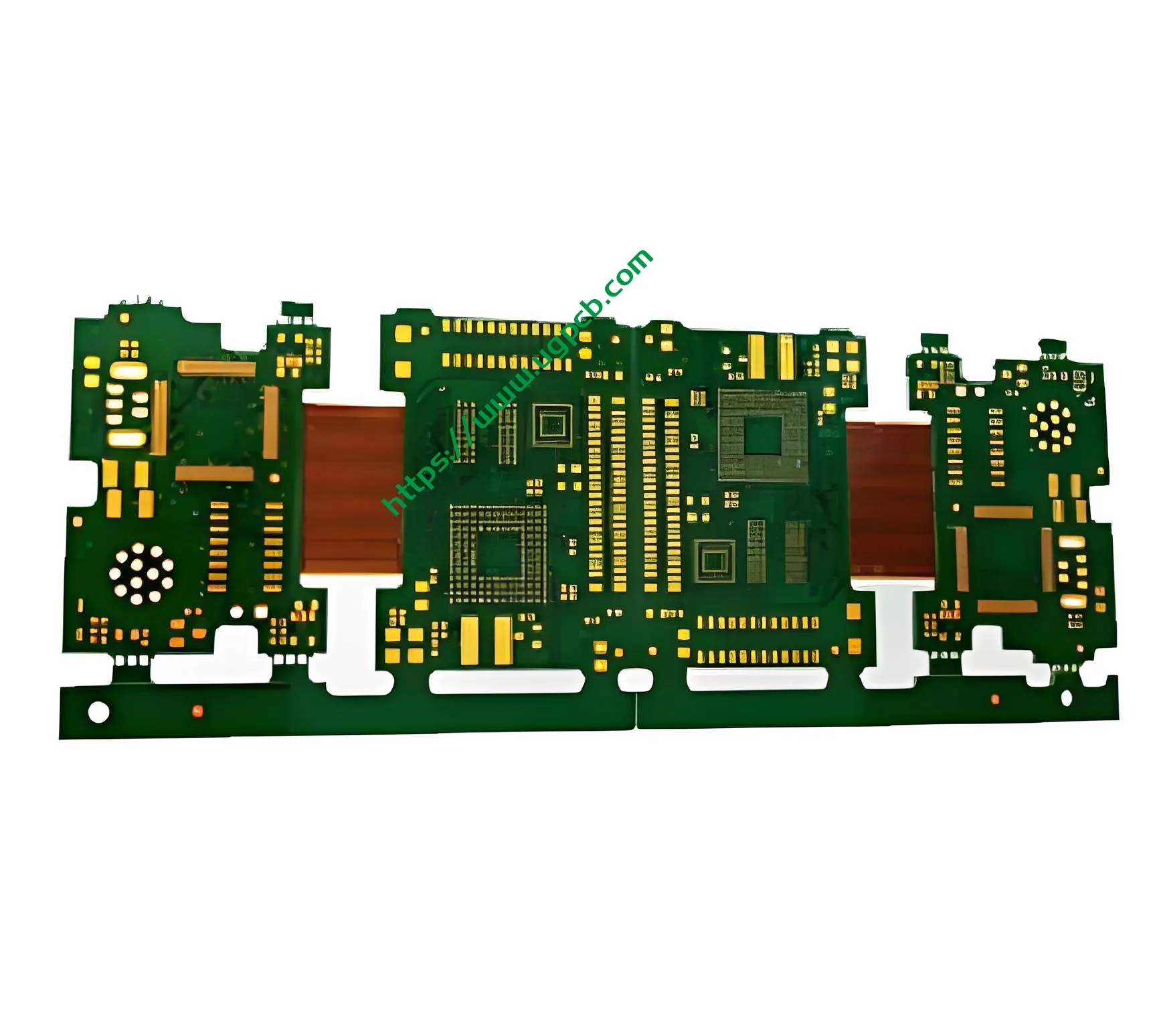
As unmanned aerial vehicles (UAVs) evolve, every gram impacts flight time, and every signal determines flight safety. Traditional rigid PCBs cannot fit into compact, folded drone frames, while flexible PCBs alone lack structural support. UGPCB solves this challenge with the PCB rígida e flexível para veículo aéreo não tripulado—a specialized circuit board designed for high-vibration, space-constrained aerospace applications.
This article explains the design, Materiais, and manufacturing standards behind this advanced PCB rígido-flexível. You will learn why it is the preferred interconnect solution for modern drone electronics.
1. Visão geral e definição do produto
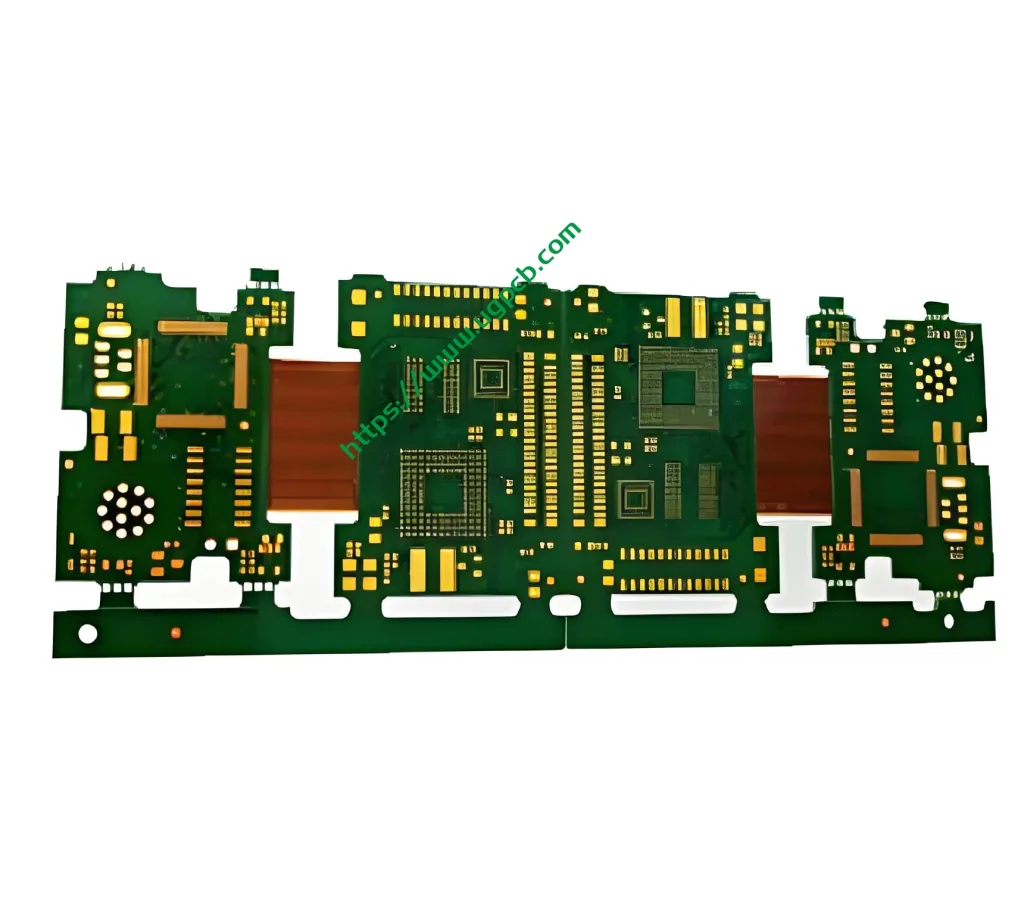
UM PCB rígido-flexível UAV combines rigid circuit board sections with flexible circuit board sections into a single, unified structure. The rigid areas (made of FR-4) support heavy components like processors and connectors. The flexible areas (made of polyimide, or PI) allow bending and folding. This design removes the need for connectors and wiring harnesses.
Aquela UGPCB, we define a high-quality rigid-flex printed circuit board as one that maintains signal integrity under drone-specific stresses, including high vibration, tight folding, and wide temperature variation. Our model is tailored for flight control systems, video transmission modules, and gimbal assemblies.
2. Key Specifications and Structure
The table below lists the core specifications for this UGPCB model.
| Parâmetro | Especificação |
|---|---|
| Modelo | PCB rígido-flexível UAV |
| Material | FR-4 (rígido) + PI (flexionar) |
| Empilhamento de camadas | Rígido: 4 camadas / Flexível: 2 camadas |
| Espessura Acabada | Rigid area: 1.0milímetros / Flex area: 0.15milímetros |
| Espessura do Cobre | 1 onças (internal and external layers) |
| Acabamento superficial | Ouro de imersão (CONCORDAR) |
| Min. Rastreamento / Espaço | 4 mil / 4 mil |
| Cor da máscara de solda | Verde (rígido) / Capa branca (flexionar) |
3. How It Works and Key Design Considerations
Como funciona
Esse PCB rígido-flexível acts as the central nervous system of a drone. The 4-layer rigid section provides a stable platform for soldering core components such as the main processor, giroscópio, e CIs de gerenciamento de energia. The 2-layer flexible section connects moving parts—like motors and gimbal cameras—without mechanical connectors. This allows free movement and folding without breaking the electrical path.
Considerações de design
-
Proteção da Zona de Transição: The junction between rigid and flexible areas is the most stress-prone point. UGPCB reinforces this area using teardrop pads and tapered trace widths. This prevents circuit breaks caused by continuous drone vibration.
-
Controle de impedância: For high-frequency video transmission signals (typically 50Ω or 100Ω differential), we use the 4 mil trace width and spacing to maintain consistent impedance across both rigid and flex sections.
4. Seleção de material: FR-4 and PI
Why does UGPCB use FR-4 and PI for this PCB rígida e flexível para veículo aéreo não tripulado?
-
Áreas Rígidas (FR-4): We select high-Tg (temperatura de transição vítrea) FR-4. This ensures the board does not soften or warp during high-power drone flights, preventing solder joint failure.
-
Flex Areas (PI – Poliimida): The flexible sections use high-grade polyimide. This material withstands repeated bending and extreme temperatures ranging from -40°C to +150°C. The asymmetric thickness (1.0mm rigid vs. 0.15mm flexível) balances mechanical strength with the thinness required for tight folding.
5. Recursos de desempenho
The combination of 1 onças de cobre, ouro de imersão, e 4 MIL Trace/Space delivers measurable performance benefits.
-
Alta confiabilidade: Ouro de imersão (CONCORDAR) creates a flat, oxidation-resistant surface. This supports fine-pitch BGA soldering and eliminates the risk of solder balls common with HASL finishes.
-
Integridade do sinal: O 4 mil trace width allows designers to route differential pairs in tight spaces. This reduces electromagnetic interference (EMI), which is critical for sensitive GPS and video signals.
-
Weight Reduction: Replacing a “rigid board + conector + cable” assembly with a single rigid-flex board can reduce total interconnect weight by up to 40%. This weight saving extends drone flight time.
-
Desempenho térmico: The white coverlay on the flexible section reflects more heat than traditional yellow coverlay. This helps manage temperatures during prolonged drone hovering.
6. Industry Classification
Baseado em IPC and industry standards, this product falls under:
-
Primary Category: Flexible and Rigid-Flex Printed Boards
-
Secondary Category: Multi-layer Rigid-Flex with Asymmetric Construction
-
Classe de aplicação: Aerospace and Unmanned Aerial Vehicle Electronics
7. Processo de fabricação (IPC-6013 & UL Compliance)
UGPCB follows a controlled process to meet IPC-6013 (Flexible/Rigid-Flex Board Qualification) e UL 94 V-0 padrões de inflamabilidade. The key steps for this 4-camada rígida + 2-layer flex design are:
-
Preparação de Materiais: FR-4 and PI base materials are cleaned and prepared.
-
Coverlay and Lamination: The flexible areas receive precision coverlay openings. O 4 camadas rígidas e 2 flex layers are then laminated together under high temperature and vacuum. This step requires precise adhesive flow control to prevent voids at the rigid-flex boundary.
-
Perfuração e Chapeamento: Laser drilling is used for microvias in the flexible areas. Copper is then plated to achieve 1 oz thickness in all vias.
-
Outer Layer Imaging and Plating: The outer layer circuits are formed, and final copper plating completes the 1 oz specification.
-
Acabamento superficial (Imersão Ouro): ENIG is applied to all exposed copper pads.
-
Profiling and Electrical Test: The board is routed to final shape. Cada conselho passa 100% teste de sonda voadora to verify electrical integrity.
8. Aplicações Típicas
Esse PCB rígida e flexível para veículo aéreo não tripulado is suitable for the following applications:
-
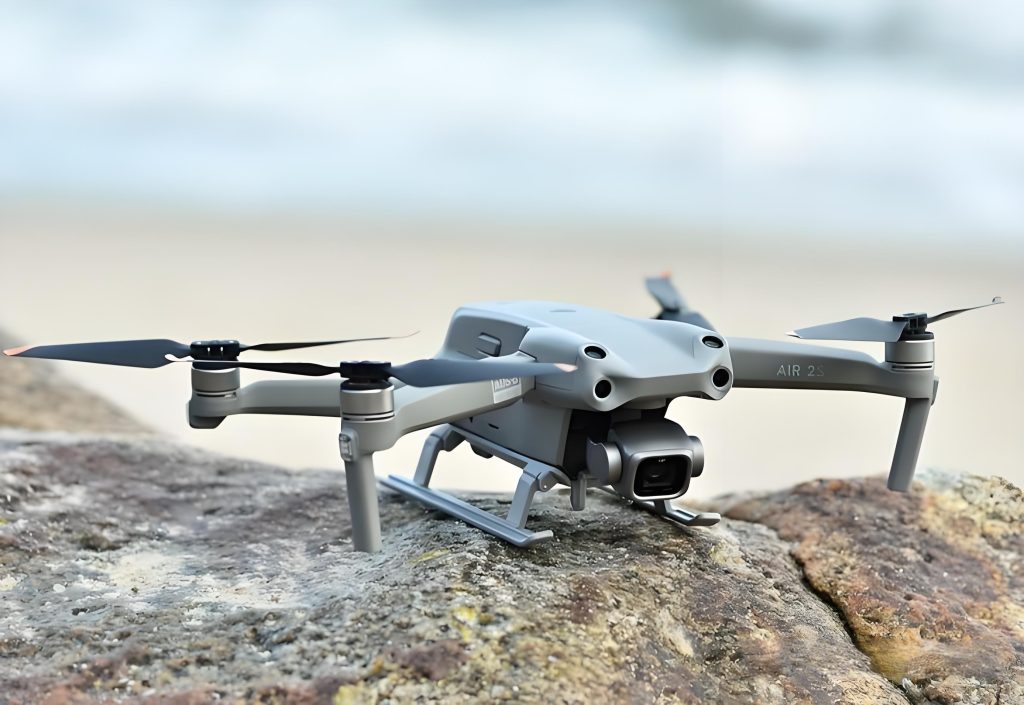
Foldable Consumer Drones: Used in hinge areas that require thousands of folds over the product lifespan.
-
FPV (First-Person View) Racing Drones: Eliminates connectors to reduce weight and improve thrust-to-weight ratio.
-
Camera Gimbals: Connects motors to the main board with fine flexible circuits that ensure zero signal lag during rapid movement.
-
Tethered Drones: O 1 oz copper in rigid sections handles high current and dissipates heat effectively during long-duration operations.
9. Por que escolher UGPCB?
A UGPCB é especializada em rigid-flex printed circuit boards with complex stackups. We have proven experience manufacturing fine-line designs (4 mil/4 mil) and asymmetric structures (1.0mm rigid + 0.15mm flexível). Our commitment includes:
-
Exact Specification Match: We build strictly to your Gerber files and stackup requirements.
-
Prototipagem Rápida: Nós oferecemos 5- to 7-day expedited service for drone developers who need rapid iteration.
-
Suporte de projeto: Our engineering team reviews your files to optimize rigid-flex transitions and minimize manufacturing risks.
10. Solicite um orçamento
Are you developing a drone and need a PCB rígido-flexível UAV that balances weight, durabilidade, e integridade do sinal? UGPCB supports projects from prototype to mass production. Contact our sales team for a competitive quote based on your 4-layer rigid, 2-layer flex requirements.
Click “Inquire Now” to let UGPCB support your next-generation drone design.