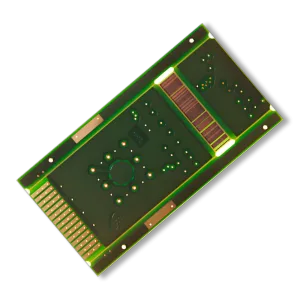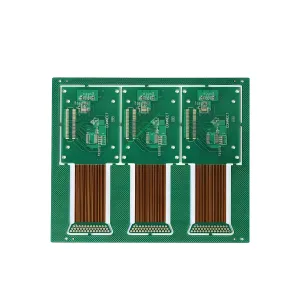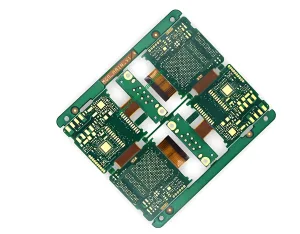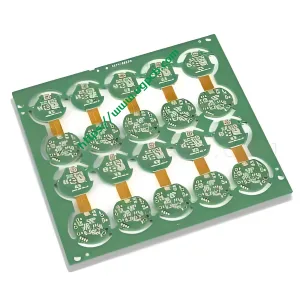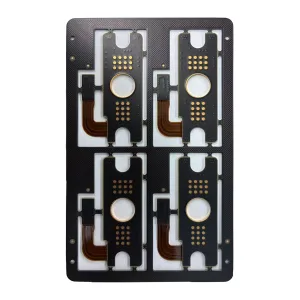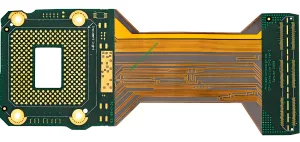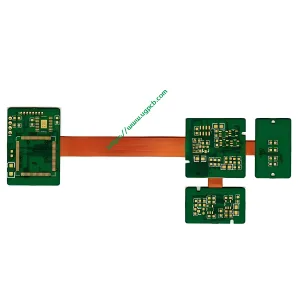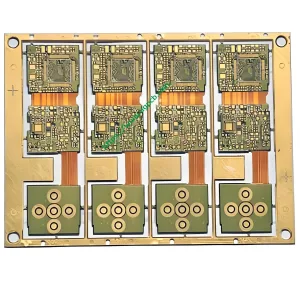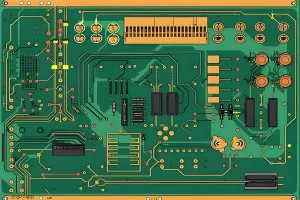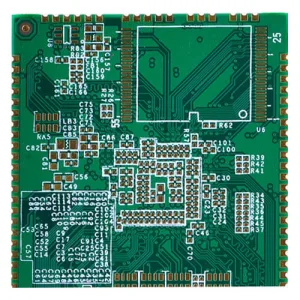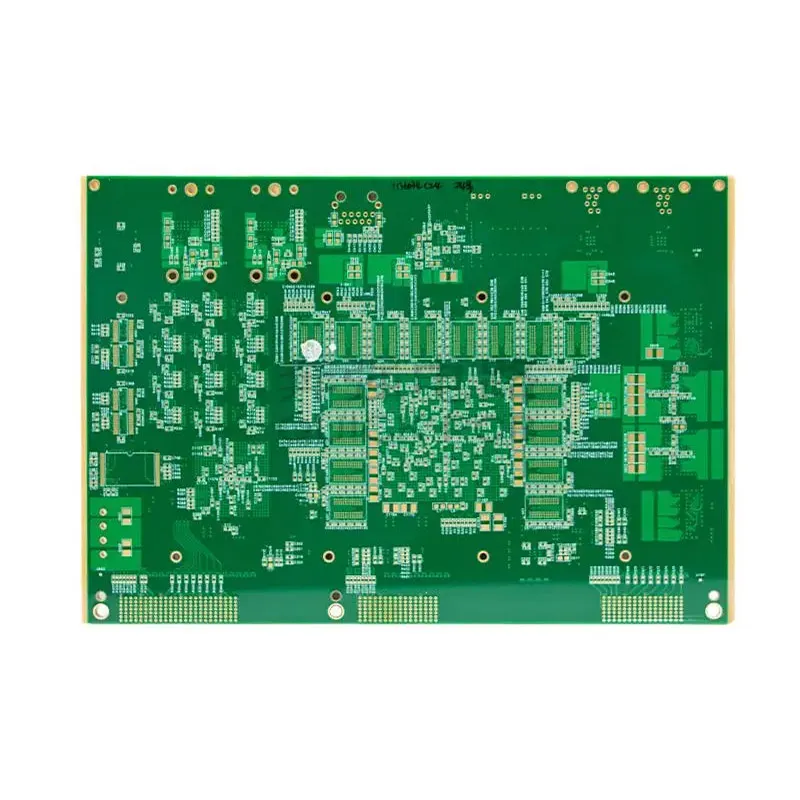
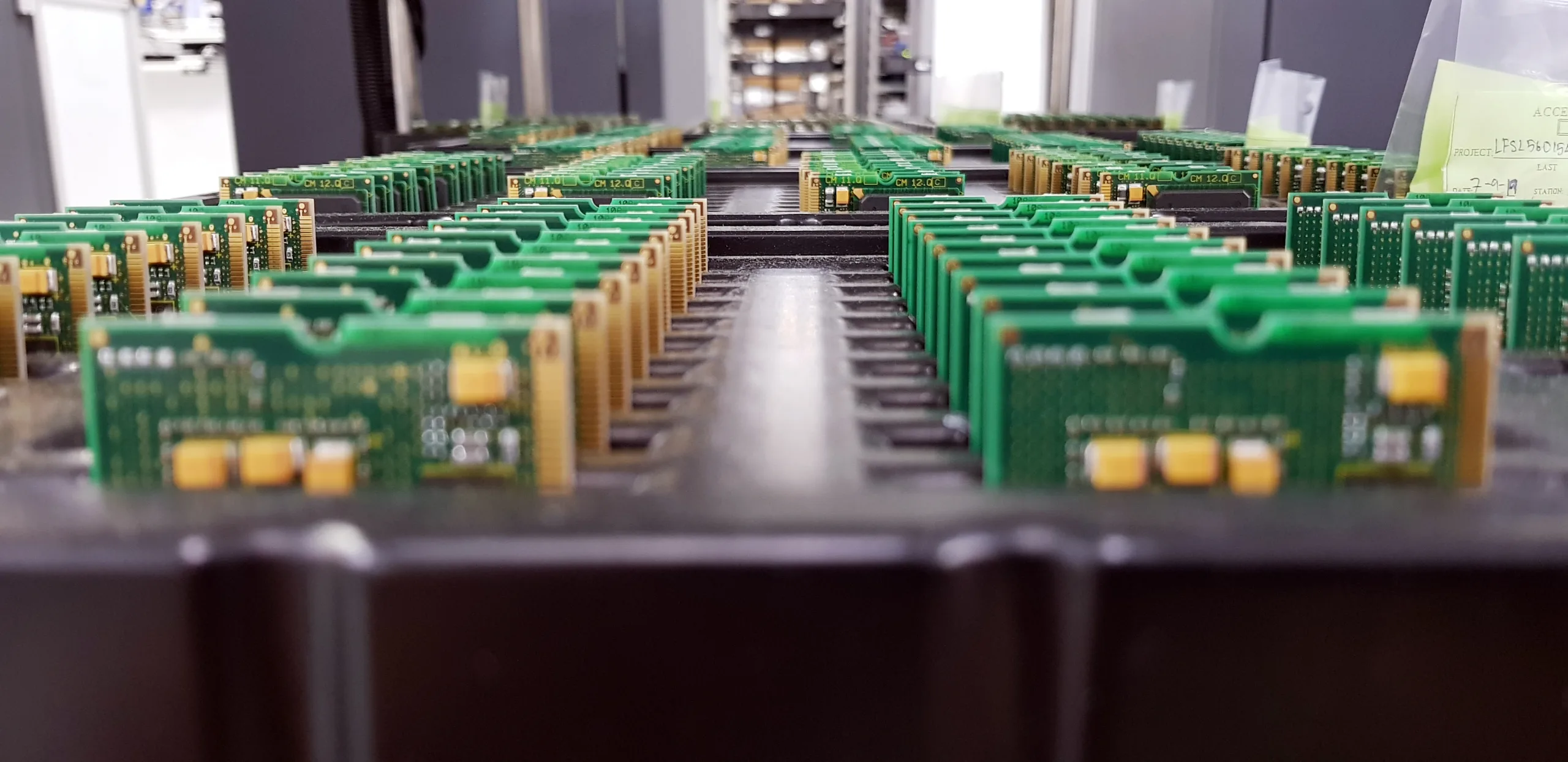
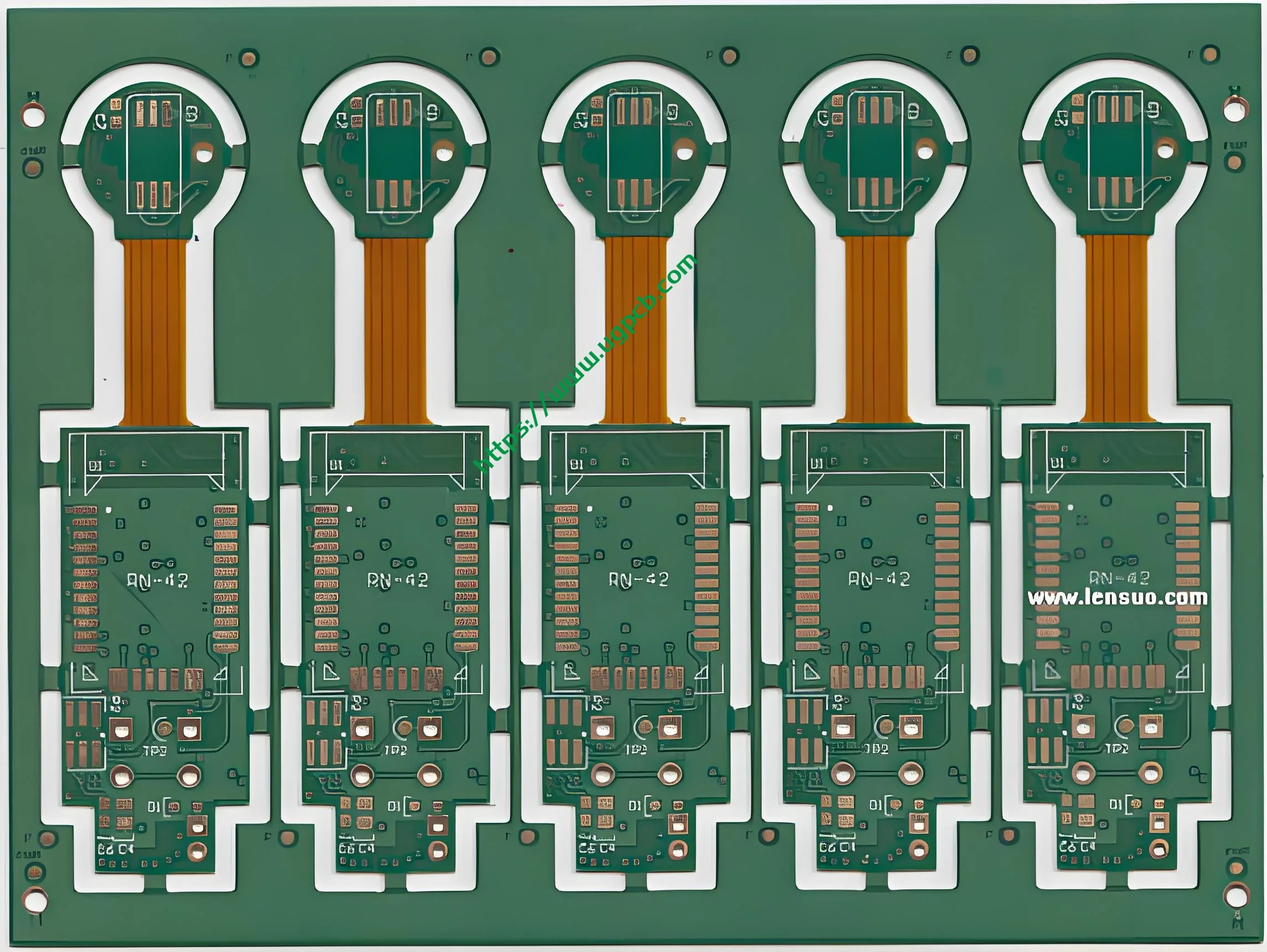
El rápido crecimiento del 5G, automatización industrial, y la electrónica médica exige una mayor fiabilidad, integración, y adaptabilidad espacial de las placas de circuito. PCB de flexión rígida (R-FPCB) Combina la estabilidad mecánica de los PCB rígidos con la adaptabilidad a la flexión de los PCB flexibles., convirtiéndola en una tecnología central para diseños electrónicos de alta gama. Según DIResearch, El mercado mundial de PCB rígido-flex alcanzó $2.604 mil millones en 2025 y se prevé que crezca hasta $3.726 mil millones por 2032, a una tasa compuesta 5.25%. UGPCB sigue esta tendencia con equipos avanzados y un estricto control de calidad., ofreciendo el 6-botón de panel de capa PCB rígido-flexible – un alto rendimiento, solución de alta confiabilidad para equipos industriales.
1. ¿Qué es una PCB rígida-flexible de 6 capas?? – Definición y Estándares IPC
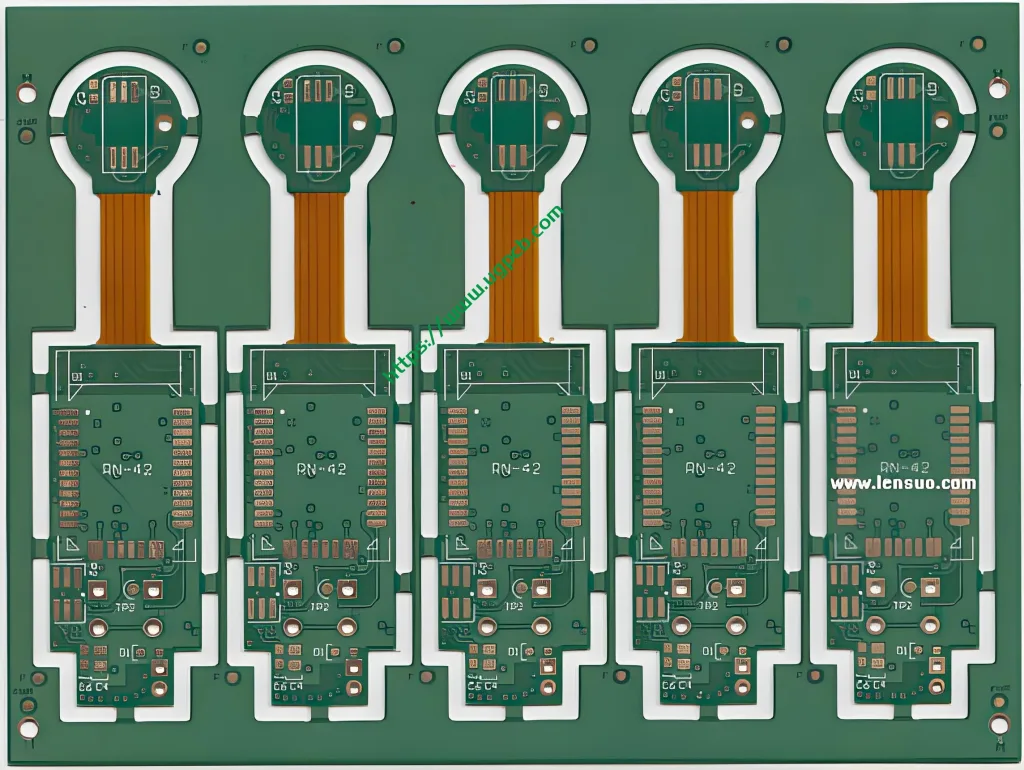
Una PCB rígido-flexible combina placas de circuito rígidas y flexibles en una estructura de interconexión mediante laminación. Su característica clave: un solo tablero tiene ambas áreas rígidas (para montaje de componentes) y áreas flexibles (para doblar y diseñar en 3D). Según IPC-6013D, Los PCB rígidos-flexibles se dividen en cinco tipos. Tipo 4 – materiales rígidos y flexibles multicapa con tres o más capas conductoras y PTH – combina con este producto. La PCB rígida-flexible de 6 capas de UGPCB utiliza una estructura híbrida: 4 Capas rígidas FR4 + 2 poliimida (PI) capas flexibles, permitiendo enrutamiento de alta densidad en áreas rígidas y flexión dinámica/estática en áreas flexibles.
Este producto sigue las pautas de diseño IPC-2221 y cumple Clase 2/3 niveles de rendimiento, adecuado para equipos industriales, instrumentos medicos, y electrónica automotriz que exigen alta confiabilidad.
2. Parámetros técnicos clave: la resistencia de una PCB rígida-flexible de alto rendimiento
UGPCB verifica todos los parámetros principales de su PCB rígido-flexible con panel de botones de 6 capas mediante un estricto control del proceso, Cumpliendo con los estándares IPC-6012 e IPC-4562..
| Parámetro | Especificación |
|---|---|
| Modelo | 6-botón de panel de capa PCB rígido-flexible |
| Acumulación | 4 Capas rígidas FR4 + 2 Capas flexibles PI |
| Grosor terminado | 0.15 milímetros |
| Espesor de la lámina de cobre | 1 onz (nominal 35 µm) |
| Color de máscara de soldadura | Verde / Blanco |
| Acabado superficial | ACEPTAR (Oro de inmersión de níquel químico) |
| mín.. rastro/espacio | 6 mil / 6 mil (0.1524 milímetros) |
| mín.. taladro mecanico | 0.2 milímetros |
| Solicitud | Placas de circuitos de equipos industriales. |
Nota de espesor de cobre: 1 oz de lámina de cobre tiene un espesor nominal de 35 µm (exactamente 34.798 µm). Para IPC-4562, la tolerancia es ±10%, por lo que el espesor real debe oscilar entre 31.31 µm en 38.5 µm. Esto garantiza la capacidad de transporte de corriente y la coherencia de la impedancia para la PCB rígida-flexible..
Fiabilidad de 6 Mil Trace/Espacio: IPC-2221 recomienda una distancia eléctrica mínima de 0.1 milímetros (~4 millones) para aplicaciones de bajo voltaje (<15V). Nuestro 6 mil (0.1524 milímetros) El diseño supera esta línea de base., proporcionando un amplio margen de aislamiento de señal en entornos electromagnéticos industriales complejos, Reducir la diafonía y el ruido eléctrico..
3. Consideraciones de diseño para PCB rígido-flexibles
El diseño de una PCB rígido-flexible requiere equilibrar áreas rígidas y flexibles. La zona de transición entre ellos es crítica para la confiabilidad a largo plazo.. Estos son los puntos clave de diseño en los que se centra UGPCB:
3.1 Diseño de zona de transición rígido-flexible
IPC-6013 define la zona de transición como una 3 Región de mm centrada en el borde del tablero rígido.. Esta área experimenta mucha tensión y es propensa a agrietarse., delaminación, y fatiga del cobre. UGPCB evita colocar elementos funcionales (vías, almohadillas, rastros críticos) en esta zona. También utilizamos láminas preimpregnadas de flujo bajo o sin flujo para evitar que la resina fluya hacia el área flexible..
3.2 Radio de curvatura y vida de fatiga dinámica
El rendimiento de flexión depende del espesor del material y del radio de curvatura.. La fórmula empírica es:
-
Radio mínimo de flexión dinámica ≥ 10 × espesor total del área flexible
-
Doblado estático (instalación única) radio mínimo ≥ 6 × espesor total del área flexible
Con un espesor total ultrafino de 0.15 milímetros, Este producto logra una flexión estable con radios tan pequeños como 1.5 milímetros, adecuado para rutas de enrutamiento complejas en equipos industriales. El área flexible de UGPCB resiste más 100,000 ciclos de flexión, y para aplicaciones altamente dinámicas puede alcanzar 500,000 ciclos (R=5mm, 180° Flexión hacia adelante y hacia atrás).
3.3 Espesor de cobre y trazas de área flexible
El cobre grueso en el área flexible reduce la flexibilidad y aumenta el riesgo de fatiga.. Por lo tanto, UGPCB utiliza una estrategia optimizada de espesor de cobre: las capas rígidas mantienen 1 oz para suficiente corriente, mientras que las capas flexibles utilizan cobre más delgado adaptado para doblarse. Un patrón de cobre rayado en el área flexible reduce efectivamente la concentración de tensión del cobre sólido., mejorando la vida de flexión dinámica.
4. Principio de funcionamiento de los PCB rígidos-flexibles
El principio de funcionamiento de una PCB rígido-flexible se basa en un diseño de interconexión integrada. Las áreas rígidas proporcionan soporte mecánico estable y disipación de calor para los componentes. (papas fritas, resistencias, condensadores, conectores). Las áreas flexibles manejan la conexión de señales y la flexión entre áreas rígidas. Los patrones conductores en cada capa se conectan eléctricamente a través de orificios pasantes chapados. (PTH). Durante la instalación u operación, el área flexible se dobla, pliegues, o se flexiona dinámicamente según la estructura mecánica, mientras que los componentes y las uniones soldadas en áreas rígidas permanecen fijos y libres de tensión.
Este diseño elimina la combinación tradicional de tablero rígido. + cables flexibles + conectores, reduciendo así las uniones de soldadura, Reducir los riesgos de reflexión de la señal y desajuste de impedancia., y mejorando significativamente la resistencia a vibraciones y golpes..
5. Clasificación de PCB rígidos-flexibles (IPC-6013D)
| Tipo de PCI | Definición | Capas conductoras | Características |
|---|---|---|---|
| Tipo 1 | PCB flexible de una cara | 1 | Con o sin refuerzo |
| Tipo 2 | PCB flexible de doble cara | 2 | Con PTH |
| Tipo 3 | PCB flexible multicapa | ≥3 | Con PTH |
| Tipo 4 | Combinación rígido-flexible multicapa | ≥3 | Rígido + materiales flexibles, con PTH – nuestro producto |
| Tipo 5 | PCB flexible/rígido-flexible | ≥2 | Sin PTH |
Para uso de instalación, este producto se aplica a Utilice un (doblar una vez para la instalación) y Utilice B (flexión dinámica continua).
6. Ventajas de materiales y rendimiento
6.1 Capa rígida FR4
FR4 (Retardante de llama 4) es el sustrato más maduro para PCB rígidos. Ofrece una excelente resistencia mecánica., buenas propiedades dieléctricas, y retardante de llama, haciéndolo ampliamente utilizado en equipos industriales. Temperatura de transición vítrea del FR4 (tg) normalmente oscila entre 130°C y 170°C, Garantizar la estabilidad dimensional en entornos industriales de alta temperatura..
6.2 poliimida (PI) Capa flexible
La poliimida es el sustrato principal para los PCB flexibles. Proporciona resistencia a altas temperaturas. (rango de funcionamiento -55°C a +150°C), buena rigidez dieléctrica, y excelente resistencia química. PI tiene una constante dieléctrica (Dk) de aproximadamente 3,4 a 3,5 y un factor de disipación (df) de aproximadamente 0,002–0,008, haciéndolo adecuado para la transmisión de señales de alta velocidad. UGPCB utiliza un sin adhesivo laminado de poliimida en la zona flexible. En comparación con los laminados tradicionales a base de adhesivos, las estructuras sin adhesivo son más delgadas (entre 12 y 25 µm), lograr radios de curvatura más pequeños (hasta 1 milímetros), y tener una expansión del eje Z más estable, mejorando significativamente la confiabilidad bajo flexión dinámica.
6.3 Acabado superficial ENIG
ACEPTAR (Oro de inmersión de níquel químico) es un acabado de dos capas metálicas: una capa de níquel (aprox. 3–6 µm de espesor) y una capa de oro (aprox. 0.05–0,1 µm de espesor). La capa de oro proporciona una excelente resistencia a la oxidación y soldabilidad.. La capa de níquel actúa como una barrera que impide la difusión del cobre en el oro.. ENIG está especialmente indicado para botoneras, conectores de dedo de oro, y almohadillas de alta confiabilidad, Garantizar un rendimiento de contacto estable después de repetidas conexiones y uso a largo plazo..
7. Características de rendimiento
La PCB rígida-flexible de 6 capas de UGPCB ofrece estas ventajas principales:
-
Ahorro de espacio: La integración rígido-flexible elimina conectores y cables, ahorrando entre un 30% y un 50% del espacio de instalación en comparación con los “tableros rígidos” tradicionales. + soluciones de cables.
-
Reducción de peso: La poliimida tiene baja densidad. (aprox. 1.42 gramos/cm³), Reducir significativamente el peso estructural general..
-
Fiabilidad mejorada: La eliminación de uniones soldadas y conectores mecánicos reduce las tasas de falla. Los estudios muestran que los PCB rígidos-flexibles reducen las tasas de falla en entornos de vibración en aproximadamente 70%.
-
Integridad de la señal: El enrutamiento continuo evita discontinuidades de impedancia en los conectores, beneficiando la transmisión de señales de alta frecuencia.
-
Resistencia a vibraciones y golpes: El área flexible actúa como un amortiguador natural., Absorber vibraciones mecánicas y proteger componentes en zonas rígidas..
-
3Capacidad de montaje D.: El tablero se adapta a diseños espaciales complejos., plegar y doblar para adaptarse a formas irregulares de recintos.
8. Proceso de fabricación de PCB rígidos-flexibles
UGPCB sigue los estándares IPC-6013 e IPC-6012 en su proceso de producción de PCB rígido-flexibles:
-
Corte de sustrato flexible – Corte el laminado revestido de cobre PI a medida.
-
Formación del circuito de capa interna. – Crear circuitos de capa interna sobre capas flexibles y rígidas. (exposición, desarrollo, aguafuerte).
-
inspección AOI - 100% Inspección óptica automatizada para aperturas/cortocircuitos..
-
Laminación – Laminar capas rígidas FR4 y capas flexibles PI usando preimpregnado de bajo flujo bajo alta temperatura y presión, con espaciadores para evitar que la resina fluya hacia áreas flexibles.
-
Perforación – Perforación mecánica (mín.. 0.2 milímetros) y perforación láser (para microvías).
-
PTH y revestimiento – Depositar cobre en los orificios y la placa al espesor especificado..
-
Formación del circuito de la capa exterior. – Transferir y grabar patrones de capas exteriores..
-
Recubrimiento de máscara de soldadura – Aplicar tinta de máscara de soldadura verde o blanca., almohadillas de apertura selectiva.
-
Acabado superficial – Tratamiento ENIG.
-
Enrutamiento – Fresar el contorno, cut away rigid material covering flexible areas to expose the flex section.
-
prueba electrica – Flying probe or fixture test to ensure continuity.
-
FQC and shipping – Final quality inspection followed by vacuum packaging.
This process ensures reliable bonding between FR4 rigid areas and PI flexible areas, while PTH hole wall copper thickness meets IPC-6012 Class 2/3 requisitos (minimum 18–20 µm).
9. Classification by Structure and Application
| Clasificación | Subtype | Descripción |
|---|---|---|
| Recuento de capas | 2 / 4 / 6 / 8+ capas | este producto: 6 capas (4R+2F) |
| Rigid-flex layout | Symmetrical / Asymmetrical | Asymmetrical: flexible layers on one side of rigid layers |
| Bend type | Estático / Dinámica | Estático: instalación única; Dinámica: repeated bending |
| Via type | Full PTH / Blind/buried / IDH | este producto: full PTH |
| Solder mask process | Cubierta / Tinta de máscara de soldadura | Coverlay is better for flexible areas |
Este producto es un multilayer symmetrical rigid-flex PCB (Tipo 4) with a rigid-to-flex layer ratio of 4:2, full PTH structure, solder mask ink on rigid areas, and coverlay protection on flexible areas.
10. Principales casos de uso: aplicaciones de equipos industriales
La PCB rígida-flexible de 6 capas de UGPCB está diseñada específicamente para equipos industriales. Las aplicaciones típicas incluyen:
-
Paneles de control industriales y sistemas de botones. – Los paneles de botones necesitan áreas rígidas (contactos de botón) y áreas flexibles (enrutamiento de señal) en un tablero. Los PCB rígidos y flexibles satisfacen perfectamente esta necesidad al tiempo que eliminan las uniones de soldadura del conector., mejorando enormemente la confiabilidad mecánica del panel.
-
Equipos de automatización y robots. – La transmisión de señales en articulaciones robóticas sufre una flexión continua.. La capacidad de flexión dinámica de los PCB rígidos-flexibles admite requisitos de ciclo alto.
-
Instrumentos de prueba y medida. – Los dispositivos de prueba compactos se benefician del enrutamiento 3D, optimizando la utilización del espacio.
-
Módulos de sensores industriales – Las áreas flexibles se adaptan a carcasas de dispositivos o superficies curvas, permitiendo una conexión perfecta entre los sensores y los tableros de control principales.
-
Módulos de visualización industriales – La interconexión entre pantallas LCD/LED y placas de controlador se simplifica con PCB rígido-flexibles, reduciendo el espesor y mejorando la resistencia a las vibraciones.
-
Dispositivos médicos – Unidades de ultrasonido portátiles, monitores de pacientes, y otros instrumentos médicos exigen miniaturización, peso ligero, y alta confiabilidad: los PCB rígidos y flexibles son una opción ideal.
-
Electrónica automotriz – Las unidades de control del vehículo y los módulos de sensores requieren resistencia a las vibraciones y tolerancia a las altas temperaturas..
Los PCB rígidos-flexibles destacan en tres dimensiones de capacidad: flexión dinámica, ambientes de alta vibración, y espacios compactos, especialmente adecuados para aplicaciones de equipos industriales exigentes.
11. ¿Por qué elegir PCB rígidos-flexibles UGPCB??
UGPCB combina años de experiencia en la fabricación de PCB con líneas de producción automatizadas avanzadas para proporcionar una solución integral de PCB rígido-flexible para clientes globales.:
-
Soporte de recuento de capas: 4 a 24 capas de combinación rígido-flexible, compatible con diseños de interconexión de alta densidad HDI.
-
Circuitos ultrafinos: Seguimiento/espacio mínimo hasta 1.5 mil/1,5 mil con tolerancia dentro de ±5%.
-
Control de impedancia de alta precisión: Tolerancia de impedancia tan ajustada como ±5%, adecuado para aplicaciones de alta frecuencia por encima 10 GHz.
-
Gestión de calidad total: La fábrica implementa TQM con 100% inspección AOI + Predicción de defectos de IA, logrando una tasa de rendimiento superior 98%.
-
Servicio integral: Desde el diseño y la fabricación de PCB hasta el ensamblaje de PCBA y el abastecimiento de componentes, UGPCB ofrece un servicio completo de cadena industrial, acortamiento R&Ciclos D y aceleración del lanzamiento de productos..
Obtenga una cotización & Soporte técnico para la PCB rígida-flexible de 6 capas de UGPCB
La UGPCB proporciona:
-
Sistema de soporte en línea en tiempo real – Asistencia técnica profesional 7×24 horas.
-
Comprobación DFM gratuita – Revisión profesional del diseño para la fabricación para evitar fallas de diseño..
-
Creación rápida de prototipos y producción en volumen – Plazo de entrega de la muestra: 7–10 días laborables; producción en volumen: 2–3 semanas.
-
Logística global – Soporte para DHL, Fedex, Unión Postal Universal, y otros mensajeros internacionales.
Visite el sitio web oficial de UGPCB para enviar su consulta sobre PCB rígido-flexible, o póngase en contacto con el equipo técnico de UGPCB para obtener una solución personalizada de PCB rígido-flexible con panel de botones de 6 capas.
*Fuentes de datos: Parámetros estándar IPC-6013D, Pautas de autorización eléctrica IPC-2221, y los datos de tolerancia de la lámina de cobre IPC-4562 se basan en estándares autorizados de la industria.. Los datos sobre el tamaño del mercado global provienen de informes públicos de DIResearch y QYResearch.*