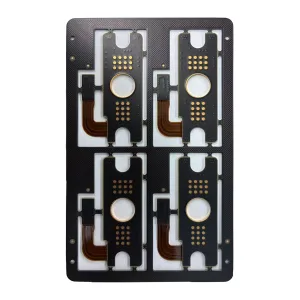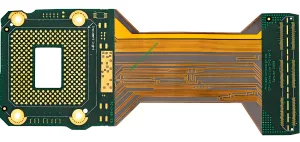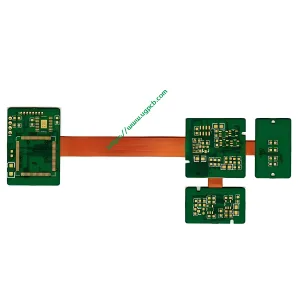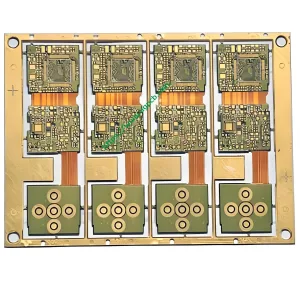
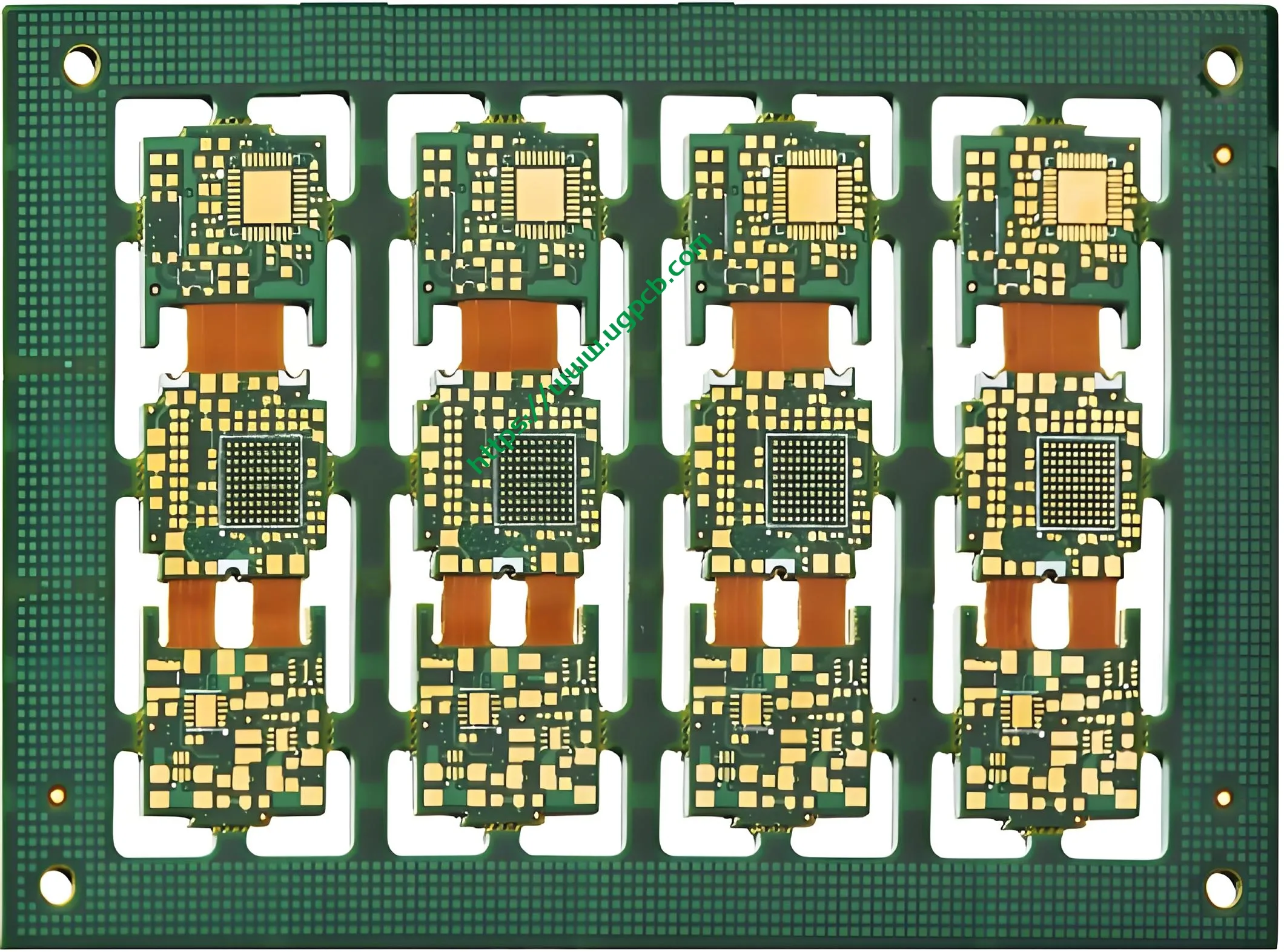
Descripción general del producto | Integrado & Arquitectura electrónica optimizada
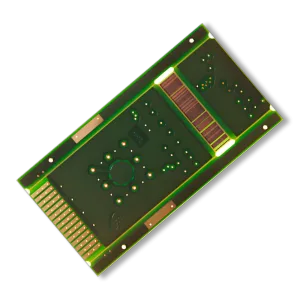
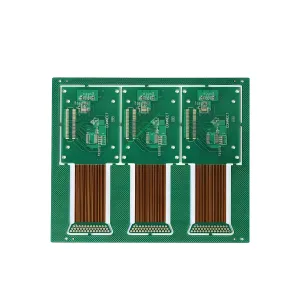
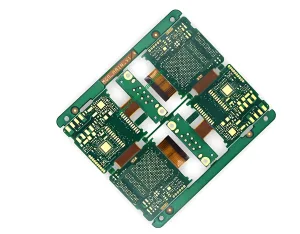
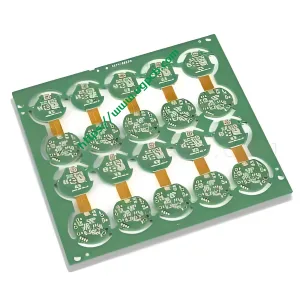
El 6 PCB rígido-flexible de capas combina placas rígidas multicapa con circuitos flexibles a través de un proceso de laminación preciso. Esta estructura eleva la capacidad de ensamblaje 3D a un nuevo nivel. UGPCB diseña este modelo específicamente para aplicaciones médicas exigentes. El espesor final del tablero es de 1,0 mm.. La superficie utiliza ENIG 2μ“ (oro de inmersión). Este acabado garantiza una planitud excelente y ofrece un rendimiento eléctrico superior para la colocación de componentes de alta densidad..
Definición técnica & Clasificación | Cumplimiento de IPC-6013E
Según IPC-6013E, a tablero impreso rígido-flexible Tiene tres o más capas conductoras.. Contiene materiales rígidos y flexibles con orificios pasantes chapados.. Para un seguimiento y trazabilidad precisos de los datos, clasificar el producto utilizando estas dimensiones:
-
Clasificación de apilamiento: 2+2+2 híbrido multicapa (1.0mm de espesor total)
-
Clase de rendimiento IPC: Clase 3 (crítico para dispositivos médicos que requieren operación continua)
-
Sistema de materiales: Compuesto (Zona rígida FR-4 + Área flexible de poliimida PI)
-
Acabado superficial: DE ACUERDO 2 µ“ (oro de inmersión)
-
Campo de aplicación: Electrónica médica profesional.
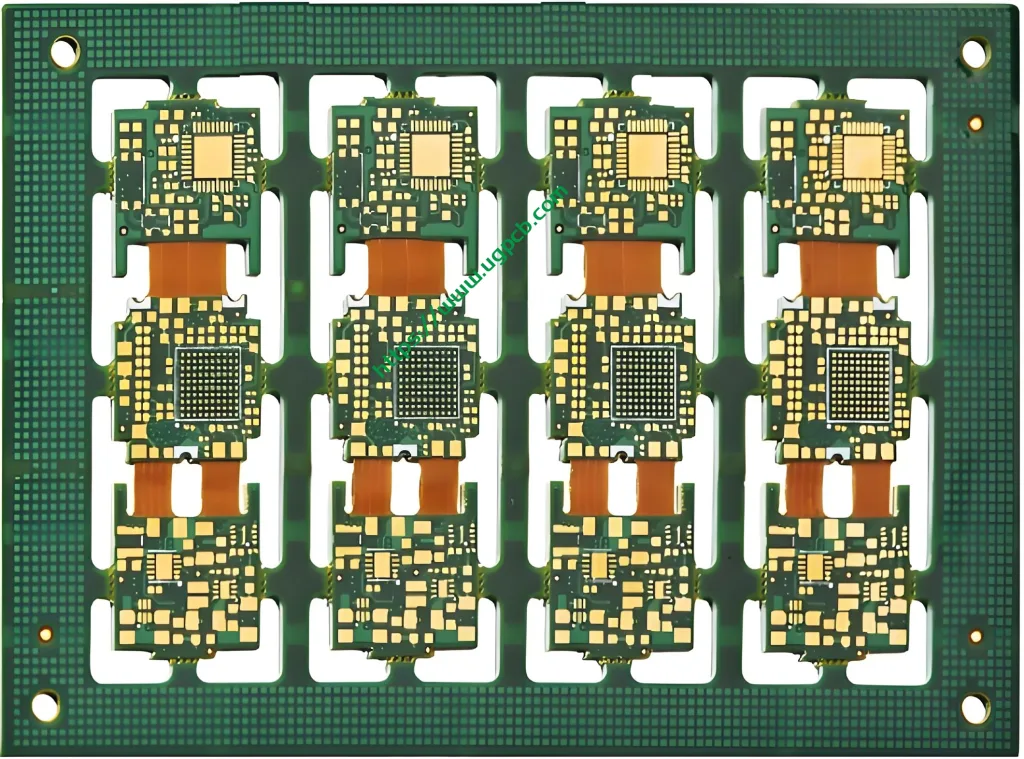
Selección de material & Acumulación | Combinación de oro PI y FR-4
La selección de materiales establece el límite de rendimiento para cualquier 6 PCB rígido-flexible en capas. UGPCB utiliza un FR-4 avanzado + sistema compuesto PI.
-
zona rígida (FR-4): El material de alta Tg proporciona soporte mecánico y disipación de calor para virutas grandes., conectores, y componentes pesados.
-
Área flexible (poliimida – PI): El núcleo flexible utiliza poliimida.. 2FCCL (cobre sin adhesivo) ofrece mejor estabilidad dimensional a alta temperatura y vida útil de flexión que el 3L FCCL. La resistencia al pelado debe cumplir con IPC-TM-650 2.4.9, normalmente ≥0,8 N/mm, para evitar la delaminación durante la flexión dinámica.
-
Diseño de apilamiento (2+2+2): Dos capas flexibles y cuatro capas rígidas se entrelazan. Esta estructura tipo sándwich mantiene un espesor total de 1,0 mm y al mismo tiempo proporciona un blindaje completo para las capas de señal..
Principio de trabajo & Integridad de señal | Interconexión perfecta
Desde una vista de ruta eléctrica, el principio de funcionamiento de un 6 El PCB rígido-flexible de capas es sencillo pero inteligente. En un “PCB” tradicional + conector + Configuración “FPC”, Cada conector introduce discontinuidad de impedancia y pérdida de inserción..
En un tablero rígido-flexible, Los rastros de cobre entre las capas flexibles y rígidas se conectan directamente a través de orificios pasantes chapados. (PTH), vias ciegas, y vias enterradas. Esta conexión perfecta reduce la reflexión de la señal durante Asamblea de PCBA. Para equipos de imágenes médicas de alta precisión que funcionan a frecuencias de GHz, la interconexión perfecta afecta directamente la claridad de las imágenes y la recuperación algorítmica.
Especificaciones clave de diseño & Parámetros | Métricas de ingeniería
UGPCB establece estrictas tolerancias de diseño y fabricación para el 6 capas de PCB rígido-flexibles para garantizar la producibilidad y la alta confiabilidad. Vea la tabla a continuación.
| Parámetro | Especificación | Nota de ingeniería & Estándar |
|---|---|---|
| Modelo de producto | 6 PCB rígido-flexible de capas | Estructura híbrida de alta densidad |
| Pila de capas | 2+2+2 | 6 capas de circuito (4 rígido, 2 doblar) |
| Grosor terminado | 1.0 milímetros | Se adapta a carcasas compactas para dispositivos médicos. |
| Materia prima | FR-4 + PI | Soporte mecanico + flexión dinámica |
| Ancho/espacio mínimo de línea | 0.15 milímetros / 0.15 milímetros | Permite enrutamiento complejo de alta densidad |
| Espesor de cobre | 1 onz (35 µm) | Garantiza capacidad de corriente y ductilidad del cobre en zonas flexibles. |
| Acabado superficial | DE ACUERDO 2 µ“ (oro de inmersión) | Cumplimiento de ROHS, buena soldabilidad y resistencia a la oxidación |
| Color de máscara de soldadura | Verde / Blanco | Colores comunes para dispositivos médicos. |
| Temperatura de funcionamiento | -40°C a +125°C | Pasa las pruebas de ciclos térmicos para entornos médicos hostiles |
*El diseño sigue IPC-2223. El radio de curvatura mínimo en curvatura dinámica debe ser ≥10× espesor del tablero. Para flexión estática o instalación., use ≥6× de espesor para evitar la fractura por fatiga del cobre.*
Características clave & Ventajas del diseño | Beneficios estructurales
La UGPCB 6 El PCB rígido-flexible de capas ofrece estas principales ventajas competitivas:
-
Interconexión interna perfecta: Elimina conectores placa a placa, reduciendo el número de conectores BOM B2B y en general tarjeta de circuito impreso peso.
-
Excelente adaptabilidad al espacio 3D: El perfil delgado de 1,0 mm y el material PI permiten una flexión máxima a lo largo de las curvas de la carcasa del dispositivo médico para diseños de formas irregulares..
-
Alta resistencia a las vibraciones: Quitar el eslabón mecánico más débil (conectores) Proporciona a las placas rígido-flexibles un rendimiento superior en marcapasos o monitores portátiles sometidos a vibración..
-
Integridad de la señal: En una pila de 6 capas, Las capas internas pueden servir como energía sólida y planos de tierra.. Proporcionan planos de referencia perfectos para señales de capa superior con acabado ENIG 2μ“.
Proceso de fabricación, control de calidad & Estándares de PCI | Control estricto del proceso
Fabricar un 6 La PCB rígida-flexible de capas es mucho más compleja que las placas multicapa ordinarias.. UGPCB controla estrictamente estos pasos clave para cumplir con la clase IPC-6013 3, el más alto estándar de confiabilidad para servicios médicos, aeroespacial, y aplicaciones militares.
-
Corte & imágenes de la capa interna
Lámina de cobre limpia, FR-4, y sustratos PI. Usar LDI (Imágenes directas láser) para lograr una precisión de registro de ±20 µm para 0.15 mm líneas finas. -
Laminación (paso crítico)
Une secciones rígidas de FR-4 con secciones flexibles de PI en un laminador de vacío a 180 °C ±5 °C con presión precisa. Controle el flujo de adhesivo para evitar que la resina se derrame en el área de doblez., que debería permanecer sin pegamento. -
Perforación & metalización
Combine perforación mecánica y láser. Porque PI y FR-4 difieren, Utilice un proceso de desmembrado con plasma para garantizar una buena rugosidad y adhesión de la pared del orificio de PTH.. -
Enchapado & acabado superficial
Después del revestimiento de cobre de pensión completa, aplicar ENIG 2μ“ oro de inmersión. La industria médica prefiere este acabado por su superficie plana y excelente biocompatibilidad.. -
Pruebas de confiabilidad según IPC-TM-650
-
Prueba de ciclo de curvatura: evalúa la vida flexible
-
Prueba de estrés térmico: simula reflujo y choque térmico
-
Análisis de microsección: verifica la integridad del cobre PTH y la línea de unión de laminación
-
Aplicaciones | Médico & Enfoque industrial de alta gama
UGPCB desarrolló este 1,0 mm 6 capas de PCB rígido-flexible para escenarios de alto estándar que exigen confiabilidad y utilización extrema del espacio.
-
imagen médica & sondas de ultrasonido: Dentro de un pequeño mango de transductor, Los componentes densos necesitan que el tablero se doble y se ensamble en un espacio 3D reducido..
-
Dispositivos médicos implantables: Los marcapasos y neuroestimuladores requieren un tamaño pequeño, peso ligero, y alta fiabilidad sin conectores.
-
monitores portátiles: La zona rígida soporta virutas con suficiente fuerza., mientras que el área flexible se pliega para conexiones de pantalla.
-
Herramientas quirúrgicas mínimamente invasivas.: Los instrumentos laparoscópicos y robóticos necesitan componentes PCBA altamente integrados dentro de un diámetro interior muy estrecho.
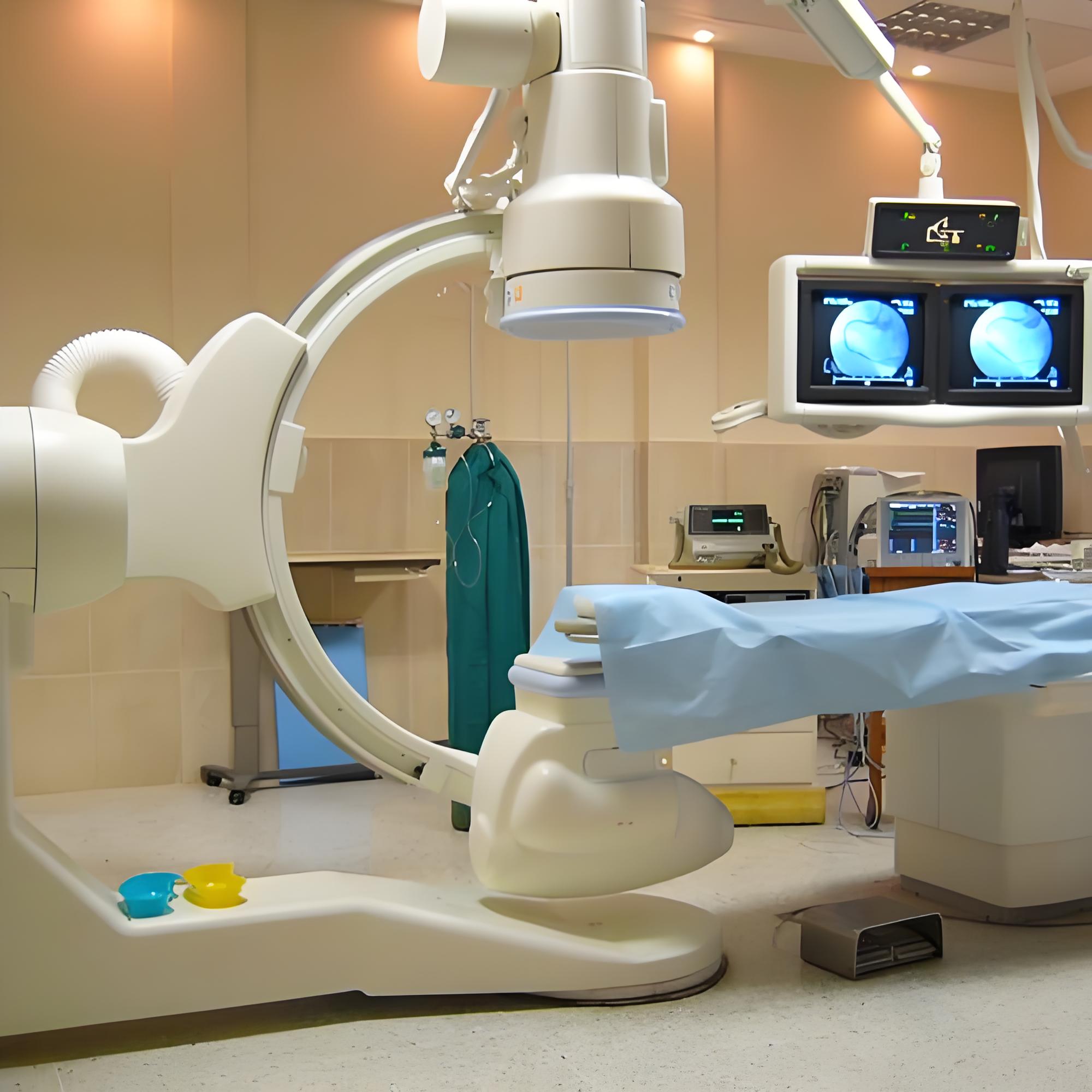
Tendencia del mercado: El mundial PCB rígido-flexible El mercado estaba valorado en aproximadamente 2.604mil millones en 2025. Se espera que alcance3.726 mil millones por 2032, con una CAGR de 5.25%. En el segmento de PCB médicos, Los impulsores del crecimiento son especialmente fuertes.. Los diseñadores están adoptando líneas y espacios más finos y la tecnología HDI de forma más amplia.
¿Por qué UGPCB?? | Su 6 Fabricante de PCB rígido-flexible de capas
Complejo 6 Los proyectos de PCB rígido-flexibles de capas necesitan un fabricante con tecnología madura y soporte de ingeniería.. UGPCB tiene un avanzado producción de IDH Línea e ingenieros experimentados que se especializan en laminación flexible.. Prometemos:
-
Comprobación DFM gratuita: Obtenga comentarios sobre la capacidad de fabricación de las áreas de transición rígido-flexible antes de realizar el pedido.
-
Cumplimiento estricto de IPC: La producción en masa sigue la clase IPC-6013 3 / Clase 2 estándares.
-
Servicio de calidad: La creación de prototipos y la producción en volumen obtienen la misma calidad de alto nivel.
-
Prototipos de giro rápido: Para necesidades rápidas de proyectos médicos, ofrecemos producción acelerada.
📞 Obtenga su cotización rápida de PCB
UGPCB ofrece servicios personalizados 6 soluciones de PCB rígido-flexibles con acabado ENIG de 2 µ“ y control de espesor especial de 1,0 mm. Visite nuestro sitio web oficial o envíe sus archivos Gerber a sales@ugpcb.com para obtener soporte técnico.