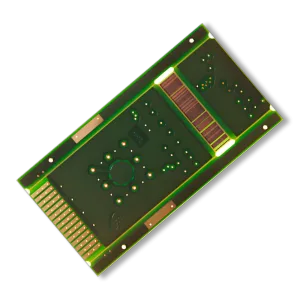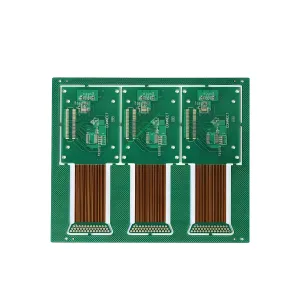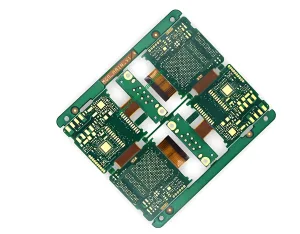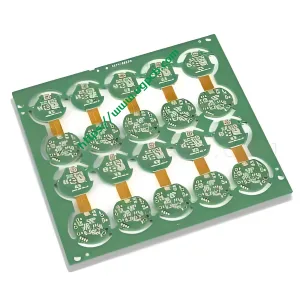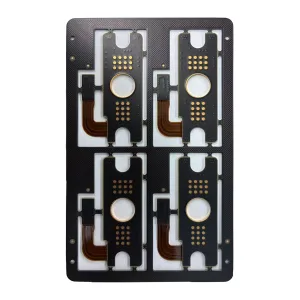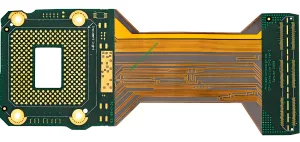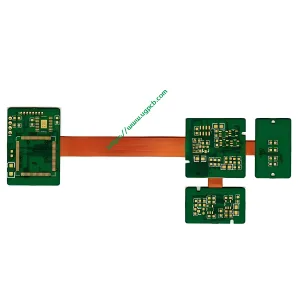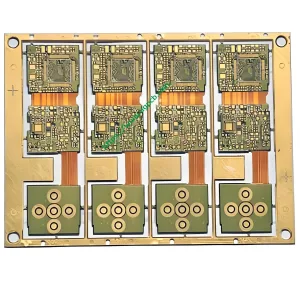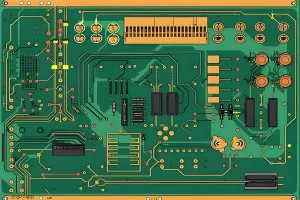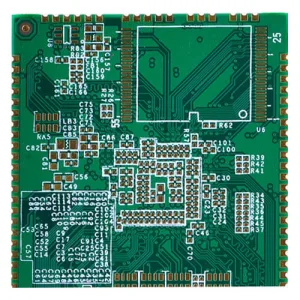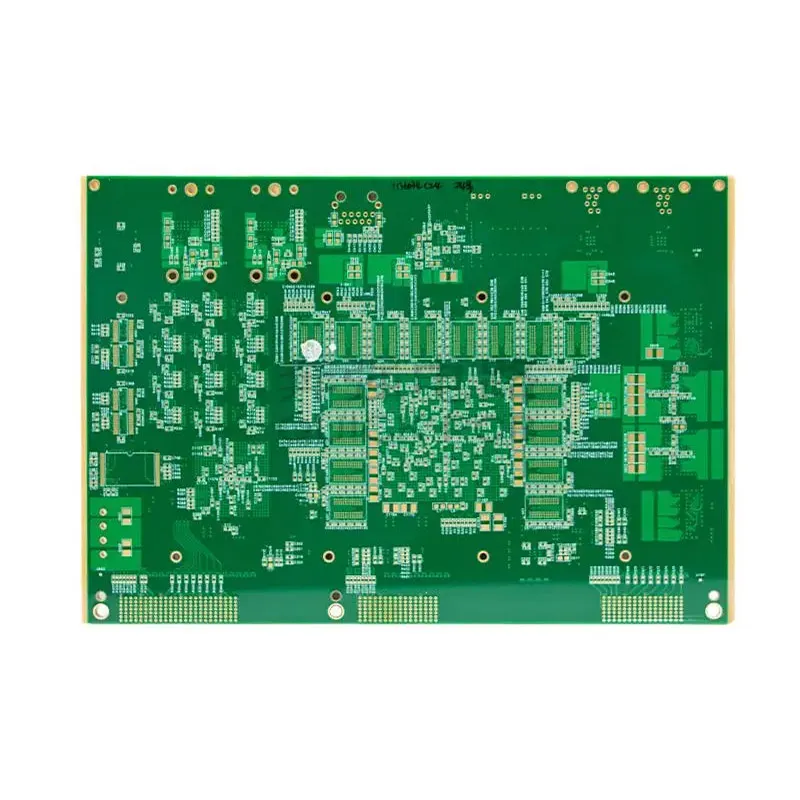
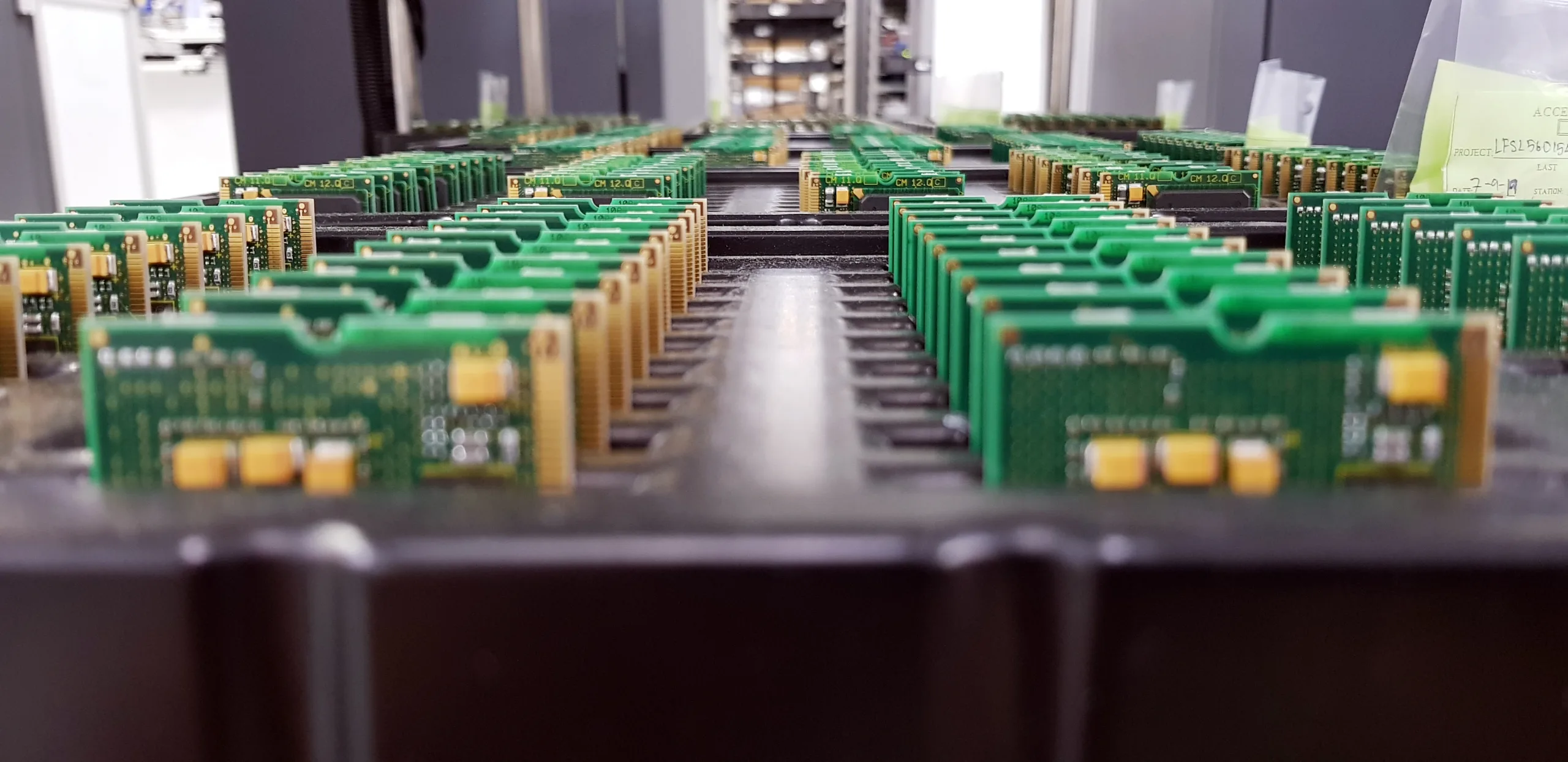
A medida que la electrónica digital evoluciona hacia una mayor integración, peso más ligero, y confiabilidad sin concesiones, PCB rígido-flexibles se han convertido en la columna vertebral crítica de sistemas de circuitos complejos. Cuando las limitaciones de espacio y la integridad de la señal son primordiales, combinatorio taponamiento de resina epoxi con tecnología rígido-flexible representa el estándar de oro para soluciones de interconexión de alta densidad.
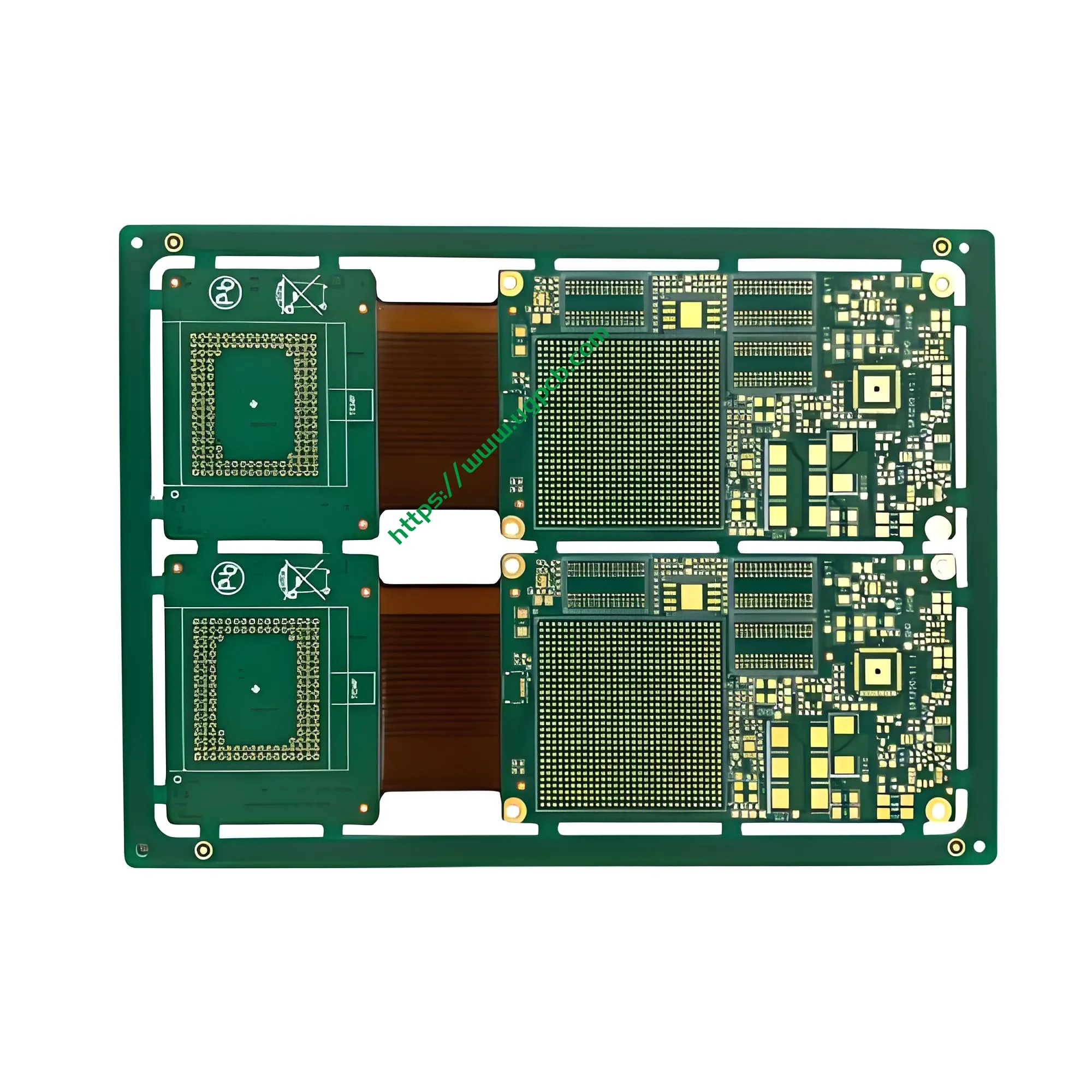
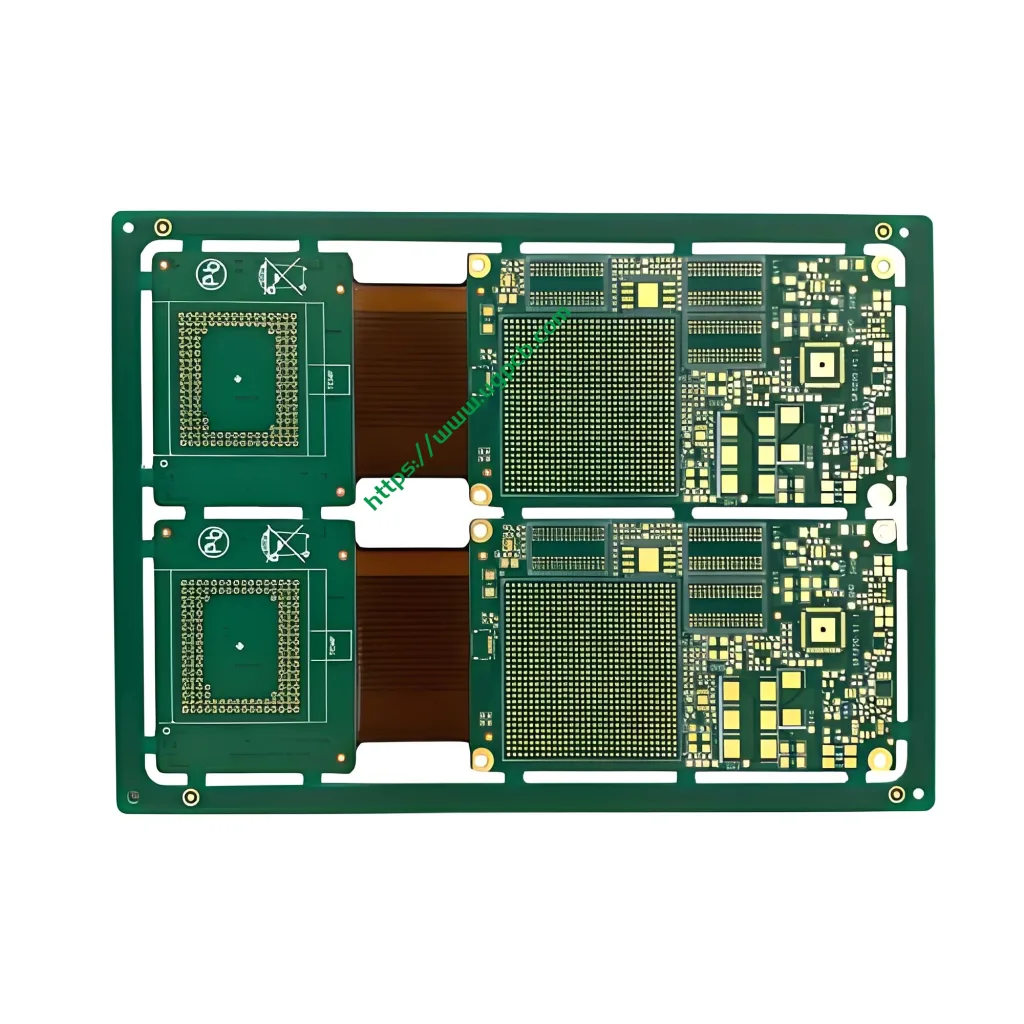
UGPCB aprovecha la fabricación avanzada para ofrecer una PCB rígido-flexible enchufado con resina epoxi construido sobre un FR4 + PI plataforma de materiales. Con un 16L Rígido + 2Flexión L construcción, Esta placa está diseñada específicamente para exigentes productos digitales, Ofrece la resistencia mecánica de las placas rígidas junto con la capacidad de flexión dinámica de los circuitos flexibles..
1. Descripción general del producto & Definición
Un PCB rígido-flexible tapado con resina epoxi Es una placa de circuito híbrido que integra secciones de PCB rígidas y secciones de PCB flexibles en una sola, estructura unificada mediante laminación. Este producto específico combina 16 capas rígidas (FR4) con 2 capas flexibles (PI). Las vías de la sección rígida se llenan utilizando un equipo especializado. proceso de taponamiento de resina epoxi.
Este diseño conserva la capacidad de flexión del área flexible al tiempo que elimina los puntos comunes de falla rígido-flexible, como la "explosión de soldadura" o la expansión de aire atrapado durante el ensamblaje SMT.. El resultado es muy fiable. tarjeta de circuitos optimizado para moderno, dispositivos digitales compactos.
2. Materiales & Arquitectura de apilamiento
El rendimiento del producto depende de la selección precisa de materiales y la ingeniería estructural.:
-
Materiales básicos:
-
Sección rígida: FR4 (Laminado epoxi reforzado con vidrio). Este material ofrece una alta resistencia mecánica., excelente estabilidad térmica, y aislamiento electrico (cumple UL 94 V-0 calificación de inflamabilidad), proporcionando una base estable para el montaje de componentes.
-
Sección flexible: PI (poliimida) película. Conocido por su excepcional resistencia al calor. (rango de operación: -200°C a +300°C), vida flexible dinámica excepcional (millones de ciclos), y baja constante dieléctrica, PI es ideal para aplicaciones de flexión dinámica.
-
-
Configuración de apilamiento:
-
Capas totales: 16L Rígido + 2Flexión L (Equivalente a un circuito de 18 capas.)
-
Espesor de cobre: 1 ONZ. según IPC-4562, 1 El espesor del acabado de cobre OZ es de aproximadamente 35µm. Esto proporciona un equilibrio óptimo entre la capacidad de transporte de corriente y la capacidad de grabado de líneas finas..
-
Grosor del tablero terminado: 1.0milímetros. Lograr este espesor en una pila de 18 capas demuestra una precisión de laminación avanzada, Satisfacer la demanda de la industria de perfiles ultradelgados..
-
Acabado superficial: Oro de inmersión (ACEPTAR). Conforme a IPC-4552, ENIG ofrece una superficie plana, excelente soldabilidad, y resistencia superior a la oxidación, lo que lo hace ideal para el ensamblaje de componentes de paso fino.
-
3. Taponamiento de resina epoxi: Principio de trabajo & Consideraciones de diseño
3.1 Principio de trabajo
En una PCB rígido-flex multicapa, Las vías conectan eléctricamente diferentes capas.. En diseños tradicionales, las vías desconectadas pueden atrapar aire. Durante procesos de alta temperatura como el reflujo sin plomo (temperaturas máximas alrededor de 245°C–260°C), este aire atrapado se expande, potencialmente causando “palomitas de maíz,” delaminación, o salpicaduras de bolas de soldadura.
El taponamiento de resina epoxi El proceso utiliza impresión al vacío o inyección para rellenar agujeros perforados mecánicamente. (tamaño mínimo 0.2milímetros) con alta viscosidad, CTE bajo (Coeficiente de expansión térmica) resina epoxídica. Después del llenado, el tablero se somete a curado térmico y planarización de la superficie., haciendo que la superficie de la vía esté al ras con la superficie del tablero.
3.2 Consideraciones de diseño
-
Control de relación de aspecto: por un 0.2milímetros tamaño mínimo del agujero terminado, la relación de aspecto (espesor del tablero al diámetro del agujero) debe controlarse para garantizar un llenado sin huecos. Con un espesor de tablero de 1,0 mm., la relación de aspecto es 5:1, dentro de las estrictas capacidades de proceso de UGPCB.
-
Capacidad de rastreo/espacio: Este producto es compatible 4mil/4mil (0.1mm/0.1 mm) circuitos de línea fina. De acuerdo a IPC-2221, Tal precisión permite interconexiones de alta densidad.. El proceso de taponamiento se gestiona cuidadosamente para no comprometer la distancia de aislamiento entre estas finas trazas..
4. Clasificación de productos
Residencia en IPC-6013, la especificación de calificación y rendimiento para tableros flexibles y rígido-flexibles, La clasificación científica de este producto es:
-
Tipo estructural: Tipo 4 (Rígido Tablero multicapa)
-
Clase de rendimiento: Clase 3 (Productos electrónicos de alta confiabilidad). Esta clase es para productos donde el rendimiento continuo es fundamental., como dispositivos médicos, controles industriales, y bienes de consumo digitales de alta gama. Exige un alto nivel de seguridad y confiabilidad comprobada..
5. Proceso de fabricación & Control de calidad
UGPCB sigue IPC-A-600 Normas de fabricación y aceptación.. El proceso central incluye:
-
Imágenes de la capa interna: Los circuitos de línea fina están modelados en sustratos PI y FR4., con control estricto sobre la geometría de traza/espacio de 4 mil.
-
Laminación de cubierta: Se aplica una cubierta PI a las áreas flexibles para proteger los circuitos y mejorar la vida útil.
-
Corte de ventana & Lay-up: Las secciones rígidas tienen ventanas para exponer las áreas flexibles., seguido de una alineación y disposición precisas.
-
Laminación: La alta temperatura y la presión fusionan la pila multicapa. Este paso es fundamental para evitar arrugas o separación en la interfaz rígido-flexible..
-
Perforación Mecánica: 0.2milímetros Las microvías se perforan con una precisión posicional mantenida dentro de ±0,05 mm..
-
Taponamiento de resina epoxi: Proceso central. Equipo de taponado al vacío inyecta resina epoxi.. Después del curado y molienda secuencial., la planaridad de la superficie se encuentra IPC-4761 Tipo VII (Completado & Cubierto) estándares, proporcionando sellado a través de protección.
-
Acabado superficial ENIG: Aplicado por IPC-4552, asegurando una densa, capa de oro uniforme libre de defectos de “almohadilla negra”.
-
Prueba eléctrica: 100% sonda voladora o la prueba de accesorios verifica que no haya aperturas ni cortocircuitos.
6. Especificaciones clave & Datos de confiabilidad
Todos los parámetros se basan en estándares de la industria para garantizar precisión y autoridad.:
| Parámetro | Especificación | Estándar / Referencia |
|---|---|---|
| Recuento de capas | 16L Rígido + 2Flexión L | Híbrido rígido-flexible |
| Materia prima | FR4 + PI | UL 94 V-0 Certificado |
| Espesor terminado | 1.0mm ±10% | IPC-4562 |
| Tamaño mínimo de agujeros | 0.2milímetros | Capacidad de perforación mecánica |
| Min Trace/Espacio | 4mil / 4mil (0.1mm/0.1 mm) | IPC-2221 (Línea fina) |
| Espesor de cobre | 1 ONZ (35µm) | Cobre acabado; Satisface las necesidades actuales |
| Acabado superficial | Oro de inmersión (ACEPTAR) | IPC-4552; Vida útil ≥12 meses |
| Prueba de tensión térmica | 288°C, 10 artículos de segunda clase, 3 ciclos | IPC-TM-650 2.4.13; Sin delaminación |
| Resistencia de aislamiento | ≥ 10^12 Ω (Estado normal) | Alto requisito de aislamiento |
| Vida flexible | > 100,000 ciclos (Dinámica) | Basado en las propiedades del material PI |
*Referencias de datos: Manual de métodos de prueba IPC-TM-650 y estándares de certificación UL.*
7. Aplicaciones
Gracias al enrutamiento de alta densidad del 16sección rígida L y la capacidad de flexión dinámica del 2Sección flexible en L, Este producto está dirigido principalmente a gama alta. productos digitales:
-
Teléfonos inteligentes de alta gama & Tabletas: Utilizado para módulos de cámara., conexiones de la batería, y la placa base se interconecta para ahorrar espacio interno.
-
Cámaras digitales & Videocámaras: Ideal para módulos de extensión de lentes que requieren repetición, flexión de alta frecuencia.
-
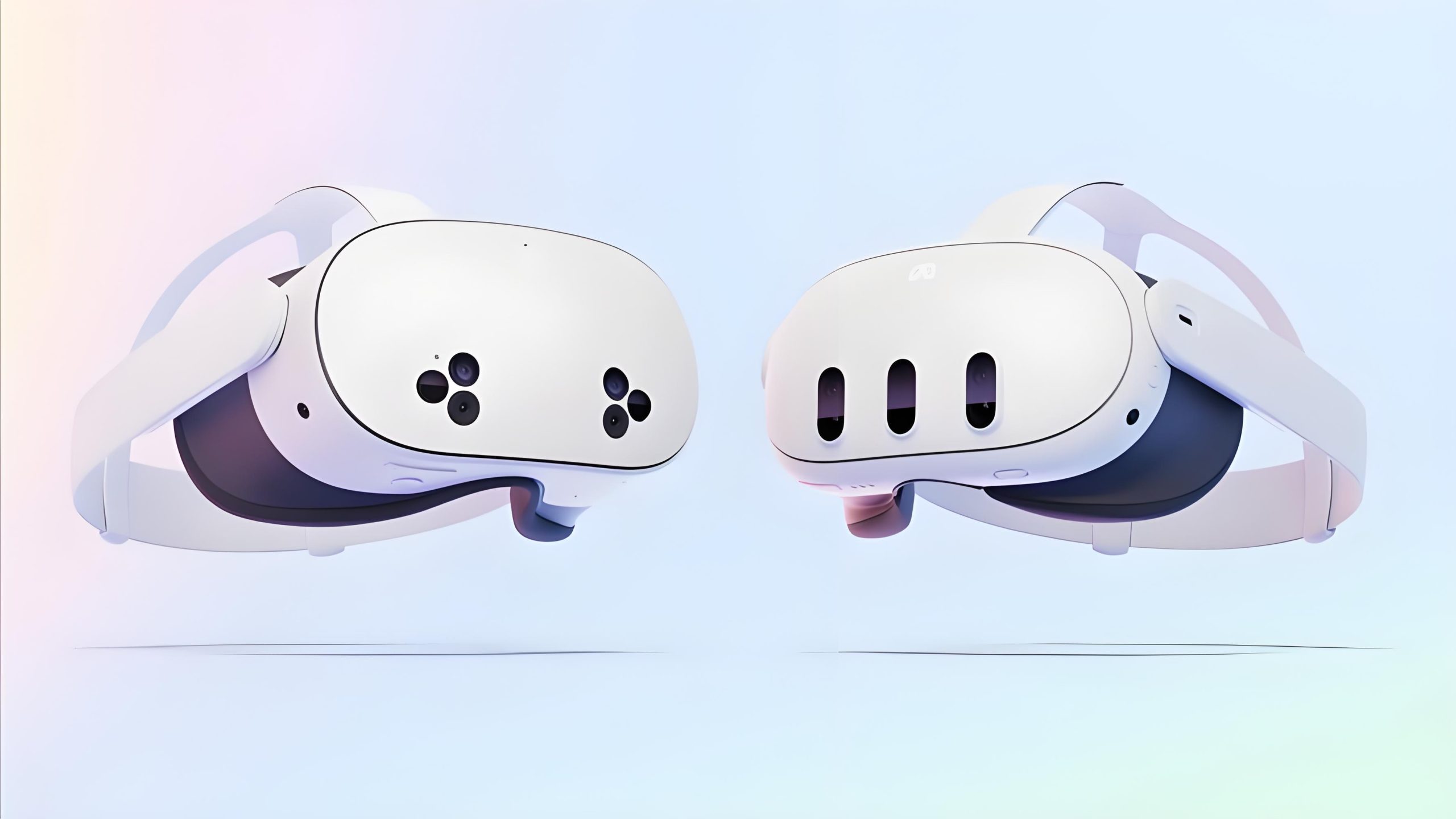
Electrónica portátil: Relojes inteligentes, Auriculares VR/AR. El 1.0milímetros El perfil delgado y el conector epoxi garantizan la estabilidad de la señal en gabinetes ultracompactos..
-
Unidades de estado sólido (SSD): Utilizado como soporte para módulos de memoria., aprovechando rígido-flexible para apilamiento de múltiples capas y conexiones de interfaz.
8. Características del producto & Ventajas
-
Diseño integrado, Ahorra espacio: Reemplaza el tradicional “PCB + Conector + montaje “FPC”. Esto elimina los conectores., reduce los costos de la lista de materiales, y mejora significativamente la integridad de la señal al minimizar las discontinuidades de impedancia.
-
El taponamiento de resina epoxi elimina la explosión de soldadura: Resuelve el problema de pérdida de rendimiento causado por la desgasificación de las vías durante la soldadura por reflujo sin plomo..
-
Circuito de línea fina: Soporte 4mil/4mil rastro y espacio, permitiendo la interconexión de alta densidad (IDH) diseños. El 0.2milímetros Las microvías ofrecen una gran libertad de enrutamiento.
-
Alta estabilidad térmica & Durabilidad flexible: La combinación de FR4 y PI proporciona una plataforma sólida para el ensamblaje de componentes y al mismo tiempo garantiza un rendimiento flexible dinámico a largo plazo..
9. Llamado a la acción & Guía de consulta
UGPCB es más que un fabricante de placas de circuitos. Somos su socio para garantizar la confiabilidad del producto.
Entendemos los desafíos de fabricación de PCB rígidos-flexibles tapados con resina epoxi. La clave es controlar la adhesión en el límite rígido-flexible y garantizar una obstrucción sin espacios vacíos.. Con años de experiencia, UGPCB utiliza líneas de taponado por vacío automatizadas, imágenes directas de alta precisión, y riguroso AOI sistemas. Cada 16L Rígido + 2Flexión L tablero que enviamos cumple Clase 3 estándares de confiabilidad.
Si necesita una PCB rígida-flexible que pueda manejar enrutamiento de alta densidad, montaje sin plomo, y flexión dinámica sin compromiso, UGPCB es tu socio ideal.
Póngase en contacto con UGPCB hoy para obtener una cotización personalizada.
-
Envía tu Archivos Gerber. Nuestro equipo le proporcionará una gratuita DFM (Diseño para la fabricación) análisis dentro 24 horas.
-
Apoyamos prototipo y volumen bajo a medio producción con plazos de entrega flexibles.
-
Nuestro equipo de ingeniería dedicado ofrece soporte personalizado para acelerar el lanzamiento de su producto digital..