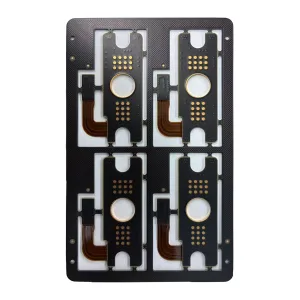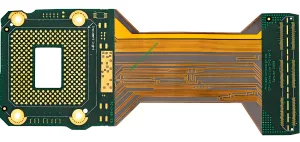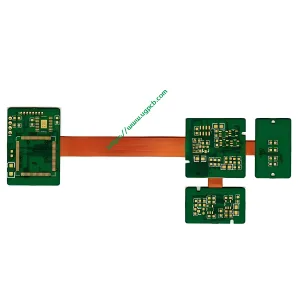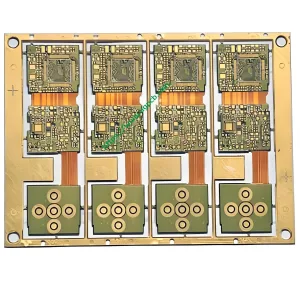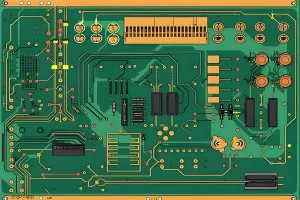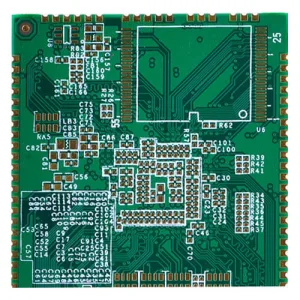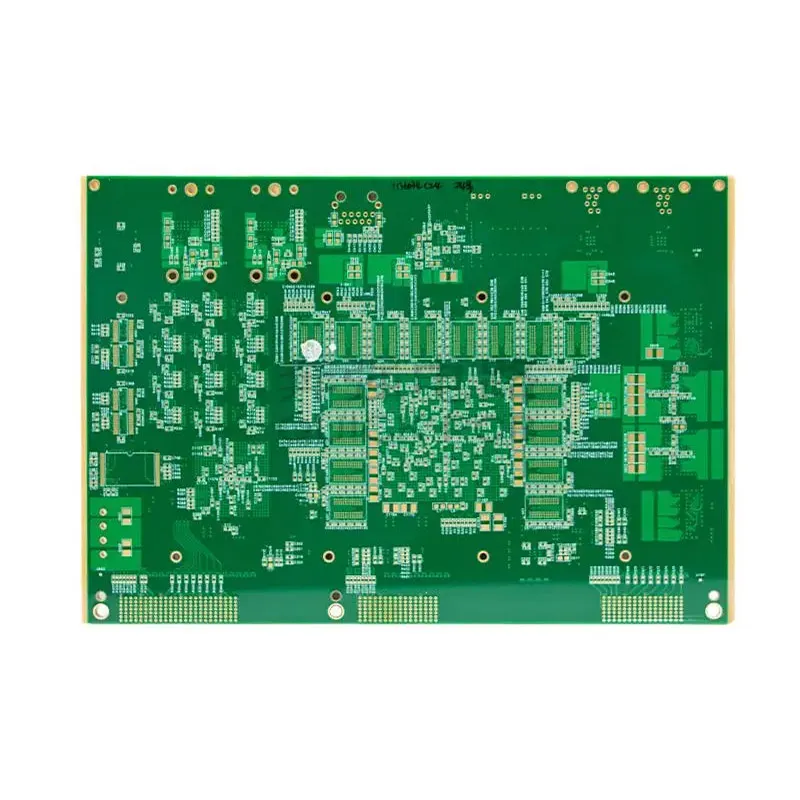
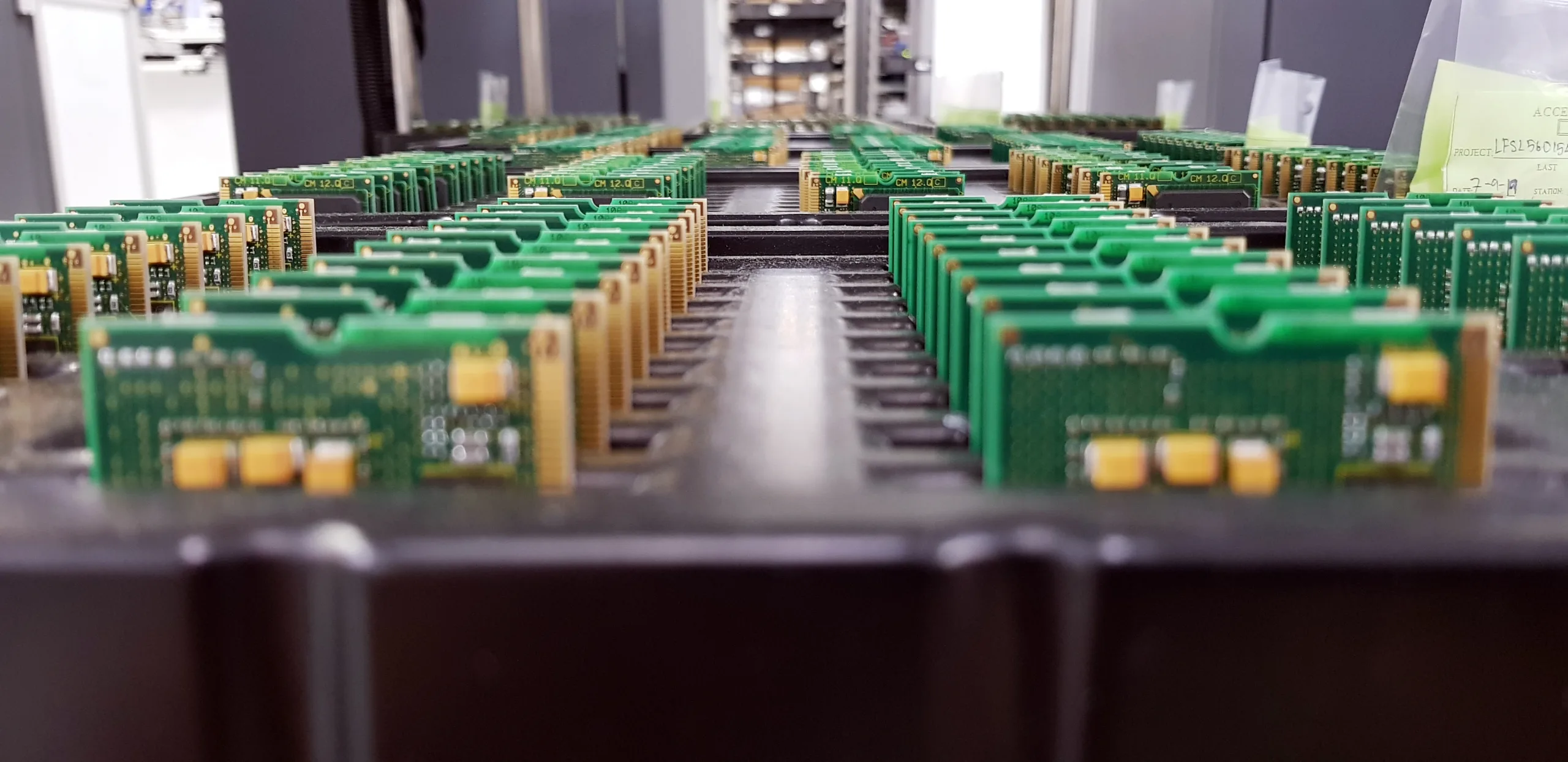
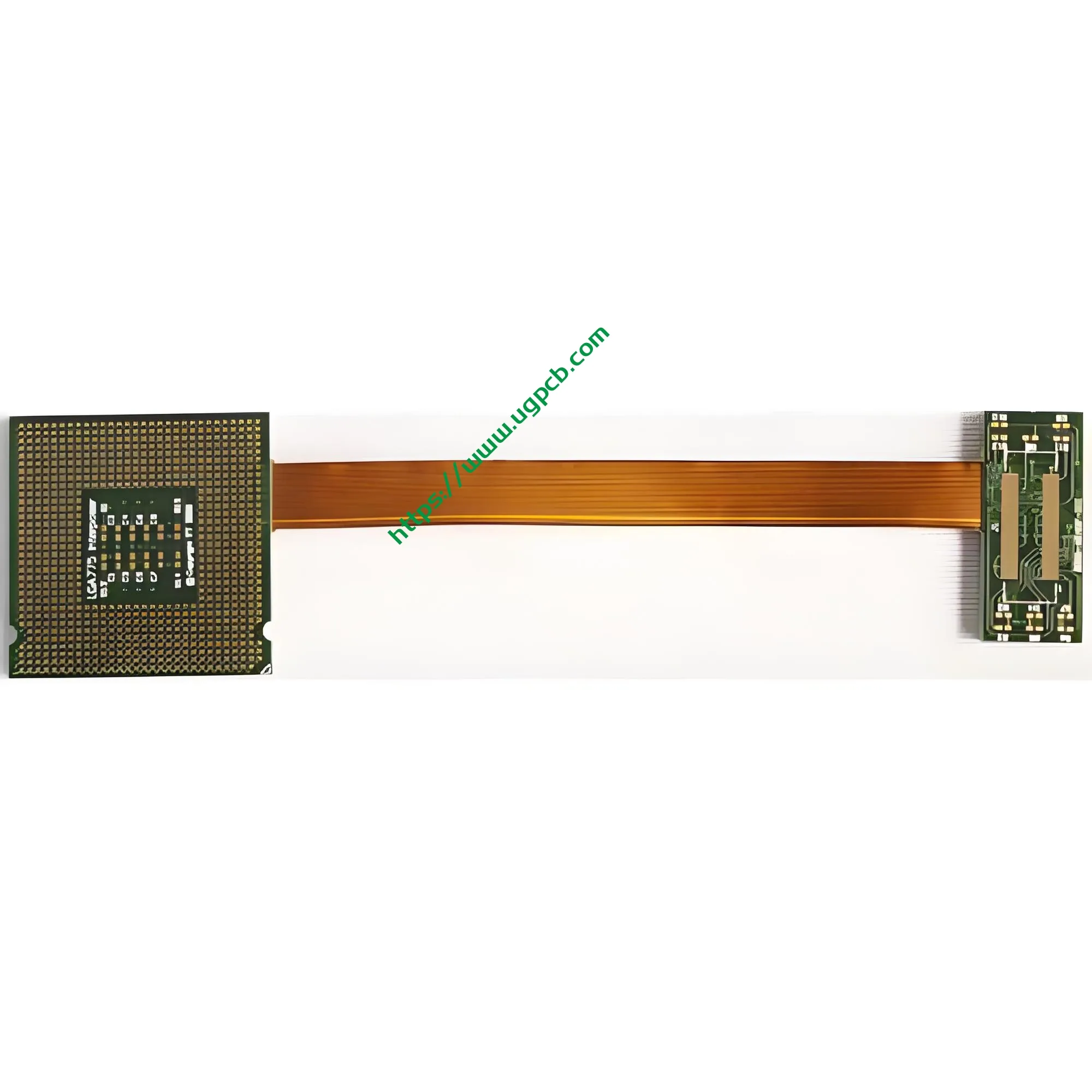
Los ingenieros necesitan diseños compactos y conexiones confiables para un uso inteligente.
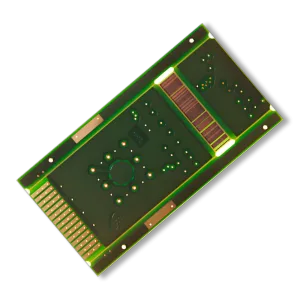
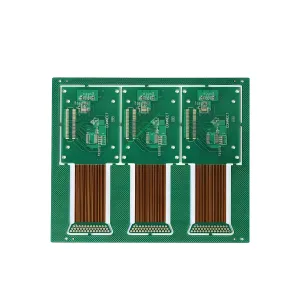
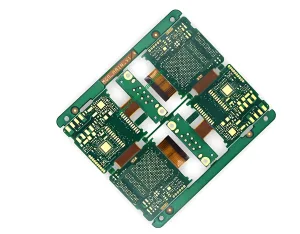
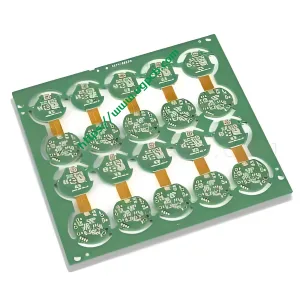
La UGPCB presenta la PCB rígido-flexible Smart Wear modelo 8L (R-FPCB). Esta placa combina 6 capas rígidas y 2 capas flexibles. Resuelve desafíos de espacio y flexión en usable PCB.
1. ¿Qué es una PCB rígida-flexible Smart Wear??
A PCB rígido-flexible tiene ambas secciones rígidas (para soldar componentes) y secciones flexibles (para interconexión 3D).
Nuestro 8L Smart Wear R-FPCB Funciona perfectamente para relojes inteligentes., parches de salud, y gafas AR.
El 6 capas rígidas soportan cableado de alta densidad. El 2 Las capas flexibles permiten doblarse libremente..
Este diseño reemplaza los conectores placa a placa y los cables planos.. Elimina fallas de contacto comunes en dispositivos pequeños.. También mejora la resistencia a los golpes al eliminar las uniones mecánicas..
2. Clasificación científica
Residencia en IPC-6013 (Especificación de calificación y rendimiento para tableros impresos flexibles), este producto cae bajo:
-
Tipo: Clase 3 (alta confiabilidad – médico/militar/portable) multicapa rígido-flexible.
-
Construcción: Asimétrico (6 rígido + 2 doblar).
-
Nivel de aplicación: Dispositivos portátiles de consumo de alta confiabilidad.
3. Material & Acumulación: ¿Por qué PI? + FR4?
Seleccionamos materiales en función de propiedades físicas y estabilidad térmica..
Área rígida – FR4
Usamos tg 170 FR4 (alta temperatura de transición vítrea). Mantiene una baja expansión del eje Z durante múltiples ciclos de reflujo. Esto garantiza un alto rendimiento de soldadura BGA..
Área Flexible – Poliimida (PI)
Usamos Película de poliimida para las capas flexibles. PI tiene una constante dieléctrica baja y una temperatura de trabajo amplia. (-200°C a +300°C). Permite más 100,000 ciclos de flexión sin agrietarse. Esto es crítico para flexible placas de circuito impreso en wearables.
Construcción apilada
Las capas flexibles (L1/L2) incrustar dentro de la sección rígida. Utilizamos laminación escalonada en el límite de transición para distribuir la tensión mecánica..
Regla de diseño: Nunca coloque vías en el área de doblado.. Que previene microfisuras por concentración de tensiones. Nuestro diseño sigue estrictamente esta regla IPC-2223..
4. Rendimiento clave & Parámetros de diseño (Cumple con IPC-2223)
La siguiente tabla muestra las especificaciones críticas para el 8Tablero rígido-flexible portátil L.
| Parámetro | Valor UGPCB 8L R-FPCB | Perspectiva del diseño |
|---|---|---|
| Estructura de capas | 6L rígido + Flex 2L | La pila asimétrica necesita una compensación especial para evitar la deformación |
| Espesor terminado | 1.2milímetros (zona rígida) | Optimizado para impedancia controlada: cumple con la clase IPC 2/3 |
| Seguimiento mínimo / Espacio | 3mil / 3mil | IDH Capacidad: se adapta a diseños de bisel estrecho. |
| Agujero mecánico mínimo | 0.2milímetros | Aumenta la densidad de enrutamiento |
| Espesor de cobre | 1 onz (interno & exterior) | Soporta altas corrientes de carga |
| Acabado superficial | Oro de inmersión (ACEPTAR) | 2 micropulgadas de espesor de oro |
5. ¿Por qué elegir UGPCB para su proyecto de PCB portátil??
A. No más roturas flexibles
Los dispositivos portátiles se doblan repetidamente (p.ej., correas de reloj). Usamos material base sin adhesivo en el área flexible. También aplicamos enrutamiento de arco en lugar de trazas de 45°.
Datos de nuestro laboratorio: El enrutamiento del arco mejora la distribución de la tensión del cobre al 40% en comparación con las trazas en ángulo. Esto elimina las fracturas por fatiga..
B. Oro de inmersión para resistir el sudor
Terminamos la superficie con ACEPTAR (Oro de inmersión), 2 micropulgadas de espesor.
Por qué? El sudor y la humedad corroen el cobre expuesto. ENIG proporciona una superficie de almohadilla plana (mejor que OSP) y excelente resistencia a la corrosión. También admite contacto directo para botones..
do. Fuerte integridad de la señal
PCB de uso inteligente Necesita señales limpias de Bluetooth y Wi-Fi. Nuestro 6 Las capas rígidas incluyen planos de tierra y de energía dedicados.. Estos proporcionan una ruta de retorno completa para señales de RF.. Eso reduce la interferencia electromagnética. (EMI) al mínimo.
6. Proceso de fabricación & Control de calidad
UGPCB utiliza líneas automatizadas para garantizar un alto rendimiento para el 8PCB rígido-flexible.
-
corte de materiales & perforación - láser ultravioleta perfora microvías de 0,2 mm en película PI.
-
desmechar & cobre no electrolítico – La limpieza con plasma elimina los residuos de resina de los agujeros..
-
Patrones de circuitos - LDI (Imágenes directas láser) crea trazas de 3mil/3mil con precisión.
-
Laminación – El preimpregnado de bajo flujo controla el sangrado de resina en la unión rígido-flexible.
-
Acabado superficial – Control químico estricto para una deposición uniforme de ENIG.
7. Aplicaciones: Donde sobresale esta PCB rígida-flexible
Este R-FPCB Se adapta a dispositivos que necesitan densidad y flexión.:
-
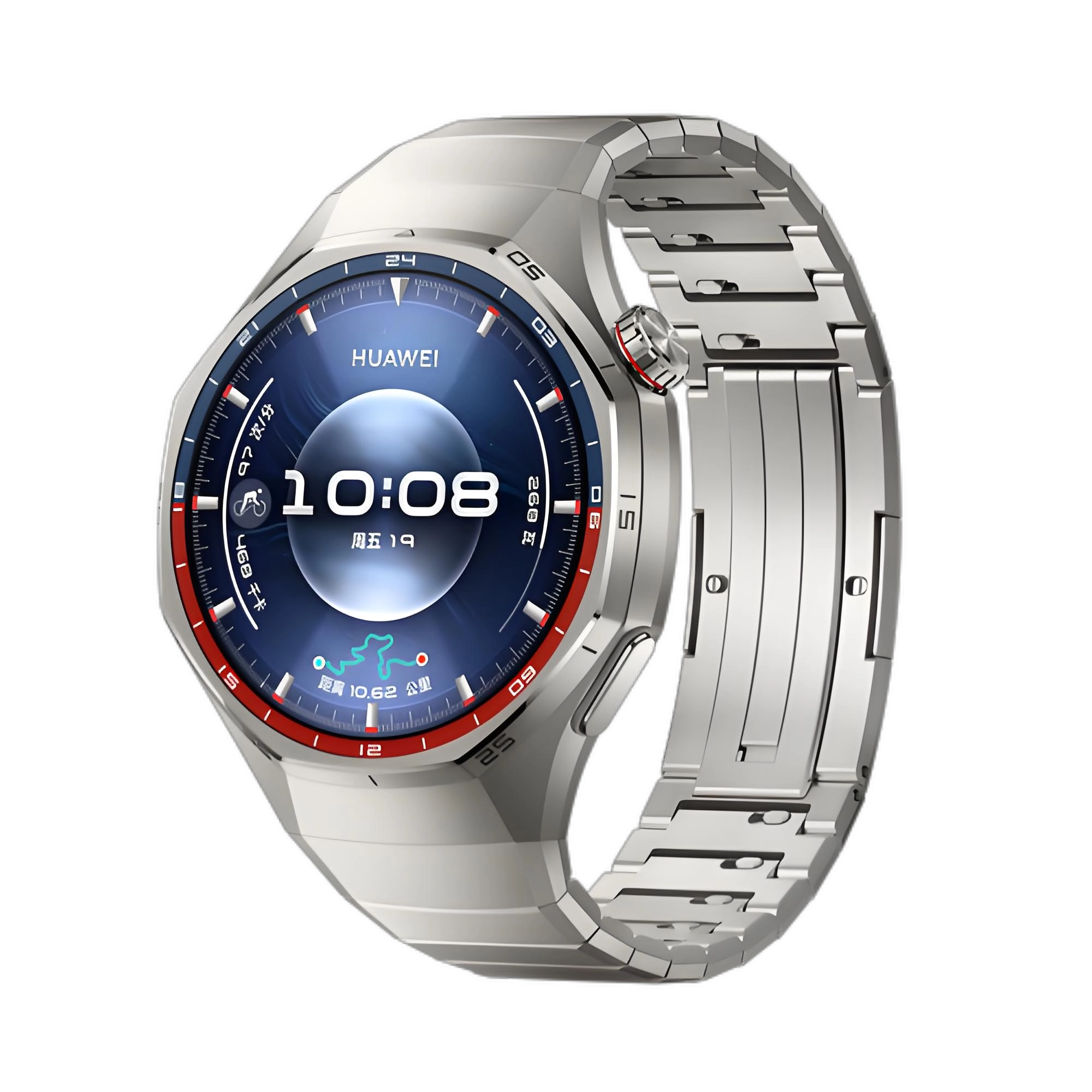
Relojes inteligentes & bandas de fitness – conecte la placa principal a los botones laterales y sensores de frecuencia cardíaca.
-
auriculares tws – encajar en tallos curvos y áreas de bisagra.
-
Parches de seguimiento médico – ultrafino, circuitos flexibles que se adaptan a la piel.
-
gafas inteligentes – unir los brazos izquierdo y derecho alrededor de la bisagra.
 8. Estándares & Datos de confiabilidad
Diseñamos y probamos esto. PCB portátil según especificaciones internacionales:
-
Estándar de diseño: IPC-2223 (Diseño de tablero impreso flexible)
-
Prueba de rendimiento: IPC-6013 (Calificación de junta flexible)
-
Validación de confiabilidad (laboratorio UGPCB):
-
10 ciclos de reflujo (pico 260°C) – sin delaminación
-
1000 horas de calor humedo (85°C / 85% RH) – sin corrosión
-
100,000 Curvas dinámicas: sin rastro de grietas.
-
9. Obtenga una cotización: comience su proyecto portátil hoy
UGPCB ofrece creación de prototipos y producción en masa.. Entendemos sus cronogramas y necesidades de calidad para PCB de desgaste inteligente.
Envíanos tus archivos o esquemas Gerber. Nuestros ingenieros responderán dentro de 24 horas con:
-
A DFM (Diseño para la fabricación) informe
-
Una cotización competitiva
[Llamado a la acción: Solicitar Cotización / Contacto Ventas]