

This article integrates the core principles of CAN bus PCB 설계 into an engineering-oriented, 심층 분석. 시장 동향부터 시작하여 점차적으로 주요 기술 결정 사항을 자세히 살펴봅니다., 반사 계수 공식과 같은, stub length criteria, and the strategic placement of common mode chokes. It concludes with a comprehensive design checklist. Every piece of data in this article comes from authoritative sources, and every conclusion has been validated under practical operating conditions. Whether you are designing an automotive-grade ECU or laying out a long-distance industrial CAN bus, this article will help you re-examine those “밀리미터 수준” details that determine communication success or failure.
After reading this article, you will gain a thorough understanding of:
- Why the core of CAN bus PCB design is a millimeter-level trade-off game.
- How to ensure signal integrity in the CAN FD and CAN XL era through precise termination resistor placement, stub control, and common-mode suppression layout.
- How to eliminate hidden risks that could plague you during mass production, starting from the top-level design.
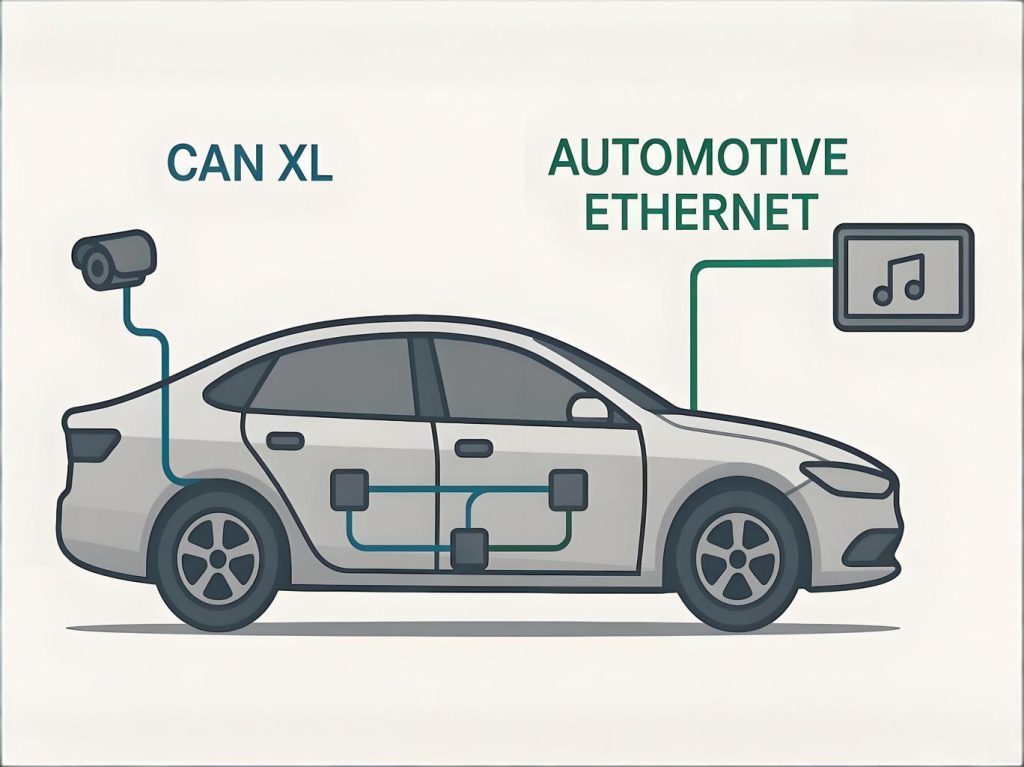
1. 소개: CAN Communication is Everywhere, but the PCB Design Challenge Has Just Begun
From automotive cockpits to industrial production lines, CAN bus technology is experiencing unprecedented deep penetration and rapid iteration.
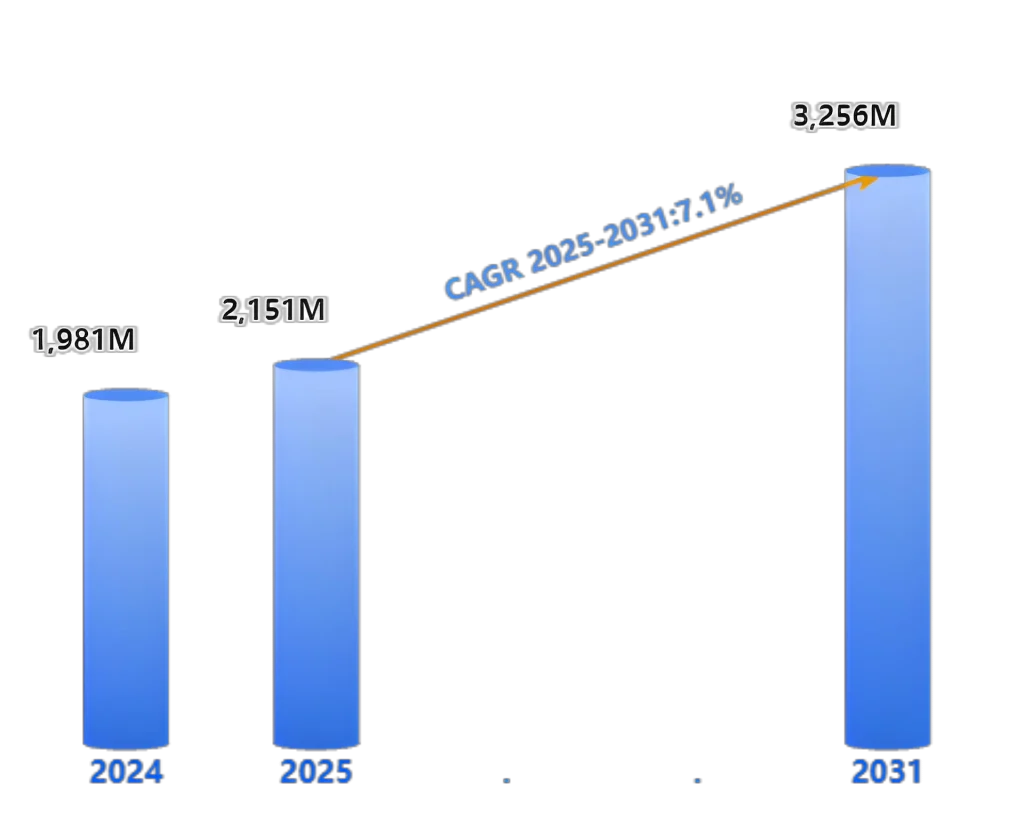
According to an industry report released by QYResearch, the global CAN bus transceiver market was valued at approximately USD 2.151 10 억입니다 2024 and is projected to reach USD 3.465 10억 단위로 2032, representing a compound annual growth rate (cagr) 약 7.1% ~에서 2026 에게 2032. The overall Controller Area Network (할 수 있다) market was valued at approximately USD 1.981 10 억입니다 2024 and is expected to reach USD 3.256 10억 단위로 2031. 그 동안에, the CAN bus interface module market was valued at USD 1.33 10 억입니다 2025 and is projected to grow at a CAGR of 7.98% to reach USD 2.28 10억 단위로 2032. Behind these figures lies the fact that the evolution of communication technology is redefining the boundaries of physical layer design.
Changes in the automotive electronics sector are particularly dramatic. 시대 2024, the share of traditional CAN in automotive electronic systems has dropped from over 90% ~에 2018 약 60%, while the share of CAN FD has jumped from less than 5% 약 25%. According to industry surveys, the penetration rate of CAN FD in newly launched car models in 2025 will exceed 60%. The data phase transmission rate of CAN FD can reach 8 Mbps, which is eight times that of traditional CAN (with an upper limit of 1 Mbps). CAN XL technology is also advancing rapidly, with a maximum data field length of 2024 bytes, providing a more solid physical layer foundation for low-end backbone networks and the underlying operation of high-end Ethernet protocols.
The higher the data rate, the more fatal the “details” in PCB design become. 모든 “밀리미터 수준” error in physical layer design can be amplified at the network level into catastrophic communication failures.
2. 종단 저항기: The Physical Logic and Pursuit of Excellence Behind 120Ω
In a CAN bus topology, the two 120Ω resistors at the physical ends of the bus are the last and most important line of defense for signal integrity.
The value of 120Ω is not arbitrary. According to the ISO 11898-2 기준, the characteristic impedance of the CAN_H and CAN_L differential pair is specified as 120Ω. This specification is perfectly consistent with the characteristic impedance of shielded or unshielded twisted pair cables widely used in the automotive industry.
In transmission line theory, the effectiveness of termination resistor matching can be measured by the reflection coefficient. The mathematical definition of the reflection coefficient (기음) 다음과 같습니다:
Γ = (Z_L – Z_0) / (Z_L + Z_0)
어디Z_L is the load impedance (즉., the termination resistor), 그리고Z_0 특성 임피던스는 (120오) of the transmission line (differential traces). When no termination resistor is connected at the bus end, Z_L approaches infinity, and Γ ≈ 1, meaning almost all signal energy is reflected back. When a 120Ω termination resistor is correctly connected, Z_L ≈ Z_0, then Γ ≈ 0, reflections disappear, and the waveform becomes clean.
In component selection and layout, this is a persistent battle against parasitic parameters. Chip resistors in 0603 또는 0402 packages are preferred because they have lower parasitic inductance compared to the 0805 패키지. The termination resistor and its connecting vias should be placed as close as possible to the connector or CAN transceiver pins. The path from the resistor pad to the via on the GND plane should be “short and thick” to minimize the inductance of the return path.
3. Stubs and Topology: 그만큼 “보이지 않는 살인자” at the Millimeter Level in CAN Bus PCB Design
As CAN FD moves toward 8 Mbps and even higher data rates, 그만큼 “그루터기” is evolving from a routine clause in design specifications into a key factor affecting system success or failure.
에서 “데이지 체인” topology, once the round-trip delay of each short trace segment branching off from the main bus to the transceiver exceeds 1/4 of the signal rise time, reflections begin to significantly impact signal quality. The theoretical formula for calculating stub length is as follows:
L_stub = 0.1 × t_r × v × c
어디 v is the signal propagation speed in the PCB dielectric material (약 0.5 times the speed of light c for FR4 material), c is the speed of light (3×10⁸m/초), 그리고 t_r is the signal rise time.
When the rise timet_r of CAN FD shortens to 10 ns, the theoretical maximum allowable stub lengthL_stub 대략이다:
L_stub = 0.1 × (10×10⁻⁹ s) × 0.5 × (3×10⁸ m/s) = 0.15 m
즉 150 mm. For traditional CAN with a rise time of 50 ns, this value is as high as 750 mm.
하지만, in actual working conditions — temperature drift, component aging, and the cumulative effect of reflections from multiple nodes — can severely compress this margin. 그러므로, the industry generally recommends controlling the stub length on the CAN bus PCB to within 100 mm (0.1 중).
실용적인 디자인에, 그만큼 “데이지 체인” topology must be strictly adhered to, with termination resistors placed at the physical ends of the bus. Any attempt at a “star” topology will turn every branch into an uncontrollable stub, leading to a sharp deterioration in signal quality.
4. Common Mode Choke and Split Termination: Attack and Defense in EMC
The placement of the common mode choke is the most delicate detail in the entire EMC design, testing the designer’s skill.
The correct placement order is: Connector → TVS Diode → Common Mode Choke → Termination Resistor → CAN Transceiver. The common mode choke must be placed between the termination resistor and the connector, never between the termination resistor and the transceiver. The presence of the termination resistor (120오) is to absorb differential mode energy on the bus. If the choke is placed after the termination resistor, its own parasitic capacitance (typically a few pF to over ten pF) will interact with the 120Ω resistor, forming unnecessary resonance at high frequencies and worsening signal quality.
In terms of component selection, a 51μH-100μH common mode choke is recommended for in-vehicle CAN applications, using an 0603 또는 0805 패키지. Murata’s DLW43SH series (with a typical DCR of 4-6Ω) is a classic and reliable choice. For higher-speed CAN FD applications, special attention needs to be paid to the choke’s self-resonant frequency (SRF), and models with an SRF higher than 100 MHz should be selected.
Split Termination is a more refined means of optimizing common-mode filtering. It uses two 60Ω resistors in series to replace a single 120Ω termination resistor, and the midpoint of the two resistors is connected to GND through a capacitor (typical value: 4.7nF to 47nF).
This RC network forms a low-pass filter, and its cutoff frequency can be estimated as:
f_c ≈ 1 / (2π × R_eq × C), 어디R_eq = (R/2) = 30Ω
When C is 10nF, the cutoff frequencyf_c 대략이다 530 KHZ. This means that high-frequency common-mode noise on the bus can be effectively bypassed to ground through this capacitor, while the differential signal path is almost unaffected.
5. Conclusion and Design Checklist: The Final Step from Theory to Mass Production
| Check Item | Design Requirement |
|---|---|
| 차동 임피던스 | 120Ω±10% (±7% recommended for CAN FD) |
| 종단 저항기 | One 120Ω at each physical bus end, 1% 용인, 0603 또는 0402 패키지 |
| Intra-Pair Skew | ≤2.54 mm (≤1 mm for CAN FD) |
| Stub Length | ≤100 mm, the shorter the better |
| Topology | Strict daisy chain, termination at both ends, star topology prohibited |
| 공통 모드 초크 | Located between termination resistor and connector, 51-100μH, SRF > 100 MHz |
| Reference Plane | Complete, continuous GND plane, no trace routing across split planes |
| Spacing to Other Signals | >3W or >50 밀, avoid long-distance parallel routing |
| ESD 보호 | TVS near connector, junction capacitance <10 pF, strictly control total node capacitance |
| 분할 종료 | 선택 과목 (2×60Ω in series + 4.7nF-47nF cap to GND), enhances common-mode filtering |
| Number of Vias | ≤3 vias on CAN differential pair to avoid introducing parasitic inductance and impedance discontinuity |
| Trace Corner | Use 45° bevel or arc routing, 90° corners strictly prohibited |
All the essence of CAN bus PCB design is condensed into the rigorous execution of every detail listed above. As a professional CAN bus PCBA 공급업체, we have helped thousands of engineers achieve success from schematic to mass production.
To transform your CAN bus project from design drawings into reliable, mass-producible products, please contact us for professional PCB design support and manufacturing services.
Data Citation Notes
- All cited data comes from publicly available, authoritative research reports (Research and Markets, GII Research, QY연구, TI E2E Forum, NXP App Note, CiA publications, 등.).
- All electrical parameters and formulas have been cross-validated with mainstream sources.
- Standard citations include the standard number and year.