

Imaginați-vă a PCB de mare viteză ca un oraș aglomerat de date. Viale care transportă semnale între straturi sunt ca niște tuneluri subterane.
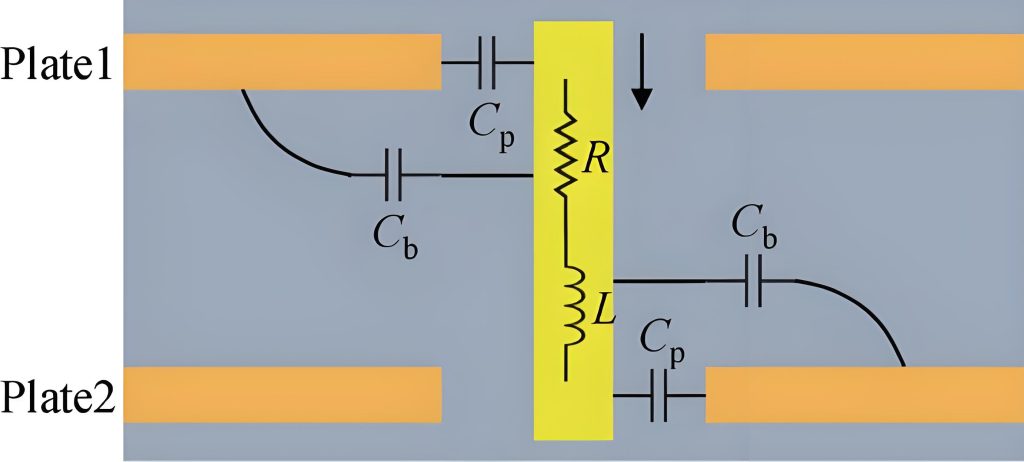
Conform aproximării standard din industrie din IPC-2251, un orificiu traversant tipic are o capacitate parazită între 0.3 pF și 0.8 pF. Când frecvențele semnalului depășesc 10 GBPS, acest număr mic poate provoca reflexii și întârzieri. Poate transforma o legătură de date perfect proiectată într-o furtună de erori de biți.
Acest articol analizează cauzele și căile de optimizare ale capacității parazitare din trei dimensiuni fizice: circuit, domeniu, și material.
1. Stratul de atenuare a capacității - Controlul dimensiunilor geometrice pentru a reduce scurgerea câmpului electric
Originea fizică a capacității via parazitare constă în cuplarea dintre pad-ul via și stratul de masă de referință.
Din perspectiva câmpului electromagnetic, pad-ul și planul de masă formează un condensator cu plăci paralele. Pentru a reduce prin capacitatea parazită, calea cea mai directă este de a micșora suprafața efectivă a plăcii.
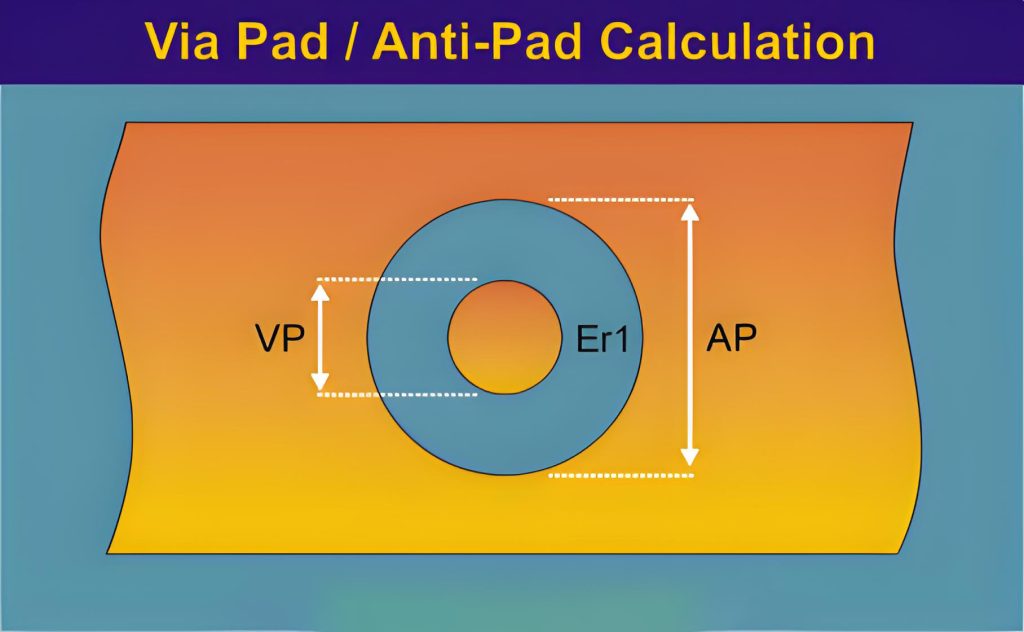
Practica industrială respectă cerințele minime ale inelului inelar. Pentru clasa IPC-6012 3 fiabilitate ridicată, stratul exterior minim este 2 mil, în timp ce stratul interior poate fi redus la 1 mil. Această strategie de minimizare reduce diametrul plăcuței și comprimă eficient zona de cuplare cu planul de masă.
Creșterea diferenței dintre diametrul găurii și a plăcuței oferă o altă cale de reducere a capacității. Trebuie să urmați formula:
Diametrul plăcuței = Diametrul forajului + 2 × Inel inelar
Forajul reprezintă de obicei 30%-40% din Fabricarea PCB cost. Prin urmare, prin ajustări de dimensiune necesită o coordonare strânsă cu constrângerile economice.
Pentru tratamentul antipad, îndepărtarea cuprului din jurul plăcuței pe straturi specifice crește distanța spațială dintre conductori. Cu toate acestea, un spațiu liber excesiv poate cauza diafonie pe urmele adiacente și discontinuitate în planul de referință.
2. Stratul de parametri dielectrici - The “Zona de încetinire a semnalului” în Selectarea materialelor
Standard material FR-4 are o constantă dielectrică relativă Dk ≈ 4,2–4,8 at 1 GHz. La 10 GHz, valoarea Dk poate scădea cu 5%-10%.
Materiale cu Dk scăzut (Dk ≤ 3.5) reduce efectiv prin capacitatea parazită, deoarece capacitatea este direct proporțională cu constanta dielectrică. Cu toate acestea, aceste materiale costă mai mult și necesită o prelucrare mai grea. Pentru circuite obișnuite de viteză mică, nu trebuie să adoptați această soluție. IPC-4101 definește limitele tehnice pentru selecția materialului. Proiectele de înaltă frecvență trebuie să se refere la specificațiile Slash Sheet relevante din acest standard.
3. Stratul limită electromagnetic – Lăsați semnalele să treacă cu precizie
Controlul prin lungimea stubului este o metodă critică pentru a depăși blocajele de mare viteză.
Pragul de inginerie pentru forarea înapoi
Pentru 10 Canale SerDes Gbps sau mai mari, o lungime a ciotului care depășește 10 mil (despre 0.254 mm) poate provoca crestături observabile cu pierderi de inserție. Procesele comerciale de forare înapoi pot controla în mod fiabil lungimea butucului între 4 mil si 8 mil (0.1 mm la 0.2 mm).
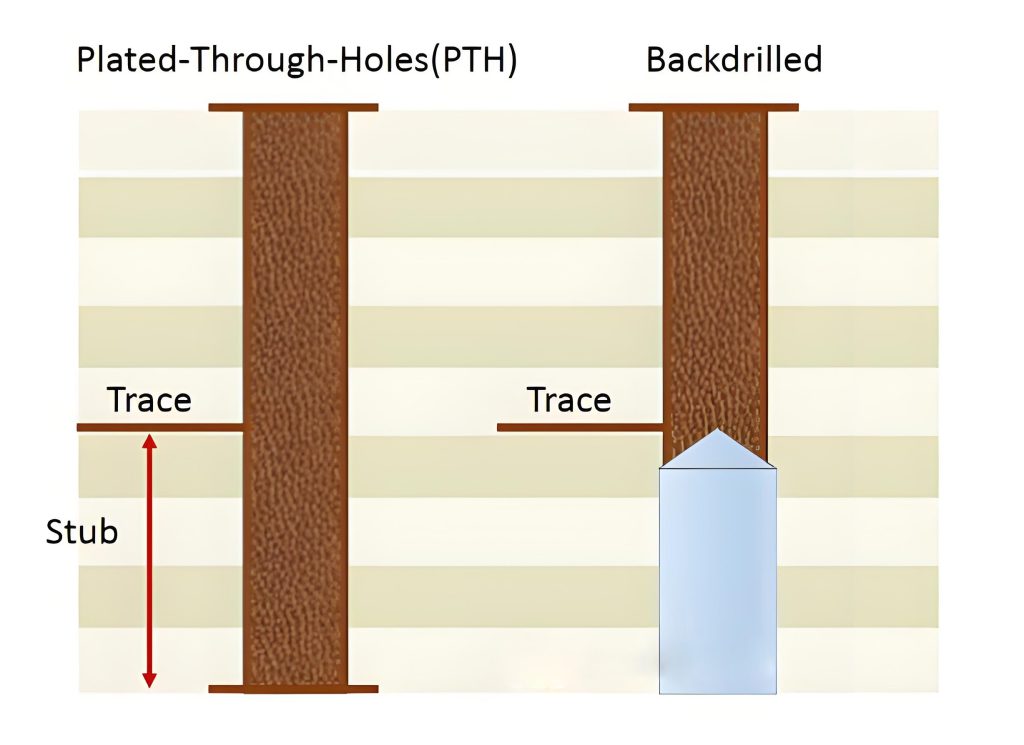
Un stub de via acționează ca un stub de linie de transmisie cu circuit deschis. Când lungimea ciotului este egală cu un sfert din lungimea de undă ghidată dielectric, excită o rezonanță în seria Q înaltă. Pierderea de retur S11 se poate deteriora local peste –8 dB.
Judecarea cantitativă a coeficientului de reflexie
Formula coeficientului de reflexie este:
C = (Z₂ - Z₁) / (Z₂ + Z₁)
Unde:
- Z₁ = impedanța liniei înainte de punctul de reflexie
- Z₂ = impedanța liniei după punctul de reflexie
Într-un caz ideal, C → 0 înseamnă absorbție completă fără reflexie. C → ±1 înseamnă reflexie totală. Când o via introduce parametrii paraziți suplimentari, Γ se abate de la zero. Proiectarea trebuie să mențină această abatere într-un interval acceptabil prin controlul impedanței.
Prin principiile de proiectare a peretelui cilindrului
La nivel microstructural, prin diametrul interior, raportul de aspect (grosimea plăcii / diametrul gaurii), și grosimea placajului cu cupru determină direct prin fiabilitatea mecanică. Grosimea standard a peretelui de cupru variază de la 2.5 mil to 3.0 mil. Limita mecanică de găurire pentru diametrul găurii este 6 mil (0.15 mm). Găurirea cu laser poate ajunge 4 mil (0.1 mm). Când raportul de aspect depășește 8:1, soluția de placare nu poate pătrunde complet în centrul găurii, iar golurile sau crăpăturile se ridică brusc.
Compensarea costurilor pentru Vias oarbe și îngropate
Viale oarbe și îngropate pot reduce capacitatea parazită la 1/3 sau 1/5 a unui orificiu traversant via. Cu toate acestea, costul lor de fabricație pe centimetru pătrat este de aproximativ 1.3 la 2.0 ori mai mare decât cea a plăcilor cu orificii traversante. Datele din industrie arată că forajul reprezintă 30%-40% din costul total de fabricare a PCB-urilor. Viasurile oarbe cresc semnificativ acest procent datorită complexității procesului lor. Recomandăm utilizarea orb/îngropat vias numai în aceste scenarii: rata de date de sistem ≥56 Gbps PAM4, HDI interconexiune cu orice strat pentru o densitate mare de rutare, sau zone mici de ambalare care nu pot găzdui găuri de trecere.
Rezumatul Măsurilor de Optimizare
Tabelul de mai jos rezumă toate soluțiile și impactul lor asupra costurilor pe baza materialului sursă.
| Categoria de optimizare | Măsura specifică | Impactul costurilor |
|---|---|---|
| Prin proiectarea dimensiunilor | Reduceți diametrul plăcuței; măriți diferența dintre diametrul găurii și a plăcuței | Minor – dar ceas rezistență mecanică și fiabilitate |
| Design dielectric și de izolare | Măriți distanța dielectrică; scoateți antipad; utilizați material cu Dk scăzut | Mediu spre ridicat – materialul Dk scăzut costă mai mult |
| Prin design de plasare | Țineți departe de marginile planului de masă; controlați distanța față de conductoarele adiacente | Minor – dar necesită autorizație de siguranță |
| Prin selectarea structurii | Găurire în spate pentru a îndepărta ciotul; utilizați vias orb/îngropați; reduce numărul de tranziții ale stratului | Medie spre ridicată – căile oarbe/îngropate costă 1,3–2,0x orificiile traversante |
Obțineți asistență profesională pentru optimizarea dvs. de înaltă frecvență
Când echipa dvs. de proiectare se confruntă cu provocări dificile prin optimizarea semnalelor de înaltă frecvență, ai nevoie de un experimentat Furnizor PCBA. Oferim cotații precise de simulare a impedanței și mostre de foraj înapoi cu randament ridicat. Capacitățile noastre de fabricație îndeplinesc clasa IPC-6012 3 standarde ridicate de fiabilitate și includ HDI matur prin structuri. Faceți clic pe butonul pentru a solicita asistență pentru design și producție personalizat.
Referințe
[1] IPC-2251, Ghid de proiectare pentru ambalarea circuitelor electronice de mare viteză, IPC, 2003.
[2] IPC-4101E/21, Specificații pentru materiale de bază pentru plăci imprimate rigide și multistrat, IPC.
[3] IPC-6012D, Specificații de calificare și performanță pentru plăci imprimate rigide, IPC.
[4] IPC-D-317A4, Standard de proiectare pentru ansambluri de plăci imprimate, IPC.
[5] IPC-TM-650, Manualul metodelor de testare, IPC.