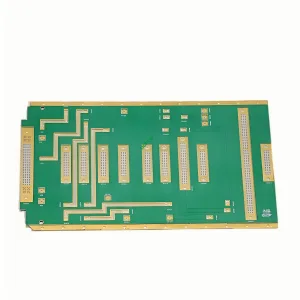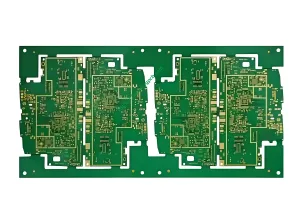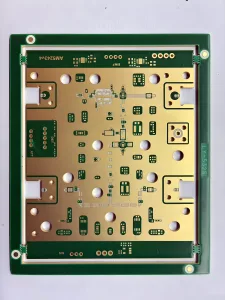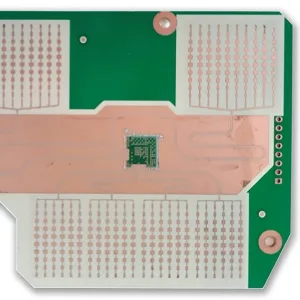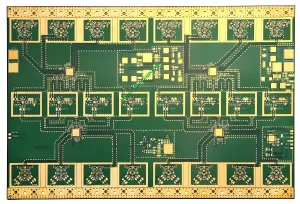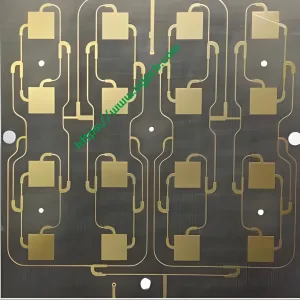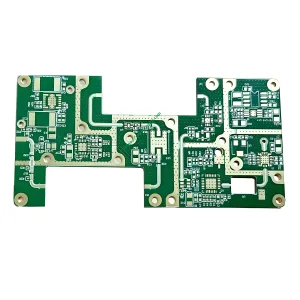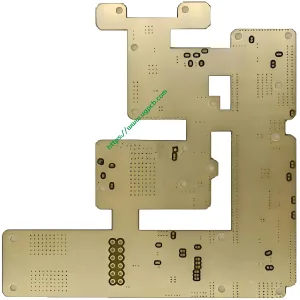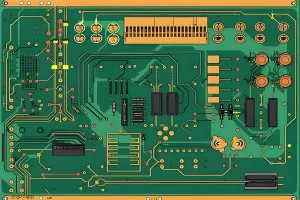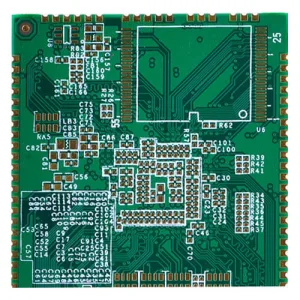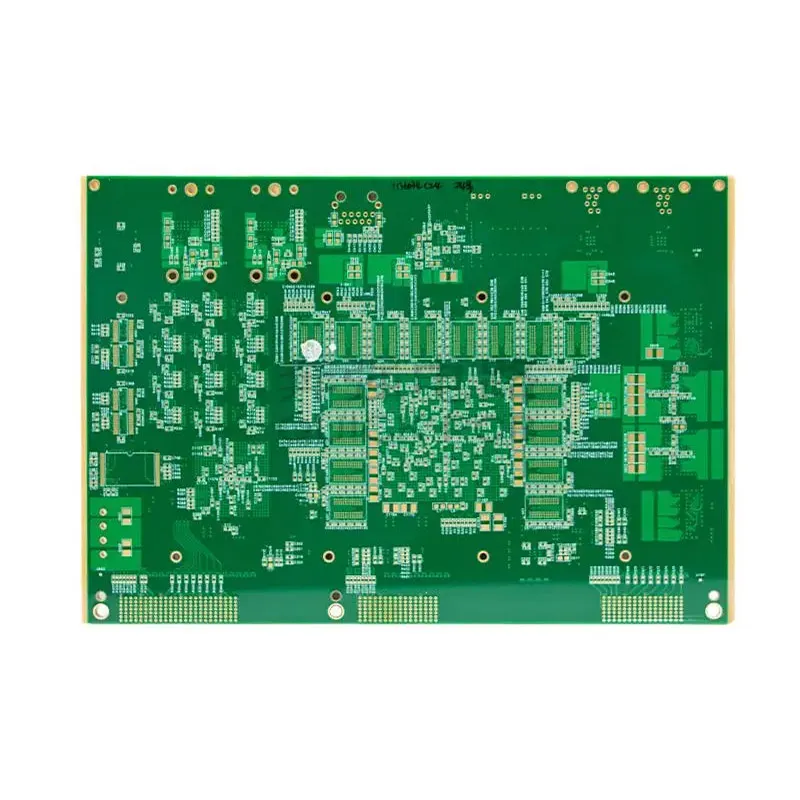
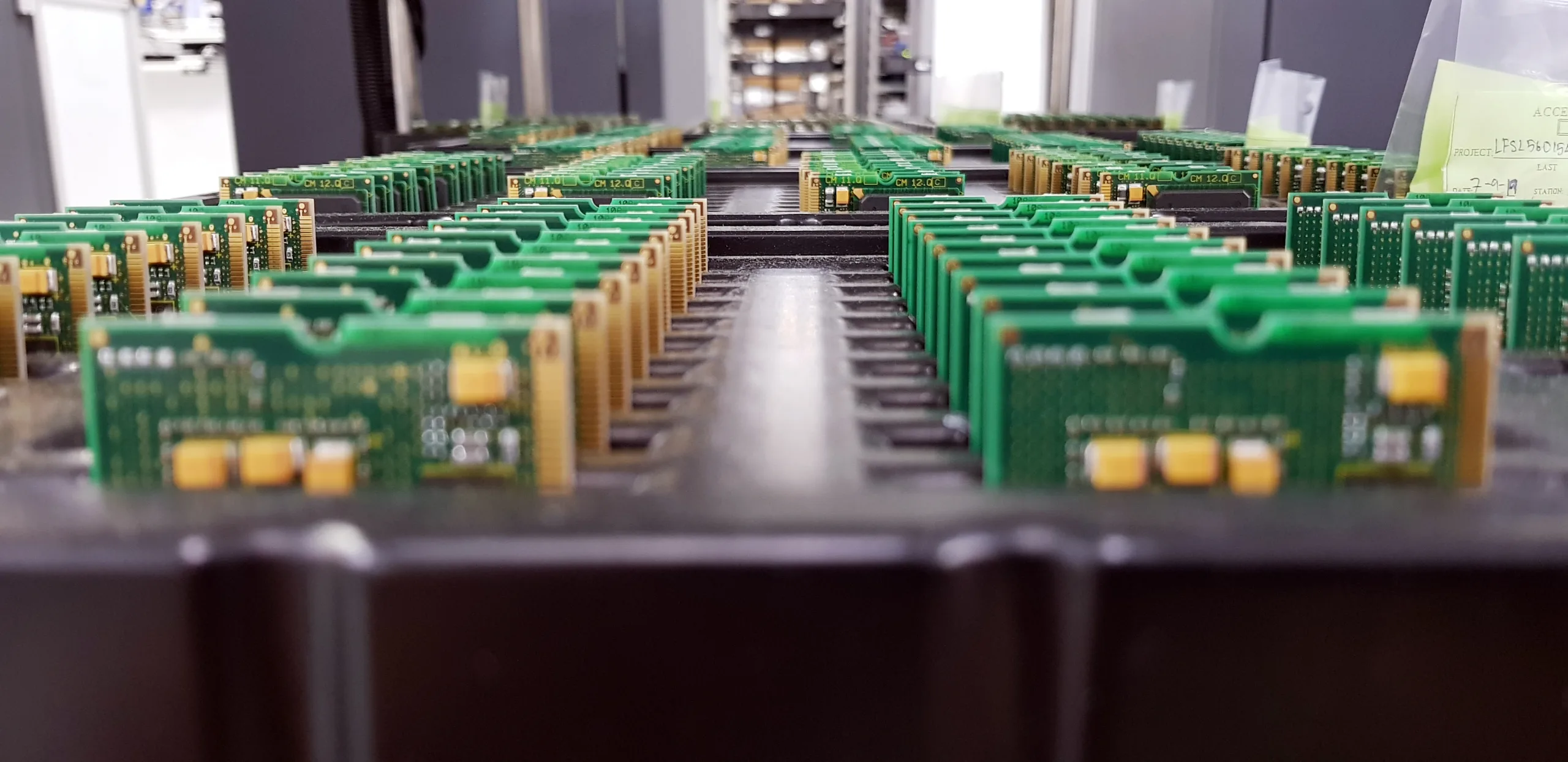
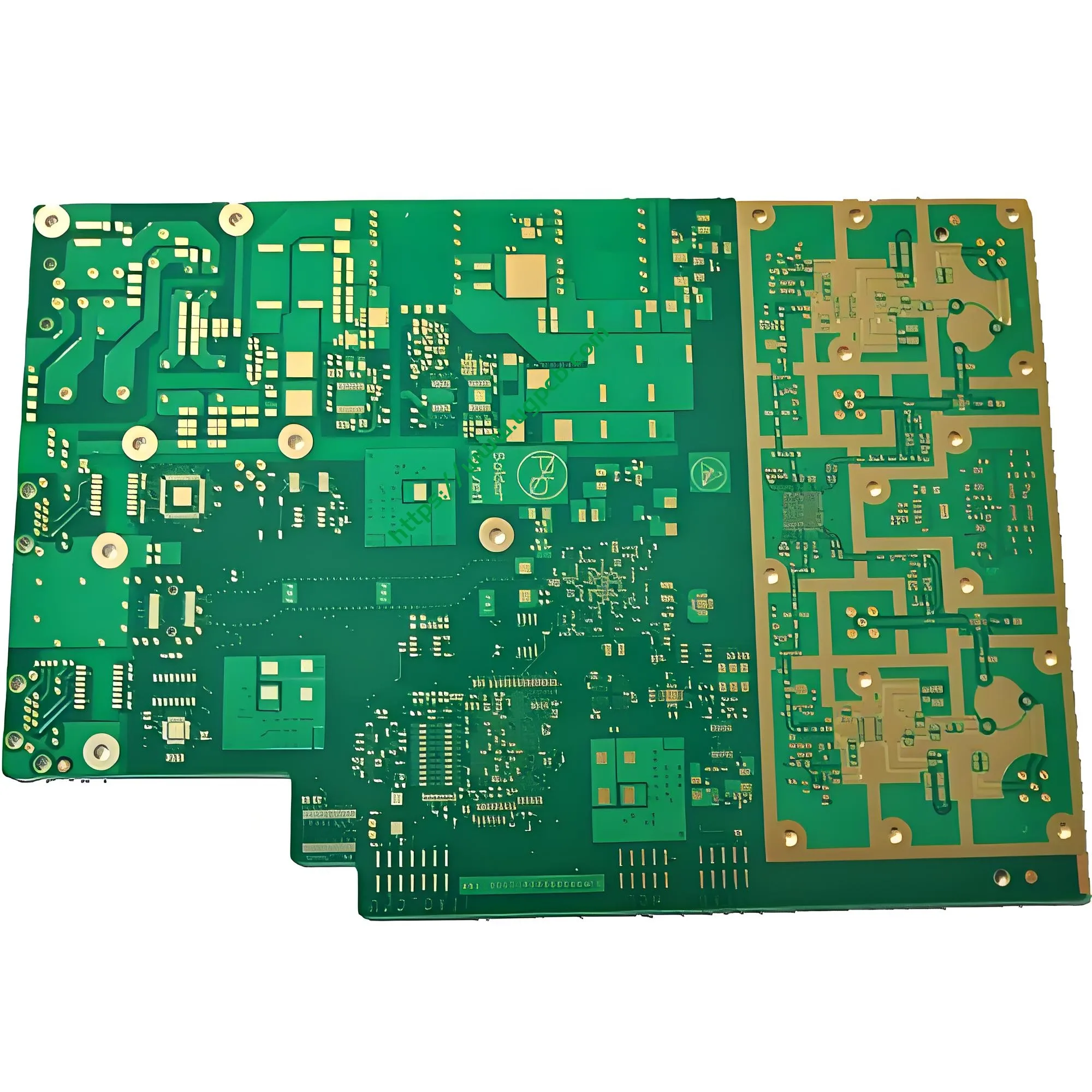
As RF front-ends and high-speed digital circuits continue to converge, PCB design engineers face a classic dilemma. A pure ФР4 board suffers excessive signal loss and poor контроль импеданса на высоких частотах. A full-board Rogers solution delivers excellent RF performance, but it costs much more and limits manufacturability. The 6-многослойная высокочастотная гибридная плата solves this trade-off with a smart mixed-dielectric design.
1. Продукт Обзор
UGPCB 6-Слои высокая гибридная печатная плата Использование Роджерс RO4350B и ФР4 materials in a mixed stack. Отделка поверхности Погружение Золото (СОГЛАШАТЬСЯ). This board targets ETC (Electronic Toll Collection) system control boards and other 5.8GHz RF applications. It achieves precise 5/4 MIL trace width and spacing for high-density RF routing. А 5-6 layer blind via structure optimizes signal paths.
2. What Is a High-Frequency Hybrid PCB?
A high-frequency hybrid PCB, also called a mixed-dielectric multilayer board, combines two or more different substrate materials in one board. The high-frequency layers use low-loss Rogers material (like RO4350B). The non-critical layers and digital/power layers use more economical FR4.
This hybrid approach places premium material only where RF performance matters – for example, on the top layer where microstrip or coplanar waveguide carries 5.8GHz signals. The other signal layers, основные плоскости, and power layers use FR4. Compared to a full-Rogers board, the hybrid design cuts material cost by 40–60% while keeping almost the same RF performance.
3. Ключевые технические параметры
| Параметр | Спецификация |
|---|---|
| Количество слоев | 6 |
| Mixed materials | Роджерс RO4350B + ФР4 |
| Чистота поверхности | Погружение Золото (ENIG per IPC-4552A, Ni 3–6μm / Au 0.04–0.1μm) |
| Product feature | High-frequency hybrid board |
| Приложение | ETC system control board |
| Специальный процесс | Blind vias between layers 5 и 6 |
| Ширина трассы / расстояние | 5/4 Мил |
| Hole-to-board thickness ratio | 1:10 |
4. Rogers RO4350B High-Frequency Material Properties
The RF performance of this hybrid board relies on accurate use of Rogers RO4350B. Key electrical and thermal characteristics (источник: Rogers Corporation datasheet, tested per IPC-TM-650) перечислены ниже.
-
Диэлектрическая проницаемость (Дк): 3.48 ±0,05 @ 10 ГГц (process reference); 3.66 @ 10 ГГц (design reference for thickness >60мил)
-
Коэффициент рассеяния (Дф): 0.0037 @ 10 ГГц
-
Z-ось Cte (коэффициент теплового расширения): 32 ppm/° C. (–55°C to 288°C) – much better than standard FR4, which reduces via cracking risk
-
Теплопроводность: 0.69 W/m/°K @ 50°C (АСТМ Д5470)
-
Класс воспламеняемости: UL 94 В-0 – meets safety requirements for active devices and high-power RF designs
-
Совместимость процессов: No special via preparation needed (в отличие от материалов из ПТФЭ); RO4350B processes similarly to FR4, which lowers production cost
Why this matters: The Dk of RO4350B changes very little from 500MHz to 40GHz. This stability allows engineers to design accurate 50Ω or 75Ω impedance transmission lines across a wide bandwidth. For ETC systems operating at 5.8GHz (per GB/T 20851), this means reliable impedance control. Например, using a microstrip structure with Dk=3.48, board thickness=0.254mm, and 1oz copper, a 5mil trace width achieves 50Ω characteristic impedance per the formula below.
5. How Does a 6-Layer High-Frequency Hybrid Board Work?
The core principle is a layer‑dedicated signal architecture.
-
Слои радиочастотного сигнала (Rogers RO4350B medium) – Located on the top layer or specific inner layers. They carry 5.8GHz ETC communication signals. The stable Dk and low Df of RO4350B keep insertion loss below 0.31dB/cm at 40GHz.
-
Digital/control layers (FR4 medium) – Handle baseband signals, MCU/FPGA logic control, and power management. FR4 brings low cost and good mechanical strength.
-
Reference ground and power layers – A solid ground plane adjacent to RF layers provides a low‑impedance return path and suppresses EMI.
-
5‑6 layer blind vias – Blind vias connect only specific layers (например, L5 to L6). They reduce parasitic capacitance and inductance compared to through‑hole vias, and they save routing space.
-
Impedance‑matched design – Using the precise Dk value of RO4350B, the controlled impedance (обычно 50 Ом) is calculated with the microstrip formula:
 Где:
Где:
-
εr=3.48 (RO4350B Dk)
-
час = диэлектрическая толщина (мил)
-
W. = ширина трассировки (5 мил)
-
Т= толщина меди (мил)
Эта формула, combined with field solver simulations, ensures accurate 50Ω control.
6. Приложения и варианты использования
The primary application of this 6‑layer hybrid PCB is the ETC system control board. It also suits many other 5.8GHz DSRC (dedicated short‑range communication) устройства.
-
ETC roadside unit (РСУ) плата управления – RF front‑end transceiver + baseband processing + управление питанием. ETC follows China national standard GB/T 20851 at 5.8GHz using ASK modulation and DSRC protocol.
-
ETC onboard unit (OBU) main board – Also works at 5.8GHz, with 5µA ultra‑low‑power wake‑up circuit and integrated RF transceiver.
-
5G base station front‑end modules – Mixed integration of microwave signal processing and digital baseband control.
-
Automotive millimeter‑wave radar (24ГГц / 77ГГц) – RO4350B works reliably up to 40GHz, meeting automotive radar requirements for phase noise and temperature stability.
-
Wi‑Fi 6/7 маршрутизаторы – Mixed board for 5–7GHz high‑speed data links with RF front‑end and digital SoC.
-
Модули спутниковой связи – Low‑cost hybrid integration of high‑frequency receive front‑end and digital demodulation.

7. Классификация продуктов
Пер IPC-6018D (Qualification and Performance Specification for High‑Frequency (Микроволновая печь) Printed Boards), этот продукт попадает в следующие категории.
-
Main class: High‑frequency microwave printed board
-
Subclass: Mixed‑dielectric multilayer – a board that combines two or more substrate materials with different Dk values in one stack
-
Feature class: Multilayer with blind vias – verified through IPC‑6018D test methods
-
Material conformance: Base materials meet IPC‑4101E (Спецификация базовых материалов для жестких и многослойных печатных плат) for high‑frequency/high‑speed performance
8. Design Guidelines for High‑Frequency Hybrid Boards
Design engineers must focus on these five critical areas.
-
Stack‑up and material assignment – Decide which layers get Rogers and which get FR4. Also define layer order (радиочастотный сигнал, земля, digital signal, власть). Tightly control each layer thickness to ensure impedance accuracy.
-
Согласование импеданса – Precise 50Ω control is the heart of high‑frequency PCB design. The Dk tolerance of RO4350B (±0,05) directly affects impedance error. Always run 2D or 3D field solver simulations to verify impedance continuity and signal integrity.
-
Blind via optimization (layers 5–6) – Blind vias connect only specific layers (например, L5 to L6). They reduce parasitic capacitance Cs and parasitic inductance Ls compared to through vias. Minimize the number of blind vias in high‑frequency signal paths and optimize via placement to avoid impedance discontinuities.
-
CTE matching and hybrid lamination – RO4350B has a CTE that matches copper well (10–12 ppm/°C in X/Y axes). Однако, FR4 and Rogers behave differently during thermal cycling. Use step‑wise lamination with a dynamic pressure curve to prevent delamination.
-
Целостность сигнала (И) анализ – Simulate insertion loss, перекрестные помехи, отражение, and timing margin at 5.8GHz. Verify that the link works below the target bit error rate.
9. Производственный процесс
UGPCB follows a strict 8‑step process to ensure every 6‑layer hybrid board meets the highest quality standards.
-
IQC (incoming quality control) – Inspect raw materials per IPC‑4101E and Rogers’ Dk tolerance (±0,05).
-
Визуализация внутреннего слоя – Use LDI (Лазерная прямая визуализация) to achieve 5/4 MIL trace width and spacing.
-
Oxide and lay‑up – Align RO4350B and FR4 layers precisely.
-
Гибридное ламинирование – Apply a step‑wise temperature profile and dynamic pressure curve to cure both materials together, avoiding delamination and warpage.
-
Бурение – Laser drill blind vias for layers 5–6 and optionally use back drilling. Maintain the 1:10 hole‑to‑board thickness ratio within tolerance.
-
Десмеар, химическая медь, and panel plating – Ensure reliable copper coverage in blind via walls per IPC‑6018D Class 3.
-
Outer layer imaging and pattern plating – Create fine outer traces and etch resist.
-
Solder mask and legend – Apply solder mask and print component identifiers.
-
СОГЛАШАТЬСЯ (Погружение Золото) обработка поверхности – Deposit Ni (3–6 мкм) и Ау (0.04–0.1μm) per IPC‑4552 A/B.
-
Routing and V‑scoring – Route to final shape and V‑score for depanelization.
-
Электрическое испытание - Использовать Летающий зонд to verify continuity and isolation.
-
FQC and outbound inspection – Sample‑check dimensions and RF performance. All products meet hybrid board quality standards.
10. Quality Certifications and Standards
UGPCB’s 6‑layer high‑frequency hybrid boards fully comply with the following industry standards.
-
IPC‑6018D – Qualification and performance for high‑frequency (Микроволновая печь) печатные платы, covering mixed‑dielectric multilayers and blind/buried vias.
-
IPC‑4101E – Specification for base materials for rigid and multilayer printed boards, ensuring electrical, тепло, and mechanical performance.
-
IPC‑4552A/B – ENIG specification, guaranteeing nickel and gold thickness and uniformity for soldering and wire bonding.
-
UL 94 В‑0 – Flammability rating for active devices and high‑power RF designs.
-
IPC‑TM‑650 – Test methods manual, used to measure Dk, Дф, and other critical parameters of RO4350B.
11. Why Choose UGPCB for Your 6‑Layer High‑Frequency Hybrid Board?
-
Superior high‑frequency performance – Stable Dk of RO4350B enables precise impedance matching with 5/4 MIL traces and low insertion loss. The RF signal quality matches high‑end microwave boards.
-
Significant cost savings – Hybrid design (Rogers only on RF layers, FR4 elsewhere) cuts material and manufacturing costs by 40–60% compared to a full‑Rogers board.
-
Optimized for ETC systems – The board is tuned for 5.8GHz DSRC communication and follows China GB/T 20851 стандарты.
-
Расширенные производственные возможности – Supports 5/4 MIL fine lines, 1:10 hole‑to‑board thickness ratio, and 5‑6 layer blind vias – ideal for high‑density HDI‑like RF designs.
-
IPC‑compliant process – Full IPC process control from IQC to FQC, certified to IPC‑6018D for mixed‑dielectric multilayers.
-
One‑stop service – From design review and prototypes to volume production. Our experienced RF PCB engineers support you at every stage.
12. Get a Quote or Start Your Order
UGPCB has years of experience in high‑frequency hybrid board manufacturing. We have delivered many 6‑layer Rogers+FR4 hybrid PCBs for ETC systems, 5G communication, and automotive radar.
Order process:
-
Send your design files – Gerber, stack‑up drawing, спецификация, and technical requirements.
-
Technical review – UGPCB engineers respond within 24 hours with a DFM report and quotation.
-
Confirm order – Sign the contract and pay the deposit.
-
Производство – IQC → in‑process control → FQC → performance testing.
-
Доставка – Receive board with outgoing inspection report, material certificates, and electrical test report.
📧 Электронная почта: sales@ugpcb.com
📞 Телефон: +86 135 4412 8719
🌐 Веб-сайт: https://www.ugpcb.com/