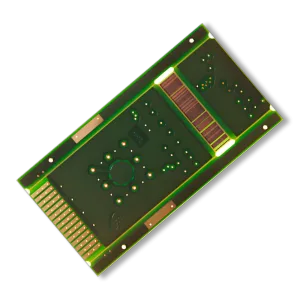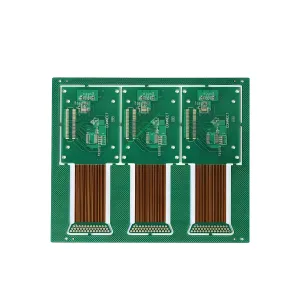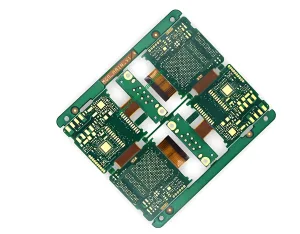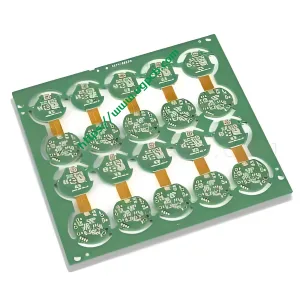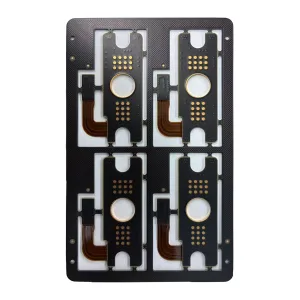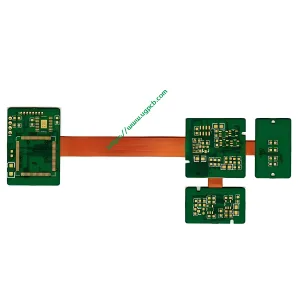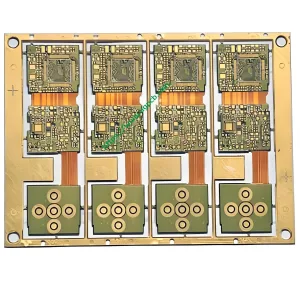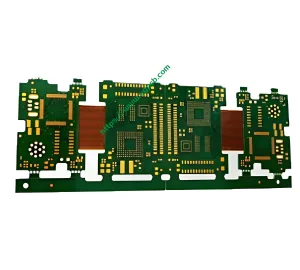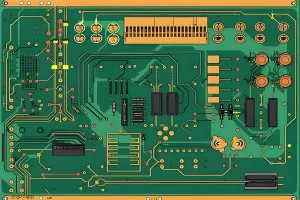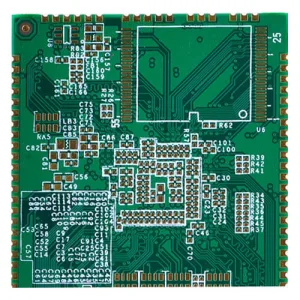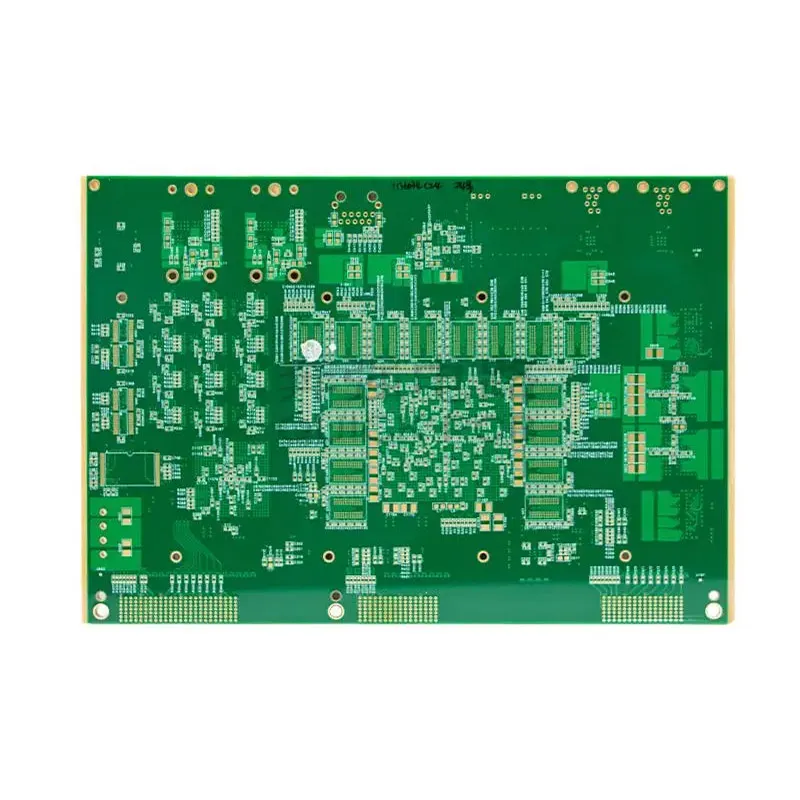
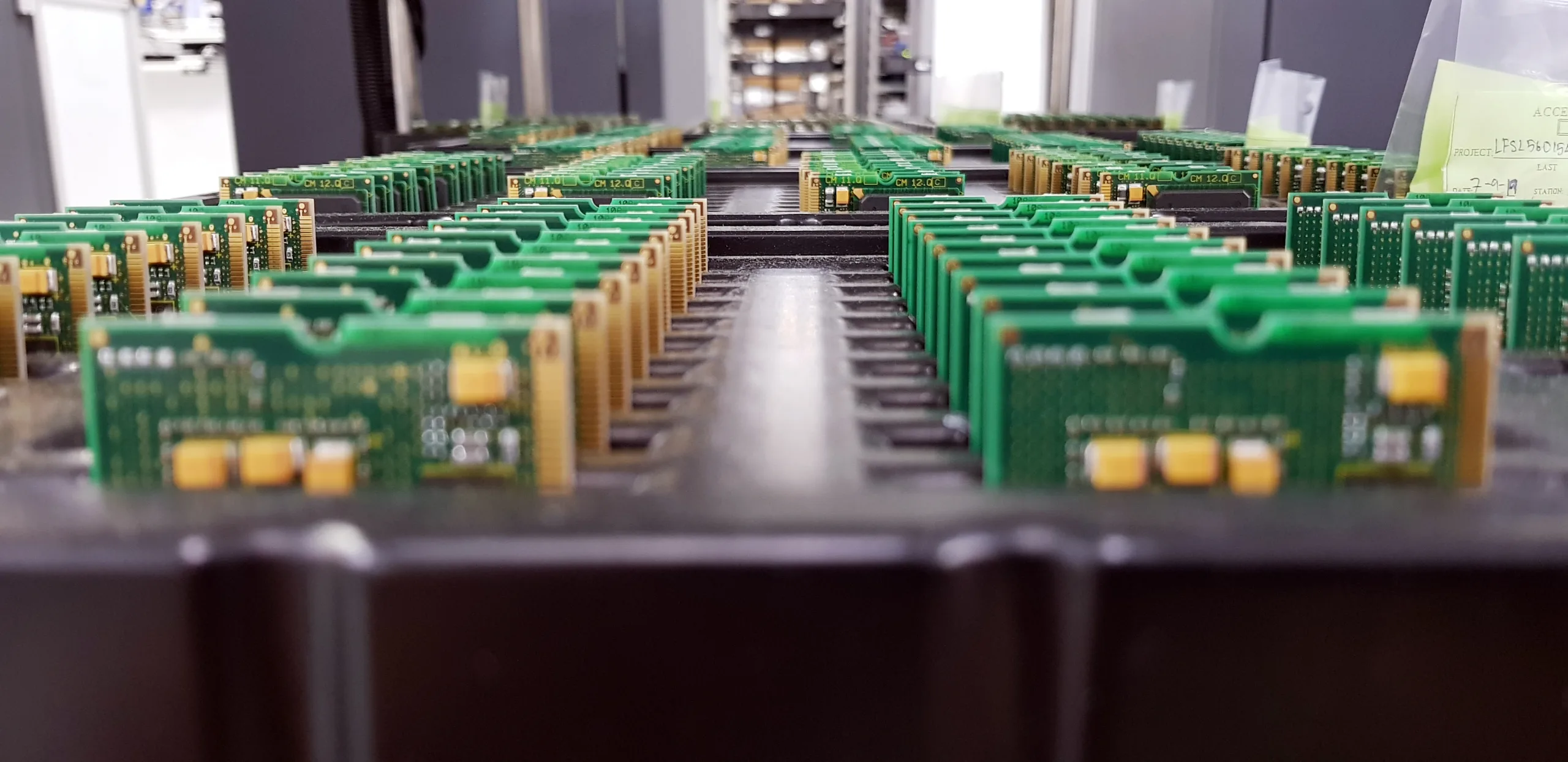
As modern electronic products demand higher integration, меньшие форм -факторы, and improved reliability, traditional rigid PCBs or standalone flexible printed circuits often fall short in complex three-dimensional designs. Жесткие платы offer a solution by combining the mechanical support of rigid boards with the bendability of flexible circuits, making them a preferred choice for high-end electronic applications.
UGPCB specializes in precision Производство печатных плат. This article introduces our flagship product — the Многослойная жесткая гибкая печатная плата (4 Rigid Layers + 2 Flex Layers) — and explains how its structure supports advanced digital product designs.
1. Что такое жестко-гибкая печатная плата?
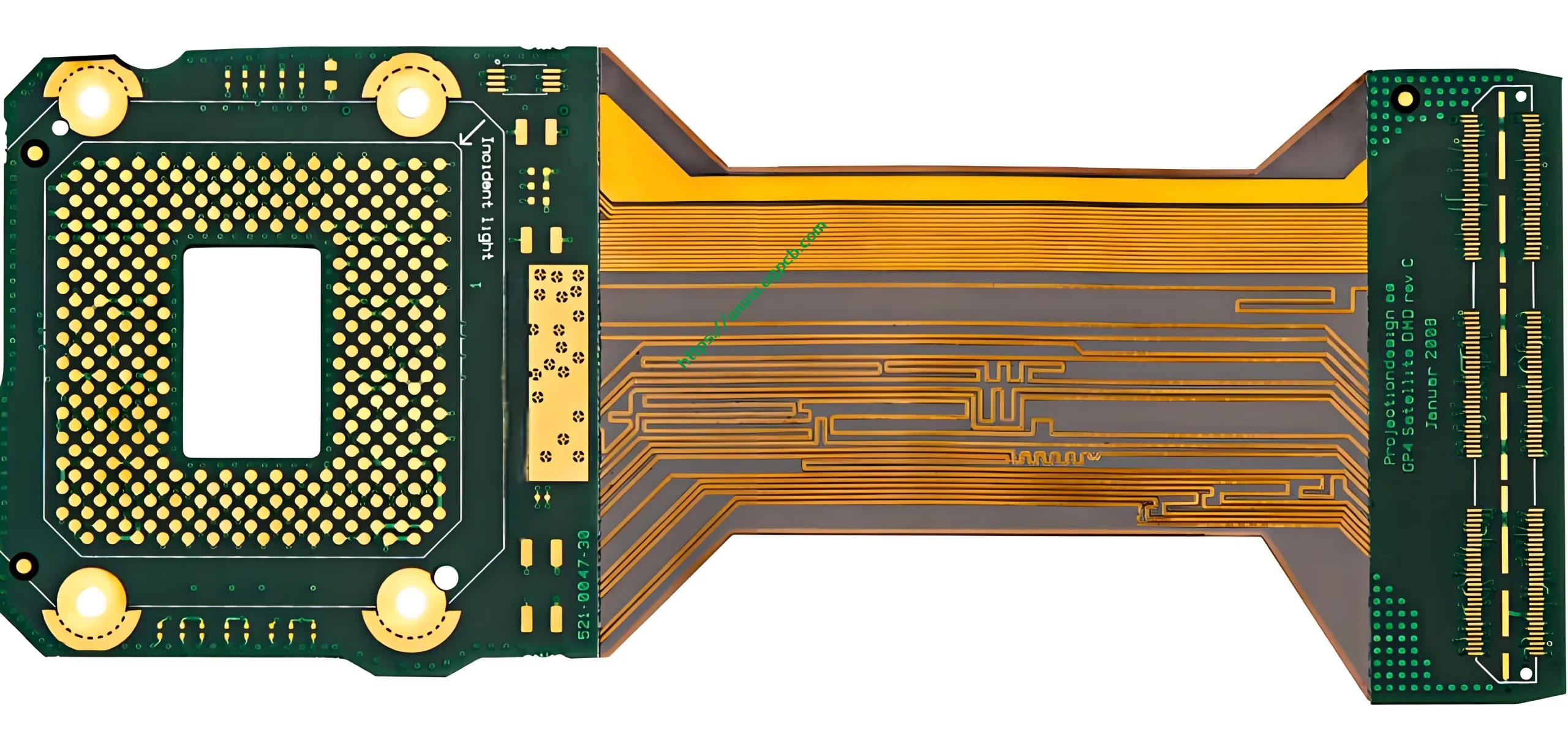
А жестко-гибкая печатная плата integrates rigid board sections and flexible circuit sections into a single unit through lamination. Unlike conventional assemblies that use connectors to join separate rigid and flexible boards, Жестко-гибкая печатная плата обеспечивает бесшовные электрические соединения через металлизированные переходы и переходы между слоями..
Такая структура обеспечивает большую гибкость проектирования.. Это позволяет складывать или сгибать печатную плату внутри устройства., сокращение использования пространства и устранение разъемов и кабелей. Это повышает устойчивость к ударам и целостность сигнала..
2. Обзор продукта: УГКПБ 4+2 Многослойная жесткая гибкая печатная плата
UGPCB предлагает жестко-гибкую печатную плату с классическим жесткий-гибкий-жесткий штабелирование. Ключевые параметры перечислены ниже.
-
Модель: Многослойная жесткая гибкая печатная плата
-
Стек слоев: 4 жесткие слои + 2 гибкие слои
-
Материал: ФР-4 (жесткие секции) + Полиимид (гибкая секция)
-
Поверхностная отделка: Погружение Золото (СОГЛАШАТЬСЯ)
-
Готовая толщина: 1.0мм (жесткая область) + 0.15мм (гибкая область)
-
Толщина меди: 1 унция
-
Минимальный след / Космос: 3 мил / 3 мил
-
Приложение: Цифровые продукты
3. Классификация и приложения
Жестко-гибкие печатные платы обычно классифицируются по структуре и назначению.. Предложения UGPCB поддерживают следующие распространенные типы::
-
Односторонние или двусторонние жестко-гибкие печатные платы – подходит для компактных устройств, таких как наушники TWS и умные часы.
-
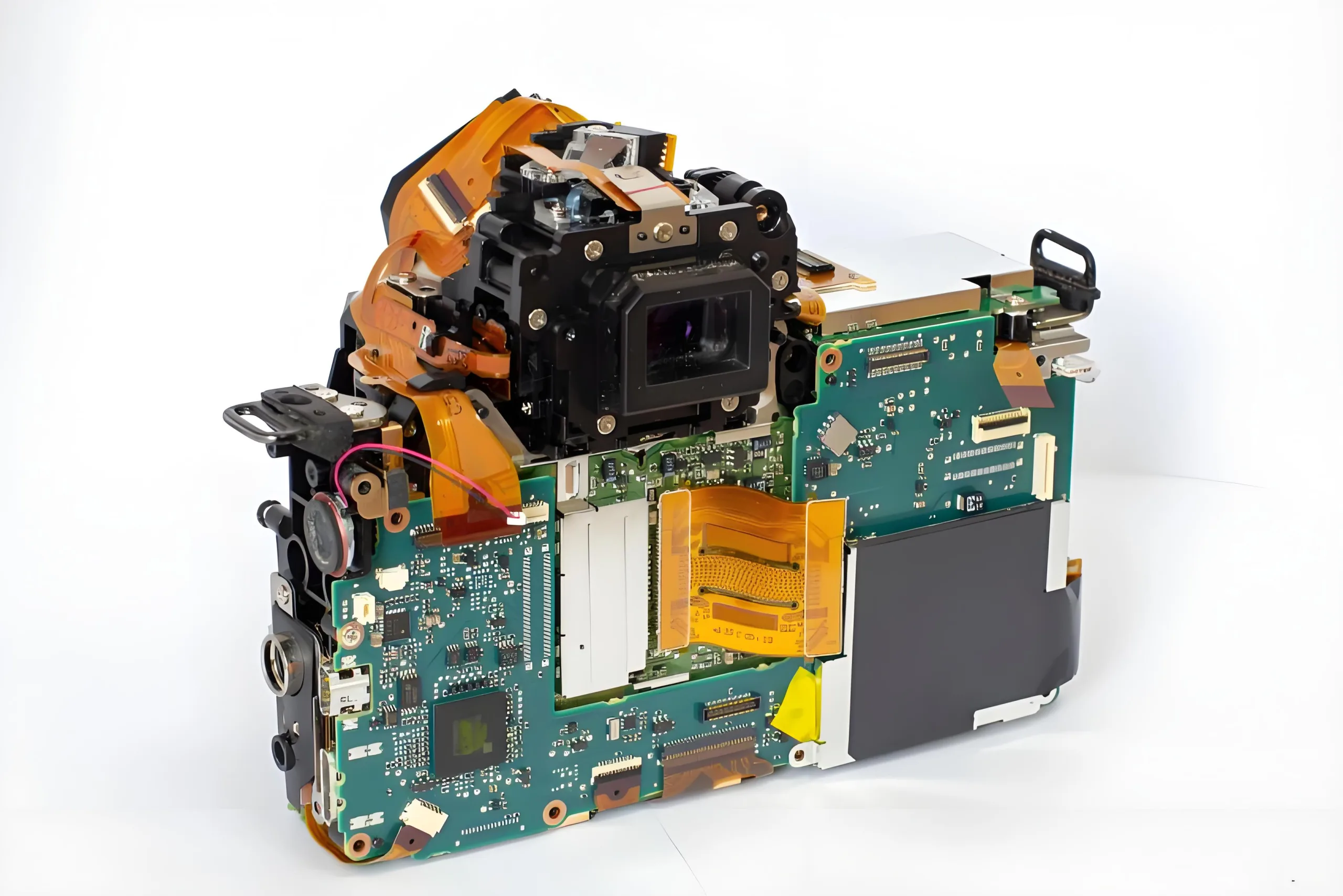
Многослойные жестко-гибкие печатные платы – УГКПБ 4 жесткий + 2 гибкий слой дизайн относится к этой категории. Он поддерживает размещение компонентов с высокой плотностью и сложную маршрутизацию., что делает его идеальным для смартфонов, цифровые фотоаппараты, и аналогичные цифровые продукты.
-
Жестко-гибкие печатные платы с локальным армированием – используется в промышленной робототехнике или складных дисплеях, где требуется длительный срок службы..
4. Особенности проектирования и принцип работы
Принцип работы жестко-гибкой печатной платы прост.: несущие компоненты жестких профилей, в то время как гибкие секции обеспечивают гибкие межсоединения. Однако, успешная реализация требует тщательного проектирования.
Ключевые методы проектирования включают в себя:
-
Симметрия стека – Симметричная структура слоев предотвращает коробление, вызванное термическим напряжением во время ламинирования..
-
Обработка переходной зоны – жестко-гибкий интерфейс это самая чувствительная зона. UGPCB следует рекомендациям DFM, используя каплевидные прокладки и конические направляющие для снижения нагрузки.. Острых углов трассировки избегают, чтобы предотвратить растрескивание..
-
Маршрутизация гибких слоев – Трассы в гибкой зоне должны быть проложены перпендикулярно оси изгиба. Для сохранения гибкости следует избегать резких изменений направления или наложения трасс..
5. Материалы и производительность
Выбор материала напрямую влияет на производительность и надежность..
-
Жесткая секция – ФР-4 – Обеспечивает механическую стабильность и отвод тепла. компоненты такие как BGA и разъемы.
-
Гибкая секция – Полиимид (ПИ) - Обеспечивает высокую термостойкость, изоляция, и гибкая жизнь. В сочетании с 1 унция катаной отожженной меди, он поддерживает динамические гибкие приложения.
-
Поверхностная обработка – Иммерсионное золото. (СОГЛАШАТЬСЯ) - Предоставляем квартиру., Устойчивая к окислению поверхность подходит для компонентов с мелким шагом и обеспечивает надежную пайку.
6. Производственный процесс
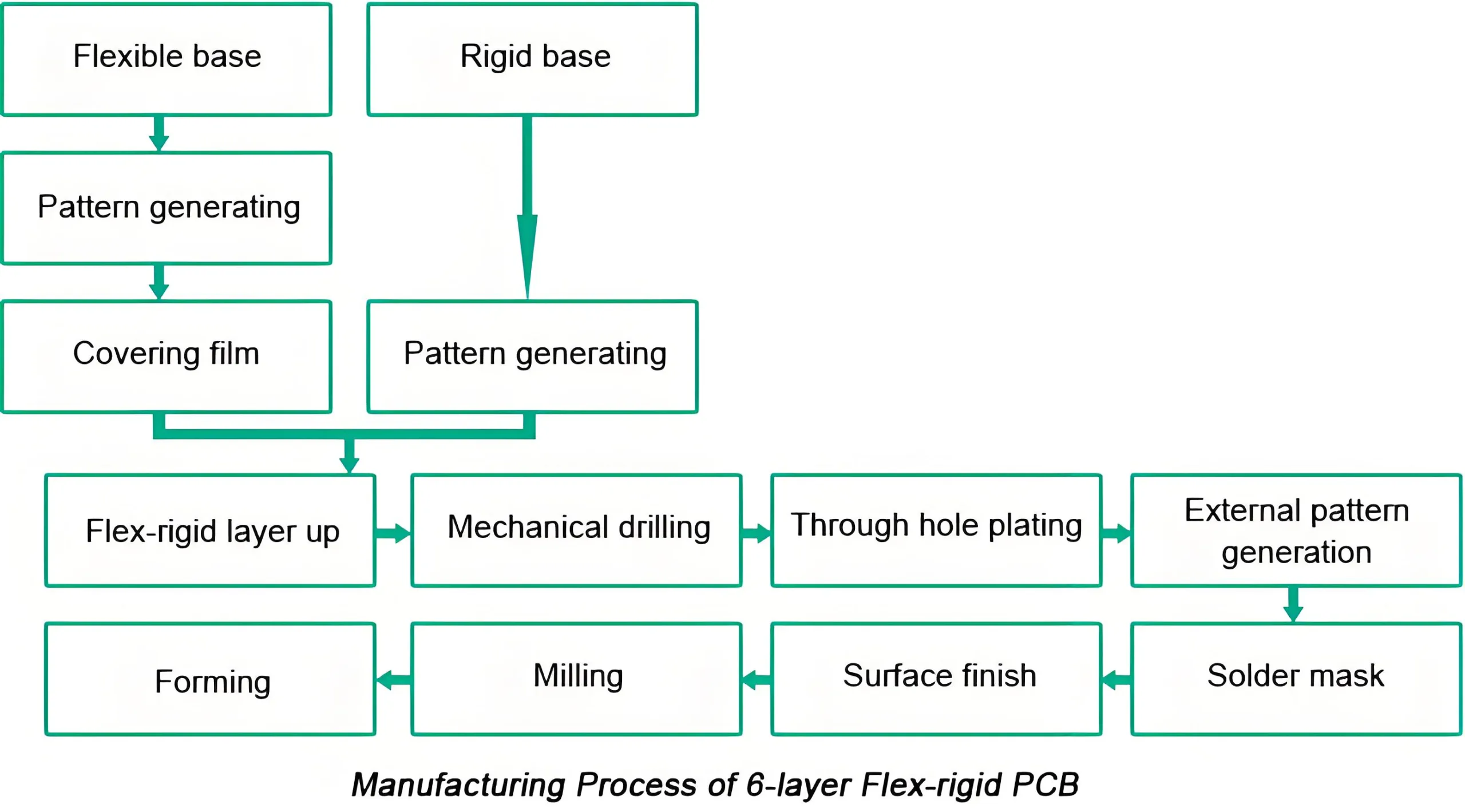
Производство высококачественной многослойной жестко-гибкой печатной платы требует строгого контроля процесса.. UGPCB следует отраслевым стандартам для обеспечения надежности..
-
Подготовка материала и визуализация внутреннего слоя – Материалы FR-4 и PI режутся отдельно. Цепи внутреннего слоя формируются за счет воздействия, разработка, и травление, с 3 ширина дорожки в милах точно контролируется. Инспекция AOI проверяет качество.
-
Плазменная обработка и подрумянивание – Плазменная очистка повышает активность поверхности и улучшает адгезию между FR-4 и PI перед ламинированием..
-
Ламинирование – Внутренние слои, препарат, и медная фольга ламинируются под вакуумом и при высокой температуре.. Контроль потока препрега для предотвращения вытекания смолы на гибкую поверхность имеет решающее значение..
-
Сверление и обшивка – Механическое и лазерное сверление создают межслоевые связи. Химическое осаждение меди и электролитическое покрытие образуют покрытие через отверстия, соединяющие 4 жесткие слои и 2 гибкие слои.
-
Визуализация внешнего слоя и удаление защитного слоя – После формирования схемы внешнего слоя, защитное покрытие над гибкой зоной точно удаляется лазером или химическими методами, чтобы освободить гибкую часть..
-
Обработка поверхности и фрезеровка — Наносится иммерсионное золото., с последующей окончательной фрезеровкой до необходимой формы.
7. Ключевые преимущества
Многослойная жестко-гибкая печатная плата UGPCB имеет ряд преимуществ.:
-
Эффективность использования пространства – Заменяет две жесткие доски и кабельную сборку одним сложенным блоком., экономия до 40% внутреннего пространства.
-
Повышенная надежность – Устраняет разъемы и кабели, уменьшение потенциальных точек отказа. Непрерывный медный путь повышает ударопрочность.
-
Улучшенная целостность сигнала – Каждый разъем создает разрывы импеданса. Жестко-гибкие печатные платы обеспечивают непрерывный путь передачи, подходящий для высокоскоростных сигналов..
-
Высокая точность – 3 военная трасса и космические возможности, в сочетании с отделкой иммерсионным золотом, поддерживает компоненты с мелким шагом и HDI Designs.
-
Более низкая общая стоимость – Хотя стоимость единицы продукции может быть выше, сокращение этапов сборки, меньше позиций в спецификации, и более низкие затраты на рабочую силу часто приводят к общей экономии затрат.
8. Запросить цену
УГКПБ обеспечивает поддержку проектирования, прототипирование, и массовое производство. Если ваш проект сталкивается с ограничениями по пространству, проблемы с надежностью, или проблемы с высокоскоростным сигналом, наша команда готова помочь.
Сделайте следующий шаг:
-
Бесплатный обзор DFM – Отправьте свои файлы Gerber. Наши инженеры предоставят обратную связь по технологичности.
-
Быстрая цитата – Используйте форму запроса, чтобы поделиться своими требованиями. Конкурентное предложение будет предоставлено в течение 24 часы.
-
Техническая поддержка – Наши инженеры-технологи готовы обсудить проектирование штабеля или выбор материала..
[Запросить цену / Получить образцы / Обратиться в службу поддержки]