

Stellen Sie sich vor: a Hochgeschwindigkeitsplatine als geschäftige Datenstadt. Die Durchkontaktierungen, die Signale zwischen den Schichten übertragen, ähneln unterirdischen Tunneln.
Gemäß der branchenüblichen Näherung von IPC-2251, Eine typische Durchkontaktierung weist dazwischen eine parasitäre Kapazität auf 0.3 pF und 0.8 pF. Wenn die Signalfrequenzen überschritten werden 10 Gbps, Diese geringe Zahl kann zu Reflexionen und Verzögerungen führen. Es kann eine perfekt gestaltete Datenverbindung in einen Bitfehlersturm verwandeln.
Dieser Artikel analysiert die Ursachen und Optimierungspfade von Via-Parasitärkapazitäten aus drei physikalischen Dimensionen: Schaltung, Feld, und Material.
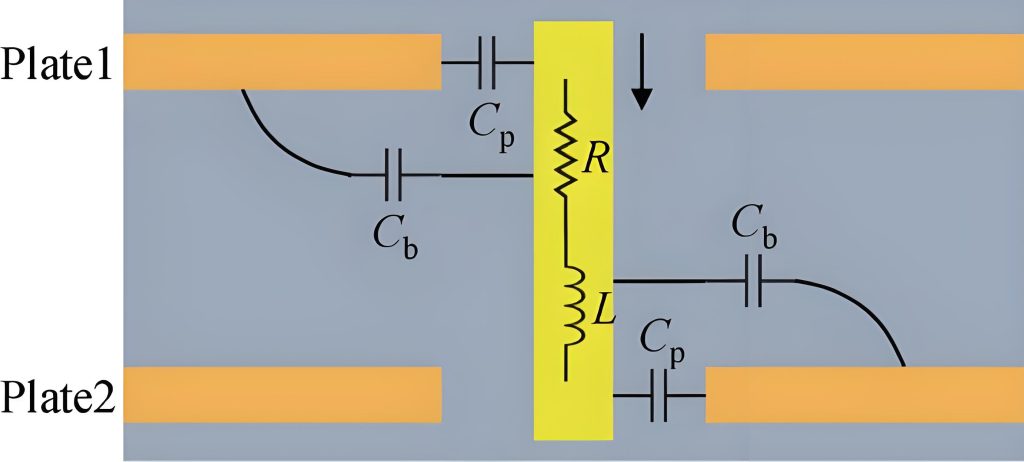
1. Die Kapazitätsdämpfungsschicht – Steuerung geometrischer Abmessungen zur Reduzierung der Ableitung elektrischer Felder
Der physikalische Ursprung der parasitären Via-Kapazität liegt in der Kopplung zwischen dem Via-Pad und der Referenzmasseschicht.
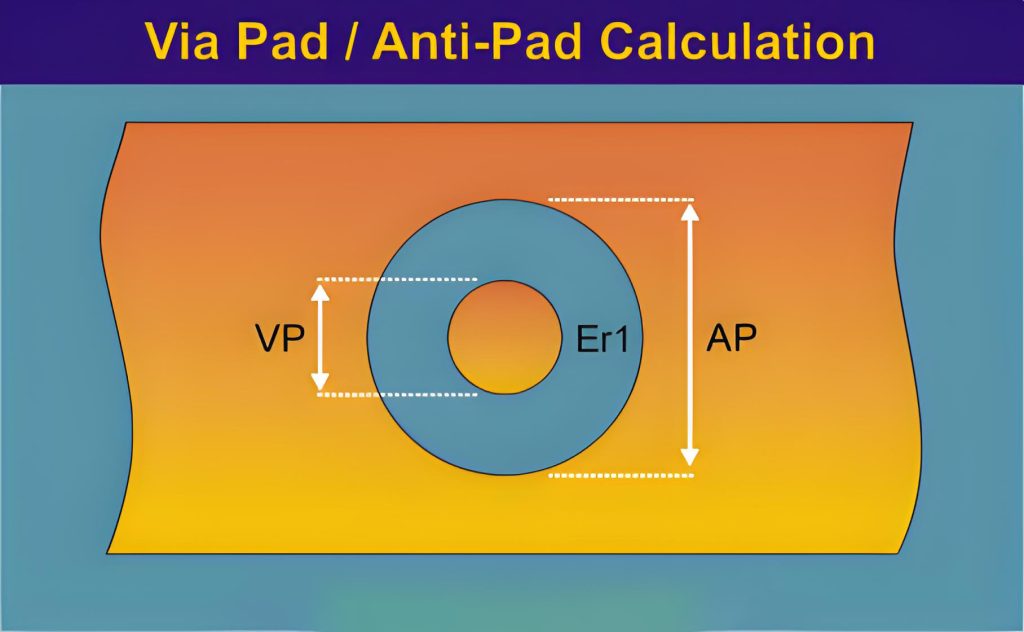
Aus der Perspektive eines elektromagnetischen Feldes, Das Pad und die Masseebene bilden einen Parallelplattenkondensator. Zur Reduzierung parasitärer Kapazitäten, Der direkteste Weg besteht darin, die effektive Plattenfläche zu verkleinern.
Die Branchenpraxis folgt den Mindestanforderungen an Ringringe. Für IPC-6012-Klasse 3 hohe Zuverlässigkeit, das Minimum der Außenschicht beträgt 2 Mil, während die innere Schicht auf reduziert werden kann 1 Mil. Diese Minimierungsstrategie reduziert den Pad-Durchmesser und komprimiert effektiv den Kopplungsbereich mit der Grundebene.
Die Vergrößerung des Loch-zu-Pad-Durchmesserunterschieds bietet einen weiteren Weg zur Kapazitätsreduzierung. Sie müssen der Formel folgen:
Pad-Durchmesser = Bohrerdurchmesser + 2 × Ringring
Normalerweise entfallen 30–40 % auf Bohrungen Leiterplattenfertigung kosten. daher, über Dimensionsanpassungen erfordern eine enge Abstimmung mit wirtschaftlichen Randbedingungen.
Zur Antipad-Behandlung, Durch das Entfernen von Kupfer um das Pad herum auf bestimmten Schichten wird der räumliche Abstand zwischen den Leitern vergrößert. Jedoch, Ein zu großer Abstand kann zu Übersprechen auf benachbarten Leiterbahnen und zu Diskontinuitäten in der Referenzebene führen.
2. Die dielektrische Parameterschicht – Die “Signalverlangsamungszone” in der Materialauswahl
Standard FR-4-Material hat eine relative Dielektrizitätskonstante Dk ≈ 4,2–4,8 at 1 GHz. Bei 10 GHz, der Dk-Wert kann um 5–10 % sinken.
Materialien mit niedrigem Dk-Wert (Dk ≤ 3.5) Reduzieren Sie effektiv die parasitäre Kapazität, da die Kapazität direkt proportional zur Dielektrizitätskonstante ist. Jedoch, Diese Materialien kosten mehr und erfordern eine aufwändigere Verarbeitung. Für gewöhnliche Strecken mit niedriger Geschwindigkeit, Sie müssen diese Lösung nicht übernehmen. IPC-4101 definiert die technischen Grenzen für die Materialauswahl. Hochfrequenzdesigns müssen sich auf die entsprechenden Slash-Sheet-Spezifikationen in dieser Norm beziehen.
3. Die elektromagnetische Grenzschicht – Signale präzise passieren lassen
Die Steuerung über die Stichleitungslänge ist eine entscheidende Methode zur Überwindung von Hochgeschwindigkeitsengpässen.
Technischer Schwellenwert für Hinterbohren
Für 10 SerDes-Kanäle mit Gbit/s oder höher, eine Stichlänge größer als 10 Mil (um 0.254 mm) kann zu sichtbaren Einfügungsdämpfungskerben führen. Kommerzielle Hinterbohrverfahren können die Stublänge dazwischen zuverlässig steuern 4 mil und 8 Mil (0.1 mm zu 0.2 mm).
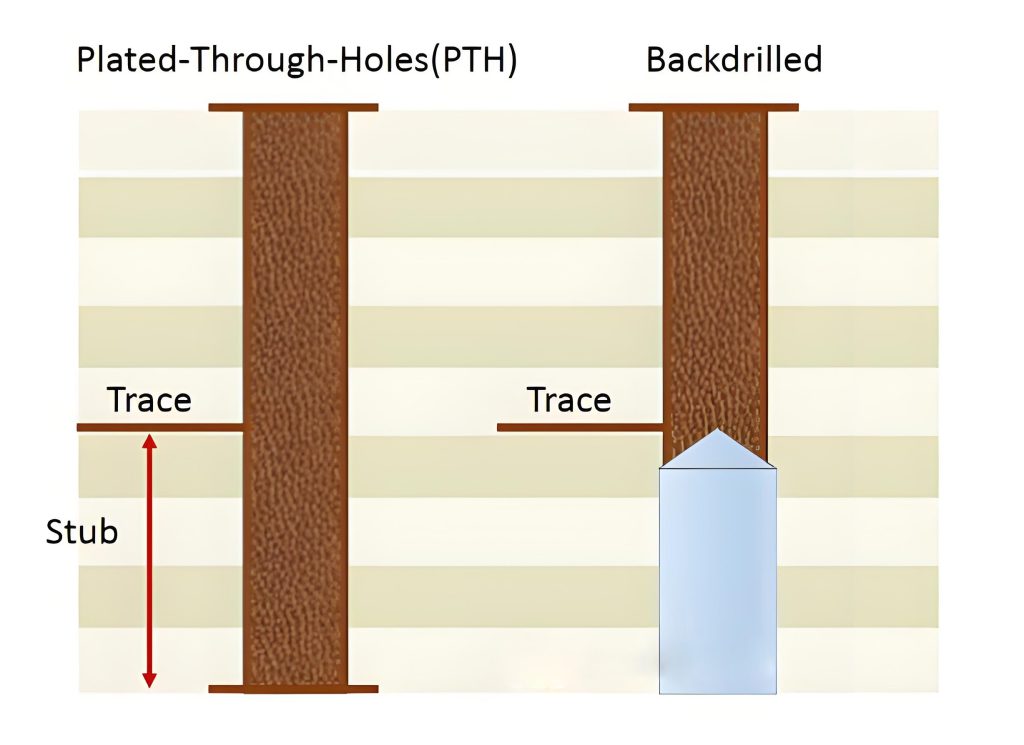
Eine Via-Stichleitung fungiert als Übertragungsleitungs-Stichleitung mit offenem Schaltkreis. Wenn die Stichleitungslänge einem Viertel der dielektrischen Wellenlänge entspricht, es regt eine Serienresonanz mit hohem Q an. Die Rückflussdämpfung S11 kann sich lokal über –8 dB verschlechtern.
Quantitative Beurteilung des Reflexionskoeffizienten
Die Formel für den Reflexionskoeffizienten lautet:
C = (Z₂ − Z₁) / (Z₂ + Z₁)
Wo:
- Z₁ = Leitungsimpedanz vor dem Reflexionspunkt
- Z₂ = Leitungsimpedanz nach dem Reflexionspunkt
Im Idealfall, C → 0 bedeutet vollständige Absorption ohne Reflexion. C → ±1 bedeutet Totalreflexion. Wenn eine Durchkontaktierung zusätzliche parasitäre Parameter einführt, Γ weicht von Null ab. Das Design muss diese Abweichung durch Impedanzkontrolle in einem akzeptablen Bereich halten.
Über die Designprinzipien von Fasswänden
Auf mikrostruktureller Ebene, über Innendurchmesser, Seitenverhältnis (Brettdicke / Lochdurchmesser), und die Dicke der Kupferbeschichtung werden direkt über die mechanische Zuverlässigkeit bestimmt. Die Standarddicke von Lochwandkupfer reicht von 2.5 mil zu 3.0 Mil. Die mechanische Bohrgrenze für den Lochdurchmesser beträgt 6 Mil (0.15 mm). Laserbohren kann reichen 4 Mil (0.1 mm). Wenn das Seitenverhältnis größer ist 8:1, Die Beschichtungslösung kann nicht vollständig in die Lochmitte eindringen, und Hohlräume oder Risse nehmen stark zu.
Kostenkompromiss für blinde und vergrabene Vias
Blinde und vergrabene Vias können die parasitäre Kapazität reduzieren 1/3 oder 1/5 eines Through-Hole-Via. Jedoch, Ihre Herstellungskosten pro Quadratzoll betragen ca 1.3 Zu 2.0 mal höher als bei Durchsteckplatinen. Branchendaten zeigen, dass das Bohren 30–40 % der gesamten Leiterplattenherstellungskosten ausmacht. Blind Vias erhöhen diesen Prozentsatz aufgrund ihrer Prozesskomplexität erheblich. Wir empfehlen, in diesen Fällen nur blinde/vergrabene Durchkontaktierungen zu verwenden: Systemdatenrate ≥56 Gbit/s PAM4, HDI Any-Layer-Verbindung für hohe Routing-Dichte, oder kleine Verpackungsbereiche, die keine Durchgangslöcher aufnehmen können.
Zusammenfassung der Optimierungsmaßnahmen
Die folgende Tabelle fasst alle Lösungen und ihre Kostenauswirkungen basierend auf dem Ausgangsmaterial zusammen.
| Optimierungskategorie | Spezifische Maßnahme | Kostenauswirkungen |
|---|---|---|
| Über Dimensionsdesign | Belagdurchmesser reduzieren; Erhöhen Sie den Unterschied zwischen Loch- und Pad-Durchmesser | Geringfügig – aber achten Sie auf mechanische Festigkeit und Zuverlässigkeit |
| Dielektrisches und isolierendes Design | Erhöhen Sie den dielektrischen Abstand; Antipad entfernen; Verwenden Sie Material mit niedrigem Dk-Wert | Mittel bis hoch – Material mit niedrigem Dk-Wert kostet mehr |
| Über Platzierungsdesign | Von den Kanten der Grundplatte fernhalten; Kontrollieren Sie den Abstand zu benachbarten Leitern | Geringfügig – erfordert jedoch einen sicheren Abstand |
| Über Strukturauswahl | Hinteres Bohren zum Entfernen des Stumpfes; Verwenden Sie blinde/vergrabene Vias; Reduzieren Sie die Anzahl der Ebenenübergänge | Mittel bis hoch – Blind-/vergrabene Vias kosten das 1,3–2,0-fache der Durchgangslöcher |
Erhalten Sie professionelle Unterstützung für Ihre Hochfrequenzoptimierung
Wenn Ihr Designteam vor schwierigen Optimierungsherausforderungen für Hochfrequenzsignale steht, Du brauchst einen erfahrenen PCBA-Lieferant. Wir bieten präzise Angebote für Impedanzsimulationen und ertragsstarke Rückbohrproben. Unsere Fertigungskapazitäten entsprechen der IPC-6012-Klasse 3 hohe Zuverlässigkeitsstandards und umfassen ausgereifte HDI-Via-Strukturen. Klicken Sie auf die Schaltfläche, um Ihre individuelle Design- und Fertigungsunterstützung anzufordern.
Referenzen
[1] IPC-2251, Designleitfaden für die Verpackung elektronischer Hochgeschwindigkeitsschaltungen, IPC, 2003.
[2] IPC-4101E/21, Spezifikation für Basismaterialien für starre und mehrschichtige Leiterplatten, IPC.
[3] IPC-6012D, Qualifikations- und Leistungsspezifikation für starre Leiterplatten, IPC.
[4] IPC-D-317A4, Designstandard für Leiterplattenbaugruppen, IPC.
[5] IPC-TM-650, Handbuch zu Testmethoden, IPC.