UGPCB-LOGO
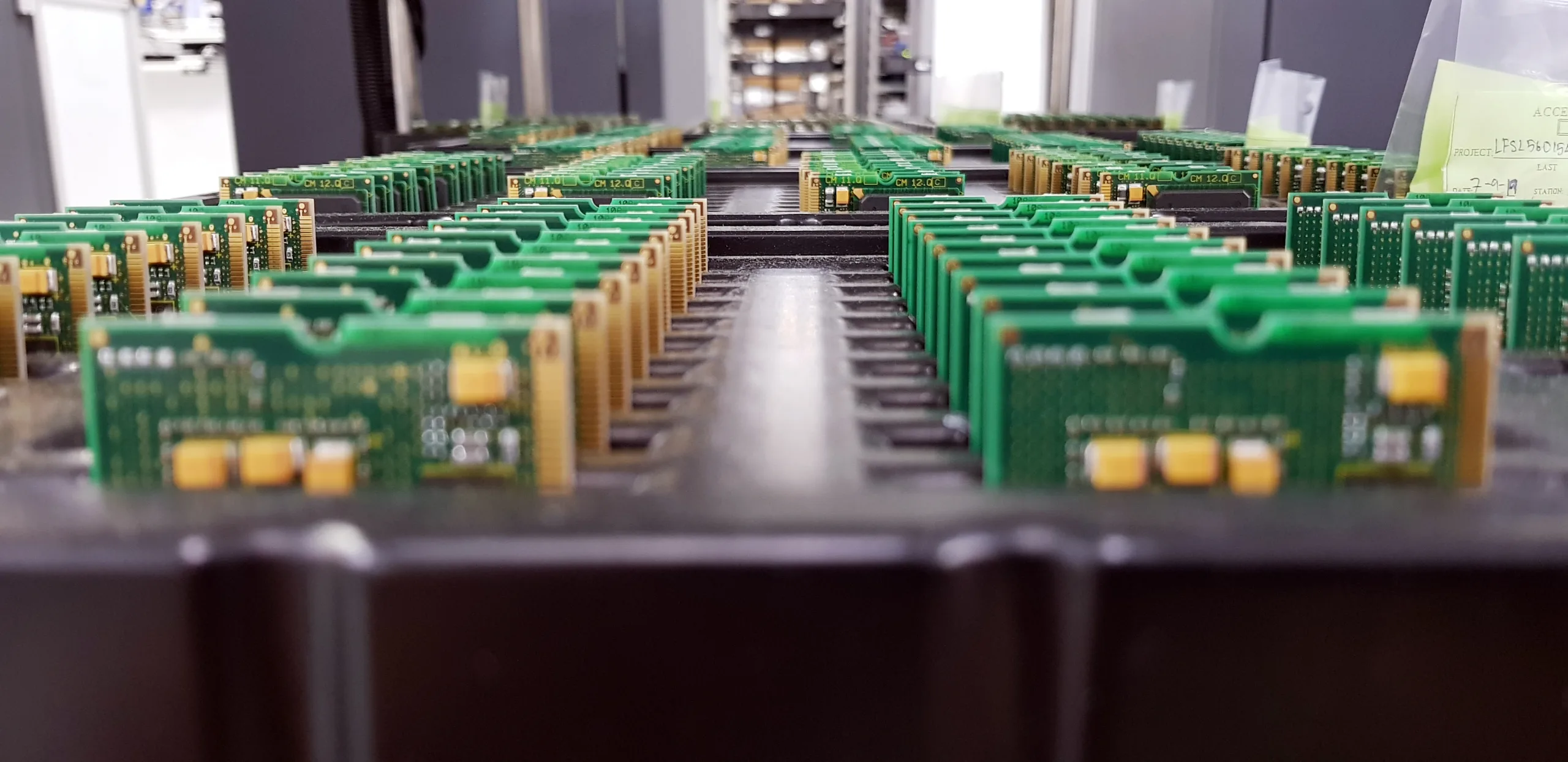
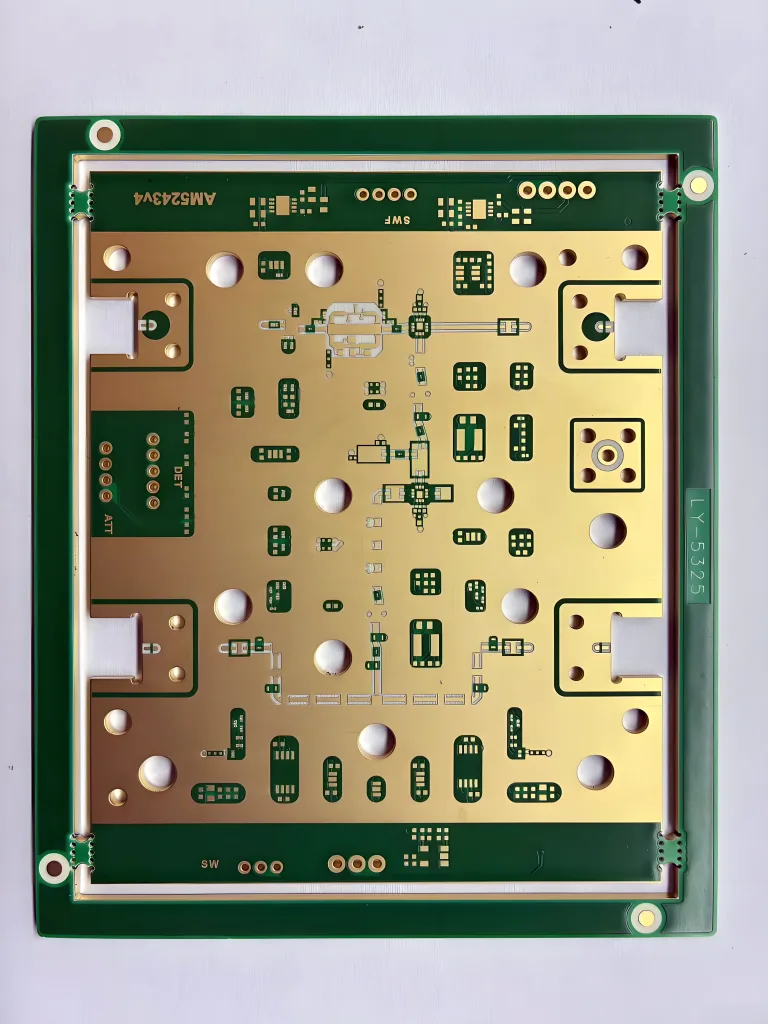
Professional Definition: What is a 6-Layer High-Frequency Hybrid PCB?
In the fields of 5G communications, Automobilradar, and high-end computing, Standard FR-4 PCBs often fall short in meeting the demands for high-frequency, hohe Geschwindigkeit, and high-stability signal transmission. This is where the Hochfrequenz Hybridplatine becomes critical.
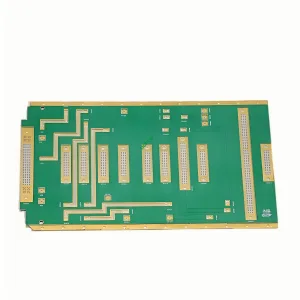
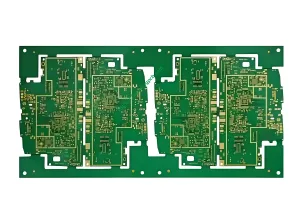
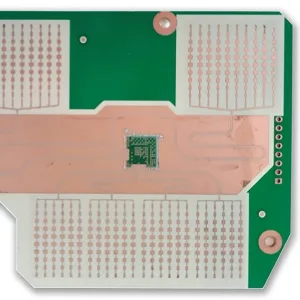
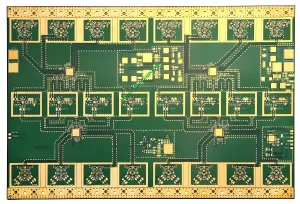
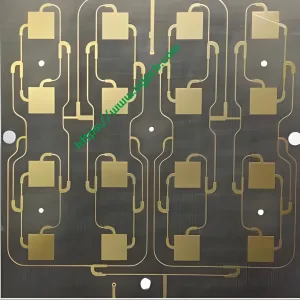
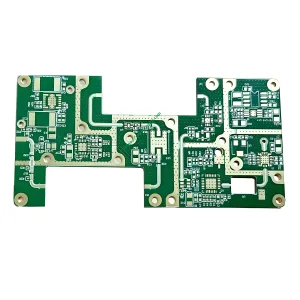
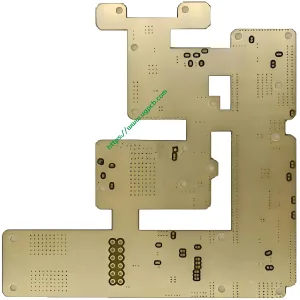
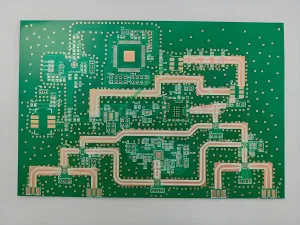
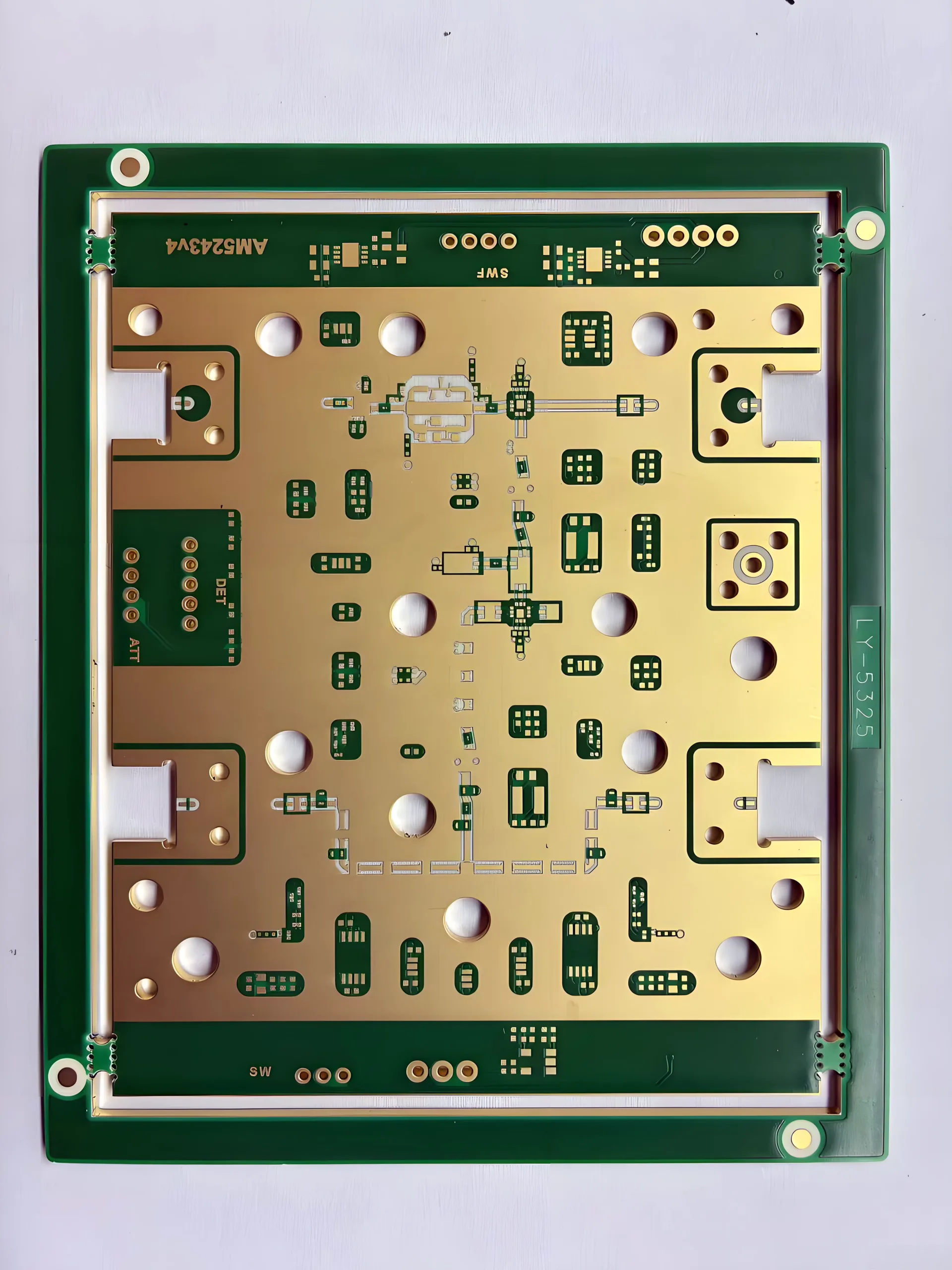
A 6-layer high-frequency hybrid PCB is a multilayer circuit board that integrates different performance-grade high-frequency laminate Materialien (such as Rogers) with standard or specialized materials through precision lamination. Das hybrid construction strategically places materials to optimize electrical, Thermal-, and cost performance across different circuit layers. It serves as the core hardware foundation for complex RF microwave circuits und schnelle digitale Designs.
Product Deep Dive: UGPCB’s High-Performance 6-Layer Hybrid Board
1. Kernspezifikationen & Materialwissenschaft
-
Schicht & Konstruktion: 6 Schichten. This represents an optimal balance between complexity, Leistung, und Kosten, suitable for integrating digital control and RF front-end circuits.
-
Material Stack-up (Hybrid Core):
Rogers 4350B + Rogers 4450F + IT180A. This is the essence of the design.-
Rogers 4350b: An industry-standard high-frequency circuit board material known for its stable Dielektrizitätskonstante (Dk) and low Dissipationsfaktor (Df), making it ideal for RF signal layers.
-
Rogers 4450F: A prepreg (Pp) with high glass transition temperature (Tg) and excellent thermal stability, used for bonding layers and ensuring reliability of the hybrid stack-up under thermal stress.
-
IT180A: A high-performance, mid-loss thermoset material often used for inner signal or power plane layers where good signal integrity is required at a managed cost. This hybrid approach applies the best material where it’s needed most.
-
-
Dicke & Kupfergewicht: Standard 1.6mm thickness for good mechanical rigidity. Copper weight is
1/H/H/H/H/1 oz, indicating 1 oz copper foil for outer layers Und 0.5 oz (H oz) copper for inner layers. This facilitates fine-line etching and optimized impedance control. -
Oberflächenbeschaffung: Elektrololes Nickel Elektrololless Palladium Immersion Gold (Enepic): 120 μin Ni, 2 μin Pd, 2 μin Au. This is a premium finish offering excellent solderability, wire-bond capability, and corrosion resistance. It is particularly suited for IC-Substrate and assemblies requiring multiple reflow cycles or gold wire bonding.
2. Konstruktionsüberlegungen & Funktionsprinzip
-
Konstruktionsüberlegungen:
-
Impedanzkontrolle & Signalintegrität: Utilizing the stable Dk of Rogers materials, combined with precise stack-up design and trace width/spacing control, enables tight PCB impedance control (z.B., 50Ω single-ended, 100Ω differential), was entscheidend ist für high-speed PCB signal integrity.
-
Stack-up Planning: High-speed RF traces are typically routed on the Rogers material layers, while power, Boden, and lower-frequency digital signals are placed on IT180A layers. A symmetrical stack-up (as in this design) helps prevent warpage.
-
Thermalmanagement: The superior thermal conductivity of Rogers materials, combined with strategic ground vias and thermal relief designs, aids in dissipating heat from high-power RF components.
-
-
Funktionsprinzip: This PCB acts as the “Skeleton” Und “highway system” eines elektronischen Geräts. Its core function is to mount and interconnect components (RF chips, CPUs, Kondensatoren, usw.). High-frequency signals travel via Mikrowellen -PCB transmission lines on the Rogers layers with minimal loss and distortion; power is distributed stably through inner-layer copper planes; and complex interconnections are achieved via blind and buried vias, shortening paths and enhancing electrical performance.
3. Four Advanced Processes: Ensuring Reliability & Leistung
-
Kernblinde/vergrabene Vias: These vias connect adjacent layers within a core (z.B., Rogers laminate) without penetrating the entire board. This significantly increases routing density in Hochdichte Interconnect (HDI) Leiterplatten, reduces parasitic effects, and improves high-frequency performance.
-
Resin Filled Vias: After plating, through-holes or blind/buried vias are filled with epoxy resin. This prevents chemical entrapment, provides a flat surface for fine-line patterning of subsequent layers, and enhances via reliability.
-
VIC-in-Pad (VIP): A via is placed directly within a component pad, then filled and planarized with resin and copper. This is a hallmark of advanced HDI-Leiterplatten, enabling further miniaturization and higher component density.
-
Metalized Edge (Edge Plating): A continuous metal layer (Typisch kupfer) is plated along the board edge. This provides excellent EMI shielding, protects internal circuits, and strengthens the edge for connector mating and mechanical wear.
4. Key Performance Characteristics
-
Superior High-Frequency Performance: Niedriger Verlust, stable Dk for pristine signal transmission in RF -PCBs.
-
Hervorragende Signalintegrität: Precision impedance control meets Hochgeschwindigkeits-PCB-Design Anforderungen.
-
Hochdichte Interconnect (HDI): Blind/buried vias and VIP technology support high-density PCB layouts.
-
Verbesserte Zuverlässigkeit: Robust hybrid construction, ENEPIG finish, and metalized edges suit demanding environments.
-
Improved Thermal & Shielding Performance: Good thermal conductivity and effective EMI suppression.
5. Wissenschaftliche Klassifikation
-
Für Schichtzahl: Mehrschichtige Leiterplatte
-
Nach Materialtyp: Hybrid / Mixed Material PCB
-
Nach Technologie: Advanced HDI PCB
-
Durch Anwendung: RF Microwave PCB / High-Speed Digital PCB
6. Standard Production Flow
Engineering Design → Material Prep & Shearing → Rogers Material Laser Drilling (Blind Vias) → Desmear & Metallization → Inner Layer Imaging & Etching → Core Lamination (Hybrid Bonding) → Mechanical Drilling → Harzfüllung & Curing → Outer Layer Imaging → ENEPIG Surface Finish → Metalized Edge Plating → Solder Mask & Silkscreen → Electrical Test & Endinspektion.
7. Primäranwendungen (Anwendungsfälle)
This product is ideal for high-reliability electronic projects with stringent demands:
-
5G Kommunikationsinfrastruktur: RF -PCBs within AAUs (Active Antenna Units) and remote radio units.
-
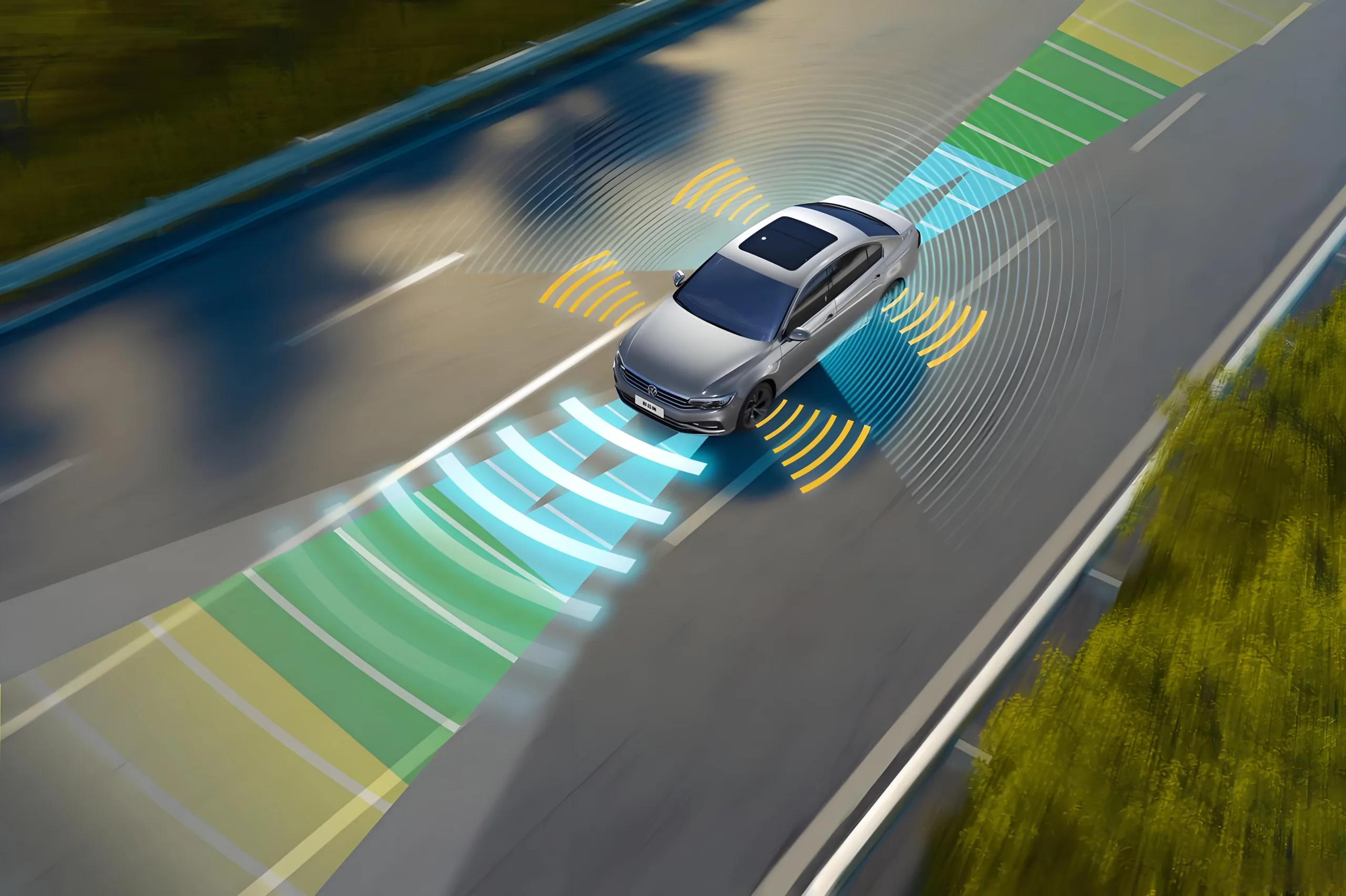
Kfz -Elektronik: Radar PCBs for ADAS and autonomous vehicles (z.B., 77GHz radar).
-
Luft- und Raumfahrt & Verteidigung: High-Reliability PCBs in radar systems, Satellitenkommunikation, and EW equipment.
-
High-End Test & Messung: Core boards for network analyzers and spectrum analyzers.
-
Hochleistungs-Computing & Rechenzentren: Backplanes or motherboards for high-speed servers/switches.
Why Choose UGPCB for Your 6-Layer High-Frequency Hybrid PCB?
In advanced Leiterplattenherstellung, consistency and attention to detail determine success. UGPCB possesses deep expertise across the entire complex process chain—from Rogers material processing Und Laserbohrung Zu resin filling Und ENEPIG plating. We deliver not just boards that meet specifications, but robust PCB solutions that ensure your product’s successful volume production.
Kontaktieren Sie uns noch heute for dedicated technical support and a competitive quote for your 5G PCB, automotive radar PCB, oder high-frequency module PCB project. Let UGPCB be your trusted partner for Hochfrequenz, high-speed PCB fabrication.