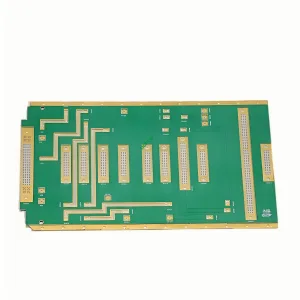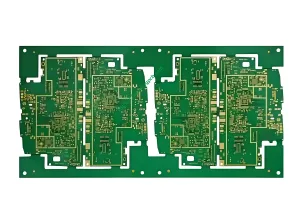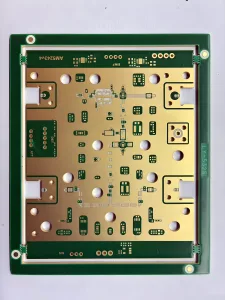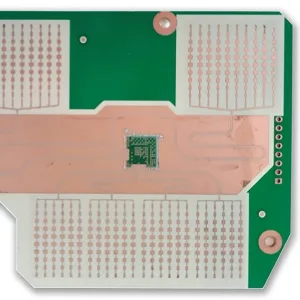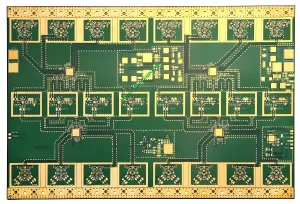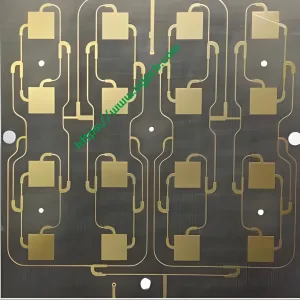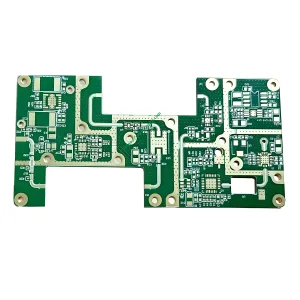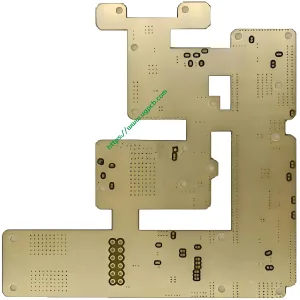
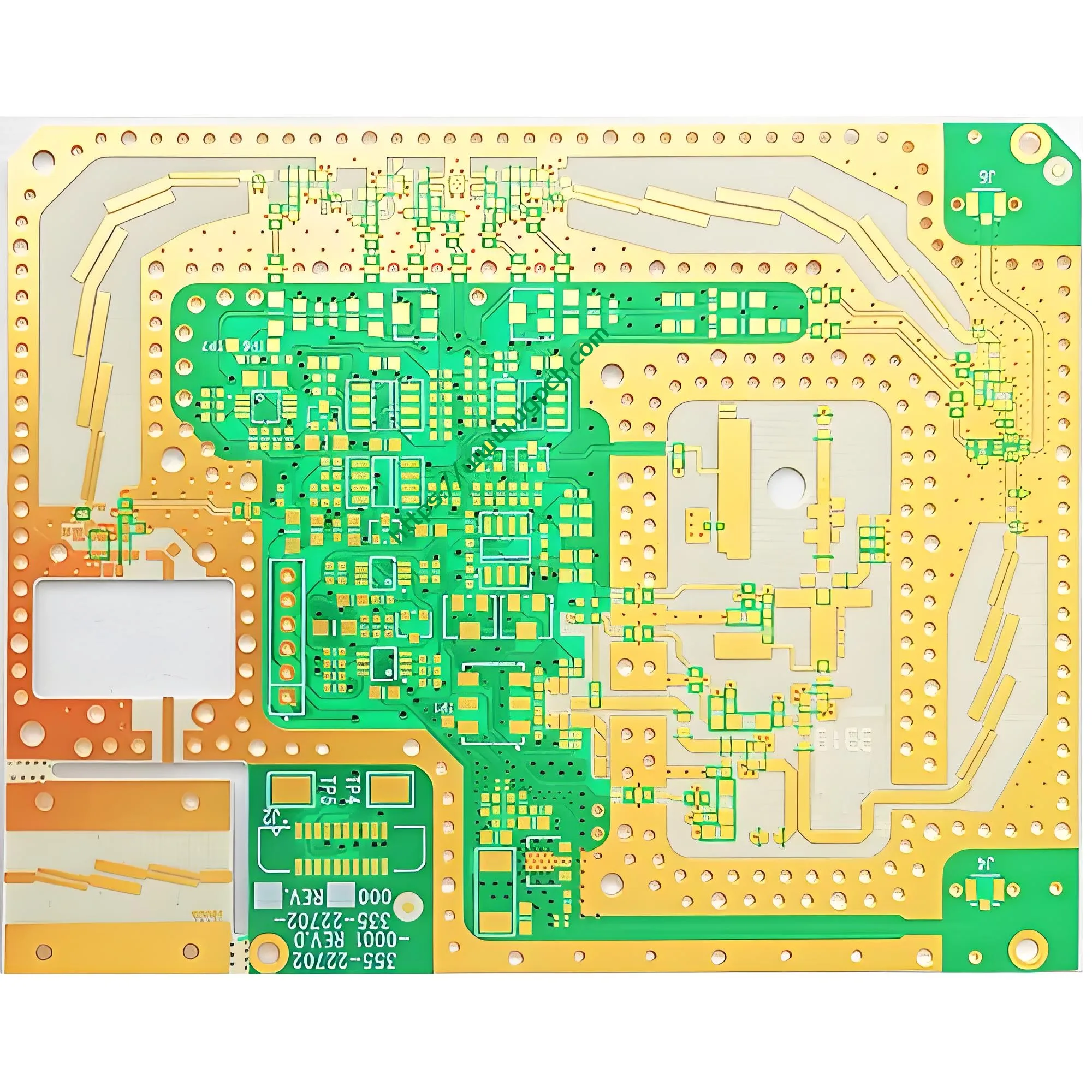
1. Présentation du produit: What is Rogers 4003 PCB?
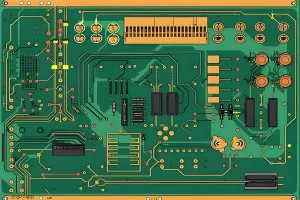
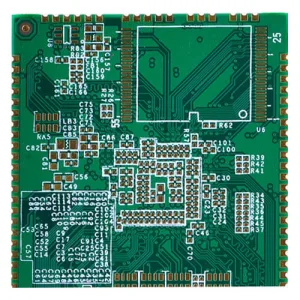
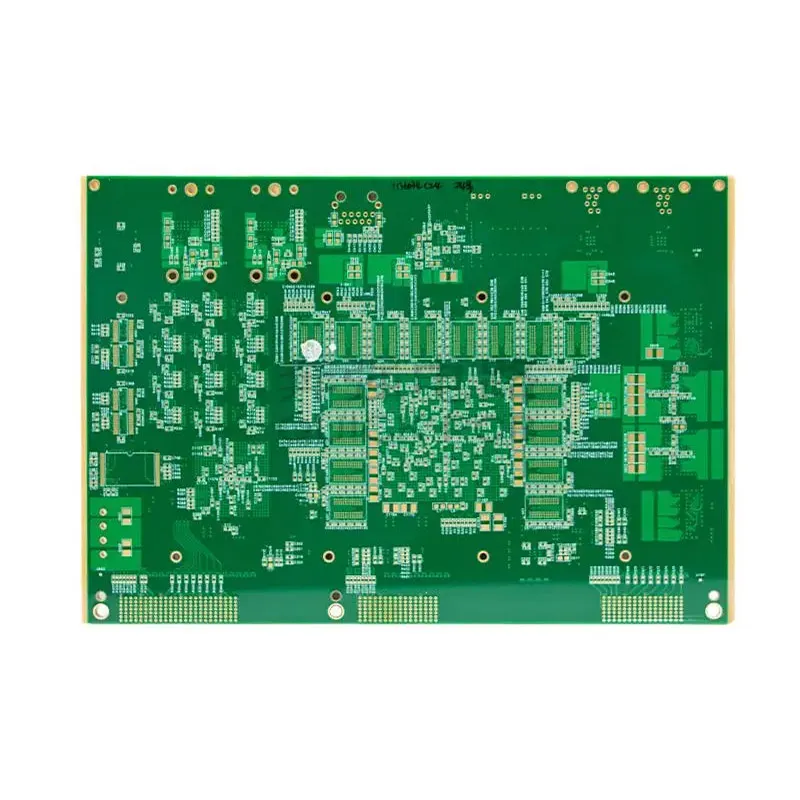
Le Rogers 4003 PCB is a high-performance printed circuit board manufactured using Rogers Corporation’s RO4003C™ laminate material. This product belongs to the RO4000® series hydrocarbon-ceramic composite material family. Manufacturers design this PCB specifically for high-frequency RF circuits, microwave circuits, and high-speed digital systems. It offers industry-leading low dielectric constant, low loss properties, et une excellente stabilité thermique.
Rogers Corporation developed the patented RO4003C™ material technology. This material is a hydrocarbon resin system enhanced with ceramic filler particles and reinforced with woven glass fabric. The electrical performance of this material system matches traditional PTFE/woven glass materials. Cependant, the processing method works with standard epoxy/woven glass (FR-4) Production de PCB processus. This eliminates the need for special via pretreatment or sodium etching, ce qui réduit considérablement les coûts de fabrication.
RO4003C laminate complies with IPC-4103 standard, Feuille oblique /10 clause. This classification covers laminate base material specifications for high-speed/high-frequency applications. Within the IPC standard system, CIB-4103 applies specifically to high-speed/high-frequency copper-clad laminate base material specifications. IPC-4104 covers interconnexion haute densité (IDH) and microvia material requirements.
This product uses a stackup structure of RO4003C (cœur) + RO4450F (prepreg/bonding layer). This forms a high-reliability panneau multicouche configuration. It works especially well for high-density interconnect high-performance RF and microwave modules.
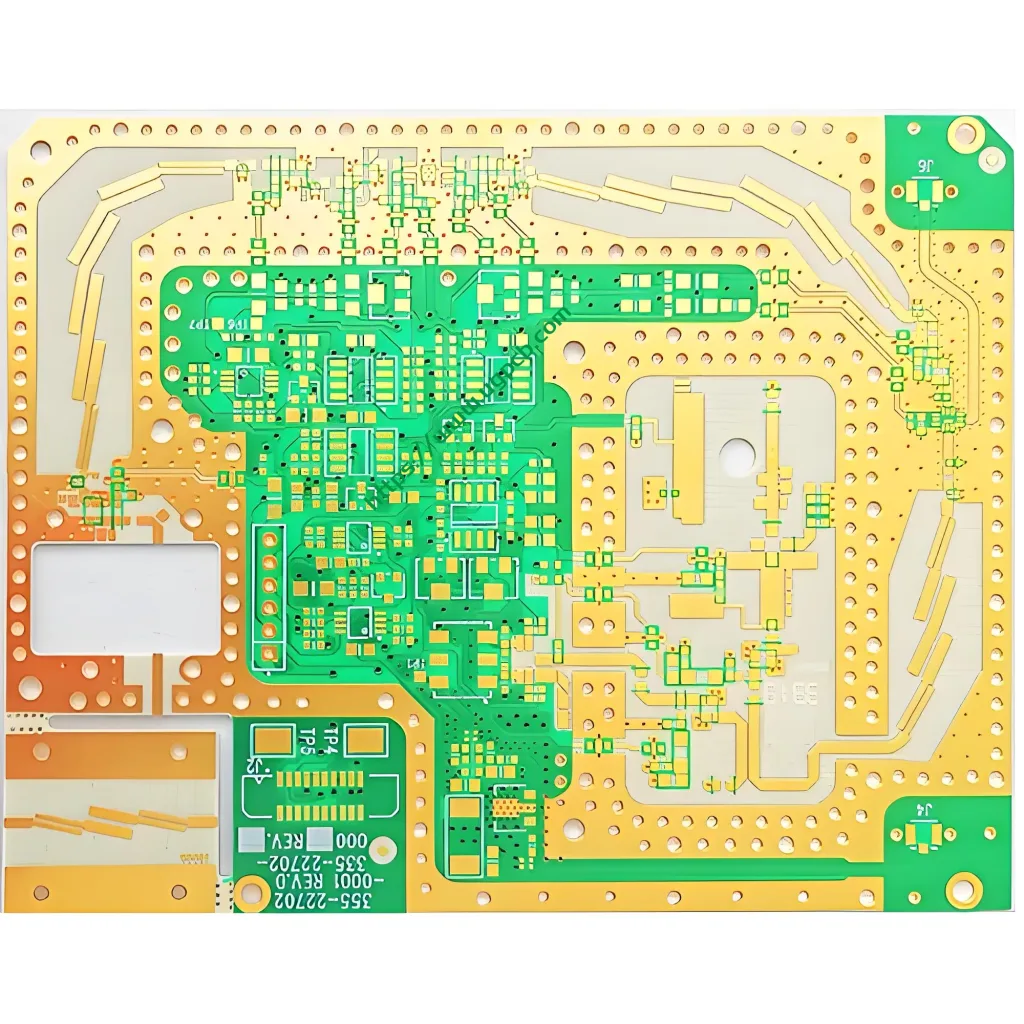
2. Product Definition and Core Specifications
UGPCB’s Rogers 4003 PCB uses the following precise configuration parameters:
| Paramètre | Spécification |
|---|---|
| Type de matériau | RogersRO4003C + Pli de liaison RO4450F |
| Constante diélectrique (Ne sait pas) | 3.38 ± 0.05 @ 10 GHz |
| Facteur de dissipation (Df / bronzage δ) | 0.0027 @ 10 GHz |
| Core Thickness | 0.508mm (20mil) |
| Épaisseur du panneau fini | 2.0mm |
| Épaisseur du cuivre de base | 17µm (0.5 once) |
| Épaisseur du cuivre fini | 1 once (35µm) |
| Finition de surface | Immersion Or (ACCEPTER) |
| Couleur du masque de soudure | Vert / Blanc |
| Trace minimale / Espace | 6mil / 6mil |
| Glass Style | 1080 / 1674 |
| Indice de flamme | UL 94 V-0 (when paired with RO4835/RO4350B) |
| Conductivité thermique | 0.71 W / m · k |
Test Method Reference: IPC-TM-650 2.5.5.5 (Stripline method), measured @10GHz/23°C.
3. Directives de conception
Engineers must focus on these key points when designing Rogers 4003 PCB:
Contrôle de l'impédance Conception: RO4003C has a tightly controlled dielectric constant of Dk=3.38±0.05 at 10 GHz. This tolerance ensures impedance consistency within ±5%, greatly improving RF matching network and transmission line design accuracy.
Copper Thickness Selection: This configuration starts with 17μm (0.5 once) base copper thickness. The finished copper thickness reaches 1 once (35µm) par galvanoplastie. Matching Z-axis copper and dielectric CTE is crucial for multilayer board via reliability.
Line/Space Capability: The minimum trace width and spacing of 6mil/6mil is a baseline for signal integrity and design for manufacturability (DFM). High-density interconnect designs can go further to 4mil/4mil depending on equipment capabilities.
Multilayer Configuration: Using RO4450F as the bonding material between core layers provides better flow than RO4450B, making it the preferred choice for new designs. RO4450F has a Z-axis CTE range of 43–60 ppm/°C, ensuring plated through-hole reliability under thermal cycling.
Masque de soudure et finition de surface: Use high-quality photoimageable solder mask ink with ENIG surface finish. This provides solderability protection, résistance à l'oxydation, and prevents copper surface contamination.
4. Working Principle and Electrical Mechanism
The high-frequency working principle of Rogers 4003 PCB relies on the material’s low dielectric constant (Ne sait pas) et un faible facteur de dissipation (Df / bronzage δ).
Signal Propagation Speed (Vp) Calculation:
Vp = c / √Dk
Où:
-
c = speed of light ≈ 3×10⁸ m/s
-
Dk = dielectric constant = 3.38
-
Vp ≈ c / √3.38 ≈ c / 1.838 ≈ 1.63×10⁸ m/s ≈ 163 mm/ns
Compared to typical Matériau FR-4 (Dk ≈ 4.2–4.8, according to IPC-4101E, @1MHz Dk range 4.2-4.8), RO4003C reduces the dielectric constant by approximately 20%–30%. This significantly increases signal transmission speed and reduces propagation delay.
Signal Loss Mechanism:
Perte d'insertion (IL) consists of dielectric loss and conductor loss:
-
Dielectric loss relates to Dk and Df: αd ≈ k·f·√Dk·Df
-
RO4003C has a very low loss factor of Df=0.0027 at 10 GHz, far lower than the typical FR-4 value (≈0.018–0.020)
-
This superior loss performance ensures high signal fidelity in the GHz frequency range
Thermal Management Performance:
Thermal conductivity k = 0.71 W / m · k, better than traditional FR-4 (environ. 0.25 W / m · k). This helps power amplifiers and RF front-end modules dissipate heat effectively.
5. Product Scientific Classification
Based on international industry standards and material properties, this product fits into the following scientific classification categories:
| Dimension de classification | Catégorie |
|---|---|
| By IPC Standard | IPC-4103 High-Speed/High-Frequency Base Material (Feuille oblique /10) |
| Par système de matériaux | Résine d'hydrocarbure + Ceramic Filler + Woven Glass Fabric Composite |
| By Frequency Applicability | High-Frequency RF/Microwave PCB, Usable Frequency Range DC–30 GHz |
| By Structural Type | Multilayer Laminated PCB (RO4003C + Pli de liaison RO4450F) |
| Par finition de surface | Immersion Or (ACCEPTER) PCB |
| By Flame Rating | Non-UL 94 V-0 Applications (Select RO4835/RO4350B for flammability rating) |
| By Processing Compatibility | FR-4 Process-Compatible High-Frequency PCB |
| By Environmental Compliance | Halogen-Free / RoHS and REACH Compliant |
This classification system provides accurate identification for supply chain management, quality evaluation, and application selection.
6. Analyse des matériaux
Core Layer – RO4003C™ Material Properties:
RO4003C is a hydrocarbon resin and ceramic filler composite reinforced with woven glass fabric. The material offers these key properties:
-
Dielectric Constant Dk: 3.38 ± 0.05 (@ 10 GHz)
-
Dissipation Factor Df: 0.0027 (@ 10 GHz)
-
Glass Transition Temperature Tg: >280° C
-
Thermal Decomposition Temperature Td: 425° C
-
Axe Z CTE: 46 ppm/°C
-
Thermal Conductivity K: 0.71 W / m · k
-
Résistivité du volume: 1.7×10¹⁰ MΩ·cm
-
Résistivité de surface: 4.2×10⁹ MΩ
Bonding Layer – RO4450F™ Bondply:
RO4450F belongs to the RO4400™ series prepreg. This material works specifically for multilayer board lamination and offers the following features:
-
Prepreg grade based on RO4000 series cores
-
Fully compatible with RO4003C, RO4350B, and RO4835
-
Axe Z CTE: 43–60 ppm/°C
-
CAF-resistant high-reliability plated through-holes
-
Prend en charge la stratification séquentielle
-
Lead-free process compatible with UL 94 V-0 cote de flamme
Feuille de cuivre:
The starting copper foil thickness is 17μm (0.5 once). The final thickness reaches 1 once (35µm) par galvanoplastie. ENIG surface finish provides excellent solderability and oxidation protection.
7. Résumé des performances
Here is a summary of the electrical, thermique, and mechanical performance of Rogers 4003 PCB:
| Performance | Paramètre | Valeur | Méthode d'essai |
|---|---|---|---|
| Électrique | Ne sait pas | 3.38 ± 0.05 @ 10 GHz | IPC-TM-650 2.5.5.5 |
| Df | 0.0027 @ 10 GHz | IPC-TM-650 2.5.5.5 | |
| Dk Temperature Coefficient | +40 ppm/°C | IPC-TM-650 2.5.5.5 | |
| Résistivité du volume | 1.7×10¹⁰ MΩ·cm | IPC-TM-650 2.5.17.1 | |
| Résistivité de surface | 4.2×10⁹ MΩ·cm | IPC-TM-650 2.5.17.1 | |
| Breakdown Voltage | 31.2 kV/mm (780 V/mil) | IPC-TM-650 2.5.6.2 | |
| Thermique | Tg | >280° C | IPC-TM-650 2.4.25 |
| Td | 425° C | ASTM D3850 | |
| Conductivité thermique | 0.71 W / m · k | ASTM E1461 | |
| Axe Z CTE | 46 ppm/°C | IPC-TM-650 2.4.41 | |
| Mécanique | Tensile Modulus | 26,889 Mpa | ASTM D638 |
| Tensile Strength | 141 Mpa | ASTM D638 | |
| Fiabilité | Absorption d'humidité | ≤0.06% | IPC-TM-650 2.6.2 |
Source de données: All electrical performance parameters comply with IPC-TM-650 standard test methods.
8. Analyse des structures
This PCB uses the following standard stackup structure:
-
External Copper Foil: Finition de surface ENIG (1 oz finished copper)
-
Couche de masque de soudure: Green/White photoimageable solder mask ink
-
Couche de base: RO4003C, thickness 0.508mm, base en cuivre 17μm
-
Bonding Layer (Bondply): Préimprégné RO4450F (typical thickness 0.102mm / 4mil)
-
Internal Copper Foil: ENIG or OSP, base en cuivre 17μm
This design achieves a total finished board thickness of 2.0mm. It meets high mechanical strength requirements and allows multilayer high-density routing. The flow properties of RO4450F ensure filling of copper area gaps, producing a uniform laminated structure.
9. Caractéristiques du produit
-
Tight Dk Control: The dielectric constant has an ultra-narrow tolerance of 3.38 ± 0.05, ensuring consistent impedance matching in RF circuits.
-
Very Low High-Frequency Loss: Df of 0.0027 à 10 GHz makes this PCB ideal for low noise amplifiers, filtres, and power dividers.
-
FR-4 Process Compatibility: Standard FR-4 production equipment and processes work, avoiding special sodium etching or plasma treatment needed for PTFE-based materials. This lowers overall manufacturing costs.
-
UL 94 V-0 Compatibilité: RO4003C is a bromine-free material and does not directly meet UL 94 V-0. Pair it with RO4835 or RO4350B to achieve UL 94 V-0 cote de flamme.
-
High Heat Resistance: Tg >280° C, Td of 425°C, supporting lead-free soldering processes such as 260°C reflow.
-
Excellent Dimensional Stability: Z-axis CTE matches copper (46 ppm/°C), ensuring multilayer board reliability under multiple thermal cycles.
-
Résistance au CAF: RO4450F provides excellent resistance to conductive anodic filament formation.
-
Environmentally Friendly: Bromine-free flame retardants, meeting RoHS and REACH environmental regulations.
-
Hybrid Lamination Compatibility: Compatible with hybrid multilayer lamination using FR-4 and other Rogers core materials. This enables cost-effective high-density interconnect designs.
10. Processus de fabrication
UGPCB uses a standardized manufacturing process for Rogers 4003 PCB, including these key steps:
-
Inspection des matériaux entrants: Test thickness, Ne sait pas, Df, and other properties of RO4003C, Préimprégné RO4450F, et feuille de cuivre. Ensure batch consistency.
-
Inner Layer Circuit Formation: Use high-precision photoplotting or direct imaging equipment to form inner layer circuits. Control minimum line/space at 6mil/6mil.
-
Inspection AOI: Perform full automated optical inspection for circuit defects.
-
Pre-Lamination Treatment: Include copper surface roughening and cleaning.
-
Stratification multicouche: Control lamination temperature, pression, and time precisely. Follow Rogers recommended lamination profile of 175°C–215°C, 200–300 PSI.
-
Forage: Use carbide or diamond-coated drill bits. Ensure hole position accuracy and hole wall quality.
-
Désenduire: Use plasma or chemical cleaning to remove residue from hole walls. This ensures good plating adhesion.
-
Electroless Copper Deposition and Panel Plating: Electroless copper deposition followed by panel plating to reach the required 1 once d'épaisseur de cuivre.
-
Outer Layer Circuit Formation: Use tin protection followed by etching to form the outer layer conductive pattern.
-
Impression de masque de soudure: Apply green or white photoimageable solder mask layer.
-
Finition de surface: L'or d'immersion (ACCEPTER) — nickel barrier layer plus gold top layer for protection.
-
Routing and V-CUT: Utiliser CNC milling for board outline profiling.
-
Tests électriques: Effectuer 100% flying probe or fixture testing to ensure open/short circuit insulation reliability.
-
Contrôle de la qualité final (FQC): Perform visual and dimensional inspection.
-
Emballage et expédition: Use vacuum packaging with antistatic protection.
Key Process Guarantee: Rogers 4003 PCB fully complies with IPC-A-600 Class 3 critères d'acceptation. Each shipment includes a 100% electrical test report.
11. Application Scenarios and Typical Uses
The global Rogers PCB market is expected to grow at a compound annual growth rate (TCAC) de 5.4% entre 2024 et 2030. With the rapid growth of 5G communications, L'Internet des objets (IdO), radar automobile, and aerospace electronics applications, Rogers 4003 PCB has become a mainstream high-frequency material with broad application prospects.
Typical application scenarios for Rogers 4003 PCB include:
11.1 Wireless Communications and Infrastructure
-
5Station de base G (Sub-6GHz) Modules frontaux RF
-
Antenna matching networks and filters
-
Amplificateurs de puissance RF
-
Point-to-point microwave backhaul systems
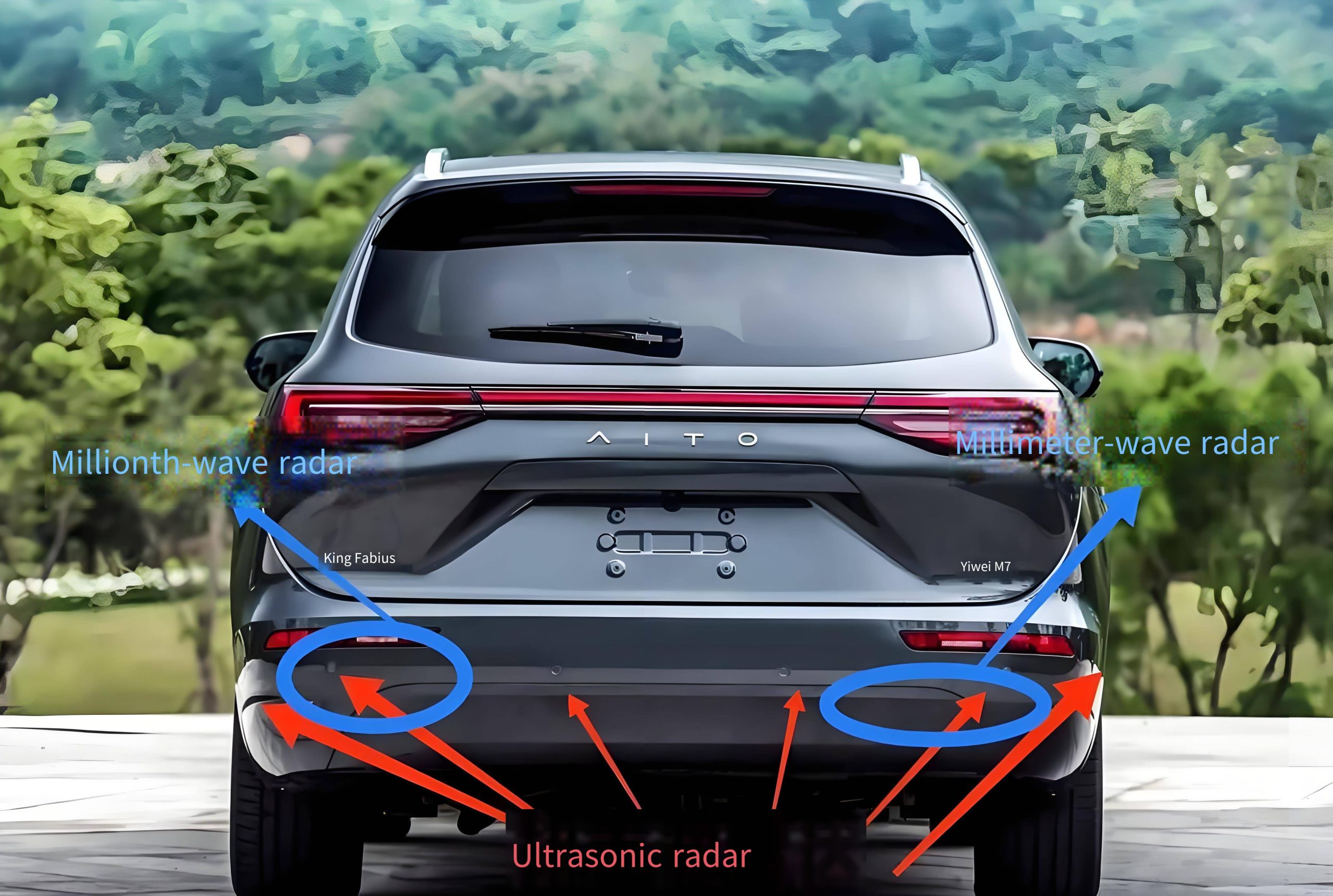
11.2 Automotive Radar and ADAS Systems
-
77 Capteurs radar GHz
-
Advanced driver assistance systems (Adas)
-
Vehicle millimeter-wave antenna modules
11.3 Aerospace and Military Electronics
-
Satellite communication LNB modules
-
Air traffic control radar
-
Military phased array radar components
-
Low Earth orbit (LION) charges utiles des satellites
11.4 Internet des objets (IdO) and Sensor Networks
-
Smart home gateways
-
RFID readers and sensor tags
-
High-reliability outdoor communication nodes
11.5 Systèmes numériques à grande vitesse
-
Optical module PCB (40G/100G/400G)
-
High-speed signal backplanes
-
Data center servers
Applicable Frequency Range: The recommended operating frequency range is DC to 30 GHz, where performance is excellent. Even at higher frequencies, this PCB can still provide stable signals in some applications.
12. Why Choose UGPCB for Rogers 4003 PCB?
✅ Genuine Material Guarantee: All RO4003C and RO4450F materials come from Rogers official authorized channels. Each shipment includes the original factory inspection report.
✅ Équipement de fabrication avancé: Our facility includes German and Japanese imported lamination, forage, placage, and AOI inspection equipment. This supports fine line/space production.
✅ Strict IPC Standards: We manufacture according to IPC-4103 and IPC-6012 Class 3 performance specifications. Every batch undergoes 100% tests électriques.
✅ Efficient Technical Support: Our dedicated engineering team supports impedance optimization, conception d'empilement, and DFM review.
✅ Fast Response Quotation: We provide technical evaluation and quotation within 24 hours of receiving Gerber/BOM files.
✅ Global Delivery Capability: Standard lead times of 5–8 business days for production plus shipping. We meet project needs worldwide.
13. Demandez un devis aujourd'hui!
📌 Three simple steps to receive a professional response:
-
Send your Gerber files, Sauvetage (Nomenclature), empilement, or design requirements to sales@ugpcb.com or contact us via WhatsApp/WeChat for an online consultation.
-
Our engineering team will perform a DFM review and provide an accurate quote (including tooling/fixture costs) dans 24 heures.
-
After order confirmation, we will schedule production and provide regular progress updates. We will deliver on time.
🛜 UGPCB has its own efficient production base, a strict système de gestion de la qualité, and deep technical support experience for high-frequency applications. Whether you need prototype samples or volume production, we are committed to providing highly stable, highly consistent Rogers 4003 Produits PCB.
We support small-batch trial production and volume production. We offer multiple surface finish options including ENIG, Étain à immersion, et Osp.
📞 +86-755-1234-5678 | 📧 sales@ugpcb.com
👉 Cliquez sur “Demander un devis” button below to upload your design files and receive a customized solution!