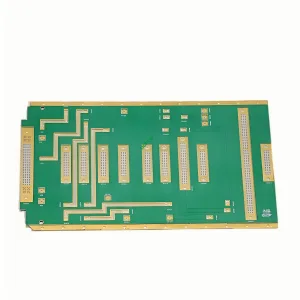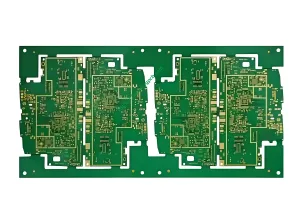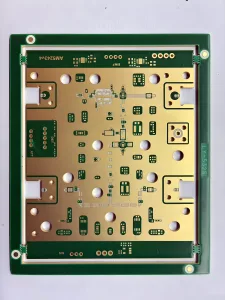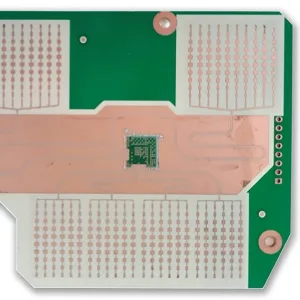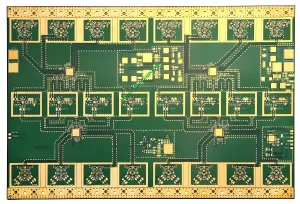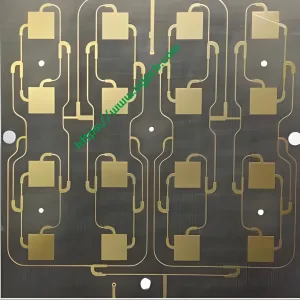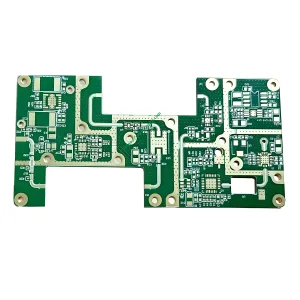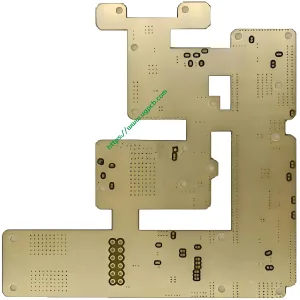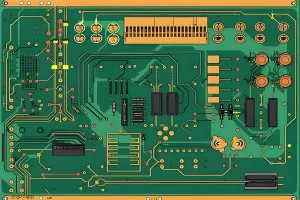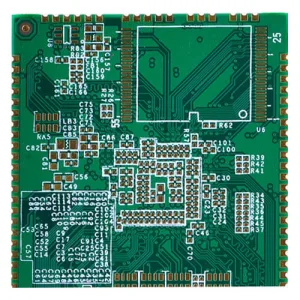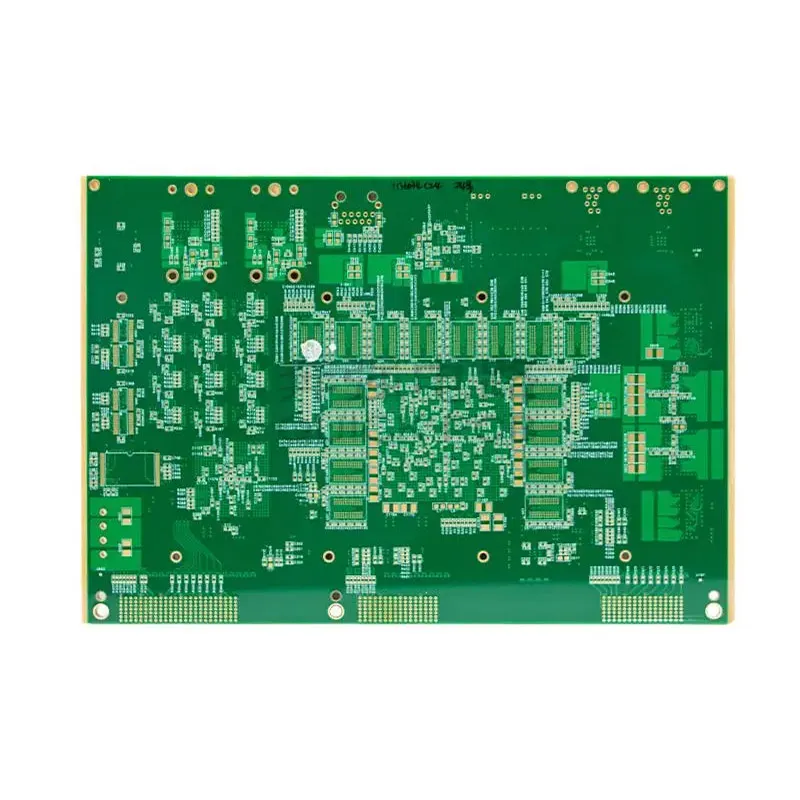
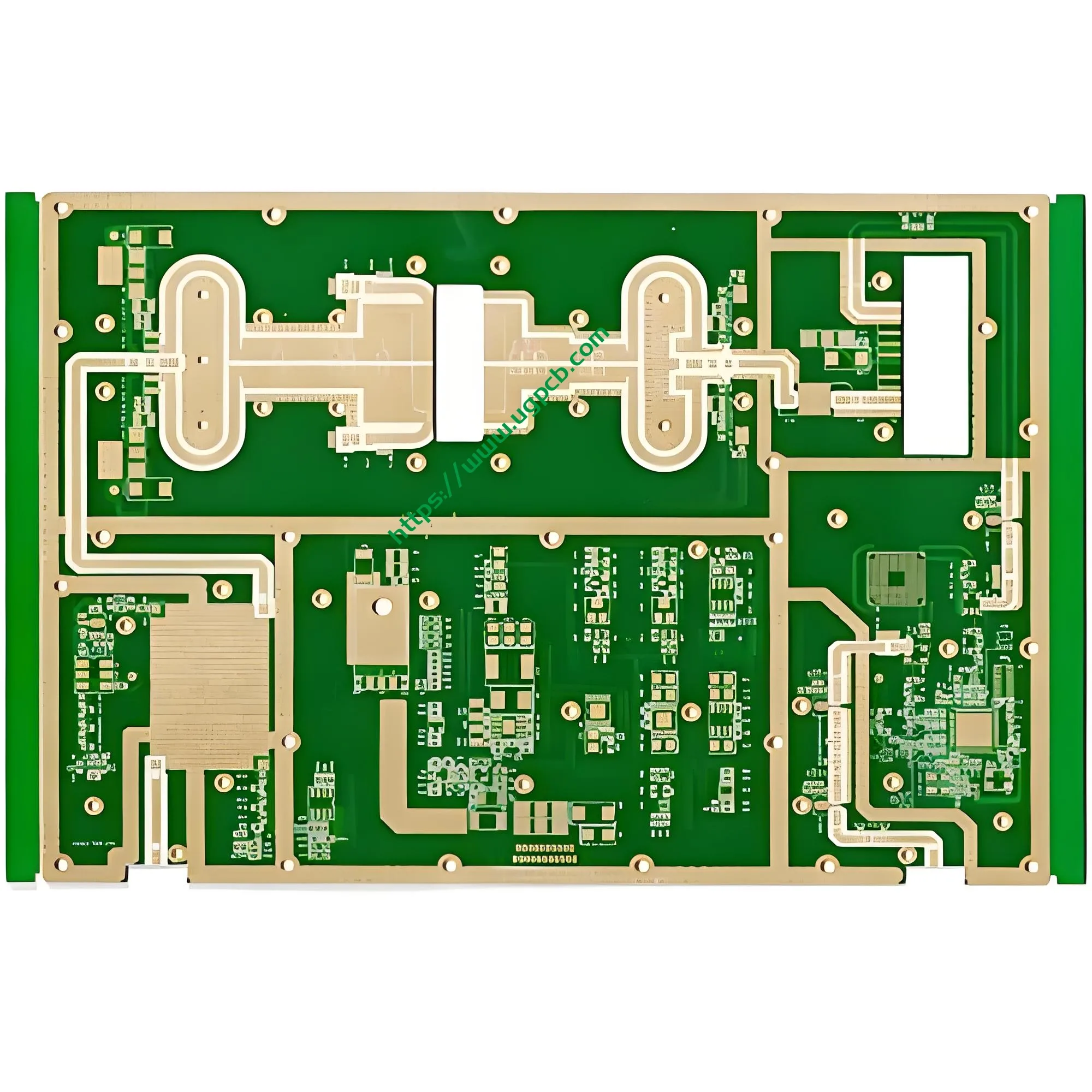
Avec la croissance rapide de la communication 5G, radar à ondes de millimètres, et communications satellites, Conception de circuits imprimés les ingénieurs sont confrontés à un dilemme classique. Utilisation de matériaux haute fréquence haut de gamme comme Rogers RO4350B pour l'ensemble de la carte donne d'excellentes performances électriques mais devient trop cher. L'utilisation de la norme FR4 pour l'ensemble de la carte permet de réduire les coûts, mais la perte de signal haute fréquence est élevée et la constante diélectrique est instable.
La carte hybride haute fréquence Rogers RO4350B+FR4 d'UGPCB résout parfaitement ce problème. Cet article couvre la présentation du produit, directives de conception, principes de travail, paramètres techniques, processus de fabrication, et applications. Il constitue une référence fiable pour les ingénieurs RF et les décideurs en matière d'achats..
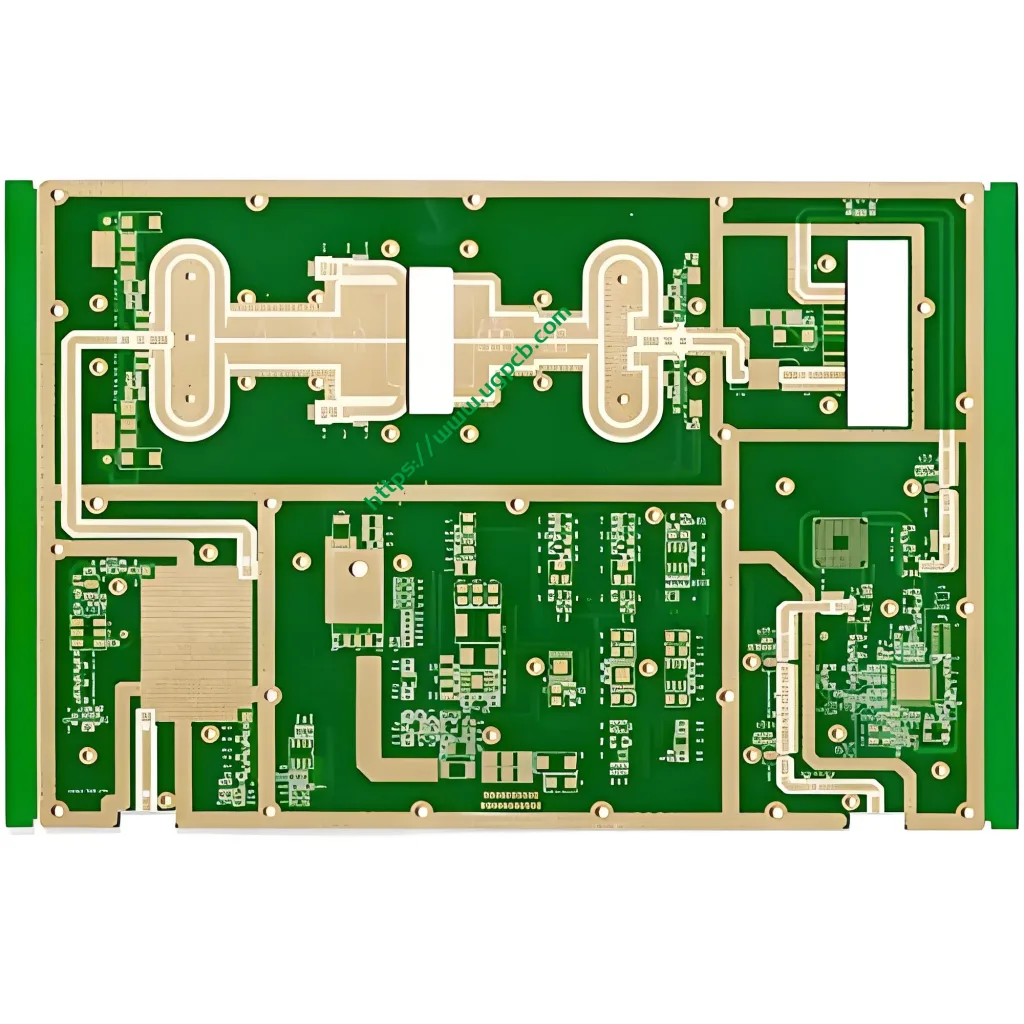
1. Présentation du produit: Qu'est-ce qu'un PCB hybride haute fréquence Rogers RO4350B+FR4?
1.1 Définition
Un PCB hybride haute fréquence Rogers RO4350B+FR4 utilise à la fois un stratifié haute fréquence Rogers RO4350B et un tissu de verre époxy FR-4 standard sur le même circuit imprimé.. Le produit de l'UGPCB utilise un empilement symétrique à 4 couches: deux couches externes de Rogers RO4350B pour le routage du signal RF, et deux couches internes de FR4 pour la distribution d'énergie et les plans de masse. Cela crée une norme “signal – masse – alimentation – signal” empilement.
1.2 Proposition de valeur fondamentale
Ce PCB hybride la solution offre un équilibre précis entre performances et coût. Il utilise un matériau Rogers haute performance uniquement sur les couches externes où transitent les signaux haute fréquence.. Il utilise du FR4 à faible coût sur les couches internes. Cela réduit considérablement le total Fabrication de PCB coût sans sacrifier les performances RF. Les estimations de l'industrie montrent une réduction des coûts de matériaux de 30 à 50 % par rapport à une carte Rogers complète..
2. Paramètres techniques clés (Données officielles de Rogers & Spécifications UGPCB)
| Paramètre | Valeur | Conditions d'essai / Standard | Source |
|---|---|---|---|
| Combinaison de matériaux | 2 couches Rogers RO4350B + 2 couches FR4 | 4-empilement symétrique en couches | UGPCB |
| Épaisseur du panneau fini | 1.2 mm | - | UGPCB |
| Épaisseur de la feuille de cuivre | 1 OZ extérieur / 1 OZ intérieur | Cuivre fini | UGPCB |
| Épaisseur diélectrique | 0.508 mm | - | UGPCB |
| Constante diélectrique Dk | 3.48 ± 0.05 @ 10 GHz | IPC-TM-650 | Fiche technique officielle de Rogers |
| Facteur de dissipation Df | 0.0037 @ 10 GHz | IPC-TM-650 | Fiche technique officielle de Rogers |
| Conductivité thermique λ | 0.69 W/m·K à 50°C | ASTM D5470 | Fiche technique officielle de Rogers |
| Indice d'inflammabilité | UL 94 V-0 | UL 94 | Fiche technique officielle de Rogers |
| Résistivité volumique ρ_v | 1.2 × 10¹⁰ Mohm·cm | - | Fiche technique officielle de Rogers |
| Résistivité superficielle ρ_s | 5.7 × 10⁹ Mohm | - | Fiche technique officielle de Rogers |
| Axe Z CTE | 32 ppm/°C | -55°C à 288°C | Fiche technique officielle de Rogers |
| Densité | 1.9 g/cm³ | - | Fiche technique officielle de Rogers |
3. Directives de conception pour les PCB hybrides Rogers RO4350B+FR4
Les ingénieurs doivent se concentrer sur ces points techniques clés lors de la conception d'un PCB hybride avec Rogers RO4350B et FR4.
3.1 Conception d'adaptation d'impédance
La différence de constante diélectrique entre RO4350B et FR4 est significative. RO4350B a Dk = 3.48 à 10 GHz, alors que le standard FR4 a Dk entre 4.2 et 4.8. L'impédance de la ligne de signal change en fonction de la couche de matériau.
Exemple pour une ligne microruban 50Ω:
- Sur couche RO4350B (NSP = 3,48, 1 Cuivre OZ), 50Ω largeur de trace ≈ 0.4 mm
- Sur couche FR4 (Dk≈4,5, même cuivre), 50Ω largeur de trace ≈ 0.25 mm
Recommandations de conception:
- Conservez les traces de signaux haute fréquence entièrement dans les couches de signaux RO4350B. Évitez de franchir les limites matérielles où l'impédance change soudainement.
- Si une transition entre couches est inévitable, utiliser une largeur de trace conique à la limite RO4350B-FR4. Ou utilisez la simulation électromagnétique pour minimiser la réflexion du signal causée par le changement soudain de Dk.
3.2 Conception à empilement symétrique
La prévention du gauchissement des cartes est une préoccupation centrale dans la conception d'empilages hybrides. Le RO4350B a un CTE sur l'axe X/Y d'environ 10/12 ppm/°C, alors que FR4 a environ 16 ppm/°C. Ce décalage est important.
L'UGPCB suit strictement un principe de stack-up symétrique. Nous utilisons une distribution d'épaisseur de cuivre de:
1 OZ RO4350B (signal supérieur) - 0.5 OZ FR4 (sol) - 0.5 OZ FR4 (pouvoir) - 1 OZ RO4350B (signal de fond).
Cela permet une répartition des contraintes thermiques même pendant le laminage et réduit considérablement le risque de déformation..
3.3 Sélection de ligne de transmission pour les PCB RF
Pour les applications haute fréquence, nous recommandons un guide d'ondes coplanaire mis à la terre (GCPW) au lieu des lignes microruban traditionnelles. GCPW place des clôtures denses des deux côtés de la ligne de signal. Cela protège efficacement la diaphonie et réduit les interférences électromagnétiques. Cela fonctionne particulièrement bien pour les ondes millimétriques 5G et 77 Radar automobile GHz.
3.4 Processus de forage et de desmear
L'UGPCB utilise les paramètres de forage recommandés par Rogers pour le RO4350B. Nous optimisons également le processus de desmear pour le matériau mélangé. Les résidus de résine FR4 peuvent provoquer des parois de trous rugueuses. Donc, nous prolongeons le temps de dessouchage du plasma d'environ 30% par rapport aux cartes Rogers pures. Cela garantit des parois de trou propres et une métallisation de haute qualité.
4. Principe de fonctionnement et performances électriques
4.1 Stabilité constante diélectrique
Le RO4350B appartient aux stratifiés chargés d'hydrocarbures/céramique de la série RO4000 de Rogers. Sa principale caractéristique est une tolérance stricte de constante diélectrique de ±0,05 sur une large plage de fréquences.. La variation Dk avec la température est seulement +50 ppm/°C (moins que 0.4% passage de -50°C à 150°C). Cela garantit un fonctionnement stable des équipements de communication sur toute la plage de température..
4.2 Analyse de perte de signal
À 10 GHz, le facteur de dissipation Df du RO4350B est 0.0037. C'est bien inférieur à celui du FR4 ordinaire à la même fréquence (Df ≈ 0,015–0,025). Cette propriété à faible perte maintient l'intégrité du signal sur de longues distances pour les signaux à ondes millimétriques. Dans la bande d’ondes millimétriques 5G (au-dessus de 24 GHz), La carte hybride de l'UGPCB affiche généralement la perte d'insertion ci-dessous 0.5 dB/pouce et perte de retour ci-dessus 15 db (les utilisateurs doivent vérifier avec un VNA leur conception spécifique).
4.3 Conductivité thermique et gestion thermique
RO4350B a une conductivité thermique de 0.69 W / m · k, environ deux fois celui du FR4 ordinaire (≈0,3 W/m·K). Cela permet au PCB hybride haute fréquence de conduire efficacement la chaleur des appareils haute puissance tels que les amplificateurs de puissance. (Pennsylvanie) aux couches de cuivre et aux vias thermiques, puis étalez-le à travers les plans de cuivre internes FR4. Cela donne une excellente solution de gestion thermique pour les modules amplificateurs de puissance RF..
5. Classement du produit
| Dimension de classification | Catégorie |
|---|---|
| Type de matériau | PCB diélectrique hybride / Panneau laminé hybride haute fréquence |
| Nombre de couches | 4-carte PCB multicouche de couche |
| Fréquence d'application | PCB RF/micro-ondes, couvrant jusqu'à des bandes d'ondes millimétriques (79 GHz maximum) |
| Processus de fabrication | Multicouche de stratification mixte |
| Indice d'inflammabilité | UL 94 V-0 PCB évalué |
UGPCB fabrique et teste selon IPC-6012 (Qualification et spécifications de performances pour les cartes imprimées rigides) et IPC-4101 (Spécification des matériaux de base pour les cartes imprimées rigides et multicouches).
6. Structure d'empilement du PCB hybride à 4 couches de 1,2 mm
La carte hybride haute fréquence Rogers RO4350B+FR4 à 4 couches de 1,2 mm d'épaisseur d'UGPCB utilise un empilement symétrique standard:
- L1 (Couche supérieure): Rogers RO4350B, 1 Cuivre fini OZ – Couche de signal RF
- L2 (Couche 2): FR4, 1 Cuivre OZ – Plan de masse
- L3 (Couche 3): FR4, 1 Cuivre OZ – Distribution d’énergie / signaux de commande basse fréquence (avion à moteur)
- L4 (Couche inférieure): Rogers RO4350B, 1 Cuivre fini OZ – Couche de signal RF
L'épaisseur diélectrique totale est 0.508 mm. L'épaisseur du panneau fini est 1.2 mm.
Finition superficielle: ACCEPTER (Or par immersion au nickel autocatalytique) – répond aux exigences de haute fiabilité en matière de soudure et de résistance à l’oxydation.
7. Analyse des matériaux
7.1 Matériau haute fréquence Rogers RO4350B
RO4350B est un stratifié composite de résine d'hydrocarbure, charge céramique, et tissu de verre tissé. Ses principaux avantages incluent:
- Compatibilité des processus: La fabrication est presque la même que celle du FR-4. Aucun traitement spécial des murs de trous n'est nécessaire (contrairement aux matériaux PTFE). Le coût de fabrication est bien inférieur à celui des stratifiés micro-ondes traditionnels.
- UL 94 V-0 cote d'inflammabilité: Convient aux appareils actifs et aux conceptions RF haute puissance.
- CTE à faible axe z (32 ppm/°C): Assure une grande fiabilité des trous traversants métallisés (PTH) dans les circuits multicouches.
7.2 Substrat FR4
Nous utilisons du matériau FR4 à haute Tg (Tg ≥ 170°C) pour correspondre à la fenêtre de traitement thermique du Rogers RO4350B. FR4 agit comme couche d'alimentation et de masse dans la carte hybride. Son coût est seulement 1/5 à 1/3 celui du matériel Rogers, réduisant considérablement le total PCB coût de fabrication.
8. Processus de fabrication des PCB hybrides haute fréquence
UGPCB suit un processus de contrôle de qualité strict pour les cartes hybrides haute fréquence:
- Couper et dorer: Appliquer un traitement de brunissement sur les noyaux RO4350B et FR4 pour améliorer l'adhérence des couches.
- Modélisation du circuit de la couche interne: Créez des modèles de couches de terre et de puissance sur les couches FR4 internes.
- Stratification hybride (étape critique): Utiliser un profil de stratification à température échelonnée (par ex., 120°C → 170°C → 220°C). Sélectionnez des préimprégnés compatibles avec les deux matériaux. Contrôlez strictement le taux de rampe et le temps de pressage pour éviter le délaminage ou les vides..
- Forage et desmear: Utilisez les paramètres de forage recommandés par Rogers. Augmenter le temps de démoulage du plasma d'environ 30% pour matériaux mélangés afin de garantir des parois de trou propres.
- Trou traversant plaqué (PTH): Cuire les planches à 150°C pendant 2 heures avant le dépôt autocatalytique du cuivre pour compenser les différences d’absorption d’humidité (Absorption d'eau FR4 >0,1 %, RO4350B <0.02%).
- Modélisation des circuits de la couche externe: Former des traces de signal sur les couches supérieure et inférieure du RO4350B.
- Masque de soudure et finition de surface: Pas de masque de soudure sur les ouvertures d'antenne. Utiliser J'ACCEPTE (Or par immersion au nickel autocatalytique).
- Test électrique et inspection de fiabilité: 100% essai électrique, Zone d'intérêt inspection optique, Vérification de l'alignement couche à couche aux rayons X, plus mesure et correction de planéité avant expédition.
9. Performances et fonctionnalités du PCB hybride
9.1 Valeurs de performance fondamentales
- Constante diélectrique Dk: 3.48 ± 0.05 @ 10 GHz (Officiel de Rogers)
- Facteur de dissipation Df: 0.0037 @ 10 GHz
- Conductivité thermique: 0.69 W/m·K à 50°C (ASTM D5470)
- Plage de température de fonctionnement: -50°C à +150°C
- Indice d'inflammabilité: UL 94 V-0
- Résistivité volumique: 1.2 × 10¹⁰ Mohm·cm
- Résistivité superficielle: 5.7 × 10⁹ Mohm
- Densité: 1.9 g/cm³
9.2 Caractéristiques du produit (Pourquoi choisir ce PCB micro-ondes RF à 4 couches)
- ✅ Meilleur rapport performance-coût: Permet d'économiser 30 à 50 % sur le coût des matériaux par rapport à. solution complète Rogers.
- ✅ Constante diélectrique stable: ±0,05 tolérance serrée, variation minimale avec la température/fréquence.
- ✅ Transmission à faibles pertes: Df=0,0037 @ 10 GHz, excellente intégrité du signal à ondes millimétriques.
- ✅ Procédé compatible FR4: Aucun traitement spécial des parois des trous, haute efficacité de fabrication.
- ✅ Bonne gestion thermique: Conductivité thermique 0.69 W / m · k, dissipation efficace de la chaleur.
- ✅ V-0 cote d'inflammabilité: Conforme à UL 94 V-0 norme de sécurité.
- ✅ Personnalisation flexible: 1.2 mm épaisseur, prend en charge plusieurs finitions de surface.
10. Applications des PCB hybrides haute fréquence Rogers RO4350B+FR4
Grâce à d'excellentes performances RF et à des avantages en termes de coûts, ce PCB hybride sert de nombreux domaines clés:
10.1 5G infrastructure de communication
- 5Cartes d'antenne de station de base macro G et modules d'amplificateur de puissance (La couche PA utilise du RO4350B, les couches d'alimentation/terre utilisent un Tg FR4 élevé avec 2+ once de cuivre épais)
- Micro-ondes point à point (P2P) équipement de connexion
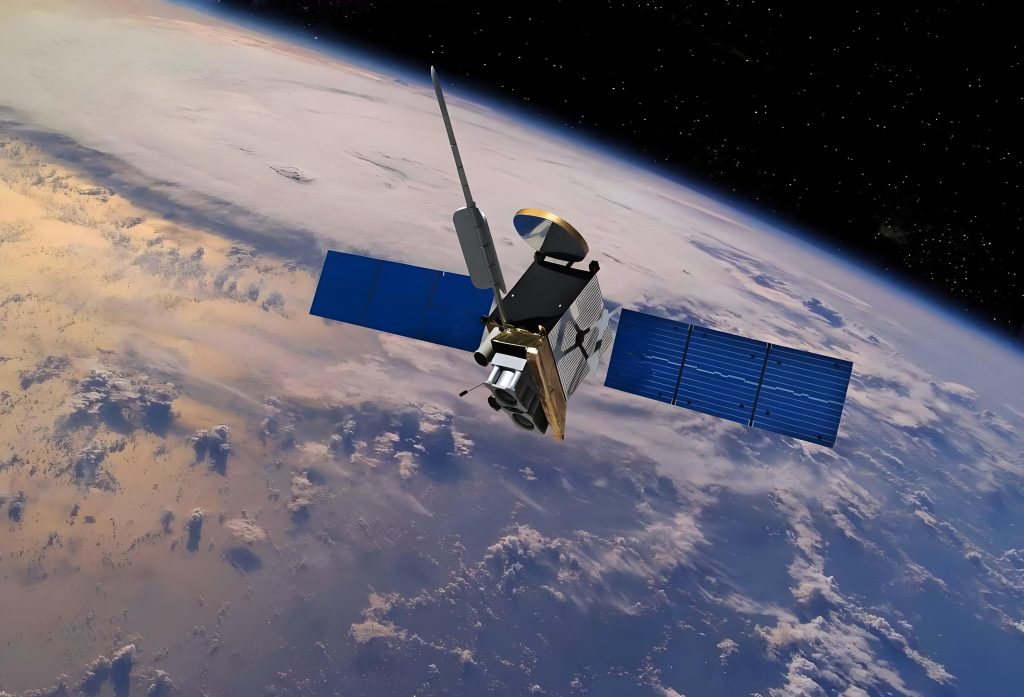
- LNB des terminaux de communication par satellite au sol
10.2 Electronique automobile et conduite autonome
- 77 GHz / 79 Radar automobile à ondes millimétriques GHz – composant de détection principal pour l'ADAS et la conduite autonome; nécessite une qualification AEC-Q100
- Véhicule à tout (V2X) module de communication
- 24 Capteurs radar de détection d'angle mort GHz
10.3 Modules frontaux RF
- Amplificateurs de puissance (Pennsylvanie) et amplificateurs à faible bruit (LNA) modules
- Frontaux d'émetteur-récepteur RF
- Modules T/R d'antenne multiéléments à ondes millimétriques
10.4 Équipements industriels et médicaux
- Lecteurs et étiquettes RFID
- Circuits de traitement du signal haute fréquence en imagerie médicale (IRM, CT)
- Instruments de contrôle et de mesure de précision
10.5 IoT et électronique grand public
- 5G CPE (équipement des locaux clients)
- Systèmes de communication inductive sans fil
- Modules d'antenne Wi-Fi 6E/7
11. Pourquoi choisir l'UGPCB pour votre PCB hybride haute fréquence?
L'UGPCB dispose de systèmes de processus matures et d'une riche expérience pratique dans le domaine de la haute fréquence. carte hybride fabrication.
- 🔧 Processus mature: Maîtrisez les principales techniques de laminage hybride – cycles de presse étagés, démaquillage au plasma, contrôle de l'alignement couche à couche.
- 📋 100% testé: Contrôle qualité complet du processus, 100% essai électrique, Inspection optique AOI, Vérification de l'alignement des rayons X.
- ⚡ Livraison rapide: Un stock suffisant de matières premières de RO4350B et FR4 garantit des délais de livraison contrôlables.
- 📞 Assistance technique professionnelle: Assistance technique unique, du conseil en conception de stack-up à la simulation d'impédance.
- 🏭 Vaste expérience en fabrication: De nombreuses années dans PCB haute fréquence production, au service des clients mondiaux.
Obtenez un devis rapide & Consultation technique
L'UGPCB propose des conseils gratuits en matière de conception d'impédance et de fabrication d'échantillons de haute précision.
📧Envoyez vos demandes à: sales@ugpcb.com
📝Demandez un devis rapide: Veuillez fournir des fichiers Gerber, spécification matérielle (RO4350B+FR4), nombre de couches (4 couches), épaisseur du panneau (1.2mm), épaisseur du cuivre (1 once), et toute autre exigence de processus
🔧Assistance technique: Contactez l’équipe d’ingénierie de l’UGPCB pour la conception de stack-up, calculs d'adaptation d'impédance, et paramètres du processus de stratification hybride.
💡 Conseil de demande: Pour garantir un devis précis, inclure des fichiers Gerber complets (avec couche de perçage), exigences de cumul, largeur/espacement minimum des traces, et spécifications de finition de surface.
Clause de non-responsabilité & Déclaration d'exactitude des données
Tous les paramètres techniques de ce document ont été vérifiés manuellement par rapport à la fiche technique officielle de Rogers. (2025-2026 edition), Normes IPC, et documentation de certification UL. Données de base – Dk=3,48 (@ 10 GHz), Df=0,0037 (@ 10 GHz), conductivité thermique 0.69 W / m · k (@50°C selon ASTM D5470) – proviennent directement de la fiche technique du Rogers RO4350B. Cet article suit les directives d'utilisation équitable en matière de citation et a été raisonnablement adapté et restructuré..
© 2026 UGPCB. Tous droits réservés. | Conception de PCB hybride haute fréquence & Expert en fabrication