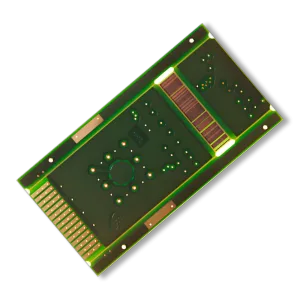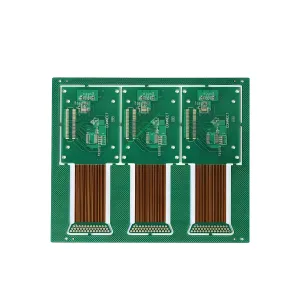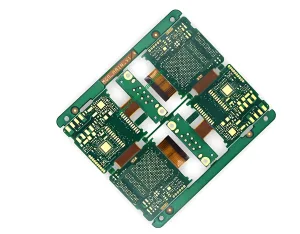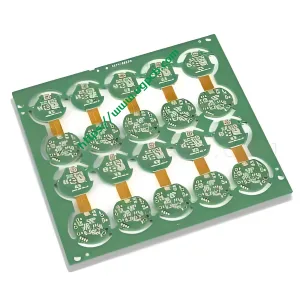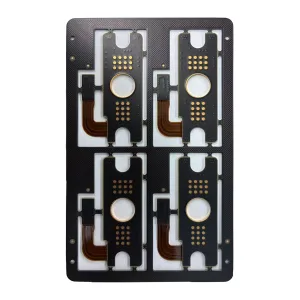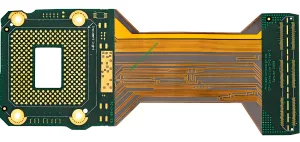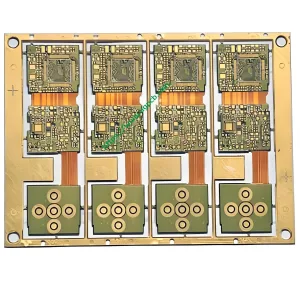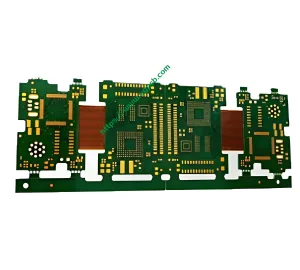
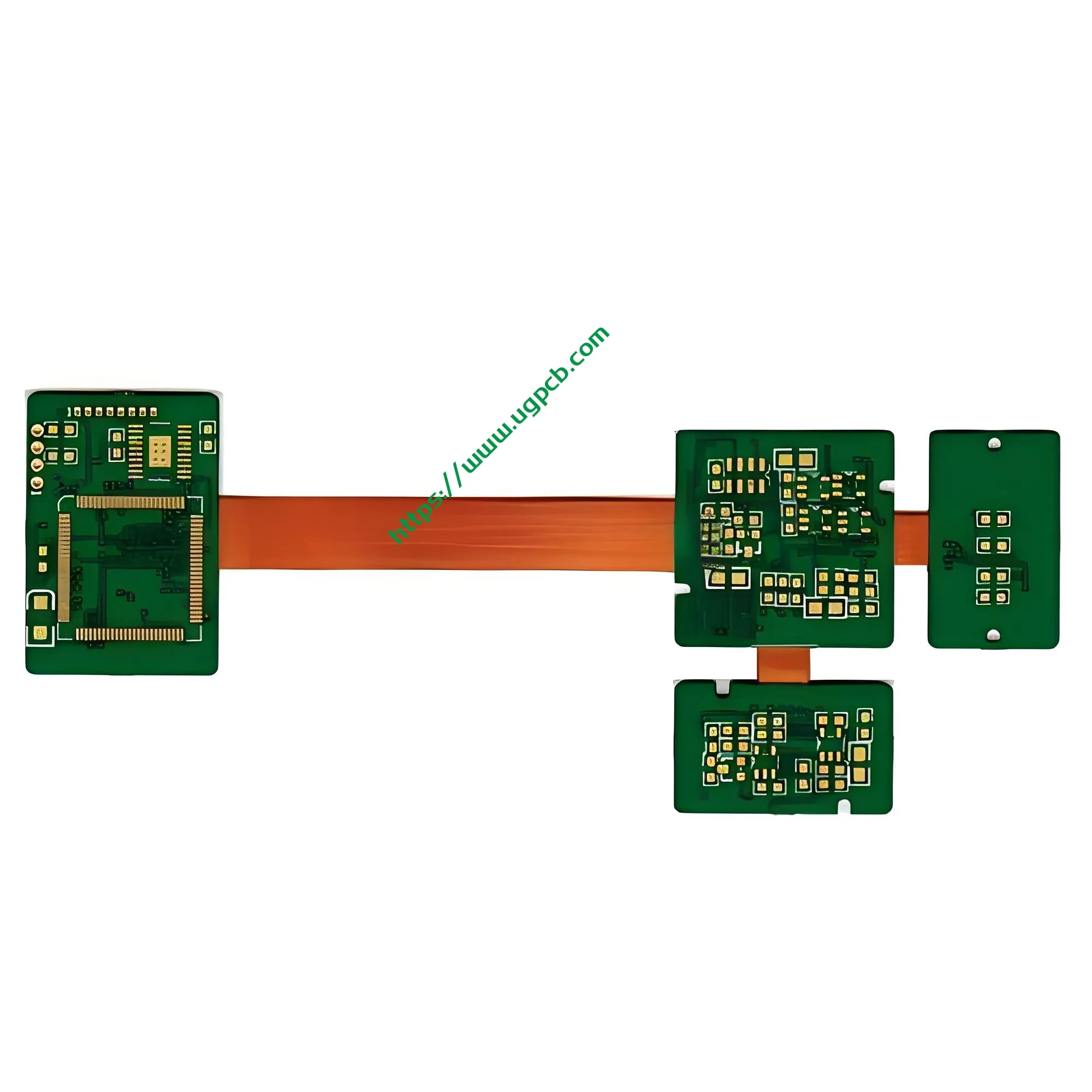
Pe măsură ce produsele electronice se îndreaptă spre de înaltă frecvență, de mare viteză, ușor, si pliabila desene, PCB-uri rigide tradiționale sau circuite imprimate flexibile (FPC-uri) singur nu mai poate satisface cerințele modulelor RF complexe, camere pentru smartphone-uri, sau endoscoape medicale. Ca lider de încredere în Fabricarea PCB-urilor, UGPCB introduce 8-Strat PCB Rigid-Flex de mare viteză. Cu unicul ei 6-strat rigid + 2-strat flex structura integrata, această placă oferă un echilibru optim de integritatea semnalului, stabilitate mecanică, și utilizarea spațiului.
Acest articol oferă o prezentare detaliată a acestui lucru PCB rigid-flex- acoperind definiția acestuia, materiale, procesul de fabricatie, și aplicații — pentru a vă ajuta să înțelegeți de ce este alegerea preferată pentru înaltă performanță module PCB-uri.
1. Prezentare generală și definiție a produsului
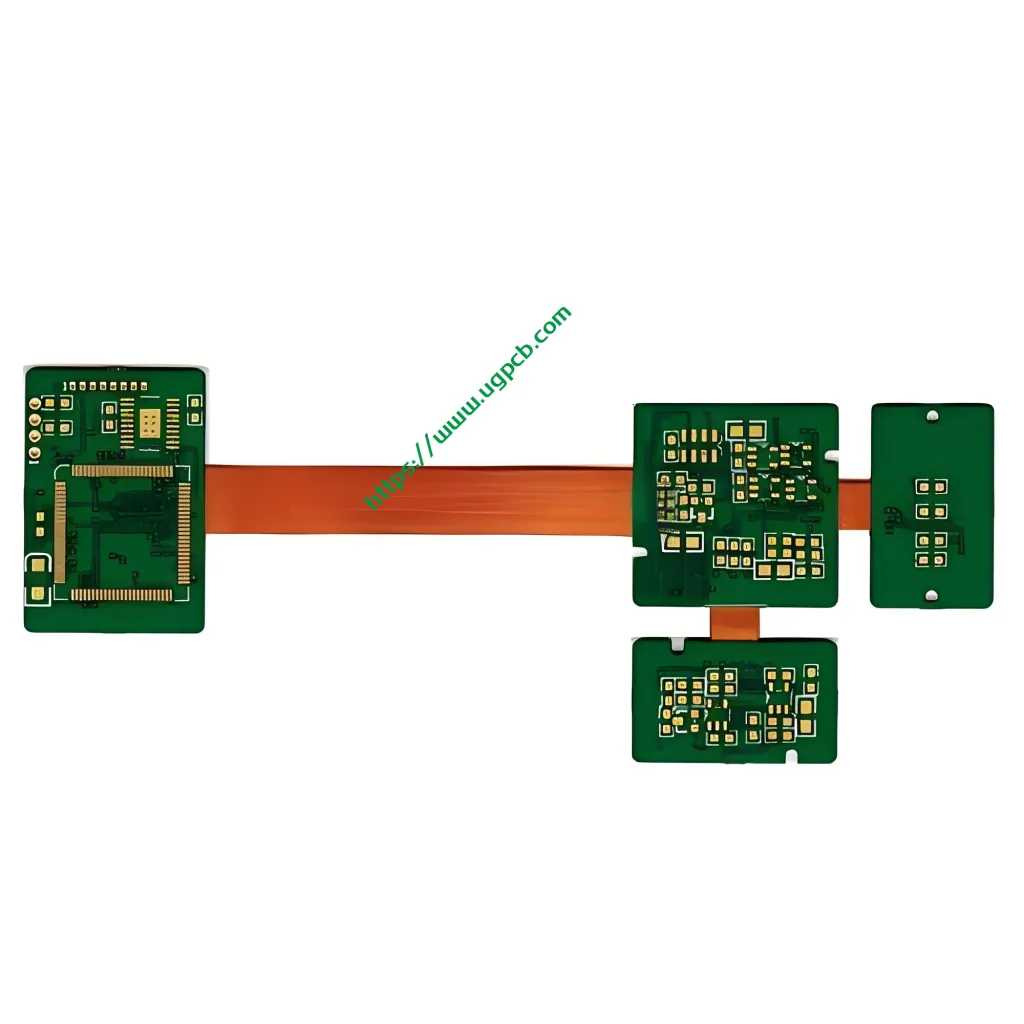
The8-Strat PCB Rigid-Flex de mare viteză nu este doar o placă rigidă conectată la o placă flexibilă printr-un conector. În schimb, este o structură unificată formată prin laminareFR4 (substrat rigid) şiPi (poliimidă, substrat flexibil) într-o singură componentă.
- Defalcarea structurii: Rigid 6L (6-strat secțiune rigidă) + Flex 2L (2-strat secțiune flexibilă).
- Poziționarea de bază: Ideal pentru dispozitive electronice compacte care necesită transmisie de semnal de mare viteză, flexie dinamică, şi fiabilitate ridicată.
Acest design elimină conectorii tradiționali de la bord la placă, reducând riscurile de defectare a îmbinărilor de lipire, îmbunătățind în același timp semnificativ compatibilitate electromagnetică (EMC) . Reprezintă un progres cheie în PCB de mare viteză tehnologie.
2. Considerații de proiectare și principiul de funcționare
Considerații de proiectare
Când proiectați acest lucruPCB rigid-flex, Echipa de ingineri a UGPCB se concentrează pe trei domenii critice:
- Controlul impedanței: Pentru semnale de mare viteză, controlăm strict lățimea și spațierea urmei. Acest produs atinge un minim 3Mii/3mil urmă/spațiu, asigurarea unei impedanțe diferențiale consistente (De ex., 90Ω sau 100Ω).
- Protecția zonei de tranziție: Joncțiunea dintre secțiunile rigide și cele flexibile este un punct de concentrare a tensiunilor. Aplicam compensare lacrimă și deschideri de acoperire optimizate pentru a preveni întreruperea circuitului în timpul îndoirii dinamice.
- Simetrie de stivuire: Pentru a evita deformarea cauzată de CTE (coeficient de dilatare termică) nepotrivire în timpul lipirii la temperatură ridicată, secțiunea rigidă folosește o stivuire simetrică în 6 straturi, în timp ce secțiunea flexibilă folosește material PI cu modul înalt.
Principiul de lucru
The strat flexibil (Pi) acționează ca o punte care conectează mai multe module funcționale rigide. În timpul îndoirii, secțiunea flexibilă transmite semnale de date de mare viteză (cum ar fi MIPI sau USB 3.0) si putere, în timp ce secțiunile rigide poartă BGA de înaltă densitate componente și dispozitive pasive. Acest design permite întregului sistem de circuite să se potrivească în carcase compacte sau neregulate ale produselor.
3. Materiale și specificații cheie
UGPCB utilizează materiale premium de la mărcile de top la nivel mondial pentru a asigura performanța și fiabilitatea electrică. Mai jos sunt specificațiile cheie pentru acest model:
| Parametru | Caietul de sarcini | Perspectivă tehnică |
|---|---|---|
| Material de bază | FR4 + Pi | Secțiunea rigidă utilizează FR4 cu Tg ridicată (TG > 150° C.) pentru stabilitatea lipirii; secțiunea flexibilă folosește poliimidă (Pi) pentru flexibilitate și rezistență la căldură. |
| Grosime de cupru | 1 Oz | Terminat 1 oz de cupru suportă sarcini de curent mai mari și ajută la reducerea pierderii efectului pielii însemnale de mare viteză. |
| Grosimea plăcii finisate | 1.0 mm | Echilibrează suportul mecanic cu cerințele dispozitivelor subțiri. |
| Finisaj de suprafață | Aur de imersiune | 2m” grosimea aurului. Oferă un apartament, suprafata lipibila cu rezistenta excelenta la oxidare, ideal pentru BGA-uri cu pas fin și lipirea firelor de aluminiu. |
| Dimensiunea minimă a găurii | 0.2 mm (mecanic) | Suport interconectare de înaltă densitate (HDI) desene; Viasurile oarbe și îngropate pot economisi și mai mult spațiu de rutare. |
| Urmă minimă / Spaţiu | 3mil / 3mil | Capacitate de linie fină pentru rutare de înaltă densitate, asigurarea integritatii semnalului la frecvente inalte. |
4. Clasificarea produselor și caracteristici structurale
Clasificarea științifică
Conform standardelor IPC-2223, acest produs este clasificat ca aPCB dinamic flex rigid-flex.
- După Structură: Rigid-flex asimetric (6-strat rigid + 2-strat flex).
- Prin cerere: De mare viteză, de înaltă frecvență PCB al modulului.
Caracteristici structurale
- Interconectare integrată: Elimină conectorii, reducerea pierderii de inserție și a reflexiei semnalului. Integritatea semnalului se îmbunătățește cu aproximativ 30% comparativ cu soluțiile tradiționale de placă rigidă plus conector.
- Flexibilitate ridicată: Secțiunea flexibilă cu 2 straturi folosește laminate recoacete (RA) cupru, care oferă o durată de încovoiere mai bună decât cea electrodepusă (ED) cupru, rezistând la zeci de mii de îndoiri dinamice.
- Subțire și Ușoară: Cu o grosime totală de 1.0 mm, economisește până la 60% de spațiu pe axa Z când este pliat.
5. Procesul de fabricație și controlul calității
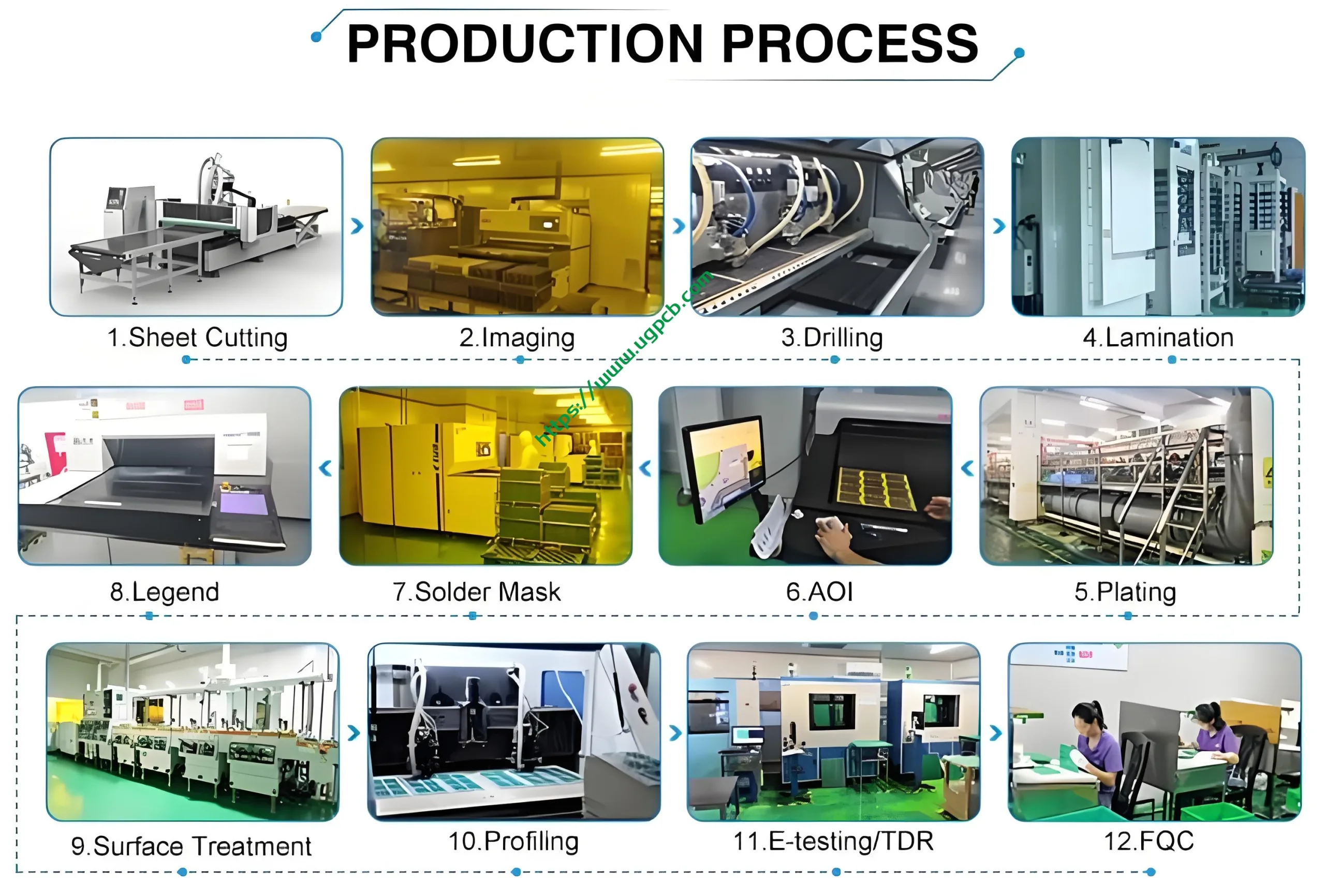
UGPCB operează o linie de producție complet integrată pentru a asigura fiecarePCB rigid-flex de mare viteză îndeplinește standarde stricte de calitate. Procesul de bază include:
- Pregătirea stratului flexibil: Substratul PI este procesat folosind film uscat din stratul interior și gravare pentru a forma circuite fine (3mil lățimea urmei) în zona flexibilă.
- Laminare acoperire: Un strat de acoperire este aplicat peste circuitele flexibile pentru a le proteja și a defini zona de îndoire.
- Stivuire strat rigid: FR4 preimpregnat este aliniat precis cu stratul flexibil prelucrat. Acesta este un pas critic pentru a se asigura că rășina umple interfața rigid-flex fără goluri.
- Laminare: Straturile rigide și flexibile sunt topite la temperaturi și presiune ridicate.
- Forare si placare: 0.2 mm se execută găurire mecanică, urmată de placarea cu cupru electroless pentru a stabili conexiuni între straturi.
- Finisaj de suprafață: Aur de imersiune se aplica cu o grosime controlata de 2m” pentru a asigura lipirea și rezistența la oxidare.
- Dirijare și testare electrică: Tăierea cu laser sau ștanțarea cu matriță modelează placa, urmată de 100% Testarea sondei zburătoare sau a dispozitivelor de fixare pentru a garanta că nu există scurtcircuit sau deschideri.
6. Scenarii de aplicație
Acest8-strat de PCB rigid-flex de mare viteză este proiectat pentru densitate mare, aplicații de înaltă fiabilitate, inclusiv:
- Smartphones și wearable: Folosit la conexiunile la placa de bază a telefonului pliabil și la modulul camerei (CCM) ansambluri, valorificarea capacităților de îndoire pentru integrarea balamalei.
- Dispozitive medicale: Cum ar fi endoscoapele cu ultrasunete și aparatele auditive. Dimensiunea compactă și fiabilitatea PCB-urilor rigide asigură o transmisie stabilă a semnalului în medii critice.
- Electronică auto: Module de cameră în vehicul și sisteme LiDAR. Îndeplinește cerințele de calitate auto pentru rezistența la vibrații și ciclul de temperatură (-40° C până la 125 ° C.).
- Aerospațial și Apărare: Module de comunicații prin satelit și sisteme de ghidare a rachetelor. Reduce greutatea, menținând în același timp fiabilitatea ridicată.
- Control industrial: Articulații robot și servomotoare. Secțiunea flexibilă absoarbe stresul mecanic din mișcare.
7. De ce să alegeți UGPCB?
Fabricarea PCB-urilor rigid-flex prezintă provocări tehnice, în special înlaminare fără goluri la interfața rigid-flex şicontrolând contracția materialului de PI. UGPCB le abordează cu expertiză dovedită:
- Compensarea precisă a contracției: Cu date extinse despre diferitele rate de expansiune ale PI și FR4, menținem înregistrarea strat la strat în termen de ±2 mil.
- Asigurarea semnalului de mare viteză: Pentru PCB de mare viteză aplicații, controlăm strict constanta dielectrică (DK) și factorul de disipare (Df), și să furnizeze rapoarte de testare a impedanței.
- Suport de personalizare: De la prototipuri la producția de masă, sprijinim personalizat PCB al modulului soluții cu termene de livrare fiabile.
8. Obțineți o cotație astăzi
Produsul dvs. de generație următoare este încă limitat de dimensiunea conectorului și pierderea semnalului? Este timpul să faceți upgrade la8-Strat PCB Rigid-Flex de mare viteză.
[Contactați inginerii UGPCB] pentru:
Prețuri de volum competitive.
Raport gratuit de analiză DFM (în 24 ore).
Recomandări de optimizare a impedanței.