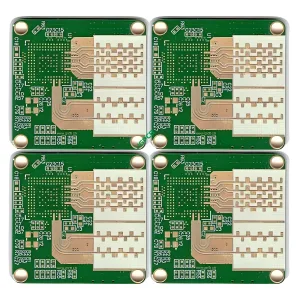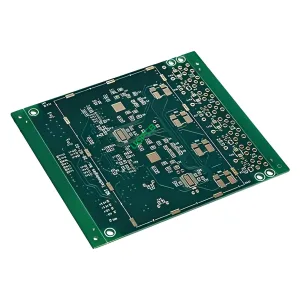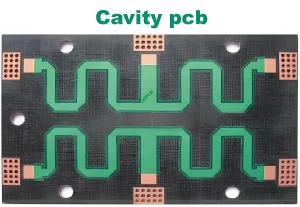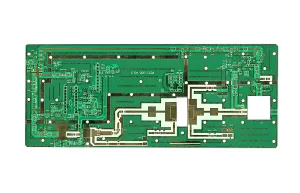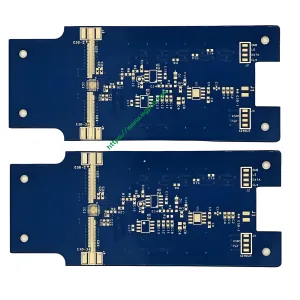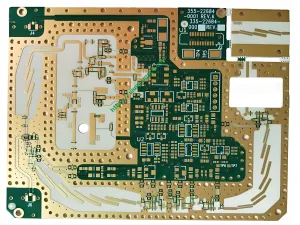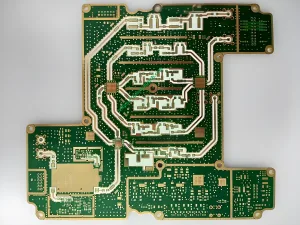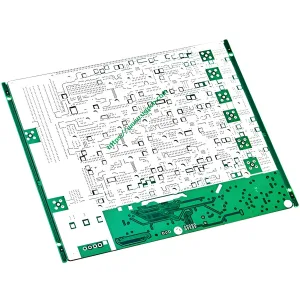
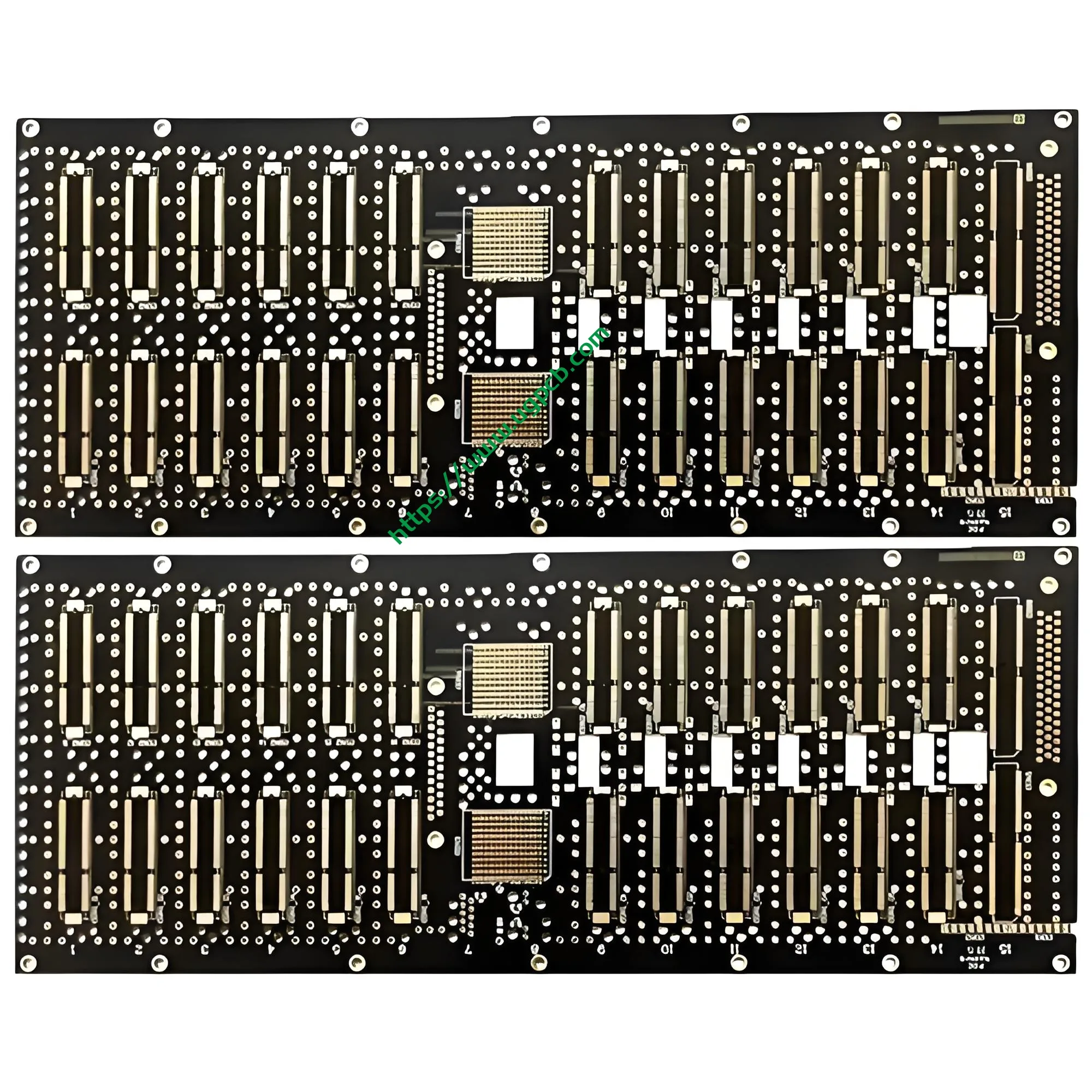
Specificații rapide
| Parametru | Detaliu |
|---|---|
| Material de bază | Rogers RT/DUROID 5870 (compozit PTFE randomizat cu microfibră de sticlă) |
| Număr de straturi | 2 straturi |
| Grosimea totală a plăcii | 0.9 mm |
| Grosime dielectrică | 0.762 mm |
| Constanta dielectrică (DK) @ 10 GHz | 2.33 ± 0.02 (tipic) |
| Factor de disipare (Df) @ 10 GHz | 0.0012 (tipic) |
| Evaluarea inflamabilității | Ul 94 V-0 |
| Greutate de cupru | Baza 0.5 Oz (≈18 µm), terminat 1 Oz (≈35 µm) |
| Finisaj de suprafață | De acord (Imersie de aur cu nichel electroless) |
| Aplicații cheie | Antene comerciale în bandă largă aerospațială, circuite microstrip și stripline, echipamente cu unde milimetrice, sisteme radar militare, sisteme de ghidare a rachetelor, antene digitale RF punct la punct |
Ce este un PCB de înaltă frecvență Rogers RT5870? Definiție și clasificare
Un PCB de înaltă frecvență Rogers RT5870 utilizează Rogers RT / DUROID 5870 laminat ca dielectric de bază. Acest laminat este un compozit PTFE. Microfibrele de sticlă orientate aleatoriu întăresc compozitul. Inginerii l-au proiectat pentru circuite de stripline și microstrip solicitante.
De la a PCB punct de vedere al clasificarii, placa RT5870 se încadrează în aceste categorii:
- După frecvență – PCB de înaltă frecvență (PCB RF/micunde) acoperind banda Ku și mai sus.
- După sistemul material – PCB de înaltă frecvență pe bază de PTFE. Acesta diferă de sistemele umplute cu hidrocarburi ceramice sau epoxidice modificate.
- Prin aplicare – PCB RF și microunde cu fiabilitate militară/aerospațială.
- După numărul de straturi – PCB cu două fețe (standard). Configurațiile multistrat sunt, de asemenea, acceptate.
- După specificația IPC – Material de bază de mare viteză/frecvență înaltă, compatibil cu IPC-4103.
Rogers RT/DUROID 5870 a apărut pentru prima dată în anii 1960. Are mai mult de 60 ani de performanță dovedită pe teren. Rămâne una dintre cele mai mature soluții de materiale PCB de înaltă frecvență din industrie.
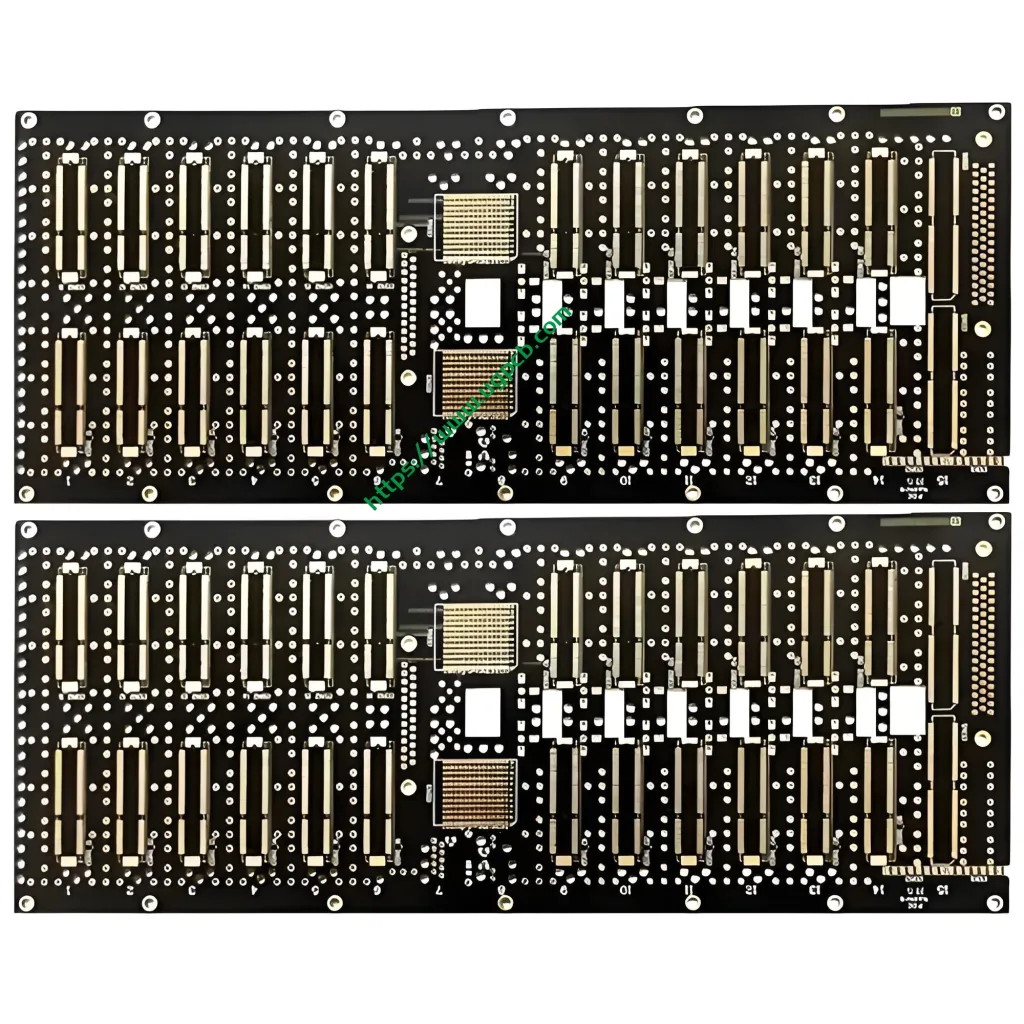
Compoziția materialului și stivuirea PCB-ului plăcii RT5870 a UGPCB
Substrat de bază: Compozit random PTFE ranforsat cu micro-sticlă
Inima RT/duroid 5870 este o matrice PTFE. Conține distribuite uniform, microfibre de sticlă orientate aleatoriu. Această microstructură unică oferă două proprietăți importante. Primul, oferă un comportament electric izotrop. Constanta dielectrică rămâne constantă în X, Y, și direcțiile Z. Doilea, garantează o uniformitate excelentă Dk de la panou la panou.
Stivuire PCB
Acest produs este un PCB cu două straturi de înaltă frecvență cu două fețe. Măsoară grosimea totală a plăcii 0.9 mm. Grosimea stratului dielectric este 0.762 mm. Conductoarele de cupru stau pe ambele părți. Greutatea de bază a cuprului este 0.5 Oz (despre 18 µm). După placare, cuprul finit ajunge 1 Oz (despre 35 µm). Acest design echilibrează transmisia semnalului de înaltă frecvență cu capacitatea de purtare a curentului.
Finisaj de suprafață: De acord
UGPCB aplică un ENIG (Imersie de aur cu nichel electroless) finisarea suprafeței. Depunem un strat de aliaj de nichel-fosfor (3–6 μm) primul. Apoi adaugam un strat de aur pur (0.05–0,1 μm). Stratul de nichel acționează ca o barieră de difuzie. Previne compușii intermetalici fragili în timpul lipirii. Stratul de aur oferă o conductivitate superioară, rezistență la coroziune, și lipitabilitate. Acest finisaj se potrivește perfect nevoilor de transmitere a semnalului de înaltă frecvență. Oferă o planeitate remarcabilă a suprafeței și protecție la oxidare.
Cum funcționează: De ce Low Dk și Low Df transformă performanța PCB de înaltă frecvență
PCB-urile de înaltă frecvență funcționează de obicei mai sus 100 MHZ. Benzile pentru microunde încep la 2 GHz. La aceste frecvente, materialul dielectric controlează direct calitatea semnalului. Doi parametri contează cel mai mult.
Constanta dielectrică (DK) și viteza de propagare a semnalului
Viteza de propagare a semnalului v_p într-o linie de transmisie PCB urmează această formulă:
v_p = c / √(DK)
Aici, c este viteza luminii în vid (≈ 3 × 10⁸ m/s). Cu Dk = 2.33, semnalul circulă la aproximativ 65.5% a vitezei luminii (≈ 1.96 × 10⁸ m/s). Acest lucru este semnificativ mai rapid decât pe plăcile standard FR-4. FR-4 are un Dk în jur de 4,2–4,8. Semnalele sale circulă cu doar 46%-49% din viteza luminii. O propagare mai rapidă înseamnă o întârziere mai mică de transmisie. Acest avantaj se dovedește esențial pentru sistemele radar și antene sensibile la fază.
Factor de disipare (Df) și atenuarea semnalului
Factorul de disipare (Df, numit și tan δ) măsoară câtă energie electromagnetică transformă un material în căldură. Un Df mai mic înseamnă mai puțină pierdere de semnal. RT / DUROID 5870 realizează un Df de numai 0.0012 la 10 GHz. Adică 0.12%. Materialele tipice FR-4 prezintă valori Df între 0.018 şi 0.025. Ca urmare, PCB-ul RT5870 reduce pierderile de transmisie de înaltă frecvență cu mai mult de un ordin de mărime.
Controlul dispersiei
Diferite frecvențe pot călători la viteze diferite într-un dielectric. Acest efect se numește dispersie. Distorsionează semnalele de bandă largă. RT / DUROID 5870 menține un Dk aproape constant pe o gamă largă de frecvențe. Acest comportament minimizează dispersia. Face din material o potrivire puternică pentru PCB-uri de înaltă frecvență de bandă largă.
Elemente esențiale de proiectare pentru circuitele de înaltă frecvență RT5870
Impedanta controlata – Standard 50 Ω Design
Microstrip și stripline servesc ca principalele structuri de linii de transmisie în PCB-urile de înaltă frecvență. Impedanța depinde de Dk, grosimea dielectrică, lățimea liniei, și grosimea cuprului. Folosind Dk = 2.33, grosimea dielectrică 0.762 mm, şi 1 oz cupru, o 50 Ω microbandă are nevoie de o lățime de linie de aproximativ 0.762 mm (30 mil). UGPCB controlează strâns lățimea urmei și distanța în timpul Fabricarea PCB. Acest lucru menține impedanța caracteristică la țintă.
Design cu absorbție scăzută a umidității
RT / DUROID 5870 absoarbe numai 0.02% apă (D48/50% stare de testare). Această absorbție ultra-scăzută de umiditate previne deriva Dk și degradarea semnalului în medii umede. Se potrivește extrem de bine echipamentelor avionice aeropurtate.
Design de stabilitate termică
Coeficientul de dilatare termică (Cte) pentru RT/duroid 5870 este 22 PPM/° C. (X), 28 PPM/° C. (Y), şi 173 PPM/° C. (Z.) între -55°C până la 288°C. Coeficientul termic al constantei dielectrice este -115 PPM/° C. (-50°C până la 150°C). CTE-ul relativ ridicat al axei Z necesită o atenție deosebită orificiului traversant placat (PTH) fiabilitate. UGPCB face față acestei provocări cu activarea cu plasmă optimizată și procese de cupru fără electroși pentru PTFE. Abordarea noastră asigură robustețe prin conexiuni.
Rezistență chimică și prelucrabilitate
Materialele PTFE sunt foarte inerte. RT / DUROID 5870 rezistă la toți solvenții și reactivii utilizați la gravare și placare. În același timp, laminatul este ușor de tăiat, forfecare, și mașină. Acest lucru sprijină fabricarea cu precizie a contururilor PCB complexe.
Date de performanță Deep Dive (conform IPC‑TM‑650 și standardele conexe)
Următorul tabel listează datele complete de performanță pentru RT/duroid 5870 laminat. Toate valorile provin din fișa tehnică oficială Rogers. Metodele de testare se aliniază cu seria IPC‑TM‑650.
| Parametru | RT / DUROID 5870 Valoare tipică | Metoda de testare |
|---|---|---|
| Constanta dielectrică (proces) @ 10 GHz | 2.33 ± 0.02 | IPC‑TM‑650 2.5.5.5 |
| Constanta dielectrică (proiecta) @ 8–40 GHz | 2.33 | Metoda lungimii diferențiale de fază |
| factor de disipare @ 1 MHZ | 0.0005 | IPC‑TM‑650 2.5.5.3 |
| factor de disipare @ 10 GHz | 0.0012 | IPC‑TM‑650 2.5.5.5 |
| Dk Coeficient de temperatură (-50°C până la 150°C) | -115 PPM/° C. | IPC‑TM‑650 2.5.5.5 |
| Rezistivitatea volumului | 2 × 10⁷ Mohm·cm | ASTM D257 |
| Rezistivitatea suprafeței | 2 × 10⁷ Mohm | ASTM D257 |
| Conductivitate termică la 50°C | 0.22 W/m·K | ASTM D5470 |
| CTE X / Y / Z. | 22 / 28 / 173 PPM/° C. | IPC‑TM‑650 |
| Coajă de rezistență (1 oz ED cupru) | 27.2 lbs/in (4.8 N/mm) | IPC‑TM‑650 |
| Densitate | 2.2 gm/cm³ | - |
| Absorbția apei | 0.02% | D48/50% |
| Evaluarea inflamabilității | Ul 94 V-0 | Ul 94 |
| Compatibil cu procese fără plumb | Da | - |
Aceste date demonstrează de ce PCB-ul de înaltă frecvență RT5870 excelează în uniformitatea dielectrică, pierdere redusă, rezistenta la umiditate, si siguranta la incendiu.
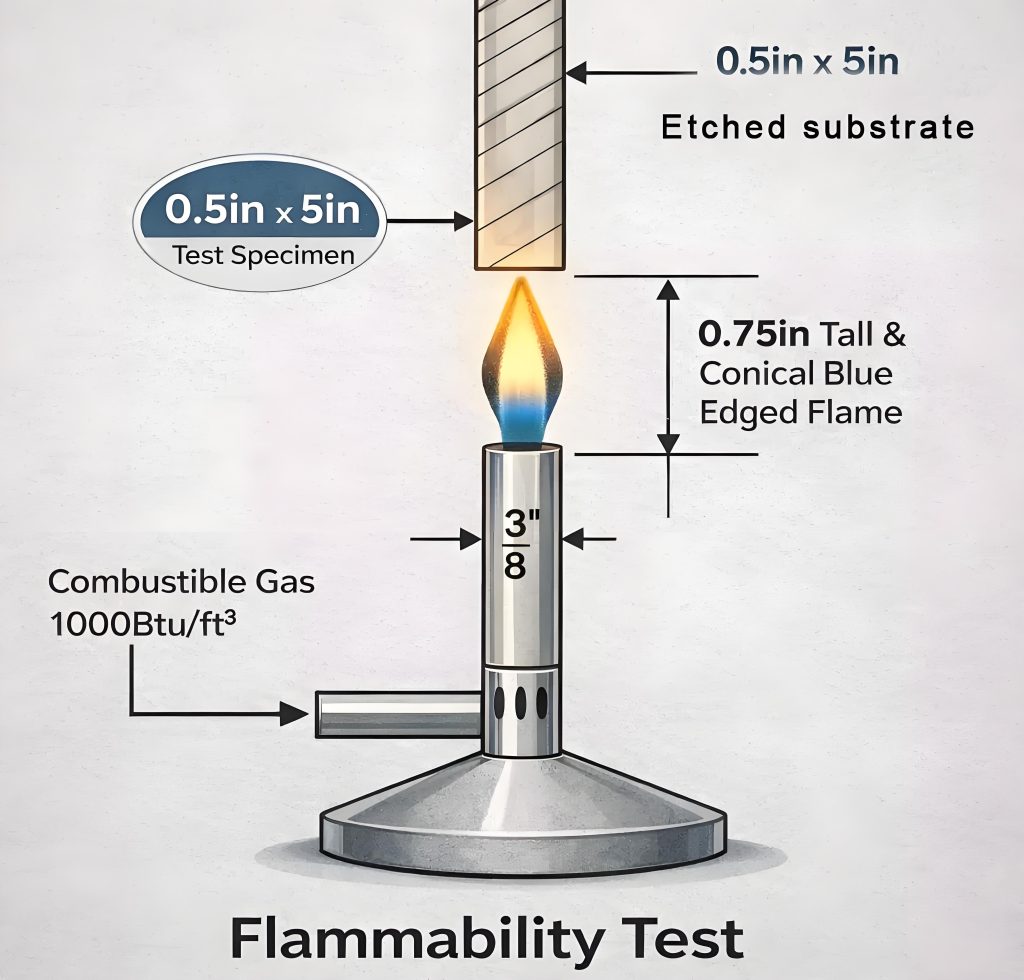
De ce UL 94 V-0 Materia?
Ul 94 V-0 este cel mai înalt nivel de inflamabilitate pentru materialele plastice din dispozitive. O calificare V-0 înseamnă că materialul se stinge singur 10 secunde în timpul unui test de ardere verticală. Orice picătură arsă nu va aprinde indicatorul de bumbac. Pentru avionică și echipamente militare, Ul 94 V-0 este o cerință de siguranță obligatorie. RT / DUROID 5870 atinge acest rating strict și acceptă lipirea fără plumb. Îndeplinește pe deplin regulile de siguranță și mediu pentru aplicațiile aerospațiale și de apărare.
Caracteristici cheie și avantaje competitive
Cinci caracteristici tehnice de bază
- Cea mai mică pierdere electrică printre materialele de înaltă frecvență PTFE armat.
- Absorbție ultra-scăzută de umiditate – ideal pentru medii cu umiditate ridicată.
- Proprietăți electrice izotrope – uniform Dk în toate cele trei direcții.
- Consistență în bandă largă – performanta electrica stabila din 1 MHz la banda Ku și nu numai.
- Rezistență chimică excelentă – rezistă la toate substanțele chimice standard de procesare a PCB.
RT5870 vs. RT5880: Cum să alegi?
RT / DUROID 5870 și RT/duroid 5880 ambele aparțin familiei Rogers de PTFE armat cu microfibră de sticlă. Fiecare produs excelează în diferite domenii.
| Comparaţie | RT / DUROID 5870 | RT / DUROID 5880 |
|---|---|---|
| nu stiu @ 10 GHz | 2.33 ± 0.02 | 2.20 ± 0.02 |
| Df @ 10 GHz | 0.0012 | 0.0009 |
| CTE-X (PPM/° C.) | 22 | 31 |
| CTE-Y (PPM/° C.) | 28 | 48 |
| Coajă de rezistență | 27.2 lbs/in | 31.2 lbs/in |
| Cel mai bun pentru | Radar de mare putere, sisteme stabile termic | Comunicare cu pierderi foarte mici, satelit |
Placa RT5870 oferă o stabilitate termomecanică mai puternică și o duritate mai mare. Aceste calități servesc radarelor și avionicii de mare putere care suportă cicluri termice intense. În comparație, RT5880 oferă un Dk ceva mai scăzut (2.20) și Df (0.0009). Câștigă la întârzierea semnalului și pierderea inserției.
Procesul de fabricație și controlul calității PCB de înaltă frecvență RT5870 UGPCB
Pregătirea și tăierea materialului
Începem cu Rogers RT/duroid autentic 5870 laminate. Microgravăm și curățăm cu acid suprafața de cupru. Acest pas îndepărtează oxizii și contaminanții organici.
Imagistica și gravura
Folosim fotolitografia cu peliculă uscată pentru a transfera modelul circuitului. Optimizăm parametrii de gravare și aplicăm compensații (factor de gravare) pentru a ține strâns pe 0.762 mm lățimea urmei și distanța. Această disciplină asigură consistența impedanței pe PCB de înaltă frecvență.
Forare si placare
După foraj, pereții orificiilor din PTFE primesc activare cu plasmă. Următorul, aplicăm depuneri de cupru electroless. Acest pas metalizează găurile și creează conexiuni fiabile prin găuri. UGPCB a stabilit parametri de proces maturi special pentru această etapă PCB PTFE.
Finisare de suprafață – ENIG
Aplicam un proces chimic nichel-aur. Depunem mai întâi un strat de nichel de 3–6 μm. Apoi adăugăm un strat de aur de 0,05–0,1 μm. Aurul oferă rezistență scăzută la contact și lipibilitate excelentă. Nichelul formează o barieră de difuzie. Acest lucru asigură fiabilitatea pe termen lung a îmbinărilor de lipit de pe PCBA RT5870.
Testare și inspecție electrică
Performam 100% testări de continuitate electrică și izolare. De asemenea, efectuăm inspecții vizuale conform IPC-A-600. Fiecare PCB de înaltă frecvență îndeplinește standardul nostru de expediere.
UGPCB Asigurarea calității
UGPCB operează conform ISO 9001 managementul calității și standardele de manoperă IPC-A-600. Producția noastră de PCB de înaltă frecvență este complet trasabilă. Inspectăm materialele de bază Rogers primite și efectuăm verificări finale pe fiecare panou de ieșire.
Scenarii tipice de aplicare pentru PCB-uri și ansambluri PCBA RT5870
Antene comerciale în bandă largă aerospațială
Uniformitatea Dk și pierderile reduse ale RT5870 îl fac un material PCB ideal pentru rețelele de alimentare cu antene în bandă largă.. În antenele în bandă Ku, semnalele circulă prin circuitele divizor de putere. Aceste rețele necesită pierderi dielectrice stricte și consistență de fază. PCB-urile de înaltă frecvență RT5870 îndeplinesc aceste cerințe.
Circuite Microstrip și Stripline
Rogers a proiectat inițial RT/duroid 5870 pentru circuite microstrip și stripline de precizie. Fie că proiectați filtre, Cupluri, divizoare de putere, sau rețele de transformare a impedanței, acest laminat oferă un mediu dielectric previzibil. Performanța circuitului dumneavoastră rămâne repetabilă.
Echipament cu unde milimetrice
Factorul scăzut de disipare împinge utilizarea RT5870 în banda Ku și nu numai. Susține 24 GHz, 60 GHz, şi chiar 77 aplicații cu unde milimetrice GHz. Acestea includ celule mici 5G mmWave, radar auto, și backhaul pentru microunde punct la punct.
Sisteme radar militare
Pierderi reduse și stabilitate termică puternică satisfac nevoile riguroase ale radarului militar. PCB-urile de înaltă frecvență RT5870 gestionează impulsuri lungi, semnale de mare putere în mod fiabil. Le găsești în radarul de control al focului aeropurtat și în sistemele de avertizare timpurie de la sol.
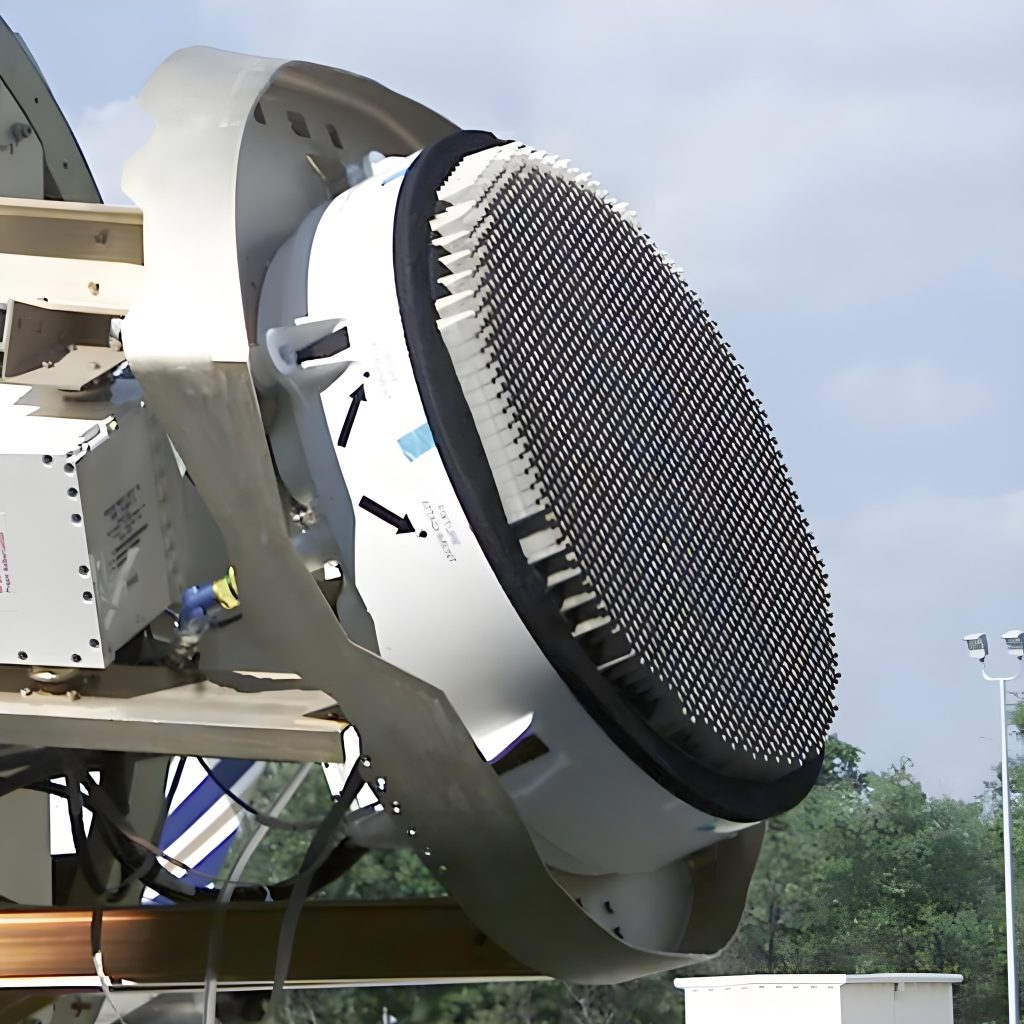
Sisteme de ghidare a rachetelor
Modulele emițător-receptoare de căutare de rachete se confruntă cu temperaturi extreme, vibratie, si umiditate. RT5870 nu absoarbe aproape nicio umiditate (0.02%) și menține proprietăți electrice stabile pe o gamă largă de temperaturi. Acest lucru asigură integritatea semnalului de la lansare până la țintă.
Antene digitale RF punct la punct
Legăturile cu microunde punct la punct se bazează pe câștigul precis al antenei și pe lățimea fasciculului. Uniformitatea superioară Dk a RT5870 garantează o aliniere precisă a fazelor pe rețele mari de antene. Performanța dumneavoastră PCB rămâne previzibilă element la element.
Parametrii de livrare pentru PCB de înaltă frecvență RT5870
| Parametru | Caietul de sarcini |
|---|---|
| Material de bază | Rogers RT/DUROID 5870 |
| Număr de straturi | 2 straturi |
| Grosimea totală a plăcii | 0.9 mm |
| Grosime dielectrică | 0.762 mm |
| nu stiu @ 10 GHz | 2.33 ± 0.02 |
| Df @ 10 GHz | 0.0012 |
| Cupru (Baza/Terminat) | 0.5 Oz / 1 Oz |
| Lățimea urmei / Spațiere | 0.762 mm / 0.762 mm |
| Finisaj de suprafață | De acord |
| Evaluarea inflamabilității | Ul 94 V-0 |
| Dimensiuni | Personalizat |
| Suport hibrid cu mai multe straturi | Da (RT5870 + FR-4 sau alte materiale Rogers) |
Servicii UGPCB PCBA pentru plăci de înaltă frecvență
Dincolo de PCB-uri goale de înaltă frecvență, UGPCB oferă ghișeu unic PCB (Asamblu placă de circuit imprimat) servicii. Pentru ansamblul plăcii Rogers RT5870, oferim:
- Ansamblu SMT de înaltă frecvență, folosind modele de tampon cu pierderi reduse și deschideri precise pentru șablon.
- Lipirea componentelor cu pas fin (BGA, Qfn, și mai mult).
- Profile de lipit prin reflow controlate strâns.
- Aoi (Inspecție optică automată) şi cu raze X inspecţie.
- Testare funcțională la nivel de sistem.
Când proiectul dvs. are nevoie de livrare la cheie pentru PCB de înaltă frecvență plus PCBA, Vă rugăm să specificați cerințele dumneavoastră PCBA în etapa de comandă.
De ce să alegeți UGPCB? – Solicitați cotația dvs. astăzi
- ✅ Aprovizionare de canal autorizată Rogers – Fiecare PCB de înaltă frecvență RT5870 începe cu laminate originale originale.
- ✅ 20+ Ani de producție de PCB de înaltă frecvență – Expertiză profundă în fabricarea plăcilor de circuite RF și cu microunde.
- ✅ ISO 9001 Producție certificată – Control strict al calității de la materialele primite până la livrarea finală.
- ✅ Prototipare rapidă și producție de volum – Timp de livrare competitiv pentru prototipuri și programare flexibilă a loturilor.
- ✅ Logistica globală – Deservirea Americii de Nord, Europa, Asia-Pacific, și alte piețe majore.
- ✅ Suport tehnic expert – Asistență de inginerie de la consultarea de proiectare prin producția de PCB și PCBA.
Contactați UGPCB pentru proiectul dumneavoastră de PCB sau PCBA de înaltă frecvență Rogers RT5870.
- 📧 E-mail: sales@ugpcb.com
- 🌐 Site-ul web: www.ugpcb.com
- 📞 Chat live: Disponibil pe site-ul nostru
- 📋 Formular rapid RFQ: Trimiteți fișierele și cerințele dvs. Gerber. Răspundem cu o ofertă în termen 24 ore.
Glosar
| Termen | Definiţie |
|---|---|
| DK (Constanta dielectrică) | O măsură a capacității unui material de a stoca energia câmpului electric. |
| Df (Factor de disipare) | O măsură a câtă energie electromagnetică transformă un material în căldură; numită și tangentă de pierdere. |
| Ptfe | Politetrafluoretilenă, un fluoropolimer de înaltă performanță. |
| De acord | Imersie de aur cu nichel electroless, un finisaj de suprafață pentru PCB-uri de înaltă frecvență. |
| Cte | Coeficient de expansiune termică. |
| PTH | Placat prin gaura, o via cu placare conductoare de cupru. |
| PIM | Intermodulație pasivă. |
| RF | Frecvență radio, de obicei 100 MHz și mai sus. |
| IPC | Asociația Connecting Electronics Industries, editor de standarde PCB. |
Întrebări frecvente – PCB-uri de înaltă frecvență Rogers RT5870
Î1: Cum aleg între RT5870 și RT5880?
A1: RT5870 (Dk=2,33) asigură o mai bună stabilitate termomecanică. Se potrivește cu radarele și avionica de mare putere. RT5880 (Dk=2,20) oferă pierderi și mai mici. Este ideal pentru sistemele de comunicații de ultra-înaltă frecvență și prin satelit. Consultați tabelul de comparație din secțiunea 6.2.
Q2: Care este lățimea și distanța minimă a urmei?
A2: Urma/spațiul minim depinde de grosimea cuprului și de designul dumneavoastră. Caracteristicile produsului nostru standard RT5870 0.762 mm linii și spații. Pentru geometrii mai fine, vă rugăm să contactați asistența tehnică UGPCB.
Q3: Acceptați PCB-uri multistrat și hibride de înaltă frecvență?
A3: Da. Construim plăci RT5870 multistrat și stackup-uri hibride. Combinăm RT5870 cu alte materiale Rogers (precum RO4350B, RT5880) sau FR-4.
Î4: Care este timpul obișnuit de livrare?
A4: Timpul de livrare pentru prototip variază în funcție de numărul de straturi și de complexitate. Echipa noastră de vânzări poate oferi cel mai rapid program disponibil. Perioadele de livrare în volum apar în cotația oficială.
Î5: Cum diferă PCB-urile de înaltă frecvență de PCB-urile standard?
A5: PCB-urile de înaltă frecvență folosesc Dk scăzut, substraturi speciale cu Df scăzut, cum ar fi PTFE pentru semnale RF/micunde. Plăcile standard FR-4 au Dk mai mare (4.2–4,8) și pierderi mai mari. Se potrivesc numai circuitelor digitale sau analogice de joasă frecvență.
Notă legală și de conformitate
Toți parametrii tehnici provin de la Rogers Corporation RT/duroid oficial 5870/5880 fișe de date. Valorile sunt tipice. Pot apărea variații normale de proces între loturile de producție. Referințele IPC-4103 servesc pentru a indica sistemul de clasificare și metodele de testare pentru substraturi de înaltă frecvență. UL 94 Evaluarea de inflamabilitate V-0 reflectă certificările de produs publicate de Rogers. Performanța reală a produsului este supusă raportului de inspecție final al UGPCB.
© 2024 UGPCB. Toate drepturile rezervate. Rogers RT/duroid este o marcă comercială înregistrată a Rogers Corporation.