UGPCB-LOGO
Einführung
In today’s rapidly evolving communication industry—especially with the widespread adoption of 5G technology—RF circuits demand unprecedented performance from Leiterplatten. Engineers face a constant challenge: they must ensure excellent signal integrity and low-loss transmission at high frequencies while managing strict BOM cost controls. Is there a solution that preserves critical RF performance without driving up manufacturing costs?
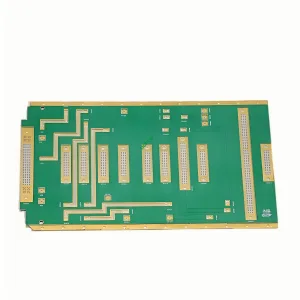
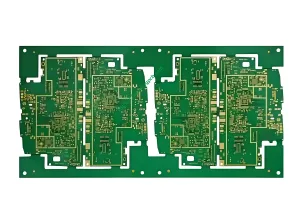
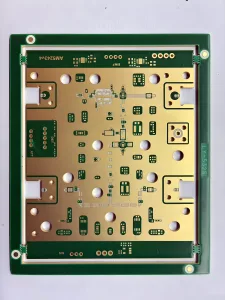
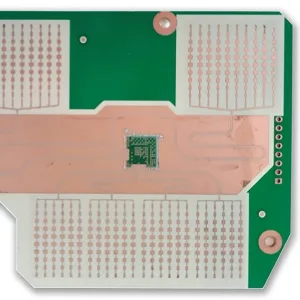
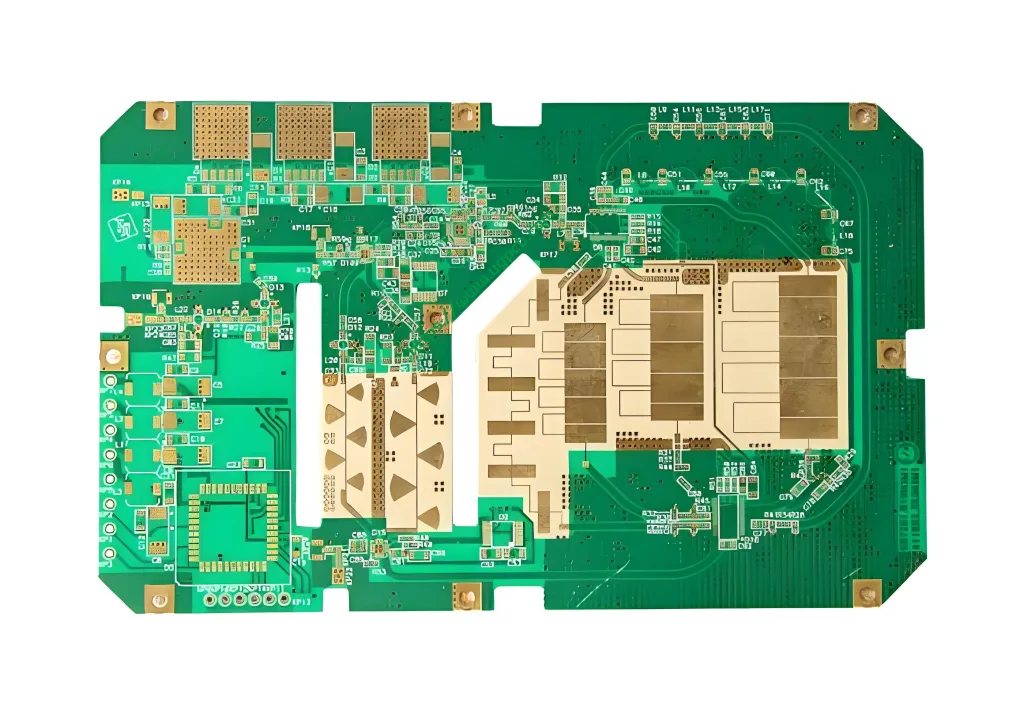
The answer is yes. UGPCB’s Rogers RO4350B Hybrid PCB directly addresses this industry challenge. This 4-layer mixed-material board combines the RF excellence of Rogers RO4350B with the mechanical strength and cost benefits of FR-4. In diesem Artikel, we explore its overview, Technische Parameter, production processes, and wide-ranging applications in communications and beyond. Discover how UGPCB’s expertise delivers Hochfrequenz-Leiterplatten with unmatched quality.
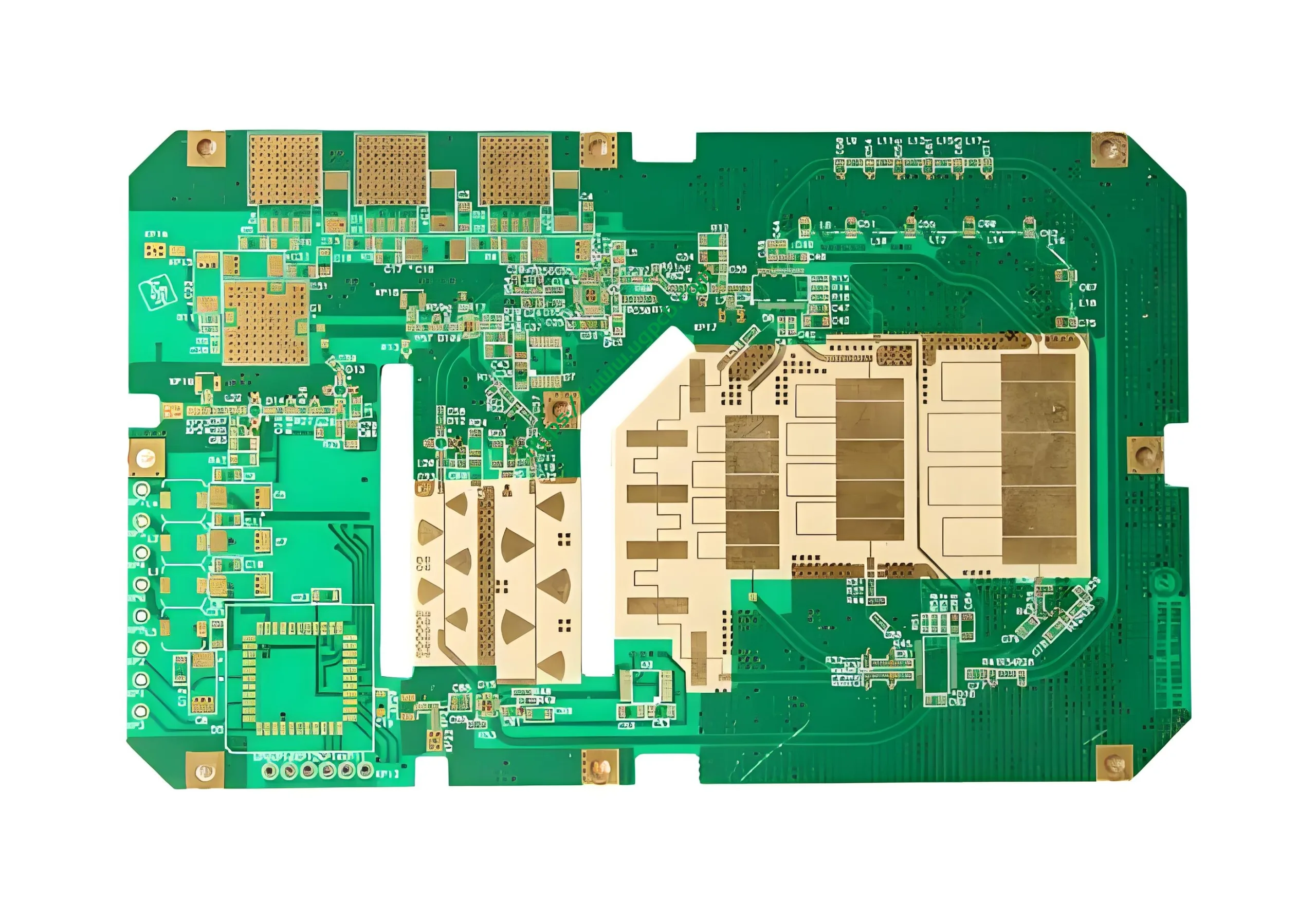
1. Produktübersicht: What is a Rogers RO4350B Hybrid PCB?
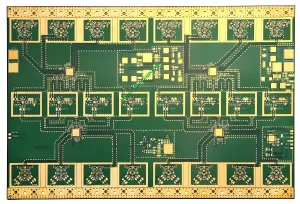
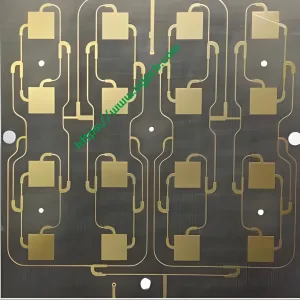
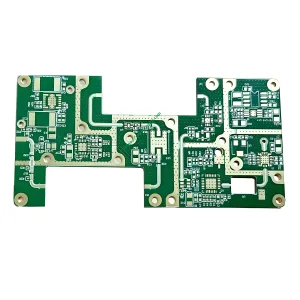
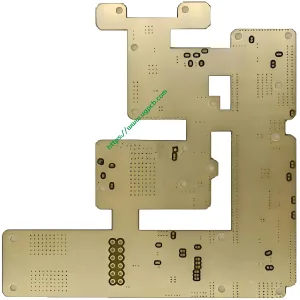
A Rogers RO4350B Hybridplatine integrates Rogers RO4350B high-frequency laminate with traditional FR-4 epoxy glass fabric through a specialized lamination process.
UGPCB’s specific configuration uses a unique “2+2” stack-up: 2 layers of Rogers RO4350B combined with 2 layers of FR-4. This design leverages RO4350B’s superior RF properties alongside FR-4’s structural integrity and cost advantages. It represents a highly cost-effective solution for RF and microwave circuit applications.
2. Wissenschaftliche Klassifikation
To help customers select the right product, UGPCB classifies this board as follows:
-
Durch Material: High-Frequency Hybrid Circuit Board
-
By Material Combination: Rogers RO4350B + FR-4
-
Für Schichtzahl: 4-Schicht Mehrschichtige Leiterplatte
-
Durch Anwendung: Communication High-Frequency PCB
3. Core Parameters and Material Analysis
UGPCB maintains rigorous quality control over raw materials and manufacturing processes. Every PCB meets high standards. Below are the detailed specifications:
| Parameter | Wert | Notizen |
|---|---|---|
| Modell | Rogers RO4350B Hybridplatine | Hybrid high-frequency material |
| Materialzusammensetzung | 2 Layers RO4350B + 2 Layers FR4 | RF layer + control layer separation |
| Gesamtebenen | 4 Schichten | Multilayer board design |
| Dielektrizitätskonstante (Dk) | 3.48 (@10ghz) | Typical value for RO4350B |
| Finished Board Thickness | 1.0mm | Suitable for compact device integration |
| Dielektrikumsdicke | 0.254mm | Specifically for RO4350B core |
| Material Kupferdicke | ½(18μm) HH/HH | Inner layer base copper |
| Fertige Kupferdicke | 1/0.5/0.5/1 (OZ) | Outer 1OZ, inner 0.5OZ for power and signal needs |
| Oberflächenbehandlung | Immersionsgold (ZUSTIMMEN) | Excellent flatness, ideal for high-frequency signals |
| Anwendung | Kommunikationsausrüstung | Basisstationen, Leistungsverstärker, Antennen, usw. |
Material Highlights: Rogers RO4350B
RO4350B is a hydrocarbon/ceramic-filled woven glass reinforced laminate. It offers these key advantages:
-
Stabile Dielektrizitätskonstante: Dk value of 3.48 remains stable across wide frequency and temperature ranges. This stability is critical for maintaining signal phase integrity.
-
Low Loss Factor: Extremely low dissipation factor minimizes signal attenuation during high-speed transmission.
-
Excellent Thermal Conductivity: Higher thermal conductivity than traditional PTFE materials aids heat dissipation from high-power components.
-
Excellent Processability: Its mechanical rigidity surpasses soft PTFE materials. It fully supports standard FR-4 PCB manufacturing processes (Bohren, Radierung, usw.), reducing fabrication complexity and cost.
Material Highlights: FR-4
As the industry’s most common PCB-Substrat, FR-4 handles power management and digital control circuitry. Its inclusion significantly reduces overall board material costs while maintaining necessary performance.
4. Performance and Structural Characteristics
4.1 Unique Hybrid Laminate Structure
UGPCB’s 4-layer board features a symmetric yet functionally asymmetric stack-up. The top and bottom layers (L1 & L4) use RO4350B for high-frequency RF signal routing. The inner layers (L2 & L3) use FR-4 for power planes and low-speed control signals. This structure balances RF performance with mechanical stability.
4.2 Precise Impedance Control
RO4350B’s accurate Dk value (3.48), combined with UGPCB’s strict etching processes, allows us to maintain characteristic impedance (z.B., 50Oh) tolerances within tight ranges. This precision is vital for RF front-end modules in communication base stations.
4.3 Superior Environmental Reliability
RO4350B features extremely low moisture absorption (etwa 0.06%) and a high glass transition temperature (Tg > 280°C). The PCB maintains stable electrical performance even in humid or high-temperature environments.
4.4 Immersionsgold (ZUSTIMMEN) Oberflächenbeschaffung
ZUSTIMMEN provides an exceptionally flat surface. This flatness is crucial for minimizing skin effect losses at high frequencies. The gold layer also protects pads, Gewährleistung hervorragender Lötlichkeit und Korrosionsbeständigkeit.
5. Working Principle and Design Considerations
Arbeitsprinzip
Within this PCB, Die Rogers RO4350B material layers primarily transmit and process RF signals. Its stable, low-loss characteristics ensure high-fidelity signal propagation from input to output. Der FR-4 layers supply power to RF chips, transmit low-speed control logic signals, and provide mechanical support for the entire board.
Wichtige Designüberlegungen
Engineers designing such hybrid PCBs must pay attention to:
-
CTE Matching: RO4350B and FR-4 have different coefficients of thermal expansion (CTE). Designs must consider stack-up symmetry to prevent board warpage after lamination.
-
Reflow Control: Precise lamination parameters are needed to prevent dielectric layer slippage during pressing.
-
Via Reliability: Drilling through two different materials requires optimized spindle speeds and feed rates. UGPCB ensures smooth hole walls and strong plated copper adhesion.
6. Production Process Flow
UGPCB utilizes industry-leading automated lines to ensure high-quality Hybrid PCB delivery:
-
Incoming Material Inspection: Strictly verify raw materials: Rogers RO4350B (0.254mm Dicke, Dk=3.48) and FR-4.
-
Bildgebung der inneren Schicht: Create inner layer circuits (L2/L3) with 0.5OZ copper.
-
Oxide Treatment & Lay-Up: Apply brown oxide treatment to RO4350B and FR-4 cores. Stack as “2 layers RO4350B + 2 layers FR4” with prepreg.
-
Vakuumlaminierung: Use segmented temperature and pressure profiles to manage stress from differing CTEs, ensuring strong interlayer bonds.
-
Bohren: Employ high-precision CNC drills with parameters tuned for hybrid materials.
-
Plating Through Hole (PTH) & Electroplating: Achieve interlayer connection, ultimately reaching outer layer copper thickness of 1OZ.
-
Outer Layer Imaging: Create outer layer circuits (L1/L4).
-
Lötmaske & Oberflächenbeschaffung: Apply solder mask, then perform Immersionsgold (ZUSTIMMEN) Oberflächenbehandlung.
-
Routenführung & Elektrische Prüfung: Profile routing, electrical testing, and impedance sampling checks.
-
Endinspektion & Verpackung: AOI inspection followed by manual re-check, then vacuum packaging for shipment.
7. Primäranwendungen
With its stable 3.48 Dk and cost-effective hybrid construction, UGPCB’s board suits diverse applications:
-
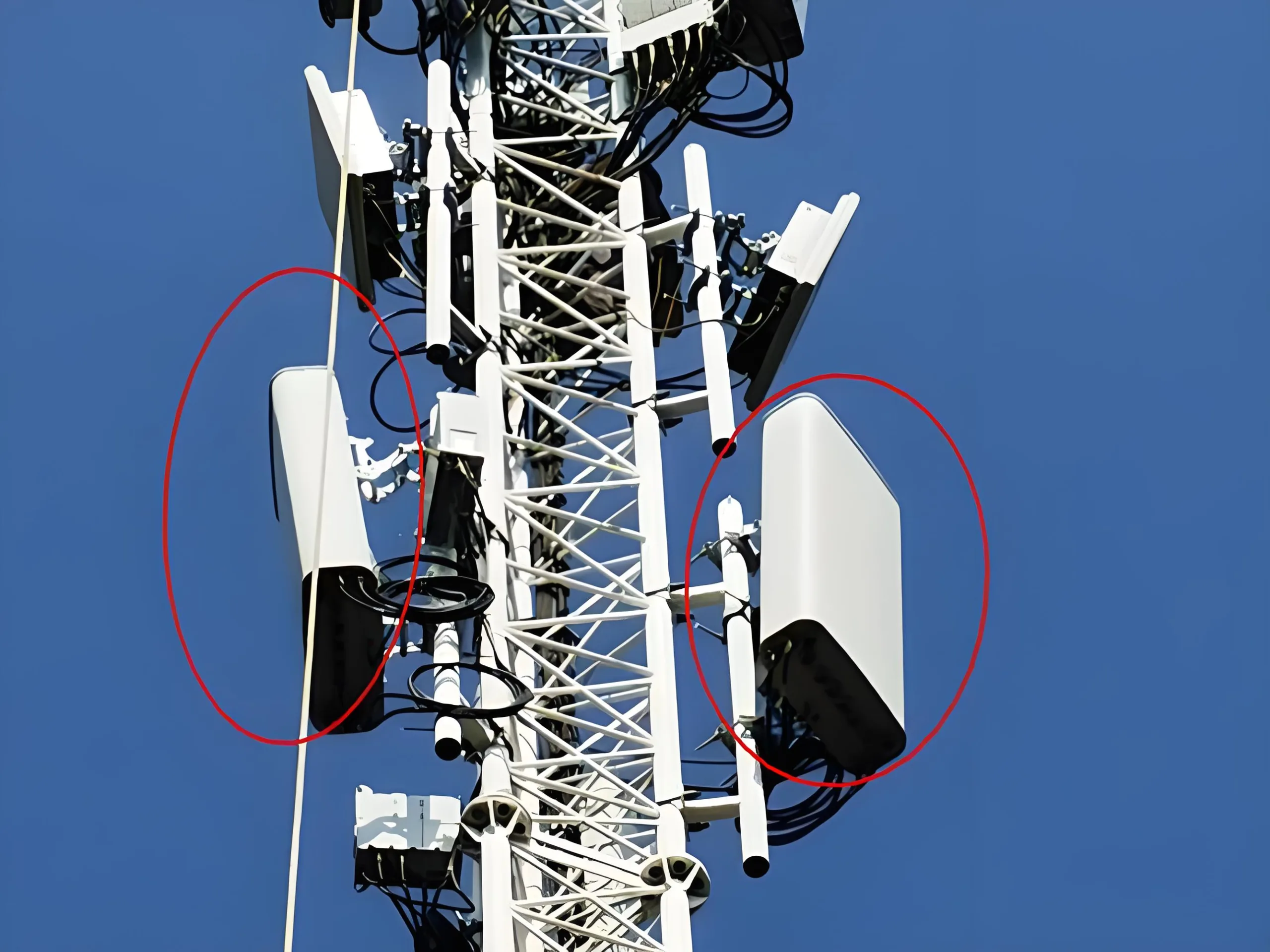
Drahtlose Kommunikationssysteme: 5G base station antennas, RF front-end modules (Power Amplifiers), repeaters, Filter.
-
Kfz -Elektronik: 77GHz automotive radar, millimeter-wave detection systems, V2X communication modules.
-
Satellitenkommunikation: GPS receivers, satellite signal distributors.
-
Industrielle Steuerung: High-frequency data acquisition modules, microwave sensors.
-
Prüfen & Messung: Core boards in high-frequency test equipment like network analyzers and signal generators.
8. Warum wählen Sie UGPCB??
-
Expert Hybrid Lamination: We possess extensive experience pressing Rogers materials with FR-4, successfully overcoming challenges like warpage, voids, and misregistration.
-
Rigorous Quality System: Every dimension is monitored, from the thin 0.254mm dielectric to the final 1.0mm total thickness.
-
Delivery & Cost Advantages: Optimized supply chain and efficient production lines allow UGPCB to offer competitive pricing and fast turnaround.
Get Your Quote and Samples Today
UGPCB provides not only standard-parameter Rogers RO4350B Hybrid PCBs but also custom solutions tailored to your specific needs. Whether for 5G infrastructure or precision automotive radar, we deliver the optimal PCB solution.
Contact UGPCB engineers and sent your Gerber files for a personalized quote. Let’s collaborate to achieve the highest performance design at the most reasonable cost.